On a university campus during mid-semester reviews, the academic council is trying to identify students at risk of failing. Faculty members open different Excel sheets, some incomplete, some formatted differently, and some stored on personal laptops.
Attendance registers from a few departments are still in paper form, and a couple have been misplaced after internal audits. Program heads debate whether a student’s attendance is actually 62% or 71% because records don’t match across classes. Meanwhile, parents are requesting clarity, accreditation teams are asking for verified reports, and leadership wants quick patterns – but no one has a single source of truth.
This is exactly what happens when an institution does not have a centralized attendance management system. Activity is happening, classes are running, and data exists, but it is fragmented, unreliable, and difficult to act upon.
Consistent attendance data powers better learning outcomes, timely interventions, and informed leadership decisions, and that is where a modern attendance management system truly makes a difference.
Today, attendance connects directly to engagement, retention, accreditation readiness, and funding decisions. When records live across diaries, Excel sheets, and disparate portals, patterns remain hidden, and compliance becomes stressful.
However, when attendance becomes digital, centralized, and real-time, institutions gain clarity: who is present, who needs support, and where learning friction exists. Therefore, the shift is not merely from paper to software; it is from guesswork to evidence-based planning.
Moreover, leadership teams increasingly seek analytics that go beyond counts and percentages. They want trends across courses, visualization of chronic absenteeism, and early warning indicators for at-risk learners. A well-designed attendance management system turns raw presence into meaningful, actionable insight that directly influences student success.
Attendance becomes truly powerful when it does not live in isolation. When linked with robust student information system software, attendance data blends with enrollment records, assessment data, progression rules, and graduation eligibility.
As a result, institutions unlock unified profiles, program-level insights, and effortless reporting, all without duplicate data entry. Additionally, this integration reduces manual errors, improves compliance documentation, and supports data-driven decision-making at every level.
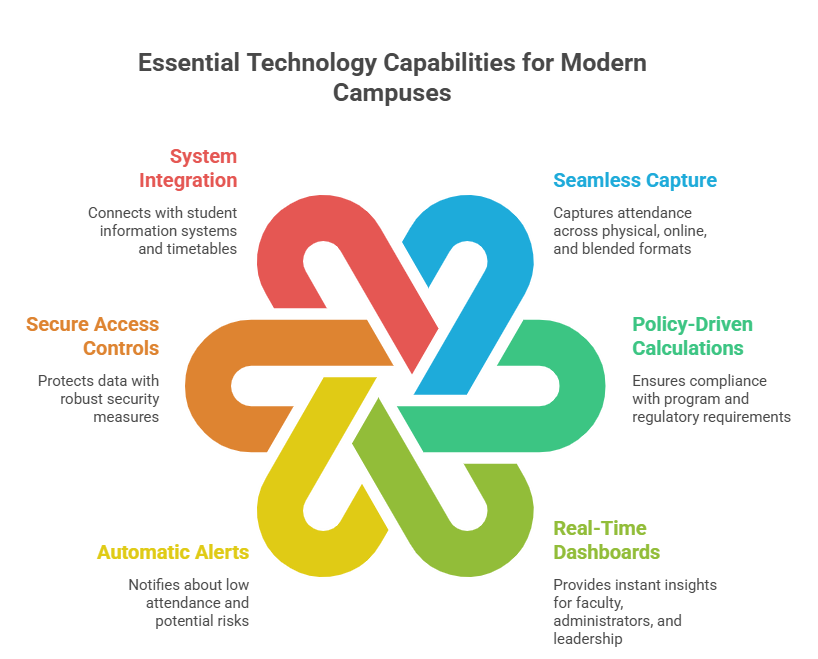
Here is a concise snapshot of what progressive campuses expect from technology that manages attendance intelligently:
Selecting technology is no longer just about features; it is about adoption. Faculty should find it intuitive, students should access it easily through mobile, and administrators should configure policies without complex IT dependency.
At the same time, seamless alignment with student information system software ensures that attendance data flows naturally into marks, progression, and eligibility rules. Transitioning from manual to digital, therefore, is both an operational and cultural shift, and ease of use accelerates both.
Furthermore, data security, scalability, and integration readiness should sit at the top of every evaluation checklist. Institutions often outgrow standalone tools quickly; platforms that evolve with academic models and regulatory expectations offer longer-term value.
Once attendance becomes accurate and automated, institutions start noticing more than convenience. Early alerts enable mentoring before dropouts happen. Transparent records reduce disputes. Department-level trends reveal teaching gaps, timetable challenges, or student support needs. Step by step, attendance data moves from “record keeping” to “academic intelligence.”
A capable attendance management system is therefore not simply an automation tool; it is an enabler of student success, operational clarity, and institutional accountability.
Academia’s attendance capabilities are part of its comprehensive student information system software, built to streamline attendance tracking while eliminating the typical challenges faced by higher ed institutions. With Academia’s Attendance Management System, attendance is no longer a fragmented or manual task; it becomes connected, accurate, and actionable.
Infographic Link:
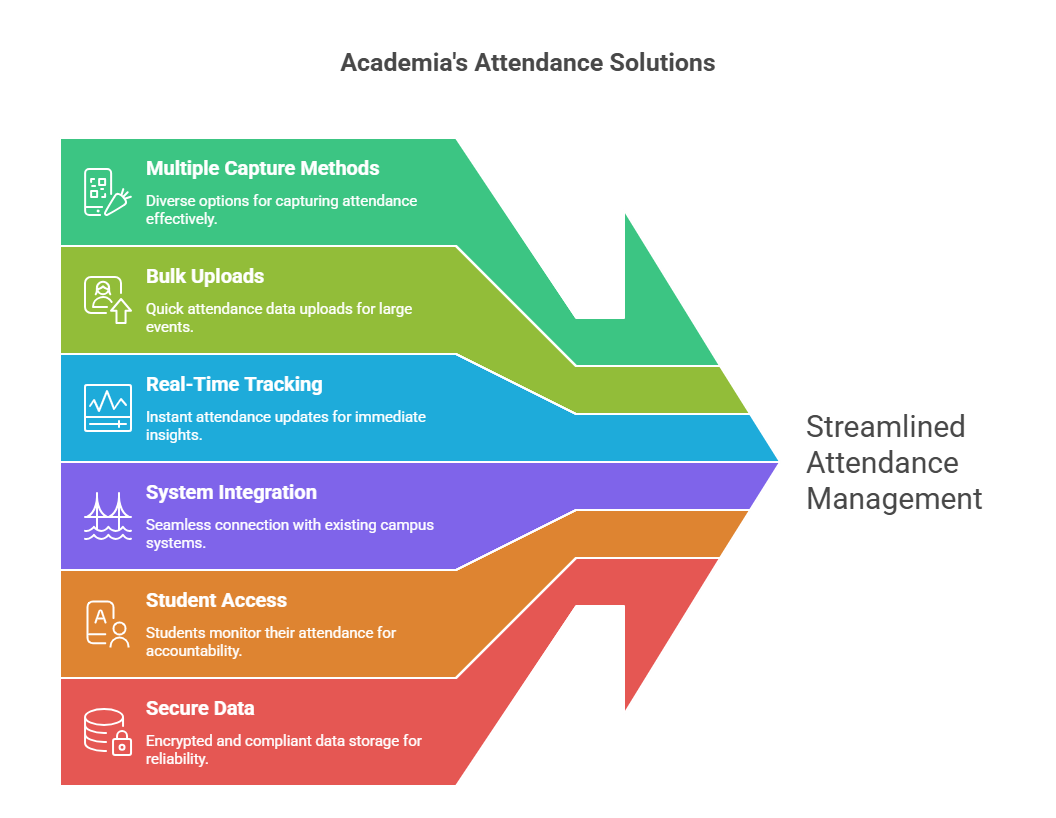
Here’s how Academia makes attendance effortless and effective for colleges and universities:
By combining flexible capture methods, real-time reporting, secure storage, and analytical capabilities, all directly tied to the broader student information system software, Academia helps institutions eliminate manual hassles, reduce administrative workload, and gain true academic insight from attendance data.
Conclusion: Precision presence, smarter decisions:
Accurate attendance isn’t just record-keeping; it is the foundation for engagement, compliance, and student success. A modern attendance management system, combined with powerful student information system software, turns raw data into actionable academic insight.
Academia delivers this seamlessly with integrated attendance tracking and real-time analytics. Ready to move from paperwork to precision?
Book your free demo with Academia today and experience effortless, accurate attendance management.

Experience Academia – Your partner in transforming campus operations, a trusted all-in-one ERP/SIS solution.
Get the latest insights, trends, and updates delivered straight to your inbox!