

Sanchit Baweja
Estd. Reading Time : 4 Min.
15th Dec, 2025
Share On:
Across Africa, higher education is not just growing – it’s transforming.
From long-standing higher education hubs to rapidly growing campuses, the region is experiencing a powerful surge toward digital transformation.
Yet amid this momentum lies a persistent challenge: managing massive amounts of student and institutional data efficiently.
As enrollments soar and digital expectations rise, institutions are realizing that spreadsheets and outdated software can no longer sustain their ambitions. What they need is a student information management system – or better yet, a comprehensive higher ed ERP – designed to connect every process, person, and performance metric seamlessly.
Universities across Africa are expanding faster than their systems can handle. Admissions offices drown in paperwork, exam departments spend weeks compiling results, and administrators juggle multiple systems for attendance, finance, and analytics.
According to a report by UNESCO, Africa’s higher education enrollment has grown by over 60% in the last decade, yet digital infrastructure hasn’t kept pace.
The result?
This imbalance between growth and governance creates inefficiency – and institutions lose both time and trust.
A student database management system does far more than store information. It builds a truly connected campus, bringing admissions, academics, examinations, and alumni relations together on one unified and synchronized platform.
For African universities aiming to become globally competitive, adopting an ERP for higher education means:
As World Bank research emphasizes, technology-led higher education can accelerate Africa’s development goals – only if systems are modern, scalable, and data-smart.
A modern ERP for higher education goes beyond technology – it builds accountability, speed, and insight. Here’s how it reshapes the African education ecosystem:
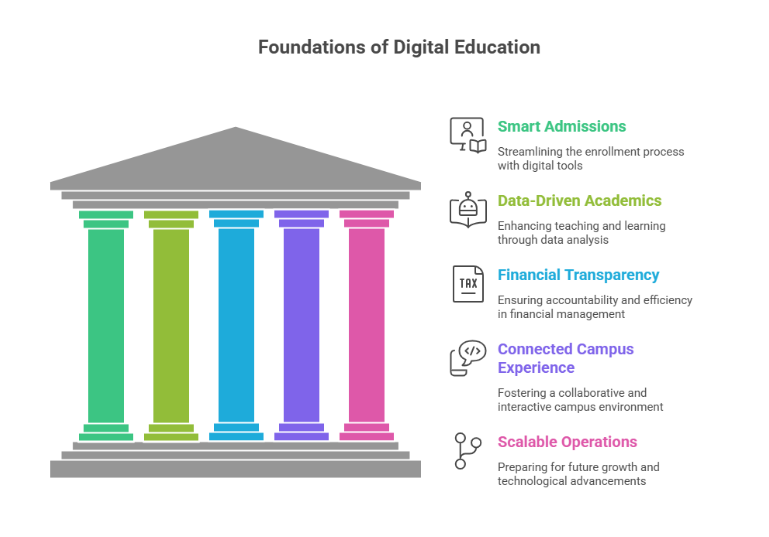
Africa’s education vision is clear – access, quality, and innovation. However, legacy systems stand in the way of scaling this vision.
In East Africa, universities are adopting cloud-based solutions to manage online learning efficiently. In West Africa, regulatory reporting and accreditation are pushing institutions toward centralized student information management systems. Meanwhile, Southern African universities are emphasizing AI-driven analytics for decision-making and research performance tracking.
Platforms like Academia SIS, trusted by 400+ institutions across 30+ countries, are empowering African campuses to transition from manual to modern – ensuring compliance, scalability, and real-time intelligence.
While affordability matters, universities should remember that a low-cost SIS often means hidden charges – lack of scalability, poor service, and limited innovation.
Choosing the right student academy management system isn’t about saving today; it’s about investing in a sustainable, AI-powered tomorrow.
When selecting a provider, ensure:

Experience Academia – Your partner in transforming campus operations, a trusted all-in-one ERP/SIS solution.
Get the latest insights, trends, and updates delivered straight to your inbox!