
Type your keyword below

The Importance of Change Management in Higher Education Digitization

Change is an inevitable part of any sector, and education is also deeply impacted by it. As universities and colleges adapt to the digital age, the process of digitization becomes crucial for their success. However, implementing change in higher education digitization can take time, as it often faces resistance from employees and stakeholders. To address this issue, change management plays a vital role in guiding the transition and ensuring its success. One effective framework for managing change is the ADKAR model, which focuses on creating awareness, desire, knowledge, ability, and reinforcement. In this article, we will explore the importance of change management in higher education digitization and how the ADKAR framework can be utilized to facilitate a smooth transition.


Click here to listen to an interesting 10-minute talk on – “ Importance of change management in Education with digitalization”  from our Founder & CEO, Aprit Badjatya. 

The Need for Change Management in Higher Education Digitization

Higher education institutions are increasingly recognizing the importance of digitization in enhancing student learning experiences, improving administrative processes, and staying competitive in a technologically advanced world. However, the implementation of digitization initiatives often faces various challenges, such as resistance from faculty members, lack of technological expertise, and organizational complexities. This is where change management becomes crucial.

Change management in the context of higher education digitization involves planning, implementing, and controlling the transition to digital systems and processes. It ensures that all stakeholders know the need for change, are willing to support it and have the necessary knowledge and skills to adapt to the new digital environment. Effective change management minimizes resistance, enhances employee engagement, and maximizes the potential benefits of digitization.

The ADKAR Change Management Framework

The ADKAR change management framework, developed by Jeff Hiatt, provides a structured approach to managing change at an individual level. It focuses on five key building blocks: awareness, desire, knowledge, ability, and reinforcement. By addressing each of these elements, organizations can successfully guide their employees through the change process and achieve desired outcomes. Let’s explore each building block in detail:

Awareness

The first step in the ADKAR framework is to create awareness among employees about the need for change. A lack of awareness can lead to resistance and hinder the adoption of new digital initiatives. To ensure successful awareness-building, organizations should communicate the reasons for digitization, its benefits, and the impact it will have on employees and students. This can be done through various channels, such as town hall meetings, emails, intranets, and training sessions. By providing a clear understanding of the need for change, organizations can overcome initial resistance and obtain buy-in from employees.

Desire

Once awareness is established, the next step is to create a desire among employees to support and participate in the digitization efforts. People are more likely to embrace change when they perceive it as beneficial to themselves and the organization. To generate desire, organizations should communicate the WIIFM (What’s In It For Me) factor, demonstrating how digitization will improve their work processes, increase efficiency, and enhance their professional development opportunities. Engaging employees in the decision-making process and soliciting their input can also foster a sense of ownership and increase their desire to support the change.

Knowledge

To effectively implement digitization initiatives, employees need the necessary knowledge and skills to navigate the digital environment. Organizations should provide comprehensive training programs to equip employees with the required technical proficiency and digital literacy. Training sessions can cover a range of topics, such as using digital tools and platforms, data security best practices, and leveraging technology to enhance teaching and learning. By investing in employee education and building their knowledge base, organizations can ensure a smooth transition to the digital landscape.

Ability

Having knowledge alone is not sufficient for successful change implementation. Employees must also have the ability to apply their knowledge in real-world scenarios. This requires providing opportunities for practice, feedback, and continuous improvement. Organizations can facilitate ability development by creating a supportive environment where employees can experiment with new digital tools, seek guidance from experts, and collaborate with their peers. By nurturing a culture of learning and innovation, organizations enable employees to confidently embrace technology and effectively contribute to digitization efforts.

Reinforcement

Change is a continuous process, and reinforcement is essential to embed new behaviors and sustain the changes brought about by digitization. Organizations should establish mechanisms for reinforcing the adoption of digital practices, such as recognition programs, performance metrics, and ongoing feedback. Celebrating milestones and showcasing success stories can motivate employees and demonstrate the positive impact of digitization. Regular evaluation and monitoring of the digitization initiatives can also help identify areas for improvement and ensure that the change becomes ingrained in the organizational culture.

Other Change Management Models

While the ADKAR framework provides a comprehensive approach to change management, it is not the only model available. Different models may suit organizations with specific needs and contexts. Some other popular change management models include:

  • Kotter’s 8-Step Change Model: Developed by John Kotter, this model emphasizes the importance of creating a sense of urgency, building a guiding coalition, and establishing a clear vision for change.
  • Lewin’s Change Management Model: Proposed by Kurt Lewin, this model involves three stages: unfreezing the current state, implementing the change, and refreezing the new state to make it a permanent part of the organization.
  • McKinsey 7-S Model: This model focuses on seven interconnected elements, including strategy, structure, systems, skills, shared values, style, and staff, to ensure successful change implementation.

Organizations should evaluate different change management models and select the one that aligns best with their goals, culture, and resources.

Conclusion

Change management is an essential aspect of higher education digitization. By effectively managing change, organizations can overcome resistance, engage employees, and maximize the potential benefits of digitization initiatives. Academia ERP – one of the leading ERP solution providers for education institutes, deals with this technology transition in the institutes very smoothly, handholding the client at every stage and thorough training, based on the ADKAR framework, provides a structured approach to guide institutions through the change process, from creating awareness to reinforcing new behaviors. By embracing change management practices, higher education institutions can successfully navigate the digital transformation and thrive in the modern educational landscape.

Embracing the EdTech Revolution: A Lucrative Opportunity Awaits

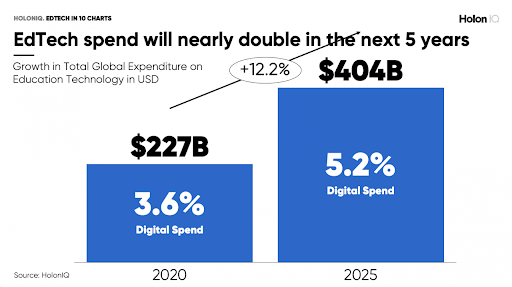
Welcome to Academia ERP, where innovation meets opportunity! Education technology, or EdTech, stands out as one of the most promising sectors for entrepreneurs and businesses alike. As we step into the future, the intersection of education and technology is reshaping the way we learn, teach, and, most importantly, how we can achieve extraordinary profits.


The digital transformation in education has opened up a world of possibilities, creating a thriving market for innovative solutions and services. With the global EdTech market on a continuous growth trajectory, now is the perfect time to embark on a journey that promises not just financial rewards, but also the chance to make a significant impact on the way knowledge is shared and acquired.

Why EdTech?

1. Meeting the Growing Demand:

The demand for online education and digital learning tools has never been higher. With the rise of e-learning platforms, interactive content, and virtual classrooms, there’s an insatiable hunger for quality educational experiences.


Ed_tech

2. Innovative Solutions:

EdTech isn’t just limited to online courses. From AI-driven personalized learning apps to virtual reality educational experiences, the industry is ripe with opportunities to create unique, groundbreaking products.

3. Global Reach:

The internet knows no boundaries, and neither should your educational initiatives. EdTech allows you to reach learners worldwide, breaking down geographical barriers and expanding your market exponentially.

4. Continuous Growth:

As technology advances, so does the potential of EdTech. Staying ahead of the curve and embracing emerging technologies ensures that your business remains relevant and continues to grow.

How to Start Your EdTech Journey

Identify Your Niche: Determine the specific area within EdTech where your passion and expertise align. Whether it’s language learning apps, coding courses, or virtual labs, finding your niche will set the foundation for your success.

Develop a Unique Value Proposition:

What sets your EdTech solution apart? Whether it’s unparalleled interactivity, expertly curated content, or a user-friendly interface, defining your unique selling points is essential to attracting your target audience.

Focus on User Experience:

User experience is paramount in the digital realm. Create intuitive interfaces, engaging content, and seamless interactions to keep your users coming back for more.

Embrace Collaboration:

Partner with educators, content creators, and technology experts. Collaboration fosters innovation and can lead to the development of transformative educational products.

Stay Updated and Adapt:

The EdTech landscape is ever-changing. Stay updated with the latest trends, listen to user feedback, and be ready to adapt your offerings to meet evolving demands.

Conclusion

Embarking on a journey into the EdTech world is not just a business venture; it’s a chance to be part of a transformative movement in education. At Academia ERP by Serosoft, we believe in the power of education to change lives and in the potential of technology to enhance and democratize learning. Join us on this extraordinary journey, where innovation, education, and profits converge to shape a future where everyone has access to quality education and limitless opportunities. Start your EdTech adventure today and unlock the door to extraordinary profits and meaningful impact.

To learn more about how Academia by Serosoft can assist you on your EdTech journey, explore our website or contact us directly. Let’s create a brighter, smarter future together!

Understanding ERP Systems in Higher Education

In the ever-evolving landscape of higher education, institutions are constantly seeking innovative solutions to streamline their processes and enhance their operations. One such solution that has gained significant traction in recent years is the implementation of Enterprise Resource Planning (ERP) systems. These systems offer a comprehensive suite of integrated software applications designed to manage various aspects of an institution’s operations, including administrative, academic, and financial functions. In this article, we will delve into the world of ERP systems in higher education, exploring their benefits, key features, and best practices for implementation.

Table of Contents

  • What is an ERP System?
    • Definition of ERP Systems
    • Evolution of ERP Systems in Higher Education
  • Benefits of ERP Systems in Higher Education
    • Streamlined Administrative Processes
    • Enhanced Data Integration and Accessibility
    • Improved Decision-Making and Planning
  • Key Features of ERP Systems in Higher Education
    • Student Information System (SIS)
    • Financial Management
    • Human Resources and Payroll
    • Procurement and Supply Chain Management
  • Best Practices for Implementing ERP Systems in Higher Education
    • Needs Assessment and Vendor Selection
    • Customization and Integration
    • Change Management and Training
  • Choosing the Right ERP System for Higher Education
    • Factors to Consider
  • Future Trends in ERP Systems for Higher Education
    • Cloud-Based Solutions
    • Artificial Intelligence and Machine Learning Integration
    • Mobile Accessibility
  • Conclusion

1. What is an ERP System?

Definition of ERP Systems

Enterprise Resource Planning (ERP) systems are integrated software applications that facilitate the management of an organization’s resources by automating and integrating various business processes. These systems provide a centralized database that enables different departments within an institution to access and share information in real time, promoting operational efficiency and data accuracy.

Evolution of ERP Systems in Higher Education

ERP systems have a rich history in the corporate world, where they have been widely adopted to streamline business operations. However, their application in the higher education sector is a relatively recent phenomenon. As institutions face increasing pressure to improve efficiency, reduce costs, and enhance student services, ERP systems have emerged as a promising solution to address these challenges.

Traditionally, higher education institutions relied on disparate systems and manual processes to manage their administrative, academic, and financial functions. This fragmented approach often led to data inconsistencies, redundant tasks, and limited visibility into key metrics. In response to these challenges, institutions began exploring the adoption of ERP systems tailored specifically for higher education.

2. Benefits of ERP Systems in Higher Education

Streamlined Administrative Processes

One of the primary benefits of implementing an ERP system in higher education is the streamlining of administrative processes. These systems automate routine tasks such as registration, admissions, course scheduling, and grading, reducing the administrative burden on staff and faculty. With centralized data management, institutions can eliminate duplicate data entry and ensure data integrity across various departments.

Enhanced Data Integration and Accessibility

ERP systems facilitate seamless integration of data across different departments, enabling a holistic view of an institution’s operations. This integrated approach allows administrators, faculty, and staff to access accurate and up-to-date information, improving communication, collaboration, and decision-making. For example, student information stored in the system can be easily accessed by advisors, faculty, and administrators, enabling personalized support and efficient academic planning.

Improved Decision-Making and Planning

By providing real-time data and analytics, ERP systems empower higher education institutions to make informed decisions and develop effective strategic plans. With access to key performance indicators, such as enrollment trends, student retention rates, and financial projections, administrators can identify areas of improvement, allocate resources effectively, and optimize institutional performance. These systems also enable institutions to generate customized reports and dashboards, providing actionable insights for data-driven decision-making.

3. Key Features of ERP Systems in Higher Education

Student Information System (SIS)

The Student Information System (SIS) is a core component of ERP systems in higher education. It encompasses a range of functionalities related to student administration, including admissions, registration, academic records, financial aid, and student billing. SIS modules facilitate the seamless flow of information throughout the student lifecycle, from recruitment to graduation, ensuring efficient student management and support services.

Financial Management

Financial management modules within ERP systems enable higher education institutions to streamline their financial operations, including budgeting, accounting, purchasing, and grants management. These modules provide a comprehensive view of financial transactions, automate financial processes, and support compliance with regulatory requirements. Institutions can generate financial reports, track expenses, and manage budgets efficiently, enhancing financial transparency and accountability.

Human Resources and Payroll

ERP systems for higher education typically include modules for human resources and payroll management. These modules centralize employee data, automate payroll processes, manage benefits administration, and facilitate employee self-service functionalities. By automating routine HR tasks, institutions can reduce administrative overhead, improve accuracy in payroll processing, and enhance employee satisfaction.

Procurement and Supply Chain Management

Procurement and supply chain management modules within ERP systems enable higher education institutions to streamline their purchasing processes, manage inventory, and track supplier relationships. These modules automate procurement workflows, facilitate vendor management, and support strategic sourcing initiatives. By optimizing procurement processes, institutions can achieve cost savings, improve operational efficiency, and ensure compliance with procurement policies.

4. Best Practices for Implementing ERP Systems in Higher Education

Needs Assessment and Vendor Selection

Before embarking on an ERP implementation project, it is crucial for higher education institutions to conduct a thorough needs assessment to identify their specific requirements and pain points. This assessment should involve key stakeholders from various departments to ensure comprehensive input. Once the needs assessment is complete, institutions can initiate the vendor selection process, evaluating vendors based on their track record, product functionality, scalability, and customer support.

Customization and Integration

While ERP systems offer a range of out-of-the-box functionalities, customization may be necessary to align the system with an institution’s unique processes and requirements. However, customization should be approached with caution, as excessive modifications can lead to increased costs, longer implementation timelines, and difficulties in system upgrades. Institutions should prioritize customization efforts based on their strategic goals and focus on integrating existing systems with the ERP to minimize disruption.

Change Management and Training

Implementing an ERP system in higher education requires effective change management practices and comprehensive training programs. Institutions should communicate the purpose and benefits of the ERP system to all stakeholders, addressing any concerns and resistance to change. Training programs should be developed to ensure that end-users are equipped with the necessary skills to maximize the system’s potential. Ongoing support and regular feedback loops are essential to facilitate a smooth transition and optimize user adoption.

5. Choosing the Right ERP System for Higher Education

Factors to Consider

When selecting an ERP system for higher education, institutions should consider several factors. These include:

  • Scalability: The system should have the ability to accommodate the institution’s current and future needs as it grows and evolves.
  • Integration Capabilities: The ERP system should be able to integrate with existing systems and applications, such as learning management systems and CRM software.
  • Vendor Support and Reputation: Institutions should assess the vendor’s track record, customer support services, and reputation within the higher education sector.
  • Security and Compliance: Data security and compliance with industry regulations, such as FERPA, should be a top priority when selecting an ERP system.
  • Total Cost of Ownership: Institutions should evaluate the total cost of ownership, including licensing fees, implementation costs, ongoing maintenance, and support.

It is crucial for institutions to thoroughly evaluate the features, functionalities, and compatibility of each ERP system to determine the best fit for their specific needs.

6. Future Trends in ERP Systems for Higher Education

Cloud-Based Solutions

The adoption of cloud-based ERP systems is expected to increase in the higher education sector. Cloud solutions offer several advantages, including reduced infrastructure costs, scalability, and enhanced accessibility. Institutions can benefit from automatic software updates, improved data security, and the ability to access the system from anywhere, anytime.

7. Artificial Intelligence and Machine Learning Integration

As artificial intelligence (AI) and machine learning (ML) technologies continue to advance, ERP systems are incorporating these capabilities to further enhance their functionalities. AI and ML can automate routine tasks, provide predictive analytics, and enable intelligent decision-making. For example, chatbots powered by AI can assist students with inquiries, freeing up staff time for more complex tasks.

Mobile Accessibility

With the proliferation of mobile devices, ERP systems are increasingly focusing on mobile accessibility. Mobile applications allow students, faculty, and staff to access important information, complete tasks, and receive smartphone or tablet notifications. This mobility promotes flexibility and convenience, enabling stakeholders to stay connected with the institution’s operations on the go.

8. Conclusion

ERP systems have become a game-changer in the higher education sector, offering institutions the opportunity to streamline their operations, improve efficiency, and enhance student services. By integrating various administrative, academic, and financial functions, there are ERP systems like Academia ERP, that provide a holistic view of an institution’s operations, enabling informed decision-making and strategic planning. As the higher education landscape continues to evolve, institutions that embrace ERP systems will be better positioned to navigate the challenges and seize the opportunities of the future.

Implementing an ERP system in higher education requires careful planning, effective change management, and ongoing support. Institutions should conduct a thorough needs assessment, select the right vendor, and prioritize customization efforts based on their strategic goals and requirements. By following best practices and leveraging the benefits of ERP systems, higher education institutions can transform their operations and empower their stakeholders for success in the digital age.

About Academia ERP:

Academia ERP is a robust, feature-rich, analytics-equipped, user-friendly ERP – built on a cutting-edge and flexible architecture – that enables educational institutions to automate & streamline their functions and processes for both learning and administration, from prospecting to graduation. We have a presence in 24 countries and have served 350+ institutions so far.

About Serosoft Solutions:

Serosoft is a leading educational software and solutions company, promoted by a dynamic team of erstwhile I-Bankers, US graduates, and MBAs. We are part of the prestigious 50-year-old Hindustan Group of Companies.

Student Information System (SIS) – Streamline Your Higher Education Experience

Technology has become an integral part of our daily lives, this is especially true in the education sector, where education institutions are constantly looking for ways to improve their processes and provide a better experience for their students. One such technology that has gained popularity in recent years is the use of education ERP / Student Information Systems (SIS) in higher education. In this article, we will explore the benefits of using ERP/SIS systems in higher education and how they can streamline the overall experience for students, faculty, and staff. We will delve into the specifics of what ERP systems are, their benefits, popular ERP systems in the market, and the challenges faced during their implementation.

The education sector has always been a fertile ground for technological advancements. From the introduction of smart classrooms to the use of artificial intelligence in learning, technology has revolutionized the way education is delivered. ERP systems are the latest addition to this technological revolution in education. They have the potential to transform the administrative and academic processes in higher education institutions, making them more efficient and effective.

What are Higher Education ERP / SIS Systems?

ERP stands for Enterprise Resource Planning, and it refers to a software system that integrates and manages various aspects of an organization’s operations. In the context of higher education, ERP systems are designed specifically for colleges and universities to manage their administrative, academic, and financial processes. These systems provide a centralized platform for managing student information, course registration, financial aid, human resources, and other campus management functions.

ERP systems in higher education are not just about managing administrative tasks. They are about creating a seamless and integrated experience for all stakeholders involved – students, faculty, staff, and management. They bring together all the disparate systems used in a university, from admission to graduation, under one umbrella. This not only simplifies the management of these systems but also ensures that all stakeholders have access to the same information, leading to better decision-making and improved outcomes.

Benefits of Higher Education ERP Systems

Streamlined Processes: One of the main benefits of using ERP systems in higher education is the streamlining of processes. With all the different departments and functions within a university, it can be challenging to keep track of everything and ensure smooth operations. ERP systems provide a centralized platform that connects all these departments and automates various processes, making it easier for staff to manage their tasks and for students to access the services they need.


Improved Communication and Collaboration: ERP systems also facilitate better communication and collaboration among different departments and stakeholders within a university. With all the information stored in one place, it becomes easier for staff to share data and work together on projects. This can lead to more efficient decision-making and a more cohesive campus community.


Enhanced Student Services For students: ERP systems can greatly improve their overall experience. With these systems, students can access all the services they need, such as course registration, financial aid, and academic records, in one place. This eliminates the need for them to visit different departments or stand in long lines, saving them time and frustration. Additionally, ERP systems can provide students with real-time updates on their academic progress, making it easier for them to stay on track and make informed decisions about their education.


Better Data Management: Data is a crucial aspect of any organization, and universities are no exception. With the large amount of data generated by various departments, it can be challenging to manage and make sense of it all. ERP systems provide a centralized database that stores all this data, making it easier for staff to access and analyze it. This can lead to better data-driven decision-making and improved efficiency in operations.


Cost Savings Implementing an Education ERP: System in higher education can also result in cost savings for the institution. By automating processes and reducing the need for manual labor, universities can save on staffing costs. Additionally, with better data management and decision-making, institutions can avoid costly mistakes and make more informed investments.


ERP systems also offer scalability, which is a significant advantage for growing institutions. As the institution expands, the ERP system can be scaled up to accommodate the increased workload without any significant disruptions. This ensures that the institution can continue to provide a high-quality education experience even as it grows.


Popular & Effective Higher Education ERP Systems

There are several ERP systems available in the market, each with its own set of features and benefits. One of the most popular ones used in higher education is Academia ERP. Academia ERP by Serosoft is a robust, feature-rich, AI-enabled, analytics-equipped, user-friendly Education Management System / Student Information System – built on a cutting-edge and flexible architecture – that is powering 350 institutions across 25 countries today.

The unique attributes of this award-winning product are:

  • AI-ENABLED

AI-powered analytics that offers intelligent, data-driven insights across all departments, enhancing and driving operational efficiency.

  • COMPREHENSIVE

Single-click Interface that provides an overview of all the departments and functions

  • CONFIGURABLE 

Highly dynamic, and configurable as per the needs of the institution

  • CLOUD-ENABLED

Delivered on the cloud and accessible by clients anytime, anywhere

  • MULTI-CENTER CAPABILITIES 

Complete decision support system for the management with multiple report generation capability

  • MOBILE APP

Academia is mobile-ready with Android and iOS apps for all the stakeholders

  • UNIFIED

Integrated structure which reduces data redundancy, and ensures process   standardization

Challenges of Implementing ERP Systems in Higher Education

While there are many benefits to using ERP systems in higher education, there are also some challenges that institutions may face during the implementation process. These include:

1. Cost

Implementing an ERP system can be a significant investment for universities, and it may not be feasible for smaller institutions with limited budgets. Additionally, there may be additional costs for training staff and maintaining the system, which can add to the overall cost.

The cost of implementing an ERP system can be a significant barrier for many institutions, especially smaller ones with limited resources. However, it is important to consider the long-term benefits of such a system. While the initial investment may be high, the cost savings and efficiency gains in the long run can make it a worthwhile investment.

2. Resistance to Change

Introducing a new system can be met with resistance from staff who are used to traditional methods of operation. This can lead to a slower adoption rate and may require additional training and support to ensure a smooth transition.

Change is often met with resistance, especially when it involves a significant shift in the way things are done. However, with proper communication and training, this resistance can be overcome. It is important to involve all stakeholders in the process and provide them with the necessary support to adapt to the new system.

3. Data Migration & Security

Migrating data from existing systems to the new ERP system can be a complex and time-consuming process. It requires careful planning and execution to ensure that all data is transferred accurately and securely.

Data migration is one of the most critical aspects of implementing an ERP system. It involves transferring large amounts of data from existing systems to new ones, which can be a complex and risky process. However, with careful planning and the use of appropriate tools and techniques, this process can be managed effectively, choosing software with global security complaint parameters will ensure security.

Conclusion

In conclusion, Education ERP/SIS systems have become an essential tool for higher education institutions looking to streamline their processes and provide a better experience for their students. These systems offer a wide range of benefits, including improved communication, enhanced student services, and better data management. While there may be some challenges in implementing these systems, the long-term benefits make it a worthwhile investment for universities. With the right ERP system in place, universities can improve their operations, save costs, and ultimately provide a better education experience for their students.

The future of higher education lies in leveraging technology to create a seamless and integrated experience for all stakeholders. Education ERP/SIS systems are a step in this direction, providing a platform that brings together all aspects of university operations under one umbrella. As more and more institutions adopt these systems, we can expect to see a significant transformation in the way higher education is delivered.


Back to top