
Academia Higher-Ed Executive Roundtable in Uzbekistan | 14 October 2026 — Shaping the Future of Higher Education Together

X

Type your keyword below

Higher Education Trends 2026: How Institutions Can Stay Ready for What’s Next

Introduction: The Campus Is Changing-Quietly, Constantly

Think of a university campus five years ago.
Long queues outside administrative offices. Spreadsheets passed from one department to another. Decisions delayed because “the data isn’t ready yet.” Faculty spending evenings on administrative follow-ups instead of academic mentoring.

Now, imagine the same campus stepping into 2026.

Students expect instant responses. Regulators demand real-time compliance data. Leadership teams want clarity, not reports stitched together from five different systems. And faculty want one thing above all else-time to focus on teaching and student success.

The reality is simple:
Higher education isn’t facing a dramatic overnight disruption. It’s experiencing a quiet, continuous shift driven by Higher Education Trends 2026.

Institutions that recognize this shift early are becoming Future-Ready Higher Education Institutions-while others struggle to catch up.

As 2026 approaches, the question for higher education leaders is no longer, “Should we change?”
It’s “Are we ready?”
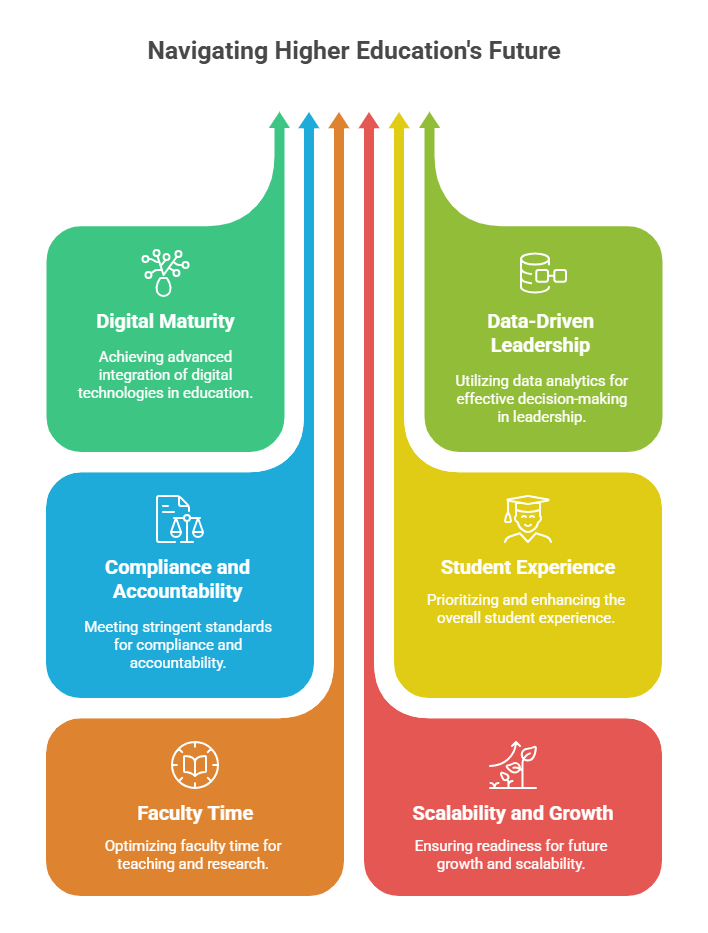
Higher Education Trends 2026
 

Trend 1: From Digital Adoption to Digital Maturity

For years, institutions focused on “going digital.” In 2026, that phase is officially over.

Today’s challenge is digital maturity-how seamlessly systems work together, how reliably data flows, and how confidently leaders can make decisions. This shift is central to Higher Education Trends 2026.

Disconnected tools create friction:

  • Admissions teams work in isolation

  • Academic data sits in silos

  • Student information lives across multiple platforms

As a result, leadership teams struggle to get a single, accurate view of their institution.

Institutions preparing for 2026 are prioritizing unified platforms that connect admissions, academics, the student lifecycle, and reporting-ensuring every decision is backed by consistent, trustworthy data.

Trend 2: Data-Driven Leadership Is No Longer Optional

In 2026, intuition alone won’t be enough.

Vice chancellors and administrators are increasingly expected to answer questions like:

  • Where are students dropping off-and why?

  • Which programs are performing, and which need intervention?

  • Are we audit-ready at any moment?

The institutions staying ahead are those that treat data as a strategic asset, not a byproduct-an approach increasingly seen across Future-Ready Higher Education Institutions.

This means:

  • Academic performance visibility instead of fragmented faculty reports

  • Operational coordination instead of siloed departmental workflows

  • Compliance and audit readiness instead of last-minute data collation

With clear academic insights, aligned operations, and audit-ready systems, leaders move from firefighting to foresight.

Trend 3: Compliance, Accreditation, and Accountability Are Intensifying

Across regions, regulatory frameworks are becoming more detailed and more demanding.

Accreditation bodies now expect:

  • Accurate historical data

  • Clear documentation of processes

  • Transparent student records

  • Evidence-based decision-making

In 2026, institutions need systems that are compliance-ready by design, not patched together before audits. This expectation is shaping Higher Education Trends 2026 globally.

When compliance is built into everyday operations, institutions reduce risk, save time, and build long-term credibility.

Trend 4: The Student Experience Is a Strategic Priority

Today’s students interact with digital platforms every day-and they bring those expectations to campus.

They expect:

  • Clear communication

  • Self-service access to information

  • Faster responses

  • Transparent academic processes

Institutions that deliver a smooth, connected student experience don’t just improve satisfaction-they strengthen retention, reputation, and outcomes.

Trend 5: Faculty Time Is the New Currency

Perhaps the most overlooked trend is also the most important.

Faculty and staff are stretched thin-not because they lack commitment, but because administrative complexity keeps growing.

Repetitive administrative tasks often go unnoticed, yet they consume a significant portion of faculty time-time that should be dedicated to students.

Institutions preparing for the future are investing in systems that:

  • Reduce repetitive tasks

  • Streamline workflows

  • Eliminate data duplication

The result? Faculty spend more time mentoring students, and administrators focus on strategy instead of troubleshooting-an essential shift for Future-Ready Higher Education Institutions.

Trend 6: Scalability and Readiness for Growth

Whether it’s increasing enrollments, launching new programs, or expanding across campuses, growth introduces complexity.

In 2026, institutions need systems that scale without breaking processes. This is a defining requirement within Higher Education Trends 2026.

This means:

  • Flexible architecture

  • Configurable workflows

  • Support for multi-campus operations

  • Readiness for regional and global expansion

Institutions that plan for scalability today avoid costly system overhauls tomorrow.

How Institutions Can Prepare for 2026-Starting Now

Readiness doesn’t come from technology alone. It comes from alignment.

Forward-looking leaders are asking:

  • Are our systems integrated or fragmented?

  • Do we trust our data when making decisions?

  • Can we respond quickly to regulatory or operational changes?

  • Are we enabling our people-or slowing them down?

Take a short pause and reflect on these questions.
Answering them honestly is the first step toward building Future-Ready Higher Education Institutions.

Conclusion: Preparing for 2026 Starts with the Right Foundation

The future of higher education isn’t about chasing trends.
It’s about building a foundation that allows institutions to adapt-confidently and sustainably-amid evolving Higher Education Trends 2026.

Academia SIS is built for institutions that want to lead, not react.

With a unified, AI-powered Student Information System, Academia helps higher education institutions:

  • Streamline admissions and academic operations

  • Gain real-time visibility into institutional performance

  • Strengthen compliance and accreditation readiness

  • Improve the student experience across the entire lifecycle

  • Free faculty and administrators from operational overload

If your institution is preparing for 2026, now is the time to act.

Book your free demo with Academia SIS today and see how Future-Ready Higher Education Institutions are simplifying complexity, empowering leaders, and transforming campus operations-one system at a time.

Why ERP for Higher Education Is Becoming Essential for UK Universities in this Data-Driven Era

Centralization is the Secret to Winning

Running a university without an integrated system is like tracking a student’s journey using separate files for admissions, academics, exams, and graduation. Each record exists, but nothing connects-leading to gaps, repetition, and avoidable confusion.

Adding to this challenge, universities must also manage increasing regulatory demands, data complexity, and rising expectations from students and stakeholders.

UK universities today operate in a highly regulated, student-centric, and data-heavy environment. From admissions to compliance reporting and student experience metrics, institutions need precision and coordination. 

This is exactly where ERP for higher education plays a critical role.

UK’s Higher Education Landscape Is Under Pressure

Universities across the UK face increasing expectations-from students, regulators, and funding bodies. Institutions must balance academic excellence with operational efficiency, while also adapting to changing enrolment patterns and digital-first learners.

Legacy systems and disconnected tools make this harder. Disparate platforms for admissions, academics, examinations, and student records lead to duplication, reporting delays, and compliance risks. A unified university management system/ERP for higher education helps institutions regain control.

ERP for Higher Education: Impact on UK Institutions

ERP for higher education is designed to manage the complete academic and administrative lifecycle within one integrated platform.

From applicant data flowing seamlessly from UCAS to enrolment, to academic progression, assessments, and graduation records, Education ERP ensures consistency, accuracy, and transparency across departments. This integration is especially valuable in the UK’s compliance-driven education ecosystem.

Why UK Universities Are Accelerating ERP Adoption

Regulatory frameworks such as OfS requirements, data protection standards, and quality assurance processes demand accurate, auditable data. At the same time, students expect intuitive digital experiences similar to those they encounter in everyday services.

UK institutions are adopting ERP systems to:

  • Reduce dependency on manual and spreadsheet-based processes
  • Improve data accuracy and reporting confidence
  • Foster digitally enabled learning models
  • Enhance institutional accountability and governance

What a Modern University Management System Must Deliver

Today’s UK universities need ERP platforms that are purpose-built for education, not adapted from generic enterprise software.


University Management System


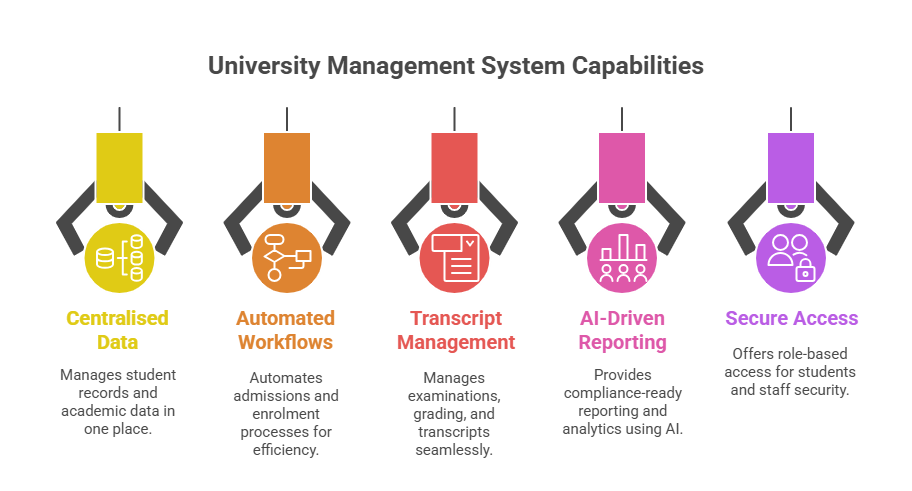
Key capabilities institutions look for include:

  • Centralised student records and academic data
  • Automated admissions and enrolment workflows
  • Seamless examination, grading, and transcript management
  • Compliance-ready & AI-driven reporting and analytics
  • Secure, role-based access for students and staff

These features help universities operate efficiently while meeting regulatory and stakeholder expectations.

Improving Student Experience Through Better Systems

A strong ERP system directly impacts student satisfaction. Clear communication, timely academic updates, and transparent processes reduce frustration and build trust.

For faculty and administrators, ERP simplifies workflows, reduces repetitive tasks, and enables collaboration across departments-freeing time for teaching, research, and student support.

Why Cloud-Based ERP Fits the UK Education Model

With growing emphasis on flexibility, resilience, and cost efficiency, cloud-based ERP solutions are increasingly preferred by UK universities.

University management system on cloud supports remote access, reduces IT infrastructure overhead, and ensures institutions always operate on the latest, most secure version of the system. For multi-campus universities or those with international students, cloud platforms ensure consistency without complexity.

Choosing the Right ERP Partner Is Critical

Successful ERP adoption depends as much on the partner as the technology. UK universities benefit most from providers who understand higher education workflows, compliance needs, and long-term institutional planning.

The right partner offers not just software, but implementation expertise, ongoing support, and continuous innovation aligned with the evolving UK education landscape.

Final Thoughts: ERP as a Strategic Foundation

In the UK, higher education is no longer just about delivering courses-it’s about building accountable, data-driven, student-focused institutions. ERP for higher education has become the foundation that enables this transformation.

A well-implemented university management system helps UK universities operate with clarity, confidence, and control-today and in the years ahead. 

Academia supports this journey by helping institutions unify systems, simplify processes, and scale with confidence.

UAE Vision 2030 and the Digital Campus Blueprint

Why a Student Information System Is the Backbone of Future-Ready Universities

Imagine building a smart city with disconnected roads, manual traffic signals, and no central command system. Even with a bold national vision, such a city cannot function intelligently without a unified digital backbone.

Many universities face a similar reality today.

As the UAE advances toward achieving its digital transformation in higher education, as outlined in UAE Vision 2030, institutions are expected to operate as intelligent, compliant, and data-driven ecosystems. However, without a robust student information system, digital ambitions often remain fragmented and difficult to execute.

UAE Vision 2030: Why Digital Transformation in Higher Education Is Non-Negotiable

Under the UAE Vision 2030, universities play a central role in economic diversification, workforce readiness, and global competitiveness. Institutions are expected to:

  • Meet evolving MoE, CAA, and regional accreditation standards
  • Support multilingual operations
  • Maintain transparent and auditable academic records
  • Enable leadership with real-time institutional visibility
  • Strengthen governance while ensuring university data security

To meet these expectations, digital transformation must be structured, compliant, and measurable-capabilities that rely heavily on a strong student information system.

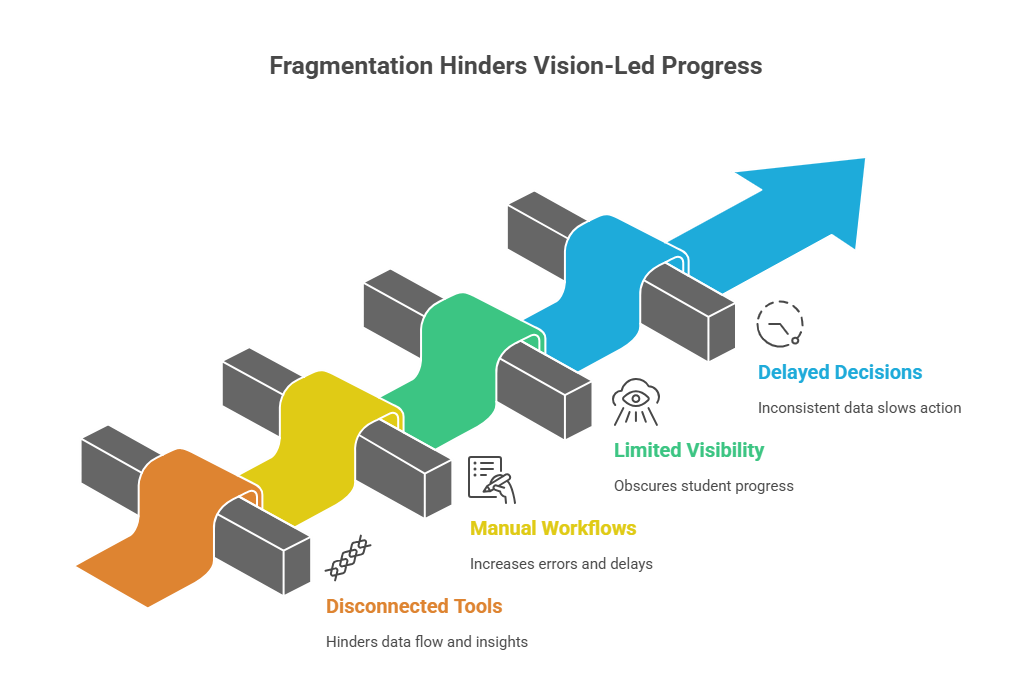
The Core Challenge: Fragmentation Slowing Vision-Led Progress


Despite a clear national roadmap, many institutions continue to struggle with:

  • Disconnected admissions, academics, and reporting tools
  • Manual compliance and accreditation workflows
  • Limited visibility into student progression and outcomes
  • Delayed decision-making caused by inconsistent data

As a result, the UAE Vision 2030 digital transformation in higher education becomes reactive rather than strategic.

At the center of this challenge is the absence of a unified student information system built for regional governance, scalability, and university data security.

Did you know a robust SIS/Education ERP enables institutions to manage accreditations effortlessly? Read the blog to learn how.

https://www.academiaerp.com/blog/accreditation-in-middle-east-higher-education-why-a-strong-sis-and-education-erp-matter/

Why a Student Information System Is Central to UAE Vision 2030

A modern student information system is more than an administrative platform-it is the operational backbone of the UAE Vision 2030.

By unifying admissions, academics, compliance, analytics, and leadership oversight, institutions gain clarity, control, and consistency. At the same time, built-in university data security safeguards sensitive student and institutional information across departments.

When implemented correctly, a student information system transforms complexity into institutional confidence.

What UAE Vision 2030–Aligned Universities Require
To fully realize the ambitions of UAE Vision 2030 in higher education, institutions need a student information system that:

  • Ensure Accreditation Excellence
    Supports CAA, CHEDS, NCAAA, MoE, and regional frameworks, guaranteeing audit-ready compliance.
  • Embed Regulatory Compliance
    Integrates statutory reporting and government requirements directly into institutional workflows.
  • Foster Inclusive Campus Operations
    Arabic-enabled and bilingual functionality ensures smooth communication and participation for all stakeholders.
  • Safeguard Data and Privacy
    Meets regional data residency standards and enforces robust university data security protocols.
  • Drive Scalable Growth
    Supports expansion across multiple campuses, programs, and student cohorts with minimal operational friction.
  • Enable Leadership with Insights
    Provides role-based dashboards and real-time data to inform strategic, vision-aligned decision-making.
  • Align with National Development Goals
    Supports UAE Vision 2031, the broader UAE Vision 2030, and GCC educational strategies for a future-ready workforce.
  • Leverage Local Partnerships
    Backed by a strong partner ecosystem for on-ground implementation, support, and sustainability.
  • Proven Regional Success
    Successfully implemented across 10+ GCC institutions, demonstrating reliability and scalability.

This ensures that digital transformation strengthens governance instead of adding operational strain.

From Admissions to Outcomes: A Secure, Unified Student Lifecycle

An integrated student information system manages the entire student lifecycle-from inquiry to graduation-within a secure, policy-driven framework.

With the right system in place, institutions can:

  • Standardize admissions and simplify enrollment processes
  • Maintain accurate, audit-ready academic records
  • Support accreditation and quality assurance reviews
  • Reduce manual effort and operational risk
  • Strengthen university data security across all functions

Interactive Dashboards: Turning Institutional Data into Direction

University leaders need clarity, not complexity.

A modern student information system offers interactive and visually powerful dashboards that provide:

  • Enrollment trends and capacity insights
  • Academic progression and completion visibility
  • Compliance and audit readiness status
  • Performance indicators aligned with the UAE Vision 2030 goals

Such visibility is critical for institutions operating under national governance expectations and strict university data security mandates.

Prioritizing Localization: A Critical Enabler of Vision-Led Transformation

Generic global platforms often fall short in regulated environments. In contrast, region-ready solutions recognize that the UAE Vision 2030 must align with local language, policy, and compliance needs.

Key regional capabilities include:

  • Arabic and English bilingual support
  • UAE data residency compliance
  • Strong university data security controls
  • Partner-led implementation with on-ground expertise

This localization ensures smoother adoption, stronger compliance, and long-term institutional trust.

Conclusion: Turning UAE Vision 2030 into Operational Reality

Just as smart cities depend on integrated digital foundations, future-ready universities rely on a robust student information system to deliver national goals.

For UAE institutions, the path forward is clear:

  • Commit to the UAE Vision 2030
  • Strengthen accreditation and governance readiness
  • Prioritize university data security
  • Empower leadership with real-time insights
  • Enable sustainable, vision-aligned growth

With the right systems in place, UAE Vision 2030 moves beyond ambition-and becomes a measurable, operational reality.

Academia SIS is designed to help UAE institutions achieve this vision by streamlining operations, ensuring compliance, and empowering leadership with real-time insights. 

Book your demo today and see how your university can become future-ready with a fully integrated, secure student information system.

Why Southeast Asian Institutions Are Rapidly Adopting Modern Higher Ed ERP Solutions in 2025

Across Southeast Asia, universities and colleges are undergoing one of the fastest digital transformations in the world. With rising student populations, increasing competition, and the growing pressure to provide global-standard learning experiences, institutions are realizing that traditional, manual systems can no longer keep pace.

As a result, leaders across the region are turning to smarter, integrated campus technologies – especially higher ed ERP platforms – to run their institutions more efficiently.

Yet, the important question remains:
What does a modern ERP for higher education actually solve, and why is it becoming essential for Southeast Asian campuses today?

Let’s break it down.

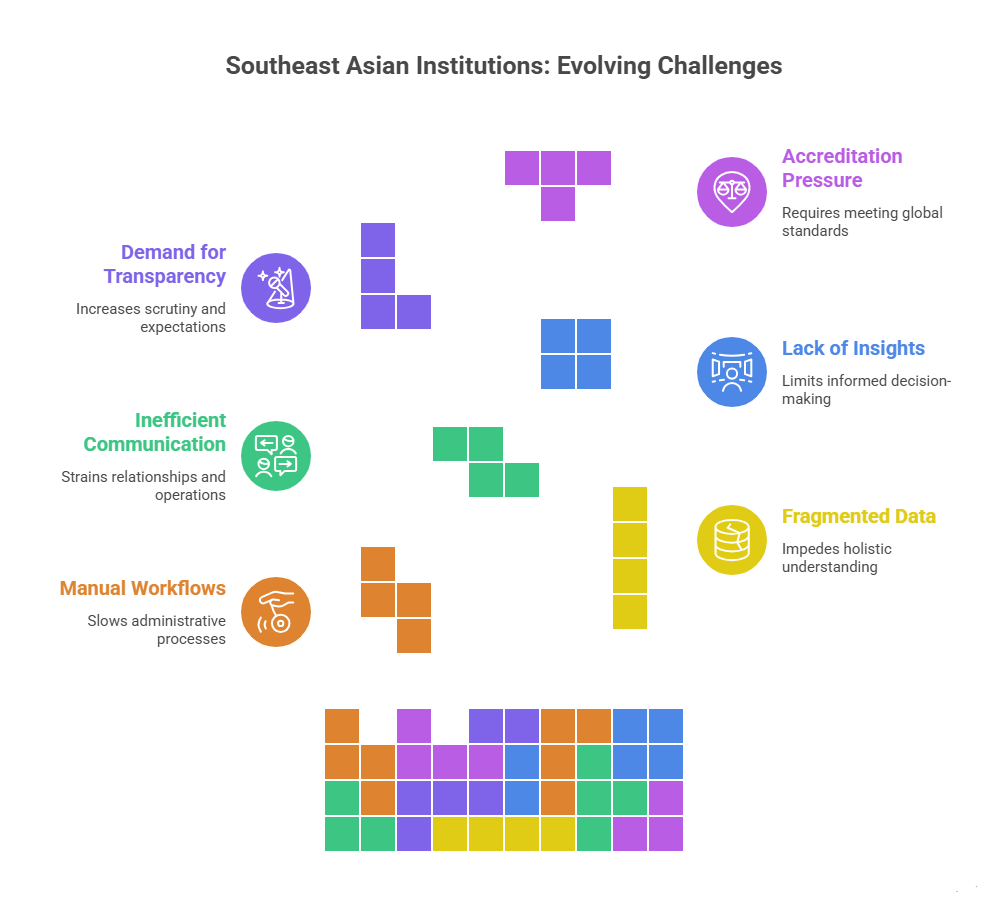
The Evolving Challenges of Southeast Asian Institutions

Although opportunities in the region are immense, institutions consistently face challenges such as:

Infographic Link:

Southeast Asian Institutions

  • Highly manual administrative workflows
  • Fragmented student data across departments
  • Inefficient communication between faculty, students, and staff
  • A lack of real-time academic and financial insights
  • Increasing demand for transparency and accountability
  • Pressure to meet global accreditation and compliance standards

Because of these gaps, universities struggle to make quick decisions, scale their operations, and deliver a seamless student experience.

This is where a modern, AI-ready education management system becomes critical.

Why Higher Ed ERP Solutions Are Becoming a Priority

Institutions in Southeast Asia are now prioritizing digital transformation not as a trend but as a strategic necessity. And instead of using multiple disconnected tools, they are adopting unified platforms like Academia by Serosoft – a robust and future-ready university ERP and student information management system.

A modern ERP for higher education does far more than digitize processes. It helps institutions:

  • Streamline campus operations end-to-end
  • Maintain a single source of truth for all student records
  • Improve academic, financial, and administrative efficiency
  • Enable better communication and collaboration across departments
  • Build a centralized university information system that supports long-term growth

With Southeast Asian institutions scaling rapidly, having a platform that supports automation, data-driven decision-making, and institutional visibility is no longer optional.

Also read: Why Southeast Asian Universities Need a Student Info Makeover

https://www.academiaerp.com/blog/why-southeast-asian-universities-need-a-student-info-makeover-and-how-academias-higher-education-erp-system-steps-up/

What Makes Academia Stand Out for Southeast Asia?

While many ERP solutions exist, Academia SIS/ERP is uniquely aligned to the needs of Southeast Asian universities and colleges. Developed after working with 400+ institutions globally, including leading campuses in Asia, Academia provides functionalities that match both regional challenges and global best practices.

Here are the capabilities institutions find most impactful:

1. Unified Student Information System for Transparent Data

Most institutions in Southeast Asia still rely on departmental systems, causing duplicates, errors, and integration issues. Academia replaces this with a fully integrated student information system where:

  • All student lifecycle data lives in one platform
  • Departments access real-time, accurate information
  • Decision-making becomes faster and data-driven

This not only improves operational reliability but also enhances trust across the institution.

2. Complete Academic Automation for Faculty Efficiency

Academia simplifies academic workflows that traditionally consume hours every week. Through its modern education management system, faculties can:

  • Generate personalized remarks automatically in marksheets using AI, reducing manual effort and ensuring consistency.
  • Digitize grading, assessments, and attendance with real-time updates and zero duplication.
  • Publish results instantly with built-in validation and error checks.
  • Communicate seamlessly with students through centralized announcements, notifications, and academic updates.

Consequently, teachers focus more on teaching and less on paperwork – a major need across the region.

3. Fully Integrated University Management ERP System

Institutions in Southeast Asia require scalability, compliance, and operational transparency. Academia’s university management ERP system integrates:

  • Admissions
  • Academics
  • Examinations
  • Student services
  • Hostel, transport, library, and more

Because everything connects seamlessly, leaders gain immediate visibility into campus performance with no manual work.

4. End-to-End Student Information Management System

Southeast Asian students expect digital-first experiences. Academia ensures institutions deliver exactly that by offering:

  • Self-service student portals for academic, administrative, and service requests.
  • Mobile app access for both students and faculty, enabling anytime, anywhere engagement.
  • AI-powered assistant SERA to handle student queries instantly-reducing response time and administrative load.
  • Automated fee management and smart reminders to ensure timely payments and transparency.

With student expectations rising, these experiences significantly improve satisfaction and institutional reputation.

5. Compliance-Friendly University Information System

Higher education institutions in Southeast Asia work within diverse regulatory and compliance environments. 

Academia helps them ease the compliance burden by:

  • Maintaining detailed audit trails
  • Ensuring secure, compliant data management
  • Offering pre-structured regulatory reports
  • Supporting multi-campus and multi-program operations

This level of compliance-readiness is essential for institutions aiming for global recognition.

The Outcomes Digitally Advanced Institutions Achieve:

By adopting Academia’s modern higher ed ERP, Southeast Asian institutions experience:

  • Reduced administrative load by half
  • 100% transparency in student data
  • 360° visibility for leadership
  • Faster academic and administrative decision-making
  • A completely connected digital campus environment

And most importantly, they strengthen their capability to offer world-class education aligned to international standards.

Ready to Transform Your Institution in Southeast Asia?

If your institution is planning to modernize operations, improve student experience, or build a fully digital campus, this is the right time to begin.

Academia SIS/ERP is helping institutions across Asia become more efficient, scalable, and data-driven.

Explore how Academia can transform your campus today
Visit: www.academiaerp.com

Or request a personalized consultation:
Book a Free Demo

Why SIS Functions Like Times Square for Modern Campuses

Digital Neighborhood Built for Students, Faculty, and the Future

Imagine your campus as a neighborhood, not a sprawling, disconnected city of buildings and calendars, but a real place where students, faculty, administrators, and families interact, exchange ideas, and find support. 

A good campus environment feels familiar, intuitive, and connected, just like any thriving community in the U.S.

Now, if that’s a neighborhood, then your Student Information System (SIS) is its town square – the place where people find information, make plans, and engage with the broader life of the institution. Without a lively, accessible, and well-designed town square, every interaction becomes harder and every journey less meaningful.

In a world where students are used to seamless digital experiences in their everyday lives-from shopping and banking to travel and communication-colleges and universities must deliver that same level of intuitive ease across their academic and administrative systems. 

And that’s where modern SIS becomes mission-critical.

From Paper Trails to Digital Highways: The Evolution Is Real

For decades, SIS solutions were like the old town bulletin board – static, siloed, and often only visible to a few.

However, the U.S. is already fast-moving and deeply invested in technology across every other sector. 

To keep pace with this momentum, Student Information Systems must also evolve-bringing in smarter functionalities and more agile capabilities that match the expectations of today’s institutions and learners. 

So, the higher ed technology isn’t limited to moving to the cloud only. It’s about creating systems that break down silos between admissions, advising, academic progression, financial aid, and post-graduation planning. 

When these pieces live together, institutions can support students at every stage – just like a neighborhood that welcomes you in, guides you through transitions, and celebrates your milestones.

Why the “Digital Neighborhood” Concept Works in the U.S. Higher Ed Context

The U.S. education sector is uniquely competitive and diverse, with institutions facing pressures such as enrollment shifts, retention challenges, funding constraints, and evolving student expectations. So how can leaders think about SIS not just as software, but as a strategic campus hub?

Here’s how the analogy plays out:

🔹 Accessibility Makes Everyone Feel Welcome

In a neighborhood, accessible roads and signage help people move with confidence. Similarly, a modern SIS should:

  • Allow students to find information easily
  • Empower staff with real-time insights
  • Enable faculty to focus on teaching, not admin hurdles

This reflects the trend in higher ed of using technology to enhance student experience across the lifecycle, from recruitment to graduation and beyond.

🔹 Integration Builds Connected Communities

The best town squares bring different people together. In your digital campus:

  • SIS integrations link academic records, advising, LMS data, and analytics
  • Leaders gain a cohesive view of student success and institutional performance
  • Departments can collaborate instead of functioning in isolation

Teaching, learning, advising, and operations all benefit from connected data and workflows, which is why modern SIS discussions emphasize flexibility and integration.

🔹 Data as a Common Language

Just as neighbors share information about local events and opportunities, today’s institutions use data to guide decisions – not just measure outcomes.

This means SIS isn’t just an administrative engine; it becomes a lens to understand patterns, respond to student needs, and refine institutional strategy over time.

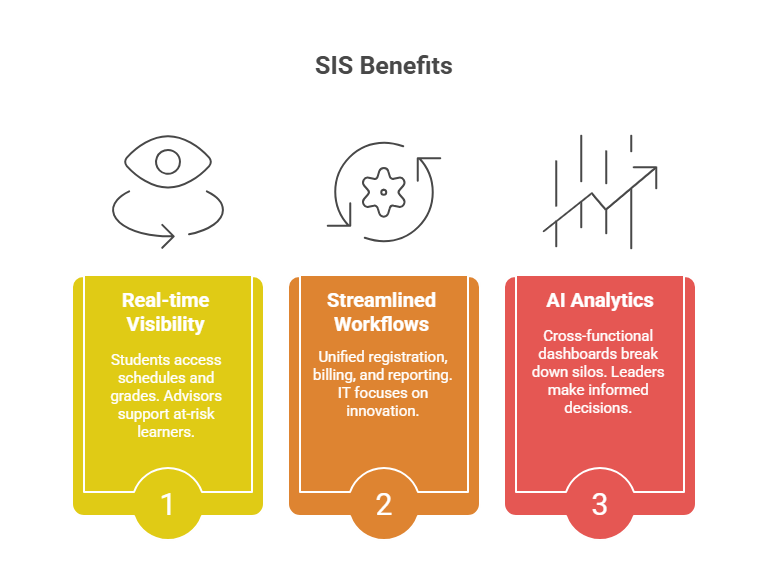
3 Ways Modern SIS Powers a Better Digital Neighborhood

3 Ways Modern SIS Powers a Better Digital Neighborhood - visual selection

Let’s break down exactly how a modern SIS transforms campus life in practical terms:

  1. Real-time student visibility
    • Students access schedules, grades, and financial info in one place
    • Advisors and staff see alerts and trends to support at-risk learners
  2. Streamlined administrative workflows
    • Registration, billing, reporting, and compliance become unified processes
    • IT teams spend less time firefighting and more on innovation
  3. Actionable AI-based analytics and reporting
    • Break down silos with cross-functional dashboards
    • Leaders make informed decisions based on real, timely data

These aren’t just efficiency wins – they support better student outcomes, which is the ultimate goal of any U.S. HE institution investing in SIS transformation.

Looking Ahead: The SIS Town Square in 2026 and Beyond

As institutions face new challenges – from shifting demographics to tighter budgets and ever-higher expectations for online and hybrid learning – the idea of a digital neighborhood becomes more than metaphorical. It becomes a strategy.

A modern SIS acts as the connective tissue between administrative systems and student experience platforms, enabling:

  • AI-enabled insights
  • Personalized communications
  • Predictive analytics for retention
  • Scalable solutions for institutional growth

In the U.S. higher ed ecosystem, where every student’s journey can look different, the value of a connected, responsive, and intuitive information system can’t be overstated.

Final Thoughts: People First, Technology Second

At the end of the day, SIS is more than software – it’s a reflection of your campus culture. When you treat it as a digital neighborhood center, you invite participation, clarity, and shared purpose across your community.

Because in a world where students expect seamless digital experiences everywhere else, your campus town square should feel just as welcoming.

That’s the philosophy behind Academia. Built specifically for higher education, Academia is designed to bring every stakeholder-students, faculty, administrators, and leaders-into one connected digital neighborhood, with SIS at its heart.

Book a quick demo with Academia today and see how your digital neighborhood can come together-by design.

The 2026 “Demographic Cliff”: Navigating the Year of Radical Transformation

Imagine a university campus as a complex, living clockwork. For decades, the gears-admissions, academics, and finance-turned at a predictable pace. But in 2026, the mainspring has tightened. 

The “Enrollment Cliff” is no longer a distant warning; it is the ground beneath our feet. As the number of traditional-aged college applicants reaches its historic peak and begins a steady slide, institutional leaders find themselves at a crossroads: adapt the clockwork or let the gears seize.

In this new era, higher education “higher-ups” are shifting their focus from simple growth to Strategic Resilience. The challenge isn’t just filling seats-it’s managing the student lifecycle with such precision that not a single learner is lost to administrative friction or lack of engagement.

The 2026 Challenge: Volatility is the New Normal

As we enter 2026, the “Murky Middle” has expanded. Students are no longer just choosing between University A and University B; they are weighing degrees against micro-credentials, stackable certificates, and immediate workforce entry. 

For a Provost or Dean, this creates a triple-threat of challenges:

  • The Retention Leak: In a softening labor market, students are hyper-focused on ROI. If your student registration software is cumbersome or your degree audits are unclear, you aren’t just an “old-school” institution-you are a high-risk investment in their eyes.

  • Information Silos: When the student fees management system doesn’t “talk” to the academic advising portal, at-risk students fall through the cracks. By the time a human notices a red flag, the student has often already “stopped out.”

  • Data Overload, Insight Poverty: Most institutions have enough data to fill a stadium, but they lack a student database management system that can actually predict which student will struggle next week.

The 2026 Solution: The Intelligence-Driven Campus

The institutions thriving in 2026 are those that have moved beyond fragmented tools and adopted a Cloud-based Student Information System. By unifying the entire campus onto a single “digital backbone,” leadership can pivot from being reactive to becoming predictive.

When you see a Student Information ERP demo today, you aren’t just looking at a place to store grades. You are looking at a Command Center. A modern online student information system uses AI to flag attendance patterns, financial stress, and engagement dips in real-time.

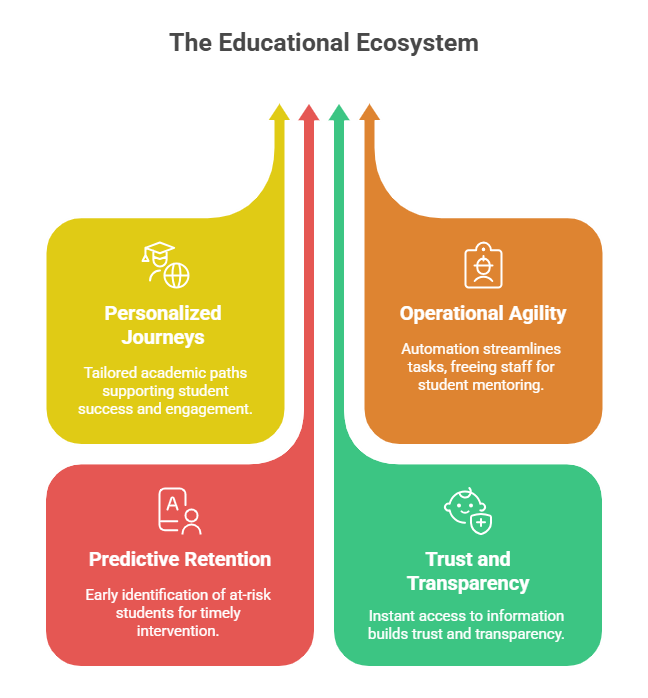
Why Unified Systems are the “Must-Have” for 2026:

Unified Systems

  • Personalized Student Journeys: Using student lifecycle management tools to offer tailored academic paths, ensuring students feel “seen” and supported from enrollment to alumni status.
  • Operational Agility: A student information system that automates routine billing and registration allows your staff to focus on high-value mentoring rather than data entry.
  • Predictive Retention: Identifying “at-risk” behaviors 6-8 weeks earlier than traditional methods through integrated student management software analytics.
  • Trust and Transparency: Providing parents and students with a student academy management system that offers instant access to progress, fees, and career-outcome tracking.

Future-Proofing the Institutional ROI

The shift to 2026 demands more than just a software upgrade; it requires a cultural shift toward a Connected Campus. Whether you are looking for the best student ERP or a specialized student record management system, the goal remains the same: removing every ounce of friction from the student experience.

In the face of the 2026 demographic shift, the most successful leaders won’t be those with history, but those with clarity. Modernizing your student information system is the first step in turning institutional “fog” into a clear, data-driven path forward.

This is where Academia becomes a strategic enabler-
Built to support connected, data-led campuses, Academia unifies admissions, academics, examinations, and student services into a single intelligent ecosystem. It gives the leadership teams real-time visibility, operational alignment, and boosts their confidence to make decisions that improve ROI-not just today, but well beyond 2026.

Get in touch with our team of experts, who are always happy and ready to assist you.

Preparing Your Higher Education Institution for 2026: A Strategic SIS & ERP Readiness Guide

Introduction: A New Year’s Resolution for Smarter Campuses

Every new year begins with resolutions-clearer goals, better systems, and stronger foundations for the future. For higher education institutions, 2026 is not just another year on the calendar; it represents a critical milestone in digital maturity. 

As student expectations rise, regulatory demands evolve, and campuses grow more complex, relying on fragmented systems is no longer sustainable.

This is where a modern Student Information System (SIS) and education ERP become central to institutional readiness. Preparing today ensures that by 2026, your institution operates as a connected, data-driven, and student-centric campus.

Why 2026 Demands a Rethink on Higher Ed Systems

Over the past few years, universities and colleges have rapidly digitized-but often in silos. Admissions software here, attendance tools there, and reporting systems that barely talk to each other.

Sounds relatable? Haha…we knew it! 

As a result, leadership lacks real-time visibility, staff struggle with manual processes, and students face disconnected experiences.


Higher Ed Systems


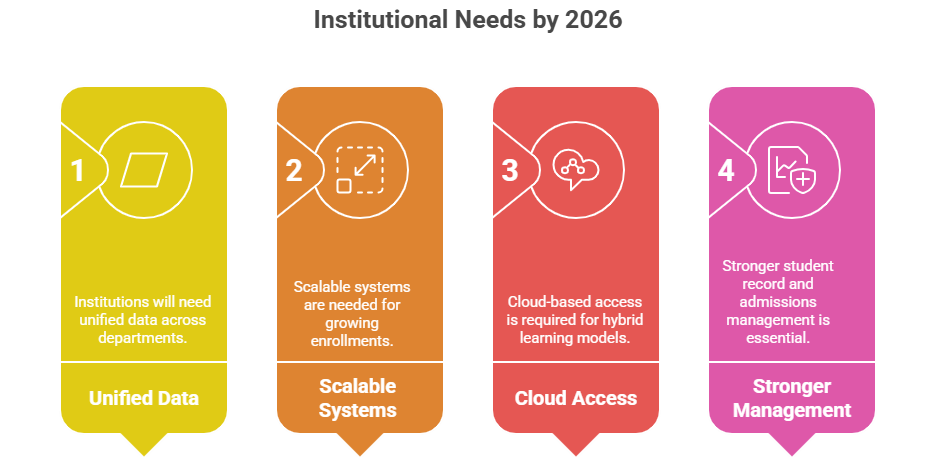
By 2026, institutions will need:

  • Unified data across departments
  • Scalable systems for growing enrollments
  • Cloud-based access for hybrid learning models
  • Stronger student record and admissions management

An integrated student information system software or university management ERP system is no longer optional-it is foundational.

Step 1: Move From Disconnected Tools to a Unified SIS /ERP

The first step in preparing for 2026 is eliminating operational silos. A modern SIS/ ERP combines admissions, academics, attendance, examinations, and reporting into a single information campus system.

Instead of juggling multiple tools, institutions benefit from:

  • A centralized student record management system
  • Seamless workflows across departments
  • Real-time data accuracy

Platforms like Academia, a globally trusted student information system, enable institutions to operate as one connected ecosystem rather than isolated departments.

Step 2: Strengthen Admissions With Data-Driven Systems

Admissions is no longer just about processing applications-it’s about managing demand, improving conversion rates, and delivering a smooth applicant experience.

An advanced admissions management system or admission management system helps institutions:

  • Automated, configurable admission workflows from enquiry to enrollment with built-in fee stages.
  • Applicant self-service portal for document uploads, real-time status tracking, and offer responses.
  • Instant offer letter generation and communication using customizable templates.
  • Actionable admission analytics and dashboards to track conversions, revenue, and intake trends.

As 2026 approaches, institutions using an online college management system will gain a competitive advantage by responding faster to applicants and forecasting enrollment trends more accurately.

Step 3: Adopt Cloud-First Campus Management

Cloud adoption is a key pillar of future readiness. A cloud education ERP demo often reveals what traditional systems lack-flexibility, scalability, and accessibility.

With a cloud-based campus management system software, institutions can:

  • Enable anytime, anywhere access
  • Support multi-campus operations
  • Scale without infrastructure constraints

A cloud-enabled college management solution ensures continuity, security, and performance as institutional demands grow.

Step 4: Prioritize Student-Centric Academic Operations

Modern students expect digital-first experiences similar to banking, retail, and healthcare. 

By 2026, institutions must align their systems accordingly.

A robust academic ERP or college ERP supports:

  • Seamless attendance tracking
  • Integrated exam and grading workflows
  • Transparent academic records

When combined into a student academy management system, these features improve engagement while reducing administrative workload.

Step 5: Enable Leadership With Real-Time Insights

Preparing for the future requires visibility. Leadership teams need access to reliable data to plan budgets, manage capacity, and ensure compliance.

A comprehensive student information system like Academia provides:

  • Centralized dashboards
  • Actionable insights through AI-powered reports & analytics
  • Institution-wide performance tracking

With a unified university ERP, decision-making becomes proactive rather than reactive-an essential shift for long-term sustainability.

Step 6: Choose a Scalable Institute ERP for Long-Term Growth

Growth is inevitable-new programs, campuses, partnerships, and learners. A future-ready institute ERP or institute management system must scale without disruption.

When evaluating systems, institutions should look for:

  • Flexible Configuration
  • Support for regional regulations
  • Proven scalability across universities and colleges
  • Multi-campus and multi-currency management capabilities
  • Seamless integration

Platforms like Academia, trusted globally, demonstrate how modern college management software can support institutions at every stage of growth.

Step 7: Validate Your Readiness With a System Demo

One of the smartest ways to prepare for 2026 is to experience the system before committing. A competent student information system allows institutions to evaluate usability, workflows, and alignment with their operational needs.

It helps stakeholders visualize:

  • End-to-end student journeys
  • Administrative efficiency gains
  • Reporting and compliance capabilities

Final Thoughts: 2026 Belongs to Institutions That Prepare Today

Just like personal New Year resolutions, institutional transformation succeeds when backed by the right tools and long-term commitment. Higher education institutions that invest early in a unified ERP for higher education will enter 2026 with confidence, not catch-up pressure.

Embracing the level of automation and intelligence this technology brings, institutions can build resilient, future-ready campuses.

Let’s begin your digital transformation journey to 2026 with Academia now!

Sophisticated Cyberattacks Target Higher Ed-Is Your Institution Prepared?

Think of today’s higher education ecosystem as a digital vault that never sleeps. Every admission, exam, attendance update, and transcript entry passes through a student information system, quietly storing years of personal, academic, and behavioral data. This concentration of sensitive information has made higher education one of the most attractive targets for cybercriminals globally.

According to global cybersecurity studies, education institutions remain among the most frequently attacked sectors because of their large user base, distributed access, and valuable student data. 

As a result, what was once considered a backend administrative platform has now become a frontline asset in the cybersecurity battlefield. A compromised student information system software can disrupt operations, expose personal data, and erode institutional trust within hours.

How AI Is Redefining Cyber Risks in Higher Education

Artificial intelligence has transformed the way higher education institutions operate-but it has also reshaped the cyber threat landscape. While AI enables faster decision-making and automation within student information systems, cyber attackers are using the same technology to scale and refine their attacks.

AI-powered phishing campaigns now closely mimic institutional communication related to enrollment updates, academic records, and system notifications. 

These messages are highly contextual, making them difficult for users to distinguish from legitimate alerts. Once credentials are compromised, attackers can quietly access the student information management system and observe data flows without immediate detection.

Additionally, automated attack tools analyze system behavior to identify weak access controls, misconfigured permissions, and unsecured integrations. 

In a highly interconnected environment where student data flows across multiple modules, AI-driven attacks can adapt in real time-exploiting vulnerabilities faster than traditional defenses can respond.

Structural Weaknesses That Make Universities Easy Targets

Cyber Security

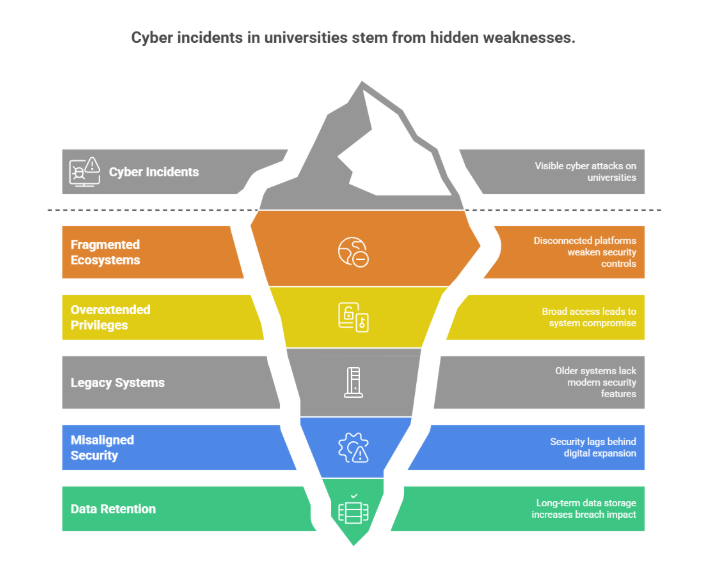
Cyber incidents in higher education rarely occur due to a single failure. Instead, they emerge from structural and operational weaknesses that attackers actively exploit.

  • Fragmented digital ecosystems
    Many institutions still operate multiple disconnected platforms for admissions, academics, examinations, and student services. This fragmentation weakens the overall student information system, making it difficult to enforce consistent security controls across the student lifecycle. 
  • Overextended access privileges
    Students, faculty, administrators, and third-party partners often share broad access to student information systems. Without strict role-based access, even minor credential leaks can escalate into full system compromise. 
  • Legacy systems within modern environments
    Older student record management systems often lack modern encryption, monitoring, or update mechanisms. When integrated with newer online student information systems, they become silent entry points for attackers. 
  • Rapid digital expansion without security alignment
    As institutions expand cloud-based student information systems, security configurations may lag behind operational needs. Misaligned permissions and unsecured endpoints increase exposure without immediate visibility. 
  • Long-term retention of sensitive student data
    Student database management systems store personal and academic records for many years, increasing both the value of the data and the potential impact of a breach.

The CIO’s Role in Building a Security-First Campus Mindset

In today’s threat environment, cybersecurity is no longer a purely technical function-it is a leadership responsibility. CIOs play a critical role in shaping how institutions perceive and prioritize the protection of student information systems.

Promoting a security-first campus culture begins with visibility. When leadership treats the student information management system as a mission-critical asset, security becomes part of everyday decision-making rather than an afterthought. Clear access policies, regular system audits, and consistent cybersecurity awareness across faculty and students help reduce human-led vulnerabilities.

Equally important is ensuring that security strategies evolve alongside institutional growth. As online student information systems expand, CIOs must align technology adoption with governance, monitoring, and accountability. The goal is not to restrict access, but to ensure that access is intentional, traceable, and protected throughout the student lifecycle.

How Academia Helps Institutions Escape the Cyber Trap

Escaping modern cyber threats requires security that is built in, not bolted on. Protection must be embedded directly into the student information system software-and this is where Academia stands apart. 

Rather than treating security as an add-on, Academia makes it a foundational part of the student data ecosystem, helping institutions protect sensitive information while maintaining compliance and operational continuity.

Key Cybersecurity Strengths Built into Academia

  1. International Security Standards & Certifications
    Academia aligns with global security frameworks such as ISO 27001:2022, SOC 2, and GDPR, ensuring the student information system meets recognized benchmarks for risk management and data privacy.
  2. Role-Based Access Controls (RBAC)
    Granular access permissions ensure users can only view or act on data relevant to their roles, significantly reducing the risk of unauthorized access.
  3. Secure Login & Authentication
    Strong password policies, enforced credential rules, and optional two-factor authentication help prevent credential misuse and unauthorized system entry.
  4. Data Protection & Encryption
    Student records are encrypted both at rest and in transit, ensuring sensitive data remains protected even if intercepted.
  5. Automated Backups & Secure Cloud Infrastructure
    Regular automated backups and a secure cloud architecture hosted on trusted data centers improve system resilience and disaster recovery readiness.
  6. Data Quality & Compliance Support
    Built-in dashboards help monitor data accuracy, while compliance tools support efficient handling of regulatory data requests and audits.

Conclusion: Security Is Now a Strategic Responsibility

Cyber attackers have adapted quickly, learning how academic systems work and where institutions are most exposed. In this environment, safeguarding a student information system is no longer just an IT concern-it is a strategic imperative for institutional leadership.

By adopting a secure, cloud-ready, and resilient student information system software like Academia, institutions can protect student data, maintain operational continuity, and stay ahead of increasingly sophisticated cyber threats. Escaping the trap isn’t about reacting faster-it’s about being structurally secure from the start.

Accreditation in Middle East Higher Education: Why a Strong SIS and Education ERP Matter

When Accreditation Pressure Meets Reality

There’s a quiet anxiety that every university leader knows too well.
Not student enrollment numbers.
Not rankings.
Not even funding.

It’s the moment when an accreditation review begins. Highlight this line, maybe italic or bold

Months of preparation. Endless documentation. Late-night data checks. And one lingering question:
“Do we actually have everything in order?”

Across the Middle East, accreditation is not just a regulatory milestone-it’s a statement of trust, credibility, and global standing. And increasingly, institutions are realizing that manual systems and fragmented data are the weakest links in this journey.

This is where a robust Student Information System (SIS) moves from being “useful” to being mission-critical.

Why Accreditation Is Critical for Middle East Universities and Institutions


Higher Education

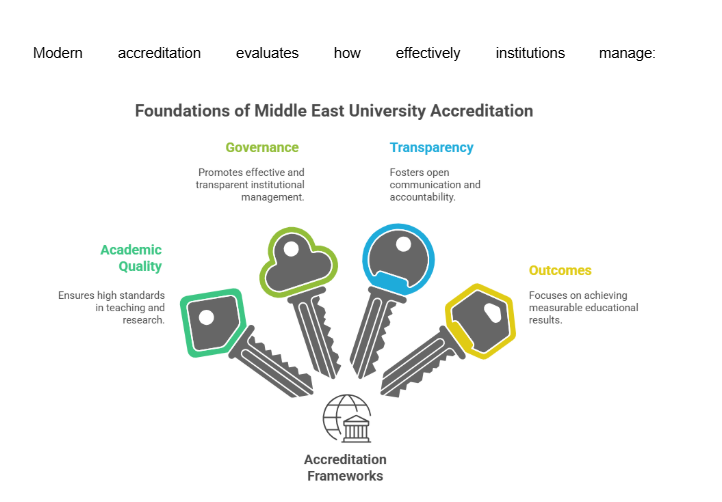
Accreditation frameworks across the UAE, Saudi Arabia, Qatar, Oman, and other regions emphasize academic quality, governance, transparency, and results. Whether it is institutional accreditation or program-level validation, compliance now directly influences enrollment growth, international collaborations, and long-term sustainability.

Modern accreditation evaluates how effectively institutions manage:

  • Admissions and enrollment management
  • Student records and academic progression
  • Attendance and examination processes
  • Learning outcomes and performance measurement
  • Data security and regulatory compliance

Without a centralized campus information system or education management information system, meeting these expectations becomes increasingly complex.

The Accreditation Gap Created by Legacy Systems

Many institutions and universities still rely on disconnected tools-manual spreadsheets, standalone admission management systems, or outdated college management software. While these may function operationally, they fall short during audits.

Accreditation teams often struggle with delayed reporting, inconsistent student data, and fragmented documentation. As a result, leadership spends weeks assembling information that should have been available effortlessly.

A modern academic ERP software eliminates this gap by unifying data across departments and campuses.

How a Higher Education ERP and SIS Strengthen Accreditation Readiness

A purpose-built higher education ERP system acts as a single source of truth for institutions. From admissions management systems to student lifecycle management, every academic activity is recorded, tracked, and aligned.

With a robust SIS for higher ed institutions, institutions gain real-time visibility into compliance metrics, academic performance, and operational efficiency. This ensures accreditation is treated as a structured, ongoing workflow-where processes are executed consistently and on time-rather than a last-minute, result-driven exercise. 

Key accreditation benefits include:

  • Centralized student information management system
  • Automated attendance management software and ERP attendance systems
  • Secure examination management software
  • Integrated admissions and enrollment management software
  • Consistent academic and administrative reporting

Supporting Outcome-Based Education Through Smart SIS/ERP

Outcome-Based Education (OBE) has become a cornerstone of accreditation across the Middle East. Regulators expect institutions to demonstrate not just teaching delivery, but measurable learning impact.

A strong student information system ERP enables institutions and universities to map courses to outcomes, track assessments, and generate performance insights. Faculty and administrators can clearly demonstrate how academic objectives translate into student achievement.

This structured approach significantly simplifies accreditation reviews while improving academic quality.

Reporting, Analytics, and Evidence Generation for Audits

Accreditation bodies rely heavily on reports. A modern campus management system software delivers detailed, customizable, and graphical reports that align with accreditation formats.

Institutions can generate:

  • Program-wise academic performance reports
  • Attendance and assessment analytics
  • Student enrollment and retention insights
  • Faculty workload and academic engagement data

Advanced analytics built into higher ed ERP systems ensure decision-makers are never dependent on manual data compilation.

Data Security, Compliance, and Regional Regulations

Accreditation today also evaluates how institutions protect academic and student data. Compliance with data protection regulations is no longer optional.

A reliable education ERP software ensures role-based access, audit trails, secure cloud hosting or on-premise deployment, and adherence to regional data security standards. This strengthens institutional credibility and builds trust with regulators and students alike.

Why Academia ERP Is Designed for

Accreditation-Driven Institutions

Academia is a purpose-built higher education ERP software and SIS ERP designed to support institutions and universities at every stage of accreditation.

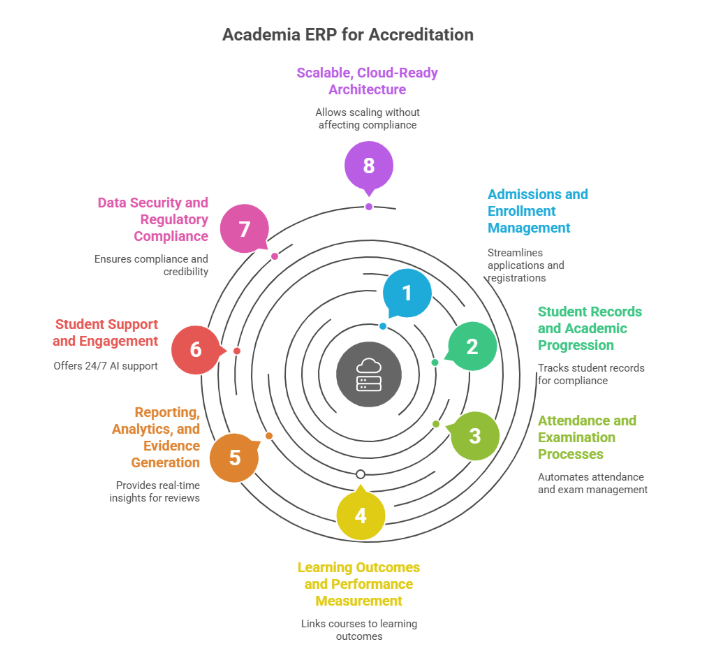
  • Admissions and Enrollment Management
    Agentic AI streamlines applications and registrations, reducing errors and ensuring audit-ready records.
  • Student Records and Academic Progression
    Centralized SIS tracks student records from admission to graduation for accreditation compliance.
  • Attendance and Examination Processes
    Automated attendance and exam management provide verifiable, standardized records for audits.
  • Learning Outcomes and Performance Measurement
    OBE capabilities link courses and assessments to learning outcomes for measurable academic effectiveness.
  • Reporting, Analytics, and Evidence Generation
    800+ AI-driven reports offer real-time insights and structured evidence for accreditation reviews.
  • Student Support and Engagement
    SERA provides 24/7 AI support with documented interactions, enhancing experience and accountability.
  • Data Security and Regulatory Compliance
    Role-based access, audit trails, and encryption ensure compliance and institutional credibility.
  • Scalable, Cloud-Ready Architecture
    Cloud deployment and seamless integrations let institutions scale without affecting compliance readiness.

Final Thought: Accreditation Is About Trust, Not Just Compliance

Accreditation ultimately measures trust-trust in data, trust in academic processes, and trust in institutional governance.

A strong education ERP like Academia that quietly builds this trust every day. It ensures that when accreditation reviews begin, institutions are not scrambling for proof-they are confidently presenting it.

Because in today’s higher education landscape, readiness is the real advantage.

Higher Education Management in Southeast Asia: When Rapid Growth Outpaces Readiness-and How Institutions Can Respond

Growth Is Exciting, Until It Becomes Overwhelming

Higher education in Southeast Asia is expanding faster than ever. New campuses are opening, student mobility across borders is increasing, and governments are investing heavily in digital education initiatives.

However, beneath this growth lies a growing fear shared quietly by university leaders and administrators:
Are our systems strong enough to manage this scale?

What starts as progress often turns into pressure when institutions realise their management processes were built for a much smaller, simpler reality.

The Real Challenge: Complexity Without Control

Managing higher education today in Southeast Asia is no longer just about enrollment and academics. Institutions must handle diverse student demographics, regional compliance requirements, outcome-based education models, and rising expectations for digital experiences.

Yet many universities continue to operate with fragmented systems. Admissions data lives in one platform, attendance in another, exams somewhere else, and reporting often depends on manual data consolidation.

As a result, leadership teams struggle to gain a clear, real-time picture of what is actually happening across their campuses.

According to the World Bank, strengthening institutional governance and data-driven decision-making is critical for Southeast Asia to meet future workforce and economic demands

Source: (https://www.worldbank.org/en/topic/education).

Why Traditional Management Approaches Are Failing

The challenge is not a lack of effort-it is a lack of integration.

When systems do not communicate with each other, even routine tasks become inefficient. Administrators spend valuable time reconciling data instead of improving student outcomes. Faculty members lack timely insights. And leadership decisions are often based on outdated information.

Over time, this operational friction impacts retention, compliance, and overall institutional credibility.

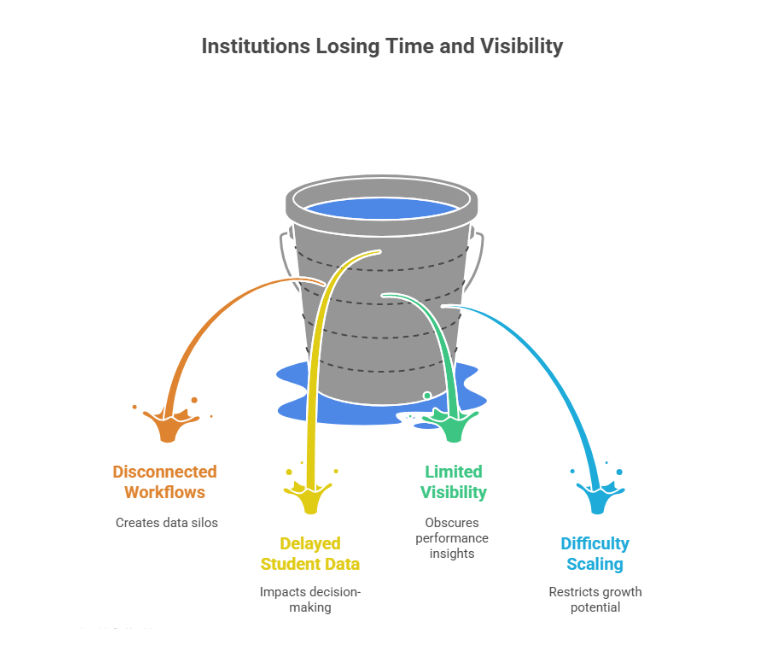
Where Institutions Lose the Most Time and Visibility

Higher education

This problem becomes clearer when we look at daily operations. Many Southeast Asian institutions face:

  • Disconnected admissions, attendance, examination, and reporting workflows
  • Delayed or inaccurate student data
  • Limited visibility into academic performance and engagement
  • Difficulty scaling operations across campuses or programs

While these issues may seem operational, their impact is deeply strategic.

The Shift Toward Integrated Student Management in ASEAN Universities

Forward-thinking institutions across Southeast Asia are responding by rethinking how they manage the student lifecycle.

Instead of adding more tools, they are consolidating operations into a single, unified Student Information System (SIS). This shift enables institutions to move from reactive administration to proactive management.

With centralized data and automated workflows, institutions gain clarity. Decisions become faster, more confident, and aligned with long-term goals rather than short-term fixes.

UNESCO also emphasizes that digital education systems play a crucial role in improving institutional capacity and learning outcomes across ASEAN countries.

Source: (https://www.unesco.org/en/education).

How a Modern SIS Brings Structure to Growth

A well-designed SIS does more than digitize processes. It creates continuity across the entire academic journey-from admissions to graduation.

When student data flows seamlessly across departments, institutions can track progress, identify risks early, and ensure compliance without administrative overload. More importantly, leaders gain real-time insights that support strategic planning and accreditation readiness.

This transformation allows institutions to scale confidently without compromising quality or student experience.

Why Southeast Asia Needs Region-Aware Solutions

Southeast Asia is not a monolithic education market. Regulatory frameworks, academic structures, and institutional priorities vary widely across countries.

Therefore, institutions need systems that are flexible, scalable, and designed with regional realities in mind. Cloud-enabled, mobile-friendly platforms that support compliance and multi-campus operations are becoming essential-not optional.

ASEAN education frameworks consistently highlight the need for digital infrastructure that supports quality, accessibility, and cross-border collaboration.

From Managing Operations to Shaping Outcomes

When higher education management systems are aligned with institutional goals, the impact is transformative.

Students experience smoother journeys and faster responses. Administrators regain control over workflows. Leadership teams move from firefighting to future planning.

Most importantly, institutions are better equipped to deliver measurable academic and career outcomes-something Southeast Asia’s growing youth population urgently depends on.

Final Takeaway: Growth Needs a Strong Backbone

Southeast Asia’s higher education sector is full of opportunity. But growth without structure leads to inefficiency, risk, and lost potential.

Institutions that invest in an integrated, student-centric management system like Academia are not just solving today’s challenges. They are building resilient campuses ready for the next decade of transformation.

Because in higher education, sustainable growth is never accidental-it is planned and designed.

How Central Asian Universities Can Transform with a Modern Student ERP: Overcoming Legacy Challenges

Introduction:

“Institutions still relying on traditional,

Tracking attendance in sheets &

Keeping exams & marksheet generation conventional!

But, For institutions to excel & rule

They must leave behind the workflow
That’s old-school.”

Embracing modern systems isn’t optional – it has become essential.

If these lines reflect your campus reality, this blog shows the way out – challenges, solutions, and the future of student management.

Central Asia’s higher education sector is at a crossroads. Countries like Kazakhstan, Kyrgyzstan, Uzbekistan, and Tajikistan are investing in digital transformation-but many institutions still rely on outdated systems, manual workflows, and fragmented data. 

To truly modernize, universities need a reliable, scalable student ERP that works as a student management system, academic ERP, and more.

Challenges Faced by Central Asian Higher Education Institutions

1. Legacy Systems and Fragmented Processes

Many universities in Central Asia continue to rely on disconnected software, spreadsheets, or even paper-based operations. This fragmentation means admissions, attendance, finance, and academics are not integrated, creating operational inefficiencies and data duplication.

2. Limited Infrastructure & Digital Divide

While some urban universities (e.g., in Almaty or Tashkent) benefit from strong internet connectivity, others struggle with inconsistent IT infrastructure. This infrastructure gap makes the rollout of a sophisticated ERP higher education solution more challenging. 

Researches point to infrastructural inequality as the key barrier to transformation.

3. Financial Constraints & Sustainability

Many institutions face limited funding, which makes it hard to invest in modern academic ERP systems. As studies show, financial constraints remain one of the biggest obstacles to higher education digital transformation. 

4. Data Security & Accountability

Digitizing student records, attendance, and academic data introduces serious cybersecurity and data privacy challenges. Without a proper student management system with strong controls, universities risk data breaches or misuse.

5. Need for Quality Assurance

Quality assurance in Central Asian universities is under special scrutiny, with calls for more standardized processes and accountability across institutions. An ERP system that provides reliable data can play a crucial role in improving transparency and institutional quality.

6. Skill Gaps & Resistance to Change

Faculty and staff in many universities may lack experience with ERP systems or data analytics. Combined with institutional inertia, this limits the adoption of modern digital tools. The global research also highlights the digital skills gap as a hindrance to successful transformation.

Why a Modern Student ERP Is the Solution:


student erp

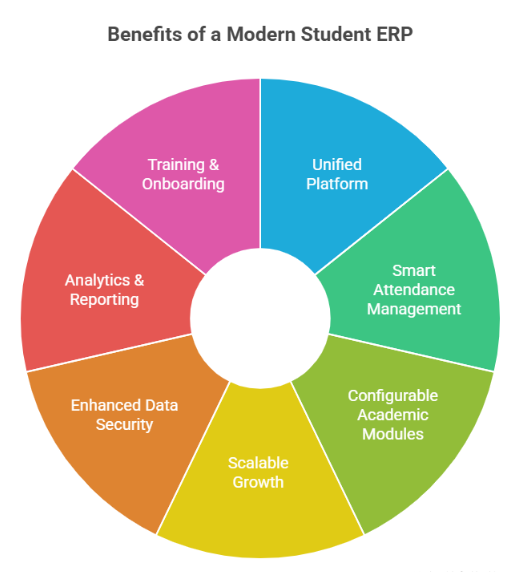
A student ERP platform developed for higher education can directly address these challenges:

  • Unified Platform: A full-feature student management system brings together admissions, academics, attendance, and finance into one system – eliminating silos.
  • Smart Attendance Management Software: Built-in modules for attendance tracking help automate daily processes, reduce manual work, and maintain real-time records.
  • Configurable Academic ERP Modules: Universities can customize the ERP to match their academic structures, credit systems, and local workflows without heavy IT dependence.
  • Scalable Growth: As campuses grow or expand regionally, the ERP system scales with minimal fuss – helping institutions future-proof their operations.
  • Enhanced Data Security: A modern ERP ensures role-based access, encryption, and compliance, helping institutions protect sensitive student data.
  • Analytics & Reporting: Advanced analytics allow administrators to draw actionable insights – such as predicting dropout risks or identifying student performance trends.
  • Training & Onboarding: Quality ERP providers support capacity building, helping staff and faculty adapt to new systems and avoid resistance.

Real-World Context: Central Asia Is Already Moving

  • Under the HiEdTec project, universities across Central Asia (including in Kyrgyzstan and Uzbekistan) are exploring ICT integration to modernize education.
  • Governments in the region – notably in Kazakhstan – are actively pushing digital university models as part of national AI and smart campus strategies.

Source: https://astanatimes.com/2025/09/exclusive-kazakhstan-cements-status-as-regional-academic-hub/?utm_source=chatgpt.com

Best Practices for Implementing a Student ERP in Central Asia

  • Start with Key Modules
    Begin ERP adoption with high-impact areas: implement attendance management software, student registration, and academic modules first to quickly improve ROI.
  • Prioritize Training & Change Management
    Invest in staff and faculty training to build comfort and familiarity with the new academic ERP system and increase operational management.
  • Ensure Compliance & Localization
    Choose a student ERP that offers multilingual support (e.g., Russian, Uzbek) and aligns with regional data protection policies
  • Adopt a Phased Rollout
    Roll out the system in phases – pilot with a few departments or campuses to refine the deployment, then scale out.
  • Use Analytics for Continuous Improvement
    Leverage ERP data for decision-making: identify student retention issues, financial trends, or administrative bottlenecks.

Conclusion

The future of higher education in Central Asia depends on smart, data-driven digital transformation. By adopting a robust student ERP or academic ERP, institutions can streamline operations, ensure data security, and improve student success.

For universities in Central Asia that want to lead, innovate, and scale – investing in the right ERP higher education system is not just an option – it’s a necessity.

AI‑Enhanced Platforms for Efficiency & Success – Using AI to improve operations and outcomes

“The future belongs not to those who adapt to change slowly, but to those who harness change swiftly – especially when it’s powered by AI.”

In the age of digital transformation, AI isn’t a futuristic concept anymore – it’s the engine driving efficiency, clarity, and unprecedented outcomes across industries. Just as a compass helps a sailor navigate the uncertain seas, AI serves as the guiding force for modern institutions seeking clarity amidst complexity. And for educational institutions, that journey toward transformation is no longer optional – it’s essential.

At Academia, we’ve embraced this reality. Our AI‑powered platform is designed to boost administrative productivity, optimize academic processes, and improve student experiences – while presenting data in ways that drive better decisions and outcomes.

Why AI Matters in Education Today

According to McKinsey,  please add citations or remove the name organizations that successfully integrate AI can boost productivity and make faster, data‑driven decisions. In higher education, this translates into streamlined operations, improved student engagement, and a reduced burden on faculty and staff. 

Transitioning from manual processes to AI‑driven workflows empowers institutions to focus more on strategic goals rather than repetitive tasks.

While traditional systems help with basic automation, AI‑enhanced platforms take it several steps further – embedding intelligence into every interaction. 

At Academia, artificial intelligence doesn’t merely automate; it augments human capability.

Wondering how?

See How Academia–AI‑Enhanced Platform is a Game Changer?

AI-Powered System

To understand the true impact of an AI platform like Academia, let’s break down the core benefits institutions experience:

1. Faster, Smarter Decision‑Making

AI systems analyze trends, detect patterns, and generate insights in a fraction of the time it would take humans. With Academia’s AI‑powered reports and analytics, institutions get access to:

  • 800+ built‑in reports covering admissions, exams, fees, attendance, and more 
  • Interactive dashboards that update in real time 
  • Predictive insights to support proactive actions 

These capabilities empower leaders with clarity – no more guessing, only informed decisions based on reliable data.

For a broader look at how analytics are reshaping decision‑making, explore this piece by Forbes add a link to Forbes article on AI‑driven analytics.

2. Enhanced Student Experiences

Students today expect fast, personalized support – and AI delivers exactly that. One of the core features of Academia’s platform is SERA, the AI‑enabled personal assistant.

SERA assists students 24/7 with:

  • Answers to academic questions 
  • Guidance through administrative tasks 
  • Instant support without queues or delays 

Through natural language understanding, SERA provides accurate responses – which means student satisfaction goes up while staff workload goes down.

3. Intelligent Enrollment Support

Traditional admissions often require students to fill out lengthy forms, visit campuses, or wait for support. Academia uses agentic AI to simplify this entire journey.

Here’s how:

  • Students begin enrollment by chatting with the AI chatbot 
  • The system accepts and verifies student information in real time 
  • Enrollment data is immediately reflected in both student and admin portals 
  • Delays and confusion are eliminated 

This isn’t just automation – it’s smart processing backed by instantaneous updates that ensure accuracy and transparency.

4. Automated Remark Generation

Teachers spend hours writing individual remarks for student performance reports. Academia’s AI‑driven automatic remark generation streamlines this process:

  • Faculty simply enter a few keywords or performance traits – just one or two words. 
  • The AI instantly crafts complete, context-relevant remarks for each student. 
  • This saves time, ensures accuracy, and maintains personalization across every student’s report.

The outcome? Faculty save time, increase productivity, and maintain high quality in academic feedback.

5. Predictive Performance Insights

Beyond generating reports, Academia’s AI can analyze student performance patterns and highlight early warning signs of academic risk or disengagement. These insights empower educators to intervene early – significantly improving retention and success rates.

Key Benefits of AI‑Enhanced Platforms in Education

Below is a summary of tangible benefits that institutions gain by adopting AI platforms like Academia:

  • Data‑driven governance: Better strategic planning with accurate, real‑time insights 
  • Operational efficiency: Reduced manual workloads and administrative overhead 
  • Student satisfaction: Faster query resolution and personalized support 
  • Time savings: More time for educators to focus on teaching and mentoring 
  • Improved compliance: Standardized workflows that adhere to institutional and regulatory requirements

Transitioning to AI isn’t about replacing humans – it’s about amplifying human intelligence to handle tasks that once consumed valuable time and energy.

Addressing Common Concerns About AI Adoption

Even with its benefits, some institutions hesitate to adopt AI because of perceived complexity or fear of disruption. Let’s clear up a few common misconceptions:

AI Is Too Complex

With thoughtful onboarding and adaptive design, Academia’s AI features are intuitive. You don’t need a technical degree to use AI‑enabled tools – they’re built for educators, administrators, and students alike.

Data Security Is a Risk

AI systems must adhere to stringent security standards. Academia equips institutions with secure data practices and compliant infrastructure to protect sensitive student information.

Wrapping Up- 

Efficiency and success aren’t outcomes – they’re ongoing processes shaped by thoughtful innovation. In the AI era, institutions that leverage intelligent platforms like Academia stand to gain not only operational excellence but also a transformative impact on the entire educational experience.

From AI‑powered analytics to agentic enrollment chatbots, SERA student support, and automatic remark generation, Academia’s AI suite empowers institutions to do more with less – and do it with precision, speed, and confidence.

Contact our team of experts to schedule your free demo today and see these capabilities in action. 

How Higher Ed Institutions in the Gulf Can Win with a Student Information Management System

In the heart of the Gulf and Oman’s higher education landscape, institutions face a paradox: they’re growing in size and ambition, yet many still rely on dated processes and fragmented technology. As student numbers surge, regulatory demands tighten, and digital expectations rise, the pressure on administrators and academics grows.

This is the moment where a student information management system, or higher-ed ERP focused on student workflows, becomes not just a convenience – but a necessity.

The Challenge: Growth + Complexity = Risk

Unified Student Information Management System

In Oman and the broader Gulf, institutions are expanding-new branches, larger intakes, more international students. 

Yet, many still manage admissions, attendance, fees, and marksheets with spreadsheets, disconnected systems, and manual workflows. 

Modern student information systems consolidate data across time and departments, enabling institutions to act in real time.

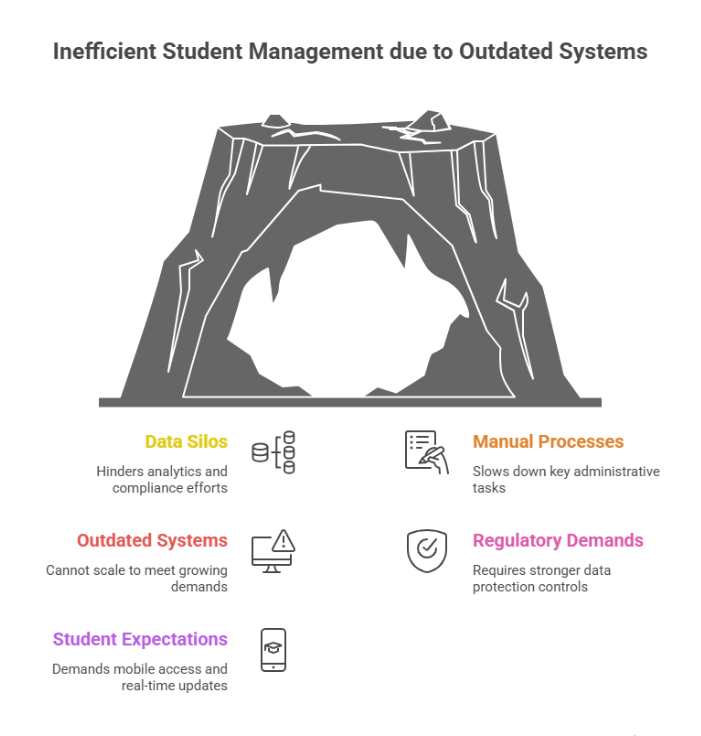
The key pain points include: 

  • Data silos across departments make analytics and compliance harder.
  • Manual processes that slow down admissions, grading, fee settlement, and reporting.
  • Outdated systems that cannot scale to multiple campuses or currencies.
  • Regulatory and data-protection demands (now a global expectation) are pressing for stronger controls.
  • Student and faculty expectations of mobile access, real-time updates, and seamless experience.

If your institution is relying on patchwork systems or legacy software, the risk isn’t just inefficiency – it’s falling behind in the competitive regional market.

The Solution: A Unified Student Information Management System like Academia

A purpose-built system for higher education does more than record data.

Academia, a thoughtfully designed student information management system for higher ed institutions, orchestrates the entire student lifecycle – from application to alumni engagement. 

Its digital framework allows higher education institutions to manage student data comprehensively. 

Here’s what Academia’s modern SIS delivers, especially for institutions in Oman and the Gulf:

  • Centralised student database: All student, academic, administrative, and financial data in one interoperable platform.
  • Agentic AI for student enrollment: Enables students to explore and enroll in courses or programs instantly through an AI chatbot, simplifying the entire admission journey without manual forms or standing in queues.
  • Workflow automation: Admissions, registration, exams, marksheet remark generation, attendance, and fee processing are all streamlined and automated.
  • AI-powered reports & analytics: Dashboards that guide management with actionable insights.
  • Self-service portals: For students, faculty, and parents – improving engagement and reducing staff burden.
  • Cloud-readiness & scalability: The ability to scale across campuses, geographies, and currencies.
  • Strong governance & compliance: Robust access control, audit trails, and regulatory compliance built in.

Modern SIS solutions are transforming administrative tasks from time-consuming chores into smooth, automated processes. Read the full blog here.

https://www.academiaerp.com/blog/streamlining-higher-ed-administration-how-sis-transforms-daily-tasks-for-efficiency/

Region-Specific Considerations for Oman & Gulf Institutions

When selecting and implementing such a system in this region, there are important factors:

  • Localization: Support in Arabic and English languages, multiple campuses, local fee structures, and regional compliance.
  • Vendor support & training: ERP implementations in the Middle East often fail due to cultural, user-adoption, or customisation mismatches.
  • Data sovereignty & security: Ensure the system meets local and international standards (for example, ISO 27001, GDPR-like controls).
  • Mobile-first experience: Many students in the region access services via mobile; a mobile-friendly system matters.
  • Change management: Legacy systems may be entrenched; successful implementations depend on stakeholder alignment, training, and phased rollout.

The Impact: What Good Looks Like

Adopting a robust student information management system like Academia isn’t just about digitising tasks – it’s about transforming the campus. 

The benefits seen globally, and increasingly in the Middle East, include:

  • Faster admissions and registration turnaround.
  • Reduction in manual errors (grades, attendance, and fee tracking).
  • Improved student and faculty satisfaction.
  • Real-time decision making using accurate data.
  • Operational cost savings, better allocation of resources, and improved institutional agility.

Conclusion: Don’t Just Digitise – Transform

For higher education institutions in Oman and the Gulf region, the question today isn’t whether you need digital systems – it’s whether your systems are future-ready. A student database management system or higher ed ERP is only as valuable as the impact it delivers.

When an institution adopts the right platform – one that manages student information, strengthens community engagement, supports informed decision-making, and scales effortlessly – operations evolve from reactive to visionary. The campus moves beyond data entry to become a strategic powerhouse.

Schedule your personalized demo call today. 

Africa’s Higher Education Revolution: Why Institutions Need a Smart Student Information Management System

Across Africa, higher education is not just growing – it’s transforming. 

From long-standing higher education hubs to rapidly growing campuses, the region is experiencing a powerful surge toward digital transformation.

Yet amid this momentum lies a persistent challenge: managing massive amounts of student and institutional data efficiently.

As enrollments soar and digital expectations rise, institutions are realizing that spreadsheets and outdated software can no longer sustain their ambitions. What they need is a student information management system – or better yet, a comprehensive higher ed ERP – designed to connect every process, person, and performance metric seamlessly.

African Higher Ed Challenge: Data Chaos in a Digital Age

Universities across Africa are expanding faster than their systems can handle. Admissions offices drown in paperwork, exam departments spend weeks compiling results, and administrators juggle multiple systems for attendance, finance, and analytics.

According to a report by UNESCO, Africa’s higher education enrollment has grown by over 60% in the last decade, yet digital infrastructure hasn’t kept pace. 

The result?

  • Fragmented data silos across departments.
  • Slow decision-making due to the lack of real-time analytics.
  • Compliance risks from weak data governance.
  • Limited scalability for multi-campus and online learning environments.

This imbalance between growth and governance creates inefficiency – and institutions lose both time and trust.

The Game-Changer: Unified Student Information System

A student database management system does far more than store information. It builds a truly connected campus, bringing admissions, academics, examinations, and alumni relations together on one unified and synchronized platform. 

For African universities aiming to become globally competitive, adopting an ERP for higher education means:

  • Transparency in administration – no more lost records or delays.
  • AI-driven reports & analytics that transform raw data into real-time insights.
  • Automation of repetitive tasks, freeing staff to focus on strategy.
  • Cloud scalability for multi-campus or remote programs.
  • Localized compliance like NITA & PDPO for national education standards and data privacy.

As World Bank research emphasizes, technology-led higher education can accelerate Africa’s development goals – only if systems are modern, scalable, and data-smart.

How a Higher Ed ERP Drives Institutional Impact

A modern ERP for higher education goes beyond technology – it builds accountability, speed, and insight. Here’s how it reshapes the African education ecosystem:

  1. Smart Admissions & Enrollments
    Digitize application processing and student onboarding for faster, transparent admissions cycles.
  2. Data-Driven Academics
    Centralized dashboards enable faculty to monitor attendance, results, and progress in real time.
  3. Efficient Financial Management
    Automated fee tracking, settlements, and audit-ready reports bring clarity to institutional finances.
  4. Improved Student Experience
    Self-service portals and mobile apps empower students to access results, academic schedules, and attendance anywhere.
  5. Long-Term Institutional Planning
    Real-time analytics support better decision-making and long-term growth strategies.

Digital Transformation

Local Relevance: Why Africa Needs a Student Information System Now

Africa’s education vision is clear – access, quality, and innovation. However, legacy systems stand in the way of scaling this vision.

In East Africa, universities are adopting cloud-based solutions to manage online learning efficiently. In West Africa, regulatory reporting and accreditation are pushing institutions toward centralized student information management systems. Meanwhile, Southern African universities are emphasizing AI-driven analytics for decision-making and research performance tracking.

Platforms like Academia SIS, trusted by 400+ institutions across 30+ countries, are empowering African campuses to transition from manual to modern – ensuring compliance, scalability, and real-time intelligence.

Choosing the Right Partner: Beyond Price

While affordability matters, universities should remember that a low-cost SIS often means hidden charges – lack of scalability, poor service, and limited innovation. 

Choosing the right student academy management system isn’t about saving today; it’s about investing in a sustainable, AI-powered tomorrow.

When selecting a provider, ensure:

  • Proven implementation success in African institutions.
  • Multi-campus, multilingual capability.
  • Data compliance and global certification (ISO 27001, GDPR).
  • Continuous innovation through AI and analytics.
  • Dedicated post-implementation support.

How the Middle East Can Build Future-Ready Campuses With a Modern Student Information System (SIS)

“Technology doesn’t replace people in education; it empowers them to do what truly matters.”

Running a university today is a lot like conducting a grand symphony. Every department-Admissions, Academics, Finance, Examinations, Student Services-plays its own instrument. But without a unified system, the rhythm breaks. You hear overlaps, delays, and missing notes.

This is exactly what many Middle Eastern institutions encounter daily – juggling manual tasks, spreadsheets, and fragmented systems.

And that is why forward-thinking universities across the UAE, Saudi Arabia, Oman, Qatar, and Bahrain are now shifting towards cloud-based student information systems like Academia SIS-a platform that brings all departments onto one synchronized stage.

Why Middle Eastern Institutions Are Facing New Pressure

The region’s higher education landscape is evolving faster than ever. Yet several operational challenges continue to slow down institutional growth.

1. Students Expect Faster, Digital-First Experiences

Today’s learners expect:

  • Quick admission decisions
  • Self-service access from mobile
  • Real-time updates
  • Transparent attendance and grades

Without a modern campus management system, institutions struggle to deliver this.

2. Multi-Campus Expansion Adds Complexity

Managing multiple campuses means dealing with:

  • Disconnected academic records
  • Manual attendance tracking
  • Campus-wise fee variations
  • Accreditation data delays

A central campus information system becomes essential.

3. Compliance & Accreditation Require Accurate Data

Accrediting bodies across the Middle East demand:

  • Timely reports
  • Program outcomes
  • Student data transparency

Manual systems simply cannot keep up.

Why Middle Eastern Universities Prefer Academia SIS

A comprehensive solution like Academia ERP for a university helps institutions overcome scattered data, manual workloads, and compliance hurdles.

✔ End-to-End Automation

With built-in modules like:

  • Admission management system
  • Attendance management software
  • Academic ERP software
  • Campus ERP implementation

Student management lifecycle becomes faster, more accurate, and more transparent.

✔ Fully Cloud-Based Architecture

A cloud-based student information system ensures:

  • Zero IT infrastructure cost
  • Campus-wide access anytime
  • High scalability for future expansion

✔ Real-Time Dashboards & Analytics

Leadership gets a single source of truth for:

  • Enrollment trends
  • Attendance patterns
  • Academic performance
  • Retention metrics

This makes decision-making significantly more strategic.

Middle East’s Biggest Bottleneck: Admissions

Admission season is a pressure point for most institutions. Long waiting times, slow communication, and missing documents impact both enrollment and reputation.

A smart admissions and enrollment management software solves this through:

  • Automated application workflows
  • Digital document collection
  • Integrated fee payments
  • Real-time status tracking
  • Communication alerts (SMS/Email)

Read UNESCO’s insights on digital adoption in education:
https://www.unesco.org/en/digital-education

How Academia SIS Addresses Region-Specific Challenges

1. Saudi Arabia – Aligning With Vision 2030

Saudi institutions must enhance transparency and digital readiness.
Academia ERP for college ensures:

  • Streamlined campus operations
  • Data-driven reporting
  • Faster accreditation support

Vision 2030 Reference: https://www.vision2030.gov.sa/

2. UAE – Competing Globally

UAE universities aim for international benchmarks.
Academia SIS supports:

  • Multi-campus management
  • Outcome-Based Education (OBE)
  • International program structures

3. Oman & Bahrain – Optimizing Costs

Institutions here seek the best ERP for higher education with measurable ROI.
Academia delivers:

  • Reduced manual workload
  • Lower admin overhead
  • Improved student experience

What Makes Academia the Preferred Choice?

Fast & Guided Implementation

The campus ERP implementation process is structured to save time and reduce disruption.

High Flexibility & Configuration

Every institution operates differently.
Academia adapts to:

  • Local policies
  • Program structures
  • Approval workflows

Scalable for Multi-Campus Institutions

Whether 300 or 30,000 students, the system grows effortlessly.

Real-Term Savings With Academia SIS

Universities across the Middle East report:

🔹 60–70% reduction in manual workload

Automated workflows replace repetitive tasks.

🔹 40% improvement in student satisfaction

Due to transparency and self-service access.

🔹 30% savings on administrative costs

Less paperwork, fewer errors, faster processing.

🔹 Leadership gains real-time visibility

Leading to faster decisions and smoother operations.

Helpful Resources

Conclusion: The Middle East Is Ready for Smart, Synchronized Campuses

As higher education grows across the region, institutions need more than just software-they need a unified system that brings people, processes, and data together.

A modern student information system like Academia ERP for universities and colleges empowers institutions to do exactly that: streamline operations, improve academic quality, and deliver exceptional student experiences.

The question isn’t “Do we need an SIS?”
It’s “How quickly can we transform our campus?”

[Schedule Your Free Demo]

Why Southeast Asian Universities Need a Student Info Makeover – and How Academia’s Higher Education ERP System Steps Up

Imagine you’re navigating the skytrain during rush hour: crowded, chaotic, delays at every station. You can’t reach your destination smoothly because the route is clogged – that’s how many universities in Southeast Asia operate when student data, admissions, schedules, and reports are managed manually or across disconnected systems.

Just like a smart metro map – clean, real-time, and efficient – a modern higher education ERP system can clear that chaos.

Regional challenge: growing student populations + legacy systems = administrative bottlenecks

In countries across Southeast Asia – Thailand, Philippines, Vietnam, Indonesia – higher-education institutions are grappling with swelling student numbers, increasing course complexity, and rising expectations for better student services. Manual or fragmented systems lead to:

  • Data silos: Admissions, academic records, attendance, transcripts, and fee payments stored in different spreadsheets or software. This fragmentation creates confusion, duplication, and delays. 
  • Slow enrolment & registration: Paper-based or disjointed processes delay student registration, reduce efficiency, and increase errors.
  • Limited analytics and poor decision-making: Scattered records make it hard to quickly analyse enrollment trends, student performance, or resource usage – critical for planning new courses or allocating faculty.
  • Security & compliance concerns: Handling sensitive student data across ad-hoc systems (spreadsheets, local servers) increases privacy risks and compliance challenges.
  • Scalability issues: As institutions grow – more departments, programs, and students – legacy systems simply can’t scale efficiently, causing admin overload and errors.

Because of these challenges, many Southeast-Asian institutions find themselves stuck – processing remains slow, transparency weak, and student satisfaction low.

The solution: How Academia Higher Education ERP System transforms campus management

Here’s how Academia Higher Education ERP System solves these pain points and delivers a modern, connected campus – particularly beneficial for Southeast Asia’s fast-growing institutes.

Academia ERP

Centralized, clean data – no more silos

With Academia ERP, all student-related data – admissions, academic records, attendance, transcripts, fee status – is consolidated into a single secure database. This eliminates duplication, ensures consistency across departments, and provides a single source of truth. (Academia ERP)

Fast, automated enrollment & registration

Students no longer wait in queues or fill out stacks of forms. Through online portals, course catalogs and class registrations are managed digitally – real-time seat availability, waitlists, scheduling conflicts alert, and auto notifications – streamlining enrollment for both students and staff. This is where cloud education ERP demos showcase their real impact. (Academia ERP demo)

Data-driven insights for smarter planning

Built-in analytics and reporting allow administrators to view enrollment trends, course demand, attendance patterns, and performance metrics – enabling better decisions on faculty allotment, course offerings, and infrastructure planning. This is a key reason institutions invest in higher education ERP software.

Enhanced security, compliance & scalability

Hosted on Azure cloud, Academia ERP ensures secure data storage, encryption, role-based access, and audit trails – crucial for student privacy and institutional compliance. As institutions grow, the system scales smoothly, supporting new programs, campuses, and larger student cohorts.

Improved student & faculty experience

Students gain self-service portals to check schedules, grades, transcripts, and admission status. Faculty and admin staff benefit from automated attendance, grade management, and transcript generation, reducing paperwork and boosting satisfaction across stakeholders. (Student Information System)

A quick real-world example

A university in South East Asia handling 12,000+ students recently shifted from manual spreadsheets to Academia ERP. Within one semester, enrollment processing time dropped by 40%, transcript generation became click-based, and faculty reported fewer administrative delays – letting them focus more on teaching and less on paperwork.

Why Southeast Asia should adopt higher education ERP now

With rising enrollments, increasing digital expectations, and growing demand for operational efficiency, institutions need systems that are reliable, scalable, and data-driven. Market analysis shows Asia-Pacific is among the fastest-growing regions for education ERP software adoption, particularly cloud-based and mobile-first solutions. (Global Growth Insights)

Legacy infrastructure is increasingly risky: high maintenance, poor user experience, limited mobility, and difficulty integrating with modern education technologies (LMS, analytics, mobile apps) hamper growth. By adopting a modern platform like Academia Higher Education ERP System, universities can ensure future-readiness, operational efficiency, and better student outcomes.


Call to action: Transform your campus today

If your student population is growing fast, or you constantly deal with paperwork and data chaos, it’s time to explore Academia ERP in action. From cloud-based management to AI-powered insights, this education ERP Philippines and Southeast Asia solution offers a modern, connected campus experience.

Experience the difference with an Academia Higher Education ERP System demo today, and move from administrative chaos to streamlined efficiency.

Back to top