
Type your keyword below

Driving Efficiency and Growth with Student Information System Software

Introduction

A modern university operates much like a living ecosystem. Every function—admissions, academics, assessments, student progression, and reporting—must work in harmony. When one part is disconnected or delayed, the entire system feels the strain. In many institutions, this imbalance is caused by fragmented tools, manual processes, and disconnected data.

This is where student information system software plays a transformative role, bringing clarity to complex processes and creating a smooth operational flow that replaces chaos with control. 

When combined with a well-integrated university management system, institutions can shift from reactive administration to proactive, growth-focused decision-making.

As higher education continues to evolve, efficiency is no longer about doing more with less—it’s about doing the right things, at the right time, with the right insights.

The Operational Reality of Modern Universities

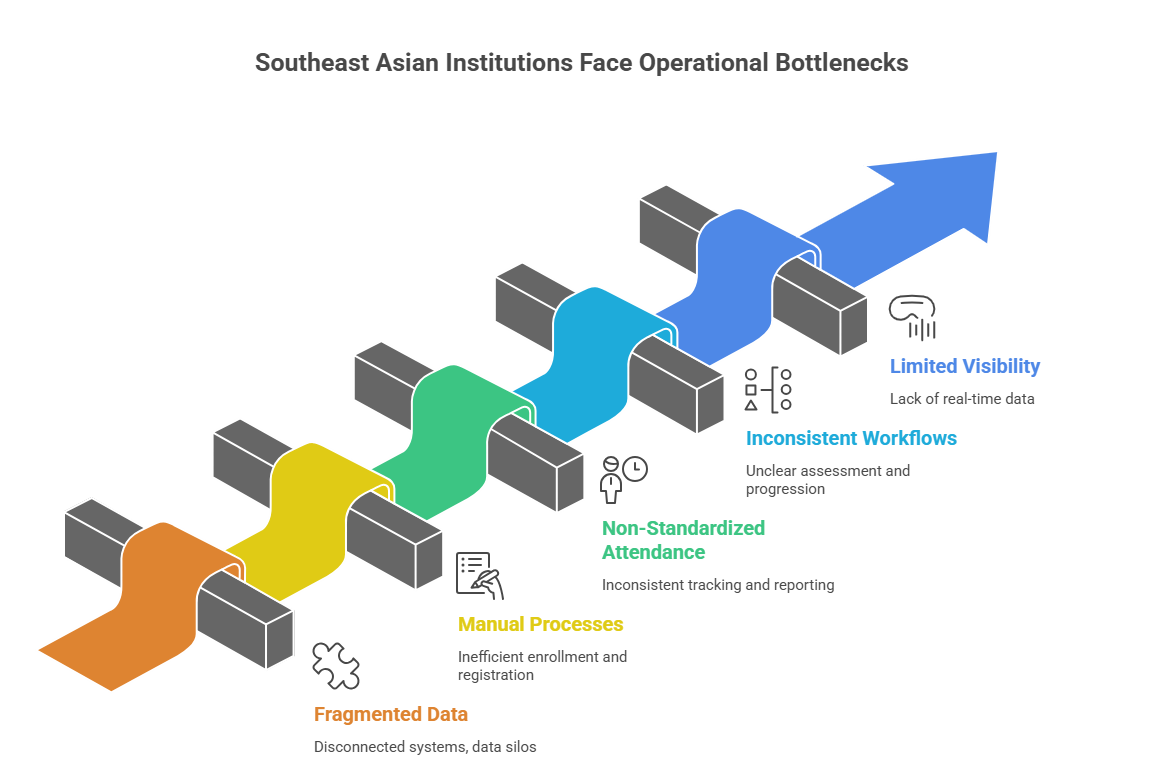
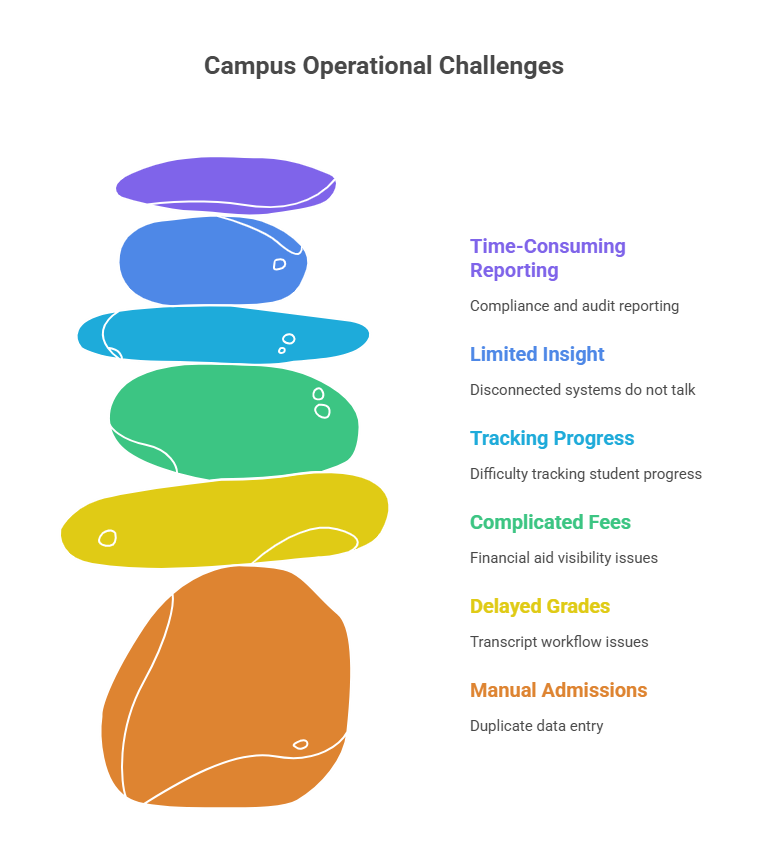
Universities today manage far more than classrooms and curricula. They handle thousands of applications, complex program structures, regulatory requirements, and growing expectations of students and accrediting bodies. Yet, many institutions still rely on legacy systems or standalone tools that were never designed to work together.

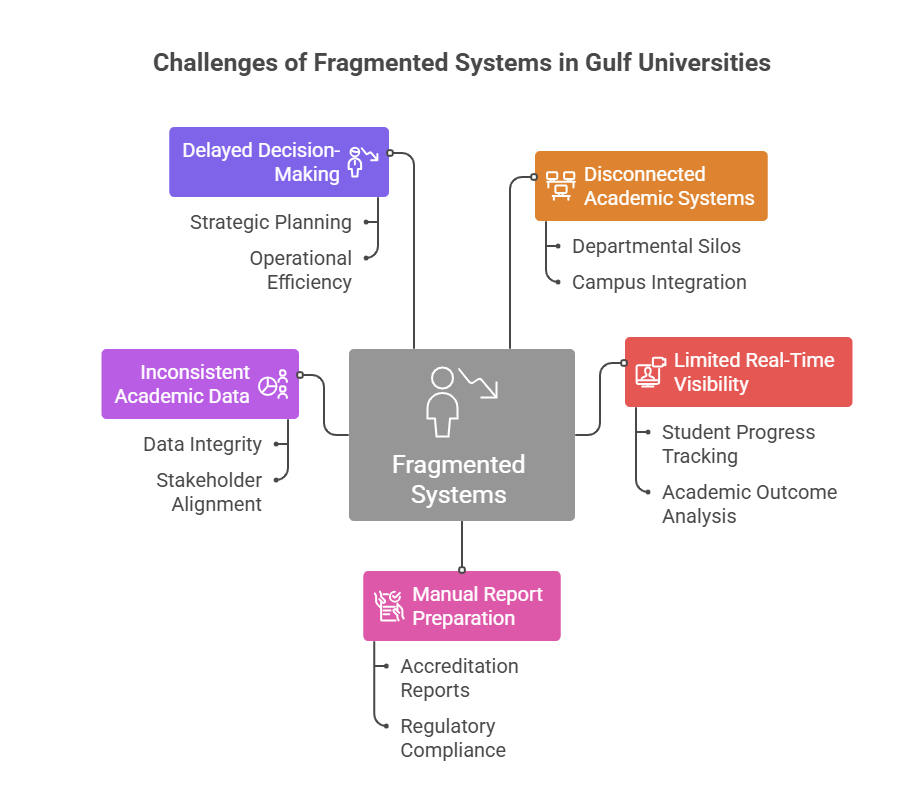
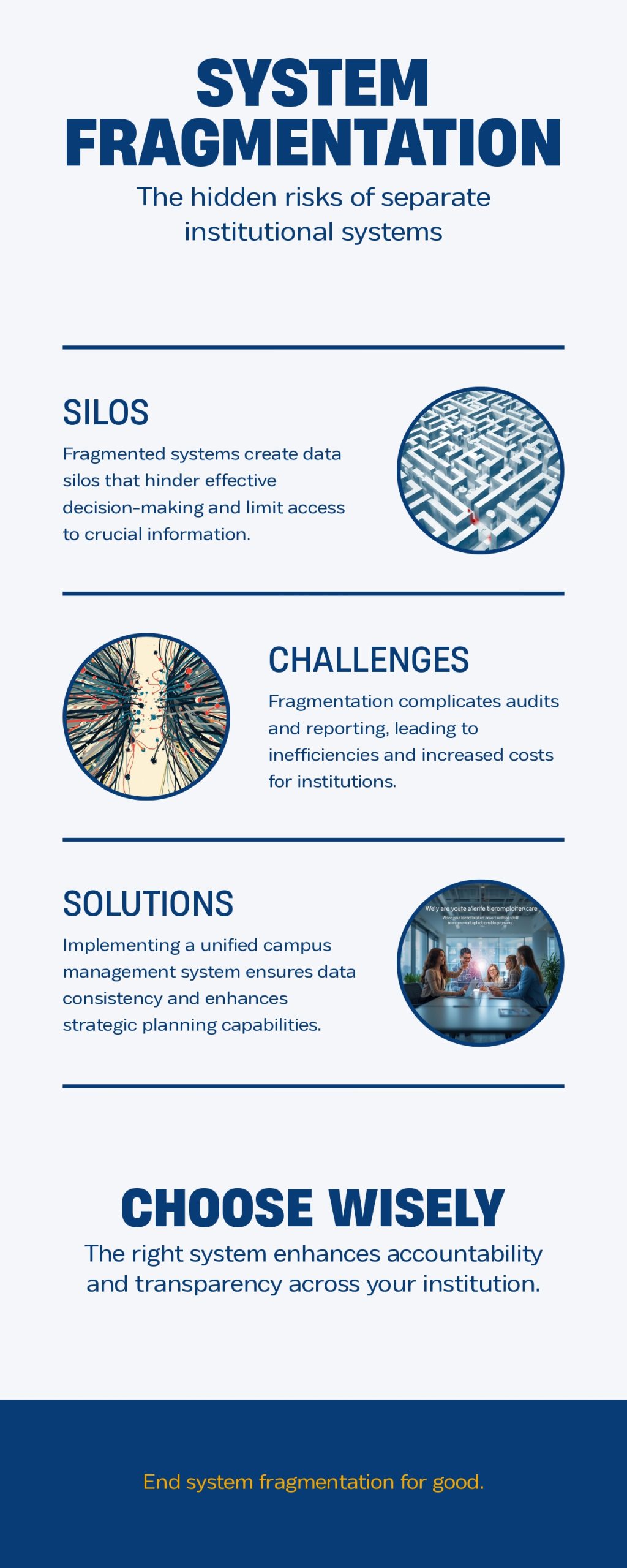
As a result, data remains scattered across departments. Reporting takes longer than it should. Decision-makers lack real-time visibility into student performance, retention trends, or operational bottlenecks. Over time, this fragmentation limits scalability and slows institutional progress.

Adopting student information system software helps address these challenges by creating a single, reliable source of academic and student data, reducing dependency on manual intervention and disconnected workflows.

How Technology Enables Efficiency and Growth

At its core, digital excellence in higher education is about alignment. A well-designed university management system aligns people, processes, and data across the institution. It ensures that admissions teams, academic departments, administrators, and leadership are all working with the same information and shared objectives.

With automation handling routine processes, universities can redirect their focus towards improving academic quality, student engagement, and long-term planning. This shift not only improves operational efficiency but also strengthens the foundation for sustainable growth.

Key Capabilities That Drive Impact

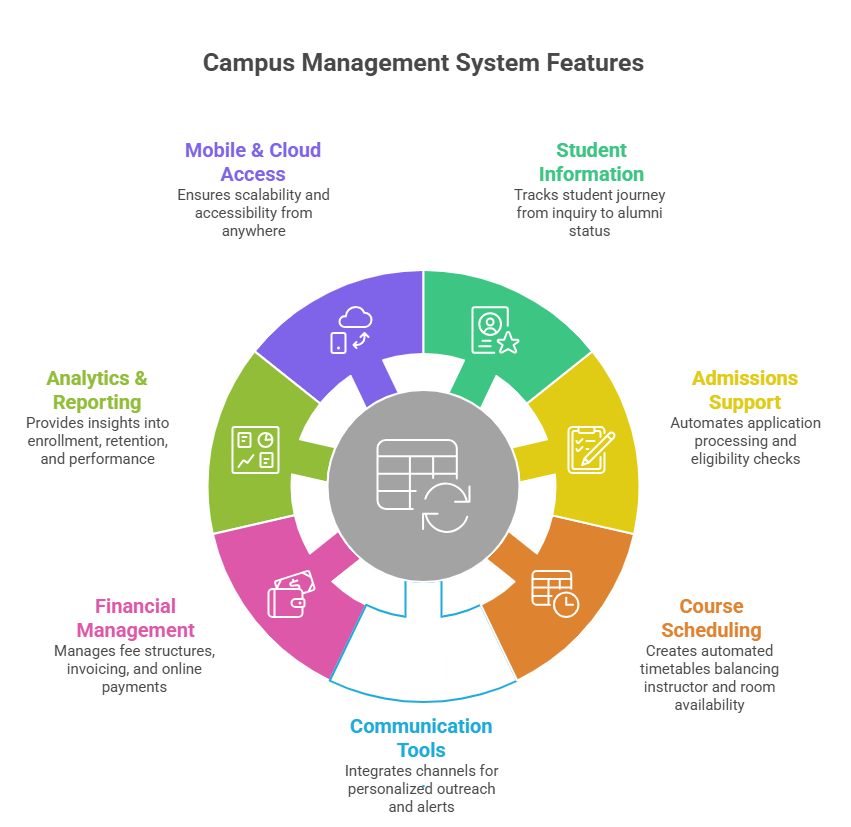
university management system


When implemented effectively, student information system software delivers measurable value across the institution:

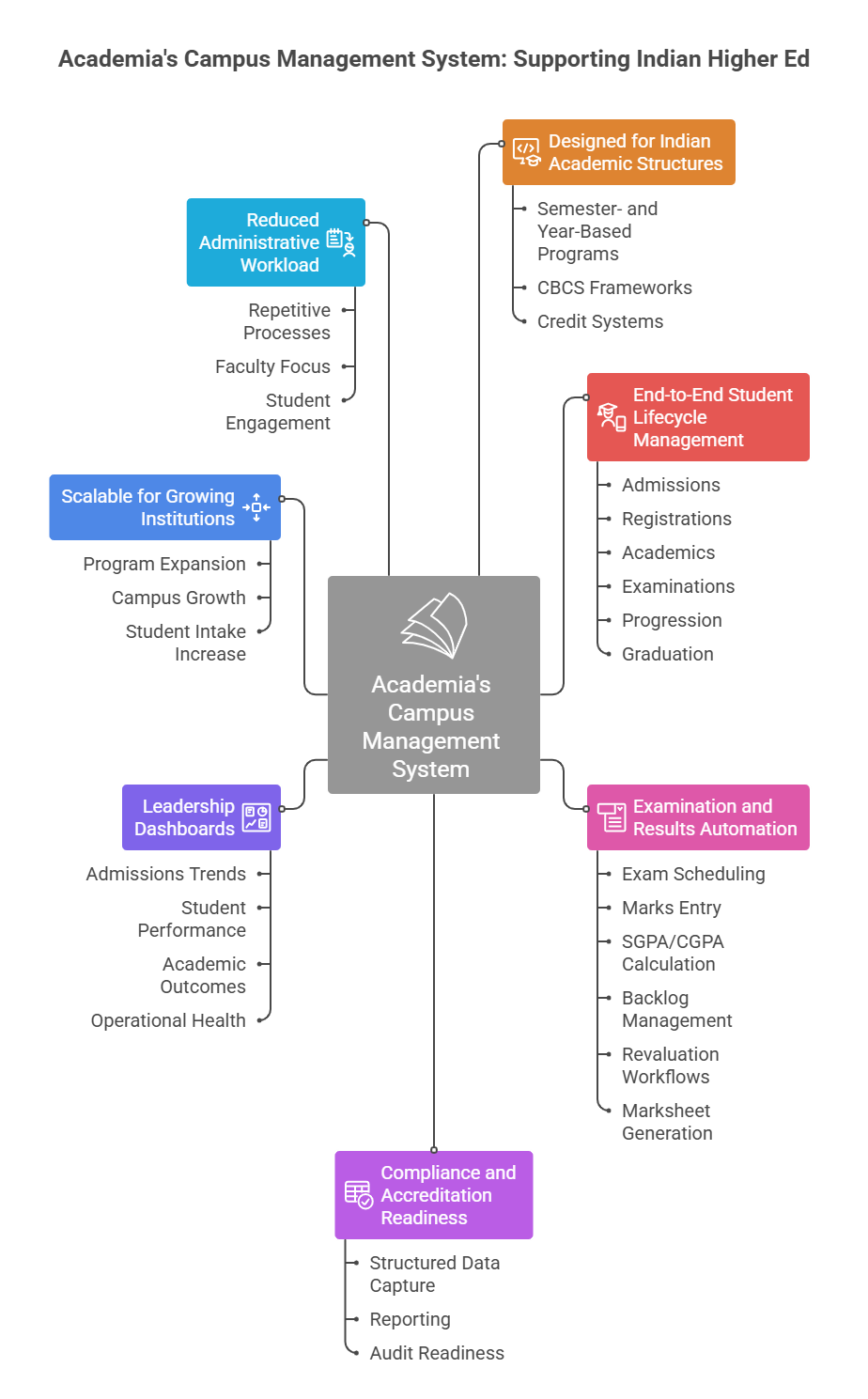
  • Centralized student and academic data that eliminates silos and ensures consistency across departments
  • Automated admissions and enrollment workflows that reduce processing time and improve applicant experience
  • Real-time visibility into student performance and progression, enabling timely academic interventions
  • Streamlined assessments, examinations, and reporting to support accuracy and compliance
  • Scalable system architecture that supports institutional expansion without operational disruption

Together, these capabilities help universities operate with greater confidence and control.

The Role of a University Management System in Decision-Making

Beyond daily operations, a modern AI-driven ERP system plays a critical role in institutional decision-making. Leadership teams gain access to insightful dashboards and AI-driven reports that reveal trends, risks, and opportunities across programs and campuses.

Instead of relying on delayed or incomplete data, universities can make informed decisions about resource allocation, curriculum planning, and student support strategies. Over time, this data-driven approach strengthens accountability, improves outcomes, and enhances institutional reputation.

As institutions grow more complex, the ability to make timely, evidence-based decisions becomes a competitive advantage rather than a luxury.

Introducing Academia: A Globally Recognized SIS Platform

As higher education institutions evolve, choosing the right technology partner becomes as important as choosing the right strategy. Academia is a student information system software designed specifically to support the scale, complexity, and regulatory demands of modern universities.

Built with both human intelligence and artificial intelligence, Academia enables institutions to move beyond transactional operations toward data-driven decision-making. From admissions and academics to assessments, compliance, and student progress tracking, the platform delivers connected visibility without forcing institutions to compromise on flexibility or local requirements.

Modernizing University Admissions: Why Legacy Enrollment Processes Are Quietly Costing You Students?

Think of your admissions process like the front gate of your campus.

If that gate is slow to open, confusing to navigate, or poorly managed, students won’t wait around to explore what’s inside. They’ll simply walk toward another institution—one that feels faster, clearer, and more prepared for the future.

This is the reality universities face today. As competition intensifies and student expectations rise, institutions relying on outdated workflows are quietly losing applicants. A modern university admission management system is no longer a backend upgrade—it is a frontline strategy for enrollment success.

Admissions Has Become a Strategic Leadership Concern

Admissions was once viewed as an administrative necessity. Today, it directly influences enrollment predictability, institutional reputation, and long-term growth.

University leaders now face mounting pressure to manage increasing application volumes while maintaining accuracy, transparency, and speed. Without a connected student admissions software, even experienced teams struggle to keep pace. Manual follow-ups, scattered data, and delayed decisions introduce friction at the very moment students are deciding where they belong.

As a result, admissions is no longer just about processing applications—it’s about delivering confidence.

The Silent Risk: Losing Students You Never Knew You Had

Here’s the truth.

Students today behave like informed consumers. They compare timelines, communication quality, and digital experience across institutions.

When responses are slow or unclear, doubt creeps in. And doubt leads to drop-offs.

Most institutions don’t lose students because of poor academics or infrastructure. They lose them between interest and enrollment—inside the admissions funnel.

Without a modern university admission management system, universities often lack visibility into:

  • Where applicants drop off

  • Which programs attract serious intent

  • How long does it take to convert an application into enrollment

This invisibility creates a leadership blind spot. Decisions are made reactively, not strategically. And over time, enrollment unpredictability becomes the norm rather than the exception.

Also read our insightful blog, which reveals the secret of “How SIS Reduces Enrollment Friction.”

https://www.academiaerp.com/blog/simplifying-admissions-how-sis-reduces-enrollment-friction/

Why Applicant Experience Shapes Enrollment Decisions

Admissions is often the first sustained interaction a student has with your institution. That experience sets expectations for everything that follows.

A well-designed applicant university portal creates clarity and reassurance. Applicants know exactly where they stand, what’s required, and what comes next. In contrast, fragmented communication leaves students uncertain—and uncertainty rarely converts into commitment.

When paired with intelligent student admissions software, institutions can reduce friction, improve completion rates, and build trust early in the student journey.

Signs Your Admissions Process Is Falling Behind

Many institutions sense something is wrong long before numbers confirm it. Common warning signs include:

  • Frequent applicant follow-ups for status updates

  • Limited insight into application drop-offs

  • Disconnected systems for data, communication, and payments

  • Difficulty scaling admissions across multiple intakes

These challenges often point back to the absence of a modern university admission management system that can support growth without chaos.

How Academia Redefines the Admissions Experience:

Modernizing admissions with Academia isn’t about adding layers of complexity. It’s about eliminating uncertainty, delays, and manual dependencies across the admissions journey.

A connected admissions ecosystem powered by Academia enables:

  • Configurable admission set-up aligned to institutional intakes, programs, eligibility rules, and workflows

  • Online enquiry capture that ensures every prospective student enters a structured, trackable pipeline

  • Centralized online applicant portal for applications, document uploads, status tracking, and timely communication

  • Automated offer letter generation to reduce turnaround time and maintain accuracy and consistency

  • Rich reporting and analytics that provide real-time visibility into application trends, conversions, and enrollment outcomes

Together, these capabilities transform admissions into a predictable, data-driven process—designed to scale with institutional growth while delivering a seamless applicant experience.

Introducing Agentic AI: Self-Driven Enrollment, Without the Friction

Agentic AI
 

Admissions today demand speed, clarity, and accessibility. Academia’s Agentic AI transforms enrollment into a self-driven, conversational experience—allowing students to move forward instantly while keeping institutions fully informed in real time.

  • Enables students to explore programs, check eligibility, and progress enrollment through a conversational AI bot
  • Allows applicants to complete key enrollment actions independently, without office-hour constraints or manual follow-ups
  • Provides real-time guidance that mirrors a one-to-one admissions interaction
  • Instantly updates all actions in both admin and student portals, ensuring complete visibility
  • Keeps students, admissions teams, and leadership continuously aligned and informed
  • Eliminates common enrollment hurdles by reducing delays, confusion, and process friction

Leadership Visibility Changes Everything

For Owners, Trustees, and VPs, admissions data is no longer just operational—it’s strategic.

A reliable university admissions management system like Academia provides real-time insight into admission patterns, conversion ratios, and operational performances. 

This visibility enables leaders to make informed decisions about program expansion, capacity planning, and long-term institutional growth.

Meanwhile, a structured applicant university portal ensures that the applicant experience aligns with the institution’s brand promise—professional, responsive, and future-ready.

A Subtle Shift Toward Smarter Admissions

Forward-looking institutions are already rethinking how admissions supports growth, experience, and leadership visibility. Platforms like Academia are helping universities bring admissions and applicant engagement into a single, intelligent ecosystem—designed for scale, clarity, and long-term success.

If modernizing admissions is on your strategic roadmap, now is the right time to explore what’s possible.

Schedule your free demo with Academia’s experts today and see how a future-ready admissions experience can reshape enrollment outcomes.

2026 Is Closer Than You Think: Why Universities That Delay Digital Transformation Will Pay the Price

Imagine running an airport with paper boarding passes in 2026. Flights might still take off, but delays would pile up, security would struggle, and passengers would lose trust fast. Higher education is heading toward a similar moment. Institutions that delay their digital journey may continue operating—but at a growing cost that becomes impossible to ignore.

As student expectations rise, regulations tighten, and competition intensifies, universities are reaching a tipping point. The difference between institutions that thrive in 2026 and those that struggle will come down to one decision: 

whether they invested early in the right university management system software or waited too long.

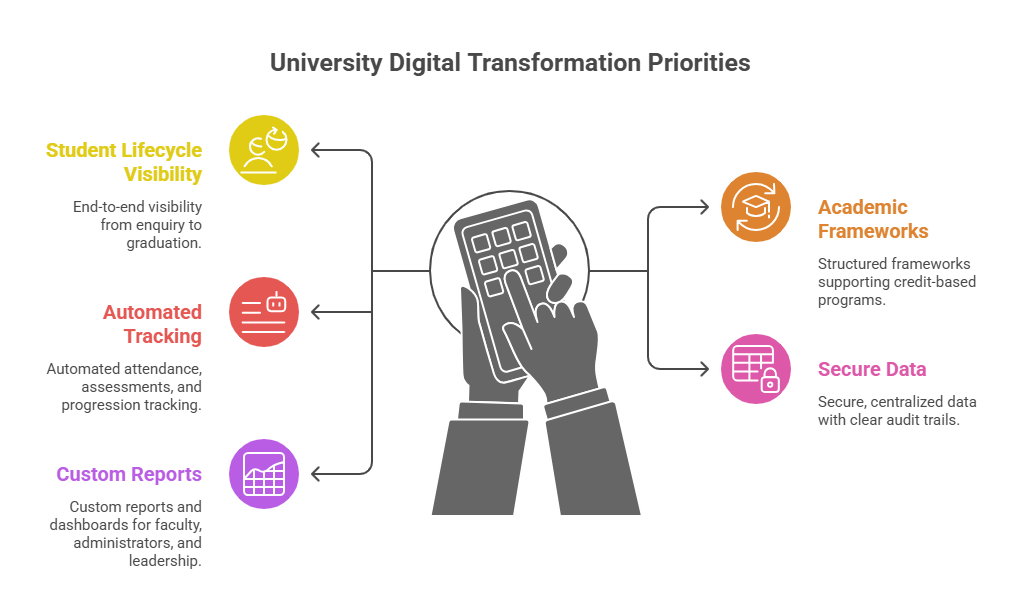
 university management system software
The Hidden Cost of “Still Managing Somehow”

Many universities feel they are managing fine today. Admissions are processed, exams are conducted, and reports are submitted—eventually. However, behind the scenes, cracks are widening.

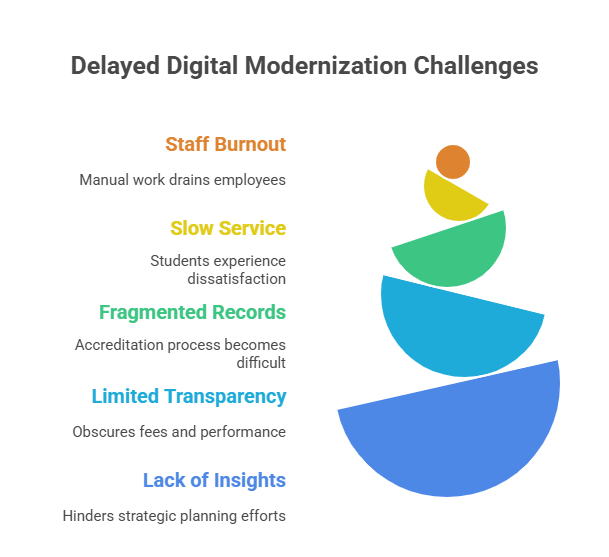
Manual processes, disconnected tools, and spreadsheet-heavy workflows silently drain time, accuracy, and morale. Departments operate in silos. Leadership waits weeks for consolidated reports. Faculty spend hours on repetitive administrative work instead of academic engagement.

What feels manageable today becomes unscalable tomorrow. By 2026, institutions still relying on fragmented systems risk falling behind peers who operate with clarity, speed, and confidence—powered by modern university management system software.

Student Expectations Are Moving Faster Than Institutions

Today’s students compare their university experience not with other campuses, but with digital-first platforms they use every day. They expect instant responses, transparent processes, and seamless digital interactions.

When systems cannot answer basic queries, delay enrollment, or require students to navigate multiple portals, frustration builds quickly. Over time, this affects enrollment decisions, retention, and institutional reputation.

A modern University ERP is no longer just an operational tool—it directly influences how students perceive institutional quality. Universities that fail to modernize risk losing trust before students even step onto campus.

Compliance and Accreditation: No Longer a Last-Minute Exercise

Regulatory frameworks and accreditation bodies are becoming more data-driven and evidence-focused. Manual reporting and last-minute data compilation increase risk with every audit cycle.

Without centralized, structured academic data, institutions struggle to demonstrate transparency, consistency, and accountability. What once required effort now requires system-level readiness.

Universities entering 2026 without a robust University ERP will find compliance increasingly stressful, reactive, and resource-intensive—while digitally mature institutions treat it as a natural outcome of daily operations.

The AI Gap Will Keep Leaders a Step Ahead

Artificial intelligence is rapidly becoming embedded in higher education operations—from enrollment to analytics to student support. Institutions that lack AI-enabled systems will not just move more slowly; they will make poorer decisions with delayed or incomplete information.

The real risk is not adopting AI—it’s being surrounded by competitors who already have. Universities without an intelligent university management system software will struggle to match the efficiency, responsiveness, and insight of those that do.

By 2026, the gap will no longer be subtle. It will be visible to students, faculty, and governing bodies alike.

2026 Is Not a Fresh Start—It’s a Deadline

Digital transformation is not something that can be rushed in a few months. System readiness, data maturity, user adoption, and process alignment take time.

Institutions that delay action until 2026 will already be behind. Those that start now will enter the year with stable operations, clearer insights, and the ability to adapt quickly to change—supported by a future-ready University ERP.

The real fear should not be change. It should be standing still while the ecosystem moves forward.

What Future-Ready Universities Are Doing Differently

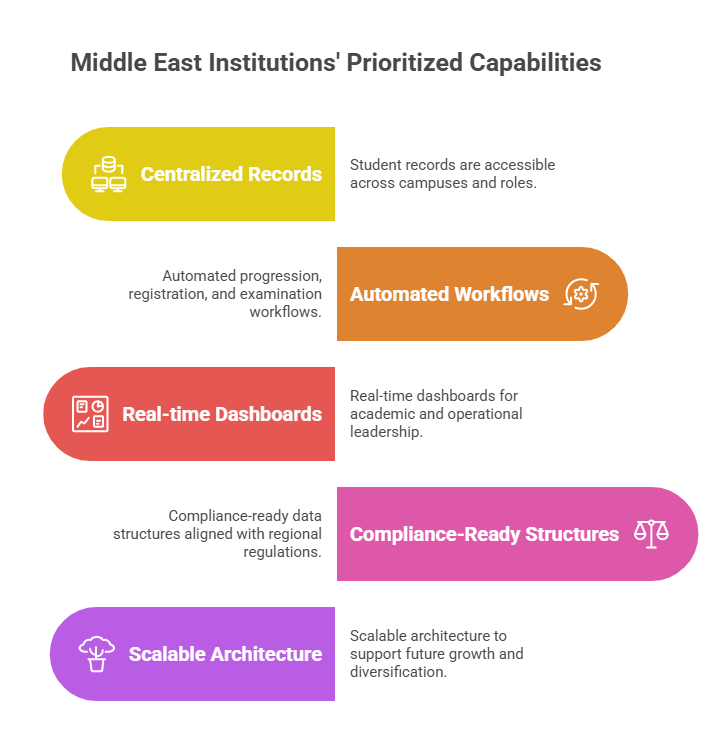
Forward-looking institutions are consolidating operations onto a single platform. They are eliminating data silos, automating routine workflows, and enabling leadership with real-time visibility.

They are choosing systems that adapt to academic complexity instead of forcing compromise. They are investing in platforms that scale across campuses, programs, and regions without increasing operational strain.

And increasingly, they are choosing university management system software that embeds intelligence, usability, and configurability at its core.

Where Academia Fits In—Without the Noise

Among modern platforms, Academia stands out quietly. Designed as a comprehensive University ERP, it supports the complete student lifecycle, complex academic structures, multi-campus operations, and AI-enabled workflows—without disrupting ongoing operations.

Trusted by 400+ institutions and recognized by leading industry authorities, Academia is built for universities that understand what’s at stake and refuse to fall behind.

Because by 2026, the question won’t be whether digital transformation was necessary.
It will be who started early enough to win.

Back to top