

Amit Kulkarni
Estd. Reading Time : 4 Min.
30th Jan, 2026
Share On:
In today’s fast-evolving educational landscape, institutions are under pressure to deliver personalised student experiences, streamline operations, and make data-driven decisions, all while managing increasingly complex administrative workflows. A campus management system has become a strategic necessity, not just a convenience, for colleges, universities, and multi-campus education groups.
This guide dives into what campus management systems are, why they matter, what features they should have, how they differ from traditional software, and how a campus management system/education ERP can unlock transformative value for your institution.
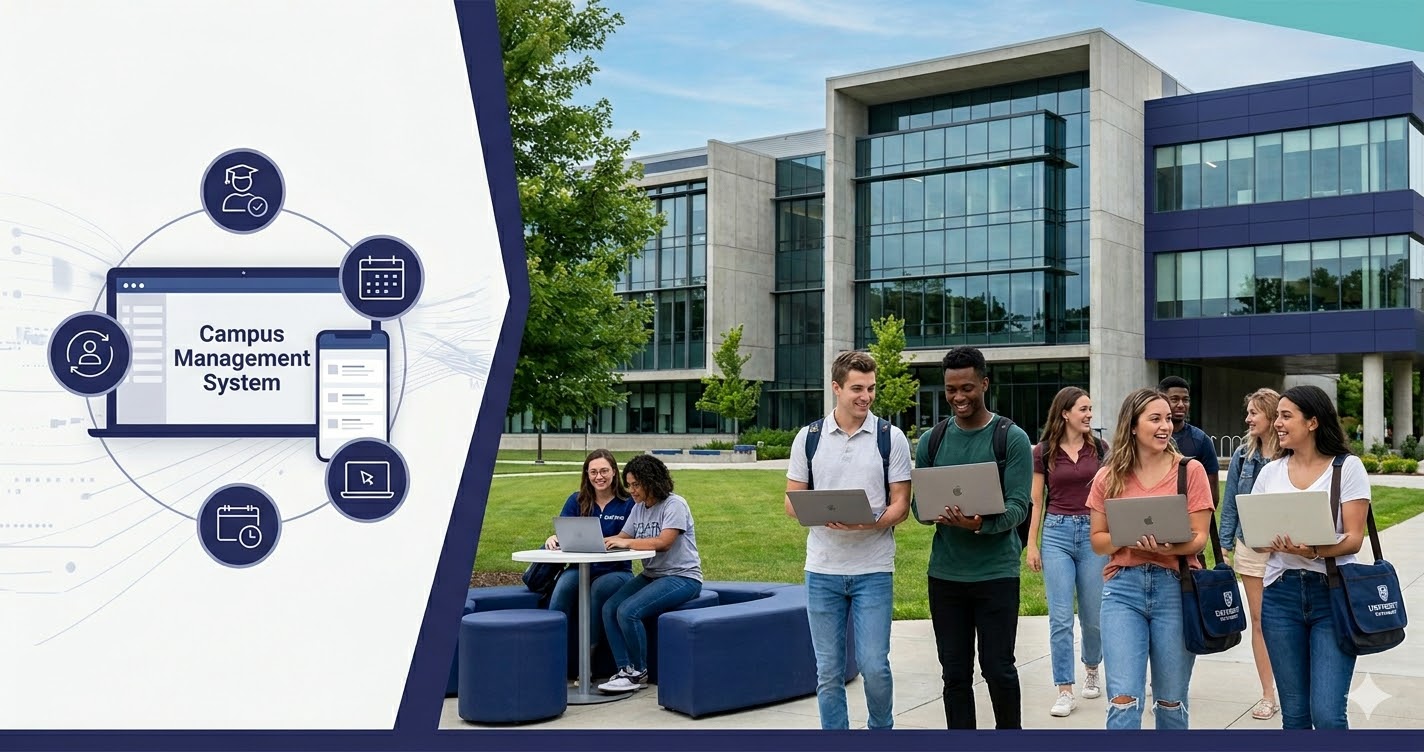
At its core, a campus management system is an integrated digital platform designed to unify key academic, administrative, and student-centric functions into a single ecosystem. It eliminates data silos between departments and automates processes that were once manual, repetitive, and error-prone, from admissions to analytics.
Unlike legacy systems that operated in isolation, modern campus management systems function as the digital backbone of an institution, empowering staff to focus on what matters most: enhancing the student journey and strategic outcomes.
Traditional campus operations often rely on spreadsheets, emails, separate databases, and disconnected tools. This creates fragmented workflows, data inconsistencies, delayed communication, and inefficiencies that impact both staff and students.
By adopting a unified campus management system, institutions experience:
All departments access a centralised data repository, ensuring a single source of truth for student records, finances, course schedules, and performance indicators.
Admissions, scheduling, fee processing, attendance, and reporting are automated, cutting down manual effort and reducing errors.
Students benefit from self-service portals, mobile access, and faster response times for academic and administrative requests.
Administrators and faculty can redirect time from paperwork to student support, academic planning, and innovation.
Powerful analytics and dashboards enable data-driven decisions on enrollment trends, retention forecasts, and resource planning.
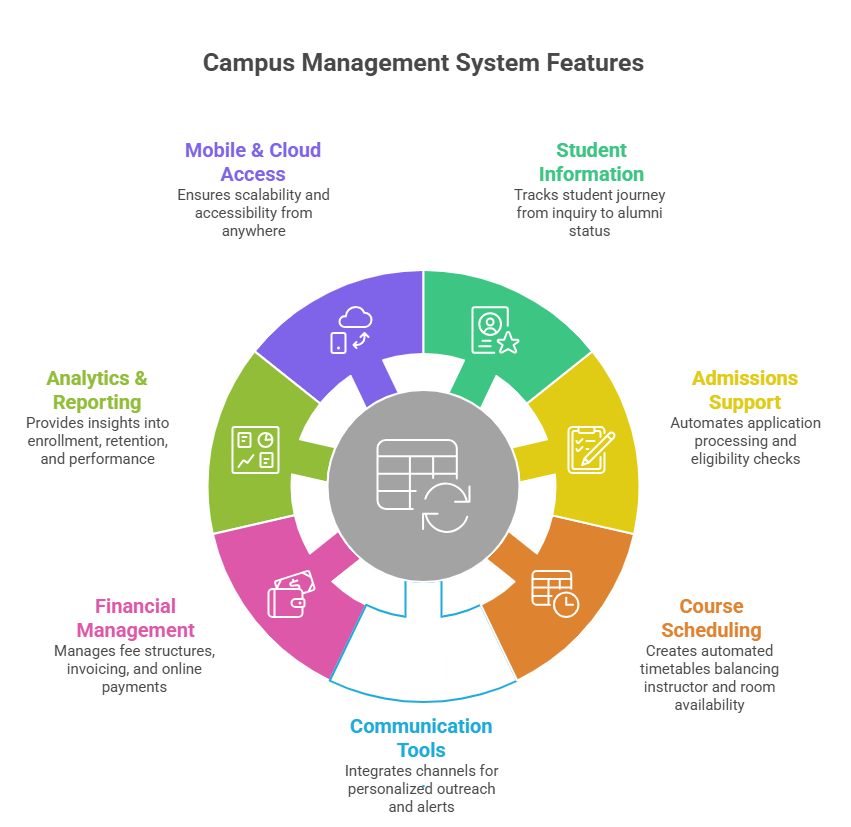
An education erp should be more than a collection of modules; it should holistically address the unique challenges of educational institutions. Here are the key components every system should include:
Track the entire student journey, from inquiry and admissions to enrollment, academic performance, certificates, and alumni status, all in one place.
Automate application processing, document verification, eligibility checks, and intake planning to enhance recruiter and applicant experience.
Enable automated timetable creation that balances instructor availability, room capacity, and course demand, eliminating manual clashes.
Integrated channels (email, SMS, in-portal notifications) support personalised outreach for deadlines, alerts, and student advisories.
Manage fee structures, invoicing, online payments, scholarships, and reconciliation workflows transparently and efficiently.
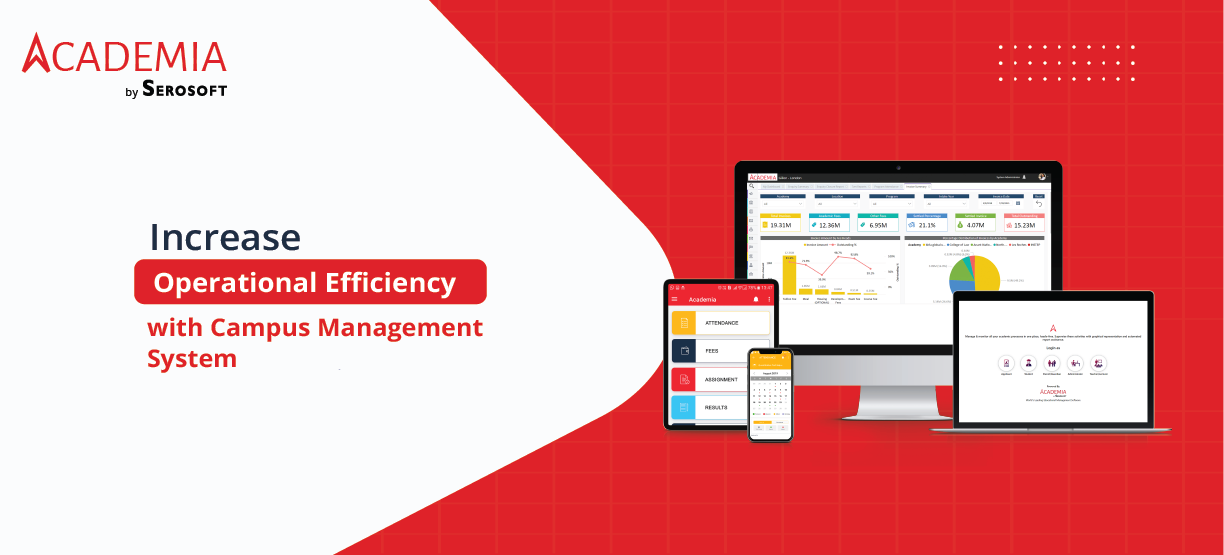
Intuitive dashboards deliver insights into enrollment patterns, retention risks, financial performance, and operational KPIs, enabling leadership to act with clarity.
Cloud-based deployment ensures access from anywhere, scalability for growth, and reduced IT maintenance overhead.
Selecting the right system is not just about features; it’s about institutional fit. Here’s a practical checklist:
Identify bottlenecks, departmental workflows, and strategic goals.
Ensure the system works with existing tools like LMS, finance software, and alumni platforms.
The platform should be intuitive for admins, faculty, and students.
Make sure the system complies with data privacy standards relevant to your region.
Choose a scalable, cloud-ready solution that can support multi-campus, multi-entity operations and future demand.
A successful implementation goes beyond installation; it transforms outcomes. Track success by monitoring:
These metrics show not just value generation but institutional transformation.
Conclusion
In an era where institutional agility, rising student expectations, and operational efficiency are non-negotiable, choosing the right campus management system/education erp becomes a mission-critical decision.
This is where Academia stands out. Designed specifically for modern higher education institutions, Academia unifies academic operations, student data, and decision-making into one intelligent platform. Institutions using Academia don’t just manage campuses; they enable strategic growth, elevate student experiences, and unlock real-time, data-driven insights across every academic and administrative function.
Book a demo with Academia today and see how a future-ready campus management system can transform the way your institution operates.

Experience Academia – Your partner in transforming campus operations, a trusted all-in-one ERP/SIS solution.
Get the latest insights, trends, and updates delivered straight to your inbox!