Type your keyword below

5 Significant Impact Of Artificial Intelligence In Education That You Should Know

It’s the 21st century, the century of continuous change and advancement. Everyone is equipped with gadgets; it can be mobile, VR Box, Fitness Band, etc. Moreover, every day, you find new updates or even an advanced version of gadgets. Technology acceptance has become very natural in the last few decades.

Amidst all these technological revolutions, Artificial Intelligence is the most admired technology in every sector. Now, it is not limited to Sci-Fi movies or novels. The reason why AI is the most attractive tech is its human-like experience. In 2016 social humanoid robot, Sophia was launched, it got trendy among tech giants and all around the world due to its human-like appearance and behavior compared to previous robotic variants.

Artificial Intelligence has entered in every sector i.e. finance, retail, law, marketing & advertising, and the health sector. It is paving its wave in the education sector also. The moment the education sector get fully equipped with AI, it will change the face of education entirely.

Let’s check out how Artificial Intelligence is going to impact the education sector.

Student Assistance

Artificial Intelligence can understand the weakness and strength of every single student. It can analyze the pace of learning and latent skills of students that will help teachers, parents to guide students in productive learning. Next generation students will have the AI companion that will know everything about them from personal to professional.

Teacher Assistance

As AI can understand students and their capability, it is going to help teachers to work accordingly. AI can also help the teachers to guide them on the rate of lecture delivering, the right time for assessments, what type of assessment is required for a particular topic, which topic is beneficial for students which are redundant, etc. Teachers can use AI for better understanding of topics and its level of difficulties towards students. That will increase the quality of education and level of students. With the use of Artificial Intelligence, educators can outsource their targets quickly and achieve results set for each and individual performance of a student.

Personalized Learning
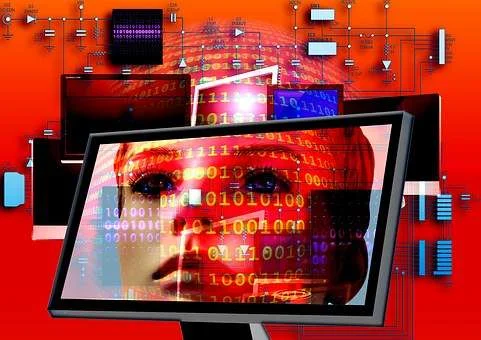
It is one of the best benefits of AI in the education sector. We all know there are various types of students, and every teacher has a different way of teaching methods. It is very difficult for teachers and students to meet the exact expectations.

There are students with different needs and some with extraordinary capabilities. In this era of ample information, it is imperative that every student gets the same access to education and learning. AI can adapt to the individual learning related requirements of students and teachers. That will reduce the meaningless and unproductive work of teachers and will help the institution to increase the efficiency of education.

Automation of Grading

At present, artificial intelligence is already able to automate grading system in multiple choice questions (MCQ) in education institutions. Can you believe how much time teachers will be able to save from the automation of the grading process?
With the continuous advancement in the AI algorithm, sooner it’ll be able to automate standard and dynamic grading system according to the needs of institutions.

Global access to education

Artificial intelligence is one advanced tool that can bring the global classroom for students in every corner of the world. AI can fill the gap of communication between teachers and students. Students with different language or with visual or hearing impairments can understand teachers with the help of real-time subtitles. Presentation Translator is a is free-plugin for PowerPoint that does so.

AI will also help students to connect on the global level for brainstorming. It will increase the spreadability of knowledge among students.

Many other educational technologies are transforming the education sector and easing the life of students, teachers, and institutions.

Here they are https://www.linkedin.com/pulse/5-edtech-trends-dominate-2020-mandira-shah/

To get a deep dive into education automation, click here to book a free demo.
Technology in schools: What are the opportunities and challenges?

Take a look around and see how technology has changed the lives of today. The same is true of technology in schools: it has certainly opened many possibilities. The adoption of technology in schools has a different image in different countries. Some developed countries, such as the United States, are looking for more technologies to integrate into their schools, but countries in the less developed regions of the world are still having difficulty integrating these technologies into their schools. While technology provides many opportunities for educational institutions at all stages, there are gaps that prevent widespread adoption of technology in schools around the world.

There are many opportunities for technology in schools:

When we talk about ways to integrate technology into schools, we can see how technology is already changing the way teachers teach in schools, a departure from text-based learning to something that includes and engages the school’s students. The possibilities are manifold. We speak of four such possibilities that can promote education.

  • A global learning platform is undoubtedly a blessing for the introduction of technology in schools. Students can choose to study a foreign language through video conference from residents of the affected country. Many Websites have created this type of video conferencing learning session, so students can benefit from the training benefits, fewer travel expenses.
  • An undocumented classroom is on its way. Cloud-based apps and tools like Google Drive, Gmail, and Google Docs provide a smarter way to empower students and teachers to learn on a daily basis. A truly affordable option to save more time than traditional teaching methods.
  • A great opportunity for technology in schools lies in the form of virtual reality (link to our blog) in the classroom. Virtual reality can transform lessons into a workflow where students can experience real-world applications in a virtual world.
  • E-books have great potential to change the image of education in the coming days. Many schools in different parts of the world have already discovered the enormous potential of e-books, but some schools do not yet know it.

There are also challenges:

The introduction of technology in schools is certainly not an easy path to success. It has a share of bad spots that need to be found.

  • Leaving the comfort zone and adopting technology in schools may be one of the biggest challenges. In most cases, teachers and school authorities are reluctant to experiment with new technologies in the classroom, believing that these experiments go beyond their job description
  • Technology in schools has another setback: Most schools are reluctant to set up correspondence courses, unlike universities that have already integrated the online courses
  • The cost factor remains a major challenge for the introduction of technology in schools. Most schools lack the resources to support the use of technology in schools. The purchase and installation of the technology are associated with the acquisition costs. In addition, the costs of maintenance, service, and modernization are associated with running costs, which are sometimes financially unsustainable for most kindergartens through to 12th-grade schools

There are challenges to master; However, the most important test is facing these challenges, overcoming and accepting technologies in schools, and revolutionizing education by offering students better opportunities.

Artificial Intelligence in Education

Advances in the development of artificial intelligence are spreading at incredible speeds around the world, creating incredible hype that raises our expectations. In this article, we have compiled some ways to use artificial intelligence in education.

Automated classification

Automated Qualification is an AI-based specialized computer program that simulates a teacher’s behavior to assign grades to essays written in a pedagogical setting. They can evaluate the students’ knowledge, analyze their answers, give feedback and create individual training plans.

The intermediate interval of training

Overhaul of knowledge if you forget that it is an effective pedagogical and technological solution. Using artificial intelligence, one can know when you probably forgot something and it is recommended that you review it. It only takes a few revisions to make sure that the information is now stored in your memory for many years.

Feedback loops for teachers

The feedback, the assessment of the teachers by the students, has a history that goes back a century. Despite the shift from paper to online surveys, little or no progress has been made in the field of commenting. Assessment of lessons by students is often the most valuable source of information.

With modern technologies such as AI-based discussion robots, machine learning, and natural language processing, there are many interesting ways to improve the quality of the comments.

How Academia ERP Enables Artificial Intelligence in Education

A chatbot can gather opinions through a dialogue interface, like a real interviewer, but with some work that a person requires. A conversation can be adapted to the answers and personality of the student. A chatbot can even find the reasons for this or that opinion. It can also filter out personal insults and obscene expressions that are sometimes present in teachers’ qualifications.

Virtual moderators

Students were intrigued by new assistant teacher Mr. Academia, who responded quickly and accurately to student requests. The students did not know, however, that Mr. Academia true identity was actually a computer equipped with an AI system. Such virtual moderators can be very useful in education.

Campus Chat

The online discussion page can answer questions on any questions a student needs to know about life on campus. How to find the next conference room, how to apply for the next semester, how to do homework, find a parking space, or address a teacher: these are the questions that AI ChatBots’ online discussion campus can answer

Personalized learning

Personalized learning refers to a variety of educational programs that optimize the pace of learning and the educational approach for each student’s needs. The experience is tailored to the learning preferences and specific interests of the different students. Artificial intelligence can adapt to the pace of individual learning and can offer ever more complex tasks to speed up learning. As a result, slow, fast students can continue learning at their own pace.

Adaptive learning

Adaptive learning is perhaps one of the most promising applications of artificial intelligence in education. It is assumed that artificial intelligence in schools can track each student’s progress and adjust the course, or inform the teacher about material that a student has difficulty understanding. In this sense, some intelligent tutoring systems should also be mentioned.

Monitoring

Distance learning, the driving force of modern high-tech training, involves conducting remote examinations. How can we do this to make sure a student does not cheat? AI-based protection systems come to the rescue. The supervision or supervision test is a mechanism to ensure the authenticity of the person to be carried out and to prevent that trap from being present by a supervisor during the test.

Capture and personalization of the data

Using the geolocation data and our previous searches, AI can now offer us the ideal coffee nearby or, for example, create a route to the store closest to your favorite comics. The same technology can be applied if we study a grammatical rule based solely on examples of the sphere that interests us with all educational content appropriate for us.

Back to top