Managing a modern higher education institution in the United States is a lot like running a city within a city. Thousands of students, faculty, and administrators rely on systems that must work seamlessly, every day, without fail. Academic records, enrollment data, compliance reports, and student services all intersect, often under intense regulatory and accreditation scrutiny.
Yet behind the scenes, many institutions still rely on fragmented platforms and legacy processes. On the surface, operations may seem stable, much like the calm fin of a shark cutting through the water.
But beneath that visible motion lies constant strain: disconnected data, manual workarounds, and growing risk. Over time, these hidden inefficiencies compound until leadership is forced to react to reporting delays, compliance gaps, or sudden operational breakdowns.
This is precisely why a campus management system has moved from being a back-office tool to a strategic imperative for U.S. institutions.
Institutions across the U.S. operate within a uniquely complex environment. Federal and state regulations, accreditation requirements, FERPA compliance, and increasing expectations around data security all place significant demands on institutional operations.
At the same time, students expect consumer-grade digital experiences, from admissions and enrollment to advising and graduation. When systems fail to communicate with one another, administrative teams spend more time reconciling data than supporting academic success.
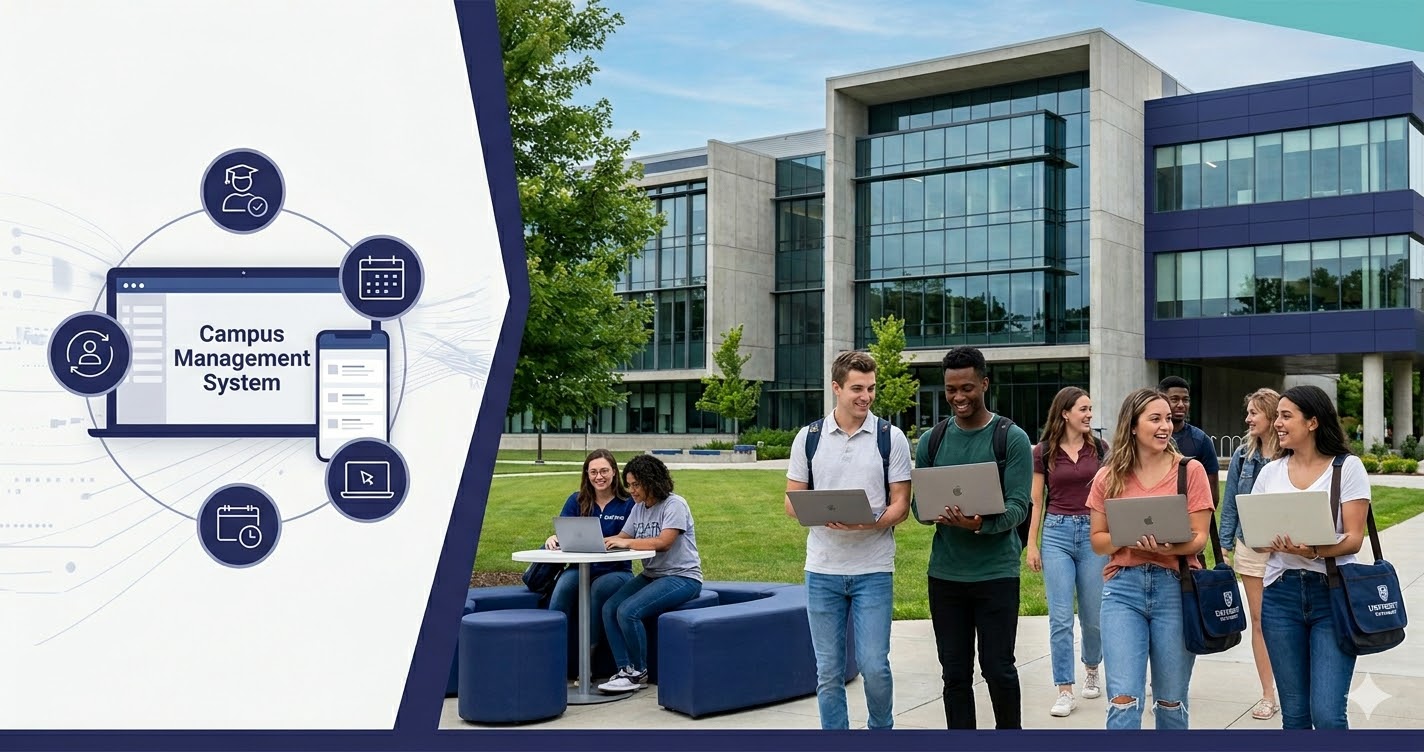
A unified campus management system addresses this challenge by bringing academic and administrative workflows into a single, structured framework, reducing friction across departments.
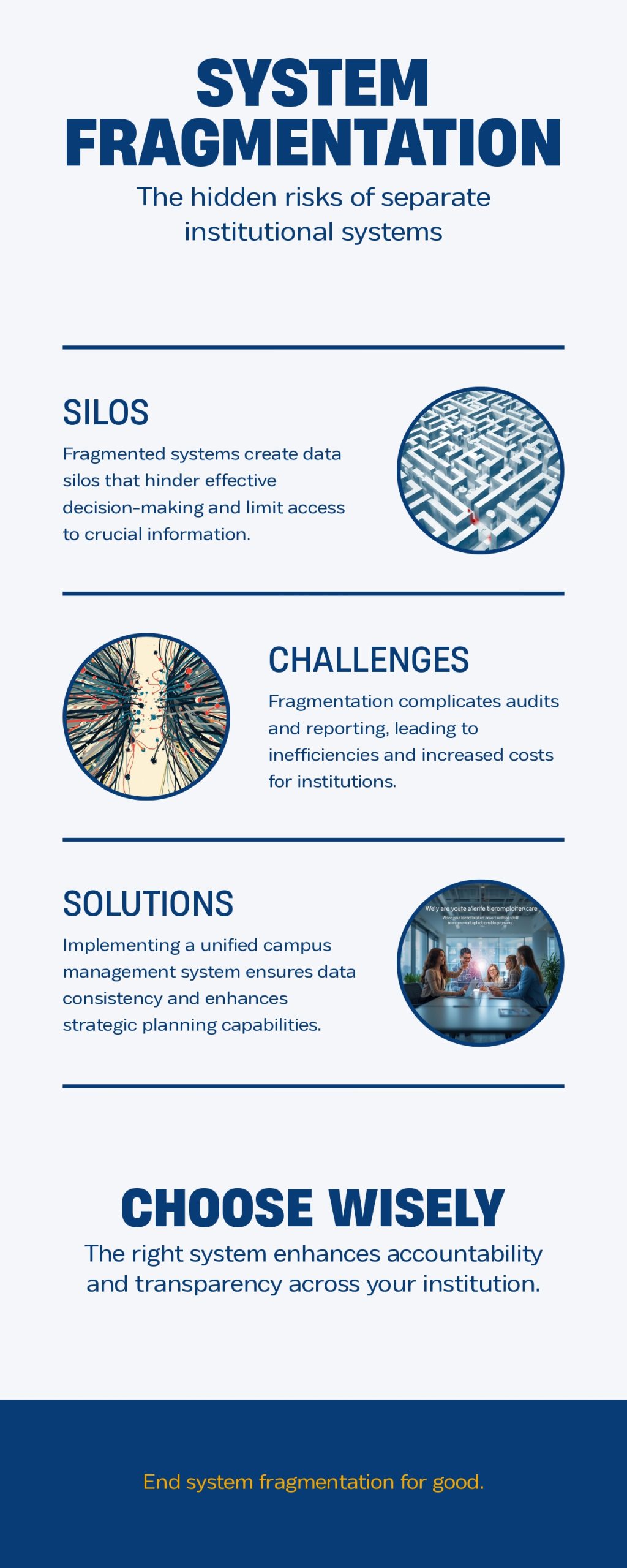
Many institutions evolve their technology landscape organically. A system for admissions here. A separate platform for student records there. Over time, this patchwork approach creates blind spots that leadership only notices when audits, reporting deadlines, or strategic planning demand consolidated data.
Choosing the right campus management system software helps institutions eliminate these silos by ensuring data consistency across the entire student lifecycle. More importantly, it reduces dependency on manual workarounds that increase both cost and risk.
In an environment where accountability and transparency are non-negotiable, system fragmentation is no longer sustainable for institutions.
Presidents, CIOs, registrars, and institutional leaders are increasingly expected to make decisions grounded in real-time data, not retrospective reports compiled weeks later.
A modern campus management system enables leadership teams to access accurate enrollment trends, academic progress indicators, and operational metrics from one trusted source. This clarity supports proactive decision-making, resource optimization, and long-term institutional planning.
When data integrity is embedded into daily operations, institutions move from reactive problem-solving to strategic governance.
Accreditation reviews and federal reporting demand precision, traceability, and consistency. Whether preparing for regional accreditation, program-level reviews, or federal audits, institutions must demonstrate that their data is reliable and well-governed.
Robust campus management system software ensures that academic records, assessments, attendance, and progression data are captured systematically and remain audit-ready at all times. This significantly reduces compliance risk while easing the administrative burden on institutional teams.
Instead of preparing for compliance events, institutions operate in a state of continuous readiness.
Student success initiatives in the U.S. increasingly focus on retention, progression, and timely completion. However, these goals are difficult to achieve when students face delays, inconsistent communication, or unclear processes.
A unified campus management system enables self-service access, timely notifications, and clear academic visibility, enhancing the student experience while reducing repetitive administrative work for institutional staff.
The result is a more responsive institution that supports both student satisfaction and institutional outcomes.
As institutions expand online programs, hybrid models, and interdisciplinary offerings, scalability becomes essential. Systems that cannot adapt to new delivery models or increased data demands quickly become obstacles to innovation.
Flexible campus management system software supports institutional growth without requiring constant redevelopment or costly system replacements. This adaptability is critical as U.S. institutions navigate enrollment shifts, funding pressures, and evolving academic models.
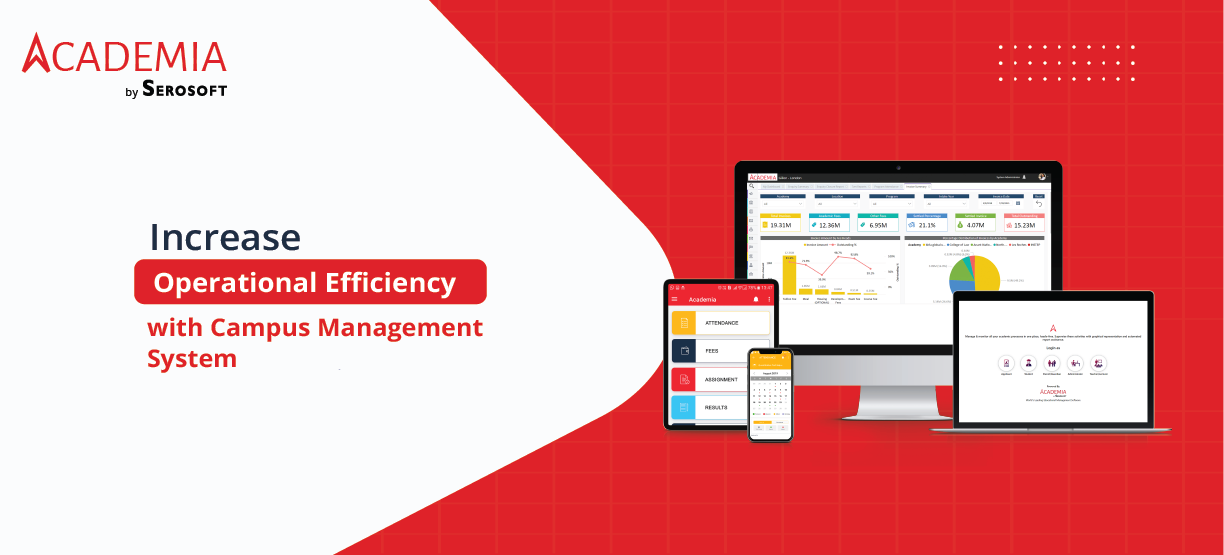
Academia by Serosoft is purpose-built to support the operational and academic complexity of higher education institutions. Designed with scalability, compliance, and data integrity in mind, Academia provides a comprehensive platform that brings admissions, student records, academics, assessments, and reporting together in one unified system.
For U.S. institutions seeking a reliable campus management system that aligns with governance standards, regulatory expectations, and long-term growth strategies, Academia enables institutions to operate with confidence, today and in the future.
Higher education institutions in the United States are at a critical inflection point. Institutions are expected to do more, with greater accountability, transparency, and agility, than ever before.
The right campus management system software is no longer just an operational convenience. It is a strategic foundation that supports compliance, student success, and institutional resilience.

Experience Academia – Your partner in transforming campus operations, a trusted all-in-one ERP/SIS solution.
Get the latest insights, trends, and updates delivered straight to your inbox!