Q1. What exactly is a Campus Management System, and how is it different from the software we already use?
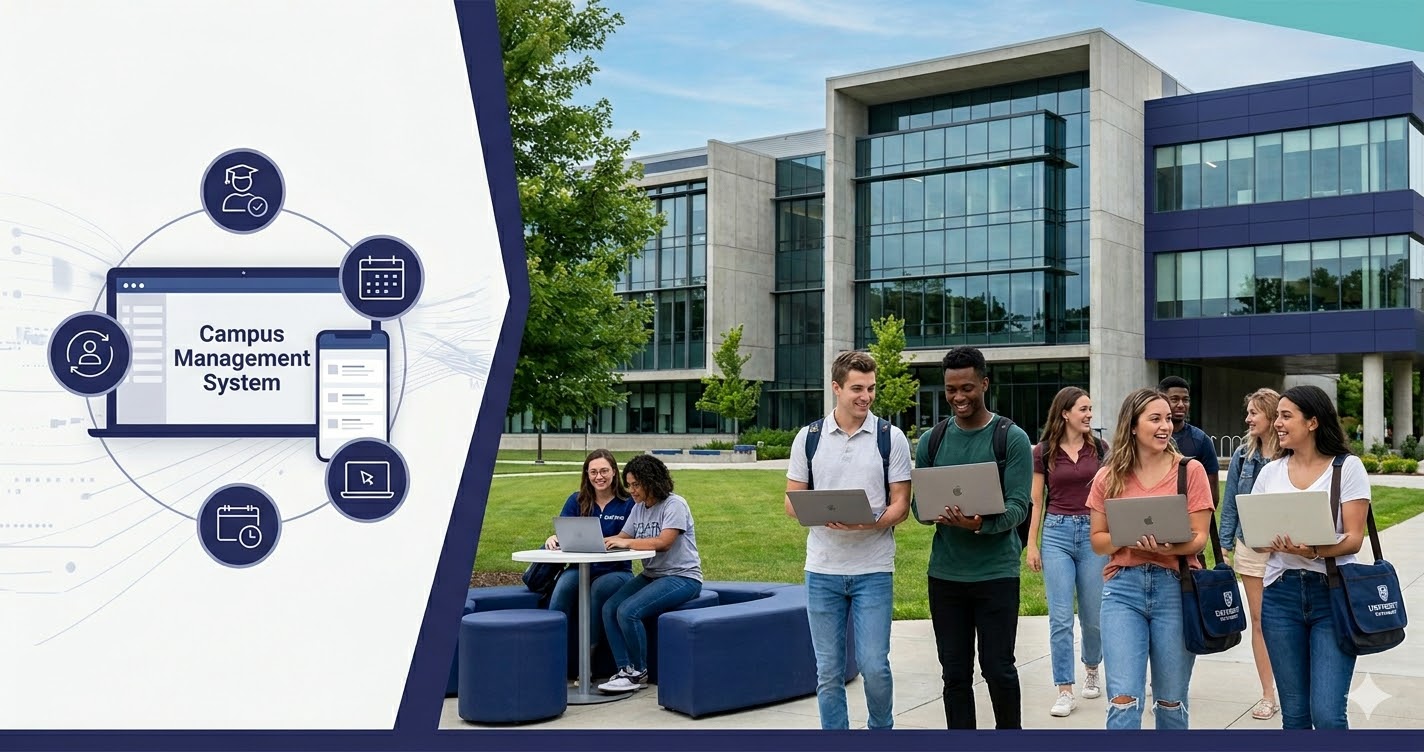
A Campus Management System, also called a Student Information System or university management system, is an all-in-one platform that connects every part of your university: admissions, academics, finance, HR, compliance, and student support. Most universities currently run these functions on separate tools that do not communicate, forcing staff to manually transfer data, fix errors, and chase information across departments. A Campus Management System eliminates that entirely.
Q2. Does our institution actually need a Campus Management System, or is our current system enough?
It depends on what your current system can actually do. Many universities operate older or partial implementations that only handle student records and enrollment, leaving all other departments to be managed separately. If that describes your setup, then yes, a modern Campus Management System will close those gaps significantly. The right platform should manage not just student data but your entire institution, from fee collection and faculty payroll to accreditation reporting and multi-campus operations, all in one place.
Q3. How long does it take to implement a Campus Management System, and will it disrupt our ongoing operations?
Implementation typically ranges from 4 to 6 months, depending on institution size, data complexity, and modules deployed. Disruption is a legitimate concern, but it is largely avoidable. Institutions that choose vendors with a structured implementation methodology and a phased rollout approach experience minimal operational impact. A well-managed implementation runs parallel to your existing systems and transitions department by department, not all at once.
73% of universities cite data silos as a top operational barrier. The average mid-size university loses $2.1 million annually to administrative inefficiency. And yet, most institutions are still running student admissions, finance, HR, and compliance on disconnected systems that were never designed to talk to each other.
The solution is not another point solution. It is a unified Campus Management System, and in 2026, it will be the single most consequential technology decision a higher education institution can make.
This guide is written for University CIOs, Registrars, Academic Administrators, College Presidents, and EdTech procurement teams who need an authoritative, data-driven framework for evaluating, justifying, and implementing the right platform for their institution.
A Campus Management System is an integrated digital platform that unifies every administrative, academic, and operational function of a higher education institution, from student admissions and course management to finance, compliance, and alumni engagement, into a single, connected ecosystem.
Unlike standalone tools that handle one function in isolation, a Campus Management System acts as the institutional nervous system. It enables real-time data flow between departments, automates repetitive workflows, and surfaces actionable intelligence for leadership at every level, from registrars managing enrollment cycles to CIOs governing institutional data strategy.
In 2026, the definition has expanded further. Modern Campus Management Systems include AI-powered predictive analytics, mobile-first student portals, regulatory compliance engines, and seamless integration with third-party platforms, making them the backbone of what analysts now call the Intelligent Campus.
A well-implemented Campus Management System is not a technology purchase; it is an institutional transformation.

Before evaluating solutions, institutional leaders need to honestly account for what fragmented operations actually cost, not just in software licensing fees, but in compounding operational drag.
Duplicate data entry and reconciliation errors. Administrative staff at a typical 15,000-student university spend an estimated 1,200+ hours annually re-keying data across disconnected systems, a direct payroll cost exceeding $48,000 per year, before accounting for error-correction cycles.
Delayed financial reporting and audit risk. Without a unified Higher Education ERP, generating consolidated financial statements requires manual consolidation across systems, creating reporting delays of 3 to 6 weeks and increasing audit exposure significantly.
Student attrition from a poor experience. 70% of students who leave an institution in year one cite poor administrative responsiveness as a contributing factor. A fragmented student information system means slower responses, lost records, and frustrated students who have no shortage of alternatives.
Regulatory non-compliance penalties. Manual compliance tracking across accreditation bodies, government reporting, and financial aid regulations creates material risk. Fines and remediation costs from compliance failures average $340,000 per incident in higher education.
What changes post-implementation? Universities that implement a unified Campus Management System report an average 28% reduction in administrative overhead within 18 months, with measurable improvements in student satisfaction scores and accreditation audit readiness.
Many institutions already operate a student information system — so the natural question is: why upgrade to a modern Campus Management System like Academia? The distinction matters more than most IT teams initially assume.
A traditional student information system covers the basics — student records, enrollment, and grades. It was built for data storage, not institutional intelligence. It captures what happened. It cannot predict what is about to happen, automate what needs to happen next, or give students the real-time, self-service experience they now expect as a baseline.
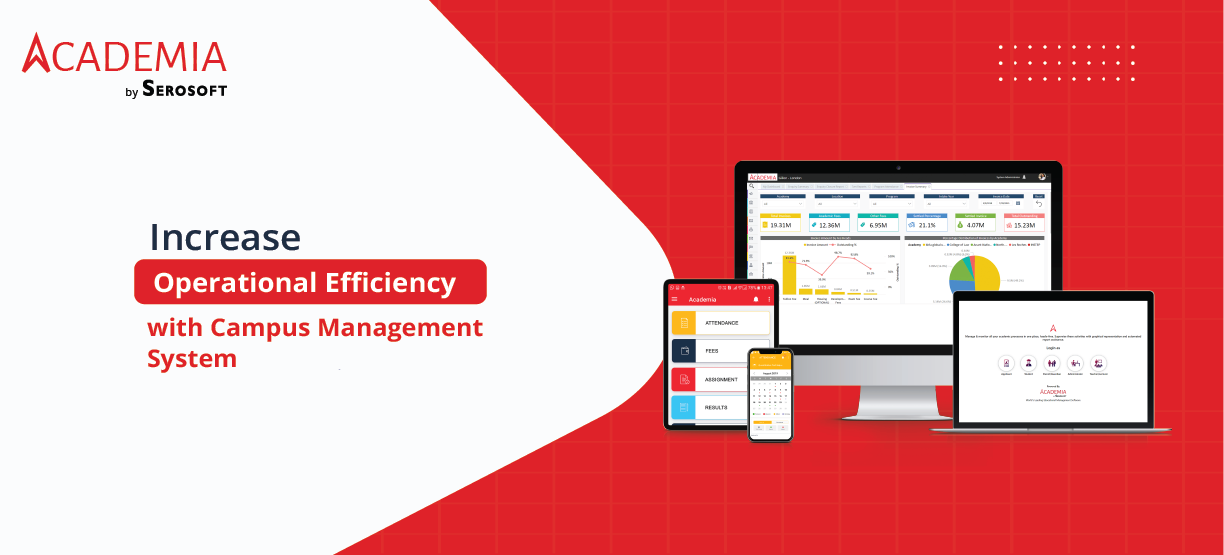
A modern Campus Management System like Academia is built around a fundamentally different philosophy. Every module, Admissions, Student Portal, Fee Management, Examinations, Marksheets, Attendance, and Outcome-Based Education, is designed not just to store data, but to act on it.
Consider what that looks like in practice. When a student misses a threshold number of classes, the attendance module does not just log it; it flags it. When exam results are processed, marksheets are not manually written; remarks are generated automatically by AI, saving faculty hours per assessment cycle. When a prospective student wants to enroll, they do not fill out a form and wait.
Academia’s AI-driven enrollment assistant bot lets them complete the entire enrollment process through a simple chat interface.
This is the gap that traditional systems cannot close, no matter how many integrations are added on top.
Academia also addresses one of the most persistent pain points in university administration: student query management.
SERA, Academia’s AI-enabled voice assistant, handles student queries around the clock — from fee payment status to exam schedules — without requiring staff intervention. For institutions managing thousands of students, this is not a convenience feature. It is an operational shift.
On the analytics side, the difference is equally significant. Traditional systems produce reports when someone runs them.
Academia’s AI-driven analytics engine generates institutional insights automatically, surfacing enrollment trends, attendance patterns, fee collection gaps, and academic performance signals without requiring a dedicated data team to ask the right questions.
Institutions that have moved from legacy student information systems to Academia consistently report the same outcome: less time spent managing the system, and more time spent acting on what it tells them.
The Decision Has a Cost Either Way
Every year an institution delays the move to a unified Campus Management System is a year of compounding administrative cost, growing compliance risk, and widening competitive disadvantage relative to institutions that have already modernized.
The question is no longer whether your institution needs one. The question is whether you lead the transition strategically — or get forced into it reactively when legacy systems fail at the worst possible moment.
Academia is built for institutions that are ready to move forward. From AI-driven enrollment and automated marksheet generation to SERA’s round-the-clock student support and outcome-based education tracking, everything your university needs is in one platform — purpose-built for higher education.
Book a free demo today and see exactly how it fits your institution.

Experience Academia – Your partner in transforming campus operations, a trusted all-in-one ERP/SIS solution.
Get the latest insights, trends, and updates delivered straight to your inbox!