
Type your keyword below

The Pivotal Role of Modern Student Record Systems in Higher Education

Introduction:

In the rapidly evolving landscape of higher education, the importance of streamlined administrative processes cannot be overstated. Modern Student Record Systems (SRS) have emerged as pivotal tools that not only manage data efficiently but also revolutionize the way institutions operate. This blog delves into the multifaceted role of modern SRS in higher education, exploring how they contribute to improved efficiency, data security, and overall student success.

Streamlining Administrative Processes:

Efficient Data Management: Modern SRS goes beyond traditional record-keeping, offering dynamic platforms for managing and organizing student information. From enrollment details to academic progress, these systems ensure that data is easily accessible and updated in real-time.

Automated Workflows: With the integration of automation, SRS minimizes manual intervention in administrative tasks. This not only reduces the risk of errors but also frees up valuable time for administrative staff to focus on more strategic aspects of their roles.

Enhancing Student Experience:

Personalized Learning Paths: SRS enables institutions to create personalized learning paths for students. By tracking individual progress and performance, educators can tailor educational experiences to meet the unique needs of each student, fostering a more engaging and effective learning environment.

Real-Time Feedback and Communication: Communication is key in the educational journey. Modern SRS facilitates instant communication between students, faculty, and administrators. This real-time feedback loop ensures that issues are addressed promptly, enhancing the overall student experience.

Data Security and Compliance:

Secure Data Storage: In an era where data security is a top priority, modern SRS employs robust security measures to protect sensitive student information. Encrypted storage and secure access protocols ensure that data is safeguarded against unauthorized access.

Regulatory Compliance: Higher education institutions must adhere to various regulations. SRS helps in ensuring compliance with standards and regulations, such as GDPR or FERPA, by providing tools for secure data handling and reporting.

Improving Institutional Decision-Making:

Data-Driven Decision-Making: One of the significant advantages of modern SRS is its ability to generate actionable insights through data analytics. Institutions can make informed decisions based on trends, performance metrics, and other relevant data points.

Resource Optimization: By providing a comprehensive view of institutional resources and their utilization, SRS assists in optimizing resource allocation. This includes faculty workload, classroom utilization, and budget planning.

Conclusion:

In conclusion, the modern Student Record System – an integral part of the Student Information System (SIS), is pivotal in transforming higher education institutions into agile, efficient, and student-centric organizations. From streamlining administrative processes to enhancing student experiences and ensuring data security, these systems are indispensable in navigating the complexities of the modern educational landscape. Embracing and integrating these technologies is not just a step towards innovation; it’s a commitment to the success and growth of higher education in the 21st century.


 

Celebrating Success: Academia ERP/SIS Earns 26 G2 Badges in Winter 2024!

We’re overjoyed to share some extraordinary news that fills our hearts with pride and gratitude. This winter, Academia ERP, our beloved Student Information System (SIS), has achieved a remarkable milestone by earning an astounding 26 G2 badges! This achievement not only validates the excellence of our platform but also underscores our team’s unwavering commitment to providing unparalleled customer support.

A Journey of Excellence

At Serosoft, our journey has always been fueled by a passion for customer satisfaction. We believe in the power of strong relationships with our users, and it’s customers’ trust that has been the cornerstone of our success. As we revel in this achievement, we extend our heartfelt thanks to each one of you for being an integral part of our journey.

Check our category-wise 26 G2 badges that Academia ERP proudly earned in the winter of 2024:

  1. Education ERP Suites:

• High Performer
• Momentum Leader
• Best Relationship
• Easiest To Do Business With
• Leader Mid-Market
• Highest User Adoption


Learn more about Academia Education ERP and the modules offered.

  1. Student Information Systems (SIS):

    • Easiest Admin Mid-Market
    • Best Relationship Mid-Market
    • Best Support Mid-Market
    • Easiest To Use Mid-Market
    • Best Usability Mid-Market
    • Leader – Asia Pacific
    • Users Most Likely To Recommend Mid-Market
    • Leader Mid-Market
    • Users Most Likely To Recommend
    • High Performer


    Learn more about Academia Student Information Systems (SIS) and the modules offered.
  2.  Admissions and Enrollment Management:

    • Easiest Admin Mid-Market
    • Best Relationship Mid-Market
    • Best Usability Mid-Market
    • Leader – Asia Pacific
    • Easiest Setup Mid-Market
    • Momentum Leader
    • High Performer Mid-Market
    • High Performer


    Learn more about Academia Admissions and Enrollment Management.
  3. School Management:

     • Best Support
     • High Performer


    Learn more about Academia School Management System.

    In the past G2 reports, we had been performing great for our customers and earning G2 badges: See our previous quarter reports, we are on a growing track.

           • Fall 2023 Reports – 23 Badges

           • Summer 2023 Reports – 19 Badges

           • Spring 2023 Reports – 5 Badges

           • Winter 2023 Reports – 5 Badges

           • Fall 2022 Reports – 2 Badges (It all started from here)

Beyond Badges: Our Customers’ Contribution

These badges aren’t just symbols of achievement; they represent the collaborative effort between our dedicated team and the invaluable customer feedback. Customers’ insights have played a crucial role in shaping Academia ERP/SIS into the robust and feature-rich system it is today.

As we celebrate these 26 G2 winter 2024 badges, we renew our commitment to innovation, customer satisfaction, and the ongoing enhancement of Academia ERP. We look forward to continuing this journey together with our clients, partners, and stakeholders. Check out Academia ERP’s G2 profile.

Empowering Educational Institutions: Academia ERP’s Cutting-Edge Management Login Feature

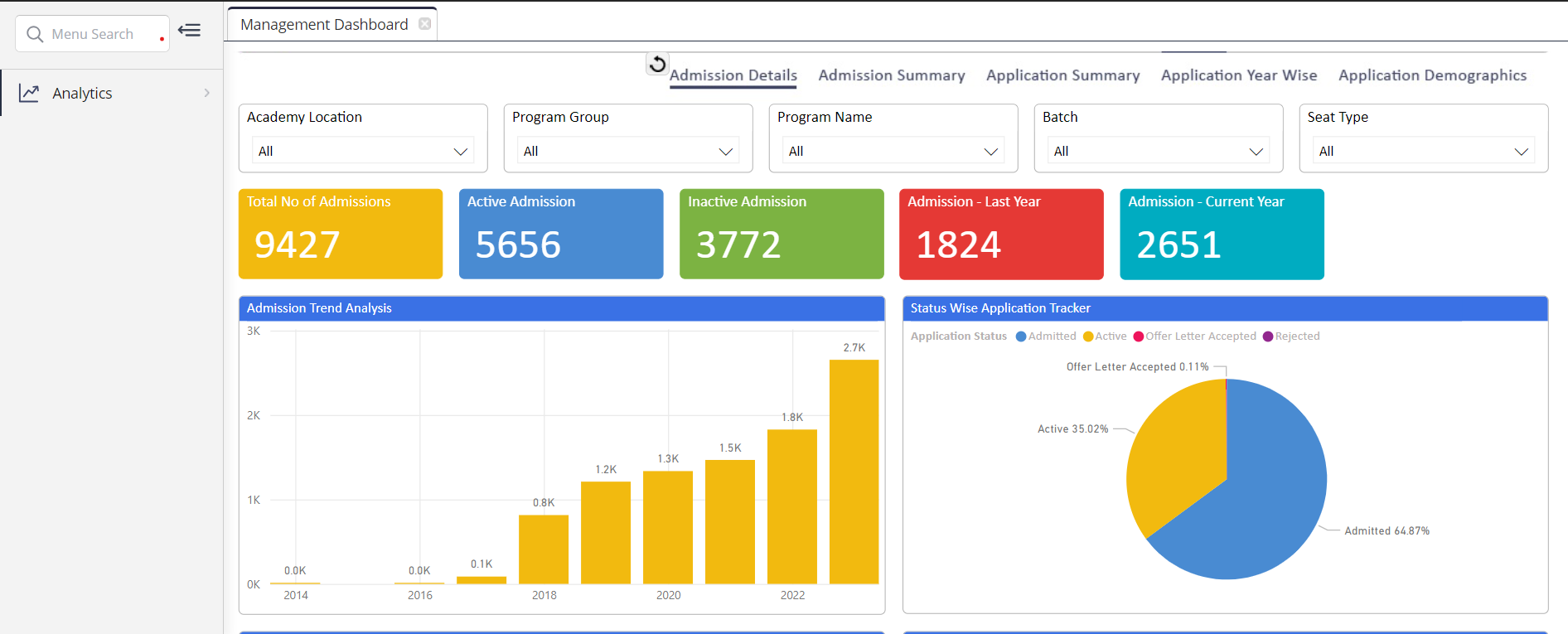
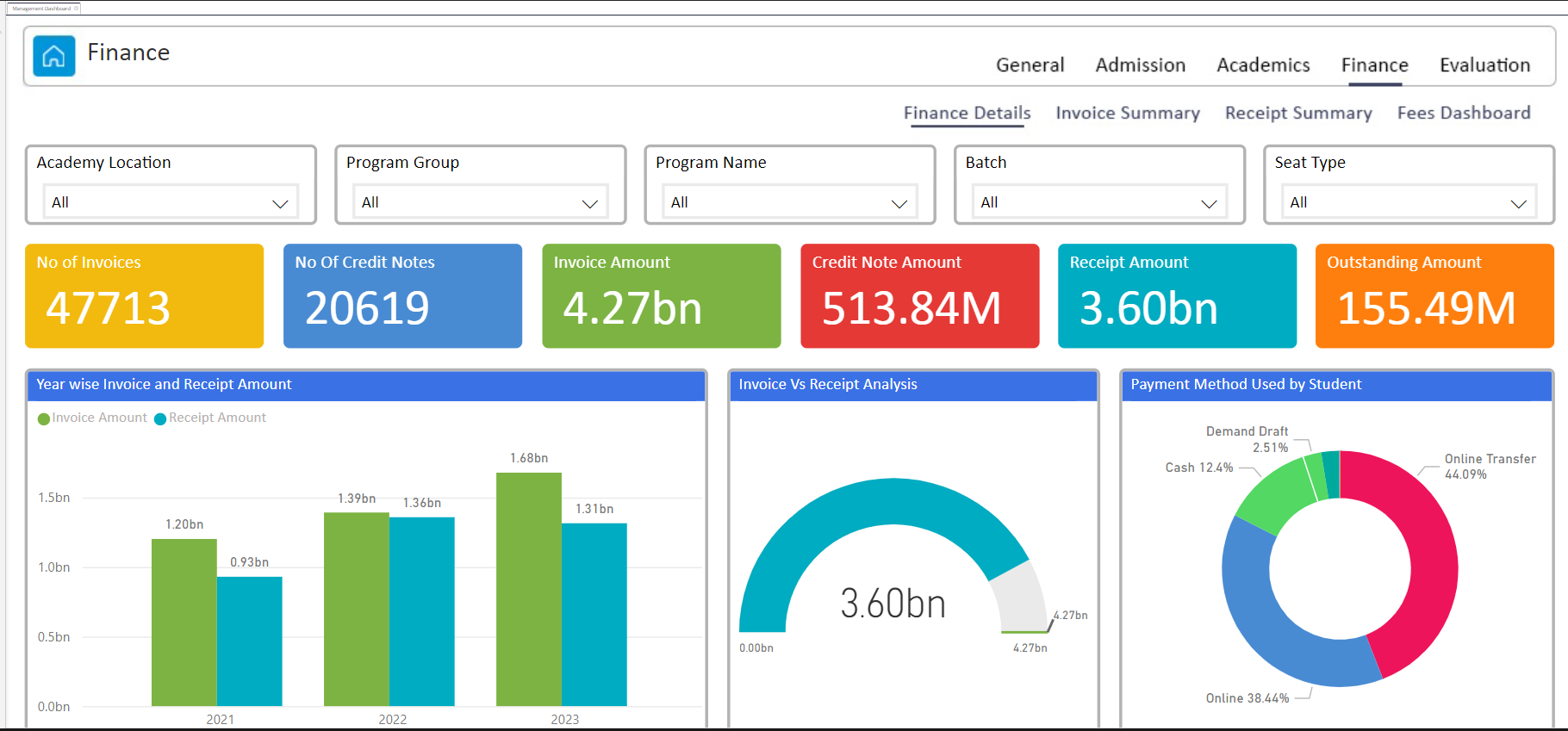
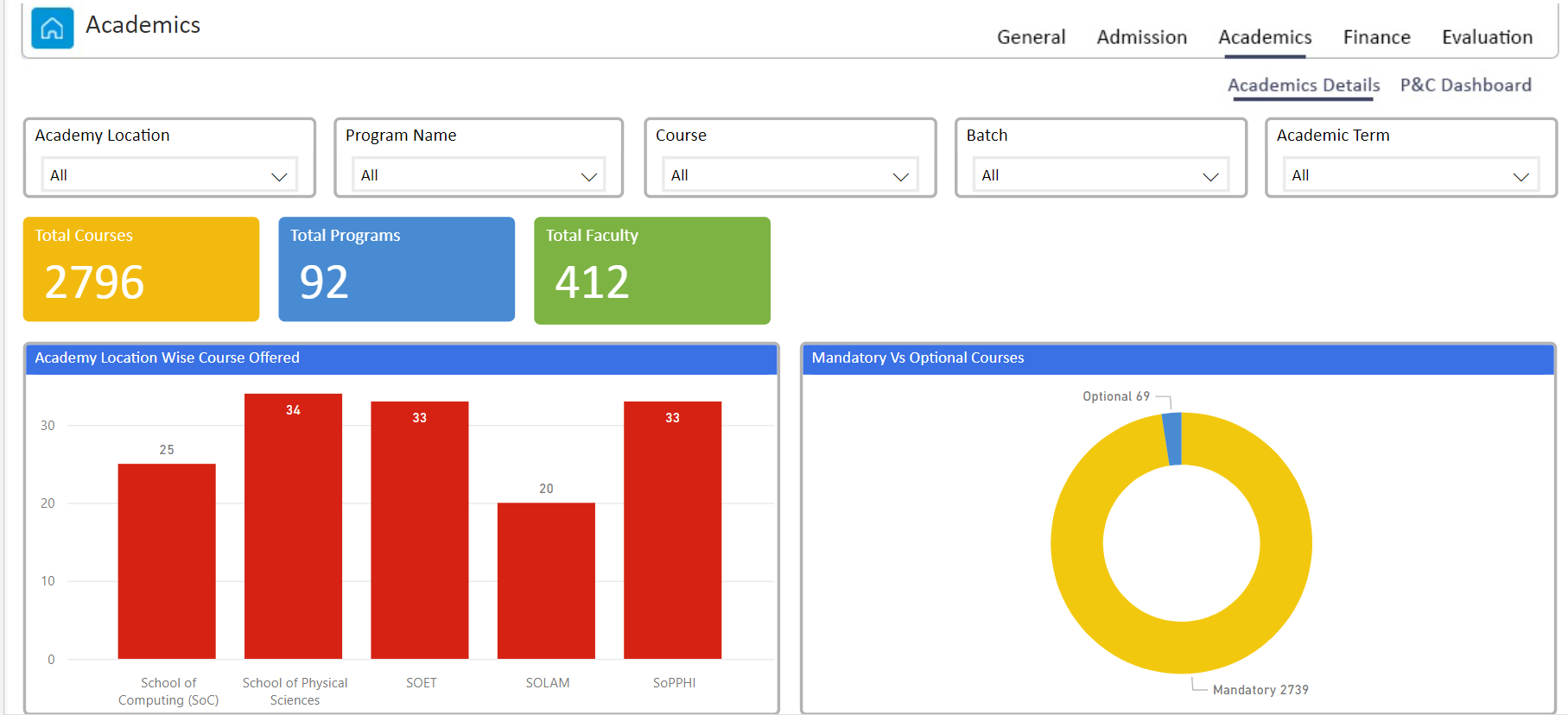
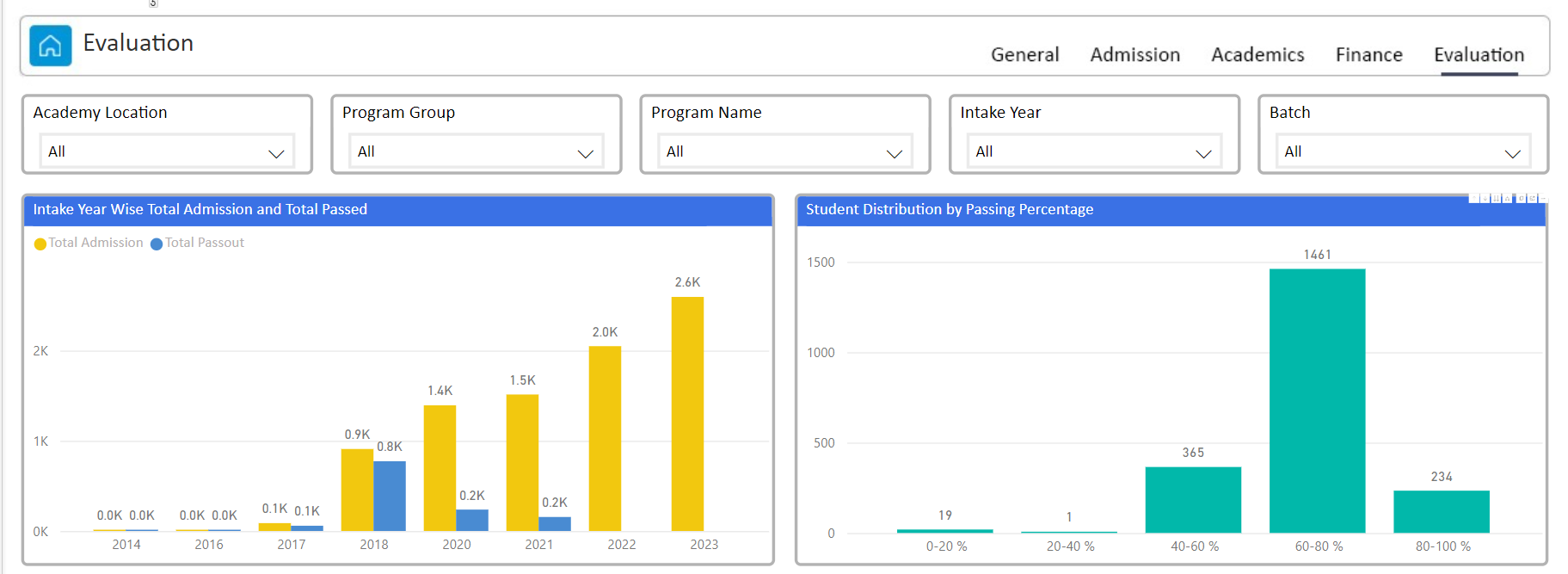
In the dynamic landscape of educational institutions, staying ahead in administrative efficiency is pivotal. Recognizing this need, Academia ERP has unveiled its revolutionary Management Login Feature, a powerful tool that offers comprehensive visual reports with multi-level drill-down capabilities. This feature empowers educational leaders with the insights to make informed decisions, enhancing efficiency and strategic planning in key functional areas.

Admission (1)

Admissions: Navigating Trends and Sources

The admissions module within the Management Login Feature provides a holistic view of enrollment dynamics. Admission trend analysis allows administrators to identify patterns and make data-driven decisions for future intake. Source-wise admission analysis enables institutions to optimize marketing efforts by understanding the most effective channels. Capacity-wise assessments across various academy locations ensure efficient resource allocation, fostering a seamless admission process. The application to the admission tracker adds another layer of granularity, offering insights into the conversion rates at different stages.

Finance

Finance: A Transparent Financial Landscape

In the finance module, Academia ERP offers tools for transparent financial management. The invoice vs receipt analysis provides a clear picture of financial transactions, ensuring accountability. The payment mode tracker aids in understanding the preferred payment methods, allowing institutions to optimize their financial processes. Outstanding amount reports, categorized by Academy location, timeline, and percentage amount, offer a deep dive into receivables. Additionally, program-wise revenue reports equip institutions with insights into the financial performance of different academic programs.

Academics

Academics: Fine-Tuning Course Offerings

The academics module of the Management Login Feature is designed to assist institutions in optimizing their course offerings. Identifying top departments with the highest course offers allows academic leaders to focus resources effectively. The analysis of optional vs compulsory courses aids in curriculum planning, ensuring a balanced academic structure. Detailed reports on courses offered over time provide a historical perspective, aiding long-term academic planning.

Evaluation

Evaluation: Enhancing Academic Performance

The evaluation module empowers institutions to assess and enhance academic performance. Pass vs fail comparisons by courses offer insights into the effectiveness of teaching methodologies. Intake and pass-out reports provide a comprehensive overview of student progression. Identifying top-performing courses enables academic leaders to recognize and replicate success, contributing to continuous improvement.

Glimpse into Decision-Making

The Management Login Feature provides a glimpse into the decision-making process with its visually intuitive reports. By presenting data at various levels of granularity, administrators can make informed decisions at the right time. Whether it’s optimizing admissions, managing finances, refining academic offerings, or enhancing evaluation processes, Academia ERP’s Management Login Feature empowers educational institutions to thrive in an ever-evolving landscape.

In conclusion, Academia ERP’s new Management Login Feature is a game-changer for educational institutions seeking a competitive edge in managing crucial processes. By providing robust visual reports and drill-down capabilities, this feature equips administrators with the tools needed to navigate challenges, capitalize on opportunities, and foster continuous improvement in all aspects of institutional management.

Embracing Educational Evolution: Implementing HyFlex for Flexibility Revolution in Higher Education

Introduction

In the ever-evolving landscape of higher education, institutions are constantly seeking innovative ways to enhance the learning experience for their students. One such transformative approach gaining momentum is the implementation of the HyFlex model. HyFlex, short for Hybrid Flexible, combines the best of both traditional and online learning environments, offering students and educators unprecedented flexibility. This article delves into the dynamics of implementing HyFlex in higher education and explores its far-reaching implications.

Understanding HyFlex

The HyFlex model is designed to accommodate diverse learning preferences and circumstances. It allows students to choose between attending classes in person, participating remotely, or even switching between the two based on their individual needs. This flexibility is especially valuable in today’s educational landscape, where students might face various challenges, such as geographical constraints, health concerns, or work commitments.

Benefits of HyFlex Implementation

Enhanced Accessibility: HyFlex makes education more accessible by breaking down geographical barriers. Students from different parts of the world can engage in the same course without the need for physical presence, fostering a diverse and inclusive learning environment.

Personalized Learning: With the ability to choose between in-person and online attendance, students can tailor their learning experience to align with their preferences. This personalized approach contributes to increased engagement and better learning outcomes.

Adaptive Pedagogy: Educators can adapt their teaching methods to suit different modes of delivery, ensuring that students receive a high-quality education regardless of their chosen learning pathway. This adaptability promotes a dynamic and responsive educational ecosystem.

Resilience in Uncertain Times: The HyFlex model proved invaluable during times of crisis, such as the COVID-19 pandemic, enabling institutions to seamlessly transition between in-person and online learning to ensure educational continuity.

Challenges and Solutions

While the HyFlex model offers numerous benefits, its successful implementation comes with its share of challenges. Technological infrastructure, faculty training, and student engagement are crucial aspects that require careful consideration. Institutions can address these challenges by investing in robust technological solutions and providing comprehensive training programs for educators.

The Role of Academia ERP

To facilitate the seamless integration of the HyFlex model, institutions are turning to advanced educational technology solutions. Academia ERP emerges as a leading solution provider, offering a comprehensive suite of tools to support HyFlex implementation. This innovative ERP system streamlines administrative processes, provides a user-friendly interface for educators and students, and ensures the efficient management of both in-person and online learning environments.

Academia ERP’s features include:

User-Friendly Interface: The platform offers an intuitive interface that simplifies navigation for both educators and students, promoting a positive and user-friendly experience.

Real-time Collaboration: Academia ERP facilitates real-time collaboration, allowing students to engage with course materials, participate in discussions, and submit assignments seamlessly, regardless of their chosen mode of learning.

Attendance Tracking: With HyFlex, monitoring attendance becomes a critical aspect. Academia ERP provides robust attendance tracking features, ensuring accurate and transparent record-keeping for both in-person and online participation.

Integration with Learning Management Systems (LMS): Academia ERP seamlessly integrates with popular LMS platforms, creating a cohesive educational ecosystem that enhances the overall learning experience.

Conclusion

In conclusion, the implementation of the HyFlex model represents a significant leap forward in the evolution of higher education. Its ability to provide unparalleled flexibility to students and educators alike positions it as a transformative force in the academic landscape. To maximize the benefits of HyFlex, institutions can leverage the technological prowess of solutions like Academia ERP. As we embark on this flexibility revolution, higher education institutions need to embrace innovation and invest in the tools that will shape the future of learning.


Maximizing Efficiency: A Foolproof Approach for College Admissions Teams to Optimize Resources

In an era where colleges face increasing demands and resource constraints, the need for streamlined processes within admissions teams has never been more crucial. This blog delves into a foolproof strategy to empower college admissions teams to accomplish more with fewer resources, ultimately fostering efficiency and enhancing the overall admissions experience.

The Challenge:

College admissions teams are often confronted with the challenge of managing growing application volumes, diverse applicant profiles, and evolving selection criteria. With limited resources, this uphill battle can lead to bottlenecks, delays, and a potential compromise in the quality of the admissions process.

The Foolproof Approach

Implement Smart Automation:

Integrate advanced automation tools to handle repetitive and time-consuming tasks such as data entry, document verification, and communication processes. By automating routine tasks, admissions teams can redirect their focus to more strategic and value-added activities.

Utilize Data Analytics for Decision Support:

Leverage data analytics to extract meaningful insights from applicant data. This enables admissions teams to make informed decisions, identify trends, and allocate resources more effectively. By understanding the applicant pool better, colleges can optimize their selection processes.

Enhance Collaboration with Technology:

Invest in collaborative technologies that facilitate seamless communication and information sharing among team members. Cloud-based platforms and project management tools enable real-time collaboration, reducing the reliance on physical meetings and streamlining workflows.

Implement a Holistic Applicant Tracking System (ATS):

Deploy a comprehensive ATS that centralizes all applicant information, simplifying the tracking and monitoring of each candidate’s progress. This not only enhances organization but also ensures that crucial details are not overlooked during the admissions journey.

Personalize and Streamline Communication:

Leverage personalized communication strategies through email automation and chatbots. Tailored communication not only improves the applicant experience but also reduces the time spent on generic inquiries, allowing admissions teams to focus on more nuanced aspects of the process.

Invest in Training and Skill Development:

Equip admissions teams with the necessary skills to navigate modern technologies effectively. Providing training on the latest tools and methodologies empowers teams to adapt to changes swiftly, making them more resourceful in managing complex admissions processes.

Conclusion:

By adopting this foolproof approach, college admissions teams can revolutionize their admission operations, achieving higher efficiency and productivity even with limited resources. Embracing smart technologies, data-driven decision-making, and collaborative platforms positions colleges to not only weather challenges but also thrive in the ever-evolving landscape of higher education admissions.

Read our case study for more used case information on this: False Bay College, Muizenberg, South Africa

Back to top