Type your keyword below

7 Emerging Technologies that are Reshaping Education

In the field of education, emerging technologies are revolutionizing the learning process for students by enhancing the way students, teachers and institutions work. Technology has changed the world and cutting-edge technologies  are reshaping education in innovative and unimaginable ways. Students are getting the opportunities and unique experiences they need and deserve as emerging technologies promise to deliver exciting new resources for learners.

Let us take a closer look at the seven emerging technologies that are earmarked to make major waves and reshape education.

1. Augmented Reality & Virtual Reality

Mixed Reality and Simulations are pathbreaking experiences for learners and teachers too. AR, considered as one of the best emerging technologies in the world, can be used by educators in innovative ways to make lessons interesting and interactive. AR is useful in overlaying interactive digital elements to give real time experience and for promoting skills like creativity, critical thinking analysis and problem solving. AR promises to help learners capture their dreams and imaginations and take learning to the next level.

Virtual Reality, the next big thing in education, enhances student learning and engagement by cutting across all barriers and immersing students in what they are learning and helping them to process information better.

learning and helping them to process information better.

2. Artificial Intelligence

Artificial Intelligence (AI) in education is already transforming the way curricula are implemented in schools, with innovations that would have been impossible a few years back. AI applications have made the academic world more convenient and personalized. One of the key impacts of AI from kindergarten to graduate school is the different levels of individualized learning with adaptive learning programs, games and software, where students can work at their own pace.

AI aims to reshape education by supporting the sharing of first-person perspectives which will be useful for students research. From artificially generated content to image recognition and smart tagging systems, AI is also automating basic activities like grading homework and tests as it takes up a lot of time for teachers. While human grading may not be fully replaced, AI can help in providing detailed analysis of student performance in exams, and help in grading to a certain extent.

AI has resulted in automation of administrative jobs, saving time for educators.

3. 5G Technology

5G is the fifth generation of wireless technology which promises high speed and low latency wireless technology. 5G is meant to change the way educational institutions interact with much quicker downloads and increased efficiency and expanding the scope of connected devices and technology within the classroom.

Some universities have started implementing IoT integration for higher education where lectures and discussions on specialized topics can be conducted through virtual reality experiences. Seamless connectivity will bring in better engagement which will be a big boon for international students, along with faster downloads of files and resources and more powerful networks. 

Interestingly, 5G was supposed to be launched in India in 2020 and would have been extremely beneficial for students learning from home during the COVID-19 pandemic. However, things didn’t go as planned and the launch has been pushed to mid 2021.

4. Internet of Things

The Internet of Things (IoT) has tremendous potential to create smarter and connected schools and is already impacting the education sector by making learning simpler, faster and safer. IoT can save energy and lighting, and sensors across the campus can track traffic and the strategic positioning of security features like lighting would help students and visitors too.. IoT can help break the usual barriers to education like language, location or certain disabilities, besides helping everyone with bottom-line solutions.

5. Adaptive Learning

The Adaptive learning technology provides learning activities to students, based on their needs and learning style and behavior. It helps students with unique learning paths that are based entirely on their interests and learning ability. 

It can play a huge role in the educational system as it uses computer algorithms to orchestrate the interaction with the learner. Although this technology originated from AI, it actively caters with individualized resources and top learning activities to take care of the special needs of a learner.

6. Learning Analytics

When it comes to the process of learning for students, it needs efficient tracking and analyzing to understand results better. This is essential to bring about improvement which is a very important factor in education to improve the learning experience of every student. The learning analytics technology helps teachers to better record the learning rate and behavior of students so that teachers can provide targeted improvements to courses.

7. Blockchain

The Blockchain technology which has changed every industry dynamically, can prove to be very useful in the education sector as well. It is especially useful to collaborate around distributed information in a database. Blockchain can help in examination management, verifying student credentials, verifying certificates, managing life-long learning records etc. Besides effective analyzing and tracking, it can help teachers provide targeted improvement for courses and help students deliver enhanced results.


5 Technologies that are Remodeling Higher Education

We are living in the 21st century in the era of the third industrial revolution. Also known as the Digital Revolution, a century of computer and automation. Every industry is moving toward automation to and the education industry is not behind.

Education Technology or EdTech has become a new trend in the education industry.

As higher education is vast and the young generation is more tech-savvy, they are transforming very quickly into an EdTech synchronized system. Not just students but institutions are also shifting to automated academic and administrative operations through ERP.

Amidst cutting-edge competition, there are few EdTech tools that are transforming the higher education system.

Here are five such trends:

1. Artificial Intelligence

AI has already entered all the major sectors e.g. finance, marketing, and advertising, healthcare, law, etc. Now, many educational institutes are adopting AI in their academic and administrative process. UK-based company Third Space Learning is using AI software to improve the teaching experience of its global network of around 300 teachers.

In some institutes, AI software is installed in the classroom to guide teachers not to lose track of the topic while teaching, to maintain teaching speed for better understanding among the students.

2. Blockchain

The role of blockchain in the next technological chapter is not hidden. The adoption of bitcoin as a legit currency in various countries is one solid example of how blockchain tech is changing the system.

There are many ways blockchain technology in education can help to decentralize the higher education system. Education record and credentialing, copyright protection, course curriculum, innovative learning platform, publishing, library are a few areas where blockchain can overhaul the education experience.

3. Student Information System

Technology is knocking on your door at higher education- academia erpThe education industry runs on number of operations. To manage a student life cycle in an institution from admission to placement is not an easy task. It requires admission management, fee management, inventory management, academic management, various report generation, and much more work.

To make higher education efficient, productive, hassle-free and more centralized education software of Student Information system or SIS is introduced.

Many institutions have already adopted to Student Information System and due to quick run-around time, they are achieving a high return on investment.

4. Virtual Reality

Virtual Reality in education is also widely known as Virtual Learning Environment, which provides immense learning potential in higher education. Educators can enhance the educational experience by using VR practice in the classroom. Tech giants like Microsoft, Google have modified human-computer interaction via gadgets like Microsoft HoloLens and Google lens.

5. IoT

IoT or the Internet of Things has made the main transformation in the retail sector, healthcare, and customer services. According to the basic definition, It is defined as the proposed development of the internet in which everyday objects (other than the usual laptop, mobile, computer) have network connectivity to send and receive data and exchange information.

With the help of IoT, the education sector is availing the benefits of collaboration between students, educators, and administration. It also helps in global networking enhancement of textbooks, attendance monitor system, data collection, and better collaboration.

Why you should use these technologies in your institution?

It is not necessary to use all the tool simultaneously.  You can opt for the right EdTech based on institutional operations and processes.

To enhance the student, faculty and administration experience, for more collaborative processes and streamlined operations it is necessary to use technology in education.

Are you looking for EdTech or software to enhance the productivity of your institute?

Academia is one of the leading education management software that is an enhancer and enabler for the education sector operations. It works for schools, higher education institutions, and training institutes. Try a free demo now!!

Improve your institute’s security system via Blockchain Technology

A few decades ago, people used to maintain ledger books for accounting. However, this is changing rapidly in the world of digital technology. Today, companies across the globe are choosing blockchain technologies that improve, secures and verifies a transaction or review the ownership of a digital asset in public.

The functionality is essentially like a big book added and enclosed, where you can write new information with new information. However, the oldest data stored in blocks cannot be changed. Use cryptography to mark the time and link the contents of the newly added block to each previous block.

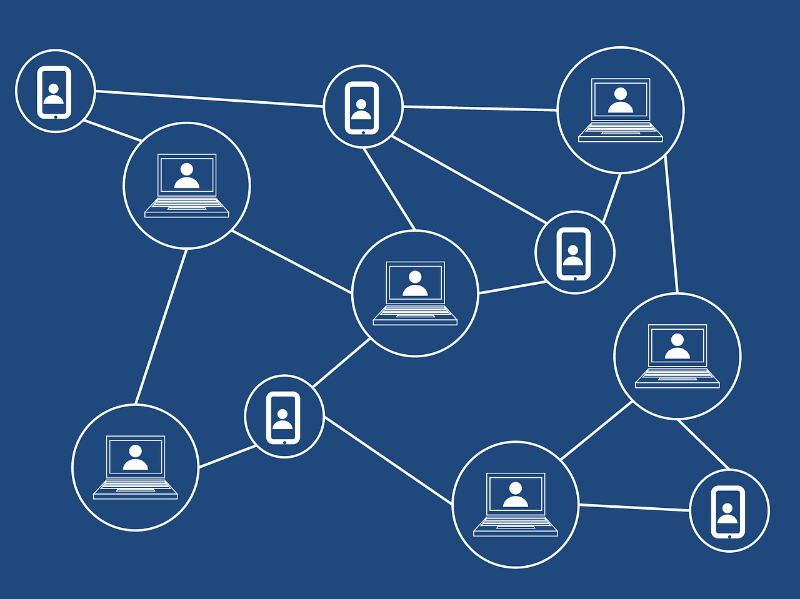
In other words, instead of uploading/downloading data like other systems to a cloud server or storing it in a single place, the blockchain divides everything into smaller parts. These mini-pieces are then distributed on the computer network. The blockchain is a digitally encrypted large book with no central point. Each node has a complete copy of this protocol so that failures in one or more modes do not cause data loss.

For educational institutions and their safety systems, blockchain offer many benefits and can improve the safety of these institutes.

1) Infrastructure security

Blockchain technologies improve institutions safety systems by improving their infrastructure security. Today, institutes around the world are adding cameras to their buildings and playgrounds. By using a security blockchain that provides tamper-proof accounting books, institutes can share security data across large device networks.

2) Institutes Data and Confidentiality

Although blockchain was originally created using a public distribution model and without special access controls, many blockchain implementations are concerned with privacy, an important element in the educational institute.

Blockchain technologies improve security systems in institutes where data can be easily manipulated. However, when encrypted with blockchain data, this data is inaccessible to unauthorized persons. Thus, protecting student data such as names, interest rate details, addresses, etc.

blockchain-technology for institutes security - academia-erp

3) Secure communication between parents and institutes

Blockchain improves the safety of the education system to ensure the confidentiality of information exchanged by Institute authorities or parents and faculties in discussion forums, messaging applications, and social networks. While other news media provide a continuous chain of encryption blocks, they can secure metadata of users who are randomly distributed in a ledger that cannot be retrieved at a single point so that it becomes impenetrable for pirates.

4) Secure storage on the cloud

With the advent of e-learning and cloud computing, students and educational institutions now store more data online. Blockchain technology helps to improve the safety of this cloud memory with tamper-proof encrypted records that protect data and ensure that these not be changed without permission.

5)Validation of the training titles

Reviewing the educational attainment of potential higher education students can be time-consuming, as post-diploma programs require validation of certificates, which is again a slow and complex process.

Institutes using Blockchain technology can offer their students a degree through a mobile app, and students can easily share their credentials with others. Additionally, because of the security of Blockchain encryption, you cannot change your certificates. This is an effective tool against the growing trend of counterfeiting.

Due to its security features, the industry is investing in the blockchain technology. Even educational institutions are rapidly using blockchain technology to benefit themselves from robust NextGen technology.

Back to top