Type your keyword below

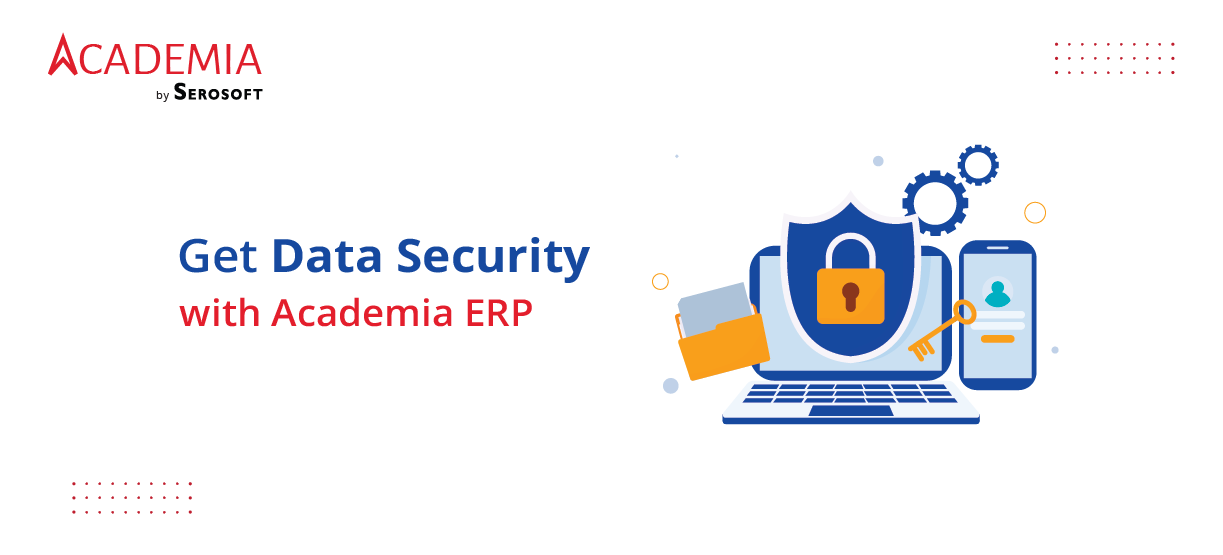
Data Security is a Concern for the Education Industry

Data privacy is a pressing issue for the education industry. But this is not something new. For any industry that is keeping its first step towards digitalization, security becomes a pressing issue and this time it is the education industry. 

How did it all start?

Now how did it start? Covid-19 has accelerated the adoption rate of technology across the globe. In a very short time, many institutes were forced to take hasty decisions and go with the available vendor without thinking much about security and the upcoming challenges pertaining to data and its mismanagement. 

Current Scenario

Now that the world is relaxing after a two-year-long harsh battle with Covid-19, it is time to rethink those choices. Now education institutes are thinking about the data that is being shared daily on online platforms by students, faculty, and school officials. This has made education institutes a primary target of cyber criminals as the proper security measures are still lacking. Frequent and high-intensity cyberattacks have become prominent in the education sector over the last two years. 

Moreover, even software that uses powerful data security regulations often becomes vulnerable to these attacks. Not always it is the fault of the product you are using. The problem may lie in the loosely integrated 3rd party software that gives cracks in your system to make a breach. The partner applications may not follow high standards of security and this may make you more prone to data theft. 

Furthermore, thousands of students use their personal devices to access the web and mobile applications and this may put the server at risk. Also, the students are at risk as the malicious code can be pushed to the devices, or phishing emails or messages may be sent easily to the students. 

Common security threats faced by EdTech companies 

In recent times, edtech companies have become a big target for cybercriminals. There have been instances of security breaches, phishing, stealing of data, and other instances. Here are some of the most frequent threats that are battled by edtech companies around the world:

  • Cloud Security Breaches: 

One of the most common threats for edtech companies is breaches in cloud-based applications. Cloud-based applications create a virtual depository of data that is very easy to access remotely. Data dissemination and analytics are also fairly easy in cloud-based applications as compared to on-premise applications. 

But at the same time, the risk of data breaches concerning the personal information of students and educators, financial operations, and other tasks associated with an institution. Cybercriminals may use this information and redirect the payments to a fictitious account that hackers control. 

  • Phishing:

Phishing needs no introduction as it is one of the most common threats. Cyber attackers mask their identity as a trusted entity and lure the users into divulging into sharing private and sensitive information such as credit card numbers, etc. Mostly cyber criminals target children as they are gullible and easy targets. 

  • Denial of Service (DoS): 

This is a new type of cybercrime, wherein the cyberattack makes sure that data or the systems that are used by the user are not accessible and are denied access. The cyberattack involves flooding the network with information and this disrupts the existing services. 

Denial of Services (DoS) in the context of edtech may result in disruption of education, delays in getting the right information for efficient administrative operations, or unavailability of knowledge resources or study material. 

  • Malware:

Malware attacks are very common. The software gets installed on the computer or server without the knowledge of the user, they come in various types and are employed to steal sensitive information of the users or commit crimes such as extortion.

  • Zoombombing:

It is fairly recent, online video conferencing platforms are interrupted by intruders. Incidents such as hate speeches against students during online classroom sessions or exposure to unwanted, harmful media during virtual classes have been reported. 

How Academia ERP is beating cyberattacks and staying compliant with global security standards? 

  • General Data Protection Regulation (GDPR): 

We are a GDPR-compliant organization. It is one of the biggest security standards for the countries in Europe, where the regulatory framework ensures we are assessing and processing the large volumes of data involving users securely and are not mishandling the data at all. We adhere to the framework very strictly and have by far never had any incidences concerning the mishandling of data or privacy breaches. 

  • Conducting Security audits: 

We timely conduct security audits and make sure there are no gaps in security with respect to our product. Furthermore, we go a step ahead and make sure the integrations that we do for our clients are not lost and do not provide any cracks through which the cybercriminals can make breaches.

  • Network and System Security

Network and system security are taken very seriously in Academia ERP. We take various measures to ensure the data and information is protected and shared through only secured channels through reliable access and network performance. Our well-designed network security solution ensures protection from a wide range of viruses, worms, trojans, spyware, adware, and ransomware. 

  • Cybersecurity awareness sessions

We are a big team of 200+ individuals, and we make sure each of our employees is adhering to the security standards and is following compliance. We regularly conduct cybersecurity awareness sessions and provide training to our employees about data protection and security protocols. 

  • Two-factor authentication & role-based access controls

Two-factor authentication and role-based access controls are implemented in the software solution. This allows us to make sure there is no unauthorized access to the system and that you face no situation where there is data leakage. 

Summing Up

Cybercrimes in the education sector are growing at a fast rate. As a decision-maker, the key to protecting yourself and other stakeholders using digital tools for administrative, academic, and non-academic operations lies in your hands.  

You can do right by choosing a reliable solution provider such as Academia Education ERP / Student Information System which adheres to the highest security standards and has by far had no instances of security breaches. We follow international standards of security and stay compliant with global regulatory frameworks. 

Know more about highly secure Education ERP called Academia ERP security by dropping a message. Also, get full-blown exposure to Academia ERP and its amazingness by requesting a live product demo

Top 10 issues around school management and how to solve them easily with ERP

We all are aware of the fact that technology is here to stay and transform. But when it comes to answering how specific it is in solving the challenges unique to you and your institute, you may find yourself wondering. 

Answering the same questions for you, here is how education ERP solutions such as Academia ERP solve some of the biggest challenges of a school. For any further information, do feel free to connect with our technology experts. We are sure you would love what you see in the live demo. 

Common challenges in School Management:

  • Paper-bound processes

Let’s just say, that you are trusting your employees to care for every single paper that is running across various departments and save it for further reference – you have too much faith in people and you are bound to see some serious mismanagement. 

The world is moving at the speed of light, people are loving digital operations. Needless to say, your employees need to access the information fast, speed up every single operation and maintain pristine records of everything that is happening in your school. And this would happen when you have a digital system in place. A software that would automate repetitive processes, and track every piece of information for you in seconds. 

  • Student/parent experience

The negative experiences of students and parents may be bad for your school’s reputation. Students and parents do not love to stand in a queue for hours for meager things such as getting a form or paying their fees, or asking for some information. 

You can simplify all this with an education ERP that would send out forms to their mobile or web apps, and provide seamless communication through SMS or push notifications on their devices. Reminder emails and notifications would eliminate the need for a person to roam from classroom to classroom to inform people about the ongoing activities in a school. 

  • Admissions and Enrollment 

It would not surprise you if we say, you are losing out on a large volume of applications each year just because you don’t have a system to manage the enquiries. In a competitive environment such as now, you should not give any chance to your competitors to thrive on your shortcomings. 

With an efficient education ERP you can fill these small gaps in your processes and ensure applicants are getting the right information and have all the aid they require throughout the admission process. Admissions and enrollment process thus can be digitalized through education ERP and shoot up your admission rates by several folds. 

  • Course Management

Designing a course curriculum is an every-year activity and a process that is time-consuming and labor-intensive. With the course management system, you can accomplish this task much easier and in a very short period of time. Also, regulations around curriculum and knowledge resources have become very strict. The regulatory bodies want to ensure students have access to quality education. 

Hence, course management activities such as creating a curriculum, and managing resources, assignments, and examinations should be in line with these policies and regulations. An education ERP would offer you the ease to support the goal of graduating students having near-zero instances of shortcomings in course management. 

  • Teacher Evaluation

Not only is it important to evaluate student performance but teachers too should regularly be evaluated based on student performance and success. Since generating reports on performance for a big number of teachers in your institute is difficult, go for an education ERP. The software comes with a number of reports that gives you granular reports on every teacher’s performance.

  • Communication and Collaboration

Not many institutes pay much attention to this challenge but this is maybe one nail that is stopping you to attain a top speed in your operations. Lack of communication between various departments, and lack of communication between students-teachers / student-teachers-parents can result in operational gaps. Seamless flow of information in real-time thus increases collaboration between departments and ensures higher experience for your all stakeholders. 

  • Classroom management strategy

Schools are not only responsible for academic education but they are responsible for building a good character in a person. Infusing qualities such as punctuality, honesty, discipline, and more are the primary goals for schools. Hence, a classroom management strategy that ensures close monitoring of students’ behavior and participation in the classroom is important. With an education ERP, you can get a robust discipline tracking and behavior management system for making this process more effective and streamlined. 

  • Student Monitoring

Teachers are struggling to monitor student activities, this includes attendance, leave, discipline, assignments and so much more. School administrators build students’ results based on these reports. The more effective the monitoring system is the more closely it would analyze a student based on these aspects and hence, provide a more clear report on a student. 

Automating and streamlining student attendance, assignment collection, and behavior management would give administrators a real-time status of any student’s activity and allows them to build performance improvement strategies. Since education ERP software offers you all these tools, it is very practical to have one for your institute. 

  • Revenue Management

Tracking every transaction in your institute with a paper-bound system is not going to ensure the best revenue management. The robust education ERP system allows you to get real-time updates on every transaction and offers online payments securely. This means, you now have a hawkeye over every monetary transaction happening in your organization on implementing education ERP. 

  • Forecasting the academic achievements

Statistics and data have transformed the world. It gives you the ability to peek into the future and change its course with effective strategies in the present. A predictive analytics tool is one of the biggest benefits you get from implementing education ERP. 

A product such as Academia SIS/ ERP comes with an AI-based data analytics toolset that provides predictive analytics on the academic performance of the students. Hence, you can know the outcome of a student’s performance before it has appeared in an exam and work on their weaknesses to alter the results. This gives you one added benefit and a sharper edge in the market to guarantee top-notch academic results. 

Concluding

Education ERP for Schools aims are automating all your processes while acting as a centralized database to support all the departments and their operations. Features such as real-time information access, remote access, remote functionality, predictive analytics, reporting, and resource management allow you to streamline processes and ensure faster operations. 

Back to top