Type your keyword below

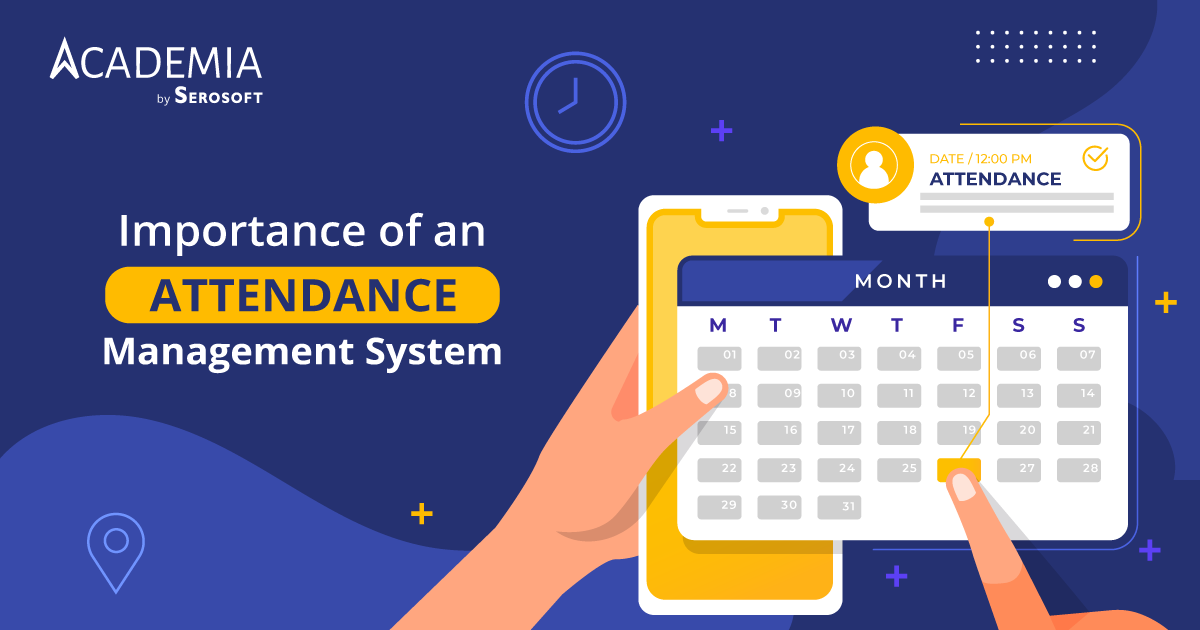
Why it is Important to Have an Effective Student Attendance Management System

It is common in most schools, colleges, and educational institutes to see teachers taking down daily attendance in a hefty register each day. Then at the end of the month, semester, or year, they manually consolidate the attendance data to produce reports. 

Disadvantages of Manually Managing Student Attendance 

Not only is this entire process manually exhaustive but it is also highly inefficient. It is no news for someone in the education domain that the industry is combatting high dropout rates. The more prolifically you manage your attendance more likely you are to identify students at risk and avert the crisis. 

  • It is a time-consuming process
  • It includes a huge amount of paperwork
  • It reduces teaching time and the productivity of the staff
  • It is prone to human errors
  • It is not secure and can easily be manipulated by students

Need for Digitally Managing Student Attendance

More than ever, now that classrooms are going digital one cannot ignore the importance of digitally transforming some of the most routine tasks in an institute. Marking student attendance, tracking it, and consolidating large data to develop attendance reports can easily be done through advanced Student Attendance Management Software. It would help an institute avoid any discrepancies in the data, improve operational efficiency, reduce manual tasks, and help track student attendance day-wise, subject-wise, month-wise, and class-wise efficiently. 

Student Attendance Management Systems 

A student attendance management system helps you eliminate paper-based operations completely from the attendance marking and reporting process. It promotes digital attendance marking and offers solutions for automatically capturing attendance from RFID cards, biometric systems, QR codes, and mobile applications. 

  • Attendance Tracking in Real-Time

With the software-based attendance marking system, you do not have to wait for someone to consolidate the data to provide you a report on the attendance, the system automatically does that and provides you real-time data for improved tracking of leaves, arrivals, departures, lunch-breaks, and more. 

  • Eliminates Proxy Attendance

Students in higher grades and colleges tend to manipulate daily attendance with proxies. Using a biometric or RFID system integrated with attendance management software you can eliminate that concern. Manipulating attendance through these systems would be almost impossible for students and they would have to be physically present in the class. This can be a great tool to improve punctuality and discipline students. 

  • Instant Notification To Parents

Integration of a student attendance management system allows parents to easily track their ward’s attendance. Increased collaboration and communication between teachers and parents can help them fight absenteeism among students. The data can be tracked in real-time over parent login or mobile application. Also, the software would and send out automated emails and messages in case of the student is absent, and this way you can create a more transparent system. 

  • Improved School Security

Using a student attendance management system with biometric integration would help you manage gate passes. Anyone that is not authorized to enter the building would not be able to get past the gate unless they have the credentials. This is a good way to increase the security of the institute. 

Wrapping Up

If you are looking for an attendance management system for your institute you can try Academia. Academia ERP comes with an attendance module that helps you mark attendance digitally and consolidates data in real-time to provide you with day-wise, month-wise, class-wise, and subject-wise attendance reports. You can also integrate the system with Biometric and RFID machines. Furthermore, the product comes with a student and parent mobile app that can be used to mark attendance through a QR code scanner. Contact our ERP expert to learn more. 

How can Power BI Dashboard help Higher Education?

Almost all organizations generate a significant amount of data on a daily basis. To keep the record and create an effective mechanism for analysis is difficult if done manually. Power BI or Business Intelligence (BI) is a tool and a smart method that companies apply for representing data in a readable format. This approach simplifies analysis and improves the efficiency of the organization.

Educational institutions generally use the Power BI tool in a Student Information System. The tool is integrated into the system that is represented with a separate module for data analysis.

Recommended Reading: Top 6 Functions of Student Information System that Every Educator Should Know

Power BI plays a key role in institutional growth. With business intelligence tools, educators can easily check all the key criteria related to student performance, faculty, and institutional activities.

Raw data sorting can be a tiresome and hectic task. Business intelligence tools represent this data in a graphical format for easy and quick understanding. The administrator can compare the data with previous entities to check institutional & student growth. This data also helps them in the decision-making process.

Here is how Power BI dashboards help in higher education:

Data-driven Decisions

With the higher education dashboard, the administrator can easily track state-wise admission and fees collection, class-wise student strength, examination results, attendance, etc. This helps them in strategic planning to get better output from different departments thereby helps them to make more informed and data-driven decisions.

Simplified Understanding of Data with Data-Drilling feature

This is a feature that helps educators locate very specific data. Suppose you need to find the data of fees paid by a student or the frequency of fee submission, without scrolling through the entire data of fee reports, you can easily get the targeted information with the drill-down functionality.

It allows complete information of a particular student which can include academic progress, invoices, medical history, and other information. In addition to the dashboard features such as filtering and sorting, it enables organizing data for better understanding.

Simplified Analytics for Administration staff

With the help of Power BI dashboard admin staff/ teachers do not have to spend time on the intricacies of data analysis. It transforms complex data from the departments into a simplified visual format so that anyone can comprehend it and make a judgment accordingly. Student performance, their results, marks, attendance, working days of college, fee records, etc. are easily understandable with the help of this tool.

Conclusion

Features of Power BI dashboards are indispensable tools not only for larger higher educational institutions such as universities or groups of institutes but also helpful for smaller colleges and education academies. 

BI dashboard can provide significant benefits to any institution that analyzes considerable amounts of data daily. Here are its key features:

  • Improves administrative management
  • Reduces paperwork thereby saving costs 
  • Decreases turnaround time leading to faster management
  • Improves analytics that helps in better student recruitment
  • Enables a better understanding of student behavior and academic progress

A well-designed system can give you a quick overview containing the major indicators. You can also use the drill down or search feature to get more detailed and specific information related to a particular student/class/course/year etc. According to the needs of a specific user, there can be dashboards providing different types of data.

Know how Academia SIS dashboard reporting can help your institute take data-driven decisions. Get a free demo now!

Image source: freepik.com

Serosoft cited in the 2019 Gartner Market Guide for Higher Education Student Information Systems

We are very happy to announce that we are in Gartner 2019, May Market Guide for Higher Education Student Information System.

Gartner is a technological research and consulting firm that is based out of Stamford, Connecticut. It is known for conducting research on technology and sharing useful insights with people through its extensive reports — guiding buyers in their course of finding the right technology solutions. It is a private consulting firm that also holds executive programs and conferences.

So, when Academia ERP made it into the May 2019 Gartner Report, we could not hold our excitement. The report was – Market Guide for Higher Education Student Information System. It included factors that are a driving force for the faster adoption of Student Information Systems.

The report included factors like the SIS market is evolving vendors pursuing strategies to update legacy and new emerging offerings. CIOs must communicate to institution leaders that moving to configurable solutions requires understanding new business processes and commitment to optimization or digital transformation.

The research includes a list of representative vendors and states, with two types of SIS solution offerings:

  • Diminishing on-premises solutions
  • Aspiring cloud/SaaS offerings

While many SIS vendors continue to offer legacy and emerging cloud/SaaS solutions, cloud offerings continue to be the most attractive option for institutions looking to modernize.

Why do we believe we were cited in the research?

Academia SIS is a solution for higher education institutions that automates the complete student life cycle and facilitates activities for students, faculty, staff, and parents. It offers more than 20 modules to address the complete administrative processes. 

This highly configurable solution covers core student life cycle processes, including

  • Admission Management 
  • Enquiry Management 
  • Selection Process 
  • Program & Course Enrollment 
  • Exams & Evaluation Management 
  • Student Management 
  • Time-table & Class Management

It can also effectively manage non-core and extracurricular activities such as

  • Events
  • Hostels 
  • Transport 
  • Positive & negative incidents records 
  • Placements

Academia SIS has many more features to fulfill the key objectives of the institute management. It is a scalable, flexible, and accountable solution that works for all types from institutes – the K-12 school system to higher education including colleges, universities, and groups of institutes. 

The cloud-based solution is the future of education management

Automation of educational institutions through the Student Information System is becoming an increasingly favored practice and it is expected to expand further in the coming future. 

The SIS market with cloud computing is the future of academic management. With the continuous advancement in technology, it is becoming more student-centric, highly configurable, and more efficient in integrating processes, eventually ensuring student success.

Change your methodology of manual management and shift to automation. Streamline & align academic operations and ensure your institute’s success. Know more with a FREE demo now!

5 Technologies that are Remodeling Higher Education

We are living in the 21st century in the era of the third industrial revolution. Also known as the Digital Revolution, a century of computer and automation. Every industry is moving toward automation to and the education industry is not behind.

Education Technology or EdTech has become a new trend in the education industry.

As higher education is vast and the young generation is more tech-savvy, they are transforming very quickly into an EdTech synchronized system. Not just students but institutions are also shifting to automated academic and administrative operations through ERP.

Amidst cutting-edge competition, there are few EdTech tools that are transforming the higher education system.

Here are five such trends:

1. Artificial Intelligence

AI has already entered all the major sectors e.g. finance, marketing, and advertising, healthcare, law, etc. Now, many educational institutes are adopting AI in their academic and administrative process. UK-based company Third Space Learning is using AI software to improve the teaching experience of its global network of around 300 teachers.

In some institutes, AI software is installed in the classroom to guide teachers not to lose track of the topic while teaching, to maintain teaching speed for better understanding among the students.

2. Blockchain

The role of blockchain in the next technological chapter is not hidden. The adoption of bitcoin as a legit currency in various countries is one solid example of how blockchain tech is changing the system.

There are many ways blockchain technology in education can help to decentralize the higher education system. Education record and credentialing, copyright protection, course curriculum, innovative learning platform, publishing, library are a few areas where blockchain can overhaul the education experience.

3. Student Information System

Technology is knocking on your door at higher education- academia erpThe education industry runs on number of operations. To manage a student life cycle in an institution from admission to placement is not an easy task. It requires admission management, fee management, inventory management, academic management, various report generation, and much more work.


To make higher education efficient, productive, hassle-free and more centralized education software of Student Information system or SIS is introduced.

Many institutions have already adopted to Student Information System and due to quick run-around time, they are achieving a high return on investment.

4. Virtual Reality

Virtual Reality in education is also widely known as Virtual Learning Environment, which provides immense learning potential in higher education. Educators can enhance the educational experience by using VR practice in the classroom. Tech giants like Microsoft, Google have modified human-computer interaction via gadgets like Microsoft HoloLens and Google lens.

5. IoT

IoT or the Internet of Things has made the main transformation in the retail sector, healthcare, and customer services. According to the basic definition, It is defined as the proposed development of the internet in which everyday objects (other than the usual laptop, mobile, computer) have network connectivity to send and receive data and exchange information.

With the help of IoT, the education sector is availing the benefits of collaboration between students, educators, and administration. It also helps in global networking enhancement of textbooks, attendance monitor system, data collection, and better collaboration.

Why you should use these technologies in your institution?

It is not necessary to use all the tool simultaneously.  You can opt for the right EdTech based on institutional operations and processes.

To enhance the student, faculty and administration experience, for more collaborative processes and streamlined operations it is necessary to use technology in education.

Are you looking for EdTech or software to enhance the productivity of your institute?

Academia is one of the leading education management software that is an enhancer and enabler for the education sector operations. It works for schools, higher education institutions, and training institutes. Try a free demo now!!

6 Steps To Perform Student Enrollment Management In Higher Ed

Enrollment management refers to the ability of institutions of higher education to exert more systematic influence over the number and characteristics of new students, as well as influence the persistence of students to continue their enrollment from the time of their matriculation to their graduation. The emergence of enrollment management as a new administrative structure within institutions of higher education originated in North America, but it has also been employed in Europe, Africa, and Asia.

The Concept

Enrollment management can be viewed as a synergistic organizational concept that can be used to link several administrative functions within a college or university in order to optimize institutional enrollment goals. Examples of this approach can be found among the financial strategies of many college campuses, where important linkages have emerged between senior enrollment managers and chief financial administrators. Both private and public colleges use some of their tuition income to fund campus-based scholarships for students. Tuition revenue accounts for millions of dollars, and campus-based financial aid has become a large expenditure at most four-year institutions. Enrollment management efforts have therefore become closely linked to budgeting and campus financial planning. Successful enrollment management strategies and practices must also consider the growing importance of university and college rankings. For many institutions of higher education, enrollment management has come to involve a combination of student enrollment strategy, budgeting strategy, and institutional positioning strategy.

Roadmap

1.  Set goals for enrollments

Setting up realistic goals and working in that very same direction to achieve them is the first necessity of systematic enrollment management for an institute. It is a crucial step since it involves market analysis and calculation of the expected rate of growth.

2.  Resource requirements

To identify the need for the required resources according to the set goals is the next step in the roadmap for enrollment management.

3.  Campaigning and recruiting plan

It is important to create a target focused marketing plan for move in the right direction and reach the set goals. The right kind marketing mix may help you get to the right target audience which would ultimately help us meet enrollment management goals.

4.  A strong follow-up on your marketing and recruitment activities

Tracking your activities is a must in the process of enrollment management to get the results. Following steps can be followed to keep on a regular check on these activities:

1) Identify which metrics to track.
2) Know how to track the metrics you identified.
3) Guide your decisions with the data you collect.
4) Monitor the effect of your efforts and adjusting accordingly.

Having a solid set of marketing and recruitment metrics you can track allows you to benchmark your efforts from year to year and make crucial decisions on allocating resources and strategies.

5.  Systematic communications within the process to develop and implement the right strategy.

With the seemingly chaotic mix of print, e-mail, Web, and social media, there may not seem to be much “flow” with recruitment communications. As with student qualification, though, building a communications flow remains a bountiful recruitment strategy if it is handled strategically.

First, you still must think through the communications at various enrollment stages—inquiry, applicant, admit, deposit. Regardless of where a student enters the flow, progressing them to the next enrollment stage remains the goal.

Second, focus your electronic communications wisely. Having a Web site that engages students is paramount. You want to invite communication in addition to delivering information. Give students opportunities to provide their e-mail addresses or even opt in to text messaging. Do the same with social media but be careful not to go overboard. You are better covering fewer social media outlets well rather than spreading yourself too thin.

Finally, get parents and guardians involved in the flow. According to our E-Expectations research, 60 percent are involved with the college research process. Target them with communications and make them ambassadors for your campus.

6.  Award financial aid so students get what they need and expect to enroll

The ability to afford a college education has emerged as the biggest roadblock to attending college. Perhaps nothing will turn away a prospective student faster than a feeling that they cannot afford your institution. You must address this concern immediately and accurately.

Back to top