
Type your keyword below

Impact Of Globalization In The Indian Education Sector

Education is the backbone of any nation. It helps the population develop itself and attain skills to represent the nation in a global job market. This is a very big reason why nations around the world make large investments in the education sector. Apart from its apparent role in improving the financial status of people, education has a multi-faceted approach to transforming the lives of people. 

Indian Education System

The education ecosystem of India has come a long way from gurukuls to modern educational institutes. We can definitely say that globalization has a big role to play in it. For centuries globalization has led to the progress of the world. It has changed the way we travel, trade, migrate, spread information and cultural norms, disseminate knowledge, and more. 


Needless to say, the Indian education system we see today is an amalgamation of decades and decades of globalization. Today, the Indian education system is composed of three components — Primary education, Secondary education, and Higher education. 

In the current scenario as well, the Indian education system is changing with the impact of globalization, liberalization, and privatization. This exchange is helping it become competitive and evolve in all spheres. This includes conquering the three biggest challenges of the Indian education system — expansion, excellence, and inclusion. Also, globalization has led to a shift in focus from traditional and cultural education to more emphasis on scientific and technological education. 

Impact of Globalization on Indian Education

It is an undeniable fact that countries that were emerging from poverty and weak economic structure had a great reliance on the private sector for providing education. This has led to some degree of commercialization of the education sector, thus making it an industry. 

With this, globalization is giving way to a free market philosophy, and that too explicitly. Commercialization of the sector has led to a spike in specialized institutes offering skill-based education. In view of globalization, many universities and colleges have started to up their education offerings – beating government institutions. This did increase the interest of students to study in private institutes. However, once the institutions start self-financing, there are no breaks or government provisions available to benchmark the prices they are putting on the courses. Meanwhile, the government struggles to keep up the quality of education and make education affordable. 

In this disparity, education becomes more accessible to the top layer of society, ignoring the need to uplift the social and economic status of people from all walks of life. As the job market becomes more narrow and precise about the skills it entertains, the polarization between the elite and non-elite becomes more and more apparent. 

Growing competition for seats

Meanwhile, there are entry barriers for the non-elite in the private institutions imposed due to the price factor; the number of available elite institutes adds up to another. There are very few globally accredited or recognized institutions, and hence there is very high competition among students for each seat. This has resulted in students looking for education opportunities abroad. 

Furthermore, universities and institutions abroad see India as a great market opportunity. They are likely to bank up the long-standing issues in the education sector and want to partner with Indian universities to increase their profits. 

Other challenges 

One of the biggest problems with the education sector in India is the mindset itself. The nation seems to still work on the principle of producing workers and industrial laborers. In short, they do not focus on knowledge workers but rather are happy with their image of being service providers. For India to combat the race of globalization, they need to change its viewpoint and make some informed decisions about changing its curriculum. They must keep evolving their curriculum to match the market. 

Some of the other challenges imposed by the globalization of education are: 

  • Faculty shortage
  • Quality of education 
  • Incentive structure

Talk to our education ERP product experts

Outcome Based Education

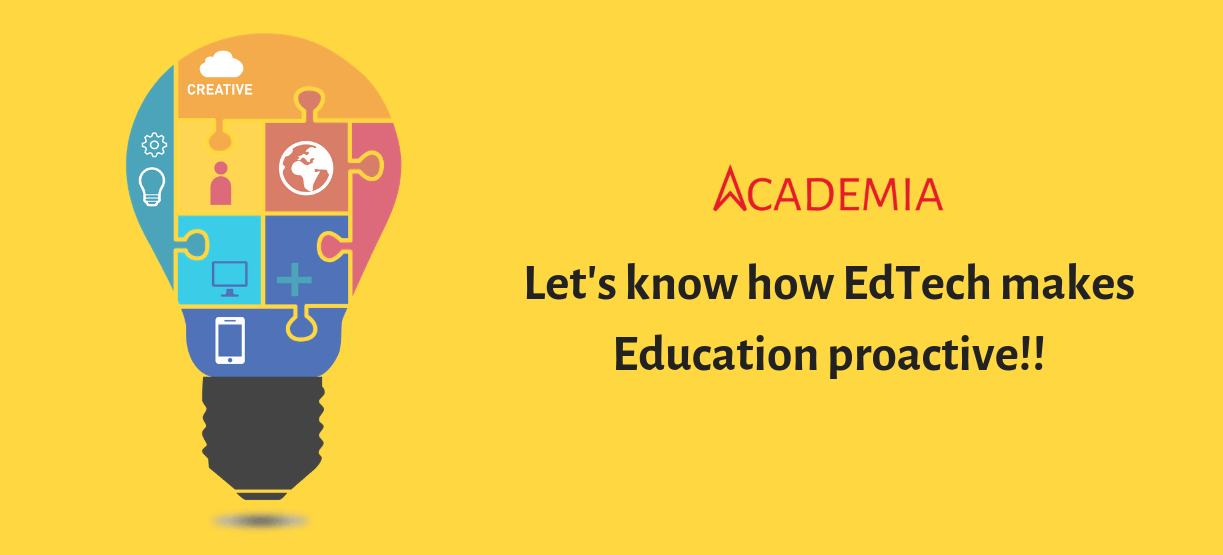
How ERP Makes Education Proactive?

“Doing the best at this moment puts you in the best place for the next moment.”

The education sector is a very huge sector like any other large industries where data-driven decision-making is critical yet important. Education ERP software like Academia is important to ensure a transparent system of flow of data which shall boost the process of decision making.

Academia provides integrated, flexible, comprehensive and scalable Education ERP system for universities, colleges, schools and training institutes that serve as the foundation for creating and delivering accurate, reliable info across your educational institution. Since all the institutions have different needs and challenges, Academia helps you automate the whole system resulting in data-driven (Available through our dashboards and reports) decision making.

ERP Implementation in Institutions brings together the knowledge necessary for making analytical decisions, taking beyond the reporting of historical data and giving you the power to look ahead using predictive analytics. A leading-edge Education ERP software helps you understand trends to facilitate overall planning and intervene where trends need further attention.

Besides such benefits of an ERP there are furthermore which can be listed:how an ERP makes Education Proactive - academia erp - education management software

  • Improved communication & collaboration among stakeholders can be done: The increased communication helps the institutions to get feedback and give critical information in time.
  • ERP increases efficiency: Educational ERP helps to ease down day-to-day activities to improve processes by automating it.
  • Parents, teachers & students can easily share real-time data through various modes and help each other to improve the overall educational structure ensuring accurate decision making.
  • Information is streamlined and improved on the idea of sharing valuable data.
  • Reporting is inbuilt in ERP: Reporting is altogether a different tool available in education automation software which can help teachers to easily generate reports for students and parents to see and evaluate.
  • Analytical capabilities are also built within the ERP: Institution can take advantage of the analytics to generate reports which in turn can help them to make quick and accurate decisions.
  • Information is accessible at all times: Relevant information such as dashboards and reports can be accessed anytime, anywhere using the browser, mobile or any other terminal.

Technology has played a super awesome role in education to make it proactive. Let’s see how?

ERP solutions provide a complete centralized control panel which can be used to improve the daily work-flow of any institutes. It also helps in the administrative process and management handling with automated approach. Information sharing also becomes easy with one-click data storage and retrieval.

To become successful, collaboration is the key. With ERP solution, everyone can easily collaborate and help make the system a better place. Report generation is automated and there is no need to spend hours after hours to generate reports for students and other causes.

Educational ERP software is now becoming mainstream in the education sector. The main reason for the change in demand is how schools and colleges are becoming complex day by day. More data is flowing through the organization and it is always a good idea to keep track of the data and make good decisions based on the data which can easily be done through an automated system one like Academia ERP.

Embracing the Future: Student Information Systems in 2030

In recent years, education has expanded beyond just imparting factual knowledge. Modern education emphasizes problem-solving, creativity, collaboration, and emotional intelligence. It also focuses on values, ethics, and diverse perspectives so the students are better prepared to navigate the world effectively.

As educational methodologies evolve, so should the technology that supports them. By 2030, Student Information Systems (SIS) will not just manage student data but actively contribute to holistic learning experiences. These systems will integrate advanced technologies like artificial intelligence (AI), machine learning, and blockchain to transform the operations of educational institutions.

Key Features By 2030

Student Information Systems of the future will be more than just administrative tools. They will empower educators to deliver personalized, data-driven instruction while fostering student success. Institutions that embrace these advancements are most likely to create more inclusive, efficient, and engaging learning environments. 

  • Automated Administrative Processes: Broadly speaking, SIS platforms already automate routine administrative tasks such as admissions, fee collection, timetable generation, and report card creation. This automation reduces paperwork, saves time, and minimizes errors. Advanced SIS platforms are set to include integrated communication tools to facilitate seamless interaction among students, teachers, and parents. AI-driven chatbots will provide instant responses to common queries, reducing administrative workload.
  • Personalized Learning Paths: Finland’s education policy is a prime example of this global trend. The Finnish education system allows students to select their learning path based on their skills and preferences. Similarly, the future of international education will revolve around analyzing student performance, preferences, and strengths to create customized learning paths. Students will receive tailored resources and assignments to ensure they progress at their own pace.
     
  • Real-Time Analytics and Insights: Educators and administrators will benefit from real-time dashboards. These dashboards offer insights into student engagement, attendance, and academic progress. Predictive analytics will identify students who need additional support to enable timely intervention. These insights will extend beyond academics to a holistic understanding of each student, including social and emotional well-being indicators. Institutes can leverage these analytics to design more effective curricula, allocate resources efficiently, and improve overall institutional performance.
  • Seamless Integration with EdTech Tools: Future SIS platforms will seamlessly integrate with popular educational apps, virtual learning environments, and content platforms. This integration will reduce administrative burdens by streamlining the teaching and learning experience. SIS will create a cohesive learning environment for teachers to assign tasks, share resources, and track progress within a unified platform. At the same time, students would be able to access all their learning materials without switching between multiple apps. Moreover, integration with video conferencing tools and digital assessment platforms will further enhance virtual and hybrid learning models. Institutes will also benefit from interoperability standards that allow different systems to communicate effectively and ensure a smooth flow of information across platforms.
  • Improved Communication and Collaboration: Advanced SIS platforms will include integrated communication tools, facilitating seamless interaction among students, teachers, and parents. Collaborative project spaces and discussion forums will further enhance the learning experience. These platforms will ensure all stakeholders stay informed by supporting real-time messaging, video calls, and automated notifications for important updates. Additionally, AI-driven chatbots will respond instantly to common queries to reduce administrative workload. Institutions will also benefit from multilingual communication features to promote inclusivity for diverse communities.

Conclusion

The future of education is dynamic, and with the right technology, institutions can navigate this transformation with confidence. Embracing next-generation SIS platforms will not only streamline operations but also enrich the educational journey for students worldwide. As we stand on the cusp of this technological revolution, one question remains: Are educational institutions ready to embrace the full potential of these innovations and redefine learning for future generations?

Modern Technological Tools That can Improve Classroom Experience

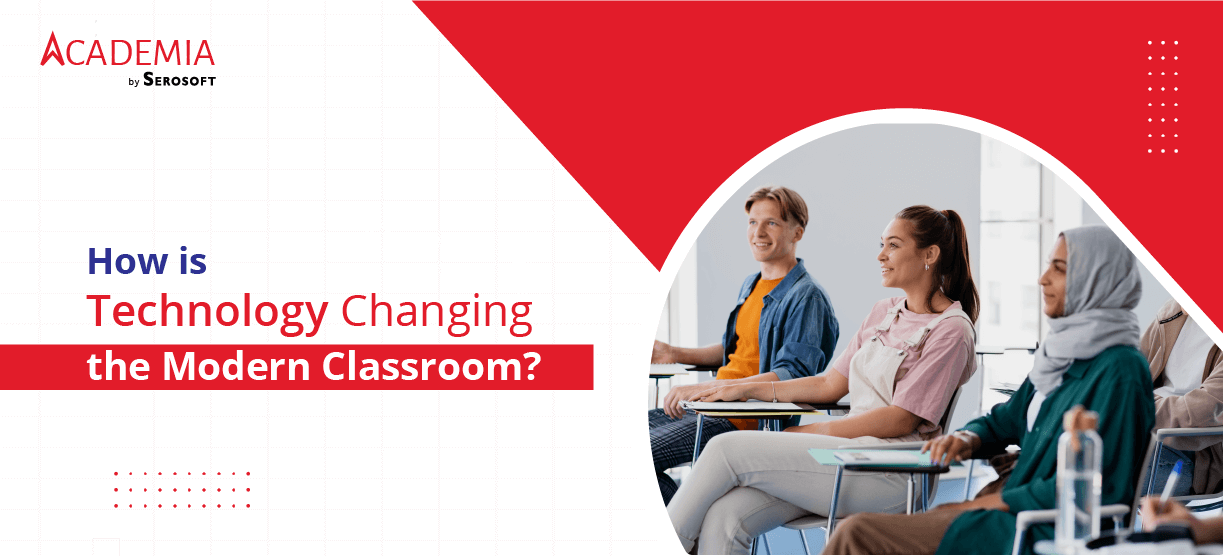
Educational institutions in today’s time need a power booster that can essentially help them in shaping complete institutional operations effectively along with making the classroom experience enhanced and better. Educational institutions need to maintain their level by choosing a modern classroom technology that can help in increasing the experience of the classroom making them more modern and technologically upgraded.  

Various technologies can help institutions to meet all the technical aspects of having smooth, consistent, and transparent management in the institution. There are various designed tools for educational institutions that can help teachers, staff, and students in day-to-day tasks like daily attendance, timetable management, managing academic and administrative tasks like and most importantly in enhancing the student and modern classroom technology.

Let’s discuss some of the points that can help institutions attain classroom technology trends: 

  • Virtual Reality and its effects on modern learning

Virtual reality is one of the most important and basic uses of modern technology in classroom teaching, it provides a next-level experience for higher education classrooms giving a lot of potential for immersive learning. 

Education relies on appropriate learning activities in a simulated environment, it provides a safe, interactive, and engaging, it helps in expanding properly. 

Virtual reality helps faculty to teach students, providing them experience destinations from across the world in the same classroom. This leads to enhancing students’ learning providing them a different experience from any aspect. 

  • Audiovisual presentation for better understanding

Old were the days when manual interventions of teaching and learning in institutions led to improper understanding among students and faculty. In the modern world, various technologies promote the audio-visual presentation of lessons through which students can understand more properly and learn accordingly. 

  • Tech-upgraded digitally smart blackboard to enhance learning

Blackboards are considered as one of the oldest and best ways of teaching and learning in any educational institution. But with the enhanced technology in this sector and uses of modern technology in classroom teaching blackboards are also now digitally smart and are helpful in modern education. Teachers can operate a whiteboard, allowing a person to write on them with real or digital markers. 

  • An efficient and robust ERP for completing academic and administrative operations 

ERP for higher education institutions is one of the best technological tools that increase the experience for modern classroom technology, an efficient and robust ERP manages all the academic and administrative tasks like examinations management, fee management, admission management, library management, and all other tasks removing manual interventions of the institutions by bringing automation and digital transformation in best ways. Institutions must choose a very good ERP solution like Academia. It is one of the best ERP/SIS solutions that focuses on improving the overall experience of the institution and the classroom in the best way. 

  • Artificial intelligence to let the students aware of the modern world

Artificial intelligence (AI) is considered a key driver of growth and innovation across every sector and the education sector is one of them. While AI-powered solutions have been in the Edtech space for some time, it helps in the learning and teaching experience of students in the best prospects, evolving better benefits for students and faculty. AI ultimately automates and streamlines the education process, providing access to the right courses, improving communication skills, it also gives a deep impact on their educational journey. 

  • Effects of Cross-lifecycle CRM on the modern classroom

Educational institutions often hold a false perception about CRM that it can only manage transactions between different departments, Gartner says “Student cross-life-cycle CRM is a deployment that creates a campuswide, 360-degree view of students across their entire life cycle in the institution”. A CRM can be considered as one of the most advanced technological tools that can help educational institutions manage and enhance student life experience in the best way.

What Gartner report states about Top Technology Trends Impacting Higher Education?

In this extremely competitive world, educational institutions must opt for technological tools that can enhance the learning experience of students along with classroom technology trends. According to Gartner, higher education CIOs should weigh recommendations in light of these trends as they shape their IT strategy and priorities. Check this blog on Top Technology Trends Impacting Higher Education in 2021 to know what Gartner has to say about this. 

Download Exclusive Gartner Reports Brought to You by Serosoft (Academia):

Gartner research reportConclusion

So, what do you think about making your institution’s classrooms tech-friendly and more advanced? Do you already have some of the above tools executed in your institution? Let’s discuss more! Contact us now! 

Back to top