Type your keyword below

Understanding Collaborative Learning and its Impact on Educational Success

Embracing Collaboration in Education

Collaborative learning has emerged as a powerful pedagogical approach, transforming how students and teachers engage with the learning process. By fostering teamwork, communication, and mutual support, collaborative learning has the potential to create a more dynamic and inclusive educational experience. In this blog post, we will explore the fundamentals of collaborative learning, its benefits, and strategies for implementing it effectively. Finally, we will discuss how Academia ERP/SIS can support collaborative learning in educational institutions.

Collaborative learning is an instructional approach where students work in small groups to accomplish shared goals. Rather than learning in isolation, students engage with their peers, pooling their knowledge, skills, and perspectives to solve problems, complete projects, or discuss concepts. This learning method hinges on the belief that learning is a social process and that interaction with others can enhance understanding and retention.

The benefits of collaborative learning are numerous, including:

  1. Improved academic performance: Collaborative learning has been shown to boost student achievement, as the process of working together can deepen understanding, promote critical thinking, and enhance problem-solving skills.
  2. Enhanced communication and interpersonal skills: By working together, students have the opportunity to practice and refine their communication, negotiation, and conflict resolution skills, which are essential for success in the placement process and future careers of the students. A successful alumni network is one key way to increase brand value of an institue
  3. Increased motivation and engagement: Collaborative learning can make the educational process more enjoyable and engaging, as students often find working with their peers more motivating than learning alone.

Academia ERP/SIS is a comprehensive education management system that can support collaborative learning initiatives in various ways. This platform offers communication, file sharing, and project management tools, facilitating seamless interaction and collaboration among students and faculties. They can upload course materials, study notes, etc., which can be made accessible to students from a particular program batch, a customized set of students, or even a specific student. It is also possible to set rules where the automatic notification will go via various channels (like Whatsapp, Email, etc.) on the upload of these documents. Also, AcademiaERP provides an option to create a drive where all the important course materials and other documents can be centrally stored. 

AcademiaERP has made the assignment allotment by the faculty, assignment submission by the student, and assignment correction by the faculty completely digital and fast.

Furthermore, Academia ERP/SIS provides real-time analytics and reporting features, enabling instructors to monitor students’ progress, identify areas for improvement, and provide personalized support as needed.

In conclusion, collaborative learning is a powerful instructional approach that fosters teamwork, communication, and mutual support, leading to improved academic performance, increased motivation, and the development of essential social and emotional skills. By embracing collaborative learning strategies and leveraging the capabilities of advanced education management systems like Academia ERP/SIS, educational institutions can create a dynamic, inclusive, and successful learning environment that prepares students for the challenges of the 21st-century workforce.

Improve Teacher’s Productivity By more than 30% with Academia ERP

Streamline Attendance, Assignments, and Course Material Distribution

Introduction: 

Teachers are the backbone of the education system, playing a crucial role in shaping the next generation’s minds. However, they often spend a significant portion of their time performing administrative tasks, such as marking attendance, distributing and collecting assignments, and sharing course materials. Research indicates that teachers spend approximately 30-40% of their time on these non-teaching tasks, which could be better utilized for lesson planning, student interaction, and professional development. AcademiaERP, a versatile ERP platform for educational institutes automates and digitizes these tasks, freeing up valuable time for teachers and enhancing their productivity.

How AcademiaERP Helps Teachers:

1. Automation of Attendance Marking: 

AcademiaERP’s advanced attendance management system automates the process of marking attendance via QR codes and hence eliminates teachers’ time to take the attendance. As those attendances are automatically logged in the system students/ teachers and admins can easily track student attendance through the platform’s user-friendly interface making the reconciliation easy and eliminating fraud. Also real-time updates and prompt notification can be sent to the students who are absent 

2. Automation of Assignment Distribution and Collection:

The platform’s assignment management module simplifies distributing, collecting, and managing student assignments. Teachers can create assignments, set deadlines, and distribute them to students with just a few clicks. Students can submit their completed work through the platform, allowing teachers to review and provide feedback quickly and more efficiently. This automation eliminates the need for the physical handling of papers and streamlines the entire assignment workflow.

3. Automation of Course, Material Distribution to the Students:

AcademiaERP’s course material distribution system enables teachers to easily share course materials, resources, and announcements with students. By centralizing these resources in one platform, teachers save time on organizing and distributing materials, while students benefit from having easy access to everything they need for their courses. 

Besides the above benefits AcademiaERP comes with other key modules like Admission Management, Program and Course Management, Fee Management, Hostel Management, Student Management etc. It digitizes the institute’s operations and ensure all the stakeholders can devote their valuable times in more productive works

Experience the power of Academia ERP/SIS firsthand by scheduling a demo. Discover how to boost teacher productivity and unlock your institution’s full potential with our cutting-edge solution.

Unraveling Competency-Based Education (CBE): A Paradigm Shift in Learning Approaches

The educational landscape is constantly evolving, and one of the most noteworthy trends of the current era is Competency-Based Education (CBE). Unlike traditional education models that focus on time-based learning and evaluation, CBE centers on students’ ability to demonstrate mastery of specific skills or knowledge areas—competencies—regardless of how much time they spend on learning.

Competency-Based Education, as the name suggests, is an educational approach that emphasizes what learners can do rather than the time they spend in a classroom. In a CBE framework, students progress through their educational journey by mastering a series of competencies, each representing a well-defined, measurable skill or knowledge area relevant to their field of study. The pace of learning is flexible and personalized, allowing students to move on to the next competency only after demonstrating mastery of the current one.

What sets CBE apart is its learner-centric model. The learning process in CBE is tailored to each student’s needs, abilities, and learning styles. This personalization is possible due to the flexible pace of learning, which allows students to spend more time on challenging competencies and less time on those they grasp quickly. This flexibility fosters a more engaging and effective learning experience and ensures that all students reach the same high standards of competence.

Assessment in a CBE system is also unique. Unlike traditional grading systems that often provide a vague understanding of a student’s knowledge, CBE uses continuous and comprehensive assessments to determine whether a student has mastered a competency. These assessments can take various forms, such as projects, presentations, or tests, and provide a clear, precise measure of a student’s skills and knowledge.

The benefits of CBE are manifold. It ensures that students gain a deep, practical understanding of their field, which employers highly value. It also fosters lifelong learning skills like self-direction, problem-solving, and critical thinking. Moreover, the flexible pacing can make education more accessible for non-traditional students, such as working adults or those with family commitments.

Despite these advantages, implementing CBE can be a complex task for institutions, requiring significant changes in curriculum design, teaching methods, and assessment practices. However, technological solutions like Academia ERP/SIS can help to overcome these challenges.

Academia ERP/SIS, a comprehensive education management system, offers robust reporting and analytics features that can significantly support CBE implementation. It allows institutions to track students’ progress towards competency mastery in real-time, providing educators with the insights they need to tailor instruction and support to individual needs. Its flexible grading and assessment tools can accommodate the diverse, performance-based assessments typical of CBE, ensuring a precise measure of student competencies.

In conclusion, Competency-Based Education represents a significant shift from the traditional time-based education model, focusing instead on students’ mastery of specific skills and knowledge. With its potential to foster deep learning, personalize education, and better prepare students for the workforce, CBE is a promising approach for the future of education. And with the support of advanced education management systems like Academia ERP/SIS, implementing CBE can be a seamless and rewarding journey for educational institutions.

Overcoming the Challenges of Implementing Outcome-Based Education

In the ever-evolving realm of education, Outcome-Based Education (OBE) has emerged as a progressive approach emphasizing students’ mastery of subject matter. With its focus on student learning outcomes, OBE aims to ensure that students gain the necessary skills and knowledge to be successful in their chosen paths. However, as with any educational reform, implementing OBE presents its unique challenges. This blog post explores ways to overcome these obstacles and adopt OBE in educational institutions.

One of the most significant challenges of implementing OBE is the shift in educational philosophy it requires. Traditional education models are primarily teacher-centered, while OBE is student-centered. Transitioning from a teaching focus to a learning focus requires a significant shift in mindset from educators, students, and parents. Overcoming this challenge involves continuous professional development for teachers to understand and embrace the OBE approach. It also necessitates clear communication with students and parents about the benefits and expectations of OBE.

Another hurdle is the development of a suitable curriculum that clearly outlines the desired outcomes. Unlike traditional curriculums, which focus on what educators will teach, OBE curriculums are centered around what students are expected to learn and achieve. Designing such a curriculum requires careful consideration and alignment of content, instructional strategies, and assessments with the intended outcomes. Institutions can overcome this challenge by involving all stakeholders in the curriculum development process, including educators, students, parents, and even employers.

Assessment is another area where OBE diverges significantly from traditional education. OBE demands a more comprehensive and continuous assessment approach, focusing on demonstrating mastery of skills rather than rote memorization. Traditional assessments, like multiple-choice tests, may not be suitable for OBE. Instead, assessments should be project-based, allowing students to demonstrate their understanding and application of knowledge in real-world contexts. Training educators in these new assessment methods and communicating the purpose and benefits of these assessments to students and parents can help overcome this challenge.

Finally, implementing OBE requires sufficient resources, including time, technology, and training. Teachers need time to plan, develop, and assess OBE curriculums. Schools may also need to invest in new technologies and training to support OBE. Overcoming this challenge requires careful planning, budgeting, and potentially seeking additional funding sources.

As we navigate the challenges of implementing OBE, technology can be a powerful ally. A robust Education Enterprise Resource Planning (ERP) system like Academia ERP/SIS can streamline and automate many OBE processes. Academia ERP/SIS offers curriculum management features that allow institutions to align content, instruction, and assessments with desired learning outcomes. Its advanced assessment tools support various assessment methods, including project-based assessments, making it easier for educators to assess student mastery of skills. Furthermore, the system’s reporting and analytics features provide valuable insights into student performance, helping institutions continually refine their OBE implementation.

In conclusion, implementing Outcome-Based Education may be challenging but not insurmountable. With the right mindset, strategies, resources, and technological support like Academia ERP/SIS, educational institutions can successfully transition to OBE and pave the way for a more relevant, engaging, and practical education for all students.

Below, you’ll find a selection of screenshots from the Academia ERP/SIS system. These images illustrate how its various features can significantly enhance the implementation and effectiveness of outcome-based education.

  1. Academia ERP OBE Options

    Academia ERP OBE Options

  2. Complete Management of Program and Course Outcome


    OBE

  3. Direct PO Attainment Report:

    Direct PO Attainment Report

  4. CO Attainment Report:

    CO Attainment Report

  5. OBE Event Level Report:

OBE-Event-Level

Discover more about the process of OBE implementation and how Academia ERP facilitates its successful execution. To gain a comprehensive understanding, we invite you to request a personalized demo.

Champion the era of tech in education through high configurability

Change is part of life, but does it always have to be complex and messy? Not exactly. When we talk about modern-day technology something has shifted innately. Widescale changes in software do not mean altering the code of the software in its entirety anymore. In fact, customization is now out of the picture, and high configurability software is in. This has been made possible by SaaS. 

The major advantages of SaaS are any new updates can be made available to the users very fast, debugging of issues become easier and much easier to adopt pay-as-you-use model.

Think Beyond Customization

Every education institute has a unique workflow and work.arounds. To ensure that software fits like a puzzle piece into these workflows and set processes, customizations to the existing software were required. 

But this meant a lot of wasted time, increased costs, and settling for below-average quality software. It created inefficiencies that led to security risks and slowed down the overall performance of the software. It also led to more downtimes. 

All in all, it was not a very viable option for the buyer and the vendor. The regular visits and revisions in the software resulted in increased costs of software and become a burden for the vendor every time an institute needed to upgrade or invest in new technology. 

Evade Vulnerability and Ensure Quality

Customizations in the software requires a team to alter the code of the software. This means increased security breaches, many downtimes, and reduced operational efficiency of software. Especially, during the upgrades, the approach was to do customizations to the product to meet the requirement of an institute. This took up a lot of time and tied up many resources in the institute to get involved in the development process. 

Meanwhile, with configuration, it is just like adjusting the knobs on the existing product to meet your current requirement. It is as simple as flipping a switch and makes upgrades and personalization of the product very easy. Furthermore, it does not require a developer to expose data to security threats and endure downtimes that disrupt the working of an institute. 

The Real Price you Pay for Customization

Education institutes is one of the biggest targets for cyber attacks. Institutes store vast amounts of personal and financial information of a student and usually, it is not protected. It just simply lies there exposed ready to be attacked by the cybercriminals. Bringing customizations into the picture elevates this situation. 

Go for a SaaS solution instead

Look for a SaaS solution that is: 

  • ISO 27001 certified. 
  • Has a dedicated Security Incident Response team
  • Has robust vulnerability and patch management capabilities
  • Has advanced Intrusion Detection System 
  • Has incredible security features 
  • Provides opportunities for upgrading new features

Wrapping Up 

The biggest difference between customization and configurability is the ease of adoption to the growing needs of the institute. Customizations make change complicated and leave institutes more prone to random cyber attacks. Meanwhile, a system that is highly configurable allows you to adjust the elements of the software as simple as adjusting the knob and changing the functionality of the product. You don’t have to dive into the code of the product. It is an added benefit that you must look for in SaaS-based cloud ERP solutions for education institutes. If you are looking for a product with high-configurability consider Academia ERP and learn more from our technology experts. 

Mastering Digital Admissions: Marketing Strategies for Educational Institutions in the Digital Era

In today’s digital age, educational institutions must adapt their marketing and admissions strategies to reach prospective students effectively. Traditional methods, such as print advertisements and college fairs, are no longer sufficient to attract and engage the modern applicant. This article will discuss key strategies to help your institution navigate the digital landscape and excel in admissions marketing.


  1. Develop a Strong Online Presence 

A robust online presence is essential for educational institutions to showcase their offerings and connect with prospective students. Invest in a user-friendly website that provides detailed information about academic programs, campus life, and admissions procedures. Additionally, create engaging content, such as blog posts and videos, to demonstrate your institution’s unique value proposition and appeal to a diverse range of prospective students. 

  1. Utilize Social Media Platforms 

Social media platforms offer unparalleled opportunities to reach and engage your target audience. Develop a social media strategy that includes regular posting, interaction with followers, and targeted advertising campaigns. Encourage current students, faculty, and alumni to share their experiences and contribute to your online community. 

  1. Implement Search Engine Optimization (SEO) 

Optimizing your institution’s website for search engines is crucial for attracting organic traffic and increasing visibility. Invest in keyword research, quality content creation, and technical SEO improvements to help your website rank higher in search results for relevant terms. 

  1. Leverage Content Marketing 

Content marketing involves creating valuable and relevant content that appeals to your target audience. Develop a content strategy that includes blog posts, articles, infographics, videos, and other multimedia formats to demonstrate your institution’s expertise and provide valuable information to prospective students. 

  1. Utilize Email Marketing 

Email marketing is an effective way to communicate with prospective students and nurture leads. Create targeted email campaigns to share important information, updates, and events related to your institution. Use personalized messaging and segmentation to ensure your emails resonate with recipients and encourage engagement. 

  1. Harness the Power of Analytics 

Monitoring and analyzing the performance of your digital marketing efforts is essential for ongoing improvement. Use analytics tools to track key metrics, such as website traffic, social media engagement, and open email rates. Apply these insights to refine your marketing strategies and make data-driven decisions. 

  1. Engage in Online Reputation Management 

Maintaining a positive online reputation is crucial for attracting prospective students. Monitor online reviews, social media mentions, and other digital channels to identify and address negative feedback or concerns. Encourage satisfied students and alumni to share their experiences and contribute to a positive online image for your institution. 

Conclusion 

Navigating the digital landscape and effectively marketing your educational institution in the digital age requires a multi faceted approach. By leveraging various digital channels and implementing data-driven strategies, your institution can reach and engage with prospective students meaningfully. Embracing these marketing techniques will help your institution 

stay competitive and attract the students who will thrive within your educational community. 

Request Demo for Academia ERP and learn about campaign and enquiry management for educational institutions. 

Change Management for Technology Adoption in Institutions – Top 8 Strategies

In today’s fast-paced digital era, educational institutions must adapt to technological advancements to remain competitive and efficient. However, the process of incorporating new technologies can be challenging and may face resistance from staff or stakeholders. This blog post will explore eight change management strategies for successful technology/software adoption in education institutions, ensuring a smooth transition and optimal outcomes.

  • Assessing the Need for Change

Before adopting any new technology/software, it’s essential to assess the current landscape and evaluate the need for change. Identifying gaps, inefficiencies, or areas for improvement will help institutions make informed decisions about the most suitable technology solutions. It’s also crucial to consider the organization’s long-term goals and how new technology can support them.

  • Establishing a Clear Vision

A clear vision is key to driving change in any organization. Leadership must outline the intended benefits of the new technology and how it will enhance the institution’s overall operations. This vision should be effectively communicated to all stakeholders to garner support and buy-in for the change.

  • Building a Cross-Functional Team

Institutions should create a cross-functional team consisting of representatives from different departments and levels of the organization. This team will lead the change management process, ensuring that diverse perspectives and insights are considered. In addition, the team will be responsible for planning, implementing, and monitoring the technology adoption process.

  • Developing a Comprehensive Change Management Plan

A well-defined change management plan is crucial for successful technology adoption. The plan should outline the project’s objectives, scope, timeline, and required resources. It should also cover the communication strategy, stakeholder engagement, training, and support initiatives, as well as plans for monitoring progress and addressing any challenges that may arise.

  • Training and Support

One of the most significant barriers to successful technology adoption is a lack of knowledge or skills among staff. To overcome this hurdle, institutions should invest in comprehensive training and support programs to ensure employees understand and feel confident using the new technology. Customized training sessions, workshops, and ongoing support can help facilitate a smooth transition.

  • Encouraging Open Communication

Open communication is essential throughout the change management process. Institutions should create an environment where staff and stakeholders can share their thoughts, concerns, and feedback regarding the new technology. This can help identify potential issues early on and foster a sense of ownership and commitment to the change.

  • Monitoring and Measuring Success

To gauge the success of the technology adoption, institutions should establish key performance indicators (KPIs) and regularly monitor progress. This will help identify areas of improvement, celebrate successes, and ensure that the adopted technology aligns with the organization’s goals and objectives.

  • Celebrating Success and Continuous Improvement

Recognizing and celebrating the achievements of the team and individuals involved in the technology adoption process can help maintain momentum and encourage continuous improvement. Education institutions should always be open to refining and optimizing their processes, using feedback and data to inform decision-making and enhance the overall impact of the new technology.

Conclusion

Adopting new technology/software can be a complex and challenging process for educational institutions, but with a strategic change management approach, success is achievable. By assessing the need for change, establishing a clear vision, building a cross-functional team, and developing a comprehensive plan, educational institutions can facilitate a smooth and successful technology adoption process. In addition, providing training, support, and open communication channels will ensure that staff and stakeholders are engaged and committed to the change, ultimately leading to more efficient, innovative, and competitive institutions. 

So, are you ready for the change in your educational institution? Start with Academia ERP, today.

Selecting the Ideal CIO for Your Educational Institution

Introduction 

The role of the Chief Information Officer (CIO) in today’s universities and colleges is increasingly important. With the rapid advancements in technology and the growing reliance on digital platforms, it is crucial to find the right CIO to help steer the educational institution towards a successful future. This article will guide choosing the ideal CIO for your university or college. 

Define the CIO’s Role and Responsibilities 

Before searching for a suitable CIO, it is essential to understand the position’s responsibilities and functions clearly. Some key duties may include managing the institution’s information technology (IT) infrastructure, formulating strategic IT plans, and ensuring effective data management. By clearly defining the role, you can create a more targeted search for the perfect candidate. 

Assess the Institution’s Needs and Goals 

You need to determine your specific needs and objectives to find the best fit for your institution. This includes identifying your institution’s technological challenges, the desired outcomes of implementing new technologies, and any budgetary constraints. Understanding these factors will enable you to create a detailed candidate profile to help streamline recruitment. 

Focus on Relevant Experience and Skills 

When evaluating potential candidates, prioritize those with a proven track record of success in IT management, preferably within the education sector. Look for individuals who have experience in strategic planning, project management, and team leadership. Strong communication skills and working collaboratively with various stakeholders are also essential. 

Evaluate Cultural Fit 

An effective CIO should be able to adapt to and thrive within your institution’s culture. During interviews, assess the candidate’s values, work style, and approach to problem-solving. Determine whether they can build strong relationships with faculty, staff, and students and whether their leadership style aligns with your institution’s ethos. 

Engage the Right Stakeholders 

Involving key stakeholders in the hiring process is critical to ensure that the selected CIO has the support necessary for success. This may include faculty members, administrative staff, and student representatives. Engaging these stakeholders will give you valuable insights into the candidate’s suitability for the role. 

Offer Competitive Compensation 

To attract top talent, your institution must offer an attractive compensation package. Research industry standards for CIO salaries and benefits in higher education and consider offering additional incentives such as performance bonuses or professional development opportunities. 

Conduct Thorough Reference Checks 

Before making a final decision, verifying the candidate’s work history and accomplishments is crucial by conducting thorough reference checks. Speak with former colleagues, supervisors, and subordinates to gain a holistic understanding of the candidate’s professional capabilities and work ethic. 

Conclusion 

Hiring the right CIO for your educational institution is complex and vital. By following the guidelines outlined above, you will be better equipped to find a candidate with the necessary skills, experience, and cultural fit to lead your institution’s IT strategy and drive technological innovation. 

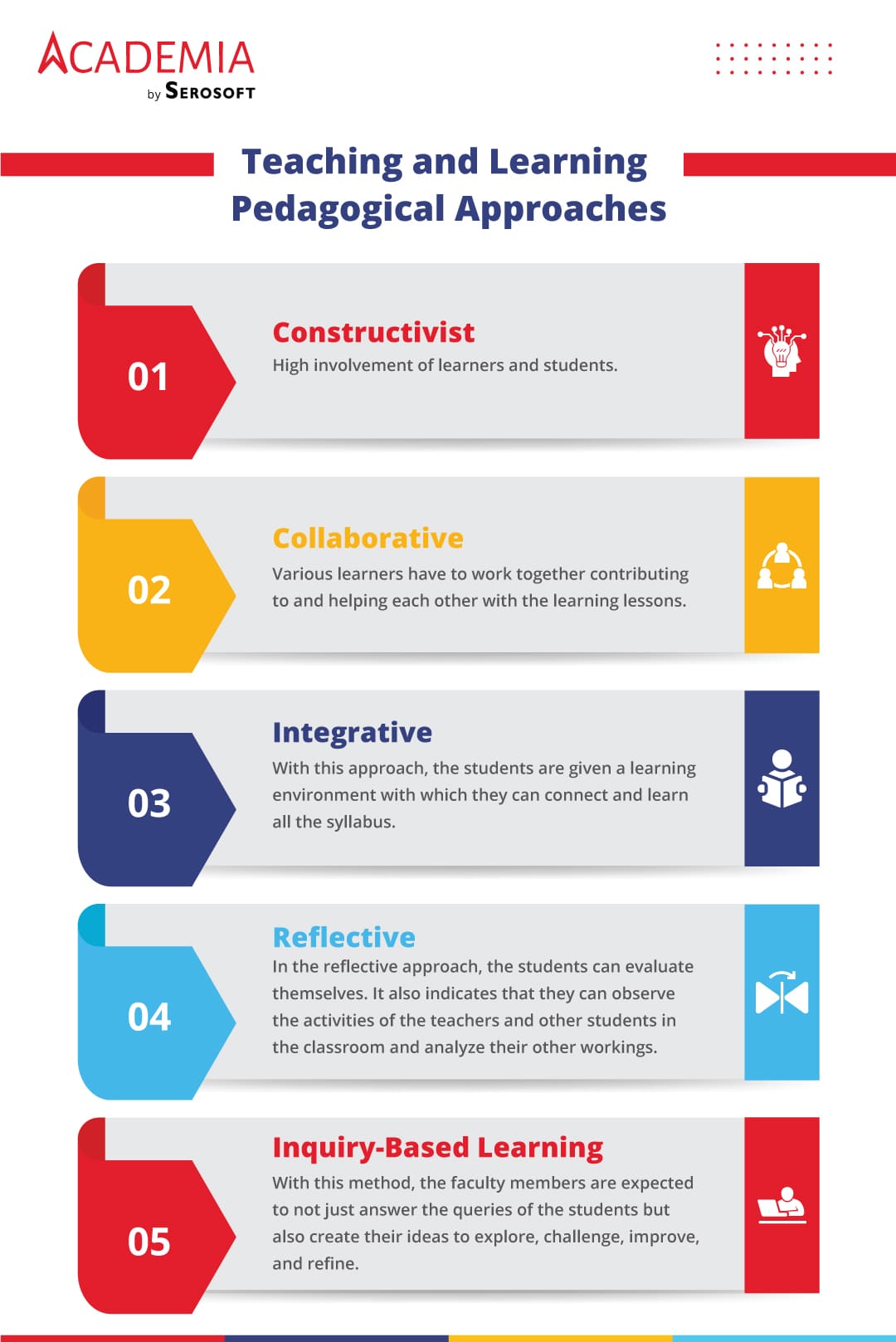
Significance of Pedagogy in Education and Learning Advancements

Exploring the Dynamics of Pedagogy: A Catalyst for Rapid Growth in Education

In a swiftly evolving education landscape, the importance of pedagogy cannot be overstated. As the education sector undergoes continuous enhancement each year, educators play a pivotal role in understanding and leveraging pedagogy to foster rapid growth within their institutions. But what exactly is pedagogy in education, and how does it contribute to institutional development? This discussion delves into the crucial role of pedagogy in shaping education and learning methodologies.

Deciphering Pedagogy in Education: Nurturing Learning Through Theory and Practice

Pedagogy in education embodies the intricate relationship between the theory and practice of teaching, influencing the culture and techniques of learning. It serves as the linchpin for creating and refining learning methods, skills, and attitudes among students. The primary goal of pedagogy is to empower learners with a profound understanding of subjects, equipping them to apply their knowledge in real-life situations beyond the confines of the classroom.

How Pedagogy can help faculty improve teaching?

Looking upon teaching in pedagogy, plays a vital role in advanced education delivery. It can be referred to as an understanding of how the students can learn. The teachers are also focused on presenting the syllabus to the students in a way that is necessary to the needs of students. Pedagogy also demands the right way of interaction and communication between the faculty and students along with creating a necessary impact on the students’ minds. 

Faculty members who teach advanced education to students can focus on teaching & learning pedagogy. For them, it is an approach that has optimized the larger responsibilities of faculty giving correct information to students. The faculty members get a clear understanding of how the students are doing concerning their learning and can also focus on the effective target language.


Importance of pedagogy in education:

  • Improves Quality of teaching and learning 

If implemented properly and effectively, pedagogy can help improve classroom learning and quality of teaching to show a drastic improvement. It will also help students resulting in improving their overall performance and learning, also allowing them to learn thoroughly and enhancing learning outcomes. 

  • Boosts cooperative learning atmosphere 

The concept of pedagogy in education helps in encouraging students to work together towards learning and completing all operations. This also helps in improving their perception by understanding and taking views from other students, along with adapting to the cooperative learning environment making education better and growing. 

  • Removes repetitive and monotonous learning 

Pedagogy helps students to develop objectives along with self-grooming. It also allows educational institutes to move beyond the traditional and old methods of memorization and comprehension of teaching and learning. It provides complex processes of learning through which students’ progress can be analyzed and evaluated. Along with all these, it also provides students and faculty with a different form of learning and teaching. 

  • Allows students to learn effectively 

A proper and well-thought plan for pedagogy can help students to grasp education in various ways. It creates the learning abilities of different students. Students are also allowed to take their preferred ways of learning and stick to them. 

With all this, it provides students with a better understanding of the subject, which can eventually improve all the skills, learning, and development outcomes. 

  • Enhances communication 

Communication is also one of the vital factors that make students and faculty relationships better. Institutions opting for the concept of pedagogy can help the faculty understand the student in a better way, triggering them to focus on the student’s weaknesses and guide them accordingly.

How Academia can help improve education delivery in institutions?

Academia ERP/SIS is a robust, feature-rich, analytics-equipped, user-friendly platform, built on a cutting-edge and flexible architecture. It enables educational institutions to automate & streamline their functions/processes for both learning and administration. 

In elevating education delivery within institutions, Academia ERP/SIS stands as a robust, feature-rich, and analytics-driven platform with a user-friendly interface, all structured on a cutting-edge and adaptable architecture. This platform empowers educational institutions to seamlessly automate and streamline both their learning and administrative processes. By embracing pedagogy, Academia becomes a catalyst for enhancing overall education delivery. 

Our software not only facilitates the efficient management of academic and administrative operations but also fosters an optimal environment for faculty and students to learn, communicate, and connect effectively. As we conclude, this article has provided valuable insights into the pivotal role and significance of pedagogy in education. Should you have further inquiries or suggestions, our dedicated team is ready to assist you. 

Feel free to Request Demo and explore the transformative capabilities of Academia.

5 Higher Education IT trends in 2021

Like other industries, higher education too got severely hit by the pandemic of 2020. Classes moved to online and hybrid environments, budgets got squeezed and higher education IT needs evolved dramatically.

Educational institutions all over the world are looking at IT infrastructure to prioritise and provide the high-quality experience that students expect. While the remote and hybrid modes of learning will be the way education will move in the immediate future, delivering efficient and flexible IT solutions will be the primary focus for institutions. The year ahead will be a pivotal one for technology in higher education and it is crucial for institutions to invest in the right solutions to reach the next level.

With institutions ready to take the best path forward, here are five IT trends in higher education to look forward to in 2021.

  1. More demand for Advanced Learning Management Systems: Even before the pandemic, online learning was on the rise, but it was limited to a few institutions. With Covid 19, learning environments were upended and institutions rapidly evolved. Higher education IT played a crucial role in making sure that classes continued virtually, and the staff was able to work remotely.

    Institutions are bringing on sophisticated systems making learning experiences in future virtual semesters more collaborative and interactive. There will be a rise in sophisticated video conferencing platforms, Augmented Reality, and Virtual Reality. With traditional enrolment decreasing, IT will also support digital marketing, customer relationship management (CRM), and analytics.

  2. More Robust Networks to Come: An increasing number of students will rely on laptops and mobile devices to do their coursework. Hence, it is important for universities and colleges to upgrade network infrastructure to manage the additional traffic. There will be network optimization tools and services employed to ensure broadband equity.Outdoor wi-fi will be a common feature with parking lots and other outdoor locations having wireless access. The aim is for students and faculty to be able to connect to the network from anywhere on the campus and off it too.
  3. New Ways of Remote Assessment: One of the biggest challenges COVID-19 has created is remote assessments. There have been serious privacy concerns raised by online proctoring services and it is crucial to have strategies to prevent dishonesty in remote assessments. However, with online learning here to stay, there will be a rise in alternative ways of appearing for exams. The coming year will present numerous ways of remote assessments, in place of virtual exams, which will be satisfactory to both students and institutions. Instructors will be able to create assessments where students will have to interact more with the material and use resources for further research, to gain deeper learning.
  4. Adoption of IoT: The Internet of Things is set to bring about revolutionary changes to education. With IoT devices getting cost-effective, they will be used widely and effectively in the higher education segment.IoT will help with digital attendance using biometric, tracking student location, or even keeping a tab on the consumption of electricity in the campuses as it can detect the human presence in the class and can switch on or off electricity as required. IoT can track the total time taken by students for completing a particular assignment which can provide useful insights and can be compared with class performance.
  5. Radical business model transformation: With downward pressure on tuitions and rising operating costs, higher education business models are being reconsidered. Institutions are looking at integrated education models that merge undergraduate education with higher-level research. This is meant to benefit the institution financially and boost growth through sponsored research by driving the development and adoption of the new financial and business models. This is also critical to reduce operating costs while increasing efficiencies by focusing on research and academic operations.

Conclusion

Institutions will need to decide on business models that are scalable, cost-effective, and accessible to take care of the needs of this decade and beyond. Higher educational institutions will be seeking innovative solutions to meet the challenges ahead.

Academia, as a leading provider of higher education ERP software, is at the forefront of designing solutions to meet each and every new challenge in the year ahead. For a detailed demo on how you could prepare yourself to move ahead, get in touch at https://www.academiaerp.com/request-demo/


Back to top