Type your keyword below

ABET Accreditation of Higher Education – All the Details

ABET (Accreditation Board for Engineering and Technology) is a US-based non-profit organization that grades engineering programs at a college to ensure professional-grade education. It is a global standard in STEM education to assure that undergraduate and postgraduate programs like computing, engineering, applied science, natural science, and software engineering provide academically sound, skill-based education.  

ABET-accredited university

ABET accreditation is a global standard and works as a magnet to attract prospects for your university. It executes the accreditation process through a network of experts that have vast industry experience. These experts evaluate and validate the institute programs to be holistic, and quality-driven. 

For this, the team of experts closely scrutinizes the programs. The process provides academicians and management of the university with a deeper understanding of the gaps in the system. The procedure includes a review of the program material, several visits to the campuses, and more. The process is well-aligned with modern education needs and standards, and thus makes ABET one of the most sought-after accreditation till now in the world for technical courses.  

What does it mean to be ABET-accredited? 

ABET sets a global standard, and getting accreditation from ABET means adding extra value to your global reputation. Being ABET accredited testifies for:

  • International quality education
  • Best practices in education 
  • Faculty and staff self-assessment process and continuous quality improvement
  • Focus on learning outcomes rather than just teaching inputs

Programs that can be ABET Accredited

  • Distance Learning Technical Programs
  • Applied and Natural Science Programs 
  • Computing Programs
  • Engineering Accreditation Commission
  • Engineering Technology Programs
  • Several Alternative Programs

Why is ABET Accreditation in Higher Education important?

ABET is globally valued. Every individual wishing to make a career in engineering and computer sciences would wish that their degree is of a global standard and also have a conviction that they are at an advantage of being part of a quality-driven, skilled-based curriculum. 

If your university is ABET accredited, you have a major edge in the market, as: 

  • It shows the compelling quality standards in the science and technology field.
  • It gives you a competitive edge in beating private and government institutes in your area.
  • It helps establish you in the global market.
  • It is a confirmation of high quality in terms of curriculum, assessment, and development.
  • It helps you in continuous improvements as ABET conducts regular reviews.
  • It ensures better student outcomes 

Note:

ABET accreditation may also help your institute to get a PE or Professional Engineer License.

ABET criteria and eligibility 

ABET promotes excellence in technical education and thus puts quality improvement at the center of all accreditation activities. The accreditation criteria is built by academic experts and technical professionals with years of experience in various industries, academic professions, and government organizations. The criteria is built to evaluate programs on three factors: 

  • Quality
  • Content 
  • Relevance

Important details of the ABET accreditation criteria

  • Eligible programs

Not every program is eligible for ABET accreditation and hence you must carefully go through the list of programs for which you apply for accreditation. Furthermore, the institute should be nationally and regionally accredited in the USA.  Also, doctoral and certificate programs are not accredited by ABET. ABET only accepts accreditation requests from degree-granting educational institutions. 

  • Minimum of one graduate is mandatory

Programs become eligible only if they have at least one graduate passed out. 

  • Program name clause

The program name should convey the objective and should not be misleading. 

  • SSR 

It is essential to submit an initial SSR before the on-site visit. The report needs to be accurate, to the point, updated, and error-free. 

ABET Accreditation Process & Timeline

ABET accreditation is a time-intensive process and can take up to 18 months. Step by step we can divide the accreditation process into: 

  • Readiness review 
  1. Collecting samples of syllabus, assignments, curriculum  
  2. It starts in October and must end by January 31st
  • Evaluation request 
  1. Assigning the assessment team 
  2. Between April and May, based on the review
  • Submission of SSR 
  1. Self-study report submission, followed by review by the assessment team
  2. Submission before July 1st
  • On-site visit
  1. Documents should be filed and ready before the on-site visit
  2. Panel interviews conducted with faculty, students, administration
  3. Usually scheduled from September until December, the on-site assessment lasts 3 days.
  • Decision-making process
  1. The review team may notify if they found any gaps during their visits 
  2. Within two-three months, formal communication starts to inform the findings
  3. Institute may be required to produce an explanation for the shortcomings within 30 days 
  4. The decision comes around July
  5. The final verdict notified to the institute by August 31st

ABET Assessment Planning

  1. Establish mission Statement
  2. Define Program Educational Objectives (PEOs) and Student Outcomes
  3. Evaluate Assessment findings 
  4. Plan Assessment design and execution
  5. Use data for decision-making

How to get ABET accredited successfully?

Here are some useful tips to get ABET accredited successfully:

  • Stick to the time frame

There is a reason why we have mentioned the months in the timeline. It is an 18-month-long process and you would get a sufficient time window to finish all the formalities and meet the expectations and standards of the assessment team. 

  • Eligibility check

Before you begin the process, it is necessary to map the eligibility criteria to your institute’s offerings. It is very common for people to apply for the accreditation of a course that doesn’t fall within the eligibility criteria. 

  • Request Application

To confirm your eligibility you are required to make a request for the same and submit the SSR, within the timeline for ensuring the process starts. 

  • ABET Review 

Based on your submission, the committee will evaluate your SSR and conduct an onsite visit to proceed with the evaluation process and give a final decision. So, make sure SSR is well-built with no errors. 

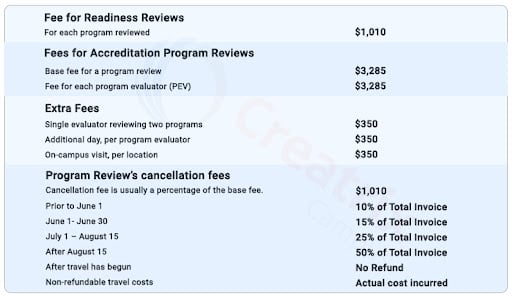
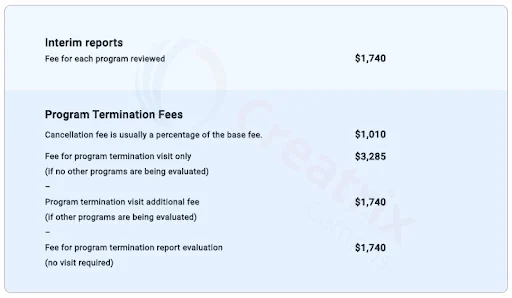
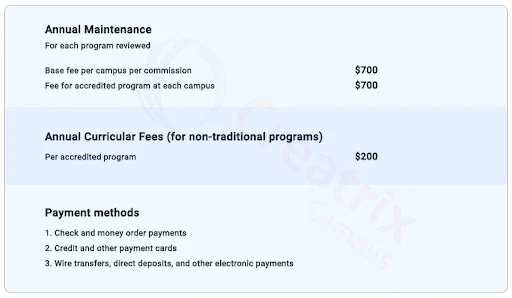
Cost of ABET Accreditation 

Based on 2021-2022:


Note: 

Fees for the programs outside the US are different, get more info on this here

Re-accreditation

Yes, re-accreditation is possible. And you need to submit RFE (Request for Evaluation) on the official website of ABET. RFE is a general formality for visits, interim visits, or interim reports. 

How does Academia ERP Solution help with ABET Accreditation?

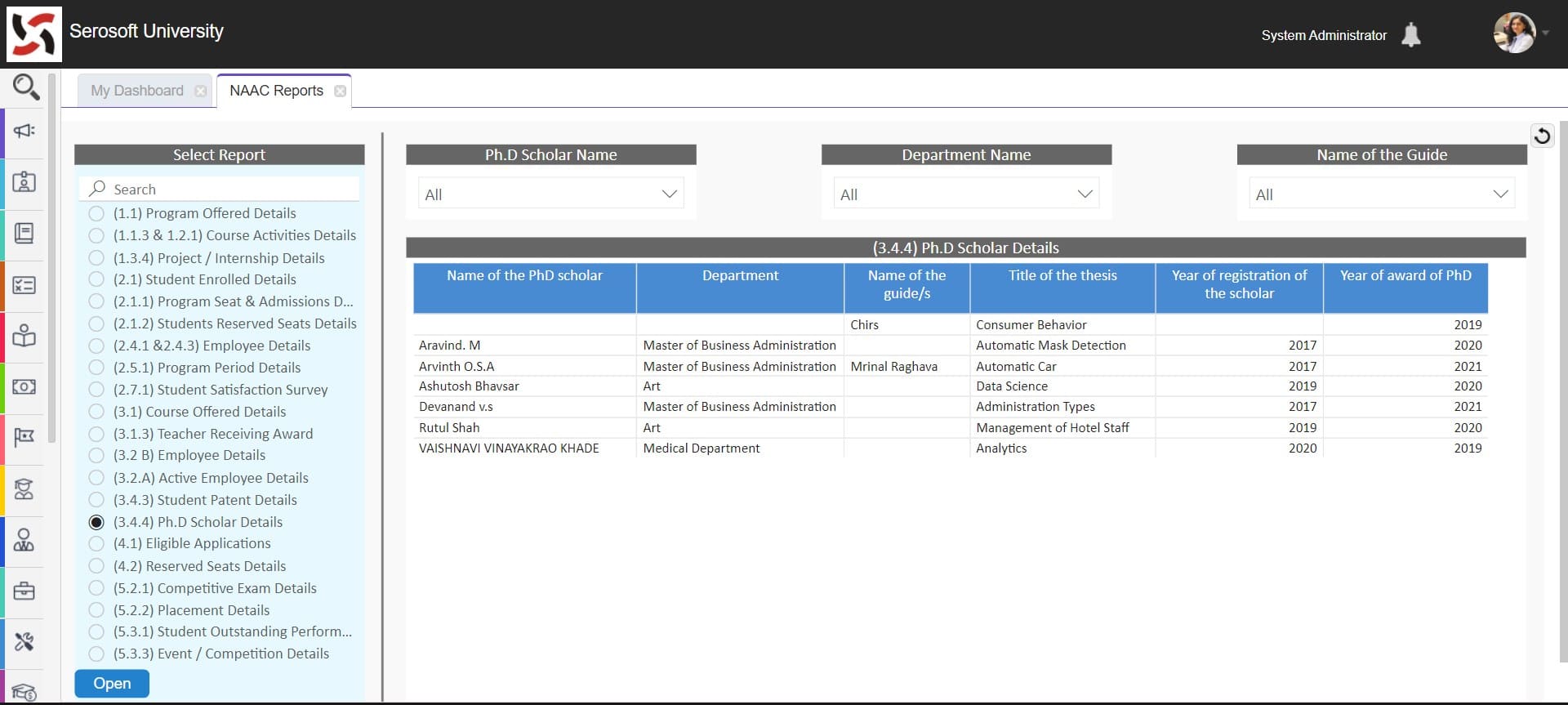
ABET accreditation requires precision analysis of the institute on various factors. With the advanced report management system offered by Academia, you can generate a host of reports and analyze where you need to improve and how you can achieve ABET accreditation. Also, the reports help you in presenting the right data to the assessment committee at ABET in the SSR and allow you to leave no gaps unfilled. Request a live demo of Academia ERP to learn more.

The Top 5 Priorities for Higher Education in Cybersecurity

Education organizations are easy targets for hackers, but institutions must opt for techniques that can make them manageable and efficient. With a proactive approach, it is the right time for educational institutions to prioritize security as an important issue and find a solution for it. 

The institutions are easy targets of cybercriminals. Whether internal or external, there are various types of data hacking practices like phishing, data breaches, ransomware, and IoT vulnerabilities present in the system. It creates a lot of risks and reduces students’ rights and wreaks havoc on the lives of students, staff, faculty, parents, and administrators.

  • Data Encryption

Data hackers today can obtain and damage institutional data by intercepting it while actively in transit. Institutions must opt for technologies that can automate all institutional tasks, along with the prevention of stealing real-time data. A good ERP system can provide you with data encryption as using it, institutions can attain automation of all the institutional tasks and update data into a single system that is highly secure and safe.

  • Network and Data Monitoring

An educational entity involves multitudes of data that need to be restored efficiently. It needs to be the top priority of institutions to monitor the data and network. Proper monitoring and tracking with the right tool can help prevent security breaches and plays a vital part in the cybersecurity of the business. 

  • Comply with Cyber Protocols

With the security improvements in institutions, most of the institutions are strict with all the stakeholders, particularly for adherence to data security. Meanwhile, institutions must adopt advanced technical support that can monitor stakeholders’ actions, and bring transparency. You can aim at creating a centralized channel to manage and protect any kind of information initially. It is also crucial that institutions should bring transparency to the rules in all departments, sections, and locations.

  • Backup Your Data

There are chances that any data in an institution related to admission, enquiry, or maybe examination needs to be accessed and used multiple times by different groups of individuals. In this case, institutions must generate the backup of the data regularly. It can also prevent data in ransomware-style attacks and help in securing data and continuing the functioning of the institute. 

  • Protect Your Devices From Physical Attacks

Whether an institution has security software that has zero tolerance for cyber crimes, it is equally essential to secure data from physical damage. For this, institutions need to secure automating all the institutional tasks that can reduce the chances of physical theft, malware attacks, and more. 

Why only Academia ERP for Securing Your Institution?

Cybercrime is becoming very common nowadays, and the world is finding ways to fight it.  As a leading ERP / SIS solution provider, Academia fights cybercrime with modern security solutions to enhance and improve the overall functioning of the institution.

Academia features data encryption, and GDPR compliance and focuses on regular security updates. Ensure security with multi-factor authentication, log reporting, and many more. One of its main functions is to deliver a next-level security environment to all the stakeholders in an institution.

Did you know that security compliance is a crucial aspect to get a higher NAAC accreditation? Contact our technology experts to get full details on how you can achieve the grade “A” in your next evaluation through Academia. Don’t forget to request a free product demo.

Challenges and Supporting Factors in Adopting ERP in Higher Education Indonesia

The education model of modern institutions in Indonesia is changing and moving towards automation and digital transformation. According to Wikipedia, the Indonesian education system is the fourth largest in the world with more than 50 million students, 3 million teachers, and 300,000 schools. Indonesian institutions need to choose and implement technologies like ERP that are directly associated with modern education and growth.

Higher education institutions in Indonesia are on the verge to opt for ERP systems for complete digital transformation, but institutions need to check the challenges & supporting factors in adopting ERP according to the Indonesian educational system. 

An ERP implementation can be one of the most intensive processes undertaken after considering Indonesia’s education ecosystem. 

Installing an ERP system changes the complete scenario for all stakeholders, so to make it positive the challenges need to be accomplished deliberately.

Challenges & their Supporting Factors in Implementing ERP 

1. Selection of the right ERP software 

Challenges

There are 2,316 higher education institutions (2,235 private), including 391 universities (345 private) in Indonesia. Higher education in Indonesia offers academic degrees, vocational degrees, and professional degrees.  

These institutions are on their way to opting for digital transformation and an ERP is one such solution. To choosing ERP, institutions are facing various confusion like selecting the ERP for some operations, avoiding systematic implementation process, and more.

Supporting Factor 

Indonesian institutions need to deep dive into research for finding the right ERP software. It is crucial to check all the necessary features, modules, and functionalities that your ERP provides. With all these, the ERP vendor organization you choose must provide you with efficient implementation, support, & pre & post-implementation process, maintenance & sprint updates. 

2. Proper communication between institutional authorities & ERP experts

Challenges

Effective communication is the key to success for any business. In educational institutions as well, it becomes necessary to have an effective chain of communication between all the stakeholders. 

After selecting an ERP system, institutions often find it difficult to connect with the ERP vendor due to various factors like language differences, unscheduled meetings, unskilled ERP managers for their institutions, and more. All these affect the entire implementation process of the ERP in your institution.

Supporting Factor 

For smooth implementation of an ERP, it is a must that institutions in Indonesia should check each and everything with the ERP they choose from the start. They can communicate and understand the product in the following manners:

  • Requesting at least 2-3 rounds of complete tour or demo of the product. 
  • Demanding a dedicated and skilled ERP expert for proper implementation of the ERP. 
  • Organizing internal sessions in your institute explaining the ERP and its features. 
  • Connecting with the ERP vendor team regularly for seamless relationships. 

3. System preparation according to the Indonesian education scenario 

Challenges

As discussed above, Indonesia includes more than 2000+ institutions. It includes institutions with academic degrees, vocational degrees, and professional degrees. In these different types of institutions, ERP vendors often get distracted and confused in choosing and accomplishing the needs in implementation. 

Supporting Factor 

An ERP is considered an end-to-end solution for educational institutions. The ERP you choose must provide you with all the features that can help in managing all the academic & administrative operations. 

For this, the system you choose must provide all the standard versions with a centralized server. The ERP experts should deal with all the necessary system preparation according to your institutional type, operations, activities, and regular tasks. 

4. An efficient deployment & training for all stakeholders 

Challenges 

After proper system preparation, institutions often face difficulties in managing the efficient deployment of the ERP and knowledge transferring to KT, as most of the ERP vendors do not always provide training to all the stakeholders for a better understanding of the product. 

Supporting Factor

As mentioned above, every institution has a different way of imparting education. The ERP system you choose must provide:

  • A Systematic Deployment 

After systematic preparation of ERP, institutions must opt for a consolidated deployment plan containing information on processes to be mapped to the designated modules. 

  • Training to Stakeholders 

An ERP system changes the complete operational activities of the institute. It makes all the stakeholders opt for an automated method, and it sometimes becomes difficult to go with the sudden transformation.

For this, higher authorities at the educational institution need to organize sessions with associated stakeholders for complete knowledge transfer and proper functioning in the institutions.

5. Regular Maintenance & Updates 

Challenges

After completing all the processes, an ERP system requires continuous maintenance & needs to be updated regularly. Institutions in their day-to-day tasks educational authorities often neglect or forget the regular maintenance & updates. 

Supporting Factor

After the completion of installation, we provide comprehensive support to the institute. A good ERP software provides institutions with raising queries related to the software, it also gets resolved as stipulated by a support team. It should also organize sessions to provide detailed sessions for sprint updates. 

Academia ERP: A perfect solution for Indonesian educational institutions 

Every country owns a different level of education ecosystem, with different types of programs & courses offered, different types of stakeholders’ behavior, and a lot more differentiated things. 

Keeping the aforementioned in view, Academia provides a comprehensive and customized ERP solution according to the needs of the institution. Currently, we are providing robust ERP solutions in more than 20 countries according to their customizable needs. 

With our several clients present in Indonesia, we provide the supporting factors & solutions to all the challenges that affect consistent ERP implementation. 

Want to know more? Request your demo now

Academia SIS by Serosoft Recognized Again in 2022 Gartner’s Market Guide for Higher Education

“Academia SIS/ERP got featured in Gartner’s market guide 2022 for the 4th consecutive year. That puts us among the top education ERP leaders in the market.”

The educational institutions in the modern scenario are improving and attaining growth and achievements using modern-day technologies like Student Information System (SIS), Enterprise Resource Planning (ERP), and more.

The SIS Market is bringing a range of solutions to higher education institutions. To accomplish its needs, educational institutions should choose solutions that can help ease all the academic & administrative operations and boost productivity growth and achievements.

There are multiple SIS vendors available as competitors who are providing services to higher education institutions across the world. To make it simpler for institutions, Gartner released a Market Guide for Higher Education Student Information Systems in which it recognized SIS vendors who are delivering excellence for institutions. 

Academia SIS got its place in the list for being one of the core representatives of SIS for higher education institutions across the world. This is the 4th time in a row, Academia got this recognition in Gartner’s market guide.

2019 Market Guide for Higher Education Student Information Systems

2020Market Guide for K12 Student Information Systems

2021Market Guide for K12 Student Information Systems

2022Market Guide for Higher Education Student Information Systems

How did Academia SIS Achieve a Place on the List for the 4th time?

  • Regular Product Development & Enhancement

Academia SIS is providing the best services to educational institutions across the world. Being one of the best solutions for completing all the academic and administrative needs, we provide regular sprint updates. Our team also works on regular product development & enhancement that can help institutions in true aspects.

  • Customizable solutions for Institutions 

Helping more than 300+ institutions worldwide, we are providing customizable and end-to-end solutions after understanding institutional requirements. Having various modules, we have been providing customizations in different available modules like admission, fee, examination, and more according to stakeholders’ size and needs that can help in achieving growth and opportunities.

  • Right Proportion of Support in Pandemic to Institutions

The pandemic has affected various businesses, and education is one of them. Various institutions have chosen technologies like ERP, SIS, and more. Academia has also helped multiple institutions in the pandemic to get the right proportion of support in managing all the operations & tasks. It also helped different stakeholders in staying connected and communicating according to their needs from anywhere and anytime. 

  • Improvement in ROI 

Being a core presenter of automation in educational institutions, we focus on providing institutions with solutions that can help achieve high ROI and growth in all segments. It primarily focuses on reducing costs on various academic & administrative tasks like paper saving, human errors, chaos, confusion, and numerous other expenses, focusing on ROI improvement and productivity.

Why Should Your Institution Choose Academia SIS?

Academia SIS by Serosoft is present in 20 countries, and 300+ institutions, impacting the lives of 700,000 learners across the world. With this, we are on a mission to digitally transform 2000 educational institutions worldwide, providing greater learning & ease for students, higher productivity for faculty members, better decision-making for leadership, innovation & advancement for the education ecosystem, and a lot more.  

This recognition by Gartner helped us in getting motivation along with being more focused on our end goal. 

So, if you are interested in taking a test drive for our hero product Academia SIS, request your demo now!

Learn How Academia Support UK EdTech Business Sector

The UK is known for its world-class education system. Students from across the world choose the UK for further education. The education institutions here focus on students’ cognitive, social, and emotional development with all the technologies that support EdTech and the advancement of education.

Technology in the UK has reached a different level, most institutions have opted for increased automation and reduced manual interventions, which boosts the enhanced growth and student satisfaction.

Digital transformation is the new future of the education sector, it is a must that institutions should opt for digital transformation embracing the right technology like an ERP/SIS. 

How is the EdTech market growing rapidly?

The UK is considered one of the most growing countries in the world. Looking upon the education ecosystem, institutions are continuously adopting new technologies that can help in making a powerful impact on EdTech. 

According to an anonymous source, the UK’s education sector will reach £35 billion in education exports by 2030.

“There are approximately 1,000 EdTech businesses in the UK, with an exciting range of cutting-edge solutions, but it is a must that institutions should choose a technology that can help in overall growth.”

Education Technology.CO.UK

Another recent report by Robert Walters Group found that the UK attracts almost half of all EdTech investments coming into Europe. It accelerated even after the COVID-19 pandemic, as institutions here were at a continuous pace of adopting new learning experiences.

What is the role of ERP/SIS in the educational sector?

An ERP/SIS system is well advocated and demanded by educational institutions. It is playing a crucial role for institutions bringing automation and digital transformation. A robust SIS system can automate all the academic & administrative tasks in the institution. 

Being a conductive property, it can automate all the operations right from admission, fee, examination, library, hostel, and all other associated tasks. Using an SIS institution provides ample opportunities to streamline all the related activities, operations, and tasks. It provides real-time management leading to the development and overall achievement. 

Role of ERP/SIS for Educational Institutions:

  • Manages, stores, monitors, and provides real-time access to all the data & information of the institution. 
  • It provides integration with all the information systems across the institution making every operation aligned.
  • Using an SIS, institutions can improve and organize the portfolio & complete the lifecycle of faculty, students, and staff. 
  • It strengthens and streamlines internal and external communication and collaboration.
  • Boosts productivity and growth in all aspects. 

How does Academia ERP/SIS support the UK Business Sector?

Academia ERP/SIS provides comprehensive support to educational institutions across the globe. It follows global EdTech trends to encourage E-learning along with managing academic & administrative operations of the institutions. 

By adopting Academia ERP/SIS, educational institutions can get 3X benefits leading to growth, profitability, and productivity. Strengthening the education ecosystem, ultimately triggers the overall business sector in the country. 

Being one of the top EdTech companies in the UK, we strengthen educational institutions in the following aspects:

1. Emergence in the top educational institutions

Being a new-age learning solution, Academia ERP/SIS is serving in more than 20+ countries, 300+ institutions, and 700,000 learners across the world. With this, Academia has grabbed various awards and recognitions for providing seamless automation and digital transformation across the globe.

Being the right technological support for higher institutions can enhance and expand the learning, knowledge, and expertise of institutions along with bringing transparency, efficiency, and productivity. 

One of Our Happy Clients from UK 

CECOS College, London:

To download the complete case study, click here.

2. Contentment among stakeholders 

Effective communication in any educational institution is the most necessary element in evaluating success. Institutions must maintain a strong communication channel among all the stakeholders i.e., faculty members, admin, staff, students, and parents. 

Academia ERP/SIS provides an effective solution to bridge the gap between all the stakeholders, creating a chain among inter-departments or campuses. 

Using the Academia mobile application, faculty members, admin, students, and even parents can perform most of their tasks anywhere, anytime, along with keeping a connection with the desired stakeholders. It provides complete access to all the academic and administrative operations right from enquiry form filling, to admission, enrollment, fee submission, fee notification, fee auditing, assignment submission & checking, exam hall ticket generation, result declaration, and whatnot. 

Voice assistant and individual profiles according to the authority of each stakeholder make it exceptional and truly effective for anyone in the institution.

Multiple other features make Academia a true companion for stakeholders bringing a level of contentment.

Academia Mobile Screen Representation


Academia’s Complete Functionality for Stakeholders:


3. Boost in growth & profitability 

Being the first choice of educational institutions across the globe, we admire providing complete digital transformation to institutions managing and maintaining their overall academic and administrative tasks. Our motive involves not only providing effective operational growth but also productivity bringing high ROI. 

Ways Academia drives positive ROI for your institution:

  • Automates all the tasks & saves paper 
  • Removes manual intervention leading to time management 
  • Complete admission management saves processing costs and more 
  • Easy and transparent fee & payment processing removing errors and chaos
  • And a lot more…

How Academia is ahead of the competition?

Academia is on a mission to impact the lives of 2 million learners by 2030. For this, we strive to make digital transformation the core of educational institutions across the globe. To accomplish our goal, we have a dynamic team of erstwhile I-Bankers & US graduates. Our out-of-the-box and customized solutions are helping scores of institutions and corporations – globally – overcome their educational and learning challenges and to drive innovation. 

Being ahead of the normal ERP/SIS vendor curve, we have various awards & recognitions. Academia recently got recognized by Gartner in the Market Guide for Higher Education Student Information Systems in 2022. We got this recognition for the 4th time in a row. This recognition motivates us more to be the best being the center of digital transformation for institutions.

Along with this, our other recognitions include, Financial Times Rank Serosoft among 500 High-Growth Companies in Asia-Pacific in 2020 & 2021, Serosoft ranked as the Growth Champion in India by The Economic Times in 2020 & 2021, Deloitte Fast 50 Award 2018 & 2019, and a lot more. 

What’s Next?

As discussed above, the UK is the center of education for various students from all over the world. It is a must that institutions here automate their operations by choosing digital transformation.

Academia can be the best solution for you, request your demo now to know more features, benefits, and functionalities of Academia ERP/SIS for your institution. 

Higher Education Recruitment Trends to Boost Enrollment

The COVID-19 pandemic has brought new challenges to the education sector. The most important among all was for recruitment and admissions in higher education, universities, and schools. Institutions that have adopted digital technologies focusing on digitization and digital transformation found ways to manage consistent education delivery. In what ways have you opted to manage higher education recruitment and boost enrollment in your institution in the new normal?

Let’s discuss 5 higher education recruitment trends to boost enrollment this year:

  • Understand the current enrollment model – virtual enrollment 

After the pandemic, things have changed, especially for admissions to higher education. Most of the institutions have continued virtual recruitment and enrollment. The right technology that includes cloud services can help institutions speed up the enrollment and admission process easily and effectively. It is far easier, convenient, and efficient than the traditional and manual processes of admission. 

To increase the admission rate, institutions must choose technologies that can strategically process and manage high volumes of information and create an easy path for recruitment managers to reach and attain prospective students in an organized way. 

  • Role of digitization and automation in admissions 

The modern world of education needs modern elements for managing admissions and enrollment. Digitization and automation in admissions can make it easier, flexible, convenient, and cost-saving. 

Automating all the tasks and operations like changing paper forms into online enquiry forms, virtual interviews into in-person visits, and late responses on enquiries to a quick update on the mobile application can lead to a tremendous boost in student enrollment and admissions. Technologies like Student Information System, Enterprise Resource Planning, and some others can help in bringing automation, digitization, and even complete digital transformation to the institution. 

  • Enhancing ways to encourage students 

The advanced generation of students demands modern ways for any operations. They are mostly available on social media platforms. It is best for educational institutions to promote and target students on different social media platforms. There are ways through which institutions can grab the attention of students who are seeking a good institution. Using social media platforms is effective and helpful in an enormous way. 

  • Encourage completing tasks using a mobile application 

Mobile applications are the most used thing in today’s time. Educational institutions must opt for a technology that can make all the operations related to admissions and enrollment on a mobile application. Institutes can choose an ERP/SIS that provides a robust mobile application to manage the complete admission process. It can help institutions in boosting enrollment and admissions. It also encourages students to complete all the tasks like effectively submitting information and completing other tasks. 

  • Reduce response time 

Again, modern educational institutions must attain the technology and methods that students demand. Education leaders in today’s time need to understand that it is beneficial to reduce response time in every process of higher education recruitment. An effective student information system provides a complete portal to manage all the operations right from enquiry to complete admission management of a student. It also helps education leaders to pursue automated responses whenever needed in the best way. This also helps in creating emotional contact and trust among students. 

Bottom line 

In what ways have you changed your admission strategy after the pandemic? 

Do you want to be the next institution to have an expected boost in enrollment and admissions?  We have the best solution for you, just let us know your interest and we will help you out in the best possible way. 

How to Use Gamification in Higher Education?

In the last few years, games have been the first choice of any age group. Boys and girls of any age are so addicted to some of the games that they always remain in front of their phones, laptops, and computers. So to make learning interesting and effective, educational institutions can adopt gamification in higher education making learning lessons more attractive and interesting instead of the old and theoretical method of reading, teaching, and learning from the books. Games have a wide appeal that derives joy from games if they are well designed and engaging. 

What do you think about using gamification in higher education? How can it enhance modern learning techniques? Let’s find out it in this blog: 

What is Gamification?

Gamification is an attempt to enhance systems, services, methodology, and activities that can be used in educational institutions and organizations to create similar experiences to those when playing games to motivate and engage students. 

How can Gamification help in Higher Education?
Gamification is a term or strategy that is used to define a process of activities and rewards to promote student engagement. It is somehow a more broadened form of experiential learning. It is a contemporary approach that properly and systematically brings education with other elements and characteristics of ethical gaming culture. 

Benefits of Using Gamification in Higher Education:

  • Motivates students and learners

Various techniques can be used in gamification in higher education. Interesting techniques used in various games with challenges and rewards help in motivating students and learners in the best prospects. 

  • Enhances student engagement 

Games have always been having a different approach for kids and teens and specifically students. Involving studies can enhance students’ engagement differently and positively. 

  • Reduces faculty burden

Gamification provides an easier way to teach and learn, it reduces faculty burden by letting students understand more quickly and properly. 

  • Improves overall learning experience 

Students must get a proper understanding of whatever is being taught to them, and all this, gamification can help a lot expand and improve the overall learning experience in a better way. 

How to use Gamification in Higher Education?

  • Gamification in Grading and Result Declaration 

Grading and Examination evaluation is one of the most important segments in any educational institution. It needs to be perfect in any sense, having manual interventions in the institutions, educational institutions opting for automation and technologies ERP and SIS can manage all the operations like attendance, admission, examination, and grading in a better and simplified manner. Along with automation, gamification can also make the grading process simpler and easier as through opting it, institutions can change the evaluating marks using the experience point system. Using which students can progress towards different levels just like games. All these processes can also start from changing the grading process in assignments and tests. 

  • Promoting Studies using Gamification 

Games have always been the first choice of students, but what if the lessons that have been taught to them include games? Students will find it interesting to learn by having fun alongside. One of the best and simpler ways to gamify the learning process in the classroom is to create and organize a quest of all the lessons that have been taught to them the whole week or month. The quest needs to be launched interestingly and more funnily that can generate the interest of students along with having a learning experience for them. The marks are given for the quest also need to be in the game format like in badges or in points that motivate students in the right direction. This is just one way as there are various techniques through which gamification can become a part of modern classrooms. 

  • Teamwork 

Teamwork in any sense always creates the right move for each individual in the team, whether it is a game from our childhood or an important decision in the parliament each involves the right perception and involvement of a team. Gamification is a classroom that promotes learning, playing, and participating together cultivating a greater learning atmosphere and inculcating the value of working together. To generate more interest in students, faculties can share rewards, points, or even power-ups that can even help in boosting morale and team spirit. 

Conclusion 

So what are your thoughts about Gamification? Are you using any technology for it? Let’s discuss it together to have better clarity about its benefits in your institution. Contact us now and we will be glad to discuss it with you.  

How Edtech Can Support Wellbeing in Higher Education?

In the modern world, students and learners in the education sector are seeking more modern techniques & methods that can help them to be more innovative, tech-friendly, and creative in all aspects. So higher education institutions need to opt for pedagogical approaches like the adoption of Edtech technology that can lead towards student wellbeing and overall support.  

Education technology is emerging as one of the powerful tools that help in connecting students with modern learning opportunities. After this COVID-19 pandemic, we have seen the potential for using technology in the classroom and managing the institutions effectively, but institutions must envision a world understanding of how to improve student wellbeing in the best prospects. 

So, in this blog, let’s discuss ways through which higher education institutions should make Edtech more supportive and beneficial for faculty, students, and the overall institution.


How is Edtech beneficial for faculty?

Teaching to higher education students is not an easy job, it needs continuous learning, confidence, and knowledge about a particular subject as modern and grown-up students know and understand what needs to be taught to them and what is necessary for them in regards to education. 

Having the right set of technology, any faculty can enhance and expand their knowledge and expertise to give a smooth learning experience to their students. With the expansion of Edtech, there are various technologies like smartboards, projectors, online learning tools, ERP/SIS for academic and administrative tools that can help faculty in self-grooming along with focusing on self and student wellbeing. 

How is Edtech beneficial for students?

The ultimate goal of any educational institution is to provide quality education to students, the possibilities of modern education using the old and traditional methods is being difficult in today’s times. Even this COVID-19 pandemic has taught institutions how important it is to opt for technology that can promote modern ways of teaching and learning. Opting for Edtech platforms like ERP, LMS, and more, institutions can attain a systematic mode of education for students leading to institutional growth and success.  

How is Edtech beneficial for institutions?

In today’s world, the education sector is considered one of the most broadest and important sectors that are growing with pace. So it is high time for institutions to opt for Edtech tools that can admire more growth focusing on student wellbeing and technological support. Meanwhile, it is also known that educational institutions include a multitude of tasks right from the admission to the alumni of the students, various academic and administrative operations are needed to be performed by faculty, students, and staff, and following the same and old traditional methods increases more chances of errors, chaos, and mismanagement. Edtech tools like ERP/SIS help institutions to maintain all the academic and administrative operations more flexibly and systematically target students’ wellbeing, faculty satisfaction, and overall well-being of the institution. 

Now, to understand it more let’s quickly check why Edtech is helpful in institutional wellbeing:-

Why is Edtech helpful in institutional wellbeing?

  • Creates new approach for academic and administrative operations 

By choosing Edtech tools like ERP/SIS, higher education institutions get the opportunity to replace traditional models with a new set of automation visioning complete digital transformation and efficient management in the institution. Here it is also important to note that transferring into a new model or technology requires proper implementation, strategies, operators, educators, administrators, and a little patience. A combination of all these qualities opens doors of growth and opportunities for the institution.  

  • Makes a growth path

Looking back to the past few years, the education sector has faced maximum challenges due to the COVID-19 pandemic, meanwhile, institutions who have opted for modern technological tools found a way to survive and provide a more systematic approach to students. Edtech tools help institutions to make a growth path completing modern students and faculty needs along with making all the institutional tasks efficient and systematic. 

  • Helps in redesigning learning models 

Students of today’s generation are grown up using various technologies easing out their various day-to-day tasks, so they expect the same in learning methods as well; simple and tech-friendly technology modules that can help in efficient learning and practices. Edtech tools like ERP, SIS, and LMS help institutions provide a more systematic and simplified form of learning & teaching patterns for students along with redesigning and creating different learning models for students. 

So, wanna enter into the Edtech world? What’s next!

I hope you liked the blog and got to know about how Edtech can support wellbeing in higher education! So, which technology are you using to make your teaching & learning processes easier and efficient along with making every operation systematic and simple? Let’s discuss and we will help you out to find the right technology set that can help your institution in achieving not just success but more opportunities and growth. Write to us now at contact@serosoft.com or request your demo now!


How Higher Education ERP System Drives Positive ROI for Educational Institutions?

What is that extra factor that you are using in your institute to increase ROI? Have you ever paid attention to ROI improvement? Every institution wants to have more revenue generation but doesn’t know how to do that. An ERP can effectively and efficiently manage all your academic and administrative tasks making everything simple, easy, and flexible, it will also focus on cost-saving – targeting an overall increase in ROI. Let’s discuss how automation of processes through a higher education ERP system in your institution helps improve the ROI of your educational institution, You can also use our – Education ERP ROI Calculation.

How can Higher Education ERP drive positive ROI for your institution?

Academic Activities 

  • Save paper and decrease administrative workloads 

The basic and most important feature of any higher education ERP is to digitize and automate maximum operations in the institution. An ERP can control user onboarding jobs like student admission, library management, teacher onboarding process, and many more to name a few. It provides automation and digitization, saving paper and decreasing administrative workloads and costs leading to increased ROI.

  • Provides excellent time management 

If you ever got a chance to handle and operate a higher education institution, you may have known that manual interventions take so much time along with creating extra expenses in each operation. These tasks take a lot of time, and as a result, your co-workers end up investing less time in educating students. With the help of higher education ERP solutions, one can easily handle all these tasks and save enormous time along with expecting a high return on ROI. 

  • Analytics and report 

Analytics and reports can significantly transform the way of working by enabling new ways for prospecting students when involved in an ERP help in increasing student enrollment, improving student retention and completion rates, along boosting faculty productivity and research. Analytics gives teachers’ performance and higher management along with managing day-to-day operations of any educational institution helping in increasing and better ROI. 

  • Examination and mark-sheet management

The examination is considered as one of the most important tasks in any educational institution, it requires a lot of pre and post preparation having multiple tasks like timetable management, paper execution, providing enrollment number and roll number to students creating exam sheets, checking the exam sheets, declaring results, and many other things. Performing these tasks manually takes lots of time, effort, and a lot of expenses, and a very less return on investment. An ERP can make the examination and mark-sheet management process easy and effective. The complete examination process can be accessed easily and with very little expense targeting high ROI using automation. 

  • Certificate & document management

In an educational institution, there is an abundance of data that needs to be managed properly so that it can be accessed whenever required. Manual interventions of certificates and document management take a lot of time and effort. Using an ERP solution, it will become easy to arrange all the documents and certificates in a system having access with just one click. 

Using the system, it will also become easy to distribute any certificates & documents to students, parents, and faculty through the mobile app or portal leading to fewer expenses in managing the documents and distributing the documents. 

Administrative Activities 

  • Admission management

Admissions are considered as one of the most important tasks for any institution, it includes a variety of tasks, a lot of queries related to classes, courses & programs, form submission, enrollment number allotment, and various other things that include time and unnecessary expenses. A Higher Education ERP works necessary to automate all the processes making it simple, efficient, and user-friendly saving time and unnecessary expenses initiating towards high ROI and growth for the institution. 

  • Fee management 

Managing fee records in an institution is difficult if done manually, there are multiple fee structures, various departments, and n-number of students; it’s an art to keep track of everything and be able to access the exact details whenever required. It also equips a lot of time, lacks flexibility, unnecessary expenses, and less return on investment. 

Meanwhile, all these processes can be handled smoothly if they can be managed using a fee management system and a higher education ERP. It manages all the tasks easily and efficiently providing proper data management and fee transactions. Saving the institute from any type of data breach and money malfunctions focusing on high return on ROI. 

  • Infirmary & Hostel management 

Infirmary and hostel management are also considered important tasks for any educational institution owning and managing a hostel as well. There are a lot of tasks like taking care of meals of the students, managing their infirmary, and regular doctor checkups, and more other tasks that need to be managed properly. Manual intervention of this includes more expenses and time, a higher education ERP provides complete management of this process leading to no or fewer expenses involved along with targeting high Return on Investment. 


Student Engagement 

  • Messaging & notifications 

Communication is one of the strongest assets that directly helps in institutional growth and success. It builds trust and avoids the disposal of improper information. 

A higher education ERP having a proper portal or mobile app clears all sorts of gaps making crystal clear communication between faculties, administrators, and students enhancing the student-faculty collaboration as well. A clear line of communication triggers the right growth and opportunities for the institution leading to high return on investment and profits. 

  • Disciple management 

The educational institution needs to focus the most on the discipline and personal development of students that sometimes goes secondary due to manual process and excessive burden on faculties. A higher education ERP provides complete discipline management, capturing misconduct details, capturing discipline committee details, capturing appeal details, capturing sanction details, and many others that initiates growth opportunities for institutions leaving a direct or indirect impact on ROI. 

How Academia can help you in increasing your ROI?

Academia is one of the best ERP systems, an award-winning ERP system that helps automate and manage the entire campus operations, administration, learning needs, and high return on investment in a very effective way. 

Highlights through which Academia can help you in increasing ROI:

  • Reduced operating expenses 
  • More growth in the same amount of time and growth
  • Reduction in cost of acquisition for new students 
  • Reduced customization cost in each segment i.e, admission, fee, examination, etc. 
  • Reduced hardware costs 

There are many more features that Academia provides that can help you in saving unnecessary costs and expenses focusing on high ROI, profits, growth, and opportunities of an institute. 

Wrapping Up

So, what are you waiting for? High return, growth, and opportunities are not so far for you and your institution. A higher education ERP can bring them all for you easily and effectively. Let’s connect so that you can better understand how an ERP can help you in proper ways. Request your demo now! 

Download Exclusive Gartner Reports Brought to You by Serosoft (Academia):


Role of Student Enrollment Management System in Higher Education Institutions

Configuration of Enrollment Rules

Use the enrollment management system to configure the entire admission process. This includes defining admission criteria, selection process, admission stages, stage fees, important documents, seat number & seat type, and more. 

Once configured, the system would behave as per your set rules and would ensure the process is followed. Also, many steps in the process would be automated and would require minimal to no manual intervention. 

Enquiry Management

Set up an online enquiry form on your website, centrally manage each enquiry on the enrollment software, assign enquiries to users, schedule follow-ups, convert enquiries to applications, close enquires, reopen enquiries, generate reports on enquiries, follow-ups, enrollment, admissions, etc., and do much more with one single tool. 

Online Application

Use the software to set up custom application forms for various programs, courses, and batches. As per your pre-defined criteria, applications can automatically be rejected and all you get is qualified applications to work with. 

Real-time Application Tracking

Track applications at any stage of the application process and assist your prospects better. The software provides you with a real-time report on the status of every application and helps you take better decisions. The software also comes with in-built features to take actions for any application such as — promoting to the next stage, collecting form fees, collecting stage fees, rejecting applications, releasing offer letters, and more. 

Merit List Generation

The enrollment management software streamlines the process of document verification, promoting applicants to the next admission stage, consolidating data and creating a merit list for various rounds, and finally generating a master list of students that are to be sent an offer letter. 

Download Exclusive Gartner Reports Brought to You by Serosoft (Academia):


Lead Management Integration

An enrollment management system is efficient in tracking enrollment enquiries from multiple sources. You can also use the software to run and manage campaigns over various channels, track ad spends, and calculate impact by generating reports on enquiries, enrollments, admissions, and follow-ups. 

Also, robust application and enquiry management software helps in the seamless management of the lead and guides an applicant throughout the lead pipeline for easy conversion and improved enrollment rate. 

Back to top