Type your keyword below

Will Online Learning replace the Traditional Classroom

Online Learning vs Classroom Learning

For thousands of years, education has been considered synonymous with traditional classrooms, but with the increasing technology and methods, institutions must opt for modernization and advancement that can lead to the overall growth of institutions, faculty, and most of all students. Various technologies are opting which institutions can create a modern and advanced experience in the classrooms. 

The concept of traditional education has changed over the years and is still on the path of advancement.  Let’s discuss some of the points that can identify whether traditional learning is good or online learning. 

Convenience

Looking upon the learning prospects, online learning is considered the best in today’s time, because it provides and creates a learning environment for learners wherever they want. It allows students to learn in their comfort zone, students can read, study, and learn at their speed having an aim in their mind, But the most important thing with online learning is it requires more concentration and self-motivation to learn. 

Looking upon classroom learning, it involves more time and learners should need to attend the class on regular basis with full concentration as there is no chance of replaying the teacher’s voice, or going back in past and attending the class, this sarcastic truth is the online disadvantage of classroom learning that can be easily ignored using the online learning methods. 

Teaching style

With classroom learning, teaching is often dependent on the teaching style of teachers. Let’s say, if the teacher is saying to repeat and learn something, the students have to follow that method to obey the teacher, this chokes the real grasping and learning capacities of students. Every teacher owns their different style of teaching and students remain with no choice instead follow the instructions given by their respective teachers. 

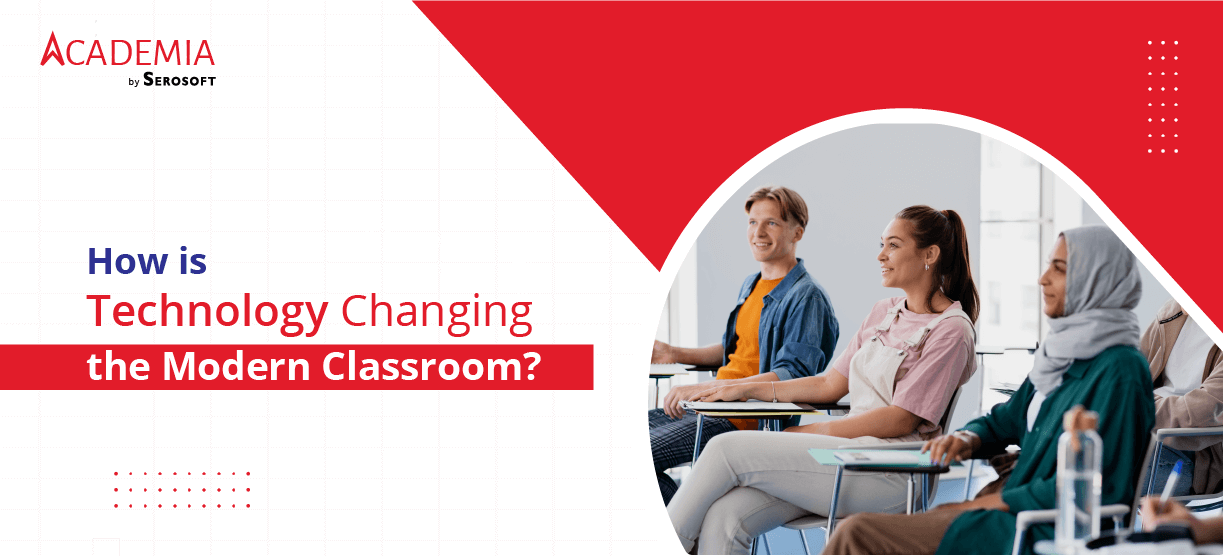
With the rise of technology, classrooms are being interactive with having multiple options with teachers and students, it provides teachers and students with various options to teach, learn, and grow together. Various technological tools like whiteboards, smart classes, projectors, and applications like Zoom, Skype, and a lot of others have helped educators with lots of learning materials in various formats like audio, images, videos, and texts that gave new hope to the new era of learning. 

Personalization

With online learning, personalization is considered as one of the biggest advantages, it allows every student to create their pattern to learn and grow, students can personalize their content according to their needs and requirements. Along with students it also gives teachers the priority to learn and teach students accordingly. 

With offline learning, personalization of content is becoming difficult as with classroom learning there becomes very few and restricted resources that bind teachers to teach with limited resources ultimately restricting the growth opportunities for modern students. 

Interaction

In this modern world, online learning is also becoming advanced, having a variety of resources like gamification, problem-solving, role-play, storytelling, case studies, speakers, and a lot of others. Good interaction among students and faculty leads to greater scopes of success and growth from both ends. 

In classroom learning, it becomes quite difficult to be in continuous interaction with teachers and students, with this, students only get a chance to interact with faculty in the classroom for a limited time in which it becomes difficult for faculty to solve queries of each student in the right way. 

Analysis

As discussed earlier, classroom settings allow students to learn on-the-spot communication with the teacher, but it does not always provide an exact analysis of students’ progress. Online technological tools like an ERP system provides real and exact data analysis making everything smoother and easier for educational institutions, it provides online access to all the operations from fee, admission, attendance, and examination, everything becomes easier and convenient. It manages everything along with analyzing each factor from faculty, student, and institutional prospect. 

So what’s the conclusion!

So what do you think? Which type of learning method is good for your institution’s growth? Which type of learning is in practice in your institution? Let’s discuss it in more detail, contact us now

Download Exclusive Gartner Reports Brought to You by Serosoft (Academia):


Is this a Beginning of Digital Education in India?

Education in India is changing, student and teacher interaction is not the way it used to be. The transformation from blackboard to the digital board is prevalent and it is growing rapidly. The resource of information is not limited to teachers or books. The curiosity of students is increasing, they don’t have the patience to find answers, they prefer to say “Hey Google” rather than digging books.

Great visionaries were/are able to see this revolution in the education industry. They knew that learning platform like ByJU’s, Khan Academy and NPTEL will gain popularity and trust over traditional mode of learning. These visionaries could see the future of digital education in India.

Not only learning but also managing higher education and schools systems has changed dramatically. Now administrations of educational institutes want to shift to no paper-pen process. Automation of complete academic operation with a single software i.e. Student Management System that can manage all the departments is overwhelming.

Can we say that it is the dawn of digital education in India?
I’ll prefer to say…Yes. But the real grand beginning is yet to happen.

India has a population of 430 million children in the age group 0-18. Of course, all these children have the right to education but do you know how many of them are getting it?

According to the last survey, the enrollment percentage in primary schools is 95%, secondary education is 69% and shockingly the enrollment rate in post-secondary is just 25%.

Reason?

Among 430 million children, India has only around 1.1 million schools in which 97K+ schools are single teacher school. Furthermore, there are 900 universities and 40,000 colleges for higher education in India where the enrollment percentage is only 25%. More than 60% of students(below age 10) dropping from schools in midway.

At present, the overall Student-teacher ratio of India for primary schools is 23:1 in which UP and Bihar have the ratio around 60:1 which is much more than standard. This decreases the quality of teaching and availability of proper resources.

You can see there is a huge gap between students and educators. There is no doubt India is moving toward a modern and more advanced education system. Penetration of education has increased by a big number during the last decades. But to achieve the real potential of this nation, education needs to reach to every single child.

How education will reach every child of our nation?

The answer is Digital Education.

Digital education can fill all the aforementioned gap in our education system. Technology can help to mitigate all the issues. It can increase the quality of learning, reachability of qualified teachers to students in remote areas. Tools like LCD, digital board, free digital library, lesson videos, etc. can help children to gain knowledge in more efficient ways.

Digital penetration of education will help children to grow in all areas. As it is a more interactive way of learning, students will stay engaged to concepts that will be taught, they will pay more attention to details and that will help them to complete assignments on time. One of the most important benefits of digital education is students can learn on their own pace whenever and wherever they want.

Not only in learning the digital revolution in education can also help educational institutes in managing their day-to-day tasks. Student Information Systems can help educators to focus their energy on teaching. It can manage all the administrative operation of institutes.

Conclusion

Digital education in India is ready to pave its way to make an extraordinary transformation for students, educators, and educational organizations. There are many initiatives such as SWAYAM, PRATHAM- LEARN OUT OF THE BOX, etc. are already started by the government of India but we have a long way to go. The collective efforts of tech giants, the government of India and the education industry, can bring the change our nation deserves. It is the dawn digital education in India and the rays are about to brighten the world.

What is a library management system and how important it is for private colleges?

“When in doubt go to the library”

The line is said by a legendary writer of all time- J.K. Rowling.

We all know the importance of books in our life but an educational institute cannot breathe it. And how do institutes manage all those books for every level, for every class?

With a well-organized library.

Unlike primary higher education, schools has more demand for books as our young adults like to explore more and their area of grasping knowledge is vast. Therefore, higher educational institutes always require a proper library with well-arranged structure.

Here comes the library management.

What is a library management system?

A library management system or integrated library management software is a program to help librarians and users in circulating and cataloging items. It helps to manage the database by tracking item movement and keeping other records library. The main objective of the library management system is to increase the productivity and output of the library, librarians and its users.

What is KOHA?

KOHA is a world-famous electronic software to automate all the operations of your library. It’s a full highly scalable, full-featured, economical and easy to use library management system. It supports companies, educational institutes of varying sizes to maintain their libraries.

The literal meaning of KOHA is-Gift that is meant to be reciprocated.

KOHA doesn’t belong to any person or company. It’s sponsored by a group of libraries, communities and support company. It’s free and open source software i.e. FOSS.

It can help in cataloging, creating and running reports with KOHA report module, circulation, resend and accounting of all size, multi-branch libraries. You can also print barcode and labels with this library management software.

KOHA usually comes integrated into a college management system. A college management system is an education ERP software to automate complete academic and non-academic operations of a colleges

Recommended reading- Top Functionalities of an Education ERP Software

Importance of library management system in private colleges

Library system in private colleges is very demanding. Due to cutting edge competition and continuous need for advancement, they have to run their system with a very targeted mission.

Private colleges offer multiple courses along with various curriculums to increase the involvement of students. This requires an administrative system fulfilled with all the resources. Resources that also include books, magazine, newspaper, published papers, etc.

Here are the reasons why private colleges need a library management system:

It saves time

Library management system automates all the manual processes in your library. With it, librarians can easily keep records of all the details. They can easily access the data whenever needed. User can also get information about where to find which books and if they are available or not. It saves a lot of time for both the users and the librarian.

It will reduce the operation cost

One library management system can do the tasks of many workers. You can save operational cost with the reduction of manual tasks. Due to time-saving in processing, it can save thousands of dollars.

It will increase productivity

With the complete automation of library information and online data management, it becomes easy to share information among users, librarians, and patrons. With the functionality of time-saving, cost-cutting it increases the productivity of the library and its users.

Are you ready for a smooth running time-saving library management?

If yes, Book a Free Demo now.

Back to top