
Type your keyword below

Admission Management Software for Chain of Schools in India

Technology has tweaked how we interact with the world. And as technology continues to disrupt the education sector, it is only practical to seek ways to transform the most crucial times of an academic year — admissions. 

Changing Admission Discourse: Traditional Vs. Academia Approach

From how students seek admission to your institute to how you manage your admission process, things are changing rapidly. Technology has managed to pull off the impossible — it has unified the most scattered operation of an education institute. Multiple stakeholders are involved in the admission process, and each department works in silos. Result — mismanagement, human errors, delayed processes, tangled operations, and so much more.

The situation is direr for chains of schools in India as most organizations are yet to adopt technology. Modern education technologies such as education ERP and Student Information System help an institute unify the data across all departments organization-wide. They have specific features to manage the pre-admission and admission phases in a school or group of schools. This helps super admins to manage and monitor the admission process across all their centers.

Furthermore, using technologies such as ML, AL, and Business Intelligence allows institutes to not go by hunch but make informed decisions while admitting any applicant into the institute and efficiently battle increasing dropout rates. 

Introducing Comprehensive App Suite for Admission Management

ERP with CRM features 

Up until now, not only did the various departments in education institute work in silos; most software were following the same suit. Unifying the data was nearly impossible for the education institutes, as most worked on old technologies. But modern technology systems are built to render a unified experience. 

Furthermore, since education ERP software serves as a centralized database, having in-built features to manage various operations is only practical. This helps an education organization put all the business intelligence to use. 

Efficient education ERP solutions such as Academia ERP now come with in-built features of Customer Relationship Management, such as:

  • Enquiry Management
  • Marketing Automation
  • Strategic Remarketing
  • Campaign Management
  • Lead Management 
  • Lead Nurturing
  • Omnichannel Communication
  • Pipeline & Admission Process Management
  • Applicant Support
  • User Management
  • Reports & Analytics
  • WhatsApp Business Integration

Pre-admission 

Pre-admissions are the most ignored phases of an academic year. We need to understand the importance of preparedness. The better we strategize to take on the challenges of the admission phase, the more likely are our chances of winning better prospects and applicants.

Academia ERP brings you a plethora of features for the pre-admission phase. Right from setting up an online application page to setting up marketing campaigns, we do it all. The efficient software helps you in centralizing the enquires from all the market channels and helps in the systematic management of leads. You can use the software to filter leads for follow-up, attend to applicant inquiries, track your spending on marketing channels, and manage appointments with prospects. 

  • Application Manager
  • Advanced Form Builder
  • Student Admission Portal
  • Payment Manager 
  • Query Management System 
  • Reports & Analytics

Admissions

Automation is one of the best things that has happened to many industries. It is convenient, cheap, and reduces time, cost and effort significantly. In the admission process, Academia ERP automates most of the admission-related tasks and operations. This includes token fee collection, appointment slot booking, evaluation scheduling, notifying applicants, providing real-time updates to the applicants on their application status, and much more. Some of the salient features of the Academia ERP admissions module are:

  • Admission Settings
  • Application Creation
  • Form Management
  • Selection Process Setup
  • Final Admission List Generation
  • Reports & Analytics


Communication

Seamless communication between various stakeholders in the education ecosystem (internal & external) alone can take the applicant’s experience several notches high. In fact, it also plays a key role in ensuring higher admission rates. At Academia, we ensure seamless communication by unifying all the modes of communication at one single dashboard. 

Meaning whether you want to connect or notify an applicant over email, phone, SMS, WhatsApp, or any other leading communication mode — you get to do it from a single dashboard. 

To reduce efforts, there are bulk messaging options as well. Recently, we have incorporated Multimedia Messaging as well to make communication more creative, engaging, and eye-catchy. Following are some modes of communication we offer in the standard solution, you can also connect with our ERP experts to learn about other integrations. 

  • Email
  • Chat
  • WhatsApp 
  • In-App Calling 
  • SMS
  • Push Notifications

Dedicated Applicant Portal

One of the most important parts of automating admissions is the applicant portal. Using the portal, applicants can apply to the desired courses, track the progress of their application, connect with the support team, pay fees and manage receipts and get real-time updates on the portal through push notifications. In the times such as COVID-19, when commute was halted online applicant portals have worked wonders for many institutes. For dire times such as the pandemic and to evolve from the traditional shell, it is important for institutes to have both digital and traditional processes for admissions. 

Academia ERP applicant portal consists of the following features:

  • Applicant Registration
  • Inquiry and Admission Form
  • Declaration and Assessment
  • Fees and Receipts
  • Support 

Wrapping Up 

Education ERP software with dedicated features to manage admission can reduce the need for having multiple software for managing admission operations. Solutions such as Academia ERP offers a multi-faceted approach to institute management. It comes with a variety of features to seamlessly manage the pre-admissions and admissions phase of an academic year. The multi-center capabilities allow you to manage an unlimited number of academies you have across the globe. Most of all it helps you amplify the applicant experience. It provides timely updates to the applicant, updates information in real-time, personalizes your communication with the applicant, and helps manage thousands of enquires you get during the admissions phase. For more information about Academia ERP and how it can help you increase your admission rate, connect with our ERP experts here

How does the Academia ERP Examination Module Help in Simplifying Grading and Reporting?

Education evaluation is an important step in the learning process. It helps teachers, parents, and students to identify if the teaching is going in the right direction and if students are well-connected with the curriculum taught. Also, it allows a student to identify if there are any shortfalls in understanding the classwork and seek the help of teachers to fill these gaps. 

However, no teacher would deny that examinations are some of the most strenuous times of the academic year. A teacher is involved in many manual operations such as reviewing, feedback, reporting, marks entry, etc. This can all be eliminated by implementing robust ERP solutions such as Academia Education ERP / SIS

About Academia ERP Solution

Academia is an education ERP suite, that comes with 30+ modules to manage, monitor, and execute various tasks in an education organization. This also includes the Academia Examination Module which has all the features and functionalities of the pre-examination, examination, and post-examination phases. 

The dedicated web portal allows teachers to automate most of their tasks and brings ease in reviewing a student’s performance and grading. Also, it optimizes each operation, giving them more time to invest in teaching and effectively improving student performance. The module is built keeping teachers in mind and has been successful in automating and streamlining assessment, grading, and reporting tasks. 

It is highly configurable software, meaning you can set the parameters for assessment as per your institution’s evaluation criteria. Furthermore, the software goes a step further and allows interoperability with secure and trusted digital tools. E.g., some of our clients are enjoying Moodle integration with the Academia ERP solution which has allowed them to take the online examination and sync the assessment records to the ERP solution without any manual work.

Here is how Academia ERP Examination Module is beneficial for teachers: 

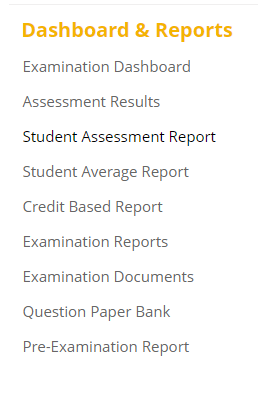
1. Accurate & Consolidated Reports

One of the biggest benefits of the Academia ERP Examination Module is automation. You can completely automate assignment collection without having to worry about mishandling the project or any inaccuracies. The software can handle the data of hundreds of students and their activities with near-zero errors. Also, gives you an auto-generated report in one click. 


This feature alone can eliminate any chances of delays in the process and you can ensure the results are out on time and students are at an advantage of checking and improving their performance. 

2. Integrations 

Academia Education ERP can be integrated with a variety of digital tools that support online learning and online evaluation. This gives you the benefit of interoperability and you don’t have to switch between software systems to manage different types of tasks. 

Also, there are a set of pre-built reports that are built by keeping each aspect of the examination phase in mind. And you might now even require any other tool to generate reports on exam-related tasks.

3. Assessment with a customized grading scale

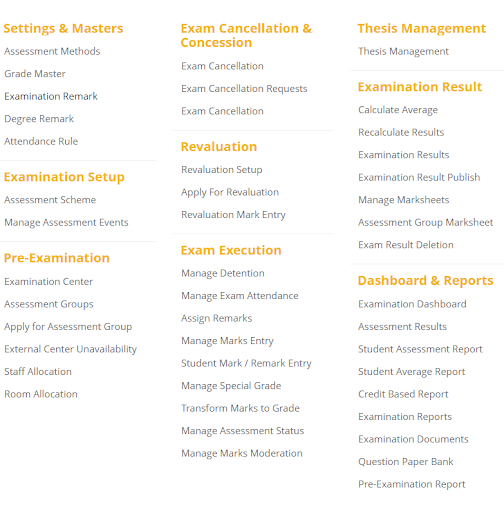
Academia ERP Examination Module has a sub-functionality “Settings and Masters”. This feature allows you to customize the performance metrics with a grading scale that fits your institution’s standard. 

Also, the software flaunts features such as changing marks to grades and vice versa in one easy click. The module allows you to take the grading scale a notch higher or a notch lower based on student performance. 

It is a versatile tool that allows you to manage periodic tests, thesis submissions, assignment management, term-end examinations, subject-oriented activities such as practical examinations and evaluations, and more. 

4. Co-scholastic Activities – Scheduling and Grading

Apart from academic learning, you have the option to create programs for Yoga, Art, Health Science, Physical Education, and other co-scholastic activities. Not only does the tool help you in managing operations pertaining to these activities it allows easy scheduling of examination and grading. 

The pre-examination and post-examination features in the Examination Module allow you to easily manage the examination schedule, resource management, crisis management, evaluation, grading, and report generation. 

5. End-term Report Card Generation

End-term examinations can be more hectic than managing the periodic tests and other evaluation processes. Report card generation could be challenging as the traditional approach made it a manual task. With Academia ERP you can easily manage it with automation. 

Grading and reporting activities can completely be automated. This allows teachers to break free from manual work. Report cards can be generated with ease and accuracy through Academia ERP Examination Module. 

6. Publish Reports 

Students can check results using Academia ERP Student Mobile Application. Also, you can give different access to the parents to access the parent portal and check the academic report of their ward. 

Online publishing of the reports is much more efficient than traditional methods wherein a parent was required to come to the school to get the report. In case they miss it, they would have to wait for the next parent-teacher meeting or need to take a personal appointment with the teacher. These communication gaps are completely filled with Academia Education ERP Software.

7. Record Management

Academia Education ERP comes with a robust Student Information System that records every academic and non-academic information, record, and activity of a student with high accuracy. You don’t have to manage any paper-based records and completely go paperless by implementing Academia ERP.

The system is efficient, secure, and easy to use. Also, you can retrieve the information remotely and perform various tasks. With Academia ERP you can enjoy hassle-free management of your education institute. 

Summing Up 

Academia ERP Solutions is a highly efficient software solution that allows you to streamline all institutional operations. It comes with a dedicated Examination Module, that has all the features and functionalities to manage pre-examination, examination, and post-examination activities. 

Implementing Academia ERP can help you in managing, monitor, and automate most tasks for the examination phase. It empowers you to handle load extensive studies and also scheduling of assignments, examinations, and evaluation processes easily. Also, the wide range of reports that come pre-built with the product is visually-stunning and comprehensive. 

To learn more about the product, you can connect with us here and schedule a live demo

Role of Predictive Analysis in the Education Industry

The education industry is undergoing some of the biggest changes in the past few years. Although the industry is embracing e-learning enthusiastically, the newfound challenges in the pandemic and post-pandemic era have completely jolted the industry. Institutes are now moving towards a tech-based evolution. An industry that dates back centuries and is known for not making many changes in its traditional format of operating is now looking up to technology for its various needs. 

Right from student discovery to student retention and other nesting stages, technology has fused itself to every operative, academic, and organization task to restrengthen it. Tech-based solutions are helping in increasing accountability in people to improve knowledge retention and student experience. Institutes are using ERP or SIS (Student Information System) solutions for allocating resources and managing them better. Benefits in terms of better management and reduced cost are remarkable. 

Going a step ahead, not only tech adaption is improving the functioning of the institutes but also preparing them for future challenges. Predictive analysis allows educational institutes at all levels to learn from students, beneficiaries, and other stakeholders in the system to gain valuable insights and highlight industry trends. Not only does it gives them protection in harsh business scenario but also a competitive edge.  

Predictive analysis

Predictive analysis is a process of crunching the data and gaining meaningful insights at all levels from various stakeholders in the system to devise useful strategies for better ROI and management. 

Concerning the education industry, predictive analysis can help the management to make more informed decisions and effectively operate their institutes. It also helps in making strategic decisions around the student lifecycle and improves student experience by ten folds. It gives you a near-accurate prediction on what are the factors that may weigh down things for your institute. They can use this new knowledge and combine it with their experience and understanding to build a more sustainable system for things. In long run, improved decision-making can result in higher revenue, brand recognition, student retention, and more. 

Not to be confused with a traditional analytical tool

Meanwhile, the traditional analytical tools are focused on providing you with a detailed analysis of things that have been done, a predictive analytical tool is forward-thinking and provides you with data-backed recommendations on things that are to be done next. 

For any institute, what they do next in the future is as important as what they are doing now. The predictive analysis provides actionable insights and accentuates the confidence of people in the management to improve their decision-making.  

Advanced predictive analysis tools use structured and unstructured data and statistically analyze various functions and operations of the institute. Furthermore, it mines data and does predictive modeling to uncover hidden patterns and associated connections between various functions and outcomes to prepare personalized recommendations. 

Moreover, predictive analysis is a tool that allows you to go beyond just the academic and organization data. It allows you to capture elements that help you understand the user participation, response, and activities through the online portal, mobile applications, and various touchpoints and triggers in the digital system. It can also use big data to tell trends and give you a 360-degree view of the institute’s performance and recommend strategies to improve. 

Evolution of Predictive Analysis in Education 

Like any other industry, the education industry too has its unique needs, and technology if not personalized doesn’t serve its purpose. The evolution of predictive analysis in the education industry has given rise to systematic improvements in the education sector also, institutes are seen using existing data to gain insights on the present and future performance of education organizations as a business in terms of monetary gains and sustainability. 

Today, predictive analysis is not only being used for bigger aspects of the education industry such as the number of admissions but it is also used in predicting student success. Student success is a key indicator in the system, all the other factors mapped to it are taken under consideration in advanced predictive analytics tools to ensure business longevity and performance as a whole. 

Bid adieu to human errors

Traditionally data collection, collation, and analysis were done manually but the process is now redundant due to two major reasons. First, organizations had to dedicate resources primarily to this job and it was time-intensive and costly. Secondly, human intervention is prone to errors that may result in data discrepancies. Thus predictive analysis is a more viable and practical solution. 

Unique Usecases of Predictive Analysis in Academia ERP Solution

Academia is an advanced ERP/SIS software that provides dedicated solutions for schools, colleges, universities, and training institutes. We offer highly configurable software solutions that can be easily customized to meet your needs. Using Academia you can manage your academic, organizational and operational tasks easily. Furthermore, the product offers you a great user experience on mobile and web platforms, it is a secure solution that allows remote working. 

As a high-end software solution, we understand the importance of predictive analysis in the modern business environment. And have utilized it to its potential to develop amazing solutions for some of the biggest institutes located globally. Connect with us to know more about Academia and how we can help you manage your institutes better. 

Here are a few use cases of predictive analysis in Academia. 

1. Predicting Student Performance

One of the biggest challenges for faculties and management is to identify students that are lagging behind. Holding examinations quarterly or half-yearly does not provide much scope for performance evaluation and improvements. 

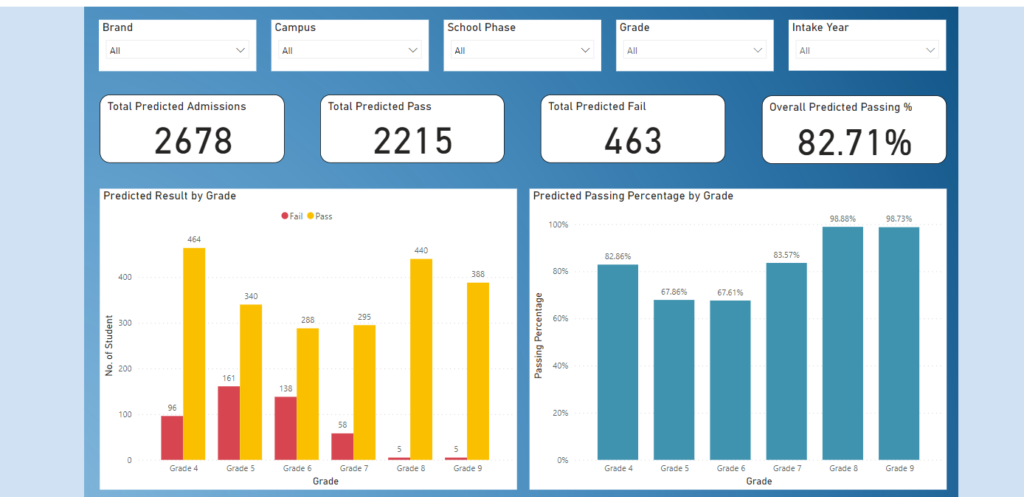
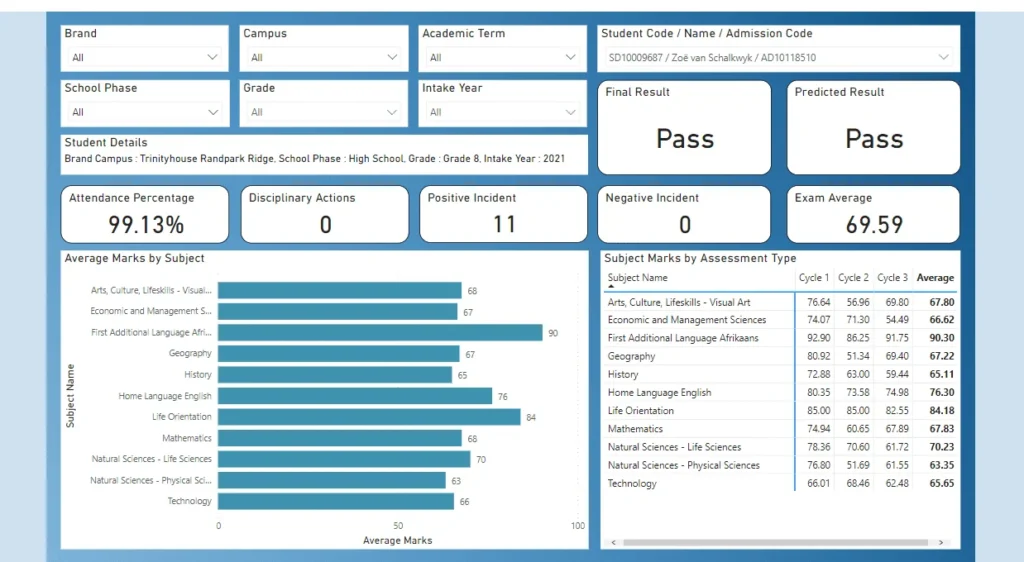
Academia ERP/SIS solution uses historical data of the students and creates a data modeling to provide you a close to accurate analysis of the student performance. Taking it a step ahead, it also helps in analyzing the performance of the class as a whole through a group analysis.

With an accuracy rate of ~90%, Academia is one of the finest education ERP solutions globally that statistically analysis a wide range of factors to provide a near-close prediction on students that may fail due to internal and external factors. The same goes for group analysis. 

Using the tool, schools, colleges, and universities can focus on student performance individually and identify the markers in the system that are causing the performance degradation in student performance. This helps them to take actions that improve student performance and drive them towards excellence. 

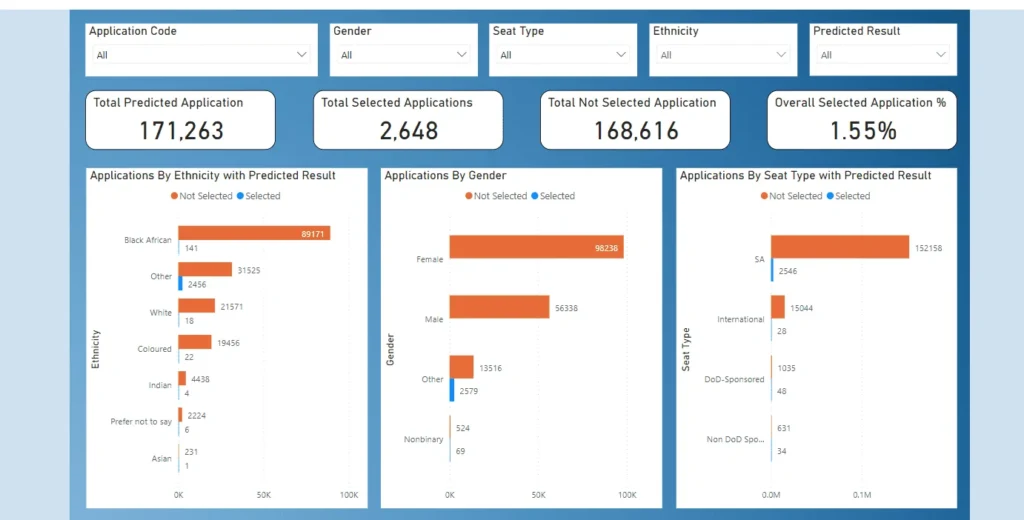
2. Application Conversion Prediction 

The drop rate in the stage from application to admission is a huge challenge for the education industry. With the limited available information about the students, it becomes very difficult for the organizations to identify the factors that are causing the drop rates to shoot up. 

With historical data analysis, the Academia ERP/SIS takes into account various factors to identify the major causes of the drop rates. Also, it provides useful insights and information to the counselors to guide students correctly and convert the applicants into students. The system being highly configurable, can be utilized by any institute easily to devise their own metric to identify applicants that are more likely to become a student in their organization and also fight off drop rates more efficiently. It gives them a major strategic advantage to increase their revenue for longevity.

Way forward

The growing competition in the industry requires a fast-paced solution that does not take much time but does the job in minutes and provides real-time updates along with greater data visualization. Owing to the new needs, the predictive analysis provides you the required support to manage your institutes better and support students in improving their performance. Student-side benefits such as improved transparency in the system and adaptive learning allow them to excel in their studies and increase their participation in the online and classroom learning scenarios. 

Tech-based solutions generate tons of data every day. Realizing the true potential of this data to devise meaningful strategies can help the organization in improving its market positioning. Operational and commercial decision-making can be backed with reliable data and prescribed suggestions from predictive analytical tools.

Back to top