
Type your keyword below

How Student Registration Software Simplifies Admission Process?

Admissions, The most primary and important task for any institution! True? Every institution always looks forward to bringing the best and brightest students according to their fixed requirements. It is the time when institutions need to do various tasks that ultimately are responsible to bring the right candidates, and thus educational institutions put their utmost efforts to perform the admission process effectively. Do you want to make the admission process more simpler and effective in your institution? If so then student registration software can be one of the best options for you. 

What step does your institution take to complete an error-free, effective, and efficient admission process?

Management, as they say, is the art of getting work done tactically through the efforts of other people. Management is universal and all-pervasive. However, it has an extremely critical role when it comes to the Education sector. The education sector has expanded leaps and bounds. With the booming population, this sector is gaining grounds both for the students and for academicians. When it comes to managing an educational institute there are several complexities and vagaries that the educational institution has to face.

Let’s discuss how admission management can reduce various roles and responsibilities by changing the overall functioning of admissions in institutions.

Why should you opt for a student registration and admissions management system?

The student registration and admission management system is something that helps the colleges and schools to manage the overall process simply and efficiently. If you are looking forward to an automated, simple, and less time-consuming admission process, then a student registration and admission management system is the only best option you can opt for. Check out the below reasons to understand more about it.

Reasons to choose a student registration software:

  • Automation 

Institutions opting for student registration software and admission management systems can access a simple and automated version of their workings, using it you will not need to spend time collecting the forms, sorting them, and not even documenting the forms. The student registration software can do all the processes easily and effectively. Automation of the process will also help in finding and sending the acknowledgments, and making receipts as per the requirement.

  • Error-free and simple process 

Suppose a school is still following the traditional method for admission and a student filled incorrect information in the form, in this case, the management can never able rectify the error in any case, they just have the option of rejecting the admission of the student or calling the student to rectify the error, but if the same school is having a student registration software, the system will alert the student or his parents about the incorrect information or blank space. It not only helps in making the process error-free but also makes it much simpler and easy to access. 

  • Time-saving process 

Student registration and admission management system can help the institution, as well as the students/parents, save a lot of time. Students/parents will not need to wait queuing for long to collect and submit their admission forms, meanwhile, the management will also get the opportunity to complete all the processes with just a few clicks.

  • Reduces mental stress

Admission season is one of the most important time for any educational institution, so at this time the management and faculties put all their efforts to manage the admission process, but in all this, the management and faculties have to face various kinds of issues due to the long and complicated traditional education system resulting in mental stress for them, it directly affects the process bringing various errors and chaos.

Although, if your institute owns a student registration and admission management system they can automate the complete process simply and systematically reducing the paperwork and ultimately the mental stress of the manpower of your institution. 

  • User friendly 

Using an online admission process you get a bunch of advantages that we have discussed above, but most importantly a student registration and admission management system is user-friendly that eventually helps in making the complete admission process simple, effective, and worthy.

Read our latest case study of Thiagarajar School of Management

Examination Management System Case Study

Why is Academia’s student registration and admission management system the best choice for you?

The student registration and admission management system designed by Academia is completely made to simplify and automate the entire admission process, it includes all the aspects that you just need to follow a smooth and proper admission process in your organization. Your institution can manage the smooth functioning of student admission forms, student fee receipts, scholarship receipts, managing the details of students for the long run, creating a unique username for the student, automation of attendance after the admission, batch allotment, proper records of academic years, and many more

Sounds interesting! Book a free demo now to learn more about the student information system by Academia from our team of experts. 

Are You Looking For Right Education ERP?

Buying an ERP is still being the biggest problem for organizations and especially for education institutes. There’re only a few good options available in the market for education ERP. It is important to take the right decision since buying an ERP is a very time consuming and expensive decision that would last for a really long time. And making mistake in such a decision is irreversible.

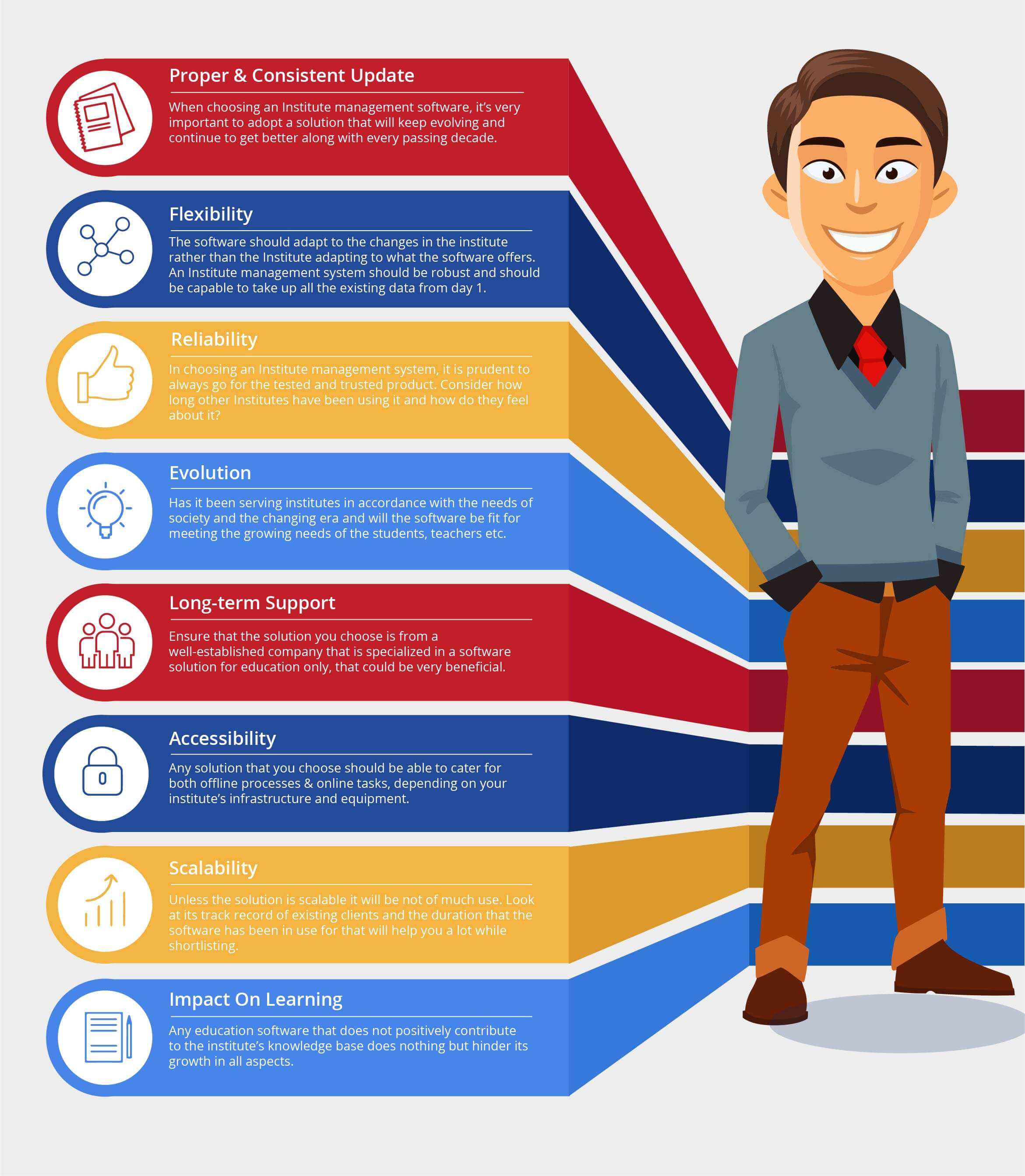
Consider these important factors while buying an ERP solution for your Institute:

  • Proper & Consistent Update: When choosing an Institute management software, it’s very important to adopt a solution that will keep evolving and continue to get better along with every passing decade.
  • Flexibility: The software should adapt to the changes in the institute rather than the Institute adapting to what the software offers. An Institute management system should be robust and should be capable to take up all the existing data from day 1.
  • Reliability: In choosing an institute management system, it is sensible to always go for the tested and trusted product. Consider how long other Institutes have been using it and how do they feel about it?.
  • Evolution: Has it been serving institutes in accordance with the needs of society and the changing era and will the software be fit for meeting the growing needs of the students, teachers, etc.
  • Long-term Support: Ensure that the solution you choose is from a well-established company that is specialized in a software solution for education only, which could be very beneficial.
  • Accessibility: Any solution that you choose should be able to cater to both offline processes& online tasks, depending on your institute’s infrastructure and equipment.
  • Scalability: Unless the solution is scalable it will be unusable or rather say not of much use. Look at its track record of existing clients and the duration that the software has been in use for that will help you a lot while shortlisting.
  • Impact on Learning: Any education software that does not positively contribute to the institute’s knowledge base does nothing but hinder its growth in all aspects.

Are You Looking For Right Education ERP- Read here some important factors while buying an ERP solution for your Institute-Academia ERP

Upcoming Trends in ERP & Its Benefits to Educational Institutions

The systems once developed to accurately determine the number of items to be purchased for the next inventory cycle, namely MRP (Material Requirements Planning) tools have come a long way from just assisting the manufacturing industries. They underwent a transition through MRPII systems and have finally evolved into a much more structured and versatile tool named ERP, which can handle all tasks related to management for almost any organization in an efficient manner with minimal effort. Yet, improvement is a continuous and unending process and ERP systems are no exception. Below is the list of upcoming trends observed in the sector:

  • Cloud ERP

Integration of ERP systems with cloud computing has made the ERP systems to be available as SaaS (Software as a Service). The availability and accessibility of precise data across the supply chain have helped the process to become much more transparent and has reduced human effort.

  • Data Analytics

The advent of big data analytics has assisted in evident predictions for future events. This has been instrumental for the ERP systems since a lot of activities depend on the forecast. The advancements in analytics have increased the efficiency of the systems.

  • Adoption by mid-size Industries

With the popularization of ERP systems, a lot of people have recognized its potential and have stepped out of their mainstream philosophy of ‘old is gold’ and have accepted it as their ultimate management tool.

  • Enhanced Security

The major concern for all the people in the world from different industries including education, intelligence, medical, financial, etc… revolves around security of information. The integration of internet with software’s poses a risk to the data held by organizations, but the continual improvement has been seen on accounts of security embedded in the ERP systems so that the users can be sure their information stays secure.

  • Social Media Integration

The sudden outbreak of social media has not only acquainted the average people with technology but has also improved communication systems. In today’s world, social media is one of the most important tools in connecting diverse people with similar interest.
The ERP systems nowadays contact the non-employees by the means of social media. Many organization globally uses social media to enhance collaboration internally with the employees as well as externally for clients.

  • Mobile

Acceptance of mobile internet has been the phenomenon for quite some time and it is only fair to assume that they will take over bulky computers and laptops for complex systems like ERPs. Some companies offer mobile services at present, but their use has been observed to be limited.

The above-mentioned advancements specifically help the implementation of ERP systems in the education industry. Be it the availability of systems as SaaS, or the accessibility of students’ data to the parents through a combinatorial effect of social media, mobile technology, and cloud computing, the changes favor an increase in acceptance of the tools.

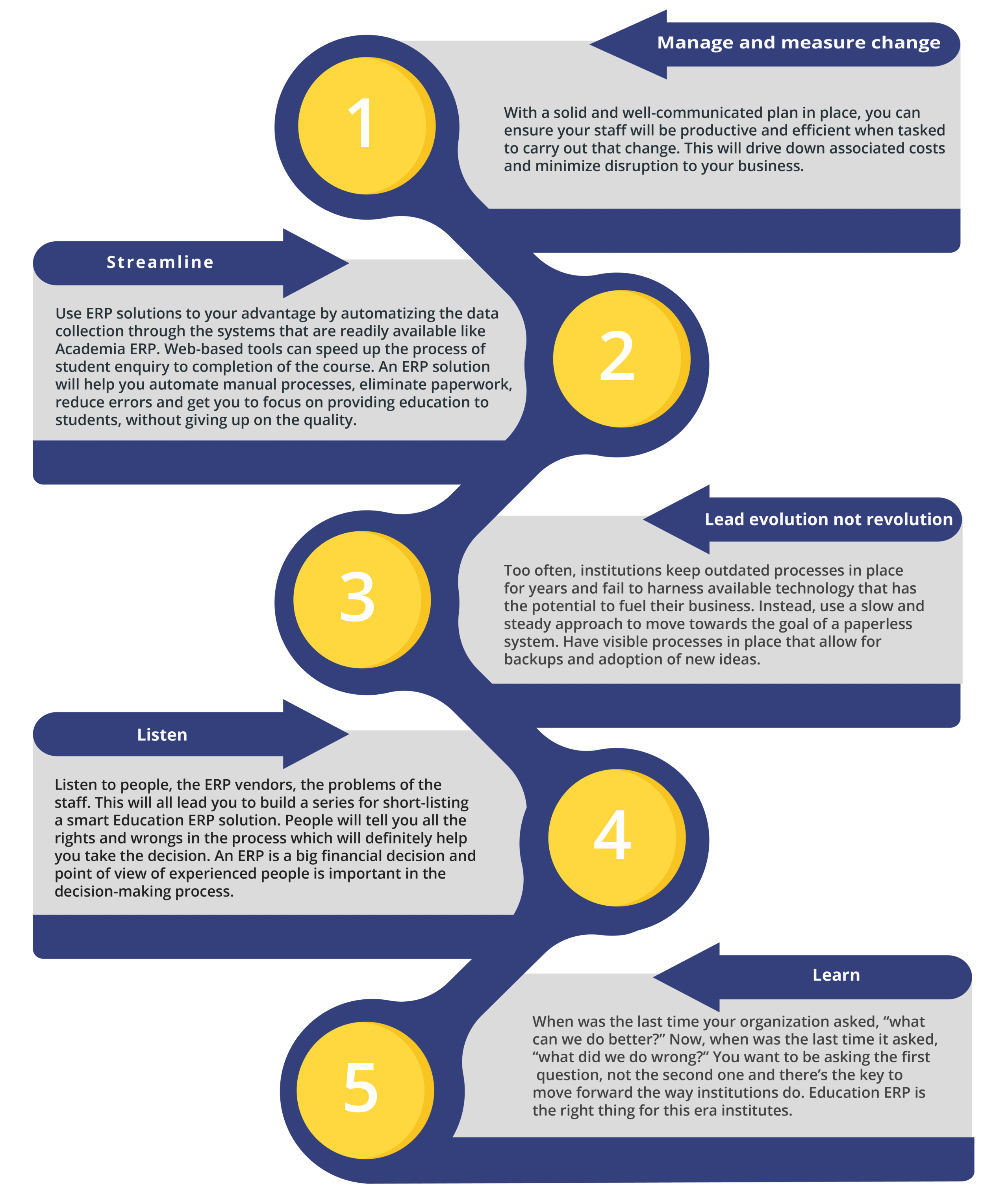
An ERP Promise to Profitability in 5 Simple Steps

With an ERP solution comes a great promise: the potential to help your organization (Institution) make more money while spending less. Whether or not you already utilize ERP technology, profit is the engine that drives business. An ERP solution can steer your company in the right direction by helping you make more profit. Academia ERP is an advanced ERP solution with an amazing support system that can help institutes get there.

The Basics:

The ERP solution itself can’t guarantee success. You and your company must guide the ship, using ERP as the sail. The promise of ERP can be fulfilled, but you must look beyond the software to find the formula that will lead you toward increased profits through smooth functioning and improved operations. Academia ERP helps you in increasing your overall profits by decreasing manual intervention in the processes and increasing the rate of admissions per year by removing inefficiency barriers from the processes.

Power of People + Power of ERP = Increased profit and a healthier organization.

So how do you leverage this formula to become a better and a more successful Institution? It’s simpler than it might seem…

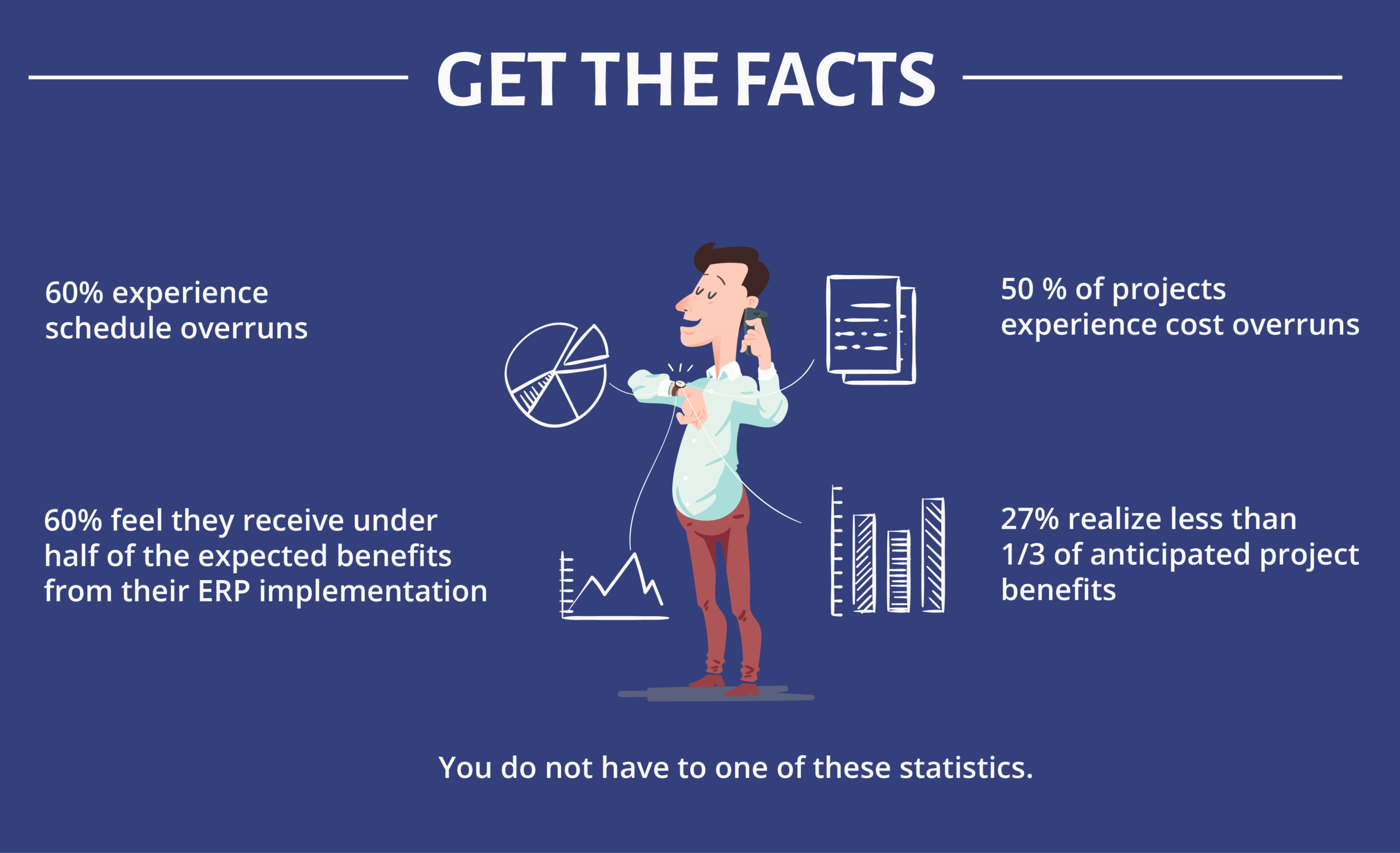
Even Institutes that are satisfied with their software run the risk of running over budget, and many do not receive the expected benefits.

the facts how erp in education benefiting institutions

online college management software-school administration software-Education-ERP- the-right-thing-for-institutes

ERP doesn’t have to be confusing, and a good solution can help the institution to grow and succeed, but only if used the right way.

Know that these steps will lead you to take confident action in adapting to ever-changing conditions, maintaining the health of education systems fuelling growth, and increasing profitability.

You don’t need to hope for the best when you’re using ERP correctly. The best will happen.

Driving Educational Campuses In Modern Way And Why You Need It

One of the most serious issues with endeavouring to add innovation to your school lies in attempting to comprehend what sorts of programming are out there and how they can help.

Without this understanding, it can be difficult to defeat some of your school’s or area’s difficulties.

One essential — however critical — factor that keeps school authorities oblivious about what’s out there is that there’s a great deal of befuddling wording twirling around in the “EdTech” space. (For some, “EdTech” itself is a case of simply such a befuddling term; it’s shorthand for “Instructive Technology.”)

There are numerous terms to filter through. Some are simple language words alluding to digest thoughts, while others are authentic names for normal and imperative programming.

Keeping in mind the end goal to kick you off, how about we take a glance at a moderately direct EdTech term that is basic to K-12 business forms however that can infrequently appear to be confused to EdTech newcomers — ERP.

What is ERP Software?

ERP remains for Enterprise Resource Planning.

Put basically, ERP programming (now and again just called an Enterprise Resource Planner, or, “an ERP”) is programming that oversees business forms for an organization, association, or, for your situation, a school/region.

So how do ERPs “oversee business forms?”

The way it works is that ERPs include different “applications,” or apparatuses, that cooperate flawlessly to interface divisions and bring the information from those different offices together into one database. Whatever errand you have to finish — be it ordering a nitty gritty year-end report or basically keeping an eye on the status of your Accounts Receivable — ERPs put all the data you require comfortable fingertips.

Why Your K-12 School District Needs ERP Software

To comprehend the advantages of utilizing a decent ERP programming, we should take a glance at the framework’s principle capacities as they identify with K-12 school locale.

Robotization:

Robotization is perhaps the most supportive capacity of ERP programming.

ERPs are intended to take numerous undertakings and do them for you, particularly assignments that you do (consistently, week, month, or year).

A case of frequently repeating work that a K-12 monetary administration ERP could improve the situation you would assemble a report of the cash your school area spent a month ago. The ERP consequently pulls particular information from among every one of the applications inside the framework with the goal that you don’t need to look for the data you require. Great ERPs even enable you to arrange the normal reports with the goal that they indicate precisely the data you need them to in precisely the way you need it appeared.

Along these lines, as should be obvious, ERP programming spares you time through robotization, which thus (since we as a whole know “time is cash”) will help your region’s money related primary concern, as well.

Reconciliation:

Another capacity of ERP programming is reconciliation.

Reconciliation fundamentally just alludes to one bit of programming’s capacity to “talk” to another bit of programming. At the point when the product from at least two separate divisions (say, your school area’s Financial Accounting office and its HR office) work firmly together by sharing information, your whole locale turns out to be more proficient and more compelling.

By utilizing ERP programming to consequently share data amongst HR and Accounting, for instance, representatives never again need to enter numbers physically into PCs more than once (if by any stretch of the imagination). Such sharing altogether eliminates information passage mistakes.

In addition, great ERP implementation arrangements keep up your information continuously, which means when you enter data into the framework, every associated office promptly start working from the refreshed information.

By enhancing the exactness of your information, you’ll have the capacity to approach each choice you make in your part with more prominent certainty.

Association:

ERP programming likewise encourages your whole locale to remain composed, not simply from division to office as we examined under “Incorporation,” yet in addition inside every individual office.

Clearly, programming when all is said in done will help your specialization to abstain from depending on scattered papers, sticky notes, and just requesting that your associates make sure to accomplish something. In any case, a great ERP goes significantly further.

As said above, ERPs involve various applications, or “applications” (basically devices), and each application imparts data to all the rest. Along these lines, for instance, if you somehow managed to add a seller record to your framework in one place, the ERP at that point would consequently add that merchant to all significant applications (Accounts Payable, Accounts Receivable, General Ledger, and so forth.).

Along these lines, ERPs keep all your data sorted out, both generally speaking and inside the individual applications, which encourages your specialization to end up more proficient.

The Best ERP Software

At last, the fundamental advantage you get from an excellent ERP programming framework (rather than bland ERP programming) is that it will be planned particularly for your necessities as a K-12 school region. All things considered, you would prefer not to work around programming settings that were worked for a retail business or a non-benefit association.

In addition, however, the best ERP programming frameworks to consider are those that are flexible. Along these lines, past just being outlined for the most part for K-12 school areas, the best ERPs will enable you to arrange the alternatives in a way that works as indicated by your particular needs as an extraordinarily singular K-12 school region.

When you’re ready to set up your product for your school area’s extraordinary needs, you basically are setting up your region for progress.

Truth be told, the capacity to tweak and arrange is such a critical element with regards to ERPs that we at Serosoft Solutions have composed the greater part of our ERPs so they can be designed however bodes well for every one of our customers.

At that point, we took this arrangement between ERP programming and the remarkable needs of individual schools above and beyond.

We’ve fabricated a few distinctive ERP programming frameworks so as to all the more fittingly serve diverse kinds of school areas in light of elements, for example, school/region size, area, and that’s just the beginning.

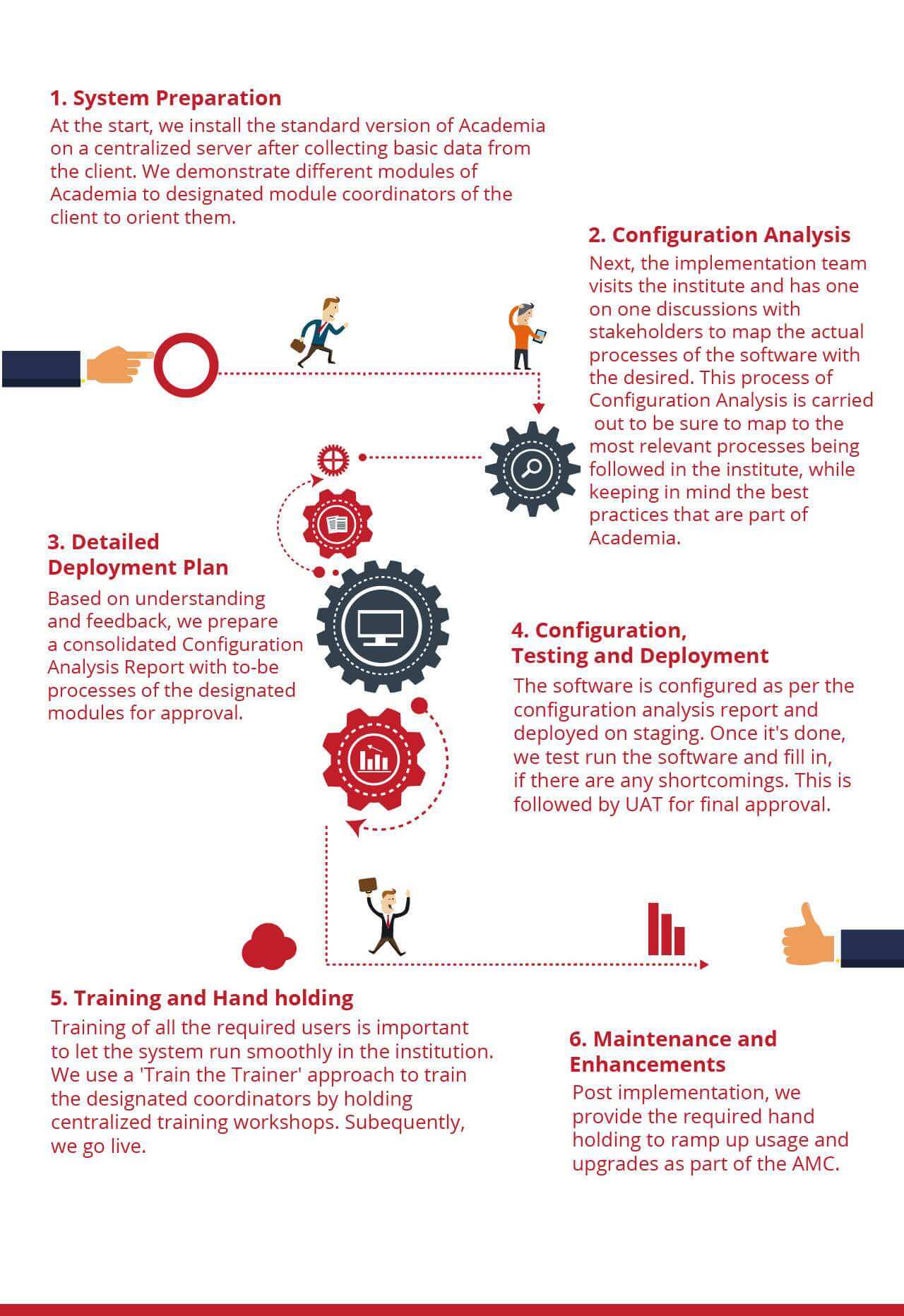
Academia 6-Step Effective ERP Implementation Process

An Education ERP implementation involves installing the software, moving your data over to the institute’s system, configuring your users & the processes, also the training of the users on the software. Choosing the right partner for implementing your ERP system is almost as important as selecting the right software in the first place.

Academia-6-Step-Effective-ERP-Implementation-Process

Things You Need To Know Before ERP Implementation!

Is it accurate to say that you are looking forward to purchase an ERP framework for your school, college or training foundation? On the off chance that you are a thinking to be an ERP client, you should setup specific trapsat that point to make the most out of it. To enable you to make the most of your ERP, here are 7 fascinating tips for appropriate execution that would doubtlessly work wonders for your school, college or training organization:

Things you need to know before successful education ERP implementation!

APPROPRIATE TRAINING:

A standout amongst the most essential strides to an effective usage is legitimate preparation of your educator’s and their will to identify & utilize ERP programming. You, your instructors and different staffs must know how to utilize it to reap its advantages. Along these lines, ensure you and your staff gets prepared legitimately and continue getting training occasionally. The scholarly community gives undeniable preparing support with video instructional exercises to keep you generally prepared in the most recent and most prominent developments.

SPECIALIZED ISSUES:

The following test coordinates every single specialized necessity to the new ERP programming and picking the best conveyance model to interface the two together. What we mean by this is: will it be an on premise arrangement, a cloud arrangement, or a mixture one?

To battle this, build up a venture that covers each progression of the execution procedure. The task design sets a course of events for everything from equipment prerequisites, asset controls, information changes and information section to approving the system. Setting up a task design is shrewd in light of the fact that it goes about as an execution guide that covers the means for continuing through the outline period of the ERP framework. The scholarly world offers extensive variety of offerings according to client’s prerequisites which isn’t just restricted to facilitating yet in addition as far as evaluating. To know more, please click here.

GET THE LATEST TECH:

It’s extremely significant to be all around familiar with the most recent student management system drifts in the instruction division before deciding to settle with a system as technology experiences systematic periodic up gradation. Better research and better downplaying about patterns will help you in getting the college management system that suits your establishment the most.

UTILIZE ‘CARROT & STICK’ STRATEGY:

‘Carrot and Stick’ system can be utilized to enhance the utilization of ERP programming among your educators and different stakeholders. Reward those staff members who makes fruitful use of the school administration framework all the time.

GROUP WORKING:

You can make a group with the best representatives including the best instructors, different staff and assign them the power and specialist to ensure that the task is done well and on time.

Legitimate execution of education management software is an important errand and requires appropriate time administration to yield the best out of it. We at Academia are engaging instructive organizations of fluctuated sizes and tasks to center around conveying brilliant training and hardly any reasoning or agonizing over the regulatory procedure. Executing Academia empowers instructive establishments to deal with their whole regulatory errands and aids monotonous asset escalated exercises through consistent mechanization. With 10 years of rich experience, we’ve planned the engineering of Academia such that it meets the remarkable and fluctuating needs of schools, colleges and training organizations. To know progressively and take a free voyage through our system, click here.

Training and Education: Important Elements For Successful ERP Implementation

With the rising EdTech trends and their positive outcomes, educational institutions worldwide are adapting technologies like ERP/SIS that can enhance overall functionality bringing efficient management in the institution. 

What is an ERP system and how can it help educational institutions?

An ERP system is software that can automate all academic and administrative processes. It can manage and streamline all the day-to-day activities such as enquiry, admission, fee & finances, examinations, and many more. 

It helps educational institutions with institution management driving all of the operations from a single platform. It is the true digital transformation of the institution. 

Institutions must choose good ERP software that can effectively meet the expected extent. After selecting a robust ERP system comes the implementation process, there are various factors associated with smooth implementation of the education ERP system.

Let’s move further to discuss the important elements for successful ERP implementation in an institution!

Elements for Successful ERP Implementation

  • Get a better understanding of ERP

ERP is a broader concept and a software solution that can automate all the activities and tasks within an institution. It is necessary to get a deeper understanding with elite training for all the stakeholders who are associated with the use of the system. 

The higher authorities need to check the overall functionalities of the software to confirm whether it can cater to their daily activities and processes. Institutions can also create a panel to check the efficacy of the product to make its work better and improved.

  • Analyze Problems/Requirements

An ERP system can replace outdated techniques entirely through digitalization. So to make it productive, it is a must that institutions should analyze the product efficiency and check the usage and problems with each department. 

The best practice to evaluate this is to create sample data from all the departments and check the accuracy of the system in various aspects i.e., some enquiries, some exam-related data, and more. After checking the accuracy of the system, you need to ask for its solution from the vendor in the best possible way.

  • Check the Needs for Customization

Every educational institution owns different types of rules and regulations. It is a must that the ERP system you choose must provide customization according to the requirements. The software you choose must be a system that can fit the existing processes of the institute with a flair for automation. 

Academia ERP provides solutions to each problem, it renders customization according to the institution, various integrations, anonymous assessment, and multi-Centre functionality to name a few.

  • Test all the Modules

As discussed above, the higher authorities need to create a panel for sample data modeling from all the departments and test each module with the ERP software. Test results are generated live and presented among the ERP team and the panel to find out real-time solutions to the problems. 

After solving the major problems, all the stakeholders in an institution need to use the system to see if they are comfortable with its functionalities and are helpful to the institution in its role.

  • ERP Implementation

After analyzing the system in all aspects, the ERP experts process the implementation of the ERP.

The process starts with transferring all the data from all the departments from manual papers and files or legacy systems. The complete process needs time and involves expert teams from both ends. 

After successful implementation, the ERP experts hand over the complete system to the educational institutions. 

  • Support

As its most important function, an ERP system automates all the operations of an institution, but for this, not just successful implementation can help; it requires effective use by the organization and continuous support from the ERP team. They need to provide maintenance and help at regular intervals. 

For this, Academia ERP has a designated customer support team with experts to resolve any issues instantly along with 24/7 availability. It also releases regular sprint updates to deliver all the updated features and functionalities of all the modules.

Conclusion

With the rising competition and expansion in the education sector, it is the right time for educational institutions to choose a very good technology like an ERP system that can boost productivity in all aspects. 

Again, it is crucial to select a robust ERP system that provides complete automation along with smooth and efficient implementation, support, and end-user satisfaction. 

If your institution is looking for one, Academia ERP can become the best option, as it is a robust platform used and loved by more than 320+ education institutions across the globe. Here, the team of experts believes in overall efficiency while rendering the software, right from the first interaction to the implementation process and customer support!

Request your demo now to learn more about the award-winning ERP solution! 

6 Steps To Perform Student Enrollment Management In Higher Ed

Enrollment management refers to the ability of institutions of higher education to exert more systematic influence over the number and characteristics of new students, as well as influence the persistence of students to continue their enrollment from the time of their matriculation to their graduation. The emergence of enrollment management as a new administrative structure within institutions of higher education originated in North America, but it has also been employed in Europe, Africa, and Asia.

The Concept

Enrollment management can be viewed as a synergistic organizational concept that can be used to link several administrative functions within a college or university in order to optimize institutional enrollment goals. Examples of this approach can be found among the financial strategies of many college campuses, where important linkages have emerged between senior enrollment managers and chief financial administrators. Both private and public colleges use some of their tuition income to fund campus-based scholarships for students. Tuition revenue accounts for millions of dollars, and campus-based financial aid has become a large expenditure at most four-year institutions. Enrollment management efforts have therefore become closely linked to budgeting and campus financial planning. Successful enrollment management strategies and practices must also consider the growing importance of university and college rankings. For many institutions of higher education, enrollment management has come to involve a combination of student enrollment strategy, budgeting strategy, and institutional positioning strategy.

Roadmap

1.  Set goals for enrollments

Setting up realistic goals and working in that very same direction to achieve them is the first necessity of systematic enrollment management for an institute. It is a crucial step since it involves market analysis and calculation of the expected rate of growth.

2.  Resource requirements

To identify the need for the required resources according to the set goals is the next step in the roadmap for enrollment management.

3.  Campaigning and recruiting plan

It is important to create a target focused marketing plan for move in the right direction and reach the set goals. The right kind marketing mix may help you get to the right target audience which would ultimately help us meet enrollment management goals.

4.  A strong follow-up on your marketing and recruitment activities

Tracking your activities is a must in the process of enrollment management to get the results. Following steps can be followed to keep on a regular check on these activities:

1) Identify which metrics to track.
2) Know how to track the metrics you identified.
3) Guide your decisions with the data you collect.
4) Monitor the effect of your efforts and adjusting accordingly.

Having a solid set of marketing and recruitment metrics you can track allows you to benchmark your efforts from year to year and make crucial decisions on allocating resources and strategies.

5.  Systematic communications within the process to develop and implement the right strategy.

With the seemingly chaotic mix of print, e-mail, Web, and social media, there may not seem to be much “flow” with recruitment communications. As with student qualification, though, building a communications flow remains a bountiful recruitment strategy if it is handled strategically.

First, you still must think through the communications at various enrollment stages—inquiry, applicant, admit, deposit. Regardless of where a student enters the flow, progressing them to the next enrollment stage remains the goal.

Second, focus your electronic communications wisely. Having a Web site that engages students is paramount. You want to invite communication in addition to delivering information. Give students opportunities to provide their e-mail addresses or even opt in to text messaging. Do the same with social media but be careful not to go overboard. You are better covering fewer social media outlets well rather than spreading yourself too thin.

Finally, get parents and guardians involved in the flow. According to our E-Expectations research, 60 percent are involved with the college research process. Target them with communications and make them ambassadors for your campus.

6.  Award financial aid so students get what they need and expect to enroll

The ability to afford a college education has emerged as the biggest roadblock to attending college. Perhaps nothing will turn away a prospective student faster than a feeling that they cannot afford your institution. You must address this concern immediately and accurately.

Technology in Education- What’s the Future!

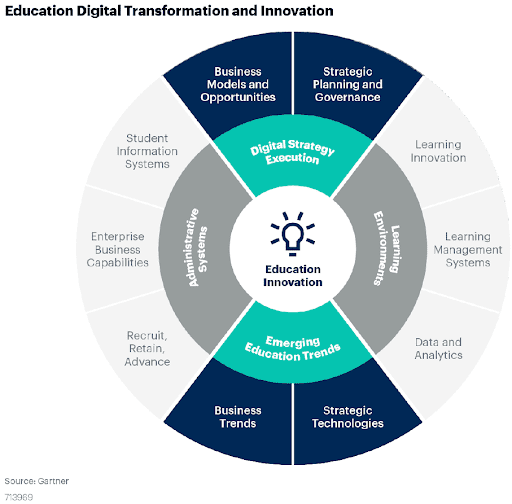
Technology is changing every aspect of our lives, and education is one of the most important sectors that need to be modernized and advanced leading to the overall growth of the institution. Meanwhile, it is also essential that institutions must understand the right usage and importance of educational technology. Technology these days is far more than digital whiteboards, learning management systems, and such technological tools. So which technology are you using in your institution to be in the technological touch? Let’s discuss some of the important technologies and their benefits for education institutions. 

To understand it better, let’s first understand why technology is important for educational institutions.

Different technologies and their benefits in education:

  • ERP for seamless academic & administrative workings 

Various types of educational technology are evolving in the modern world that are supporting institutions, but ERP is the only and one of the leading technologies that provide complete automation of all the academic and administrative activities in the institution. It can manage all the operations like admission, enrollment, fee, hostel, library, transportation, examination, result declaration, and even alumni of the institution using a single software. A good ERP system even provides a simple and coding-free portal with a mobile application through which all the stakeholders like students, faculty, parents, administrators can manage their tasks effectively. 

  • SIS for a seamless relationship between students and faculty 

Students are one the most important stakeholders of an institution, institutions need to opt for techniques through which students can focus on their studies directly instead of indulging in day-to-day operations and tasks. A student information system is one of the leading technologies that is helping various institutions to create a systematic workflow of all the operations associated with a student. Having a student information system, institutions can attain and fill admission forms using the portal or mobile application. They can even get their enrollment numbers, can attain a systematic flow of timetable, examination details, and even the results. Institutions also get access to students’ activities from anywhere and anytime starting from their attendance to all other daily activities that are triggered for the overall growth of students and the institution. 

  • Immersive learning for the enhanced learning experience 

In the modern era of technology, learning and teaching are not only restricted to classrooms and textbooks. The students of today’s generation expect a more advanced and immersive experience that can solve their curiosity with practical solutions. 

Immersive learning provides students with real-time experiences created through augmented, VR/AR reality. These real-time experiences can transfer students virtually to the planet and help them eat up all the information to satisfy their curiosity and hunger in the best manner. 

  • Gamification for fun, and modern learning 

Games have always been the first choice of any age group, but what if students can learn and faculty can teach using modern technology? Technology is changing in every aspect and now using different technological games classrooms can be personified to make lessons more interactive and understandable along with boosting participation, encouragement, and collaboration. 

Conclusion

The Edtech world is booming now, it is the correct time for educational institutions to choose technologies that can help them in boosting the teaching and learning experience for students. What is your opinion on educational technology and its expansion, which is your favorite technology till now? Let’s discuss it in detail. Reach out to us today!

Download Exclusive Gartner Reports Brought to You by Serosoft (Academia):

Gartner-research-report

Back to top