Type your keyword below

Embracing the EdTech Revolution: A Lucrative Opportunity Awaits

Welcome to Academia ERP, where innovation meets opportunity! Education technology, or EdTech, stands out as one of the most promising sectors for entrepreneurs and businesses alike. As we step into the future, the intersection of education and technology is reshaping the way we learn, teach, and, most importantly, how we can achieve extraordinary profits.


The digital transformation in education has opened up a world of possibilities, creating a thriving market for innovative solutions and services. With the global EdTech market on a continuous growth trajectory, now is the perfect time to embark on a journey that promises not just financial rewards, but also the chance to make a significant impact on the way knowledge is shared and acquired.

Why EdTech?

1. Meeting the Growing Demand:

The demand for online education and digital learning tools has never been higher. With the rise of e-learning platforms, interactive content, and virtual classrooms, there’s an insatiable hunger for quality educational experiences.


Ed_tech

2. Innovative Solutions:

EdTech isn’t just limited to online courses. From AI-driven personalized learning apps to virtual reality educational experiences, the industry is ripe with opportunities to create unique, groundbreaking products.

3. Global Reach:

The internet knows no boundaries, and neither should your educational initiatives. EdTech allows you to reach learners worldwide, breaking down geographical barriers and expanding your market exponentially.

4. Continuous Growth:

As technology advances, so does the potential of EdTech. Staying ahead of the curve and embracing emerging technologies ensures that your business remains relevant and continues to grow.

How to Start Your EdTech Journey

Identify Your Niche: Determine the specific area within EdTech where your passion and expertise align. Whether it’s language learning apps, coding courses, or virtual labs, finding your niche will set the foundation for your success.

Develop a Unique Value Proposition:

What sets your EdTech solution apart? Whether it’s unparalleled interactivity, expertly curated content, or a user-friendly interface, defining your unique selling points is essential to attracting your target audience.

Focus on User Experience:

User experience is paramount in the digital realm. Create intuitive interfaces, engaging content, and seamless interactions to keep your users coming back for more.

Embrace Collaboration:

Partner with educators, content creators, and technology experts. Collaboration fosters innovation and can lead to the development of transformative educational products.

Stay Updated and Adapt:

The EdTech landscape is ever-changing. Stay updated with the latest trends, listen to user feedback, and be ready to adapt your offerings to meet evolving demands.

Conclusion

Embarking on a journey into the EdTech world is not just a business venture; it’s a chance to be part of a transformative movement in education. At Academia ERP by Serosoft, we believe in the power of education to change lives and in the potential of technology to enhance and democratize learning. Join us on this extraordinary journey, where innovation, education, and profits converge to shape a future where everyone has access to quality education and limitless opportunities. Start your EdTech adventure today and unlock the door to extraordinary profits and meaningful impact.

To learn more about how Academia by Serosoft can assist you on your EdTech journey, explore our website or contact us directly. Let’s create a brighter, smarter future together!

Understanding ERP Systems in Higher Education

In the ever-evolving landscape of higher education, institutions are constantly seeking innovative solutions to streamline their processes and enhance their operations. One such solution that has gained significant traction in recent years is the implementation of Enterprise Resource Planning (ERP) systems. These systems offer a comprehensive suite of integrated software applications designed to manage various aspects of an institution’s operations, including administrative, academic, and financial functions. In this article, we will delve into the world of ERP systems in higher education, exploring their benefits, key features, and best practices for implementation.

Table of Contents

  • What is an ERP System?
    • Definition of ERP Systems
    • Evolution of ERP Systems in Higher Education
  • Benefits of ERP Systems in Higher Education
    • Streamlined Administrative Processes
    • Enhanced Data Integration and Accessibility
    • Improved Decision-Making and Planning
  • Key Features of ERP Systems in Higher Education
    • Student Information System (SIS)
    • Financial Management
    • Human Resources and Payroll
    • Procurement and Supply Chain Management
  • Best Practices for Implementing ERP Systems in Higher Education
    • Needs Assessment and Vendor Selection
    • Customization and Integration
    • Change Management and Training
  • Choosing the Right ERP System for Higher Education
    • Factors to Consider
  • Future Trends in ERP Systems for Higher Education
    • Cloud-Based Solutions
    • Artificial Intelligence and Machine Learning Integration
    • Mobile Accessibility
  • Conclusion

1. What is an ERP System?

Definition of ERP Systems

Enterprise Resource Planning (ERP) systems are integrated software applications that facilitate the management of an organization’s resources by automating and integrating various business processes. These systems provide a centralized database that enables different departments within an institution to access and share information in real time, promoting operational efficiency and data accuracy.

Evolution of ERP Systems in Higher Education

ERP systems have a rich history in the corporate world, where they have been widely adopted to streamline business operations. However, their application in the higher education sector is a relatively recent phenomenon. As institutions face increasing pressure to improve efficiency, reduce costs, and enhance student services, ERP systems have emerged as a promising solution to address these challenges.

Traditionally, higher education institutions relied on disparate systems and manual processes to manage their administrative, academic, and financial functions. This fragmented approach often led to data inconsistencies, redundant tasks, and limited visibility into key metrics. In response to these challenges, institutions began exploring the adoption of ERP systems tailored specifically for higher education.

2. Benefits of ERP Systems in Higher Education

Streamlined Administrative Processes

One of the primary benefits of implementing an ERP system in higher education is the streamlining of administrative processes. These systems automate routine tasks such as registration, admissions, course scheduling, and grading, reducing the administrative burden on staff and faculty. With centralized data management, institutions can eliminate duplicate data entry and ensure data integrity across various departments.

Enhanced Data Integration and Accessibility

ERP systems facilitate seamless integration of data across different departments, enabling a holistic view of an institution’s operations. This integrated approach allows administrators, faculty, and staff to access accurate and up-to-date information, improving communication, collaboration, and decision-making. For example, student information stored in the system can be easily accessed by advisors, faculty, and administrators, enabling personalized support and efficient academic planning.

Improved Decision-Making and Planning

By providing real-time data and analytics, ERP systems empower higher education institutions to make informed decisions and develop effective strategic plans. With access to key performance indicators, such as enrollment trends, student retention rates, and financial projections, administrators can identify areas of improvement, allocate resources effectively, and optimize institutional performance. These systems also enable institutions to generate customized reports and dashboards, providing actionable insights for data-driven decision-making.

3. Key Features of ERP Systems in Higher Education

Student Information System (SIS)

The Student Information System (SIS) is a core component of ERP systems in higher education. It encompasses a range of functionalities related to student administration, including admissions, registration, academic records, financial aid, and student billing. SIS modules facilitate the seamless flow of information throughout the student lifecycle, from recruitment to graduation, ensuring efficient student management and support services.

Financial Management

Financial management modules within ERP systems enable higher education institutions to streamline their financial operations, including budgeting, accounting, purchasing, and grants management. These modules provide a comprehensive view of financial transactions, automate financial processes, and support compliance with regulatory requirements. Institutions can generate financial reports, track expenses, and manage budgets efficiently, enhancing financial transparency and accountability.

Human Resources and Payroll

ERP systems for higher education typically include modules for human resources and payroll management. These modules centralize employee data, automate payroll processes, manage benefits administration, and facilitate employee self-service functionalities. By automating routine HR tasks, institutions can reduce administrative overhead, improve accuracy in payroll processing, and enhance employee satisfaction.

Procurement and Supply Chain Management

Procurement and supply chain management modules within ERP systems enable higher education institutions to streamline their purchasing processes, manage inventory, and track supplier relationships. These modules automate procurement workflows, facilitate vendor management, and support strategic sourcing initiatives. By optimizing procurement processes, institutions can achieve cost savings, improve operational efficiency, and ensure compliance with procurement policies.

4. Best Practices for Implementing ERP Systems in Higher Education

Needs Assessment and Vendor Selection

Before embarking on an ERP implementation project, it is crucial for higher education institutions to conduct a thorough needs assessment to identify their specific requirements and pain points. This assessment should involve key stakeholders from various departments to ensure comprehensive input. Once the needs assessment is complete, institutions can initiate the vendor selection process, evaluating vendors based on their track record, product functionality, scalability, and customer support.

Customization and Integration

While ERP systems offer a range of out-of-the-box functionalities, customization may be necessary to align the system with an institution’s unique processes and requirements. However, customization should be approached with caution, as excessive modifications can lead to increased costs, longer implementation timelines, and difficulties in system upgrades. Institutions should prioritize customization efforts based on their strategic goals and focus on integrating existing systems with the ERP to minimize disruption.

Change Management and Training

Implementing an ERP system in higher education requires effective change management practices and comprehensive training programs. Institutions should communicate the purpose and benefits of the ERP system to all stakeholders, addressing any concerns and resistance to change. Training programs should be developed to ensure that end-users are equipped with the necessary skills to maximize the system’s potential. Ongoing support and regular feedback loops are essential to facilitate a smooth transition and optimize user adoption.

5. Choosing the Right ERP System for Higher Education

Factors to Consider

When selecting an ERP system for higher education, institutions should consider several factors. These include:

  • Scalability: The system should have the ability to accommodate the institution’s current and future needs as it grows and evolves.
  • Integration Capabilities: The ERP system should be able to integrate with existing systems and applications, such as learning management systems and CRM software.
  • Vendor Support and Reputation: Institutions should assess the vendor’s track record, customer support services, and reputation within the higher education sector.
  • Security and Compliance: Data security and compliance with industry regulations, such as FERPA, should be a top priority when selecting an ERP system.
  • Total Cost of Ownership: Institutions should evaluate the total cost of ownership, including licensing fees, implementation costs, ongoing maintenance, and support.

It is crucial for institutions to thoroughly evaluate the features, functionalities, and compatibility of each ERP system to determine the best fit for their specific needs.

6. Future Trends in ERP Systems for Higher Education

Cloud-Based Solutions

The adoption of cloud-based ERP systems is expected to increase in the higher education sector. Cloud solutions offer several advantages, including reduced infrastructure costs, scalability, and enhanced accessibility. Institutions can benefit from automatic software updates, improved data security, and the ability to access the system from anywhere, anytime.

7. Artificial Intelligence and Machine Learning Integration

As artificial intelligence (AI) and machine learning (ML) technologies continue to advance, ERP systems are incorporating these capabilities to further enhance their functionalities. AI and ML can automate routine tasks, provide predictive analytics, and enable intelligent decision-making. For example, chatbots powered by AI can assist students with inquiries, freeing up staff time for more complex tasks.

Mobile Accessibility

With the proliferation of mobile devices, ERP systems are increasingly focusing on mobile accessibility. Mobile applications allow students, faculty, and staff to access important information, complete tasks, and receive smartphone or tablet notifications. This mobility promotes flexibility and convenience, enabling stakeholders to stay connected with the institution’s operations on the go.

8. Conclusion

ERP systems have become a game-changer in the higher education sector, offering institutions the opportunity to streamline their operations, improve efficiency, and enhance student services. By integrating various administrative, academic, and financial functions, there are ERP systems like Academia ERP, that provide a holistic view of an institution’s operations, enabling informed decision-making and strategic planning. As the higher education landscape continues to evolve, institutions that embrace ERP systems will be better positioned to navigate the challenges and seize the opportunities of the future.

Implementing an ERP system in higher education requires careful planning, effective change management, and ongoing support. Institutions should conduct a thorough needs assessment, select the right vendor, and prioritize customization efforts based on their strategic goals and requirements. By following best practices and leveraging the benefits of ERP systems, higher education institutions can transform their operations and empower their stakeholders for success in the digital age.

About Academia ERP:

Academia ERP is a robust, feature-rich, analytics-equipped, user-friendly ERP – built on a cutting-edge and flexible architecture – that enables educational institutions to automate & streamline their functions and processes for both learning and administration, from prospecting to graduation. We have a presence in 24 countries and have served 350+ institutions so far.

About Serosoft Solutions:

Serosoft is a leading educational software and solutions company, promoted by a dynamic team of erstwhile I-Bankers, US graduates, and MBAs. We are part of the prestigious 50-year-old Hindustan Group of Companies.

Student Information System (SIS) – Streamline Your Higher Education Experience

Technology has become an integral part of our daily lives, this is especially true in the education sector, where education institutions are constantly looking for ways to improve their processes and provide a better experience for their students. One such technology that has gained popularity in recent years is the use of education ERP / Student Information Systems (SIS) in higher education. In this article, we will explore the benefits of using ERP/SIS systems in higher education and how they can streamline the overall experience for students, faculty, and staff. We will delve into the specifics of what ERP systems are, their benefits, popular ERP systems in the market, and the challenges faced during their implementation.

The education sector has always been a fertile ground for technological advancements. From the introduction of smart classrooms to the use of artificial intelligence in learning, technology has revolutionized the way education is delivered. ERP systems are the latest addition to this technological revolution in education. They have the potential to transform the administrative and academic processes in higher education institutions, making them more efficient and effective.

What are Higher Education ERP / SIS Systems?

ERP stands for Enterprise Resource Planning, and it refers to a software system that integrates and manages various aspects of an organization’s operations. In the context of higher education, ERP systems are designed specifically for colleges and universities to manage their administrative, academic, and financial processes. These systems provide a centralized platform for managing student information, course registration, financial aid, human resources, and other campus management functions.

ERP systems in higher education are not just about managing administrative tasks. They are about creating a seamless and integrated experience for all stakeholders involved – students, faculty, staff, and management. They bring together all the disparate systems used in a university, from admission to graduation, under one umbrella. This not only simplifies the management of these systems but also ensures that all stakeholders have access to the same information, leading to better decision-making and improved outcomes.

Benefits of Higher Education ERP Systems

Streamlined Processes: One of the main benefits of using ERP systems in higher education is the streamlining of processes. With all the different departments and functions within a university, it can be challenging to keep track of everything and ensure smooth operations. ERP systems provide a centralized platform that connects all these departments and automates various processes, making it easier for staff to manage their tasks and for students to access the services they need.


Improved Communication and Collaboration: ERP systems also facilitate better communication and collaboration among different departments and stakeholders within a university. With all the information stored in one place, it becomes easier for staff to share data and work together on projects. This can lead to more efficient decision-making and a more cohesive campus community.


Enhanced Student Services For students: ERP systems can greatly improve their overall experience. With these systems, students can access all the services they need, such as course registration, financial aid, and academic records, in one place. This eliminates the need for them to visit different departments or stand in long lines, saving them time and frustration. Additionally, ERP systems can provide students with real-time updates on their academic progress, making it easier for them to stay on track and make informed decisions about their education.


Better Data Management: Data is a crucial aspect of any organization, and universities are no exception. With the large amount of data generated by various departments, it can be challenging to manage and make sense of it all. ERP systems provide a centralized database that stores all this data, making it easier for staff to access and analyze it. This can lead to better data-driven decision-making and improved efficiency in operations.


Cost Savings Implementing an Education ERP: System in higher education can also result in cost savings for the institution. By automating processes and reducing the need for manual labor, universities can save on staffing costs. Additionally, with better data management and decision-making, institutions can avoid costly mistakes and make more informed investments.


ERP systems also offer scalability, which is a significant advantage for growing institutions. As the institution expands, the ERP system can be scaled up to accommodate the increased workload without any significant disruptions. This ensures that the institution can continue to provide a high-quality education experience even as it grows.


Popular & Effective Higher Education ERP Systems

There are several ERP systems available in the market, each with its own set of features and benefits. One of the most popular ones used in higher education is Academia ERP. Academia ERP by Serosoft is a robust, feature-rich, AI-enabled, analytics-equipped, user-friendly Education Management System / Student Information System – built on a cutting-edge and flexible architecture – that is powering 350 institutions across 25 countries today.

The unique attributes of this award-winning product are:

  • AI-ENABLED

AI-powered analytics that offers intelligent, data-driven insights across all departments, enhancing and driving operational efficiency.

  • COMPREHENSIVE

Single-click Interface that provides an overview of all the departments and functions

  • CONFIGURABLE 

Highly dynamic, and configurable as per the needs of the institution

  • CLOUD-ENABLED

Delivered on the cloud and accessible by clients anytime, anywhere

  • MULTI-CENTER CAPABILITIES 

Complete decision support system for the management with multiple report generation capability

  • MOBILE APP

Academia is mobile-ready with Android and iOS apps for all the stakeholders

  • UNIFIED

Integrated structure which reduces data redundancy, and ensures process   standardization

Challenges of Implementing ERP Systems in Higher Education

While there are many benefits to using ERP systems in higher education, there are also some challenges that institutions may face during the implementation process. These include:

1. Cost

Implementing an ERP system can be a significant investment for universities, and it may not be feasible for smaller institutions with limited budgets. Additionally, there may be additional costs for training staff and maintaining the system, which can add to the overall cost.

The cost of implementing an ERP system can be a significant barrier for many institutions, especially smaller ones with limited resources. However, it is important to consider the long-term benefits of such a system. While the initial investment may be high, the cost savings and efficiency gains in the long run can make it a worthwhile investment.

2. Resistance to Change

Introducing a new system can be met with resistance from staff who are used to traditional methods of operation. This can lead to a slower adoption rate and may require additional training and support to ensure a smooth transition.

Change is often met with resistance, especially when it involves a significant shift in the way things are done. However, with proper communication and training, this resistance can be overcome. It is important to involve all stakeholders in the process and provide them with the necessary support to adapt to the new system.

3. Data Migration & Security

Migrating data from existing systems to the new ERP system can be a complex and time-consuming process. It requires careful planning and execution to ensure that all data is transferred accurately and securely.

Data migration is one of the most critical aspects of implementing an ERP system. It involves transferring large amounts of data from existing systems to new ones, which can be a complex and risky process. However, with careful planning and the use of appropriate tools and techniques, this process can be managed effectively, choosing software with global security complaint parameters will ensure security.

Conclusion

In conclusion, Education ERP/SIS systems have become an essential tool for higher education institutions looking to streamline their processes and provide a better experience for their students. These systems offer a wide range of benefits, including improved communication, enhanced student services, and better data management. While there may be some challenges in implementing these systems, the long-term benefits make it a worthwhile investment for universities. With the right ERP system in place, universities can improve their operations, save costs, and ultimately provide a better education experience for their students.

The future of higher education lies in leveraging technology to create a seamless and integrated experience for all stakeholders. Education ERP/SIS systems are a step in this direction, providing a platform that brings together all aspects of university operations under one umbrella. As more and more institutions adopt these systems, we can expect to see a significant transformation in the way higher education is delivered.


Navigating Change: Effective Change Management in Education

Change is an inevitable aspect of life, and the education sector is no exception. As technology continues to reshape the landscape of learning, embracing change becomes crucial for educational institutions. Change management in education entails strategic planning and execution to ensure a seamless transition towards adopting technological advancements. In this blog, we delve into the key principles of change management in the context of education management.

  • Communicate About the Change: Transparent communication is the cornerstone of successful change management. Educational leaders must communicate the reasons behind the change, its benefits, and the expected outcomes to all stakeholders. Providing clear and consistent messages fosters understanding and minimizes resistance.


  • Involve Stakeholders at All Levels of the Organization: Engaging stakeholders across various levels – students, teachers, administrators, parents, and support staff – empower them to take ownership of the change. Involvement encourages a sense of responsibility and collective commitment, which are vital for a successful transition.


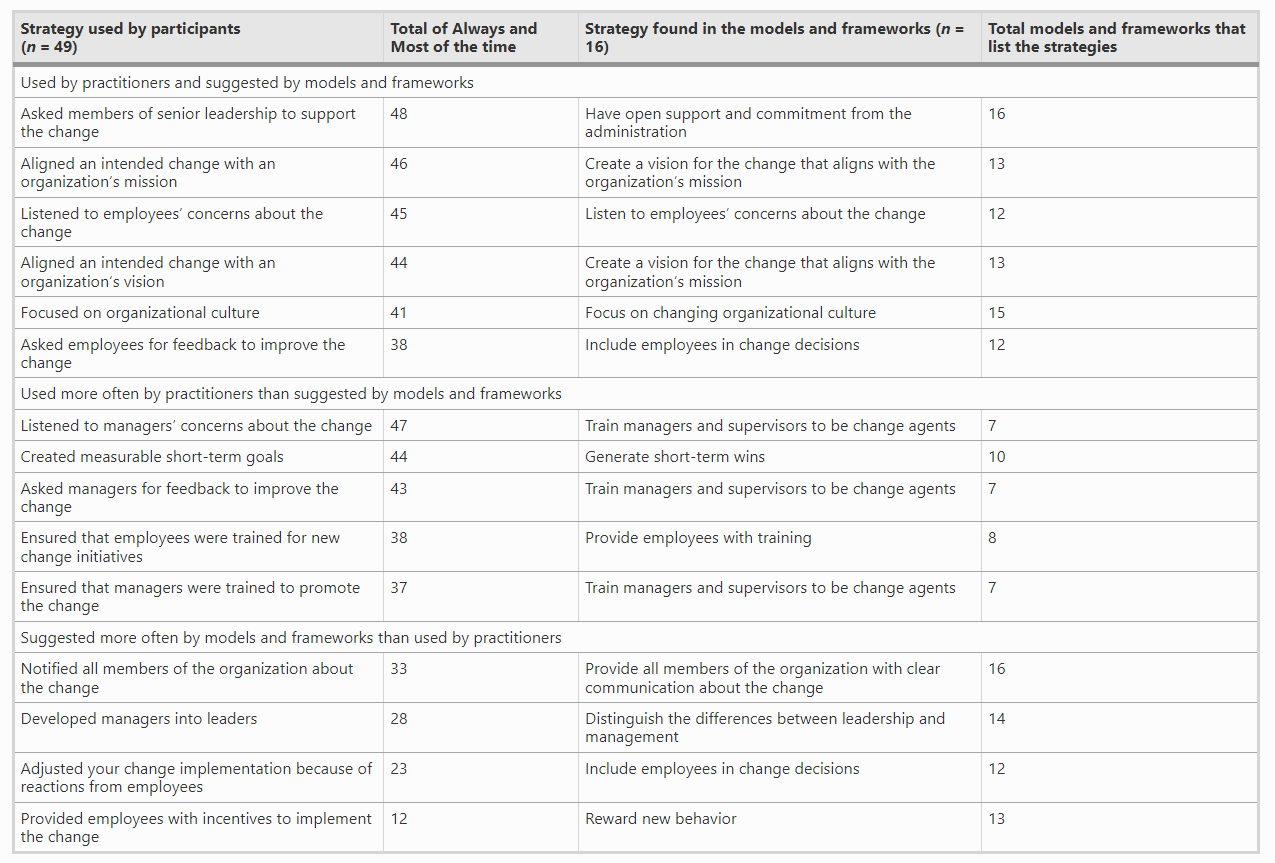
  • Focus on Organizational Culture: A supportive organizational culture is instrumental in facilitating change. Create an environment that promotes innovation, experimentation, and adaptability. Encourage open dialogue and feedback, allowing individuals to voice their concerns and ideas without fear.

A comparison of the strategies used by practitioners to the strategies found in the literature

Table Source: https://link.springer.com/article/10.1007/s11528-022-00775-0/tables/4 


  • Consider the Organization’s Mission and Vision: Align the proposed change with the institution’s overarching mission and vision. Any change should enhance the educational institution’s ability to achieve its educational goals. This alignment provides a sense of purpose and direction, making the change more meaningful.


  • Provide Encouragement and Incentives to Change: Acknowledge and celebrate small wins during the transition. Recognizing the efforts of individuals and teams fosters a positive attitude toward change. Additionally, consider offering incentives, such as professional development opportunities or recognition, to motivate stakeholders to embrace the change.


  • Future Conversations Between Practitioners and Researchers: Bridge the gap between practitioners and researchers to ensure a well-informed approach to change. Collaboration between educators, researchers, and technology experts can lead to innovative solutions that address the evolving needs of education.

While change may appear daunting, it is imperative to evolve alongside technological advancements in education. Change management provides the roadmap to navigate this transformation successfully. Remember that change is not merely about adopting new tools, but about fostering a culture of continuous improvement. With proper communication, stakeholder involvement, a nurturing culture, and a strong alignment with the institution’s mission, change can be a catalyst for positive growth. As we embrace the future, tools like Academia ERP/Student Information System can serve as invaluable companions, facilitating the seamless integration of technological progress in education. So, let’s walk hand-in-hand with change, and with the right strategies, make the journey a smooth and enriching one.

Reference –

Phillips, J., Klein, J.D. Change Management: From Theory to Practice. TechTrends 67, 189–197 (2023). https://doi.org/10.1007/s11528-022-00775-0

Academia SIS by Serosoft and One Solution Group Forge a Strategic Alliance to Revolutionize Global Education

In a groundbreaking move, One Solution Group and the renowned industry leader, Academia SIS by Serosoft, have officially sealed a strategic partnership aimed at spearheading digital transformation within the global education sector. This collaboration represents an exciting milestone that brings together our unique strengths and expertise to provide cutting-edge solutions and services to educational institutions worldwide.

Mr. Arpit Badjatya, the Founder, CEO & MD at Academia SIS by Serosoft, shares his perspective on this monumental partnership, stating, “By joining forces, we leverage our respective strengths and expertise to deliver innovative solutions and services to educational institutions worldwide.”

Key Benefits of Our Partnership

  1. Expanded Reach: One Solution Group will gain access to Academia’s extensive network of educational institutions, unlocking new markets and expanding our customer base. Additionally, we aim to nurture and develop existing customers within the sector.
  2. Enhanced Product Offerings: Through our collaboration with Academia SIS by Serosoft, One Solution Group will integrate their industry-leading educational solutions into our own and our partners’ products. This synergy empowers us to provide comprehensive and cutting-edge offerings to the educational sector.
  3. Shared Resources and Knowledge: This strategic partnership entails the sharing of resources, research, and best practices between our two organizations. Such collaboration fosters mutual learning and innovation, driving the development of more effective educational solutions.
  4. Market Credibility: Partnering with a renowned industry leader like Academia SIS by Serosoft enhances One Solution Group’s reputation and credibility within the educational sector. It builds trust with our customers while setting us apart from competitors.

A Pioneering Impact on Global Education

By harnessing the combined strengths of One Solution Group and Academia SIS by Serosoft, we are poised to make a substantial positive impact on the global educational sector. Together, we contribute to the advancement of education worldwide, ensuring a brighter future for learners everywhere.

About Academia ERP/SIS by Serosoft

Academia ERP/SIS by Serosoft is a comprehensive enterprise solution designed to automate academic and administrative processes in universities, colleges, schools, and training institutions. Built on cutting-edge technology with AI-enabled features, Academia SIS streamlines the entire student lifecycle, from initial prospecting to graduation. With over 40 modules, 400+ drill-down reports, cloud-based functionality, voice-assistant SERA, interoperability, and minimal manual intervention, Academia SIS enhances efficiency and provides greater control over systems and processes for all stakeholders. With more than 350 client institutions in 22 countries across four continents, Academia SIS is a well-established provider that has garnered widespread success and appreciation among its clients.

Learn more about Academia ERP/SIS by visiting here.

About One Solution Group

One Solution Group is an international software company, re-seller, and system integrator with its main office in the UAE and offices throughout Europe. Leveraging the ONE Digital Platform, world-class delivery capacity for education ERP, and extensive system integration experience, we offer unparalleled enterprise solutions as a service, setting us apart from our peers.

Discover more about One Solution Group at one-solution.com.


The Irresistible Advantages of Partnering with Academia ERP

The business landscape is full of growth & opportunities in the current scenario, forging strategic partnerships is key to staying competitive and accelerating growth. One of the most promising collaborations that businesses can tap into is with Academia ERP. This symbiotic relationship not only fosters knowledge exchange but also offers a plethora of advantages that can significantly bolster a company’s success. Let’s delve into the compelling advantages of partnering with Academia ERP for businesses:

  1. Lucrative Business Opportunity: Collaborating with Academia ERP opens up new avenues for revenue generation. By harnessing the expertise of researchers, businesses can develop innovative products, services, and solutions that cater to unmet market needs. These innovations often lead to a unique selling proposition that can set a business apart, attracting a larger customer base and subsequently driving higher profits.

  1. Diversified Revenue Streams: Through partnerships with Academia ERP, businesses can diversify their revenue streams by exploring various joint ventures, licensing agreements, or commercializing intellectual property. This diversification not only mitigates risks associated with market fluctuations but also strengthens the overall financial health of the company.

  1. Recurring Revenue Model: Academic partnerships can enable the creation of long-term, sustainable revenue models. By co-developing products or technologies, businesses can establish recurring revenue streams through licensing, royalties, or ongoing collaboration projects. This steady income bolsters financial stability and facilitates future planning.

  1. Strong Market Demand: Academic institutions are often at the forefront of identifying emerging market trends and demands. Partnering with Academia ERP grants businesses access to comprehensive research and insights into current and future market needs, allowing them to align their strategies and offerings accordingly.

  1. Access to Cutting-Edge Technology: Innovation is the cornerstone of business growth. Academic institutions are hubs of cutting-edge research and technological advancements. Partnering with Academia ERP gives businesses access to state-of-the-art technologies, enabling them to develop groundbreaking solutions that address complex challenges and gain a competitive edge.

  1. Brand Recognition and Support: Associating with esteemed academic institutions enhances a business’s brand reputation. Collaborative efforts are typically associated with credibility, trustworthiness, and high-quality output. This positive perception can attract customers, investors, and other stakeholders who are inclined to support companies with strong academic backing.

  1. Scalability and Growth Potential: Partnerships with Academia ERP lay the groundwork for scalability. Collaborative projects can be scaled more rapidly by leveraging academic resources, talent, and infrastructure. This scalability accelerates growth and facilitates the exploration of new markets and opportunities.

  1. Industry Insights and Networking: Academic partnerships provide businesses with invaluable industry insights and networking opportunities. Engaging with researchers, professors, and students exposes companies to fresh perspectives, novel ideas, and potential talent for recruitment. Additionally, participation in conferences and workshops organized by academic institutions fosters connections with other industry leaders.

Conclusion: 

A synergistic path to success: In an era of innovation-driven competition, forging partnerships with Academia ERP offers businesses a strategic advantage. The benefits of such collaborations extend far beyond the initial collaboration project, positioning companies for sustained growth, enhanced market presence, and the ability to meet evolving customer demands. From accessing cutting-edge technology to establishing recurring revenue models, the advantages of these partnerships are undeniable. Embracing Academia ERP – business collaborations can prove to be a transformative step toward unlocking unprecedented success in the dynamic business landscape.

Navigating Education Sales with Tech: From Awareness to Enrollment

In the ever-evolving domain of education, an efficient sales process is pivotal to ensuring seamless enrollment and growth for educational institutions. The art of education sales goes beyond conventional marketing strategies; it’s about understanding the unique needs of educators, students, and administrators. To truly ace this process, incorporating the right measures and best practices, can revolutionize your approach, enhance efficiency, and streamline your institution’s growth.

Understanding the Education Sales Process

The education sales process involves a series of stages that guide potential students from initial awareness to enrollment. It encompasses identifying prospective students, nurturing leads, providing valuable information, addressing concerns, and finally, guiding them through the enrollment process. Each stage demands personalized interactions and careful handling to ensure a positive experience.

Best Practices to Excel in Education Sales

  1. Personalization is Key: Tailor your communication to address the unique needs and aspirations of each prospect. This human touch establishes a connection and demonstrates your institution’s commitment to individual success.
  2. Educate and Inform: Provide insightful content that showcases the benefits of your institution’s programs, faculty, and infrastructure. Be transparent about outcomes to build trust and credibility.
  3. Prompt Communication: Respond to inquiries swiftly. Prospective students are often juggling multiple options, so a prompt response can make a significant difference.
  4. Leverage Data Analytics: Utilize data-driven insights to understand prospective students’ behavior, preferences, and pain points. This information can guide your approach and help you tailor your offerings accordingly.
  5. Empower Your Team: Train your sales team to be educational consultants rather than aggressive sellers. Encourage them to understand each student’s unique situation and recommend the best-fit solutions.

Cost-Saving Tips in Education Sales

  1. Digital Marketing: Utilize cost-effective digital marketing strategies such as social media advertising, content marketing, and search engine optimization to reach a wider audience.
  2. Referral Programs: Incentivize current students and alumni to refer potential students. Word-of-mouth recommendations can be powerful and cost-efficient.
  3. Efficient Outreach: Use automated email marketing to nurture leads, provide relevant information, and keep prospective students engaged throughout their decision-making process.

Utilizing Technology at Different Stages of the Education Sales Process:

  1. Awareness:
  • Digital Marketing Campaigns: Leverage social media, search engine optimization (SEO), and content marketing to reach a wider audience and create awareness about your institution’s offerings.
  • Webinars and Virtual Events: Host online seminars and virtual open houses to showcase your institution’s programs and engage with potential students.
  1. Engagement:
  • Personalized Email Campaigns: Use automated email sequences to nurture leads with tailored information and keep them engaged throughout their decision-making journey.
  • Chatbots and AI Assistants: Implement chatbots on your website to provide instant responses to inquiries and guide prospects in real-time.
  1. Information Sharing:
  • Interactive Website: Develop an informative and user-friendly website that provides comprehensive details about courses, faculty, facilities, and student success stories.
  • Virtual Campus Tours: Offer virtual tours of your campus, allowing prospects to explore your institution from the comfort of their homes.
  1. Communication:
  • Video Conferencing: Conduct virtual meetings and consultations with prospective students, addressing their questions and concerns in a personalized manner.
  • Social Media Engagement: Interact with potential students on social media platforms, responding to their comments, messages, and inquiries promptly.
  1. Enrollment:
  • Online Application Platforms: Implement user-friendly online application portals, enabling prospects to easily apply and submit necessary documents digitally.
  • Electronic Signatures: Use e-signature tools to simplify the enrollment agreement process, reducing paperwork and delays.
  1. Follow-up:
  • CRM Systems: Utilize Customer Relationship Management (CRM) software to track interactions, set reminders for follow-ups, and maintain a centralized database of prospects.
  • Automated Follow-up Sequences: Set up automated follow-up emails and reminders to keep prospects engaged and informed.
  1. Onboarding:
  • Learning Management Systems (LMS): Integrate an LMS to provide newly enrolled students with access to course materials, schedules, and resources online.
  • Online Orientation Programs: Deliver orientation materials and sessions virtually, helping new students feel connected and informed.

By strategically integrating technology at each stage of the education sales process, institutions can enhance their outreach, engagement, and enrollment processes, ultimately providing a seamless experience for prospective students.

Conclusion: 

In conclusion, mastering the education sales process requires a blend of personalized engagement, strategic practices, and innovative technology solutions. By adopting best practices, leveraging technology, and incorporating cost-effective strategies, institutions can drive enrollment growth while providing a seamless experience for prospective students. Systems like Academia ERP emerge as vital partners in this journey, offering the technical backbone required to ace the education sales process at every stage – from automated campaigns management, online inquiry, followups, scheduling, data analytics, reports, and many more, which empowers institutions to thrive in the digital age.

Jane’s Journey: A Seamless Odyssey through Academics with the Magic of ERP

Once upon a time in the bustling town, a young and bright student named Jane embarked on an extraordinary journey through her educational institute. Little did she know that this journey would be sprinkled with the enchantment of an ERP solution, transforming her student life into a cakewalk.

Phase 1 – A New Beginning

Jane’s adventure began with her first step into the institute. Enrollment, typically a labyrinth of paperwork, was now a breeze. The ERP system whisked away her worries as she filled out her information online. Jane marveled at the speed and convenience, amazed at how her entry into the academic realm was so smooth.

Phase 2: Navigating Learning Realms

As Jane delved into her studies, she encountered the heart of the ERP magic – the online learning platform. Gone were the days of shuffling through notes; now, her mobile app presented her with assignments, reading materials, and interactive quizzes. The ERP system knew her pace, adapting to her learning style, and even sending her reminders for upcoming deadlines.

Phase 3: The Extracurricular Enchantment

Jane wasn’t just a diligent student; she was also an aspiring artist. Thanks to the ERP solution, she effortlessly signed up for art club meetings and tracked event schedules. No longer lost in a sea of announcements, Jane found her creative haven and nurtured her passions.

Phase 4: The Midterm Marvel

Midterm exams, usually a nerve-wracking experience, took an unexpected turn. With the ERP’s examination management system, Jane received her personalized schedule and exam venue ahead of time. No more frantic searching for classroom numbers; Jane walked into her exams with confidence, knowing that the ERP had her back.

Phase 5: A Journey Shared with SERA

Throughout her journey, she had a new virtual AI-empowered friend – SERA. She could just ask anything related to her academics & records, SERA was always there to answer. The collaboration came naturally with the ERP’s communication tools. Group projects became a symphony of creativity as Jane and her teammates seamlessly exchanged ideas, documents, and feedback. The ERP’s virtual teamwork space transformed their group assignments into a collective masterpiece.

Phase 6: The Graduation Gateway

Time flew by, and Jane’s graduation day arrived. ERP’s student information system ensured that her records were meticulously maintained, and ready to be presented in a beautiful digital portfolio. Her transition from student to graduate was seamless, with the ERP system handling everything from certificate generation to alumni networking.

Epilogue: Beyond the Campus

Even after leaving the hallowed halls of her institute, the ERP’s magic continued to shine. As Jane pursued her career, she found herself utilizing skills honed through the ERP’s practical learning modules. The ERP’s influence extended into her professional life, making her adaptable, tech-savvy, and ready to conquer new challenges.

And so, Jane’s journey through the world of academia, enriched by the wonders of ERP technology, came to an end. Her student life had been transformed into a captivating tale of ease, efficiency, and excellence, leaving an indelible mark on her heart. As she looked back on her adventure, Jane knew that she had been a part of something truly extraordinary – a story where Academia ERP solution turned the ordinary into the extraordinary, every step of the way.

Student Success Amplified: Leveraging Co-curricular Programs for Institutional Growth

Co-curricular programs have emerged as vital contributors to student success, institutional growth, and overall student satisfaction in the education landscape. Institutions can draw inspiration from successful models outlined in “Student Success in College,” aligning resources and structures with both curricular and co-curricular offerings and continuously enhancing them through rigorous assessment. This blog explores practical strategies for harnessing the power of co-curricular activities to elevate student success and improve institutional performance.

Integration of Resources and Continuous Improvement

High-performing institutions have demonstrated that the synergy between curricular and co-curricular offerings is crucial for holistic student development. By adopting a model of alignment and ongoing enhancement, institutions can create a seamless educational experience. Regular assessment ensures that co-curricular programs remain relevant, impactful, and aligned with institutional goals.

Co-curricular Learning Outcomes Frameworks

The integration of co-curricular learning outcomes frameworks, such as CAS, Learning Reconsidered, LEAP, NACE, and the Wellness Wheel, provides a structured approach to planning and organizing co-curricular initiatives. These frameworks help institutions map out student learning pathways that align with their academic, personal, and post-graduation aspirations.

Establishing Clear Pathways to Success

Institutions can empower students by designing comprehensive pathways to success that showcase the connections between academic pursuits and co-curricular activities. By illustrating how skills acquired through co-curricular involvement align with their goals, institutions motivate students to engage more deeply with both their studies and extracurricular pursuits.

Fostering Peer Relationships Through Student Leadership

Student leaders play a pivotal role in cultivating a vibrant peer-to-peer community through clubs and organizations. Empowering these leaders to create inclusive and engaging environments enhances students’ sense of belonging and encourages active participation in co-curricular activities.

Co-curricular Transcripts for Reflective Learning

Developing co-curricular transcripts offers students a tangible way to track and reflect upon their learning outside the classroom. These transcripts serve as a valuable tool for self-assessment, showcasing the skills and competencies gained through co-curricular engagement.

Marketable Skills Assessment

Conducting marketable skills assessments helps students recognize the valuable connections between their coursework, co-curricular experiences, and their future employment. This process aids students in understanding how their overall environment contributes to the acquisition of skills sought after by employers.

Equity-Minded Assessment

An equity-minded approach involves disaggregating co-curricular student data to identify patterns and disparities among different student populations. By addressing the needs of marginalized groups and making data-driven changes, institutions create a more inclusive and supportive environment for all students.

Showcasing Student Affairs Impact

Implementing meaningful Student Affairs assessment, including Program Review guided by the CAS Standards, highlights the role of the student affairs division in shaping the student experience. By showcasing the division’s impact, institutions demonstrate their commitment to student success and holistic growth.

Conclusion

The integration of co-curricular programs into the fabric of education is a strategic move that elevates student success and institutional excellence. By aligning co-curricular initiatives with curricular offerings, utilizing learning outcomes frameworks, creating clear pathways to success, fostering peer relationships, and implementing comprehensive assessment strategies, institutions pave the way for a transformative educational journey. Moreover, the incorporation of solutions such as Academia ERP streamlines administrative processes enhances communication, and supports data-driven decision-making, further contributing to the holistic growth of both students and the institution. As the educational landscape continues to evolve, co-curricular programs and innovative solutions like Academia ERP remain invaluable tools in preparing students for success both during and after their academic journey.


Study In India Portal: Elevating India’s Global Education Status

In a significant move aimed at positioning India as a prominent player in the international education landscape, the government of India has unveiled the Study in India (SII) Portal. This innovative initiative, launched on August 3, 2023, is a collaborative effort led by Union Education Minister Dharmendra Pradhan and External Affairs Minister Dr. S Jaishankar. The launch event witnessed the participation of ambassadors from more than 10 countries, reflecting the widespread interest and support for this transformative endeavor.


The Study in India Portal serves as a dedicated platform that offers comprehensive insights into Indian Higher Education Institutions (HEIs). By presenting a comprehensive overview of academic programs ranging from undergraduate to doctoral levels, the portal endeavors to attract students from all corners of the globe. Notably, the portal goes beyond conventional academic offerings and extends its scope to encompass indigenous courses such as Yoga, Ayurveda, and classical arts, thereby showcasing the rich tapestry of India’s knowledge system.


A central tenet of the portal’s design is to provide a one-stop solution for students seeking admission to Indian institutions. This comprehensive platform not only facilitates seamless registration but also streamlines the visa application process. Students will be empowered to apply to multiple institutes or courses of their preference, ensuring a simplified and efficient academic journey within India.


Dr. S Jaishankar, addressing the launch event, emphasized that the Study in India initiative is poised to bolster India’s global presence in the realm of education. By attracting a diverse range of international students, this initiative not only fosters cross-cultural exchange but also cements India’s brand image as an educational hub on a global scale. This resonates strongly with the country’s larger vision to position India as a beacon of knowledge and innovation.

The launch of the Study in India Portal harmoniously aligns with the principles outlined in the National Education Policy (NEP) 2020. This policy framework has facilitated the entrance of foreign universities into India and enabled the establishment of international campuses for premier Indian institutions. The SII Portal is seen as an instrumental force in further catalyzing these efforts, thereby bridging the gap between Indian and global education landscapes. This synergistic approach benefits domestic students by fostering greater connections with the globalizing world and its evolving demands.

Union Minister Dharmendra Pradhan, underscoring the significance of the portal, highlighted its role in simplifying the academic trajectory of students within India. Guided by the principles of NEP, the Study in India Portal is a testament to India’s commitment to becoming a preferred education destination, transcending academic boundaries, and sculpting a prosperous future for its students.


The Study in India program’s vision extends to promoting India as a favored study destination, offering education of exceptional quality at par with global standards. To realize this vision, the program collaborates with educational institutions that meet specific criteria, including National Institutional Ranking Framework (NIRF) rankings, National Assessment and Accreditation Council (NAAC) accreditation scores, and the status of Institutes of National Importance (INI).

The launch event celebrated the diverse cultural tapestry that international students bring to India. Students hailing from countries like Russia, Thailand, Japan, Ethiopia, Ecuador, Kazakhstan, and the Republic of Korea, currently pursuing their studies in India, presented tokens of their culture as a gesture of respect to the dignitaries present.


In conclusion, the Study in India Portal marks a watershed moment in India’s journey toward becoming a global education hub. This initiative not only serves as a beacon for international students seeking top-quality education but also positions India as a symbol of academic excellence and cultural diversity. As we celebrate the launch of the Study in India Portal, it’s worth noting that similar pioneering efforts are being made within the education sector to enhance efficiency and accessibility. Academia ERP / Student Information System (SIS), a prominent player in the education ERP landscape, shares the spirit of streamlining educational processes, making academic journeys smoother, and contributing to the broader goal of globalizing education.

Back to top