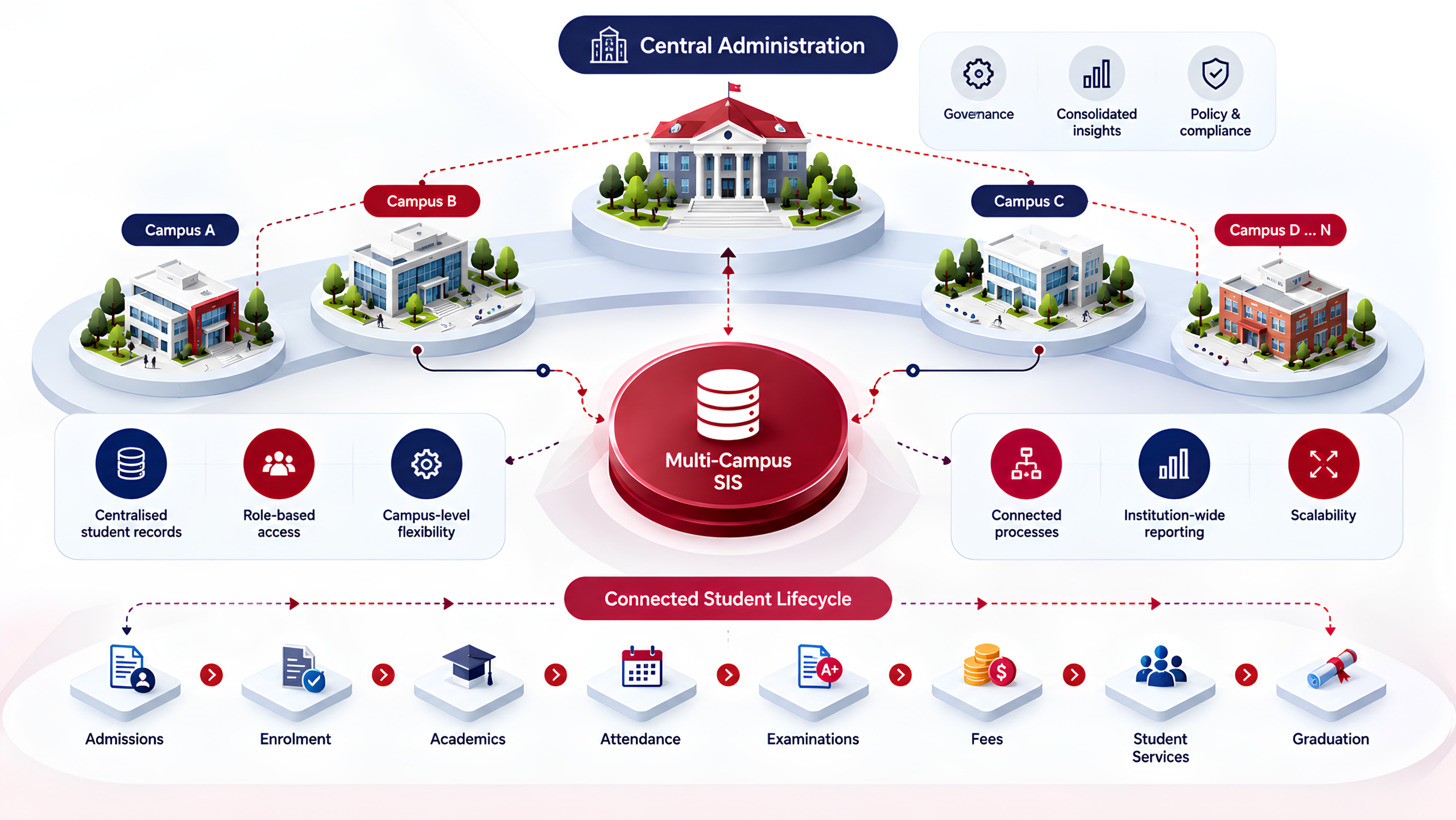

Higher education institutions increasingly rely on Higher Education Management Information Systems (HEMIS) to collect institutional data, monitor performance, and meet reporting requirements. However, digital transformation in universities requires more than submitting accurate reports. Institutions must also improve administrative workflows, integrate disconnected systems, strengthen student services, and use data to make faster, better-informed decisions.
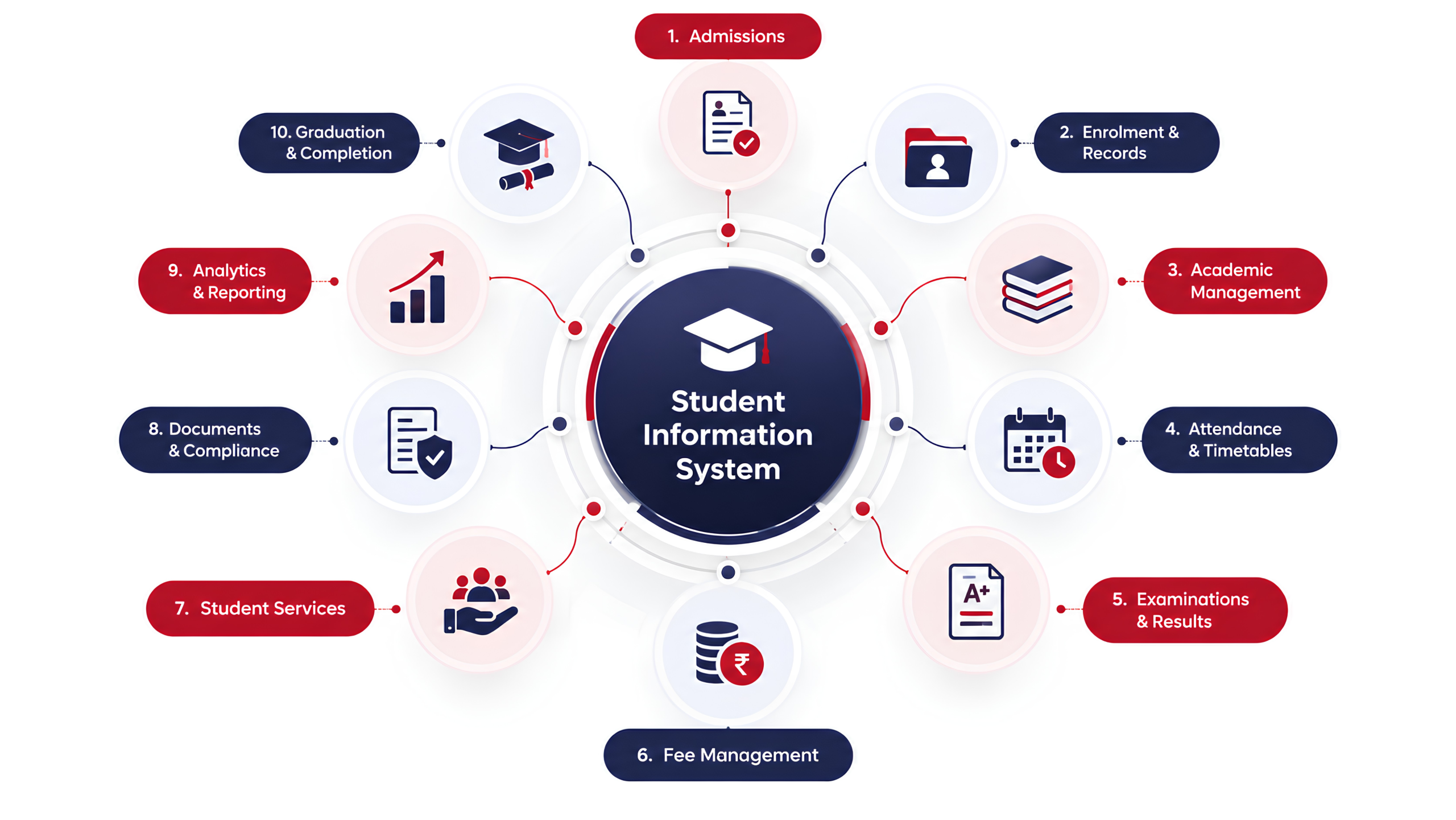
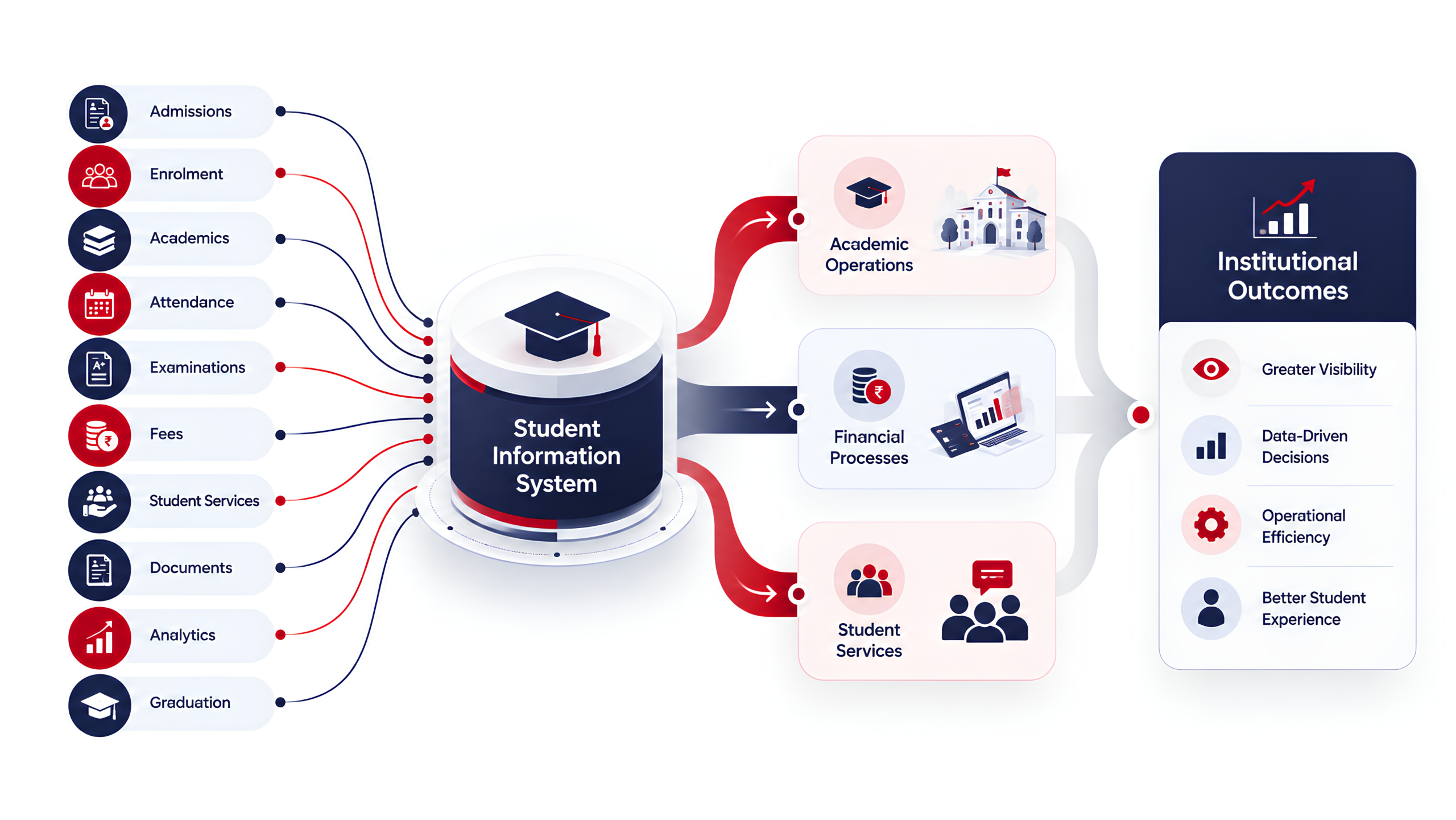
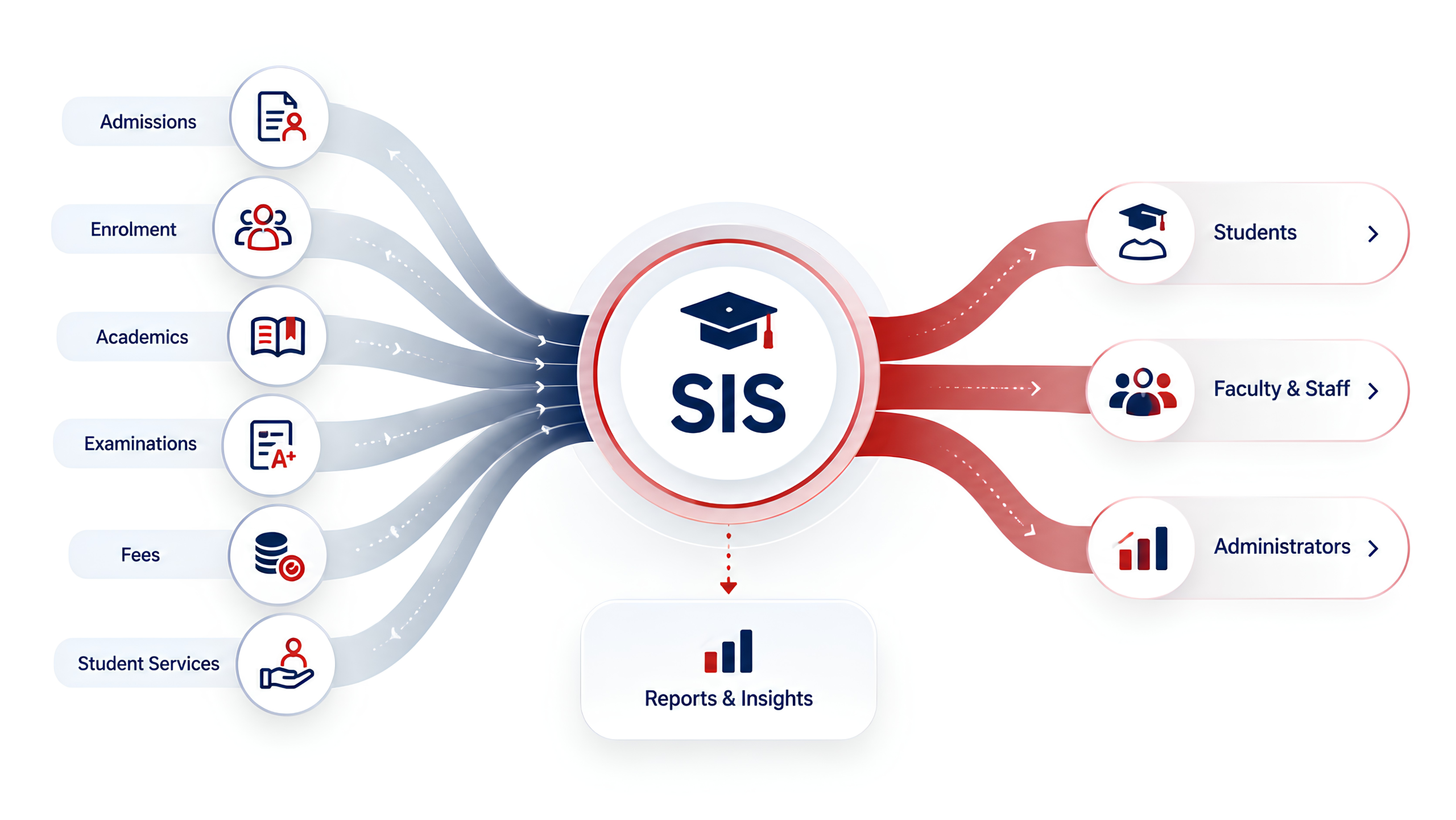
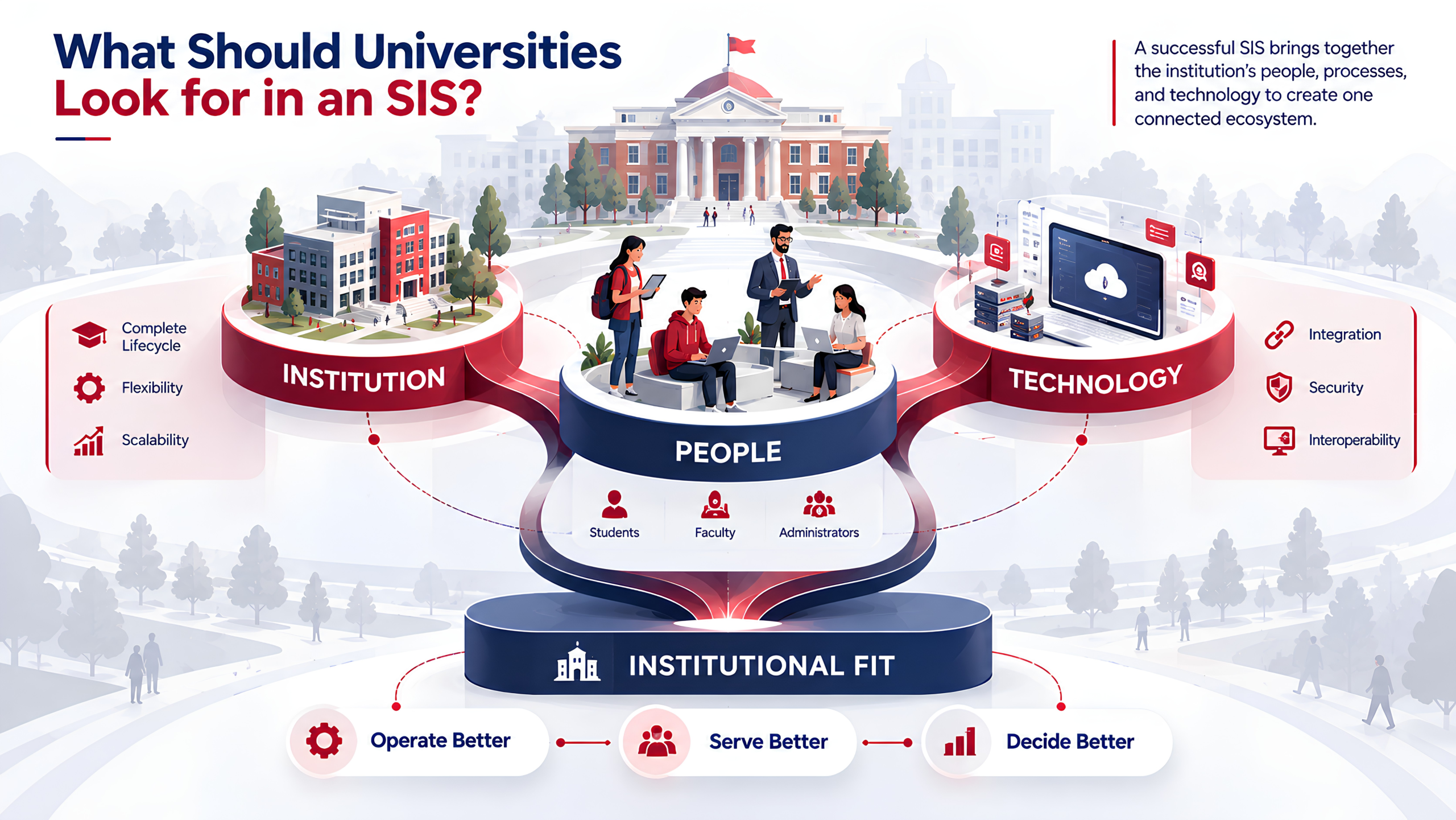
For universities in South Africa and other developing higher education markets, the next stage of digital transformation involves moving from reporting-focused systems to connected, data-driven institutional operations. Integrated Enterprise Resource Planning (ERP) and Student Information Systems (SIS) can support this transition by connecting admissions, academics, examinations, finance, human resources, and student services.
The objective is simple: reduce repetitive administrative work, improve data accuracy, and give university leaders actionable insights beyond regulatory reporting.
What Does Digital Transformation Beyond HEMIS Reporting Mean?
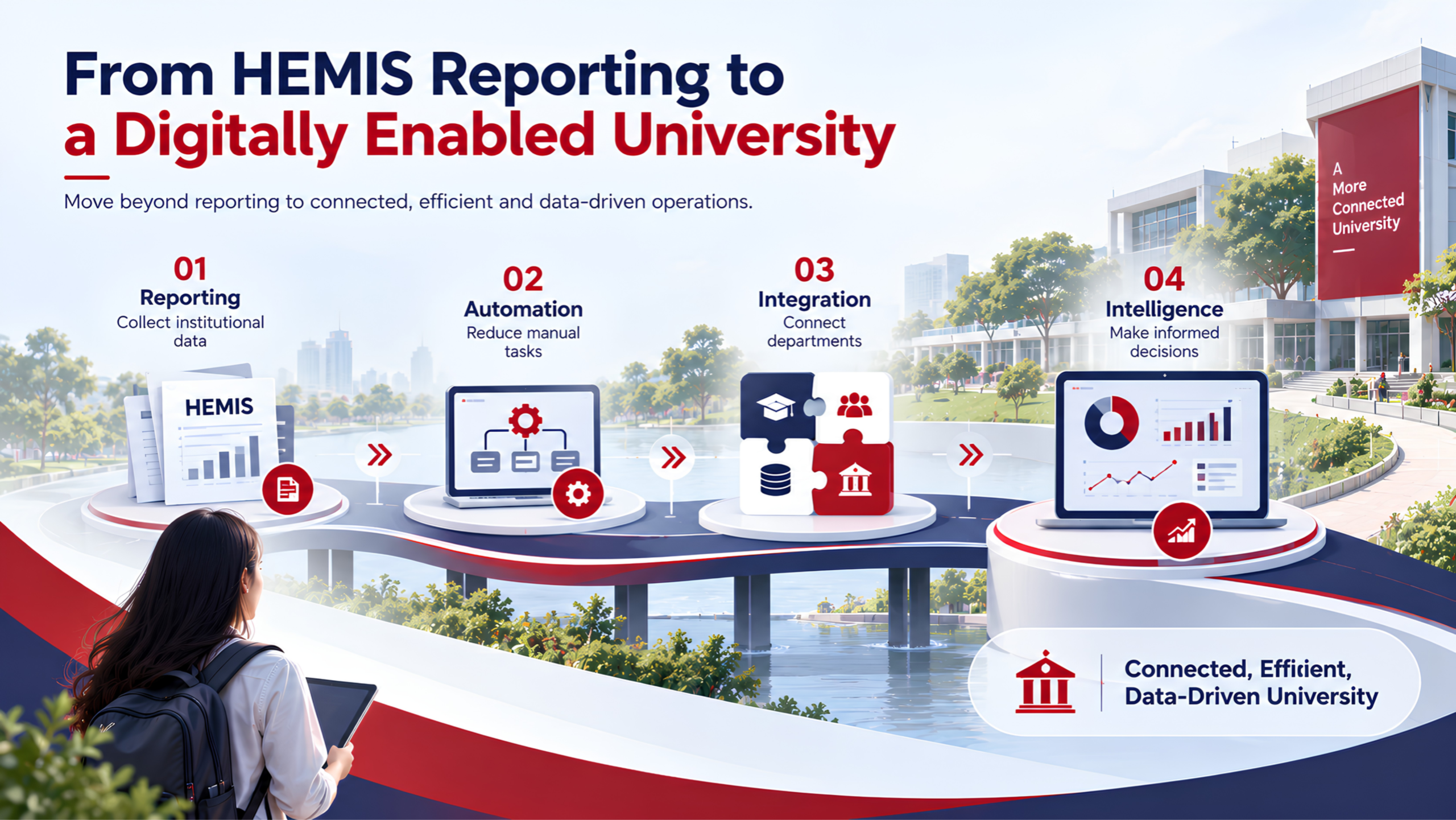
HEMIS reporting primarily focuses on collecting, consolidating, and submitting institutional information. Digital transformation extends this capability by using connected systems to improve everyday university operations.
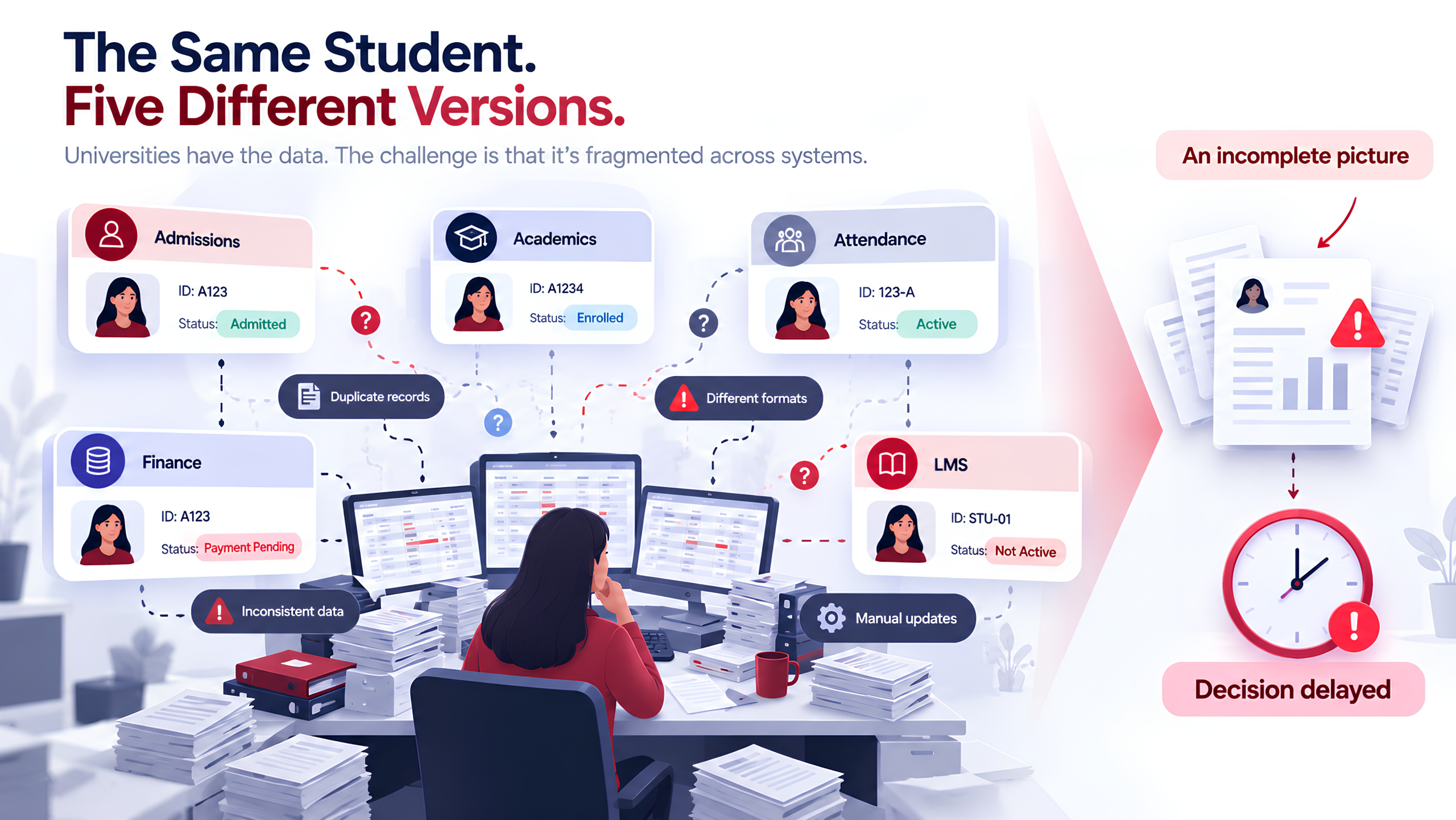
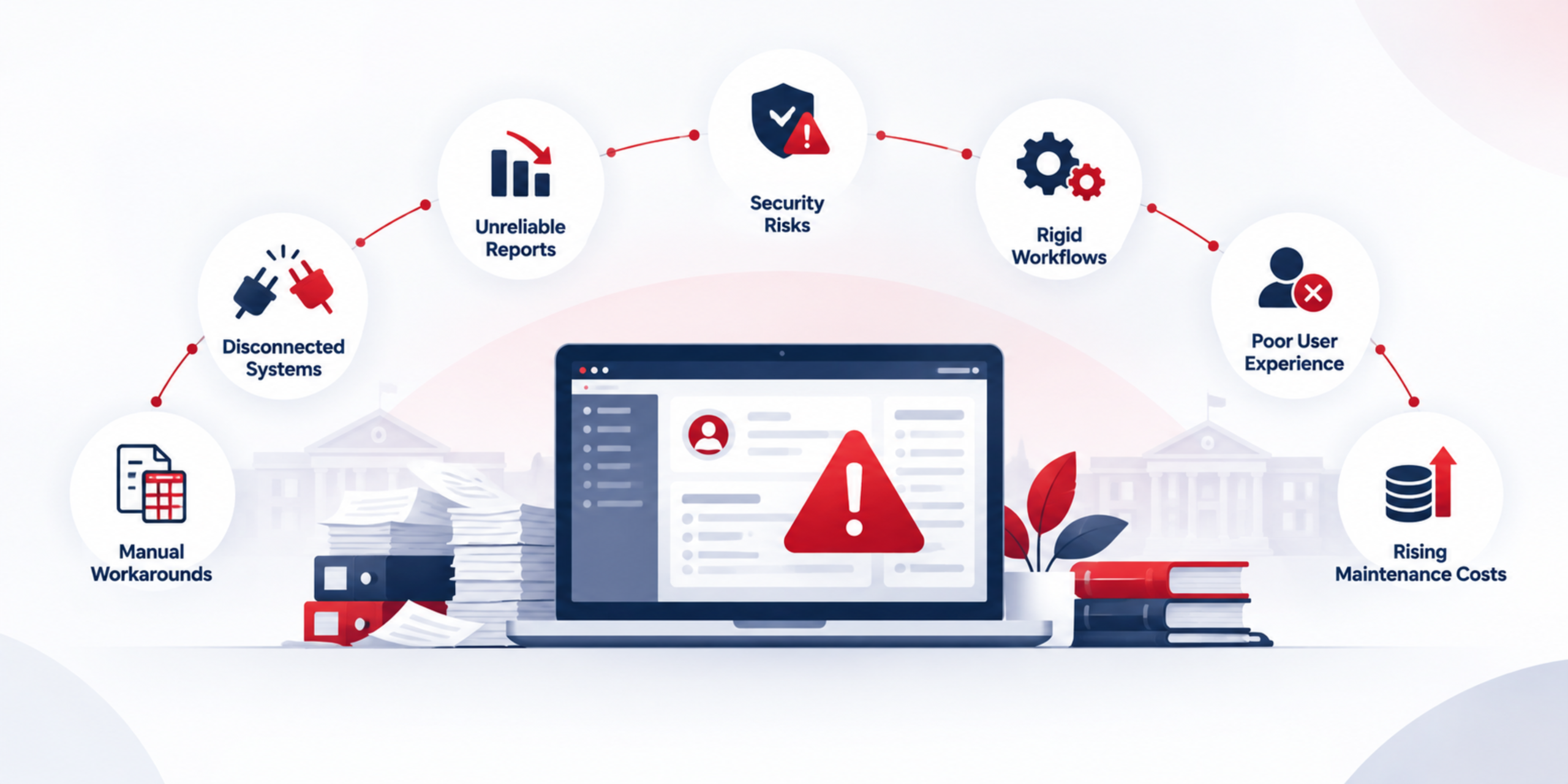
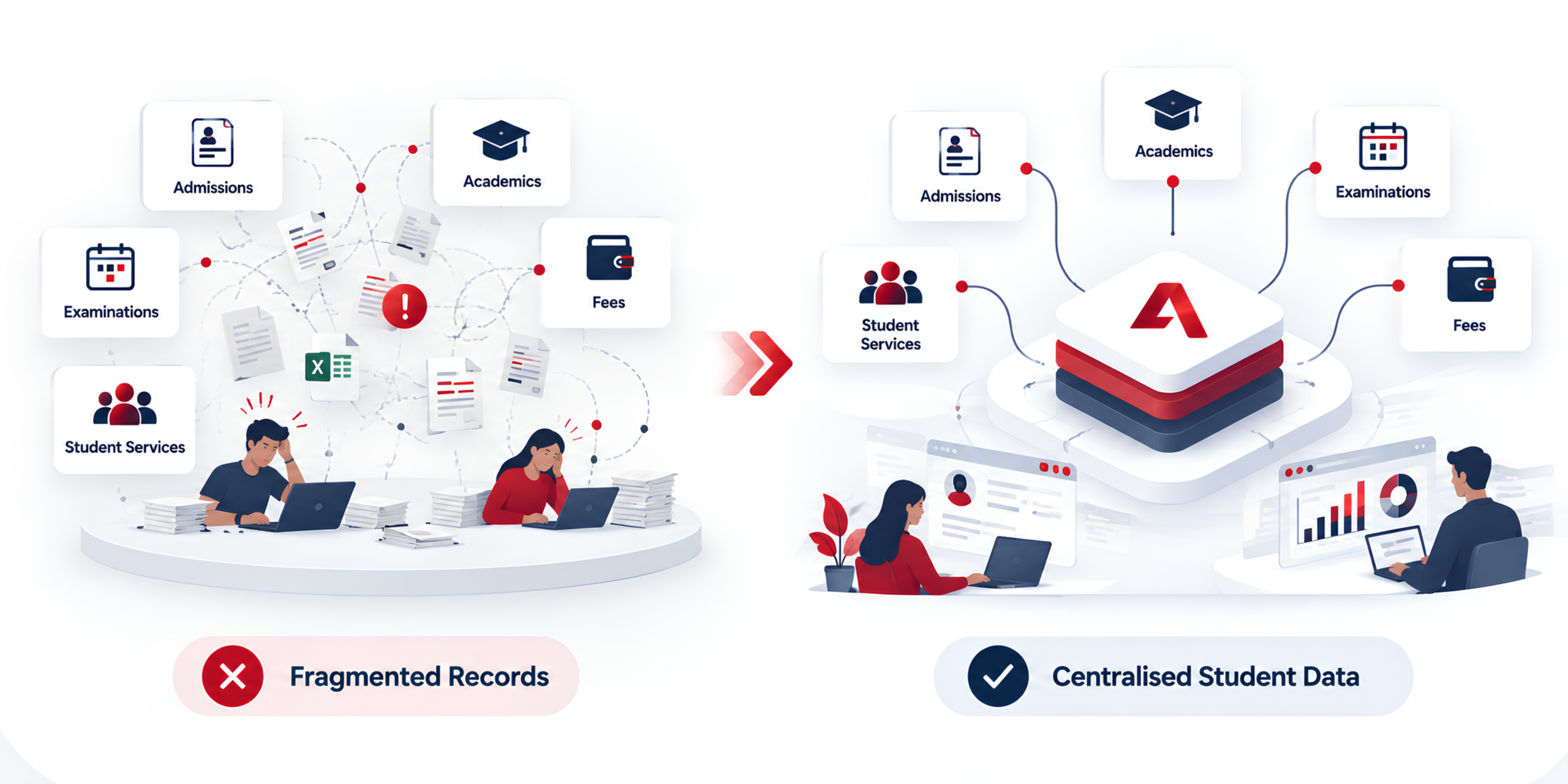
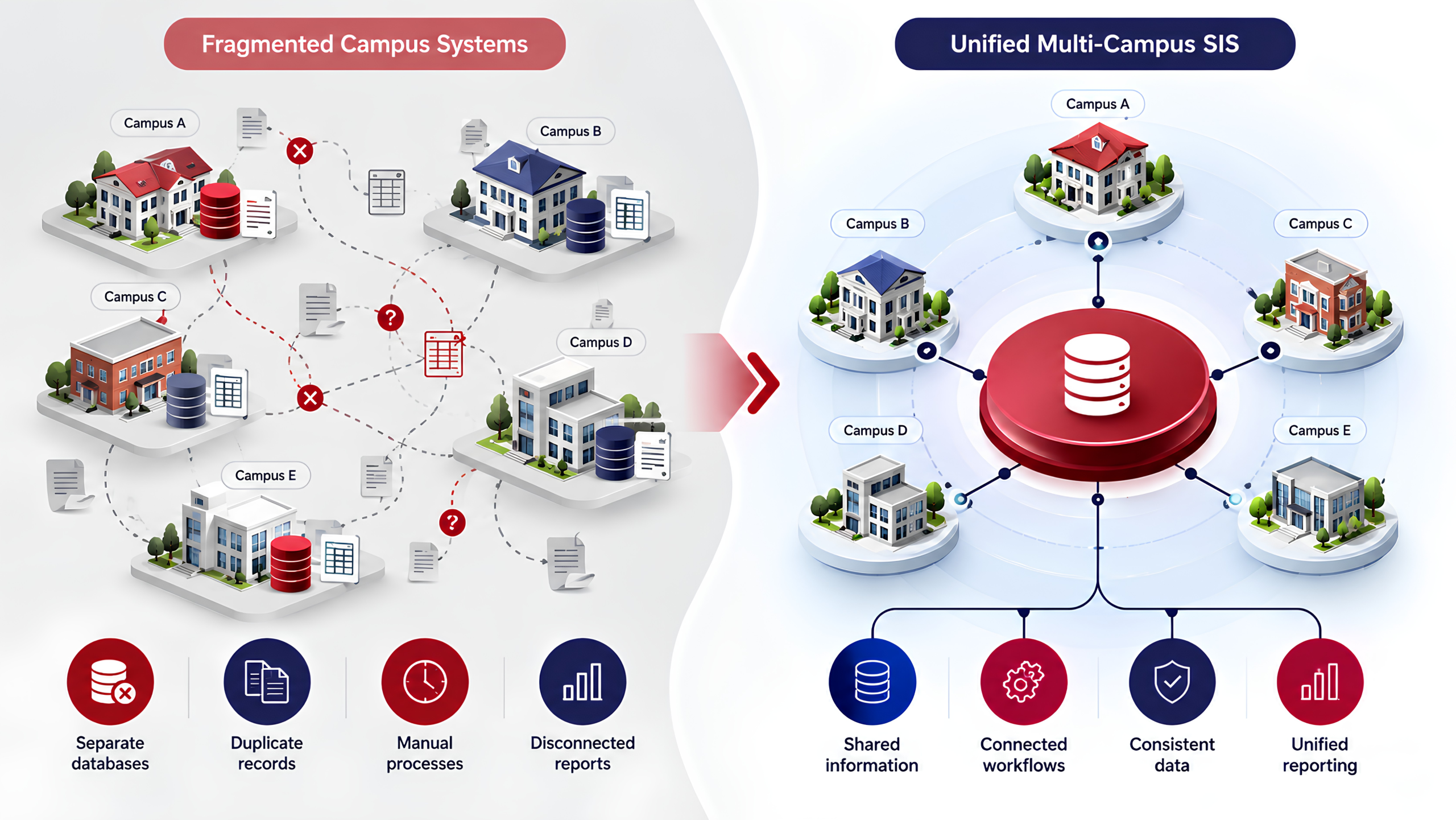
For example, a university may successfully submit enrolment figures while its admissions team still updates spreadsheets manually, its finance department reconciles payments separately, and students must visit multiple offices to resolve administrative queries.
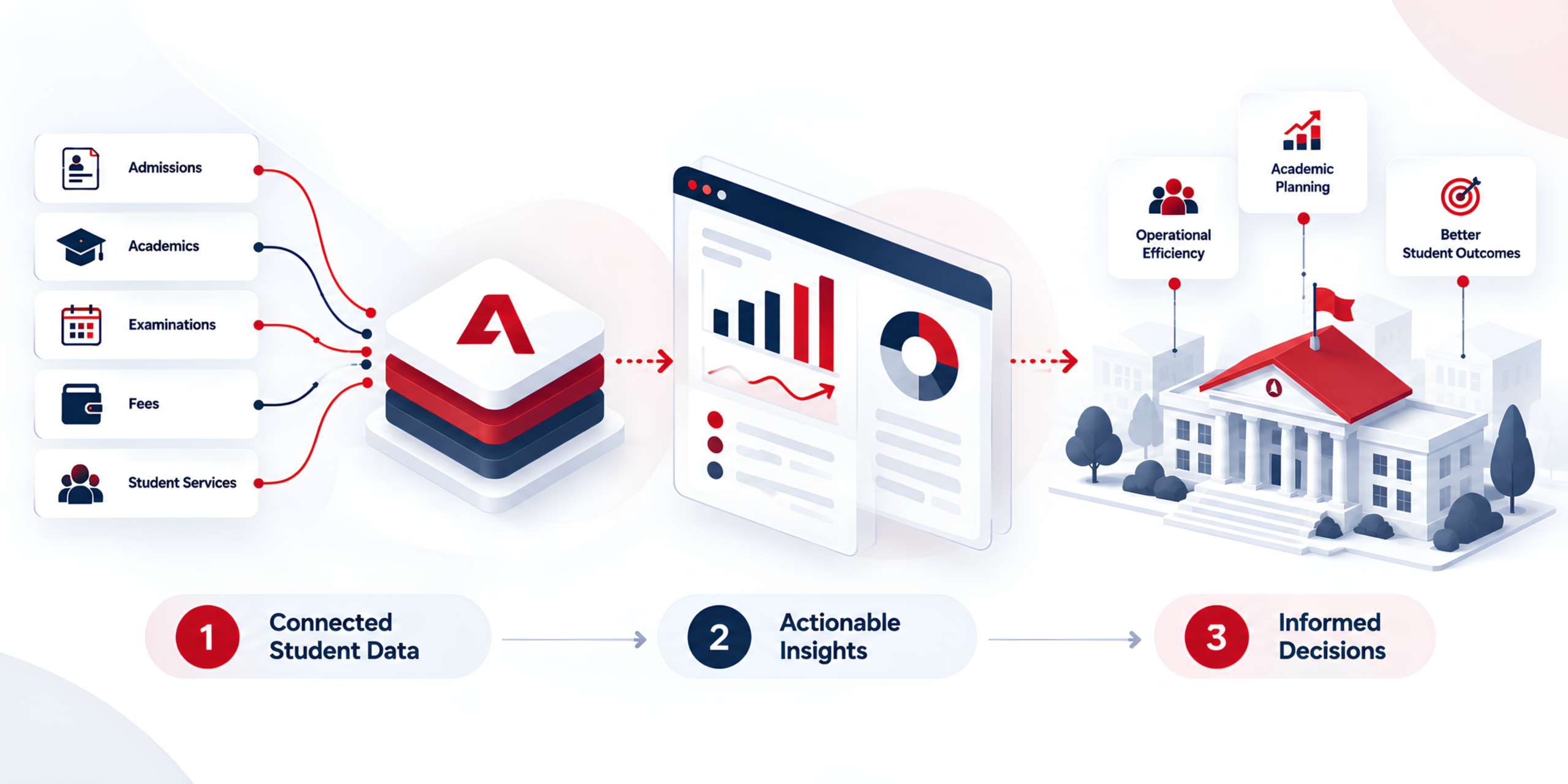
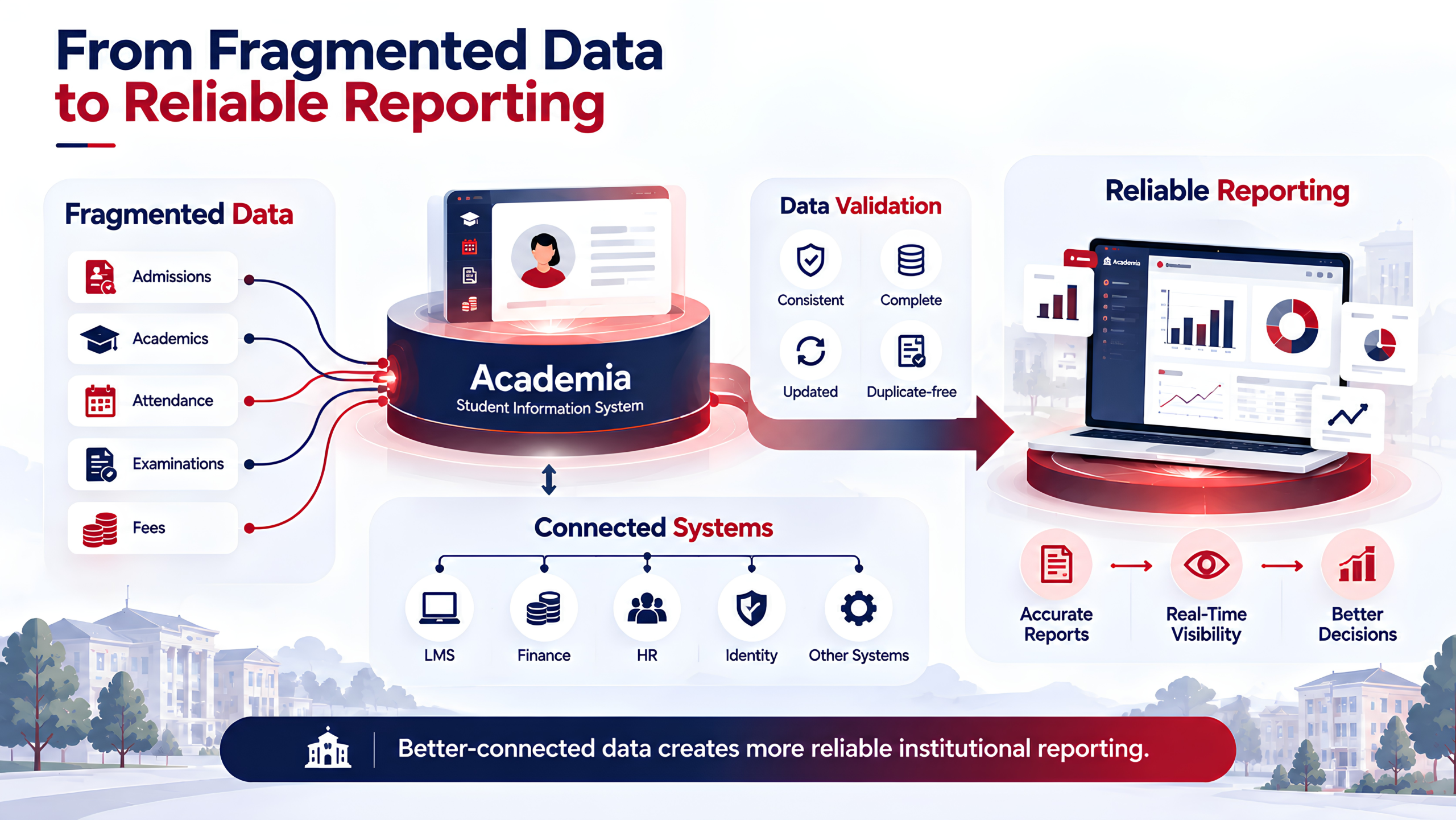
A connected digital ecosystem helps address these inefficiencies by enabling information to move between departments through shared databases, automated workflows, and integrated applications.
The difference is between reporting what has happened and using institutional data to improve what happens next.
Why Is Digital Transformation Important for Higher Education Institutions?
Universities manage thousands of student records, academic activities, financial transactions, staff records, and operational processes. When these functions operate independently, information becomes fragmented, and employees spend valuable time reconciling data.
Digital transformation helps institutions address four priorities:
- Operational efficiency: Automate repetitive tasks such as application processing, fee reconciliation, and approval workflows.
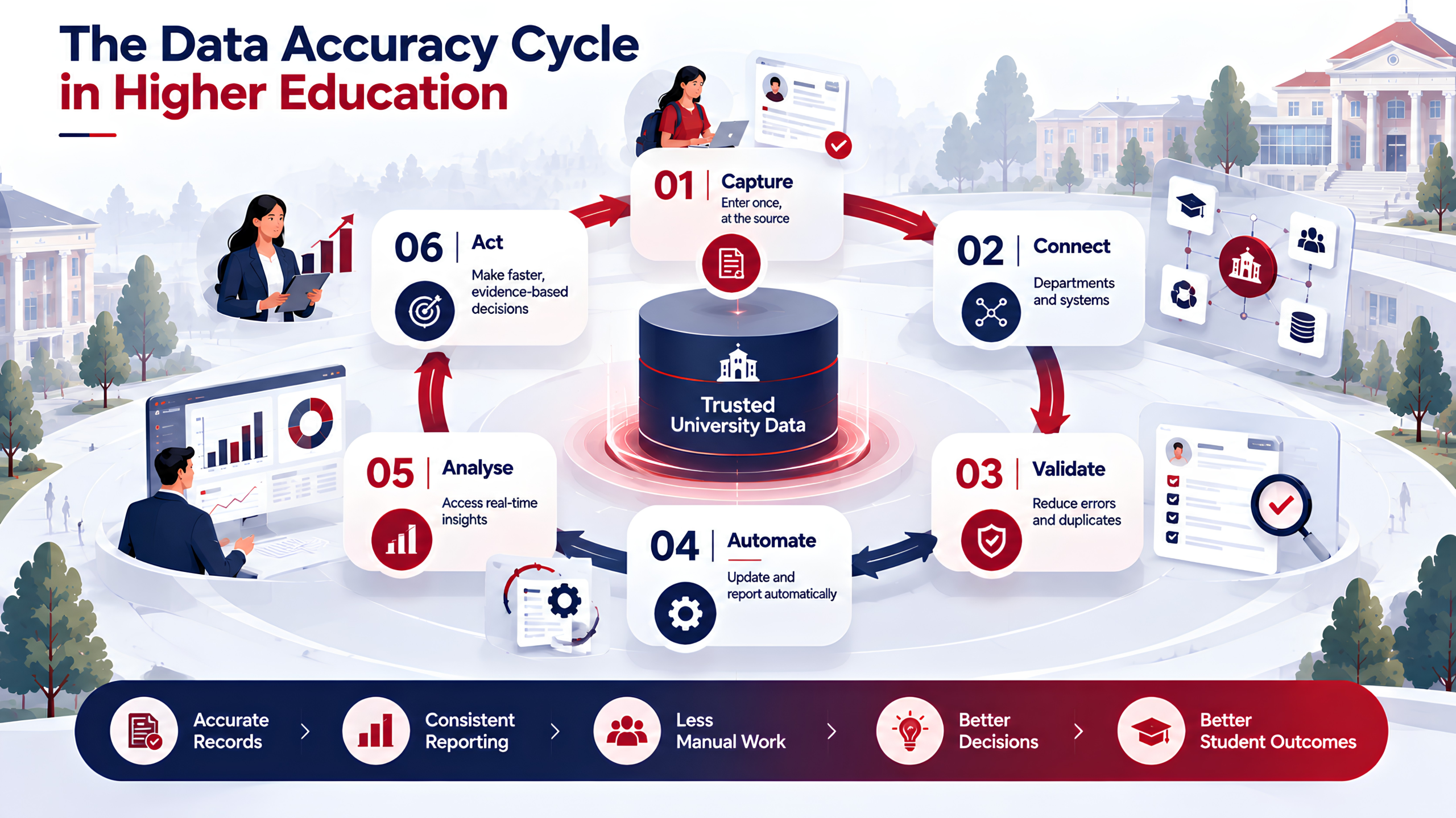
- Data accuracy: Maintain consistent student and institutional records across departments.
- Better decision-making: Use dashboards and analytics to identify emerging issues and allocate resources effectively.
- Improved student experience: Provide faster access to applications, fee information, academic records, and administrative services.
These improvements are particularly important as universities expand their programmes, campuses, online services, and student populations.
What Do Higher Education Reports Say About Digital Transformation?
Two reports provide useful direction for universities planning their digital transformation strategies.
Digitalisation and the Use of Artificial Intelligence in Higher Education in Africa: An Exploratory Study
The UNESCO-ICHEI and UNESCO-IICBA report on digitalisation and AI in African higher education, released in 2026, examines digital transformation across higher education institutions in Africa, including South Africa. The study explores institutional digitalisation strategies, governance, online services, infrastructure challenges, and readiness to adopt artificial intelligence.
The report highlights that digital transformation requires more than introducing new technologies. Institutions also need effective planning, adequate infrastructure, stronger digital capabilities, and organisational support to integrate technology into everyday operations.
What this means for South African universities: Institutions looking to move beyond HEMIS reporting can prioritise connecting academic and administrative systems, automating repetitive workflows, improving access to operational data, and strengthening institutional reporting. An integrated SIS or education ERP can support these priorities when its capabilities are aligned with institutional requirements.
EDUCAUSE 2025 Horizon Report Data and Analytics Edition
The 2025 EDUCAUSE Horizon Report: Data and Analytics Edition highlights data governance, analytics, artificial intelligence, and institutional data capabilities as important considerations for the future of higher education.
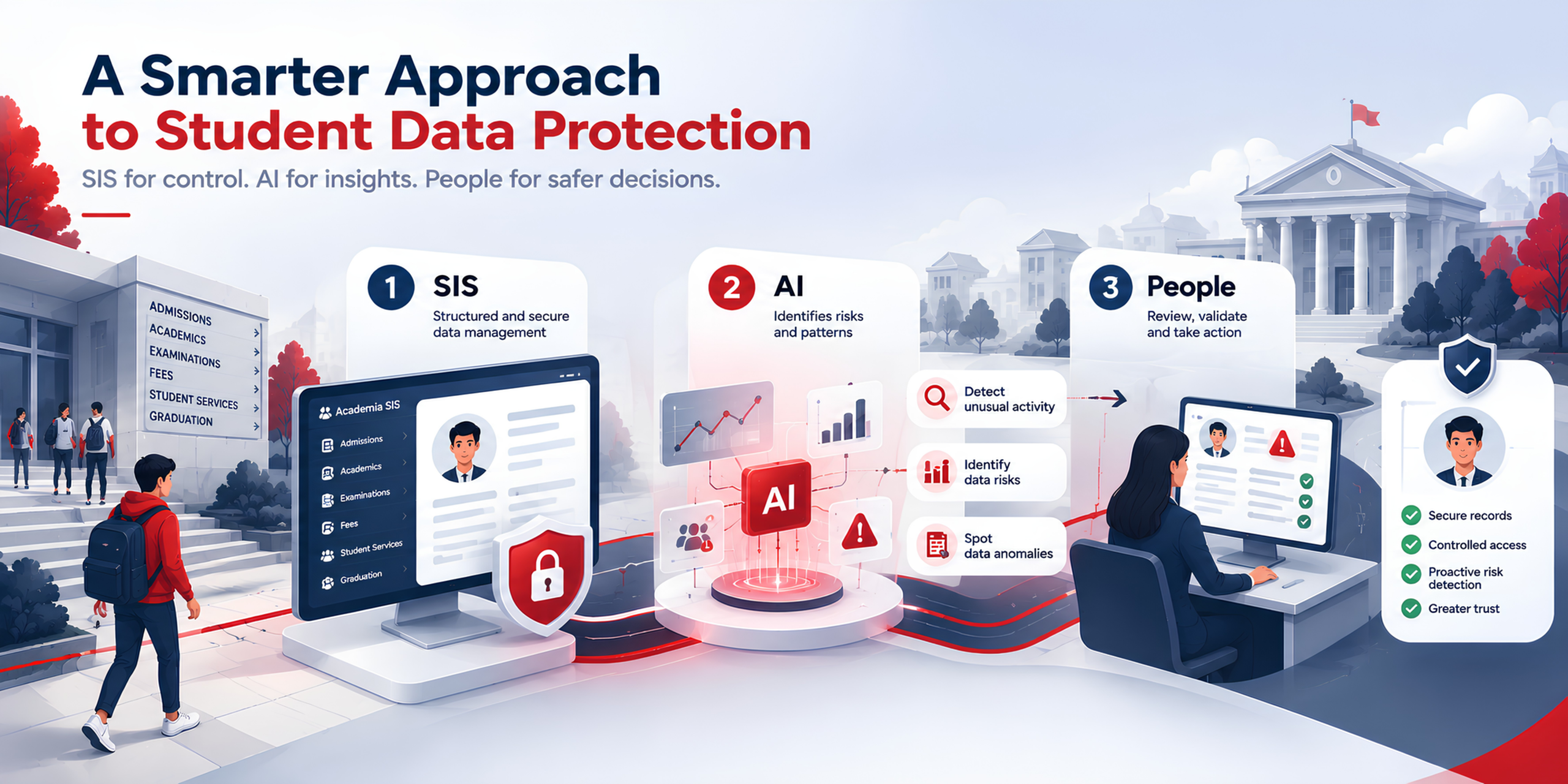
The report emphasises that effective analytics depends on strong data foundations, clear governance, and the ability to turn information into decisions. It also identifies emerging practices involving AI-powered assistance, decision intelligence, data mesh architecture, and federated data governance.
What this means for universities: Collecting more data is not enough. Institutions need reliable information, clear ownership, and analytics tools that help administrators identify problems and evaluate possible responses.
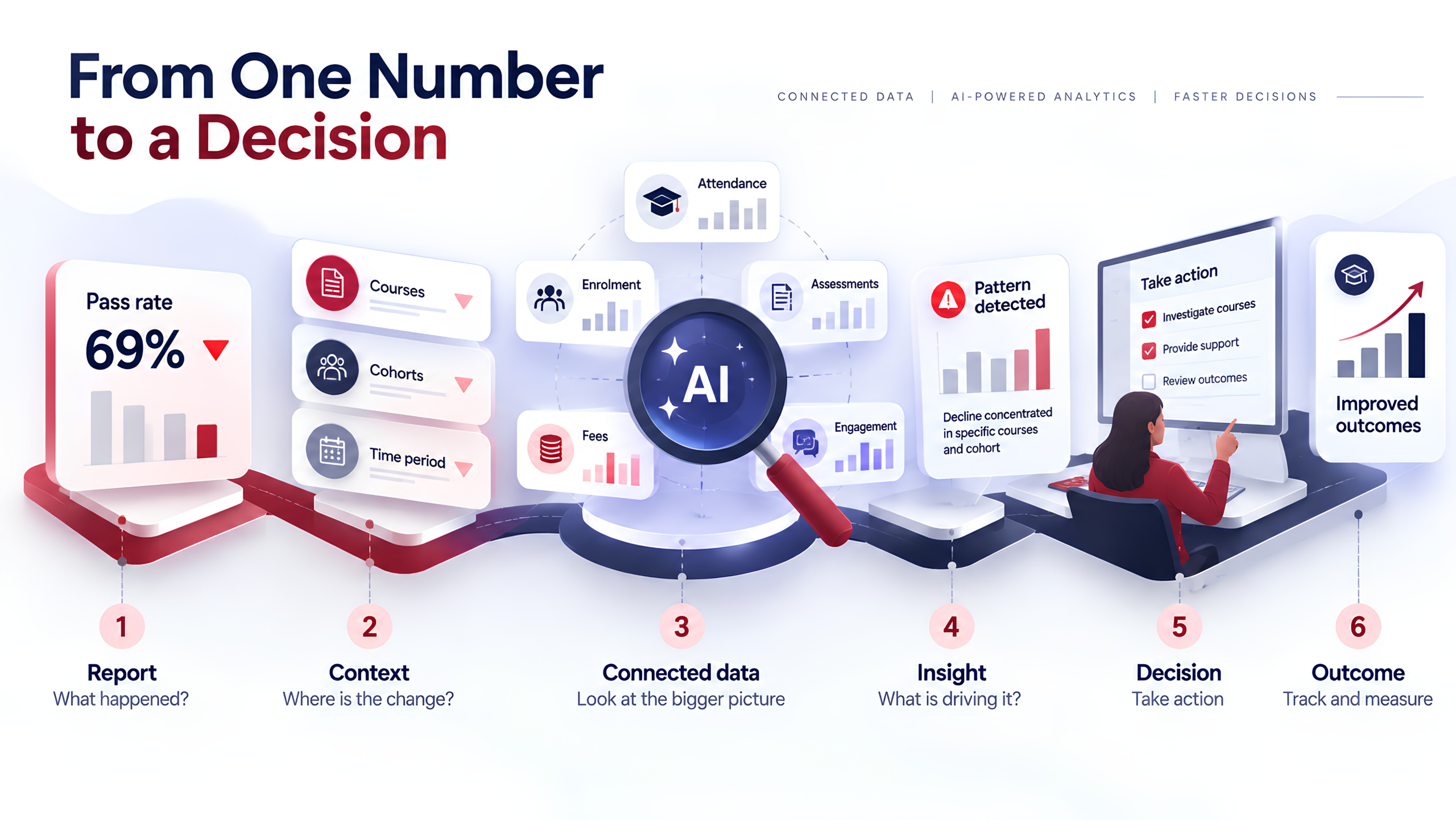
For example, instead of reviewing enrolment figures only at the end of a reporting period, a university could use regularly updated dashboards to monitor application conversion, unpaid fees, course demand, and student progression.
Together, these reports support a practical direction: move from basic digitisation and compliance reporting towards integrated operations and evidence-based institutional management.
How Can Universities Improve Operational Efficiency Beyond HEMIS Reporting?
Universities can strengthen digital transformation by connecting their information systems, automating routine tasks, and using institutional data to improve decisions.
1. Integrate Academic and Administrative Systems
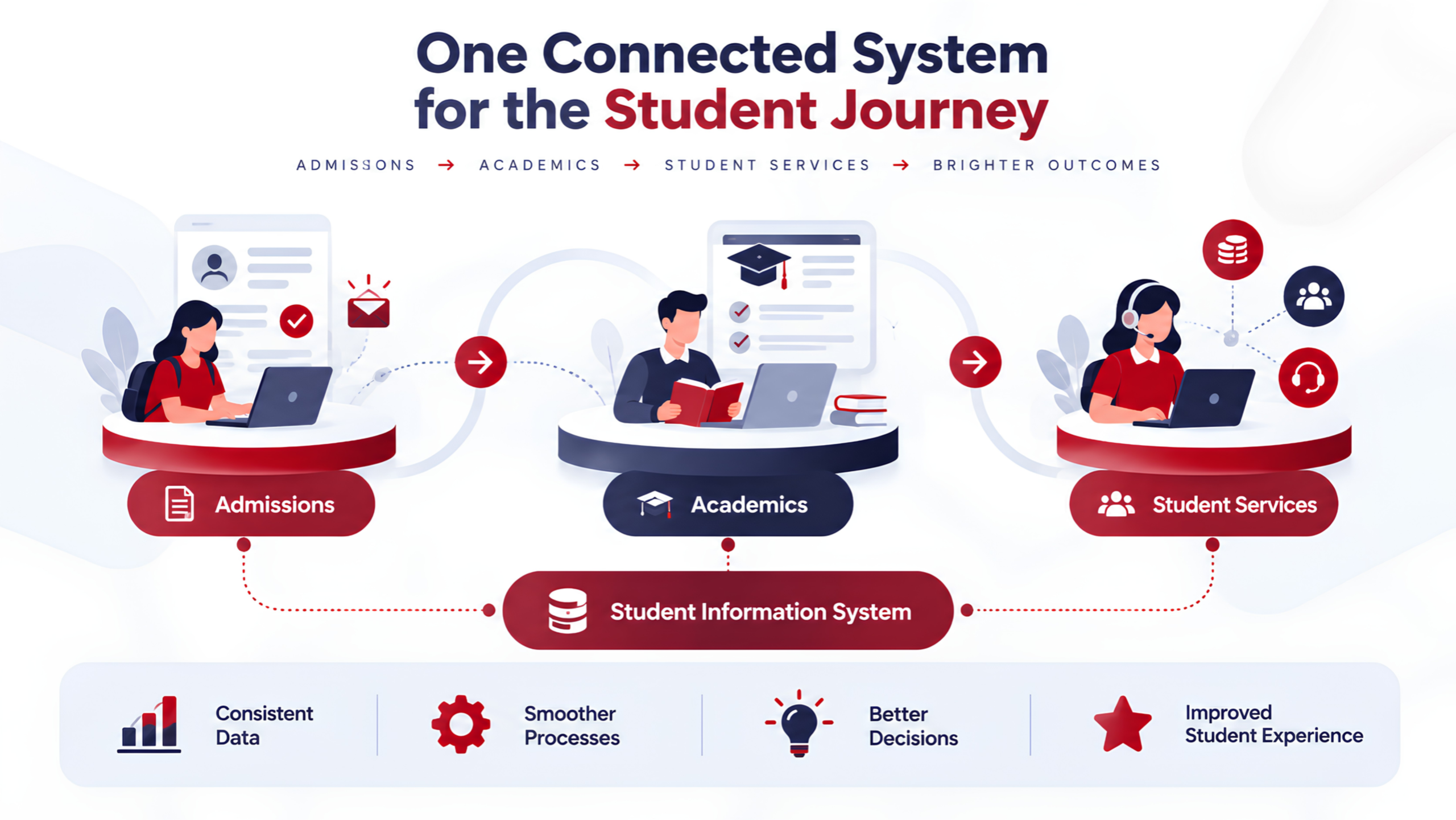
An integrated ERP or SIS creates a more consistent source of institutional information. For instance, when an applicant becomes an enrolled student, the relevant record can flow into academic administration, fee management, and student services without unnecessary duplicate entry.
2. Automate Repetitive Administrative Workflows
Manual approvals, fee reconciliation, timetable preparation, and document verification consume staff time. Workflow automation can route requests to the appropriate department, flag missing information, and notify users when action is required.
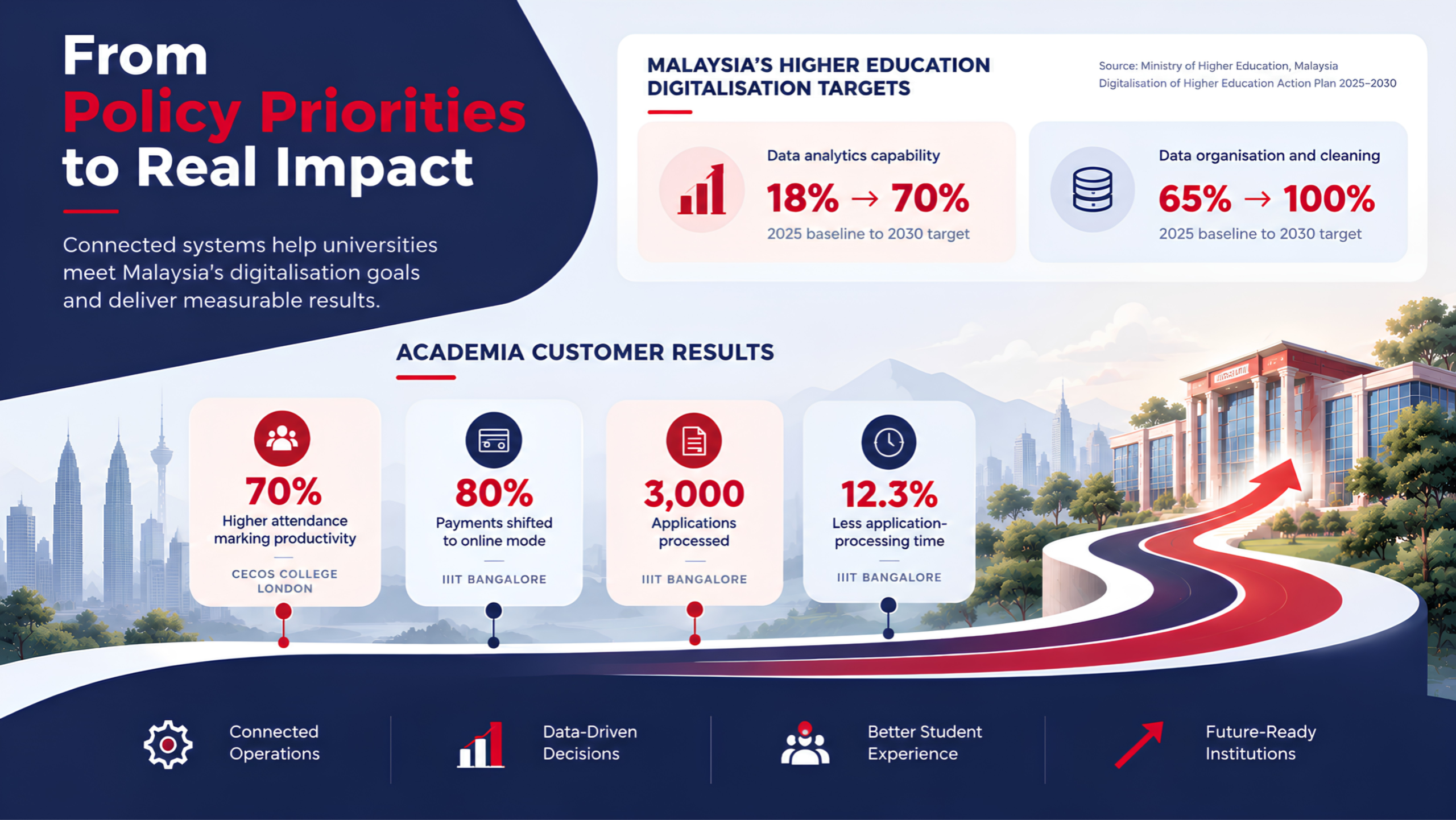
Although results vary by institution, this example demonstrates how targeted workflow automation can deliver measurable operational improvements beyond reporting.
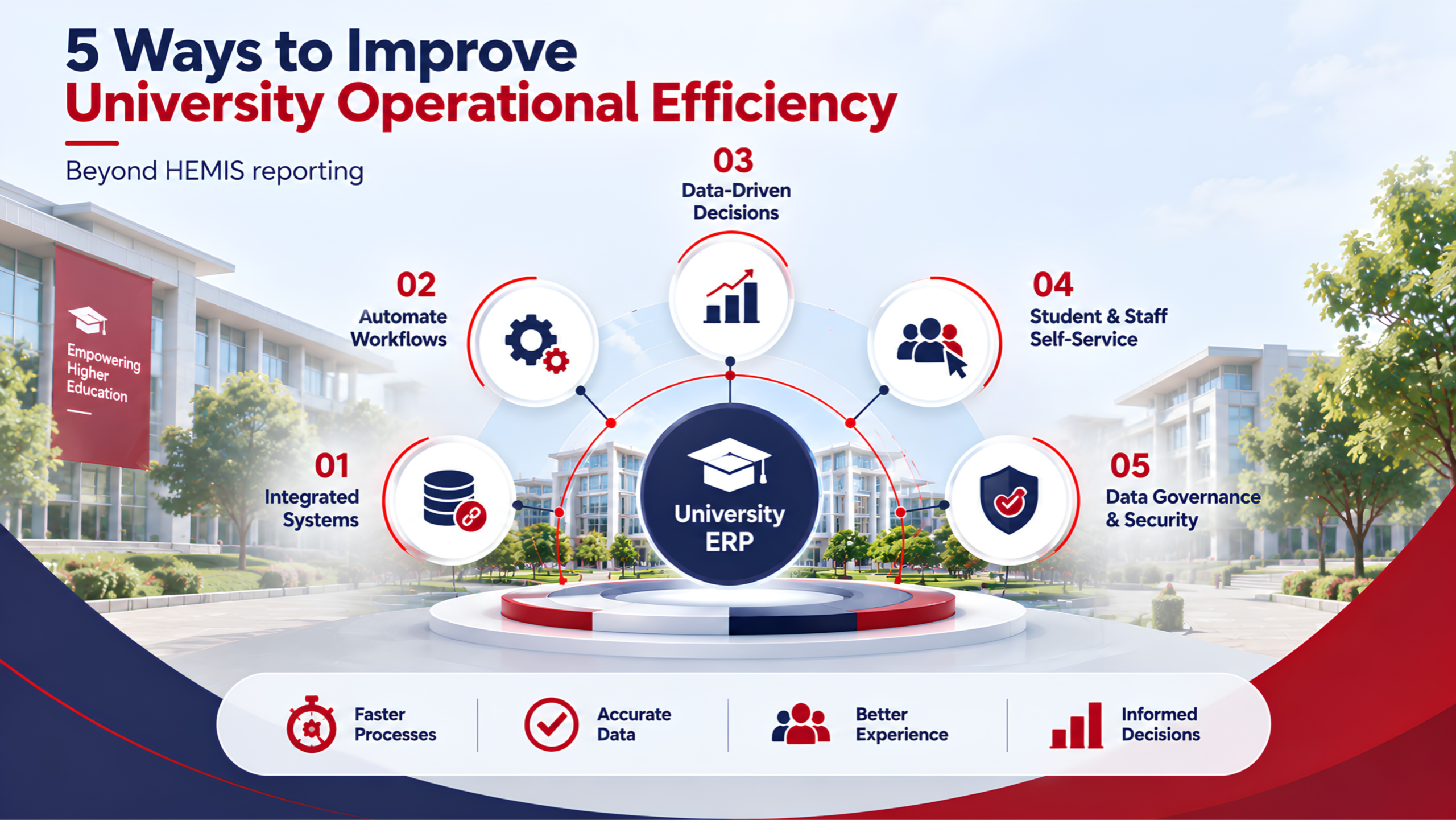
3. Use Real-Time Dashboards for Decision-Making
HEMIS reports help institutions understand their reported performance. Operational dashboards can help administrators investigate developing issues and respond sooner.
A university could monitor:
- Application-to-enrolment conversion rates.
- Outstanding fees and payment trends.
- Course registrations and classroom utilisation.
- Student progression and examination outcomes.
- Administrative request turnaround times.
For example, if registrations for a particular programme decline, admissions and academic teams can investigate enquiry volumes, application completion rates, and course demand before the next reporting cycle.
4. Improve Student and Staff Self-Service
Student and employee portals can reduce dependence on in-person visits, emails, and repeated phone enquiries.
Students could access fee statements, examination results, academic calendars, and application updates through one portal. Staff could submit leave requests, access payroll information, and track approvals digitally.
The result should be measured through indicators such as average processing time, number of repeated enquiries, portal adoption, and user satisfaction.
5. Strengthen Data Governance and System Integration
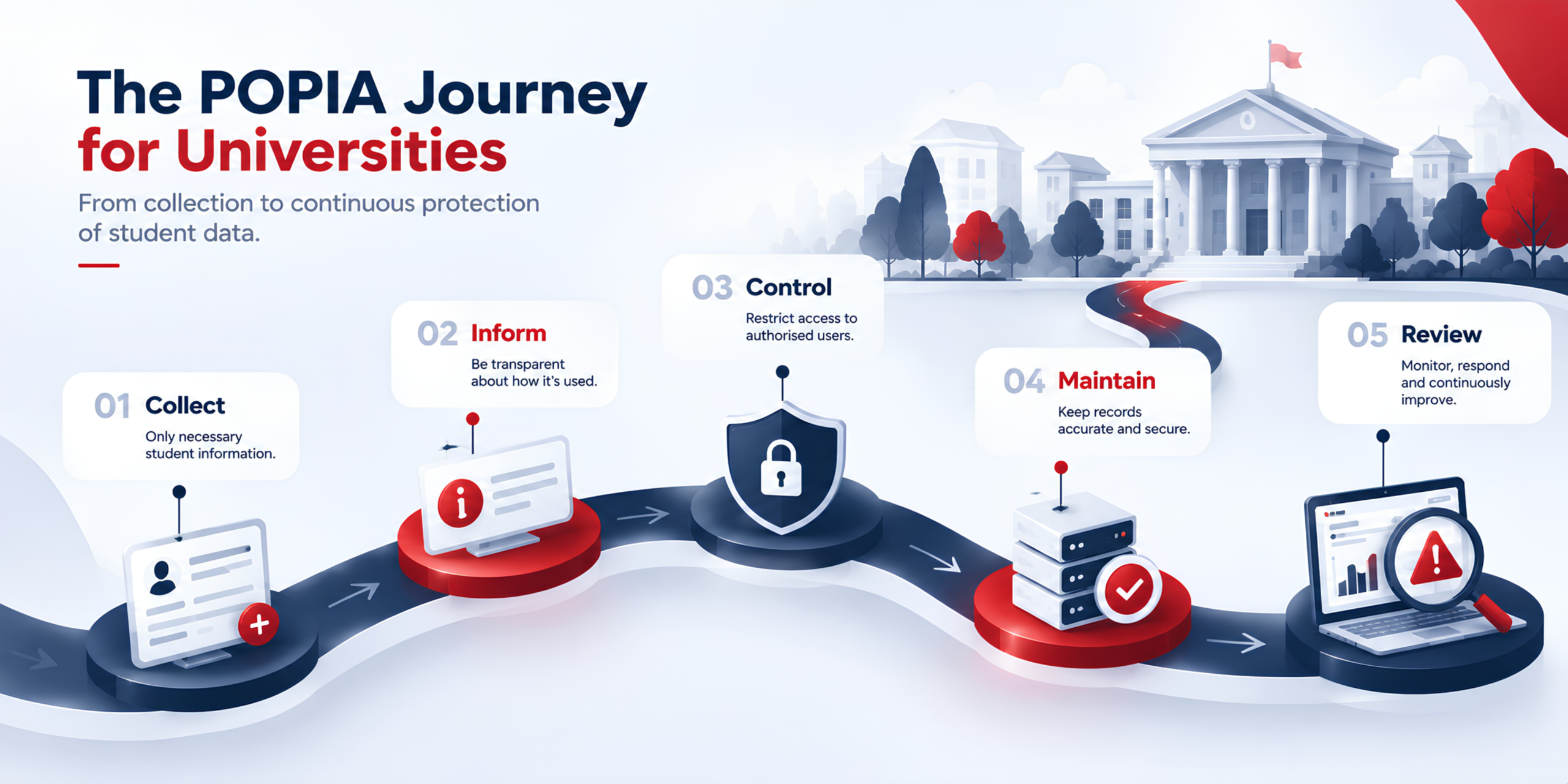
Digital transformation requires more than connecting software. Universities must establish clear data ownership, consistent definitions, appropriate access controls, and reliable integration between systems.
For example, admissions and academic departments should use consistent definitions of an enrolled student. Otherwise, different dashboards may display conflicting enrolment figures even when the underlying systems are functioning correctly.
Application programming interfaces (APIs), data validation rules, and documented governance procedures can help maintain consistency across the institutional ecosystem.
How Can Academia by Serosoft Support This Transformation?
Academia by Serosoft brings a higher education technology perspective to the challenge of connecting student information management with broader institutional operations.
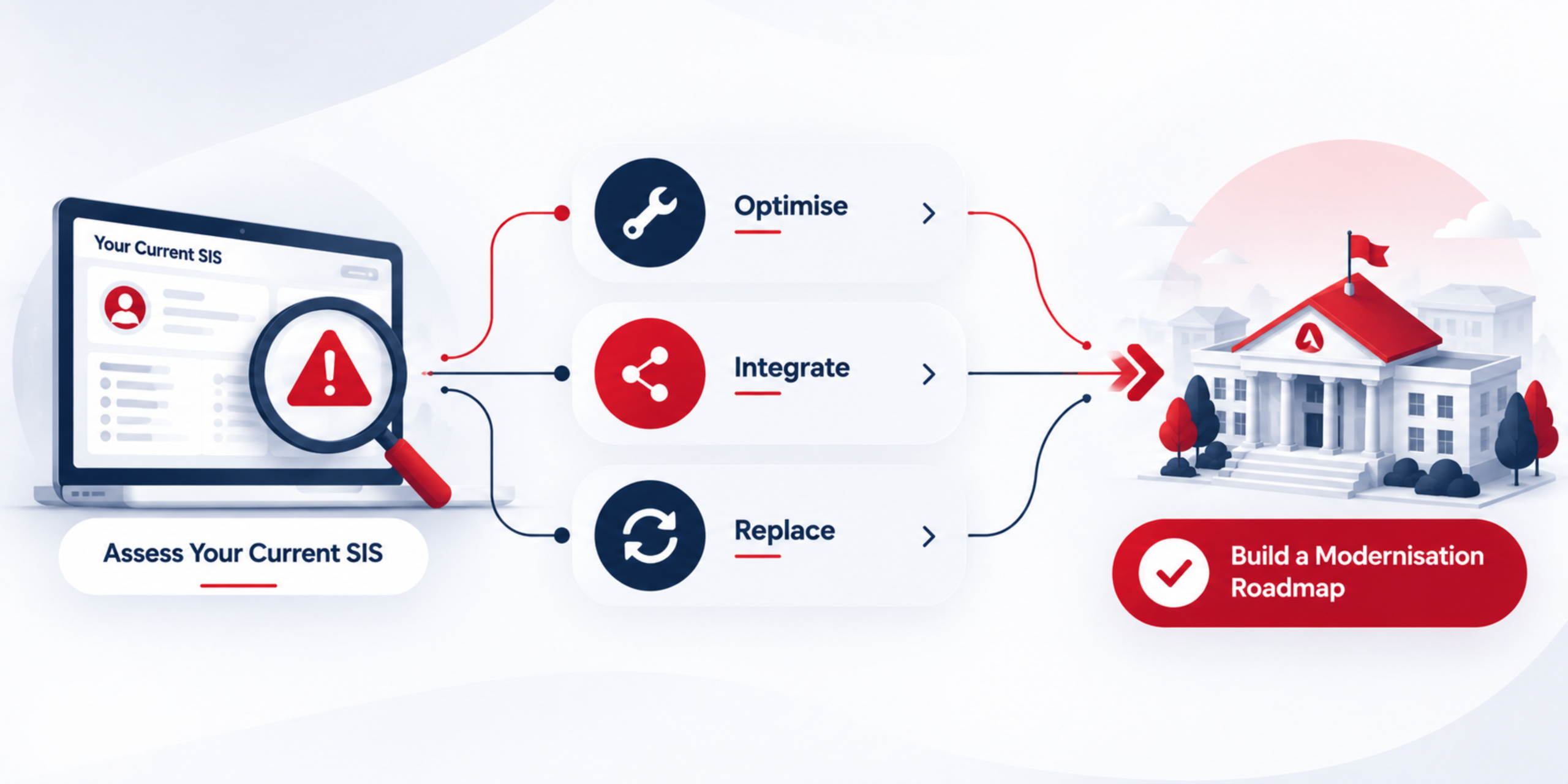
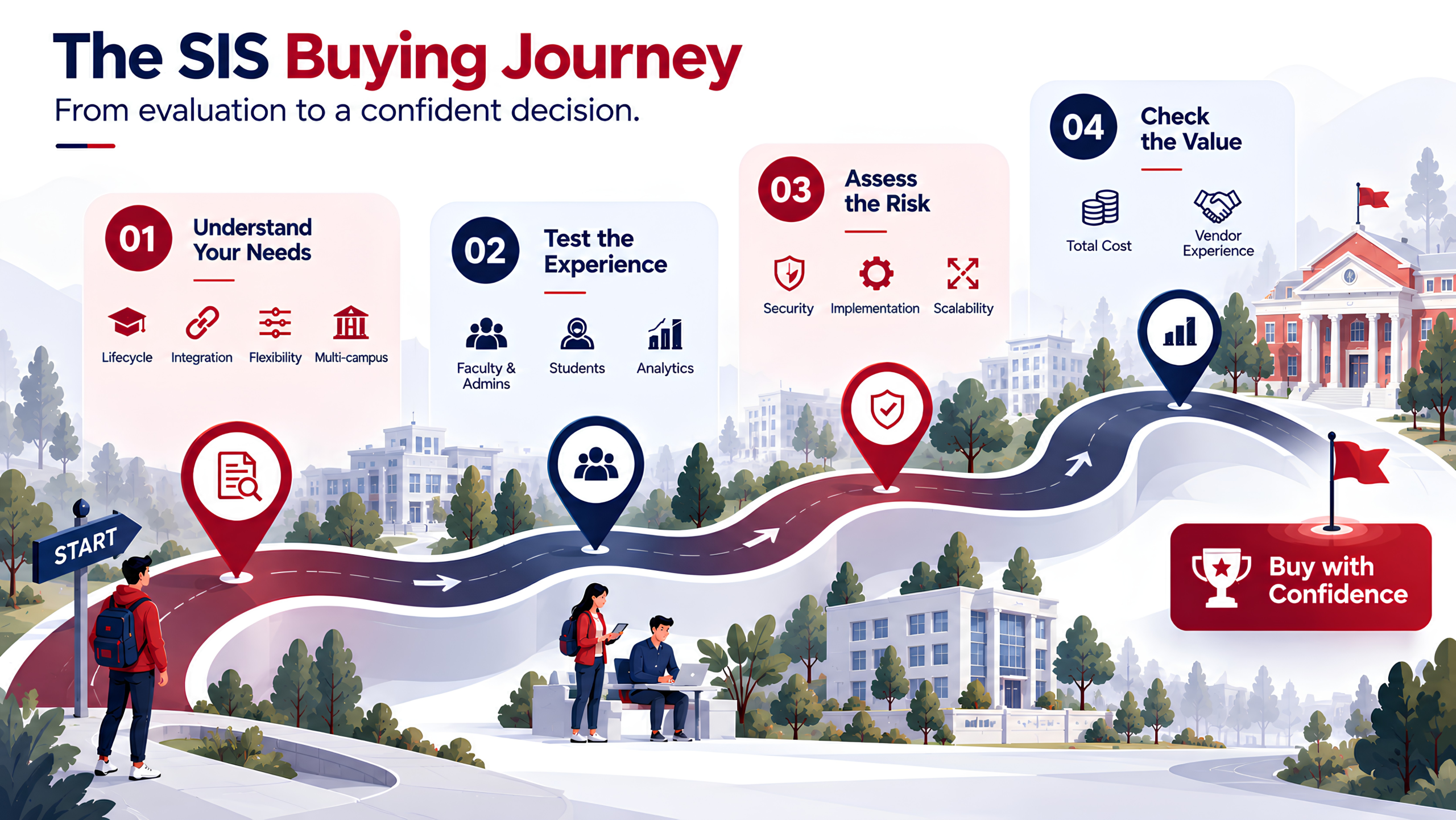
When evaluating an education ERP or SIS, universities should assess whether the platform can support:
- Integrated student management: Connect relevant student information across academic and administrative processes.
- Workflow automation: Reduce manual interventions in routine tasks and approvals.
- Operational reporting and analytics: Give authorised users access to useful institutional performance indicators.
- System integration: Enable appropriate data exchange with finance, learning platforms, and other institutional applications.
- Scalable operations: Support institutional growth without unnecessarily increasing administrative complexity.
The key is to evaluate these capabilities against the university’s actual requirements, existing infrastructure, and implementation priorities rather than assume that every feature is available by default.
Academia’s higher education expertise reinforces an important principle: technology should support better institutional processes, not simply digitise inefficient ones.
Explore Academia’s Student Information System to learn more about student information management for higher education.
How Should Universities Measure Digital Transformation Success?
Universities should establish a baseline before implementing new systems and track improvements against defined operational KPIs.
| Performance indicator | What to measure |
|---|---|
| Administrative efficiency | Average task completion time |
| Data quality | Duplicate records and correction requests |
| Workflow automation | Percentage of eligible tasks automated |
| Student services | Average enquiry resolution time |
| Financial operations | Fee reconciliation and collection processing time |
| System integration | Number of manual transfers between systems |
For example, a university might set a target to reduce application-processing time by 20% over two semesters. This is an illustrative target, not a guaranteed outcome. Actual results should be evaluated using baseline data and post-implementation measurements.
Conclusion
Improving digital transformation and operational efficiency beyond HEMIS reporting requires universities to move from compliance-focused data collection towards integrated, automated, and data-driven operations.
South Africa’s six-stage digitalisation framework and EDUCAUSE’s research on data and analytics both highlight the importance of building strong data foundations, improving institutional capabilities, and progressing towards connected systems.
By integrating academic and administrative processes, automating repetitive work, strengthening analytics, and improving self-service, universities can reduce operational friction and give staff more time to focus on institutional priorities and student success.
Planning your university’s next stage of digital transformation? Request Demo of Academia to explore how an education ERP can support your institution’s operational and student information management needs.
Frequently Asked Questions
1. What is digital transformation in higher education?
Digital transformation involves using connected technologies, automated workflows, and data analytics to improve academic, administrative, and student-facing operations.
2. How can universities improve operational efficiency beyond HEMIS reporting?
Universities can integrate ERP and SIS platforms, automate administrative processes, introduce operational dashboards, improve self-service portals, and establish consistent data governance.
3. What is the role of an ERP in university digital transformation?
An education ERP can connect academic and administrative processes, reduce duplicate data entry, support workflow automation, and provide information for operational decision-making.
4. How can universities measure digital transformation ROI?
Institutions can compare implementation costs with measurable changes in staff hours, processing times, administrative expenses, error rates, and service quality.
5. Does HEMIS reporting alone achieve digital transformation?
No. HEMIS reporting supports institutional data collection and reporting, while broader digital transformation also addresses system integration, process automation, student services, and data-driven decision-making.