Type your keyword below

5 Significant Impact Of Artificial Intelligence In Education That You Should Know

It’s the 21st century, the century of continuous change and advancement. Everyone is equipped with gadgets; it can be mobile, VR Box, Fitness Band, etc. Moreover, every day, you find new updates or even an advanced version of gadgets. Technology acceptance has become very natural in the last few decades.

Amidst all these technological revolutions, Artificial Intelligence is the most admired technology in every sector. Now, it is not limited to Sci-Fi movies or novels. The reason why AI is the most attractive tech is its human-like experience. In 2016 social humanoid robot, Sophia was launched, it got trendy among tech giants and all around the world due to its human-like appearance and behavior compared to previous robotic variants.

Artificial Intelligence has entered in every sector i.e. finance, retail, law, marketing & advertising, and the health sector. It is paving its wave in the education sector also. The moment the education sector get fully equipped with AI, it will change the face of education entirely.

Let’s check out how Artificial Intelligence is going to impact the education sector.

Student Assistance

Artificial Intelligence can understand the weakness and strength of every single student. It can analyze the pace of learning and latent skills of students that will help teachers, parents to guide students in productive learning. Next generation students will have the AI companion that will know everything about them from personal to professional.

Teacher Assistance

As AI can understand students and their capability, it is going to help teachers to work accordingly. AI can also help the teachers to guide them on the rate of lecture delivering, the right time for assessments, what type of assessment is required for a particular topic, which topic is beneficial for students which are redundant, etc. Teachers can use AI for better understanding of topics and its level of difficulties towards students. That will increase the quality of education and level of students. With the use of Artificial Intelligence, educators can outsource their targets quickly and achieve results set for each and individual performance of a student.

Personalized Learning
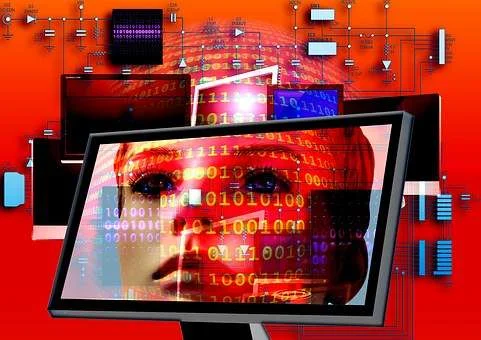
It is one of the best benefits of AI in the education sector. We all know there are various types of students, and every teacher has a different way of teaching methods. It is very difficult for teachers and students to meet the exact expectations.

There are students with different needs and some with extraordinary capabilities. In this era of ample information, it is imperative that every student gets the same access to education and learning. AI can adapt to the individual learning related requirements of students and teachers. That will reduce the meaningless and unproductive work of teachers and will help the institution to increase the efficiency of education.

Automation of Grading

At present, artificial intelligence is already able to automate grading system in multiple choice questions (MCQ) in education institutions. Can you believe how much time teachers will be able to save from the automation of the grading process?
With the continuous advancement in the AI algorithm, sooner it’ll be able to automate standard and dynamic grading system according to the needs of institutions.

Global access to education

Artificial intelligence is one advanced tool that can bring the global classroom for students in every corner of the world. AI can fill the gap of communication between teachers and students. Students with different language or with visual or hearing impairments can understand teachers with the help of real-time subtitles. Presentation Translator is a is free-plugin for PowerPoint that does so.

AI will also help students to connect on the global level for brainstorming. It will increase the spreadability of knowledge among students.

Many other educational technologies are transforming the education sector and easing the life of students, teachers, and institutions.

Here they are https://www.linkedin.com/pulse/5-edtech-trends-dominate-2020-mandira-shah/

To get a deep dive into education automation, click here to book a free demo.
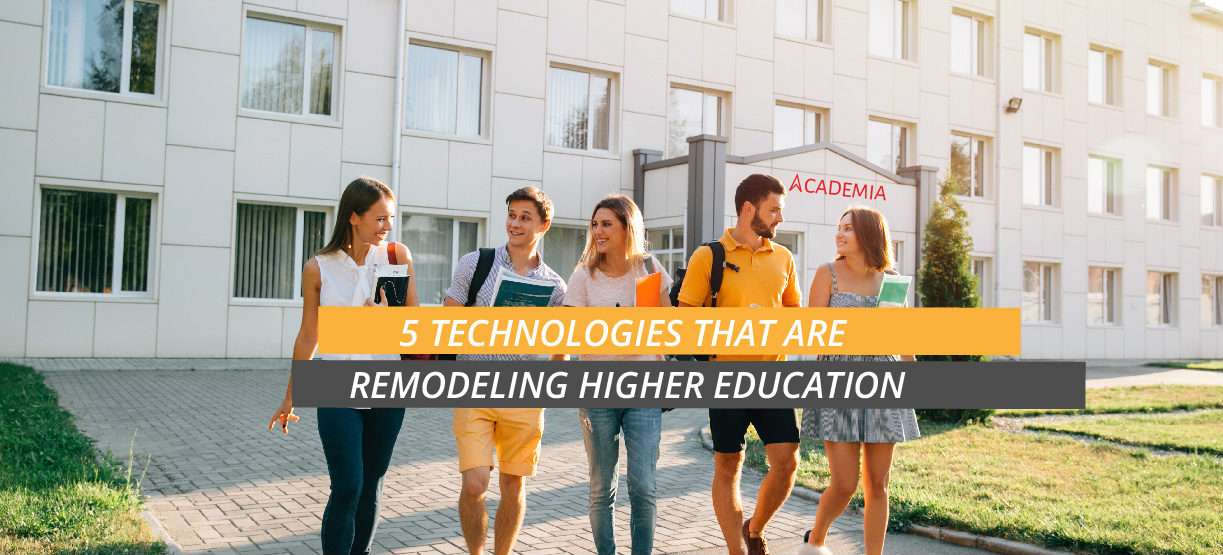
5 Technologies that are Remodeling Higher Education

We are living in the 21st century in the era of the third industrial revolution. Also known as the Digital Revolution, a century of computer and automation. Every industry is moving toward automation to and the education industry is not behind.

Education Technology or EdTech has become a new trend in the education industry.

As higher education is vast and the young generation is more tech-savvy, they are transforming very quickly into an EdTech synchronized system. Not just students but institutions are also shifting to automated academic and administrative operations through ERP.

Amidst cutting-edge competition, there are few EdTech tools that are transforming the higher education system.

Here are five such trends:

1. Artificial Intelligence

AI has already entered all the major sectors e.g. finance, marketing, and advertising, healthcare, law, etc. Now, many educational institutes are adopting AI in their academic and administrative process. UK-based company Third Space Learning is using AI software to improve the teaching experience of its global network of around 300 teachers.

In some institutes, AI software is installed in the classroom to guide teachers not to lose track of the topic while teaching, to maintain teaching speed for better understanding among the students.

2. Blockchain

The role of blockchain in the next technological chapter is not hidden. The adoption of bitcoin as a legit currency in various countries is one solid example of how blockchain tech is changing the system.

There are many ways blockchain technology in education can help to decentralize the higher education system. Education record and credentialing, copyright protection, course curriculum, innovative learning platform, publishing, library are a few areas where blockchain can overhaul the education experience.

3. Student Information System

Technology is knocking on your door at higher education- academia erpThe education industry runs on number of operations. To manage a student life cycle in an institution from admission to placement is not an easy task. It requires admission management, fee management, inventory management, academic management, various report generation, and much more work.
To make higher education efficient, productive, hassle-free and more centralized education software of Student Information system or SIS is introduced.

Many institutions have already adopted to Student Information System and due to quick run-around time, they are achieving a high return on investment.

4. Virtual Reality

Virtual Reality in education is also widely known as Virtual Learning Environment, which provides immense learning potential in higher education. Educators can enhance the educational experience by using VR practice in the classroom. Tech giants like Microsoft, Google have modified human-computer interaction via gadgets like Microsoft HoloLens and Google lens.

5. IoT

IoT or the Internet of Things has made the main transformation in the retail sector, healthcare, and customer services. According to the basic definition, It is defined as the proposed development of the internet in which everyday objects (other than the usual laptop, mobile, computer) have network connectivity to send and receive data and exchange information.

With the help of IoT, the education sector is availing the benefits of collaboration between students, educators, and administration. It also helps in global networking enhancement of textbooks, attendance monitor system, data collection, and better collaboration.

Why you should use these technologies in your institution?

It is not necessary to use all the tool simultaneously.  You can opt for the right EdTech based on institutional operations and processes.

To enhance the student, faculty and administration experience, for more collaborative processes and streamlined operations it is necessary to use technology in education.

Are you looking for EdTech or software to enhance the productivity of your institute?

Academia is one of the leading education management software that is an enhancer and enabler for the education sector operations. It works for schools, higher education institutions, and training institutes. Try a free demo now!!

How Machine Learning Can Improve The Education System

Artificial intelligence (AI) and machine learning (ML) are at the heart of the digital revolution. Many industries, such as education, logistics, healthcare, and retail have begun to add emerging technologies to their game plan.

Machine learning, a subset of artificial intelligence (AI), is becoming increasingly popular and is gaining acceptance in almost every area. Machine learning is a field of inquiry devoted to understanding and building methods that ‘learn’. That is, methods that leverage data to improve performance on some sets of tasks. It is a branch of artificial intelligence. 

Machine learning is becoming increasingly important in many areas. Here, the technology will perceive the data and its structure to provide useful insights. 

Higher education needs to improve the experience of students, faculty, and staff. This can be achieved by using new technologies. It can bring about remarkable positive changes in this area. In this article, I will explore a few ways in which machine learning can help to improve the education system.

Efficient machine learning can initiate:

  • Personalization Learning Experience

The introduction of machine learning in schools transforms traditional learning methods with physical books into online learning. In addition, the teacher never has to keep records of each student. A good tech solution can deliver the concepts and set goals for each student. The purpose of this function is to help a teacher to follow and observe each student in the class. Therefore, a teacher can see and judge which methods work or which do not work well and what needs to be changed in the program to make the job easier.

  • Student Path Prediction

With the development in technology, education institutions need to choose a very good technology solution that can help in managing students’ lifecycle. Based on the daily actions of the students, it helps in recognizing their weaknesses and working on their improvements in a better way.

  • Automated Processes

Through machine learning, educational institutions can attain automation. Automation for teaching, learning, and overall institutional management can lead to improvement. It also improves student lifecycles and motivates them to complete academic and non-academic activities with ease.

  • Chatbot Integration

With the expansion of technology in the education industry. Institutions can optimize modern techniques like chatbot integration. A chatbot integrated with a mobile application and portal on its own can help all the stakeholders and enhance its usefulness.

  • Performance Feedback – students  & teachers

Not only do the machines aim to show the students’ level they also provide feedback through analysis of the data and their recent work. The machines are based on the student progress analysis program. The same procedure will apply to teachers so that a teacher can also know where to change their work. During this time, students learn about their knowledge gaps, areas where improvements are needed, and methods to get better results.

Conclusion

Machine learning is a new way to accelerate progress in the education system. This allows students to make the learning process more entertaining and challenging through AI technologies. With increasing class sizes, machine learning can help teachers pay more attention to each student. This will take our education system to a whole new level as schools introduce it into their programs. With the improvement of machine learning technology, the impact on the education system will be even greater. And we hope for a positive effect on the future of education.

Artificial Intelligence in Education

Advances in the development of artificial intelligence are spreading at incredible speeds around the world, creating incredible hype that raises our expectations. In this article, we have compiled some ways to use artificial intelligence in education.

Automated classification

Automated Qualification is an AI-based specialized computer program that simulates a teacher’s behavior to assign grades to essays written in a pedagogical setting. They can evaluate the students’ knowledge, analyze their answers, give feedback and create individual training plans.

The intermediate interval of training

Overhaul of knowledge if you forget that it is an effective pedagogical and technological solution. Using artificial intelligence, one can know when you probably forgot something and it is recommended that you review it. It only takes a few revisions to make sure that the information is now stored in your memory for many years.

Feedback loops for teachers

The feedback, the assessment of the teachers by the students, has a history that goes back a century. Despite the shift from paper to online surveys, little or no progress has been made in the field of commenting. Assessment of lessons by students is often the most valuable source of information.

With modern technologies such as AI-based discussion robots, machine learning, and natural language processing, there are many interesting ways to improve the quality of the comments.

How Academia ERP Enables Artificial Intelligence in Education

A chatbot can gather opinions through a dialogue interface, like a real interviewer, but with some work that a person requires. A conversation can be adapted to the answers and personality of the student. A chatbot can even find the reasons for this or that opinion. It can also filter out personal insults and obscene expressions that are sometimes present in teachers’ qualifications.

Virtual moderators

Students were intrigued by new assistant teacher Mr. Academia, who responded quickly and accurately to student requests. The students did not know, however, that Mr. Academia true identity was actually a computer equipped with an AI system. Such virtual moderators can be very useful in education.

Campus Chat

The online discussion page can answer questions on any questions a student needs to know about life on campus. How to find the next conference room, how to apply for the next semester, how to do homework, find a parking space, or address a teacher: these are the questions that AI ChatBots’ online discussion campus can answer

Personalized learning

Personalized learning refers to a variety of educational programs that optimize the pace of learning and the educational approach for each student’s needs. The experience is tailored to the learning preferences and specific interests of the different students. Artificial intelligence can adapt to the pace of individual learning and can offer ever more complex tasks to speed up learning. As a result, slow, fast students can continue learning at their own pace.

Adaptive learning

Adaptive learning is perhaps one of the most promising applications of artificial intelligence in education. It is assumed that artificial intelligence in schools can track each student’s progress and adjust the course, or inform the teacher about material that a student has difficulty understanding. In this sense, some intelligent tutoring systems should also be mentioned.

Monitoring

Distance learning, the driving force of modern high-tech training, involves conducting remote examinations. How can we do this to make sure a student does not cheat? AI-based protection systems come to the rescue. The supervision or supervision test is a mechanism to ensure the authenticity of the person to be carried out and to prevent that trap from being present by a supervisor during the test.

Capture and personalization of the data

Using the geolocation data and our previous searches, AI can now offer us the ideal coffee nearby or, for example, create a route to the store closest to your favorite comics. The same technology can be applied if we study a grammatical rule based solely on examples of the sphere that interests us with all educational content appropriate for us.

Back to top