Type your keyword below

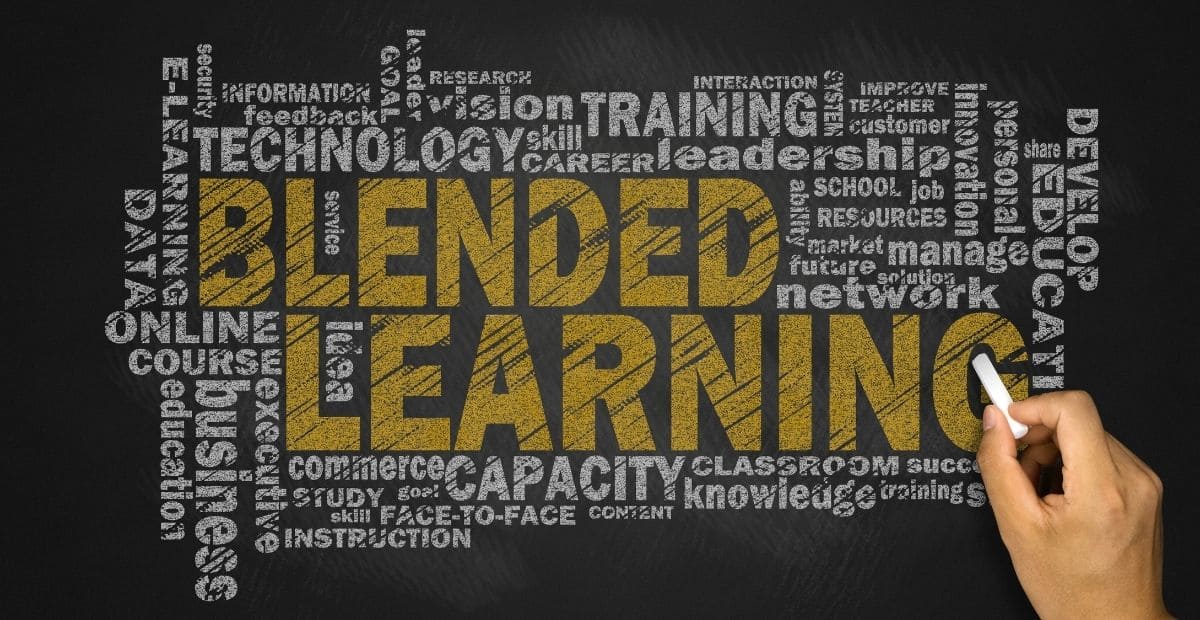
Blended Learning in the Education Sector: The Need of the Hour

Today the educational landscape is changing. The pandemic has opened the gate to think beyond the traditional learning & teaching methods. Teachers are adapting to new technologies as digital transformation becomes more convenient and necessary than ever before.

With the imminent reopening of schools and higher education institutions are planning to use a mixture of online learning and traditional teaching where students will come to schools for a few days a week. Hence, the concept of blended learning is leaping in the education world.

Even before the advent of the internet, correspondence education, and independent learning through distance education programs were prevalent. As digital platforms have become more accessible to purchase and implement, there has been more inclination towards mixing conventional and modern learning that could benefit students.

If it weren’t for technology, it wouldn’t be possible for educators to keep the education running even for a short period. Traditional teaching, online learning, online classes, and hybrid classes are all mediums for knowledge transfer and enable students to master in given subjects. These terms are becoming a part of 21st-century learning when talking about education, and blended learning is one popular concept among educators.

What is blended learning? 

There has been much confusion to find the meaning of blended learning. You can find many definitions for it. To sum up all the definitions of B-Learning, it is “enhancing teaching with the help of digital platforms and online educational content.”

Blended learning is one form of hybrid learning that uses multiple digital resources to expand the classroom approach. Hybrid learning does it in two-parts, separate sessions of face-to-face instruction and online sessions. In blended learning, both systems are integrated along with digital modalities to create a coherent and yet varied learning environment.

What is the difference between blended learning & hybrid learning?

Most of the time blended learning and hybrid learning are used interchangeably. It is similar if we see the broad spectrum but there is a subtle difference between them. Hybrid learning is a holistic approach that focuses mainly on enhancing learning experiences for students. As the name suggests, it is the combination of various methods of learning methods whether it is offline, online, distance learning, etc. It replaced most of the physical communication between teachers and students with online interactions. Whereas blended learning is an explicit combination of offline and online approaches of instructions. It is a perfect blend of online instruction and offline communication among learners & instructors.

What are the types of blended learning?

Blended learning has many types according to the usage and techniques such as; Remote Blended Learning, Flipped Classroom, Mastery-Based Blended Learning. But it is broadly classified into two categories, as synchronous learning and asynchronous learning.

In synchronous learning, groups of people connect with coaches/ instructors, and real-time discussion is similar to offline classes. It provides a sense of community and encourages them in more collaborative learning. Whereas in asynchronous learning, educational content is delivered to students. It is more like a distance learning program. It is more flexible and allows students to learn according to their pace. 

What is the objective of blended learning?

There is no doubt that technology aids learning, fuels the ultimate objective of education i.e., Knowledge Transfer and supports learners in a holistic learning environment. Blended learning is a combination of traditional and modern approaches that become convenient for teachers to adapt to new technologies with the conventional method’s backup. 

Blended learning enhances access to education and maximizes flexibility. A blended learning model meets students wherever they are by delivering content in a self-directed, digital format.


What are the methods of blended learning?

As it is all about flexibility, blended learning comes with numbers that educators are using nowadays.

One of the most famous ones is known as a flipped classroom. A flipped classroom is a teaching method that works in reverse i.e., from students to teachers. It is where teachers have questions that they share with students in advance. The responses from students help capture where the teachers will need to focus their guidance in a discussion. This way, they can target instructions in a way that is most effective for learners.

For example, a teacher might provide students with a discussion topic or question before class and ask for feedback via email or perhaps a shared online document. The teacher reviews the responses before class and uses that information to more intentionally direct the live discussion. Here student input comes first, with the activity coming second, the opposite to traditional learning, where the instructor will first facilitate discussion and then solicit feedback in response.

Just-in-time learning is another method. This is where teachers use class time for active learning and remove passive activities that students could do on their own, such as reviewing the syllabus.

It could also involve video tutorials and digital activities targeted for students to complete at their own pace. It allows teachers to focus classroom time entirely to hone in on confusion or lead group work or other collaborative activities.

Implementing more robust coaching and advising models are also an essential strategy for blended learning. Personalized, face-to-face support meets students’ expectations and allows to build rapport between instructors & learners intentionally. It creates a sense of accountability driven by the customized nature of the instructor-learner relationship.

What are the advantages and disadvantages of blended learning?

A significant benefit of blended learning is flexibility for students; the ability to control the pace. It also creates space for reflective thought for students. Digital resources are generally readily available unless there are budget issues.

But some fundamental issues create obstacles for penetration of blended learning. Unfortunately, ready access to high-speed internet isn’t a given for everyone, even for families with the internet in their home. Similarly, parents with a full-time job might need to prioritize it using the bandwidth. Moreover, having several siblings in the house who all need to stream video for school assignments at the same time, and a mobile hotspot won’t be sufficient.

One way to combat this is to incorporate blended learning activities that don’t just involve bumping someone in front of a screen but encouraging experiential learning or offline, more reflective, or independent tasks.

How Education ERP facilitates blended learning?

Education ERP is a management information system for educational institutions that helps educators to manage all administrative tasks through a single platform. It also improves communication among all the stakeholders thereby enhancing the overall student experience.

Solutions such as Academia ERP are integrated with a learning management system that enables institutions to facilitate education digitally. It also aids communication between teachers & students beyond campuses that makes learning more student-centric that is the ultimate goal of blended learning. 

In concluding note

Due to the outbreak of the pandemic, education leaders are bound to implement technology in educational institutions. The new normal of the post-COVID world of education will be inbuilt with EdTech to maintain institutional continuity. Ultimately, all learning methods are designed so that teachers can focus on the vital component of their role; student-focused education. That’s what learners need the most. Providing the content is laying the foundation, but working with learners to enhance their knowledge with that content is the key.

Blended learning allows teachers and students to work more cohesively by using all available resources in multiple ways to enhance learning and ultimately to help students find the method of learning that benefits them the most.
Intelligent School – Transforming Education System

Smartphones, Smart TVs, Smartwatches and Intelligent schools: The demand for intelligent products is at a high level. People living in this “Intelligent” age can easily show how smart devices have dramatically improved their lives.

But is there anyone who can answer how efficient is an intelligent school system? Does an intelligent school influences the development of children? Or is it just another trick to score better than traditional schools?

Let us try and answer all your questions here so you can decide why it’s imperative to introduce smart classes in schools.

Let’s start with the million dollar question: What is an Intelligent School?

Intelligent school is a technology-based teaching-learning facility that prepares Multimedia tools such as movies, photos, audio, slides, etc. to make the learning process more effective. Unlike traditional schools, the curriculum and guidelines are not rigid, and teachers can use a variety of multimedia tools to improve their learning.

The definition of intelligent schools seems to be simple. However, the impact of introducing smart classes in schools should be considered. Most of today’s smart schools use advanced technologies to transfer the traditional school curriculum. In other words, these schools follow the traditional curriculum and only use new technologies to disseminate information. On the contrary, some educational institutions use intelligent education systems to change education processes completely and overcome the traditional education system.

Intelligent school goals – that makes a difference!

intelligent school-school-management-system Academia

Today’s goals determine the actions of tomorrow. That’s why the goals of Intelligent school are future-oriented and better aligned with the era of information and communication technology (ICT). Intelligent school system focus on the holistic development (physical, mental, emotional and psychological) of the students. It has been proven that there are no two identical persons. How can we achieve miraculous results if all students are treated equally? Intelligent schools are designed to recognize and enhance an individual’s ability to excel in the area of their choice. One of the key objectives of intelligent school systems is to promote students’ participation. In doing so, students must overcome their fears as they learn to express their opinions that prepare them for the outside world.

Intelligent School Blocks

Student Management System

To become an intelligent school, the first step is a student management system. This system automates many of your institution’s processes and allows you to focus on teaching and sharing knowledge.

Curriculum

The intelligent classroom program in schools is designed for the complete development of students. It is uniquely designed to integrate the knowledge and skills necessary for balanced and inclusive development.

Education

It gives freedom and flexibility to plan lessons unlike the traditional education system and combines learning strategies for a more effective transfer of knowledge.

Evaluation

Evaluation in an educational system is as important as the teaching-learning process. The rating in intelligent classes is continuous and integral. Accurate feedback is another important element of the evaluation in the ICT education system.

Teaching methods

Teaching methods in intelligent schools are student-centered. Teachers can use a variety of multimedia tools to develop student’s skills and talents. Teachers can even record their lessons and place them in a central network so students can consult them when needed.

After extensive discussions about Intelligent schools, it is easy to conclude that the intelligent school system is brilliant and should be introduced in schools to enable more effective student learning and development. It is true that creating intelligent schools in India is a challenge, but every step taken in this direction will make our education system and country stronger and superior!!!

Modern trends of education and technology in a sustainable future

Stemming from one of the pillars of the United Nations 2030 Agenda for Sustainable Development, quality education has taken a central stage. The agenda talks about equitable quality education that promotes lifelong learning opportunities along with inclusiveness. The overall goal is to connect the general trends affecting education in the information age. 

But why do you think sustainable development is talking so much about quality education? Shouldn’t it focus on the environment and the relationship between human development and its effect on nature? Well, after long research it was established that sustainable development cannot survive without social and cultural reforms and education plays an important role in building newer perspectives. Hence, sustainability cannot thrive without needling itself in the fabric of education. 

But to execute a change on a global scale is challenging. Education is one of the oldest industries and since digitalization has not fully penetrated into the working of education institutes it requires a major shift in the focus. As a result, the entire world is changing its policies. 

Furthermore, lifelong learning is centrally aligned with the concept. This global reform aims at being more agile in its approach. This global thought leadership has brought in trends of changes that we would like to discuss today.  

  • Information Technology 

Communication, connectivity, collaboration, transparency, and so many other things are amiss still in many educational organizations. The reason is their dependency on redundant methods of administration, management, and execution of academic activities. To counter that, education technologies are hustling to make technology and solutions cheaper. 

With a major focus on making technology user-friendly, technology partners are researching the industry to understand the digital literacy of the population in focus. Solutions for all the stakeholders in the ecosystem – Students, Faculty, Administrators, and Parents are available easily in the market. 

Edtech, digital learning, learning management systems, ERP, and other trending technologies have become an integral part of many institutes. Artificial Intelligence, Augmented Reality, Machine Learning, BigData, and Business Intelligence are being used to improve knowledge retention, student experience, student retention, and better student outcomes. Directly and indirectly, institutes are enjoying ample benefits from these technologies. 

But most of all global policymakers are aiming at digitalization because it gives them an opportunity to bring the world together and propagate the best practices for achieving sustainability goals. 

  • Change in aims and objectives

From implicit to explicit, the focus on skills has increased massively. It is not just a benefit for the students that are immediately “hire-ready” on passing their exams but it is in the interest of the world too. The more skill-based education is provided to the students along with their responsibilities to a sustainable future, the better outcomes are going to be achieved in the near future and future. 

Policymakers are ensuring professional responsibilities along with creative, strategic, and analytical thinking are taught to the students to build a better future. They want people to think of things in terms of the world, not just individual gains and losses. Promoting the participation of youngsters in achieving these goals is ensured through increased access to knowledge, availability of knowledge material in contemporary formats, and increasing collaboration and open communications through free forums and communities.

  • Education sustainability

Till now we have talked about the use of education to achieve sustainability goals. Now we should talk about educational sustainabilities. Educational ecologies are frameworks that are brought in place to promote education sustainability. It is a major shift in the current education curriculum. The ecologies provide an in-depth change in the content to improve the context of learning and align it with global goals. 

Furthermore, these ecologies are not just focused on classroom education at schools and universities, it also aims to penetrate training institutes and alternative education sources. Leaving no stone unturned, policymakers are focusing on all the prominent media and the changing infrastructure of the schools, colleges, universities, and training institutes to digital. 

Wrapping Up 

Education plays a crucial role in the lives of people. It nurtures inclusiveness and promotes shared goals that the world focuses to meet. When we talk about sustainable development, a lot of changes have to be done, not only in terms of policy and processes but also in terms of social, economic, and cultural reforms. To attain this education has changed drastically. And thus modern trends have been introduced to drive the education industry towards meeting better goals. 

Education Is Wisdom And Wisdom Is Required To Modernize Education

Education is one of the greatest needs of the day. An upgraded and student-friendly curriculum which is also closely connected with the practical needs of the day is indispensable for the survival of the fittest.

The scenario of education has broadened in the past few years. Now…..it is no longer confined to the four walls of the classroom or for that matter four walls of the school itself. The education has evolved from the primitive times beyond leaps and bounds. From the era of Gurukul to the current era of international schools, education has gone through different phases of revolution. When we talk in the context of India, the transformation is quite evident. We earlier had only state-boards, ICSE and CBSE boards. Gradually the idea of public schools set in. The Gurukul evolved into day cum boarding schools where students experienced overall and holistic development. Globalization entered into the education industry as well. Foreign exchange programs, the Cambridge board, and the International Baccalaureate bridged the gap that existed on account of cultural differences. Education is another term for integration, an integration of thoughts, morals, cultures, and passions thereby making the world a better place to live in.

Education Modernization through ERP

Change as they say is the law of nature and henceforth this law is equally applicable to academics and education. It is for this reason that it has changed significantly with the change in time. The idea of education is not to make the students book smart thereby enabling them to earn a living but to make them street smart thereby preparing them to fit for life.

In the thoughts of Robert Frost, “vocation and avocation must be combined”. Vocation refers to the job and avocation is the hobby. The present-day education system intends to do the same. It enables the student to identify their latent potentials and passion for which they have a flair culminating them to integrate those passions into professions, which is what we call vocational education.

Being educated and being literate are two different things, although literacy being a part of education. When one gets literate, he safeguards himself, whereas when one gets educated, he safeguards others thriving in the same society. Education is a dynamic phenomenon where stagnation must never set in if we want to evolve over time. Modernization and up gradation are two accompaniments of education without which the academics would perish.

The success of any major phenomenon is evaluated in terms of the quality of output it generates. The same happens in education too. The number of students that have been successful in their endeavors has been consistently on a rise. So many new avenues of professions have been generated. One major branch for say engineering has emerged into so many branches further and the same has happened with other professions too. This is what we call specialization and it has created a buffet of professions where one makes his own choice. This is how education has helped and fostered the young generation to make wise choices. Education is wisdom and wisdom is required to modernize education.

Back to top