Type your keyword below

Student Information System: Secure Information & Data Management

In today’s digital age, managing student information efficiently is crucial for educational institutions. A Student Information System (SIS) plays a vital role in streamlining data management, ensuring security, and enhancing operational efficiency. From admissions to academic records, attendance, and financial details, a robust SIS ensures that all student-related data is organized, accessible, and, most importantly, secure.

Key Features of an SIS to Secure Information & Data Management

  1. Centralized Data Management A modern SIS consolidates all student-related information in one place, making it easy to retrieve and update records efficiently. This eliminates the need for multiple databases and reduces the risk of data inconsistency.
  2. Role-Based Access Control Security is a top priority in an SIS. With role-based access control, only authorized personnel can access specific data. For instance, teachers can access student grades, but financial records remain restricted to administrative staff.
  3. Data Encryption & Secure Storage A reliable SIS uses encryption protocols to protect sensitive student information from unauthorized access and cyber threats. Cloud-based SIS solutions often come with multi-layer security, ensuring compliance with data protection regulations.
  4. Automated Attendance Tracking Many SIS platforms integrate biometric or RFID-based attendance tracking, reducing manual errors and improving efficiency. Digital attendance records also help parents and educators monitor student presence in real-time.
  5. Seamless Communication Channels An SIS enhances communication between students, parents, and faculty through built-in messaging systems, email notifications, and mobile apps. This ensures that important updates regarding student progress and institutional announcements are easily accessible.
  6. Secure Online Payment & Financial Management Managing tuition fees, scholarships, and other financial transactions securely is essential for educational institutions. An SIS offers encrypted online payment gateways, financial tracking, and automated billing to simplify financial operations.
  7. Academic Performance Tracking Schools and colleges can track student progress through automated grading systems, report generation, and performance analytics. This helps educators identify strengths and areas of improvement for each student.

Why Security Matters in Student Information Systems

With increasing cases of cyber threats and data breaches, securing student information has become a primary concern. A breach in SIS data can expose sensitive details, including personal information, academic records, and financial transactions. Here’s why security in SIS is crucial:

  1. Protecting Student Privacy: Personal data, including addresses, contact details, and health records, should never fall into the wrong hands.
  2. Preventing Identity Theft: Secure systems prevent unauthorized access that can lead to identity theft or misuse of student credentials.
  3. Compliance with Regulations: Educational institutions must adhere to data protection laws like FERPA (Family Educational Rights and Privacy Act) and GDPR (General Data Protection Regulation) to avoid legal consequences.
  4. Maintaining Institutional Reputation: A secure SIS builds trust among students, parents, and stakeholders, ensuring a positive reputation for the institution.

Best Practices for Ensuring SIS Security

  1. Regular Data Backups – Institutions should perform regular backups to protect against data loss due to system failures or cyber-attacks.
  2. Strong Authentication Methods – Implementing two-factor authentication (2FA) enhances login security for students, teachers, and administrators.
  3. Frequent System Updates – Regular software updates and security patches help in mitigating potential vulnerabilities.
  4. Access Monitoring & Audit Logs – Keeping track of user access logs ensures transparency and helps detect any suspicious activities.
  5. Training & Awareness – Educators and staff must be trained on cybersecurity best practices to prevent phishing and other cyber threats.

Conclusion

A Student Information System is more than just a database-it is a critical tool that enhances educational efficiency while ensuring secure data management. Schools and universities must invest in an advanced SIS that prioritizes security, compliance, and usability. By implementing best practices and leveraging modern technologies, institutions can protect sensitive student data while improving overall administrative workflows.

Choosing the right SIS not only enhances operational efficiency but also fosters a secure and transparent environment for students, faculty, and parents. In an era where data security is non-negotiable, a well-protected SIS is the backbone of any successful educational institution.




Harvard Remains the Most Reputed University; Suggests a Times Survey

In a survey of 300 universities across the globe, Harvard University has been named the most reputed university for the 14th consecutive time. According to the “THE World Reputation Survey 2025”, the leading institutions are distributed across 38 countries. Oxford University shares second place with MIT, while Stanford and Cambridge follow closely in fourth place. The United States leads with 71 universities, and the United Kingdom follows with 39. Asia is underrepresented, with only 15% of the ranked universities in Asia. 


But what enables these universities to lead the global stage consistently? It is not just history or legacy-it is strategic excellence in every aspect of education and administration. From adopting cutting-edge technology to focusing on student success, these institutions set the benchmark for academic and operational excellence.


In our understanding, here is how top universities maintain their reputation and how a robust Student Information System (SIS) or Education Enterprise Resource Planning (ERP) solution like Academia ERP plays a pivotal role in supporting such achievements.


In our understanding, here’s how they maintain their brand:

Innovative Learning Delivery: They constantly update their curricula to match industry standards and future readiness. The fact that they use an SIS/ERP is not up for debate because they must. For their subject matter, they must continuously be in touch with the experts in their field and industry while continuously mapping them in their SIS/ERP system to keep track of their respective specializations. In addition, they must also be using modern technological implements like AI, VR, ML, etc. Modern SISs integrate seamlessly with these AI-driven platforms to ensure smooth content delivery and tracking.


Data-Driven Decisions: They leverage technology to improve academic performance and operational efficiency. By analyzing trends, universities can make informed decisions about curriculum updates, resource allocation, and student support. Their SIS must offer advanced reporting and dashboards and provide real-time insights into student performance, attendance, administrative efficiency, etc. It helps identify at-risk students, streamline admissions, and improve financial planning based on historical data and predictive analytics.


Global Collaboration: World-class universities collaborate with international institutions for joint research projects, student exchange programs, and knowledge sharing. Their SIS must facilitate global collaboration by maintaining digital student records that are easily shareable across institutions. It has to support international admissions with multi-currency and multi-language capabilities to ensure a smooth onboarding process for global students.


Student-Centric Approach: They offer personalized learning paths and holistic support for student success. The SIS must provide customized learning pathways based on student performance, interests, and career goals. To track student progress, the system must also provide timely alerts for attendance, assignments, and exam results. Moreover, they must use SIS-backed self-service portals to empower students to access resources, register for courses, and communicate with faculty effortlessly.


Efficient Management: Streamlined administrative processes allow universities to focus more on academics and innovation rather than paperwork. It is a core function of an SIS to automate daily operations such as admissions, attendance, grading, and fee management. It should connect various departments through a single platform, reducing errors and improving workflow efficiency. The system should also ensure compliance with institutional policies and government regulations.


The consistent success of universities like Harvard, MIT, Oxford, Stanford, and Cambridge is not accidental. It results from strategic excellence, continuous innovation, and technology-driven operations. A robust SIS/ERP system like Academia ERP is crucial in supporting such achievements.


Understanding these benchmarks, Academia ERP continuously evolves to offer cutting-edge solutions for seamless operation, better decision-making, and enhanced student experiences. While more than 40% of universities are elevating their brands to global standards, the question remains: Have you been left behind?

Connect with the Academia ERP team today to discover how technology can drive your institution toward excellence and global recognition. The future of education is here-embrace it with Academia SIS/ERP.

Source: https://www.timeshighereducation.com/world-reputation-rankings

Modern Student Information Systems: How AI & Predictive Analytics are Transforming Higher Ed

In the ever-evolving world of higher education, institutions face pressure to improve student outcomes, streamline operations, and stay ahead of technological advancements. One of the most powerful ways to address these challenges is by integrating Artificial Intelligence (AI) and Predictive Analytics in Student Information Systems (SIS). As AI continues to reshape industries, its potential in education is immense-offering solutions for enhanced decision-making, personalized student success tracking, and improved administrative efficiency.


According to recent reports, 80% of higher education institutions believe AI will be key in improving operational efficiency and student experiences in the next five years. AI-powered SIS is leading the way with institutions striving to be more data-driven and proactive.

Let’s dive into how AI and predictive analytics are used by Student Information Systems and know why your institution should consider adopting these technologies.


How AI Transforms Student Information Systems

AI is more than just a buzzword-it’s a game-changer in education. Traditional SIS relies heavily on manual processes, which can lead to inefficiencies and errors. AI automates administrative tasks, from managing student data to grading and tracking performance, which frees faculty and staff to focus on more strategic initiatives.


A study by EDUCAUSE found that AI in education can save institutions up to 30% of administrative costs by automating routine tasks. AI also improves the accuracy of student data and reduces human error. By analyzing patterns across vast datasets, AI tools help institutions better understand their students’ needs, improving the overall quality of service and experience.

AI-driven systems can also provide real-time insights into how students are performing academically. For example, AI can flag students struggling in real-time, alerting instructors or advisors to intervene before problems escalate. This proactive approach saves time and can significantly boost student success rates.


Predictive Analytics for Boosting Student Retention

Student retention remains a critical challenge for higher education institutions. With rising tuition fees and increasing competition, institutions must focus on keeping students enrolled and engaged. Predictive analytics is a key tool in this effort.


By leveraging historical data-such as attendance, grades, and engagement metrics-predictive analytics can forecast which students may be at risk of dropping out or underperforming. According to a McKinsey & Company report, universities that use predictive analytics have seen retention rates improve by up to 15-20%. With these insights, institutions can offer targeted interventions, such as tutoring, counseling, or mentorship, to support at-risk students and improve their chances of success.


Moreover, predictive analytics can help colleges/universities optimize their programs by analyzing student preferences and predicting future demand for courses, majors, and campus facilities. This data-driven approach allows institutions to align resources with student needs, enhancing student experience.


Intelligent Reporting for Smarter Decision-Making

In today’s fast-paced educational environment, decision-makers need immediate access to reliable, data-driven insights. Traditional reporting methods require manual effort, resulting in delayed or incomplete information. On the other hand, AI-powered SIS generates dynamic, intelligent, real-time reports, offering decision-makers access to up-to-date insights that can guide critical decisions.


For instance, AI can track key metrics such as student enrollment, financial aid status, and course performance, providing a clear picture of institutional health. This data can be used to identify trends, improve resource allocation, and spot potential problems early. 60% of educational leaders believe real-time data analytics significantly improves campus decision-making.


With AI-driven reporting, institutions can stay on top of evolving trends and quickly respond to challenges, ensuring that resources are always deployed where needed.


Why Your Institution Needs an AI-Powered SIS

As more institutions embrace digital transformation, adopting AI-powered SIS is becoming increasingly essential. By integrating AI and predictive analytics into your SIS, you can enhance decision-making, optimize student retention, and improve operational efficiency-all of which contribute to a more personalized and impactful educational experience.


Moreover, AI-powered systems provide long-term cost savings, streamline workflows, and empower administrators, faculty, and staff to focus on their core mission: supporting students’ success. Institutions that embrace this technology will improve their bottom line and foster an environment of innovation and student-centered learning.


Ready to See How It Works? Try a Free Demo Today

The future of student information systems is here, and AI and predictive analytics power it. Ready to experience the benefits of AI & predictive analytics in action? Request a free demo today and see how an AI-powered SIS can enhance decision-making, boost retention, and drive institutional success.


As institutions continue to navigate an increasingly complex educational landscape, AI will undoubtedly play a pivotal role in shaping the future of higher education. Don’t let your institution fall behind-embrace the future with an AI-powered Student Information System today.

From Legacy to Cloud: Why Higher Ed Institutions Must Upgrade Their Student Information System Now

The Urgent Need for Digital Transformation in Higher Ed

Higher education institutions are at a crossroads. As student expectations evolve and administrative complexity increases, legacy Student Information Systems (SIS) are proving to be a significant roadblock. According to a recent Gartner report, over 65% of higher education CIOs cite outdated SIS infrastructure as a primary challenge in achieving digital transformation.

For institutions still relying on legacy SIS, the question is no longer if but when to migrate to a cloud-based solution. This article explores the limitations of legacy systems, the benefits of cloud migration, and real-world success stories of institutions that made the shift.

The Challenges of Legacy Student Information Systems

Many universities and colleges rely on on-premise, outdated SIS platforms built decades ago. These systems come with a host of challenges:

1. High Maintenance Costs

Legacy SIS solutions require ongoing hardware maintenance, software patches, and IT staffing, leading to escalating costs. Gartner research indicates that institutions using on-premise SIS spend up to 60% more on IT maintenance than cloud adopters.

2. Limited Scalability & Flexibility

As student populations grow and academic programs diversify, legacy SIS struggles to scale efficiently. Adding new features or integrating third-party tools often requires expensive custom development.

3. Security & Compliance Risks

Cybersecurity threats are rising, and legacy systems often lack modern security protocols like multi-factor authentication (MFA) and encryption. In 2023 alone, 50% of data breaches in higher education were linked to outdated IT infrastructure.

4. Lack of Remote Access & Mobility

Students, faculty, and administrators need access to student records, course materials, and administrative tools anytime, anywhere. Legacy SIS lacks mobile compatibility and real-time access, making remote operations cumbersome.

5. Poor User Experience & Integration Issues

Modern institutions require seamless integration with LMS platforms, CRM systems, and financial aid portals. Legacy SIS often fails to provide API-based connectivity, leading to data silos and inefficiencies.

Why Cloud-Based SIS is the Future

Higher education institutions that have migrated to a cloud-based SIS are experiencing enhanced efficiency, security, and innovation. Here’s why the shift is essential:

1. Cost Efficiency & Reduced IT Overhead

Cloud-based SIS eliminates the need for on-premise infrastructure and costly maintenance. Institutions save up to 40% on IT expenditures while benefiting from automatic software updates.

2. Scalability & Future-Readiness

Cloud SIS solutions scale effortlessly with student enrollment fluctuations, new program additions, and technological advancements.

3. Enhanced Security & Compliance

Leading cloud-based SIS providers offer end-to-end encryption, role-based access control, and real-time security monitoring, ensuring compliance with GDPR and other data regulations.

4. Seamless Access & Mobility

Faculty and students can securely access real-time student records, grading systems, and academic resources via web or mobile applications.

5. Faster Decision-Making with AI & Analytics

Cloud SIS solutions have built-in analytics and AI-driven insights, allowing institutions to track student success metrics, retention rates, and financial performance in real-time.

The Time to Migrate is Now

Institutions that delay cloud migration risk falling behind in student experience, administrative efficiency, and security compliance. A cloud-based SIS is not just an upgrade; it’s a strategic investment in the future of education.

Start Your Cloud Transformation Today

Academia SIS is designed to help higher education institutions seamlessly transition from legacy systems to a modern, cloud-based platform.

Book a Demo with our experts today and discover how a cloud-based Student Information System can transform your institution.

Request a Consultation Now

AI in EdTech – Is your educational institution in sync with the Revolution?

Artificial Intelligence is transforming the world, and the Educational Technology (EdTech) sector is no exception! From personalizing learning experiences to automating administrative tasks, AI’s influence is reshaping how education is delivered and managed. 

In this blog, we’ll explore the impact of AI on EdTech, highlighting key innovations and discussing how Academia by Serosoft is leading the way in this exciting evolution.

Personalized Learning Experiences

One of the most remarkable ways AI is revolutionizing education is through personalized learning. AI algorithms analyze individual student data to tailor educational content according to each student’s unique needs and learning style. 

Imagine a classroom where every lesson plan is customized to fit each student’s pace, strengths, and areas for improvement. This personalized approach not only enhances student engagement but also improves academic performance.

Intelligent Tutoring Systems

AI-driven intelligent tutoring systems (ITS) are redefining traditional education by offering personalized, real-time support. These systems use machine learning to understand student queries and provide instant feedback, mimicking the benefits of one-on-one tutoring.

Example: Socratic by Google uses AI to help students with their homework by offering explanations and solving problems. The app scans questions and uses AI to deliver detailed, understandable answers and guidance, making learning more accessible and effective.

Engaging and Interactive Content

AI is also enhancing educational content, making it more engaging and interactive. Platforms like Coursera use AI to recommend personalized courses and materials while language-learning apps such as Duolingo adjust content and difficulty levels based on user proficiency. This dynamic approach ensures that learning remains engaging and motivating throughout the educational journey.

Automation and Efficiency in Administrative Tasks

Beyond teaching and learning, AI is streamlining administrative tasks within educational institutions. Automating routine activities like grading and schedule management allows educators to focus more on teaching and less on paperwork.

Data-Driven Insights

AI’s ability to analyze vast amounts of data is revolutionizing decision-making in education. By examining student performance metrics, engagement patterns, and learning behaviors, AI tools provide actionable insights that help educators improve teaching strategies and outcomes.

Accessibility and Inclusivity

AI also plays a crucial role in making education more inclusive. By developing solutions tailored for students with disabilities, AI helps remove barriers and ensures that all learners have access to quality education.

Preparing Students for the Future Job Market

AI-powered educational tools are crucial in equipping students with the skills needed for the future job market. These skills include problem-solving, critical thinking, and technological proficiency, which are increasingly important as automation and AI become integral to various industries.

Academia: Leading the AI Revolution in EdTech

Academia is at the forefront of leveraging AI to revolutionize the EdTech industry through its innovative Student Information System (SIS) and College Management Solutions. By integrating AI into these critical areas, Academia is transforming institution management and student engagement.

AI-Powered Student Information System

Academia’s Student Information System harnesses AI to provide a comprehensive and efficient way to manage student data. Key features include:

  • Data Analytics: AI algorithms analyze student performance, engagement metrics, and behavioral data to provide actionable insights. This helps educators tailor their approaches and interventions to meet individual student needs more effectively.
  • Predictive Analytics: By examining historical data and current trends, AI predicts student outcomes and identifies potential challenges before they become critical. This allows institutions to proactively address issues and improve student retention.
  • Automated Processes: AI automates routine administrative tasks, such as data entry and report generation, reducing the administrative burden on staff and freeing up time for more strategic activities.

AI-Enhanced College Management Solutions

Academia’s College Management Software integrates AI to streamline and enhance various administrative functions:

  • Campus Management System: The AI-driven campus management system automates scheduling, resource allocation, and communication, ensuring smooth operation and efficient management of campus resources.
  • Education ERP: Academia’s Education ERP system provides a unified platform that incorporates AI to optimize administrative workflows, enhance student services, and improve institutional efficiency. It supports real-time data processing, facilitating better decision-making and operational management.
  • Security and Compliance: AI enhances data security and compliance by implementing advanced encryption, role-based access controls, and continuous monitoring. This ensures that sensitive information is protected and regulatory standards are met.

Comprehensive Support and Growth Opportunities

Partnering with Academia offers institutions a range of benefits, including:

  • Cutting-Edge Technology: Access to advanced AI-driven solutions that enhance student management and institutional efficiency.
  • Dedicated Support: Comprehensive training and ongoing assistance to ensure successful implementation and use of Academia’s solutions.
  • Market Expansion: Opportunities to tap into a broad market of educational institutions, leveraging Academia’s reputation and expertise to build valuable partnerships.

Conclusion

AI’s impact on the EdTech industry is transformative, enhancing personalized learning, automating administrative tasks, and providing valuable insights that drive educational success. 

By integrating AI into educational practices and management systems, Academia is not only improving learning outcomes but also revolutionizing the way educational institutions operate. 

Academia by Serosoft is truly designed to support and enhance your educational institution in this AI-powered era!

Elevate Your Institution with AI

Curious about how AI can transform your educational institution? Explore Academia’s Student Information System and College Management Solutions to see firsthand how our innovative tools can enhance efficiency and student engagement. 

Request Demo today and take the first step toward revolutionizing your educational institution.

The Digital Leap: UIEH University’s transformative experience with Academia

In the dynamic world of higher education, digital transformation is not just a trend but a necessity. At the forefront of this transformation is Academia, a cutting-edge solution designed to revolutionize and digitally transform educational institutions. 


A remarkable example of this transformation can be seen at Uniciti International Education Hub (UIEH), Mauritius, where Academia ERP has played a pivotal role in enhancing both operational efficiency and the overall educational experience.


Seamless Integration for Enhanced Efficiency

UIEH, part of the esteemed Medine Group in Mauritius, embarked on its digital transformation journey with a clear objective: to streamline processes and improve the experience for students and staff alike. When they chose Academia ERP, they found more than just a software solution; they found a partner dedicated to their success.

The implementation of Academia at UIEH was a testament to meticulous planning and execution. From the outset, Academia’s team worked closely with UIEH to understand their unique needs. 

The result was a college management system that was not only tailored to their specific requirements but also integrated seamlessly into their existing processes. This careful alignment ensured that the transition was smooth and efficient, minimizing disruptions and maximizing the benefits.

Comprehensive Training for Lasting Impact

One of the standout features of the implementation was the comprehensive training provided by Academia. The training workshops, both on-site and off-site, equipped UIEH staff with the knowledge and skills necessary to leverage the new system effectively. 

These interactive sessions were designed to ensure that everyone-from administrative staff to faculty members-felt confident and comfortable using the new tools.

This emphasis on thorough training highlights a crucial aspect of successful digital transformation: the importance of empowering users. By providing extensive support and education, Academia ensured that UIEH could fully utilize its new student information management system, leading to improved productivity and a more streamlined workflow.

Exceptional Support and Continued Partnership

Beyond the initial implementation and training, Academia has continued to provide exceptional support to UIEH. Our responsiveness and readiness to assist with any queries or issues have been instrumental in ensuring the system’s ongoing success. This level of support underscores Academia’s commitment to not just deploying a product, but fostering a lasting partnership that supports continuous improvement.

Transforming Educational Experiences

The new student management system has enhanced operational efficiency, allowing the university to manage its administrative tasks more effectively. This has translated into a better experience for both students and faculty, with streamlined processes and improved access to information.

In addition to operational benefits, the adoption of Academia’s college management software has positioned UIEH to make more informed decisions. By providing a robust, cloud-based platform, Academia has enabled UIEH to leverage data for strategic planning and innovation, driving advancements across the educational ecosystem.

Looking Ahead

This partnership has not only transformed UIEH’s campus management and student information systems but has also set a precedent for how technology can enhance educational institutions. 

The benefits of Academia are clear: greater learning ease for students, higher productivity for staff, and a more innovative approach to education.


Ready to transform your institution? Discover how Academia by Serosoft can streamline your campus management and enhance the educational experience at your university. Contact us today to schedule a demo and see firsthand how our solutions can drive your institution’s success.

Data-Driven Decision Making in Higher Education

As higher education becomes increasingly competitive, institutions face growing pressure to demonstrate the effectiveness of their people, programs, and resources. This evolving landscape demands heightened accountability, compelling organizations to address questions across various processes, identify and anticipate trends, and work cohesively to drive growth and change.

Data-driven decision-making plays a crucial role in this environment, empowering institutions to ensure business continuity, enhance profitability, and streamline operations. By leveraging advanced data collection and analysis, colleges and universities can unlock a new era of fact-based decision-making, which is critical for gaining a competitive edge.

The Role of Data in Strategic Decision-Making

While experience and intuition remain important, data-driven strategies offer deeper insights into the needs of students, faculty, and the institution. A well-planned and executed data-driven approach can significantly impact all institutional and student success aspects.

By utilizing data-driven decision-making, institutions can identify new opportunities, respond to evolving market conditions, launch innovative services, better meet student needs, and event boost their ROI. 


However, achieving these benefits requires more than just implementing a new analytics solution. Institutions must address common data challenges, such as outdated information, fragmented systems, and difficult-to-navigate databases, to fully realize the potential of their software.


Laying the Foundation for Success

Before implementing new software, institutions must review their data and establish a solid foundation. Addressing historical challenges, such as data integrity and governance issues, provides greater flexibility and ensures a smoother transition to new systems.

For example, an institution seeking to future-proof its systems would prioritize establishing a robust data governance policy, ensuring data integrity, and crafting a change management process to support implementation. This approach can lead to significant improvements in decision-making, enabling stakeholders to make informed choices that positively impact the institution.

Enhancing Collaboration and Insight

Adopting a data-driven culture fosters improved collaboration and communication within institutions. Many universities and colleges operate in silos, with limited interaction between departments. However, data can reveal common challenges and opportunities across these silos, facilitating more effective collaboration.

For instance, an institution that integrates a higher education ERP system can break down these silos, enabling departments to work together more effectively. By providing structured and organized access to data, institutions can enhance student engagement, improve workforce development, and ultimately achieve better outcomes.

Real-World Impact: SIS Group’s Experience with Data Analytics

A compelling example of the transformative power of data-driven decision-making comes from SIS Group. Jaspal, a key figure at SIS Group, shared how their data analytics allowed them to swiftly identify and address a significant issue related to Mandarin language instruction. By leveraging data insights, they were able to trace the problem and implement effective solutions, ultimately enhancing the quality of education for their students. You can watch Jaspal’s full testimony in this video.


Data: An Invaluable Asset

Data is vital for higher education institutions, underpinning strategic planning, supporting business continuity, and enhancing overall performance. Whether through ERP, CRM, or SIS systems, up-to-date and integrated technology is essential for connecting, adapting, and growing an institution.

With a focus on higher education solutions and flexible cloud pathways, institutions can future-proof their systems, ensuring they are well-equipped to navigate whatever the future holds. By leveraging data-driven decision-making, institutions can make a lasting impact on their operations and, most importantly, on the success of their students.


Transforming African Higher Education: The Power of Student Enrollment Management Systems

African higher education institutions face numerous challenges, including managing growing student populations, ensuring accurate data handling, and improving administrative efficiency. These challenges can significantly hinder an institution’s ability to provide quality education and support services. However, the implementation of student registration software and online enrollment management software is revolutionizing the higher education landscape in Africa by addressing these issues and enhancing overall operational efficiency.

What is a Student Enrollment Management System?

A student enrollment management system is a comprehensive software solution designed to streamline and automate the enrollment process for higher education institutions. This system handles application processing, document verification, fee payment, and course registration. Integrating these processes into a single platform ensures accuracy, reduces administrative workload, and enhances the overall enrollment experience for students and staff.

Streamlining Enrollment Processes

One of the primary benefits of student registration software is the automation of enrollment processes. Traditional enrollment methods, often reliant on manual data entry and paper-based systems, are prone to errors and can be time-consuming. With student registration software, these processes are streamlined, allowing quicker and more accurate data entry. This automation reduces administrative burdens and minimizes errors, ensuring correct and up-to-date student records.

Enhancing Data Management

Efficient data management is crucial for higher education institutions, and online enrollment management software plays a pivotal role in achieving this. The software provides a centralized database where all student information is stored and easily accessible. This centralized system ensures that data is consistent across departments and reduces the likelihood of discrepancies. Moreover, it facilitates easy information retrieval, enabling administrators to access and update student records as needed quickly.

Improving Communication and Engagement

Effective communication between students, faculty, and administrative staff is essential for the smooth functioning of higher education institutions. Online enrollment management software includes features that enhance communication channels, such as automated notifications and reminders for important deadlines and events. This improved communication ensures that students are well-informed about their enrollment status and any required actions, leading to higher engagement and satisfaction.

Supporting Data-Driven Decision Making

Online enrollment management software provides powerful analytical tools that help higher education institutions make data-driven decisions. These tools offer insights into enrollment trends, student demographics, and academic performance, enabling administrators to identify areas for improvement and develop targeted strategies. Institutions can optimize their enrollment processes and improve student retention rates by leveraging these insights.


Case Study: False Bay TVET College

False Bay TVET College in South Africa is a prime example of how student registration software can transform educational institutions. The college has significantly improved its enrollment processes, data management, and overall efficiency by implementing Academia ERP’s enrollment solution. The software’s user-friendly interface and robust features have enabled the college to get a Mega boost on its enrollment & handle large volumes of student data seamlessly.

To learn more about the success story of False Bay TVET College, read our case study.

Conclusion: Academia ERP’s Role in Enhancing Higher Education Efficiency

Academia ERP offers a comprehensive student enrollment management system that addresses the unique challenges faced by African higher education institutions. Its powerful features, including automated processes, centralized data management, and advanced analytical tools, make it an ideal choice for institutions looking to enhance their efficiency and provide better student services. By adopting Academia ERP, institutions can streamline operations, improve communication, and support data-driven decision-making.

Request a free demo here for a personalized demonstration of how Academia ERP can benefit your institution.

Partner with the most secure SIS – Academia: Empower Education and Grow Your Business

Are you ready to be at the forefront of educational innovation? Academia ERP is seeking dynamic companies to join us as channel partners and help transform the education sector. By partnering with us, you’ll have the opportunity to drive positive change in educational institutions worldwide while unlocking new business potential for your company.

Why Partner with Academia ERP?

1. Cutting-Edge Technology: Academia ERP is a state-of-the-art platform designed to streamline administrative tasks, enhance student engagement, and improve overall institutional efficiency. Our system features advanced AI, robust data analytics, and secure cloud infrastructure, setting new standards in educational technology.


2. Comprehensive Support: As a channel partner, you’ll receive dedicated support from our team. We provide comprehensive training, marketing resources, and ongoing assistance to ensure you have everything you need to successfully promote and implement Academia ERP.


3. Expand Your Market Reach: Partnering with Academia ERP opens doors to a broad and growing market. Our solutions are trusted by over 400 institutions across 30 countries, serving over 1 million learners. You’ll have the chance to tap into this expanding market and build valuable relationships with educational institutions.


4. Competitive Advantage: By offering Academia ERP, you provide your clients with a top-tier solution that is GDPR compliant, VAPT certified, and ISO 9001:2015 certified. This not only enhances your value proposition but also positions your company as a leader in the educational technology space.


5. Attractive Business Model: Our channel partnership program is designed to be mutually beneficial. Enjoy competitive margins, performance incentives, and opportunities for growth as you contribute to our shared success.

Security and Compliance: A Cornerstone of Academia ERP

  • Data Encryption: Academia ERP uses robust encryption protocols to secure data both at rest and in transit. This ensures that sensitive student records and institutional information are protected from unauthorized access and cyber threats.


  • Compliance Features: We adhere to strict data protection regulations, including GDPR, ensuring that our platform meets the highest standards for privacy and security. Our VAPT certification further demonstrates our commitment to safeguarding your data through rigorous vulnerability assessments and penetration testing.


  • ISO 9001:2015 Certification: Our system is ISO 9001:2015 certified, reflecting our commitment to quality management and continuous improvement. This certification assures our partners and clients of our dedication to delivering reliable and secure solutions.


  • Role-Based Access Controls: We implement role-based access controls to ensure that staff members can only view and manage data relevant to their roles. This minimizes the risk of unauthorized access and maintains data privacy and security.


  • Secure Login Options: Our platform includes secure login options such as strong password policies, regular password changes, and two-factor authentication (2FA) to enhance account security and protect against unauthorized access.


  • Subject Access Requests: Academia ERP simplifies the process of handling Subject Access Requests (SARs) by allowing easy retrieval of data directly from the student or staff member’s profile page. This ensures compliance with data access regulations and enhances transparency.


  • Data Quality Dashboard: Our Data Quality Dashboard helps institutions monitor and maintain data integrity by identifying missing information, and potential duplicates, and assisting in data retention procedures. This proactive approach ensures accurate and reliable data management.


  • Automated Backups: We regularly back up critical data to prevent loss and ensure resilience in case of a cyber incident or system failure. Automated backups provide an added layer of protection for your institution’s valuable data.


  • Cloud Infrastructure: Academia ERP operates on secure Azure data centers globally, providing reliable and secure cloud infrastructure. This ensures data availability, scalability, and protection against physical and digital threats.

How to Get Started

Becoming a channel partner with Academia ERP is straightforward. Reach out to us @ [email protected] to learn more about our partnership program, discuss how we can align our goals, and explore the opportunities available. Our team is eager to collaborate with you and support you in becoming a successful channel partner.

Conclusion

Partnering with Academia ERP offers a unique opportunity to be a part of a groundbreaking solution in educational technology. By joining us, you’ll not only enhance your business prospects but also contribute to the advancement of education worldwide. Our commitment to security and compliance, combined with our innovative features, makes Academia ERP a top choice for educational institutions.

Take the next step in your business growth and educational impact – contact us today to become a channel partner with Academia ERP. Together, let’s empower educational institutions and drive innovation in the learning sector!

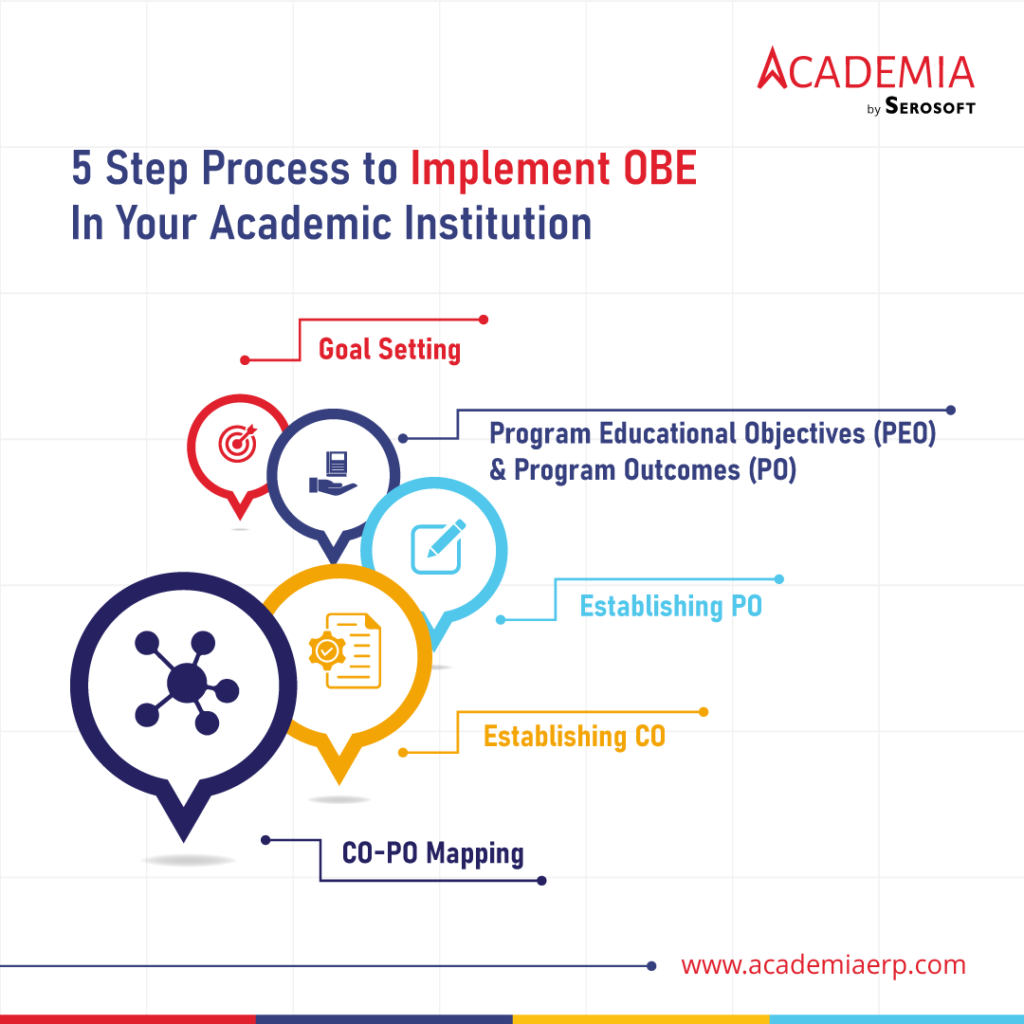
Outcome-Based Education (OBE): Complete Guide

The traditional education system, which prioritizes high scores over practical knowledge and skill acquisition, is becoming increasingly outdated. This approach is contributing to the growing problem of unemployment, as students are not being adequately prepared for the workforce. To address this issue, educational institutions must adopt an Outcome-Based Education (OBE) system, a modern approach that emphasizes actual learning outcomes rather than mere grades.

Understanding Outcome-Based Education

Outcome-Based Education (OBE) is a student-centric approach that focuses on the results of the learning process. In OBE, students are given clear objectives and are regularly evaluated on their progress towards meeting these goals. Personalized feedback is provided to help students understand how well they are achieving the desired outcomes. The primary aim of OBE is to establish clear expectations for both teachers and students regarding the skills, knowledge, and attitudes that students must acquire.

Transparency is a cornerstone of OBE. Unlike traditional systems that use curve grading, OBE requires students to meet specific standards to graduate. This allows educators the freedom to experiment with various teaching methodologies that best facilitate student learning.

Traditional Education System: A Comparison

The traditional education system, while once effective, now appears rigid and outdated. Originally designed to advance national progress, it now emphasizes rote learning and high grades over practical knowledge and skill development. While this system includes beneficial extracurricular activities that can boost students’ self-esteem and confidence, it primarily focuses on academic performance rather than real-world application of knowledge.

In contrast, OBE seeks to transform education into a flexible and adaptive system. It prioritizes practical skills and competencies over memorization, aiming to prepare students for real-world challenges.

Outcome-Based Education vs. Traditional Education

When comparing Outcome-Based Education with the traditional education system, several key differences emerge. OBE emphasizes mastering specific outcomes that are deemed essential by the community for adult life. It shifts the focus from standardized school provisions to an individualized learning approach that highlights measurable standards and student development.

OBE prioritizes the development of critical thinking and competencies over the ability to memorize facts. This system uses assessments of student performance to gauge success, rather than relying on class averages or the performance of top students. This ensures a more holistic development of students, equipping them with the skills necessary for their future careers.

Academia ERP and Outcome-Based Education

Academia ERP is a comprehensive cloud-based educational system that integrates Student Information System (SIS) and many other systems to support Outcome-Based Education. This framework is designed to help institutions incorporate modern learning concepts into their daily operations, available on both web and mobile platforms.

Click here to learn more about OBE in Academia.

Academia ERP’s mission is to enhance the educational experience by making it more engaging and effective. The solution helps institutions fully digitize their processes, simplifying operations and ensuring a smooth implementation of OBE. Academia ERP’s facilitates the management and execution of OBE, helping educators create a positive and productive learning environment.

By adopting systems like Academia ERP, educational institutions can transition from traditional methods to a more effective OBE approach, better-preparing students for the demands of the modern world.

Streamlining Admissions: Student Enrollment Software Solutions for African Universities

Introduction

In today’s fast-paced educational landscape, African universities face numerous challenges in managing the admission process. From handling a large volume of applications to ensuring a smooth enrollment experience for students, an efficient and comprehensive student enrollment software solution is paramount. Academia ERP by Serosoft stands out as a transformative tool that can revolutionize the admission process for African universities.

1. Efficient Application Management

Managing thousands of applications manually can be overwhelming and prone to errors. Academia ERP provides a streamlined application management system that allows universities to handle and process applications efficiently.

How Academia ERP Helps:

  • Automates Data Collection and Organization: By digitizing the application process, Academia ERP ensures that all application data is collected in a standardized format, reducing discrepancies and errors.
  • Facilitates Tracking and Management: University staff can easily monitor the status of each application, ensuring that every application is noticed and completed.
  • Reduces Administrative Workload: By automating repetitive tasks, staff can focus on more strategic activities, improving overall efficiency.

2. Simplified Document Handling

The submission and verification of documents are crucial steps in the admission process. Handling these manually can be cumbersome and inefficient.

How Academia ERP Helps:

  • Digital Submission Platform: Applicants can upload their documents directly to the system, eliminating the need for physical submissions and reducing paperwork.
  • Secure Storage and Easy Retrieval: Documents are securely stored in a centralized digital repository, making it easy for staff to access and review them as needed.
  • Automated Verification Process: The system can automatically verify specific document criteria, such as completeness and format, streamlining the verification process.

3. Enhanced Communication with Applicants

Effective communication keeps applicants informed and engaged throughout the admission process.

How Academia ERP Helps:

  • Automated Communication Tools: Academia ERP can send automated emails and SMS updates to applicants, informing them about their application status.
  • Real-Time Updates: Applicants receive instant notifications about changes or updates to their application, reducing uncertainty and anxiety.
  • Centralized Query Platform: Applicants can easily submit queries and receive responses through a single platform, ensuring consistent and timely communication.

4. Data-Driven Decision Making

Making informed decisions based on accurate data is vital for a successful admission process. Academia ERP offers robust data analytics and reporting features.

How Academia ERP Helps:

  • Detailed Reports: The system generates comprehensive reports on application trends, helping universities understand their applicant pool and make data-driven decisions.
  • Candidate Identification: By analyzing application data, universities can identify the most suitable candidates based on predefined criteria, improving the quality of admissions.
  • Strategic Insights: The data insights from Academia ERP can inform future admission strategies, helping universities attract and enroll the best students.

5. Seamless Integration with Other Systems

Universities often use multiple systems for different functions. Ensuring seamless integration between these systems is crucial for a smooth workflow.

How Academia ERP Helps:

  • Easy Integration: Academia ERP can integrate with other university systems such as finance, HR, and learning management, ensuring a unified operational environment.
  • Data Sharing: The system facilitates seamless data sharing across different departments, reducing data silos and improving coordination.
  • Cohesive Operations: By integrating various functions, the university can ensure a more cohesive and efficient operational workflow, enhancing overall productivity.

6. Improved Applicant Experience

A smooth and user-friendly application process enhances the overall experience for applicants, increasing the likelihood of them choosing your university.

How Academia ERP Helps:

  • Intuitive Application Portal: The online application portal is designed to be user-friendly, with clear instructions and guidance to help applicants navigate the process.
  • Simplified Application Process: The system simplifies the application process, reducing the steps and time required to complete an application.
  • Real-Time Tracking: Applicants can track their application status in real-time, providing transparency and reducing anxiety.

7. Scalability and Customization

As universities grow, their needs and requirements evolve. Academia ERP is designed to scale and adapt to these changes.

How Academia ERP Helps:

  • Scalable Solutions: The system can accommodate increasing applications and users, ensuring it remains effective as the university grows.
  • Customizable Features: Academia ERP can be customized to meet each institution’s specific needs and preferences, ensuring it aligns with their unique processes and goals.
  • Future-Proofing: By providing scalable and customizable solutions, Academia ERP ensures that the system remains relevant and effective over time, adapting to changing needs and technological advancements.

Read the Case study to know further- https://www.academiaerp.com/case-studies/case-study-false-bay-college-muizenberg-south-africa/

Conclusion

Streamlining admissions is crucial for African universities aiming to enhance their operational efficiency and provide a better experience for applicants. Academia ERP by Serosoft offers a comprehensive solution that addresses every aspect of the admission process, from application management to data-driven decision-making. By leveraging Academia ERP, universities can ensure a smoother, more efficient, and more successful admission process, ultimately attracting and enrolling the best students.

Integration of AI in Education: Transforming with Academia ERP/SIS

Artificial Intelligence (AI) is fundamentally reshaping the landscape of education by integrating into Academic Enterprise Resource Planning (ERP) and Student Information Systems (SIS). These systems serve as the backbone of educational institutions, managing student records, schedules, curriculum planning, and more. 


The Rise of Artificial Intelligence in Education

Artificial Intelligence, with its ability to analyze vast amounts of data and make intelligent decisions, is reshaping industries globally. The AI market is projected to grow at an impressive compound annual growth rate (CAGR) of 37.3% from 2023 to 2030, underscoring its pivotal role in driving innovation and economic growth across sectors. According to PWC, AI is expected to contribute a staggering $15.7 trillion to the global economy by 2030, highlighting its potential to transform not only businesses but also educational institutions.


Here’s how AI is revolutionizing academia through ERP/SIS integration:

Here’s how AI is revolutionizing academia through ERP/SIS integration:

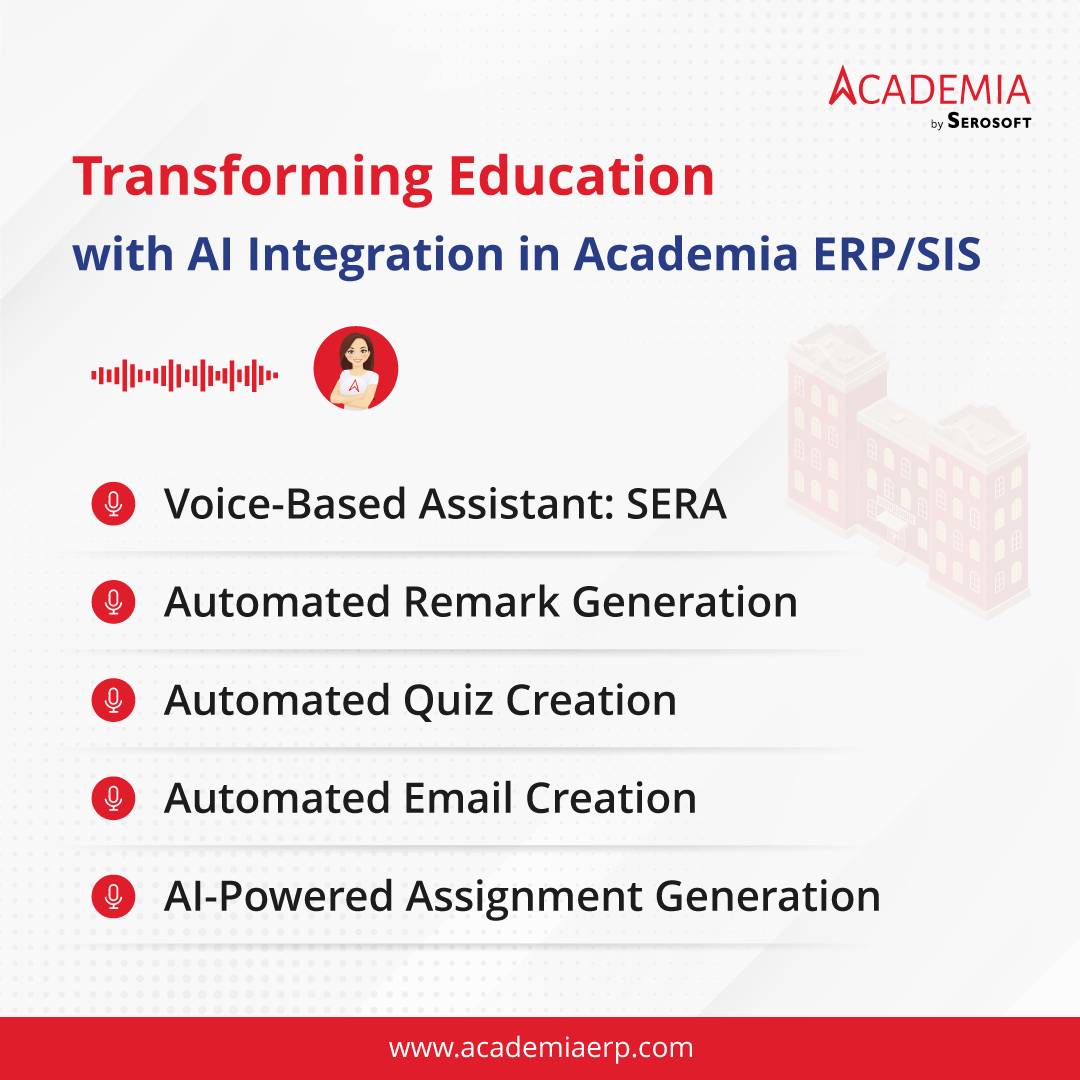
Voice-Based Assistant: SERA

One of the most innovative applications of AI in academia is the development of voice-based assistants like SERA (Student Educational Resource Assistant). SERA assists students by providing information on courses, schedules, deadlines, and study resources through natural language interaction. This AI-powered assistant enhances accessibility and supports personalized learning experiences tailored to individual student needs.


Automated Remark Generation

AI algorithms analyze student performance data and generate personalized remarks for assignments and assessments. This not only saves educators time but also provides students with timely, specific feedback to enhance their learning and academic growth. Automated remark generation fosters a supportive learning environment focused on continuous improvement.


Automated Quiz Creation

AI-enabled systems dynamically generate quizzes and tests based on student performance data and learning objectives. These adaptive assessments can adjust to each student’s pace and comprehension level, ensuring that testing is both challenging and aligned with curriculum standards. Automated quiz creation allows educators to spend less time on test preparation and more time analyzing student progress.


Automated Email Creation

AI streamlines administrative tasks such as sending reminders, notifications, and announcements to students and parents. Using natural language processing (NLP) algorithms, AI systems generate personalized emails that are contextually relevant and timely. This automation improves communication efficiency within educational institutions, keeping stakeholders informed and engaged.


AI-Powered Assignment Generation

AI algorithms analyze educational content, student performance data, and learning objectives to generate assignments that are personalized to each student’s academic level and interests. These AI-generated assignments encourage critical thinking, creativity, and problem-solving skills, promoting active learning and knowledge retention. Educators can leverage AI to create diverse and engaging assignments that inspire student engagement.


The Benefits of AI-Personalized Learning Experiences

The integration of AI into EdTech offers numerous benefits that enhance the overall educational experience for both students and educators:

  • Personalization: AI enables personalized learning pathways based on individual student strengths, weaknesses, and learning preferences, fostering a more engaging and effective learning experience.
  • Adaptability: AI-powered systems can adapt in real time to student progress and performance, providing targeted interventions and support where needed.
  • Efficiency: Automation of routine administrative tasks frees up educators’ time, allowing them to focus on teaching and student interaction.
  • Data-Driven Insights: AI analytics provide educators with valuable insights into student learning patterns and trends, enabling data-driven decision-making to optimize educational strategies.


Future Directions and Challenges

As AI continues to evolve, its role in EdTech is poised to expand further. Future developments may include more sophisticated AI algorithms for adaptive learning, virtual tutoring systems, and AI-driven curriculum personalization. However, challenges such as data privacy concerns, equity in access to AI tools, and the need for educator training in AI integration remain significant areas of consideration for educational institutions worldwide.

Conclusion

In conclusion, AI represents a paradigm shift in EdTech, offering unprecedented opportunities to enhance personalized learning experiences and transform educational outcomes. The integration of AI into academia’s ERP/SIS systems is paving the way for a more inclusive, adaptive, and effective education system. Embracing AI in EdTech is not just about keeping pace with technological innovation but about empowering educators and students to thrive in a digitally-driven future. As AI technology continues to advance, its potential to revolutionize education for learners of all ages and backgrounds remains limitless.

Artificial intelligence (AI) holds immense promise for transforming educational technology and reshaping traditional teaching methodologies.

The Current Educational Landscape

Recent findings by the World Economic Forum (WEF) reveal that teachers often work over fifty hours a week, with less than half of that time spent interacting directly with students. Concurrently, a study by Gradient Learning indicates that 50% of students feel disengaged with their schoolwork. AI stands poised to address these challenges, offering solutions that benefit educators and learners through personalized learning experiences and predictive analytics. Notable AI-driven platforms like Thinkster Math, Jill Watson, Nuance, and Congii are already making strides in this domain.


Transforming Assessments

Traditional assessments often focus on rote memorization rather than true understanding and application of knowledge. This approach must include critical learning aspects, such as problem-solving and analytical thinking. Generative AI (GenAI) has the potential to revolutionize assessments by enabling interactive, conversational evaluations. Through these AI-powered interactions, students can be assessed on their problem-solving abilities, depth of knowledge, and domain-specific skills, all while ensuring objective and fair evaluation.


Personalized AI Mentorship

AI can facilitate personalized learning journeys, encouraging critical thinking and offering proactive support. AI mentors are available around the clock, providing individualized tutoring that combines academic instruction with personalized guidance. This continuous availability allows educators to enhance student learning effectively and engage a broader range of students, making education more inclusive and captivating.


Advancing Hybrid Learning

Hybrid learning blends digital and physical learning environments, is becoming increasingly prevalent. AI can ease the transition to hybrid learning by analyzing learner data to create customized educational paths, predict academic outcomes, and provide real-time feedback. For example, a student might attend traditional classes for certain subjects while simultaneously pursuing online certifications in areas like graphic design. This personalized approach not only caters to individual learning needs but also enhances employability by equipping students with marketable skills.


Remote Exam Supervision

AI is also revolutionizing the way exams are conducted, particularly in remote settings. Advanced AI solutions enable remote proctoring, ensuring a secure testing environment without the need for students to be physically present at a specific location. This technology monitors exams for any suspicious behavior, thereby maintaining the integrity of the testing process.


Steps for Implementing AI in Education

To effectively implement AI in educational settings, it is essential to identify specific needs that AI can address, such as enhancing personalized instruction or streamlining administrative tasks. Educators should start small, integrating AI technologies that directly support their educational goals and gradually expanding as they become more comfortable with the technology. Professional development workshops and collaboration with AI experts can facilitate this transition.


Academia ERP/SIS Powered by AI: Key Enhancements

  • Voice-Based Assistants: SERA
    • Provides instant answers to student and educator queries.
    • Facilitates administrative tasks, improving efficiency.
  • Automated Remark Generation
    • Saves teachers valuable time.
    • Creates personalized feedback for student assignments.
  • Automated Quiz Creation
    • Designs diverse and adaptive assessments.
    • Caters to individual student needs for more effective learning.
  • Automated Email Creation
    • Maintains timely and effective communication.
    • Ensures prompt sharing of important information between teachers and students.
  • AI-Powered Assignment Generation
    • Tailors homework and projects to each student’s learning pace and style.
    • Fosters a more engaging and effective educational experience.


Challenges and Considerations

Implementing AI in education comes with its own set of challenges, including technological hurdles, concerns about data privacy, and ensuring equitable access to technology. Educators require ongoing support and training to integrate AI systems successfully. It’s also important to address issues like algorithmic bias and to ensure transparency and fairness in AI applications. Additionally, maintaining a balance between technological innovation and the essential human element in education is crucial. Open discussions about the potential and limitations of AI can help alleviate concerns and create an environment where technology enhances traditional teaching methods.


By taking measured, informed steps towards AI adoption, educators can harness its benefits while mitigating potential drawbacks, ensuring that AI serves as a valuable tool in enriching the educational experience rather than overshadowing it.


Partner with us & let’s grow together

Implementing AI in education offers significant opportunities for enhancing operational efficiency, improving teaching quality, and creating dynamic, personalized learning environments. Educators benefit from ongoing support and training to effectively integrate AI systems, ensuring transparency and fairness in AI applications. Balancing technological innovation with the essential human element in education is crucial. Open discussions about AI’s potential can create an environment where technology enhances traditional teaching methods. By taking informed steps towards AI adoption, educators can harness its benefits, enriching the educational experience. Businesses partnering with Academia ERP gain access to cutting-edge AI technologies that streamline operations, reduce costs, and improve academic outcomes. These partnerships can lead to innovative solutions that enhance both educational institutions and business ventures, driving mutual growth and success.

Embracing Diversity, Equity, and Inclusion in Education (DEI): A Path to Holistic Growth

Diversity, Inclusion, and Equity (DEI) principles have become more relevant in today’s increasingly interconnected world. These universal values resonate with the fundamental belief that everyone deserves respect and the opportunity to thrive, irrespective of their background, identity, or circumstances. Aligning with the United Nations Sustainable Development Goals (SDGs), particularly Goal 4 (Quality Education) and Goal 10 (Reduced Inequalities), DEI initiatives play a pivotal role in fostering inclusive and equitable learning environments.


Let’s explore how DEI can transform educational environments and why it is crucial for students’ holistic development.


Universal Values: Respect for All Students

Respecting and valuing every student is a cornerstone of DEI. It involves recognizing the unique experiences and perspectives that each student brings to the table. When we honor these differences, we create a more dynamic and enriching learning environment. Respect is not just about tolerance; it’s about genuine appreciation and acceptance of diversity in all its forms.

For example, universities incorporate cosmopolitan meals into their dining options, demonstrating respect for diverse cultural backgrounds. By offering a variety of foods from different cultures, they not only cater to the dietary needs of international students but also expose all students to global culinary traditions. This simple yet profound gesture fosters a sense of belonging and mutual respect among students.


Creating Inclusive Environments

An inclusive environment is one where every student feels safe, supported, and valued. Such an atmosphere is essential for effective education as it allows students to focus on learning without the distraction of feeling marginalized or excluded. Inclusive environments are built on policies and practices that promote participation, representation, and equity.


For instance, educational institutions can adopt inclusive teaching strategies that cater to different learning styles and needs. This could involve providing materials in multiple formats, implementing collaborative learning activities, and ensuring that classroom discussions reflect diverse viewpoints. By doing so, educators create a space where all students can engage meaningfully and contribute their best.


Benefits of DEI


Enhanced Learning Outcomes

Research has shown that diverse and inclusive classrooms enhance critical thinking, problem-solving skills, and empathy among students. When exposed to various perspectives, students learn to approach problems more creatively and develop a deeper understanding of complex issues. This benefits their academic performance and prepares them for future challenges.


Preparing for a Diverse World

Today’s students will enter a globalized, multicultural workforce. Learning in diverse environments equips them with the skills and attitudes to navigate and succeed in such settings. Exposure to different cultures, ideas, and ways of thinking fosters adaptability, cultural competence, and practical communication skills – highly valued qualities in the modern workplace.


Broader Context of Educational Equity


Equitable Education

DEI is fundamentally about ensuring that all students have access to high-quality education and the opportunity to succeed. This means addressing systemic barriers and disparities that can hinder the educational progress of marginalized groups. Equitable education policies might include financial aid programs, mentorship opportunities, and targeted support services to help all students achieve their full potential.


Holistic Development

Beyond academic success, DEI contributes to the holistic development of students. It nurtures their social and emotional well-being, fostering a sense of belonging and community. When students feel seen and valued, they are more likely to develop confidence, resilience, and a positive self-image. These attributes are crucial for their overall growth and future success.


How Academia ERP Supports DEI

Modern educational institutions are leveraging technology to support DEI initiatives effectively. Academia ERP is a prime example of a solution designed to foster inclusivity and equity in academia through various features:


1. Gender Categories:

The ERP/SIS system includes many gender categories in student forms beyond the traditional binary options. This ensures that all students, regardless of their gender identity, feel recognized and respected.


2. Inclusive Admissions Process:

Academia ERP/SIS facilitates an inclusive admissions process by allowing institutions to categorize and admit students based on various criteria, such as socio-economic background, race, ethnicity, etc. This helps promote diversity and ensure that underrepresented groups have access to educational opportunities.

3. Customizable Reporting and Analytics:

The system offers robust reporting and analytics tools that help institutions monitor DEI metrics. This data-driven approach allows for continuous improvement of DEI strategies, ensuring that institutions remain committed to equity and inclusion.


4. Support for Diverse Learning Needs by Dynamic Assessment Scheme:

Academia ERP can be tailored to support students with different learning needs by integrating assistive technologies and dynamic assessment schemes. This ensures that all students receive the support they need to succeed academically.

5. Enhanced Communication Channels:

The Academia ERP system provides multiple communication channels, including multilingual support at some places, to engage with students and parents from diverse backgrounds effectively. This fosters better understanding and collaboration within the educational community.

Explore more about the Academia ERP/SIS here.

Conclusion

Embracing Diversity, Inclusion, and Equity in education is not just a moral imperative; it is a strategic advantage that benefits everyone. Although certain governments, courts & federal states share differing opinions, reflected in the decline of DEI in some higher education campuses, by respecting and valuing all students, creating inclusive environments, and promoting equitable education, we prepare our students to thrive in a diverse world. The example of cosmopolitan meals in universities illustrates how simple actions can make a significant impact in fostering inclusivity and respect. Ultimately, DEI enriches the educational experience and contributes to the holistic development of every student, paving the way for a more just and equitable society.


Student Attendance Management Systems: From Manual to Digital Transformation in Institutions

In today’s fast-paced educational landscape, having an efficient student attendance management system is vital for institutions and academic institutions. This article highlights the significance of such systems and explores their various facets. By understanding their concept, importance, benefits, and implementation and examining case studies, we can appreciate how a robust attendance management system can enhance the overall educational experience.

Understanding the Concept of the Student Attendance Management System

A student attendance management system is a comprehensive set of tools and processes used by institutions to record, monitor, and manage student attendance. These systems enable institutions to track student presence or absence, identify patterns, and take appropriate actions to ensure regular attendance. Typically, they include software solutions, hardware devices, and communication channels to streamline the attendance process.

With the growing emphasis on student attendance in educational institutions, the need for effective attendance management systems has become crucial. These systems simplify the process of recording attendance and provide valuable insights into attendance patterns and trends. By leveraging technology, institutions can ensure consistent student attendance and address any attendance-related issues proactively.

Definition of Student Attendance Management System

A student attendance management system is a centralized mechanism that captures, stores and analyzes attendance data. It uses technology to automate attendance recording, generate reports, and facilitate communication among institutions, parents, and students.

By centralizing attendance data, institutions can easily access and analyze attendance records, enabling data-driven decisions to improve attendance rates. Additionally, these systems promote transparency and accountability by providing real-time attendance information to parents and students.

Key Components of an Effective Attendance Management System

An effective attendance management system includes several key components that work together seamlessly:

  • Attendance Recording: Utilizing biometric devices, ID cards, mobile applications, or QR codes to record student attendance accurately. Biometric devices, such as fingerprint scanners or facial recognition systems, provide a secure and reliable method of recording attendance. ID cards with embedded RFID technology can automatically track student presence. Mobile applications offer convenience and flexibility, allowing students to check in using their smartphones.
  • Data Management: Storing attendance data in a secure and accessible database for future reference and analysis. Effective data management ensures comprehensive attendance records. Attendance data should be securely stored in a centralized database, providing easy access and retrieval. By organizing the data, institutions can analyze attendance patterns over time and identify areas that require improvement.
  • Automated Notifications: Send computerised notifications to parents or guardians when a student is absent without prior notice. Automated notifications keep parents and guardians informed about their child’s attendance. When a student is absent without prior notice, the system can automatically send messages via email, SMS, or mobile app alerts, ensuring parents are aware and can take appropriate action.
  • Reporting and Analytics: Generating comprehensive reports and analytics to identify attendance trends, patterns, and areas requiring improvement. Reporting and analytics provide valuable insights into attendance trends and patterns. Institutions can generate reports highlighting attendance rates, late arrivals, and absences. Analyzing this data helps institutions identify recurring absences or specific periods of low attendance and take proactive measures to address them.
  • Integration with Existing Systems: Seamlessly integrating with Institution management systems, timetables, and academic platforms for efficient data exchange. Integration with existing systems streamlines the attendance management process. By seamlessly exchanging data between different systems, Institutions can eliminate manual data entry and reduce administrative burdens, ensuring that attendance data is always up-to-date and accurate.
  • Communication Channels: Establish effective communication channels between institutions, parents, and students for easy dissemination of attendance-related information. Effective communication channels, such as parent portals, mobile apps, or SMS notifications, ensure that parents and students receive timely updates regarding attendance, fostering a collaborative approach toward improving attendance.

The Importance of Student Attendance in Education

Student attendance is crucial in the overall education process. Regular attendance benefits students, teachers, and the educational institution as a whole. When students attend classes consistently, they fully immerse themselves in the learning experience. Each day brings new knowledge and discoveries that contribute to their intellectual growth. By being present, students can actively engage with the material, ask questions, and participate in discussions.

Impact of Regular Attendance on Academic Performance

Research consistently shows that students with higher attendance rates tend to perform better academically. Regular attendance ensures that students do not miss out on valuable classroom instruction, discussions, and collaborative activities. It helps build a strong foundation of knowledge and promotes continuous learning.


When students attend classes regularly, they can participate in group projects, presentations, and hands-on activities. These collaborative experiences deepen their understanding of the subject matter and enhance their interpersonal and communication skills. By engaging with peers, students learn to work effectively in teams, solve problems collectively, and appreciate diverse perspectives.


Attendance and Student Engagement

Regular attendance enhances student engagement by fostering a sense of belonging and accountability. When students attend classes regularly, they are more likely to participate in discussions, ask questions, and interact with their peers. This engagement leads to a deeper understanding of the subject matter and promotes a positive learning environment.


Attending classes regularly also allows students to establish meaningful connections with their teachers and classmates, creating a support system within the educational institution. This sense of community contributes to the overall well-being and social development of students. Furthermore, regular attendance instils a sense of accountability in students, developing a strong work ethic and a sense of responsibility towards their education.

 

Benefits of an Effective Student Attendance Management System

An effective student attendance management system offers numerous benefits for Institutions, parents, and students alike:

  • Streamlining Administrative Tasks: Implementing an attendance management system reduces administrative burdens for Institutions. Automated attendance recording and monitoring save time and effort for teachers and staff, eliminating manual paperwork and reducing errors.
  • Enhancing Communication Between Parents and Institutions: Improved communication between parents and Institutions is a key benefit. Real-time notifications and reports keep parents informed about their child’s attendance status, fostering a strong partnership to address attendance issues promptly.
  • Early Identification of Attendance Issues: An attendance management system helps identify attendance issues early. By monitoring trends and generating reports, Institutions can quickly identify students with frequent absences or irregular attendance patterns, allowing for timely intervention and support.

Implementing a Student Attendance Management System

Implementing a student attendance management system requires careful consideration and a systematic approach:

  • Factors to Consider When Choosing a System: Institutions should consider scalability, ease of use, compatibility with existing software and hardware, data security and privacy features, and cost-effectiveness. It is crucial to choose a system that meets the Institution’s unique requirements and aligns with its goals.Steps in Implementing an Attendance Management System:


  • Assessing Needs and Requirements: Identify the specific needs of the Institution in terms of attendance management.
  • Research and Evaluation: Explore different attendance management systems and evaluate them based on compatibility, features, and reviews.
  • Pilot Testing: Implement a small-scale pilot test to evaluate the system’s effectiveness and identify any potential issues.
  • Training and Integration: Train teachers, staff, and administrators on using the system effectively. Integrate the system with existing infrastructure as necessary.
  • Communication and Rollout: Inform parents, students, and the Institution community about the new system, addressing any concerns and ensuring a smooth rollout.
  • Monitoring and Continuous Improvement: Regularly monitor the system’s performance, gather feedback, and make necessary adjustments for optimal functionality.

In conclusion, an effective student attendance management system is essential for Institutions to ensure regular attendance, enhance academic performance, streamline administrative tasks, and promote effective communication with parents. By understanding the concept, importance, benefits, implementation steps, and real-life case studies, educational institutions can make informed decisions to adopt the most suitable attendance management system, fostering a positive and supportive learning environment for students.

Transforming Education in Malaysia: The Impact of Education ERP Software

In the digital age, where technology drives innovation across all sectors, education in Malaysia is embracing the change. The adoption of Education ERP (Enterprise Resource Planning) software is revolutionizing how educational institutions operate, manage resources, and deliver quality education. This article explores the transformative role of Education ERP software in Malaysia’s educational landscape.


The Power of Education ERP Software

Streamlining Administrative Tasks

Education ERP software simplifies a multitude of administrative tasks, enabling educational institutions to manage student data, attendance, and financial records efficiently. By automating these processes, educators and administrators can redirect their efforts toward enhancing educational quality.

Enhancing Communication

Effective communication among students, parents, and teachers is fundamental to a successful educational system. Education ERP software facilitates seamless communication through dedicated portals, instant messaging, and timely alerts, ensuring everyone remains connected and well-informed.

Facilitating Strategic Decision-Making

Education ERP software offers valuable insights and data analytics that support strategic decision-making. By providing a holistic view of institutional performance, enrollment trends, financial health, and academic achievements, the software empowers administrators to make informed decisions. This strategic foresight helps in setting long-term goals, optimizing resource allocation, and enhancing overall institutional effectiveness.

Improving Resource Management

Education ERP software provides tools for managing resources, such as classrooms, equipment, and supplies. This ensures optimal utilization of resources, reduces wastage and helps planners efficiently for future needs.

Supporting Online Learning

Incorporating online learning modules and virtual classrooms, Education ERP software supports blended and remote learning environments. This adaptability is crucial in times of crisis, such as the COVID-19 pandemic, allowing education to continue uninterrupted.

Enhancing Data Security

The software includes robust security features to protect sensitive student and institutional data. With advanced encryption and access controls, Education ERP software ensures that data privacy and security are maintained at all times.

Facilitating Performance Analytics

Education ERP software provides comprehensive analytics and reporting tools. These features enable institutions to track and analyze performance metrics, identify trends, and make data-driven decisions to improve academic outcomes and operational efficiency.

Features of Education ERP Software

Student Information Management

Managing student records, including personal information, academic performance, and attendance, becomes efficient and error-free with the help of a Student Information System (SIS). This ensures that data is consistently accurate and up-to-date.

Timetable and Scheduling

The software’s scheduling features simplify the creation and management of class timetables, exam schedules, and extracurricular activities, making organizational tasks straightforward and efficient.

Financial Management

Education ERP software streamlines financial processes, including budgeting, invoicing, and fee collection. This not only ensures financial transparency but also reduces the risk of manual errors.

Implementation Strategies

Training and Support

Successful implementation of Education ERP software hinges on comprehensive training and continuous support. Ensuring that all users are well-versed in the software’s functionalities is crucial for its practical use.

Customization

Adapting the software to meet the unique needs of each educational institution is essential. Customization ensures that the software aligns perfectly with the institution’s specific requirements and operational processes.

Advantages of Education ERP Software in Malaysia

  • Efficiency: The software streamlines operations, significantly reducing the administrative workload.
  • Accuracy: By eliminating manual errors, the software ensures accurate record-keeping and financial management.
  • Transparency: Enhanced financial transparency is achieved through streamlined financial processes.
  • Improved Communication: The software fosters better communication among all stakeholders, enhancing overall collaboration.

FAQs

What is Education ERP software? Education ERP software is a comprehensive solution designed to help educational institutions efficiently manage a range of administrative and academic tasks. It is often integrated as part of a College Management Solution, University Management System, or Higher Ed Management Solution.

How can Education ERP software benefit my institution? The software can streamline administrative processes, improve communication, and enhance overall efficiency, leading to a superior educational experience.

Is Education ERP software customizable? Yes, most Education ERP software solutions can be tailored to meet the specific needs of an institution, ensuring they address unique operational requirements.

Conclusion

The integration of Education ERP software in Malaysia signifies a significant shift in the educational sector. By alleviating administrative burdens and enhancing communication, this software contributes to a more efficient and transparent educational system.

In an era where adaptability and innovation are critical, Malaysia’s adoption of Education ERP software underscores its commitment to delivering a world-class education. With these technological advancements, the future of education in Malaysia looks promising and bright.

The Role of Data Analytics in Shaping the Future of EdTech: The Power of Academia-Industry Partnerships

In the rapidly evolving landscape of education technology (EdTech), data analytics has emerged as a transformative force, redefining how educators teach and students learn. By harnessing the power of data, EdTech companies can tailor educational experiences to individual needs, optimize learning outcomes, and enhance operational efficiency. Central to maximizing the potential of data analytics in EdTech is the collaboration between EdTech companies and academic institutions. This synergy accelerates innovation and ensures that educational tools are both cutting-edge and pedagogically sound.


Transforming Education Through Data Analytics

Data analytics in EdTech involves systematically analyzing educational data to uncover patterns, gain insights, and make informed decisions. Here are some key ways in which data analytics is reshaping education:


1. Predictive Analytics: Predictive analytics uses historical data to forecast future outcomes. In education, this means predicting student performance, identifying at-risk students, and intervening early to provide necessary support. Such insights can drastically reduce dropout rates and improve overall academic achievement.


2. Strategic Decision-Making Support: Data analytics provides robust support for strategic decision-making at the management level. By analyzing trends, performance metrics, and other vital data points, institutions’ administrators and EdTech companies can make informed decisions regarding curriculum development, resource allocation, and long-term planning. This data-driven approach ensures that strategic initiatives are aligned with actual needs and potential outcomes.


3. Adaptive Learning Technologies: Adaptive learning systems leverage data analytics to adjust the difficulty level of tasks in real time based on student responses. This ensures that learners are consistently challenged at the right level, fostering continuous improvement and mastery of subjects.


4. Enhanced Teacher Support: Data analytics can help teachers gain insights into student progress and areas of struggle. This allows for more targeted instruction and efficient resource allocation, making teaching more effective.


5. Operational Efficiency: Beyond the classroom, data analytics helps in optimizing administrative functions such as enrollment management, resource allocation, and financial planning. Efficient operations support the overall goal of delivering high-quality education.


6. Personalized Learning: Data analytics enables the creation of personalized learning pathways for students. By analyzing data on student performance, learning styles, and preferences, EdTech platforms can offer customized content and recommendations. This individualized approach helps address the unique needs of each student, promoting better engagement and learning outcomes.


The Power of Academia-Industry Partnerships

For EdTech companies, partnering with academic institutions is crucial to fully realizing the benefits of data analytics. These collaborations provide several advantages:


1. Access to Expertise: Academic institutions house educational psychology, pedagogy, and data science experts. Collaborating with these professionals ensures that EdTech solutions are grounded in robust theoretical frameworks and cutting-edge research.


2. Real-world Testing Grounds: Universities, colleges, and institutions offer a diverse and real-world testing environment for EdTech products. Pilot programs and field studies conducted in academic settings provide valuable feedback, allowing companies to refine their products based on actual classroom experiences.


3. Rich Data Sources: Academic partnerships give EdTech companies access to large and diverse datasets. This data is critical for developing and fine-tuning algorithms that drive personalized and adaptive learning technologies.


4. Credibility and Trust: Working with reputable academic institutions enhances the credibility of EdTech companies. This partnership signals to educators and stakeholders that the products are rigorously tested and pedagogically sound, fostering trust and acceptance in the education community.


5. Innovation and Development: Joint research initiatives between academia and industry can lead to groundbreaking innovations. Collaborative projects can explore new frontiers in AI, machine learning, and other technologies, pushing the boundaries of what is possible in education.


6. Professional Development for Educators: Partnerships can also focus on professional development, equipping educators with the skills to use new technologies in the classroom effectively. This ensures that technological advancements translate into meaningful educational improvements.


Conclusion

The integration of data analytics in EdTech holds immense potential to transform education, making it more personalized, effective, and efficient. However, the journey from innovation to implementation is complex and requires combined efforts from industry and academia. By forging strong partnerships, EdTech companies and academic institutions can drive the future of education forward, ensuring that technological advancements translate into tangible benefits for students and educators alike. In this collaborative effort, the ultimate winners are the learners, who receive a more tailored, engaging, and impactful educational experience.

Academia ERP Shines at e-Learning Africa 2024 in Kigali, Rwanda

Kigali, Rwanda – June 2024 – Academia ERP, a leading provider of comprehensive ERP solutions for educational institutions, proudly participated in e-Learning Africa 2024, held from May 29-31, 2024, at the Kigali Convention Centre, Rwanda. The event brought together experts and innovators in the field of e-learning and showcased cutting-edge technologies transforming education across Africa.

Representatives from Academia ERP included Founder & CEO Arpit Badjatya,

Kigali, Rwanda – June 2024 – Academia ERP, a leading provider of comprehensive ERP solutions for educational institutions, proudly participated in e-Learning Africa 2024, held from May 29-31, 2024, at the Kigali Convention Centre, Rwanda. The event brought together experts and innovators in the field of e-learning and showcased cutting-edge technologies transforming education across Africa.

Representatives from Academia ERP included Founder & CEO Arpit Badjatya, Manager of Sales – Sanchit Baweja, and VP of Customer Success – Michele Du Rand. Their presence at the event was met with great appreciation, as they engaged with educators, policymakers, and industry leaders from across the continent. Academia ERP’s products received high praise for their ability to address the unique challenges faced by African educational institutions, demonstrating the company’s deep understanding of the African education market.

A highlight of the event was an insightful session delivered by Arpit Badjatya, titled “Digital Transformation through AI in Education.” In his presentation, Arpit discussed the transformative potential of artificial intelligence in enhancing educational experiences and operational efficiency. His session attracted a large audience and sparked engaging discussions on the future of digital education in Africa.

eLearning Rwanda Event


eLearning Rwanda Event

“We are thrilled to be part of e-Learning Africa 2024 and to have the opportunity to share our expertise and innovations with such a diverse and dynamic audience,” said Arpit Badjatya, Founder & CEO of Academia ERP. “Our commitment to understanding the unique needs of the African education market has enabled us to develop tailored solutions that truly make a difference.”

Academia ERP stands out as one of the few companies from Asia in the IT domain that has extensively researched the African education sector. This deep knowledge allows Academia ERP to provide solutions that are not only technologically advanced but also culturally and contextually relevant. Their participation in e-Learning Africa 2024 underscores their dedication to supporting the digital transformation of education on the continent.

For more information about Academia ERP and its innovative solutions, please visit https://www.academiaerp.com/our-events/

About Academia ERP: Academia by Serosoft is an award-winning, AI-powered, analytics-equipped, flexible, and feature-rich Educational ERP / Student Information System. Tailored for Universities, Colleges, Schools, and Training Institutions, Academia includes 40+ modules and powers 375+ institutions across 28 countries. Serving over 1 million students, Academia is a pioneer in digital transformation in Education.

Contact: 

Marketing Team Academia ERP 

Email: [email protected]

Contact: +91 9993577766

Back to top