Type your keyword below

3 Key Insights into Higher Education in MENA: A Personal Journey

Traversing the terrain of higher education in the Middle East and North Africa (MENA) region reveals many experiences, challenges, and revelations. As a student immersed in this vibrant environment, I’ve garnered profound lessons illuminating the nuances of pursuing tertiary education in MENA. Here, I share three pivotal insights that have profoundly influenced my journey, highlighting the strategic role of Academia ERP/SIS in navigating the intricacies of higher education in the region.

  1. Celebrating Diversity:

At the heart of higher education in MENA lies a rich tapestry of diversity, encompassing myriad cultures, languages, and perspectives. Academia ERP/SIS catalyzes embracing this diversity, fostering a dynamic learning ecosystem where students from diverse backgrounds converge. Academia ERP/SIS nurtures an inclusive environment conducive to cross-cultural exchange and mutual understanding by facilitating seamless communication and collaboration among students and faculty.

  1. Overcoming Challenges:

While higher education in MENA offers immense opportunities for growth and advancement, it is not without its challenges. Here, Academia ERP/SIS emerges as a strategic ally in navigating bureaucratic hurdles, administrative inefficiencies, and resource constraints. Academia ERP/SIS empowers students to overcome obstacles with resilience and determination by streamlining administrative processes, optimizing resource allocation, and enhancing transparency.

  1. Cultivating Innovation:

In an era of rapid technological advancements and evolving societal needs, fostering innovation within higher education institutions is paramount. Academia ERP/SIS plays a pivotal role, providing a platform for nurturing creativity, fostering interdisciplinary collaboration, and incubating entrepreneurial ventures. Through initiatives such as research hubs, innovation labs, and startup incubators, Academia ERP/SIS cultivates a culture of innovation that empowers students to explore new frontiers and drive positive change in their communities.

Higher education in MENA has been characterized by diversity, resilience, and innovation, with Academia ERP/SIS strategically positioned at every step. By celebrating diversity, overcoming challenges, and cultivating innovation, students in the region are equipped to embark on transformative educational journeys that transcend boundaries and shape the future of society. The complexities of higher education in MENA are navigated with strategic support and growth opportunities afforded by Academia ERP/SIS. Learn more with an Academia ERP/SIS live demo.


Nurturing Student Well-being: Leveraging Comprehensive Solutions for Mental Health Support

In the dynamic landscape of academia, the welfare of students stands as a cornerstone for sustainable growth and success. Amidst the rigors of academic life, it’s imperative to acknowledge the pivotal role mental health plays in shaping students’ experiences. Enter comprehensive solutions poised to champion student mental health through innovative support mechanisms and streamlined processes.

Acknowledging the Significance of Mental Health Support

The significance of mental health support within educational institutions cannot be overstated. As students navigate many academic and personal challenges, the need for robust support systems becomes increasingly apparent. These solutions step into this arena as beacons of support, offering a multifaceted approach to effectively address students’ mental health concerns.

Empowering Student Well-being through Innovative Solutions

These solutions stand as catalysts for fostering student well-being by embedding features tailored to address mental health needs seamlessly. Through intuitive interfaces, students access resources ranging from counseling services to self-care strategies aimed at nurturing holistic growth and resilience.

Fostering a Supportive Academic Ecosystem

At the heart of these solutions lies the mission to cultivate a nurturing academic environment where students feel empowered and supported. By facilitating seamless communication channels between students, faculty, and support services, they foster a sense of belonging and solidarity. Moreover, by streamlining administrative processes, they alleviate unnecessary stressors, enabling students to prioritize their well-being effectively.

Navigating the Balancing Act: Tips for Harmonizing Work and Studies

The realm of university life demands adept navigation of diverse responsibilities, including academic pursuits and professional commitments. To thrive amidst this balancing act, students can leverage these solutions as strategic allies.

Harnessing Time Management Tools

These solutions equip students with robust time management tools, enabling them to orchestrate their schedules with precision. From personalized calendars to task management features, students can optimize their time allocation, effectively balancing academic rigor with work obligations.

Embracing a Culture of Support

Beyond time management, these solutions foster a culture of support, encouraging students to seek assistance whenever needed. Whether it’s accessing academic resources or reaching out to counselors for guidance, the platforms serve as gateways to holistic support, ensuring students feel empowered to navigate challenges with resilience and determination.

In summation, comprehensive solutions emerge not only as technological aids but as catalysts for holistic student development. By championing mental health support and offering strategic tools for balancing work and studies, they pave the way for a transformative educational journey characterized by growth, resilience, and well-being.

How Technology Helps Address the Student Debt Crisis

“Debts are like cobwebs: easy to get into, but difficult to get out of.”

One issue that stands out starkly in higher education is the mounting burden of student debt. According to recent reports from the Federal Reserve in the USA, student loan debt has exceeded a staggering $1.7 trillion, with the average college student carrying a weighty $30,000 debt load. This financial strain impacts individual students and poses broader societal challenges. However, amidst this crisis, technology emerges as a powerful tool with the potential to alleviate the burden of student debt and foster a more equitable educational landscape.

Optimizing Resource Allocation:

Modern Student Information Systems (SIS) offer invaluable insights into utilizing resources within educational institutions, ranging from faculty time to classroom and laboratory space. By leveraging these insights, institutions can optimize resource allocation, potentially reducing the overall cost of education. 

Through platforms like AcademiaERP, comprehensive charts and dashboards provide detailed analyses of resource utilization, enabling institutions to identify and address inefficiencies proactively. By maximizing resource utilization, educational institutions can make education more affordable, thus diminishing the need for students to resort to borrowing.

Early Identification and Support of At-Risk Students:

SIS platforms are equipped with tools for tracking student performance and identifying at-risk students. Leveraging data analytics, educators can provide targeted academic support to struggling students, such as tutoring or counseling, increasing their likelihood of academic success. By reducing dropout rates and improving graduation rates, institutions can mitigate the need for students to incur additional debt due to academic setbacks. 

Institutes can use AcademiaERP’s analytics module to identify at-risk students by analyzing various data points, such as attendance and exam performance, and intervening in a timely manner.

Support for Work-Study Programs and Internships:

Some SIS platforms include modules for managing work-study programs and internships. By facilitating student participation in these programs, institutions enable students to earn income to offset educational expenses while gaining valuable work experience. This reduces reliance on student loans and enhances students’ employability post-graduation. 

AcademiaERP’s Placement modules streamline the process of accessing internship opportunities, providing students with valuable avenues for financial support and career development. Institutes can post internship opportunities and define eligibility criteria, and eligible students can apply for the internship online from the student portal.

Student Advising:

SIS platforms assist students and advisors in planning course schedules more efficiently, ensuring timely graduation and minimizing unnecessary expenses. By optimizing course selection and progression, students can reduce the length of their enrollment and associated costs, thereby mitigating debt accumulation.

Financial Aid Management:

Integration with financial aid systems enables SIS platforms to seamlessly manage student aid applications, disbursements, and eligibility. By streamlining these processes, institutions make it easier for students to access available aid, ensuring efficient allocation of funds. Additionally, increased transparency regarding financial aid status empowers students to make informed decisions, potentially reducing reliance on loans.

Enhanced Communication and Engagement:

SIS systems facilitate communication between institutions and students, providing information about financial literacy resources, scholarship opportunities, and financial aid workshops. By enhancing students’ awareness of available resources, institutions empower them to make sound financial decisions and reduce reliance on loans. 

AcademiaERP’s communication channels enable automated messaging to inform students about events and opportunities related to financial aid, fostering greater engagement and financial literacy.

In conclusion, the student debt crisis in higher education is a multifaceted issue that demands innovative solutions. By harnessing the power of technology, educational institutions can mitigate the burden of student debt and create a more accessible and equitable educational landscape for all. Through optimized resource allocation, early intervention strategies, support for work-study programs, efficient student advising, streamlined financial aid management, and enhanced communication, technology holds the key to a brighter future for students and institutions alike.


Student Information System Transformation: Best Practices for a Seamless Transition

In the ever-evolving landscape of education technology, institutions increasingly recognize the need to replace outdated Student Information Systems (SIS) with more advanced solutions to meet modern-day challenges. Transitioning to a new SIS can be a daunting task. Still, careful planning and implementation can pave the way for improved efficiency, enhanced student experiences, and streamlined administrative processes. Here are some best practices to consider when replacing your Student Information System (SIS):


1. Assess Current Needs and Challenges: Before replacing your SIS, it’s essential to conduct a comprehensive assessment of your institution’s current needs and challenges. Identify pain points in the existing system, such as outdated technology, lack of integration, or inefficient workflows, to determine the specific requirements of your new SIS.


2. Set Clear Objectives and Goals: Establish clear objectives and goals for the replacement project, aligning them with your institution’s strategic priorities. Whether the objectives are improving data accuracy, enhancing reporting capabilities, or facilitating better communication, defining clear objectives will guide the selection and implementation process.


3. Engage Stakeholders: Throughout the process, involve key stakeholders, including administrators, faculty, staff, and IT personnel. Their insights and feedback are invaluable for understanding user requirements, addressing concerns, and ensuring buy-in for the new system.


4. Conduct Thorough Research: Invest time researching and evaluating potential SIS vendors to find the solution that best aligns with your institution’s needs and budget. When deciding, consider factors such as functionality, scalability, ease of use, support services, and vendor reputation.


5. Plan for Data Migration and Integration: Develop a comprehensive data migration plan to ensure a smooth transition from your old SIS to the new system. Verify data accuracy, clean up duplicate or outdated records, and establish protocols for ongoing data maintenance. Additionally, prioritize integration capabilities to connect the new SIS seamlessly with existing systems and third-party applications.


6. Provide Adequate Training and Support: Recognize that transitioning to a new SIS involves a learning curve for users. Offer comprehensive training sessions and resources to help staff and faculty navigate the new system effectively and maximize its capabilities. Additionally, ensure ongoing technical support and assistance to address any issues or challenges that may arise post-implementation.


7. Implement in Phases: To minimize disruption and manage risk, consider implementing the new SIS in phases rather than all at once. Begin with a pilot phase involving a small group of users to test functionality and identify any potential issues before rolling out the system campus-wide.


8. Monitor Progress and Evaluate Performance: Continuously monitor the implementation progress and evaluate the new SIS’s performance against predefined metrics and benchmarks. Solicit user feedback to identify areas for improvement and promptly address any concerns to ensure a successful transition.


By following these best practices, institutions can navigate the process of replacing their Student Information System with confidence and set the stage for enhanced efficiency, productivity, and student success.

At Academia by Serosoft, we empathize with educational institutions’ complexities in managing their student information and are dedicated to offering tailored solutions to address these challenges. Our award-winning Academia ERP/SIS empowers institutions to streamline administrative tasks, enhance data accuracy, and elevate the overall educational journey for students and staff.

Our structured implementation plan is designed to facilitate a seamless transition, we offer-

1. Defined Data Migration Process: Our systematic approach ensures smooth data migration from legacy systems. Our data migration plan is meticulously structured, with clear timelines for each activity and detailed breakdowns of daily sub-activities.


2. Auto-Populated Templates: Simplify data capture and upload with pre-configured templates covering all the operations of an educational institute like admission, examination, fee, program, and courses.


3. Comprehensive Training and Evaluation: We provide thorough training and evaluation processes for end users to maximize system utilization. Our multi-channel training includes traditional classroom training, online training, user manuals, video tutorials, etc.


4. Phased Implementation: This approach enables institutes to launch required modules in stages, enabling early adoption and efficient integration of the SIS System.


5. Separate Staging Environment: Navigate AcademiaERP features seamlessly in a dedicated staging environment without affecting production servers.


6. JIRA Ticketing System: Our ticketing system facilitates swift issue resolution, ensuring uninterrupted operations.


Optimize your institution’s SIS replacement process and leverage Academia SIS for transformative outcomes. Academia can empower your institution’s digital transformation journey.


Digitally Transforming Education in Sri Lanka: Serosoft Partners with 3W Group to Introduce Academia ERP

In a significant stride towards transforming Sri Lanka’s educational landscape, Serosoft, a leading provider of ERP solutions for educational institutions, has joined forces with the 3W Group, a distinguished consultancy firm with over 27 years of regional expertise. This strategic partnership aims to introduce Academia ERP, one of the world’s leading premier education ERP, to educational institutions across Sri Lanka.

A Fusion of Expertise

At the heart of this collaboration lies a shared commitment to innovation and excellence in education. Serosoft brings to the table its robust Academia ERP solution, designed to streamline academic and administrative processes in universities, colleges, and schools. With features such as admissions management, exam automation, fee processing, hostel management, and more, Academia ERP promises to revolutionize how institutions operate and engage with stakeholders.

The 3W Group, with its wealth of experience in consultancy services, complements Serosoft’s technological prowess with strategic guidance and implementation expertise. Together, these two entities are poised to deliver comprehensive solutions that address the evolving needs of Sri Lanka’s educational institutions.

Driving Efficiency and Excellence

One key objective of this partnership is to enhance work efficiency and promote corporate governance within educational institutions. By leveraging Academia ERP’s advanced technology and 3W Group’s strategic insights, institutions in Sri Lanka can expect to optimize their operations, empower their staff, and provide a superior learning experience for students.

A Vision for Transformation

Speaking about the collaboration, Mr. Arpit Badjatya, Founder & CEO at Academia by Serosoft, emphasized the importance of partnerships in delivering value to clients. He stated, “Our partners are selected and certified to ensure smooth implementation of Academia software solutions. With a rich history of trust from educational institutes across 28 countries globally, we have brought forth dynamic yet mature ERP solutions for the past 16 years.”

Mr. Stefan Moraes, Founder and Managing Director of the 3W Group, echoed this sentiment, highlighting the transformative potential of the partnership. He stated, “By combining Serosoft’s advanced technology with our strategic expertise, we are poised to revolutionize the education sector in Sri Lanka. Together, we will empower institutions to achieve their goals and deliver a superior learning experience for students.”

Looking Ahead

As Serosoft and the 3W Group embark on this collaborative journey, they are committed to driving positive change in Sri Lanka’s education sector. By implementing Academia ERP and providing tailored consultancy services, they aim to equip institutions with the tools and knowledge needed to thrive in today’s dynamic educational landscape.

For educational institutions in Sri Lanka seeking to enhance their operations and elevate the learning experience, the partnership between Serosoft and the 3W Group presents a compelling opportunity. By embracing innovation and strategic collaboration, institutions can unlock new possibilities and pave the way for a brighter future in education.

For more information about Serosoft and its ERP solutions, visit Academia ERP.

For inquiries about 3W Consulting, please visit 3W Consulting.

Unlocking the Future: A Comprehensive Blueprint for Digital Transformation in Education

Education is the most powerful tool that we can use to change the world; these are the insightful words of Nelson Mandela.

And we strongly believe that technology is the most powerful tool that can change the world of education.

In the landscape of education, the integration of digital technology has emerged as a powerful catalyst for transformation. The digital revolution in education has brought about unprecedented changes, reshaping the way students learn, educators teach, and institutions operate. In this comprehensive guide, we delve into everything you need to know about digital transformation in education, exploring key concepts, benefits, challenges, and the future of learning.

Understanding Digital Transformation in Education

Digital transformation in education refers to the strategic use of digital technologies to enhance and redefine the teaching and learning experience. It goes beyond the mere adoption of technology and involves a fundamental shift in the educational paradigm, leveraging digital tools to improve efficiency, accessibility, and outcomes.

    Key Components of Digital Transformation

  • Integration of Smart Classrooms
  • Interactive Whiteboards: These tools empower educators to create dynamic, multimedia-rich lessons, fostering engagement and interaction.
  • Digital Content: Smart classrooms leverage a plethora of digital content, including videos, simulations, and e-books, offering a diverse and interactive learning experience.
  • Collaborative Tools: Platforms like Google Workspace and Microsoft Teams facilitate real-time collaboration among students and educators, promoting teamwork and communication skills.
  • Immersive Learning Experiences: AR and VR technologies create realistic and immersive learning experiences, especially in fields such as science, history, and medical education. 

    E-Learning Platforms and Learning Management Systems (LMS)

    • Remote Learning Opportunities: E-learning platforms enable students to access educational resources from the comfort of their homes, providing flexibility in scheduling and reducing geographical constraints.
    • Content Customization: LMS allows educators to tailor content to individual learning styles, providing adaptive learning experiences that cater to diverse student needs.
    • Progress Tracking: These systems offer robust analytics, allowing teachers to monitor student progress, identify learning gaps, and provide timely interventions.
    • Intelligent Tutoring Systems: AI-powered tutoring systems provide real-time feedback and support, offering personalized assistance to students in need.
  • Data Analytics and Learning Analytics 
  • Predictive Analytics: Educational institutions can use predictive analytics to forecast student performance trends, enabling proactive interventions to support struggling students.
  • Personalized Learning Paths: Learning analytics tools help create personalized learning paths, ensuring that each student receives the right level of challenge and support.
  • Continuous Improvement: By analyzing data on teaching methods and content effectiveness, educators can make data-driven decisions to enhance instructional strategies.Enhanced Accessibility
  • Global Reach: Digital transformation breaks down geographical barriers, allowing students to participate in international collaborations, exchange programs, and global learning communities.
  • Inclusive Learning: Accessible design features in digital content and tools accommodate diverse learning needs, fostering inclusivity for students with disabilities.
  • 24/7 Learning: Digital resources provide the flexibility for students to learn at their own pace, anytime and anywhere, accommodating different time zones and personal schedules.Personalized Learning Experiences
  • Adaptive Learning Technologies: Personalized learning platforms use adaptive algorithms to tailor content to the individual needs of each student, ensuring mastery before progressing.
  • Differentiated Instruction: Educators can use digital tools to provide varied learning experiences, catering to different learning styles and addressing the unique needs of each student.
  • Immediate Feedback: Digital assessments and quizzes offer instant feedback, allowing students to track their progress and address misconceptions promptly.
  • Personalized Learning Paths: AI algorithms analyze student performance data to create adaptive learning paths, catering to individual strengths and weaknesses.
  • Virtual Laboratories: VR enables students to conduct experiments in virtual laboratories, providing a safe and cost-effective alternative to traditional hands-on labs.
  • Field Trips in Virtual Spaces: AR and VR can transport students to historical sites, museums, and other locations, enriching the learning experience beyond the classroom.Efficient Administration and Resource Management
  • Paperless Administration: Digital transformation streamlines administrative processes, reducing paperwork and manual tasks, and allowing administrators to focus on strategic initiatives.
  • Resource Optimization: Analytics tools help institutions optimize resource allocation, ensuring that budgets, personnel, and facilities are utilized efficiently.
  • Automated Workflows: Workflow automation in administrative tasks, such as enrollment and grading, reduces turnaround times, enhancing overall operational efficiency.
  • Automated Administrative Tasks: AI automates routine administrative tasks, freeing up time for educators to focus on personalized instruction and mentorship.Monitoring Student Progress through Technology
    Employing technology in education streamlines the tracking of students’ development. By digitizing various assignments, educators can easily assess and compare students’ work, gaining valuable insights into individual performance and identifying areas for improvement.
    Enhancing Outcomes with Precise Data Analytics
    Educational institutions can harness the power of data analytics derived from students’ technological interactions to improve overall outcomes. This analysis provides valuable insights into the specific needs of students and classrooms, acting as a supplementary resource to educators’ professional expertise.
    Fostering Collaboration through Digital Learning
    Digital learning platforms facilitate seamless collaboration among students. Educators can efficiently create and manage groups, and collaborative authoring tools like Google Docs and Edmodo enable teamwork irrespective of geographical distances. Introducing students to these collaborative tools prepares them for future professional environments.
    Future-Focused Curricula for Tomorrow’s Workforce
    To remain relevant in the ever-evolving job market, educational institutions should integrate subjects such as robotics, artificial intelligence, and automation into their curricula. Despite challenges, the digitization of education accelerates curriculum development, ensuring students have access to up-to-date and pertinent content.
    Strengthening Teacher-Parent Partnerships through Digitalization
    Leveraging digital tools enhances communication between teachers and parents, positively impacting students’ academic performance and overall well-being. Automation facilitates the electronic delivery of progress and attendance reports, fostering a more transparent and collaborative relationship between parents and educators.
    Time-Efficient Learning Opportunities
    In areas with limited transportation infrastructure, a digital transformation in education proves invaluable. By offering courses online or through alternative channels like dish TV, students from remote areas can access quality education without the time-consuming commute. Initiatives like UNISA and GetSmarter exemplify how technology transcends geographical constraints, providing educational opportunities globally.

Operational Efficiency in Institutions with Automation

Operational efficiency in institution management can be significantly enhanced through the integration of automation and digitalization, particularly through the implementation of a Student Information System (SIS). By leveraging an SIS alongside other automated processes, institutions can streamline operations and improve overall productivity. Here are some key points and descriptions highlighting how automation, digitalization, and the use of an SIS contribute to operational efficiency:

Streamlined Processes: The integration of an SIS automates various administrative tasks related to student records, such as admissions, registration, and grading. This streamlines processes and reduces manual data entry errors, allowing staff to focus on more critical responsibilities.

Academia ERP/SIS and its 40+ modules- starting from admission,  examination, to placement &  alumni, the entire student life cycle and processes around it can be streamlined immensely through automation. Furthermore, Academia ERP/SIS’s  400+ comprehensive reports & AI-based analytics can give a deep insight & boost to the institute’s ROI.

Improved Communication: An SIS often includes communication features that enable seamless interaction between students, faculty, and administrators. Through built-in messaging systems and notifications, communication becomes more efficient, fostering better collaboration and engagement.

Academia ERP/SIS can help in enhancing communication amongst various publics of an institution in many ways- with Sera, the AI-based voice assistant in the mobile app, push notifications, emails, scheduled messages in-app, text messages, drive,    Academia facilitates real-time sharing of important info and data. 

Data-Driven Decision Making: An SIS collects and organizes vast amounts of student data, providing valuable insights for administrators. By leveraging analytics tools within the SIS, institutions can make data-driven decisions related to student performance, resource allocation, and curriculum planning, leading to more informed and effective strategies.

Academia  ERP/SIS provides an in-depth view & insight into each & every function of the institution with its robust & comprehensive 400+ Reports. Furthermore, Academia has a dedicated Management Login- which gives higher-ups a bird’s eye view of the institute or the group of institutes at a single glance. They can plan the resource allocation & strategize with more accuracy & driven by data.

Enhanced Accessibility: With an SIS, students and faculty have access to important information anytime, anywhere. Online portals and mobile applications provide convenient access to course materials, grades, schedules, and other relevant information, promoting greater accessibility and flexibility.

Academia’s involvement in the development and implementation of SIS ensures that students and faculty can access vital information anytime, anywhere. Through the creation of user-friendly online portals and mobile applications, academia facilitates convenient access to course materials, grades, schedules, and other relevant information, thereby promoting greater accessibility and flexibility for all stakeholders.

Cost Savings: Implementing an SIS reduces the need for manual paperwork and administrative tasks, resulting in cost savings over time. By automating processes such as registration and enrollment, institutions can lower operational expenses and reallocate resources to areas that directly impact student success.

Academia’sAutomation via SIS leads to significant cost savings for institutions. By streamlining processes such as registration and enrollment, the need for manual paperwork and administrative tasks is reduced, resulting in lower operational expenses over time. These cost savings enable institutions to reallocate resources to areas that directly impact student success, enhancing overall efficiency and effectiveness. It gives a significant boost to the ROI, you can even try the ROI calculator – click here.

Scalability and Configurability: An SIS is designed to scale alongside the institution’s growth and evolving needs. As the student population expands or new programs are introduced, the system can accommodate increased workload and complexity, ensuring continued operational efficiency and effectiveness.

Academia’s expertise in SIS ensures that institutions have access to scalable and flexible solutions that can adapt to their evolving needs. As the student population grows or new programs are introduced, the SIS can accommodate increased workload and complexity seamlessly. This scalability and flexibility ensure that operational efficiency is maintained, allowing institutions to continue providing quality education and services regardless of changes in size or scope. Academia is highly configurable with other automation tools like KOHA, Moodle, Tally, etc. that have already been used by the institute.

Compliance and Risk Management: An SIS helps ensure compliance with regulatory requirements and data protection laws. By centralizing student data and implementing robust security measures, institutions can mitigate the risk of data breaches and non-compliance, safeguarding sensitive information and maintaining trust with stakeholders.

Academia ERP provides complete automation with strict compliance – it is VAPT-certified, GDPR compliant, & follows international standards on security & thus trusted by its 350 + clients across 26 countries. 

Digitalization through a Student Information System is instrumental in enhancing operational efficiency in institution management. By streamlining processes, improving communication, harnessing data insights, and ensuring compliance, institutions can optimize their resources, enhance student experiences, and achieve their strategic goals more effectively.


Challenges in Implementing Digital Transformation

  • Digital Divide
  • Access to Devices and Internet: Bridging the digital divide requires addressing disparities in access to devices and reliable internet connections, ensuring all students have equal opportunities for online learning.
  • Digital Literacy: Promoting digital literacy programs helps bridge the gap by equipping students and educators with the necessary skills to navigate the digital landscape effectively.
  • Community Partnerships: Collaborating with community organizations and businesses can provide resources and support to bridge the digital divide in underserved areas.
  • Resistance to Change
  • Professional Development: Investing in comprehensive professional development programs equips educators with the skills and confidence to integrate digital tools into their teaching methods.
  • Change Management Strategies: Implementing effective change management strategies involves transparent communication, involving stakeholders in decision-making, and addressing concerns proactively.
  • Showcasing Success Stories: Highlighting success stories and positive outcomes from digital transformation initiatives can inspire and motivate educators to embrace change.
  • Data Security and Privacy Concerns
  • Compliance with Regulations: Educational institutions must stay informed about data protection regulations and ensure compliance to safeguard student and institutional data.
  • Cybersecurity Training: Providing ongoing cybersecurity training for educators, administrators, and students helps create a culture of awareness and responsibility regarding data security.
  • Secure Infrastructure: Investing in secure infrastructure, including encrypted communication channels and secure servers, protects against potential data breaches.
  • Credential Verification: Blockchain ensures the authenticity of educational credentials, simplifying the verification process for employers and academic institutions.
  • Decentralized Learning Records: Students can have ownership of their learning records on the blockchain, providing a secure and tamper-proof repository for their academic achievements.
  • Reducing Credential Fraud: Blockchain reduces the risk of credential fraud by creating a transparent and traceable record of academic achievements, safeguarding the integrity of educational credentials.

Conclusion

Digital transformation in education is a dynamic and ongoing process that holds the key to unlocking the full potential of learning. By embracing innovative technologies, educators, students, and institutions can create a future where education is accessible, personalized, and equipped to meet the challenges of tomorrow. As we navigate this transformative journey, it is essential to address challenges, foster inclusivity, and continually adapt to the ever-evolving landscape of digital education.

Frequently Asked Questions (FAQs)

  • What is The Future of Learning: Emerging Trends in Digital Transformation?Extensive use of AI – Artificial intelligence, VR – Virtual reality & Blockchain technology for more personalized, enigmatic & simulation-based education is what lies ahead in education automation.
  • How does digital transformation benefit students with diverse learning needs?
    Digital transformation allows for personalized learning experiences, catering to diverse learning needs. Adaptive technologies and multimedia resources support different learning styles, ensuring that every student can thrive.
  • What steps can educational institutions take to overcome the digital divide?
  • To bridge the digital divide, institutions can implement initiatives such as providing subsidized devices, offering internet connectivity solutions, and developing partnerships with technology companies for resource sharing.
  • How can educators integrate digital tools into traditional teaching methods?
  • Educators can undergo professional development to gain proficiency in using digital tools. Integrating these tools gradually, starting with simple applications, and encouraging collaboration among teachers can facilitate a smoother transition.
  • What role does cybersecurity play in digital transformation in education?

    Cybersecurity is crucial to protecting sensitive student and institutional data. Educational institutions must implement robust security measures, conduct regular audits, and educate staff and students about cybersecurity best practices.
    How can institutions ensure the privacy of student data in the era of digital transformation?

    Institutions can ensure privacy by implementing strict data protection policies, obtaining informed consent, and regularly auditing data handling practices. It is essential to stay compliant with data protection regulations and prioritize the security of sensitive information.
    Still, you want to connect: Request Demo now.

Streamlining Operations: Enhancing Efficiency with College Education ERP Software

In the dynamic landscape of higher education, efficiency and streamlined operations are key pillars for success. With the increasing complexities in managing academic institutions, traditional methods often fall short in meeting the demands of modern educational ecosystems. This is where the College Management System (CMS) emerges as a transformative solution, revolutionizing the way colleges and universities manage their operations.

The Need for Efficiency in Higher Education

Operating a college or university involves managing multifaceted tasks, ranging from admissions and student records to faculty management and financial operations. With an ever-growing student population and evolving regulatory requirements, manual processes become cumbersome and prone to errors. These inefficiencies not only impact productivity but also hinder the overall student experience.

College Management System for Digital Transformation

College Management System (Higher Education ERP) offers a comprehensive solution to streamline administrative processes, integrate disparate systems, and provide real-time insights for informed decision-making. By leveraging a centralized platform, institutions can automate routine tasks, optimize resource allocation, and enhance collaboration across departments.

Key Features and Benefits:


    • Unified Data Management: Centralizing student information, academic records, and administrative data eliminates silos and ensures data integrity.
    • Efficient Admissions Process: From application submission to enrollment management, ERP software simplifies and accelerates the admissions process, enhancing prospective student experience.
    • Academic Planning and Scheduling: Dynamic scheduling tools facilitate efficient course planning, allocation of resources, and optimization of classroom utilization.
    • Faculty and Staff Management: Streamlining faculty recruitment, onboarding, and performance evaluation processes improves workforce management and fosters a conducive academic environment.
    • Financial Management: Integrated financial modules enable institutions to manage budgets, track expenses, and streamline procurement processes, ensuring financial sustainability.
    • Student Engagement and Support: ERP systems facilitate personalized communication, academic advising, and support services, enhancing student engagement and retention rates.


The Academia Advantage

Among the myriad of College Management solutions available, Academia’s College Management Solution stands out as a beacon of excellence. With its robust features, user-friendly interface, and scalable architecture, Academia empowers educational institutions to optimize operations, drive innovation, and deliver unparalleled student experiences.

Why Choose Academia?

    • Comprehensive Functionality: Academia offers a comprehensive suite of modules tailored to meet the diverse needs of colleges and universities, ensuring seamless integration and efficient operations.
    • Highly Configurable: With flexible customization options, Academia adapts to the unique requirements of each institution, empowering administrators to tailor the system according to their specific workflows.
    • Scalability and Reliability: Built on cutting-edge technology infrastructure, Academia scales effortlessly to accommodate the evolving needs of institutions, ensuring reliability and performance at scale.
    • Exceptional Support and Training: Academia provides dedicated support services and comprehensive training programs to empower users and maximize the benefits of the ERP system.


Conclusion

In an era defined by digital transformation and evolving educational paradigms, College Management System Software emerges as a catalyst for change, revolutionizing the way institutions manage their operations. Among the plethora of options available, Academia’s College Management Solution stands out as the epitome of excellence, empowering colleges and universities to enhance efficiency, drive innovation, and deliver exceptional student experiences. Embrace the power of ERP software and embark on a journey toward operational excellence in higher education.

Signs Your Education ERP Needs an Upgrade

In the rapidly evolving landscape of education technology, Education Enterprise Resource Planning (ERP) systems play a pivotal role in managing various administrative and academic tasks efficiently. From student enrollment to managing faculty, from handling finances to monitoring academic performance, ERPs streamline operations for educational institutions. However, just like any other technology, ERPs require regular updates to stay relevant and effective. But how can you tell when it’s time for an update? Let’s delve into the factors that signal the need for an education ERP upgrade.

Outdated User Interface: One of the most apparent signs that an education ERP needs updating is an outdated user interface. If the system looks and feels archaic compared to modern software, it may hinder user experience and productivity. A clunky interface can slow down tasks, frustrate users, and deter them from utilizing the ERP to its fullest potential.

Lack of Scalability: As educational institutions grow, so do their data and operational needs. If your current ERP struggles to accommodate increasing volumes of data or users, it’s a clear indication that an update is overdue. A scalable ERP ensures smooth operations even as your institution expands, preventing bottlenecks and performance issues.

Inadequate Integration Capabilities: In today’s interconnected world, seamless integration with other systems and applications is crucial for efficiency. If your ERP lacks compatibility with other essential tools like Learning Management Systems (LMS), library management software, or communication platforms, it may be time for an upgrade. An updated ERP should offer robust integration capabilities to streamline processes and data flow across various systems.

Security Vulnerabilities: With the rising threat of cyber-attacks and data breaches, security is a top priority for educational institutions. An outdated ERP may need more essential security features and patches, leaving sensitive data vulnerable to exploitation. Regular updates ensure that your ERP stays fortified against evolving security threats, safeguarding student and institutional information.

Limited Mobile Accessibility: In today’s mobile-centric world, the ability to access ERP functionalities on the go is indispensable. If your current ERP lacks mobile compatibility or offers limited functionality on mobile devices, it may hinder productivity and accessibility for users who rely on smartphones or tablets. An updated ERP should prioritize mobile responsiveness and offer dedicated mobile apps for enhanced usability.

Inefficient Reporting and Analytics: Data-driven decision-making is integral to improving educational outcomes and operational efficiency. If your ERP lacks robust reporting and analytics capabilities or provides outdated, cumbersome reporting tools, it can impede your institution’s ability to derive insights from data. An updated ERP should offer advanced analytics features, customizable reports, and real-time dashboards to empower administrators and educators with actionable insights.

Poor User Adoption and Satisfaction: Ultimately, the success of an ERP hinges on user adoption and satisfaction. If users express dissatisfaction with the current system due to usability issues, performance bottlenecks, or outdated features, it’s a clear signal that an update is necessary. Engaging stakeholders and soliciting feedback can help identify pain points and inform the decision-making process for ERP updates.

In conclusion, staying abreast of technological advancements and evolving user needs is paramount for ensuring the effectiveness of education ERPs. By recognizing the telltale signs that signal the need for an update, educational institutions can proactively enhance their ERP systems to support their mission of delivering quality education efficiently and effectively. Regular updates not only optimize system performance but also future-proof educational institutions against emerging challenges in the ever-evolving landscape of education technology. Request Demo to understand end to end capabilities of education ERP systems.

Revolutionizing Higher Education: The Student Enrollment Management System

In the ever-evolving landscape of higher education, staying competitive and relevant is key to success. Institutions are constantly seeking innovative solutions to enhance student experiences, streamline administrative processes, and optimize operations. One such solution that has been gaining traction is the Student Enrollment Management System (SEMS).


SEMS is a comprehensive platform designed to revolutionize the way higher education institutions manage student enrollment processes. From admissions to graduation, SEMS offers a holistic approach to student lifecycle management, empowering institutions to make data-driven decisions and enhance student success.

Here are some key benefits and features of SEMS that make it a game-changer for higher education institutions:


Streamlined Admissions Process: SEMS automates and streamlines the admissions process, from application submission to enrollment. This reduces paperwork, eliminates manual errors, and accelerates decision-making, leading to a smoother experience for both students and staff. 


Enhanced Student Engagement: SEMS provides a centralized platform for students to access important information, such as course offerings, academic calendars, and financial aid opportunities. With features like online registration and self-service portals, students can easily manage their academic journey, resulting in higher engagement and satisfaction.


Data-Driven Insights: SEMS collects and analyzes data throughout the student lifecycle, offering valuable insights into enrollment trends, retention rates, and academic performance. Institutions can use this data to identify areas for improvement, implement targeted interventions, and ultimately enhance student success.


Personalized Communication: SEMS allows institutions to communicate with students in a personalized and timely manner. Whether sending reminders about important deadlines or providing academic support resources, institutions can tailor their communications to meet the unique needs of each student, fostering a sense of connection and support.


Integration with Existing Systems: SEMS seamlessly integrates with existing institutional systems, such as learning management systems (LMS) and student information systems (SIS). This ensures data consistency and interoperability, enabling institutions to leverage their existing infrastructure while maximizing the benefits of SEMS.


Scalability and Flexibility: Whether a small college or a large university, SEMS is designed to scale according to the needs of the institution. With customizable features and flexible deployment options, institutions can adapt SEMS to fit their unique requirements and growth trajectory.


Compliance and Security: SEMS prioritizes compliance with data privacy regulations and industry standards. Robust security measures safeguard sensitive student information, ensuring confidentiality and peace of mind for both students and institutions.


In conclusion, the Student Enrollment Management System is a powerful tool for empowering higher education institutions to thrive in today’s competitive landscape. By streamlining processes, enhancing student engagement, and providing actionable insights, SEMS enables institutions to focus on what matters most: student success. As prospective channel partners, embracing SEMS presents an opportunity to revolutionize higher education and make a positive impact on the future of learning.

Unlocking Academic Efficiency: Top 10 Benefits of Implementing a Fee Management System for Education Institutions

In the dynamic landscape of education, efficiency and organization are paramount for institutions to thrive. One such crucial aspect is managing fees seamlessly. Manual fee management processes can be tedious, error-prone, and time-consuming. However, with the advent of Fee Management Systems (FMS), institutions can revolutionize their administrative operations. Let’s delve into the top 10 benefits of implementing an FMS:

Streamlined Fee Collection: An FMS automates the fee collection process, reducing paperwork and manual errors. Parents can conveniently pay fees online, eliminating the need for physical visits to the Institutions.

Enhanced Financial Transparency: Institutions gain real-time insights into their financial data, facilitating better decision-making. With detailed reports and analytics, administrators can effortlessly track fee payments, outstanding dues, and revenue streams.

Time and Cost Savings: By automating repetitive tasks, such as fee calculation and receipt generation, an FMS frees up valuable time for Institution staff. Moreover, it reduces administrative costs associated with manual fee management.

Improved Parental Satisfaction: Parents appreciate the convenience of online fee payments and access to transparent fee-related information. This enhances their satisfaction levels and fosters a positive Institution-parent relationship.

Accurate Record-Keeping: Manual record-keeping is prone to errors and inconsistencies. An FMS maintains accurate records of fee transactions, ensuring compliance with audit requirements and minimizing financial discrepancies.

Customization and Flexibility: Fee structures may vary from one Institution to another. An FMS offers customization options to adapt to diverse fee models, including tuition fees, transportation charges, and extracurricular activity fees.

Automated Reminders and Notifications: Timely reminders and notifications regarding fee payment deadlines can significantly reduce instances of late payments. An FMS sends automated alerts to parents, ensuring timely fee settlements.

Secure Transaction Processing: With robust security measures in place, FMS platforms ensure the confidentiality and integrity of financial transactions. Encryption techniques safeguard sensitive payment information, mitigating the risk of data breaches.

Efficient Fee Reconciliation: Reconciling fee collections with bank statements can be a cumbersome task. An FMS automates this process, reconciling transactions seamlessly and eliminating reconciliation errors.

Scalability and Integration: As institutions grow, their administrative needs evolve. An FMS offers scalability to accommodate increasing student populations and expanding fee structures. Furthermore, integration capabilities enable seamless connectivity with other Institutions’ management systems, enhancing overall operational efficiency.

In conclusion, implementing a Fee Management System is a strategic investment for institutions seeking to streamline administrative processes, enhance financial transparency, and improve parent satisfaction. Among the myriad solutions available, Academia ERP stands out as a probable choice, offering comprehensive features tailored to the unique needs of educational institutions. By harnessing the power of Academia ERP, institutions can embark on a journey towards academic excellence and operational excellence hand in hand.

Affiliated vs Autonomous Colleges: Key Differences Explained

In the landscape of higher education, colleges play a pivotal role in shaping students’ future. However, the structure and governance of these institutions vary significantly, with two prominent models being affiliated and autonomous colleges. Understanding the nuances between these two systems is crucial for educators and students.

As the name suggests, Affiliated colleges are affiliated with a more prominent university or institution. These colleges follow the curriculum, rules, and regulations set by the affiliating university. While this provides a structured framework and ensures uniformity across affiliated colleges, it also limits the autonomy of individual institutions. Decisions regarding curriculum, examinations, and administrative matters are primarily governed by the affiliating university, leaving little room for independent innovation and customization.

On the other hand, autonomous colleges enjoy greater freedom and flexibility in decision-making. These institutions can design their curriculum, conduct examinations, and manage administrative affairs. This autonomy enables them to adapt quickly to changing educational trends, cater to the specific needs of students, and foster a culture of innovation. However, with independence comes responsibility, as autonomous colleges must ensure that their policies and practices adhere to regulatory standards and maintain academic integrity.

The choice between affiliated and autonomous status depends on various factors, including institutional goals, academic priorities, and regulatory requirements. While some colleges opt for affiliation to leverage a prestigious university’s resources and brand value, others seek autonomy to pursue academic excellence and foster a culture of innovation.

Technological advancements are crucial in streamlining administrative processes and enhancing academic outcomes in this dynamic educational landscape. Academia ERP emerges as a comprehensive solution for institutions seeking to automate their operations and achieve efficiency in management. With modules tailored to meet the diverse needs of colleges and universities, Academia ERP offers seamless integration of academic, administrative, and financial functions. From student admissions and fee management to examination scheduling and result processing, Academia ERP simplifies complex tasks and enables institutions to focus on their core mission of education.

In conclusion, the debate between affiliated and autonomous colleges underscores the importance of a balance between structure and autonomy in higher education. While both models have advantages and challenges, the key lies in leveraging technology to enhance operational efficiency and academic excellence. With Academia ERP, institutions can navigate the complexities of modern education and pave the way for a brighter future for students and educators alike. Request a live demo of Academia ERP.


Unveiling the Emergence of College Management Systems and Their Growth

In the dynamic landscape of education, the emergence of College Management Systems (CMS) has revolutionized how academic institutions operate, manage resources, and deliver quality education. CMS has become indispensable for modern-day educational institutions, from streamlining administrative tasks to enhancing communication channels. Let’s delve into the evolution, benefits, and significance of College Management Systems in higher education.

Evolution of College Management Systems:

The evolution of College Management Systems can be traced back to the increasing complexities and challenges educational institutions face in managing administrative tasks, student information, and academic resources. With advancements in technology and the digitization of processes, traditional manual record-keeping and administrative management methods became outdated and inefficient. This paved the way for the development of automated systems that could streamline operations, improve efficiency, and enhance overall institutional effectiveness.

Growth and Adoption of CMS:

Over the years, the adoption of College Management Systems has witnessed exponential growth across educational institutions worldwide. From small-scale colleges to large universities, institutions of all sizes and types have embraced CMS to optimize their operations and provide a seamless experience for students, faculty, and administrative staff. The growing demand for integrated solutions that address diverse needs such as admissions, enrollment management, academic planning, student information management, and financial administration has fueled the expansion of CMS offerings in the market.

Benefits of College Management Systems:

The implementation of College Management Systems offers a myriad of benefits to educational institutions, including:

Enhanced Efficiency: CMS automates routine administrative tasks, reducing manual efforts and saving time and resources.

Improved Communication: CMS facilitates seamless communication among stakeholders, fostering collaboration and engagement within the academic community.

Data Centralization: CMS centralizes student data, academic records, and administrative information, providing easy access and retrieval when needed.

Strategic Decision-Making: CMS provides valuable insights through analytics and reporting tools, empowering institutions to make informed decisions and drive strategic initiatives.

Enhanced Student Experience: CMS enhances the overall student experience by providing access to academic resources, course materials, and support services through online platforms.

Academia ERP: A Leading CMS Solution:

Among the plethora of College Management Systems available in the market, Academia ERP stands out as a premier solution that offers comprehensive functionalities and robust features tailored to the needs of educational institutions. With its user-friendly interface, scalability, and flexibility, Academia ERP streamlines administrative processes, optimizes resource utilization, and enhances institutional performance. From admissions and enrollment management to academic planning and student information management, Academia ERP provides a holistic solution that empowers educational institutions to excel in today’s competitive landscape.

In Conclusion:

As educational institutions continue to adapt to the evolving demands of the digital age, College Management Systems have emerged as indispensable tools for fostering efficiency, innovation, and excellence. With their ability to streamline operations, improve communication, and enhance the overall educational experience, CMS solutions like Academia ERP play a crucial role in driving the growth and success of academic institutions worldwide. Embracing the transformative power of CMS is essential for institutions seeking to thrive in the dynamic landscape of higher education. Request Demo for your college digital transformation.

Expert Insights on Academia from Education Leaders

In the realm of educational technology, Academia ERP stands out as a transformative solution, empowering institutions worldwide to streamline operations, enhance academic standards, and embrace digital transformation. Let’s delve into the firsthand experiences of educationists who have leveraged Academia ERP to drive success within their institutions.

De Montfort University Kazakhstan:

Sunil Ramapura, Lead IT Operations, extols Academia ERP’s diverse modules and multi-currency capabilities, highlighting its role in streamlining processes with seamless integration, which is essential for academic administration. Watch the video here.

SIS Group, Indonesia & Southeast Asia:

Andrew, Director of Operations, enthusiastically shares how Serosoft’s Academia ERP swiftly became the cornerstone of their educational strategy. With a keen focus on data-driven decision-making and unparalleled customer service, Serosoft’s solution has empowered SIS Group to streamline operations and elevate academic standards across the region. Watch the video here.

CECOS College, London:

Aakif Tanveer, Communication Director, shares why they turned to Academia by Serosoft and how it promptly fulfilled the college’s automation needs. Watch the video here.

Arch College of Design, Jaipur:

Archana Surana, Founder & Director, elucidates how digital transformation with Academia, its integration with Learning Management System, and other software proactively assists institute management. Watch the video here.

TSM, Madurai:

Academia ERP has facilitated the digital transformation of processes at TSM. The institute, satisfied with the support provided, has been utilizing Academia for the last four years. Watch the video here.

INIFD, Bhopal:

Punit Surekha, Director of INIFD, shares their experience of shifting all operations to Academia and expresses delight in using the ERP for managing admissions, examinations, fee management, and more. Watch the video here.

VJIM, Hyderabad:

VJIM Hyderabad lauds Academia for aiding in optional-based grade calculation through its robust grading system and other features like a timetable, which are backed by excellent services from Team Serosoft. Watch the video here.

Ghana Technology University, Ghana:

Dr. Asunka, Head of IT Support Services, reflects on his experience with Academia and its impact on improving overall efficiency at GTUC. Watch the video here.

Furthermore, the voices of students and parents echo the positive impact of Academia ERP:

INIFD, Indore:

Students at INIFD express their gratitude for Academia, which aids them in managing attendance, assignments, timetables, and more seamlessly.

Raisoni Group of Institutions, Nagpur:

A delighted student from the Raisoni Group of Institutions shares the benefits provided by Academia in managing data, attendance, and assignments more effortlessly.

VJIM, Hyderabad:

Students at VJIM, Hyderabad, share their experiences using the Academia ERP portal and mobile application, highlighting its convenience and efficiency.

IIHMR University, Rajasthan:

Academia ERP Solution’s dedicated student application receives praise for providing a digitalized experience to effectively manage academic and non-academic tasks.

Swasthya Kalyan College of Physiotherapy, Jaipur:

Both students and parents at Swasthya Kalyan College of Physiotherapy commend Academia Education ERP for its user-friendly interface and comprehensive features.

Check out a complete Youtube playlist for students and parents videos.

These testimonies underscore Academia ERP’s pivotal role in revolutionizing educational administration and fostering success across diverse institutions and regions. As educators continue to embrace technological advancements, Academia remains steadfast in its commitment to driving excellence in education. Learn more with a live demo of Academia.

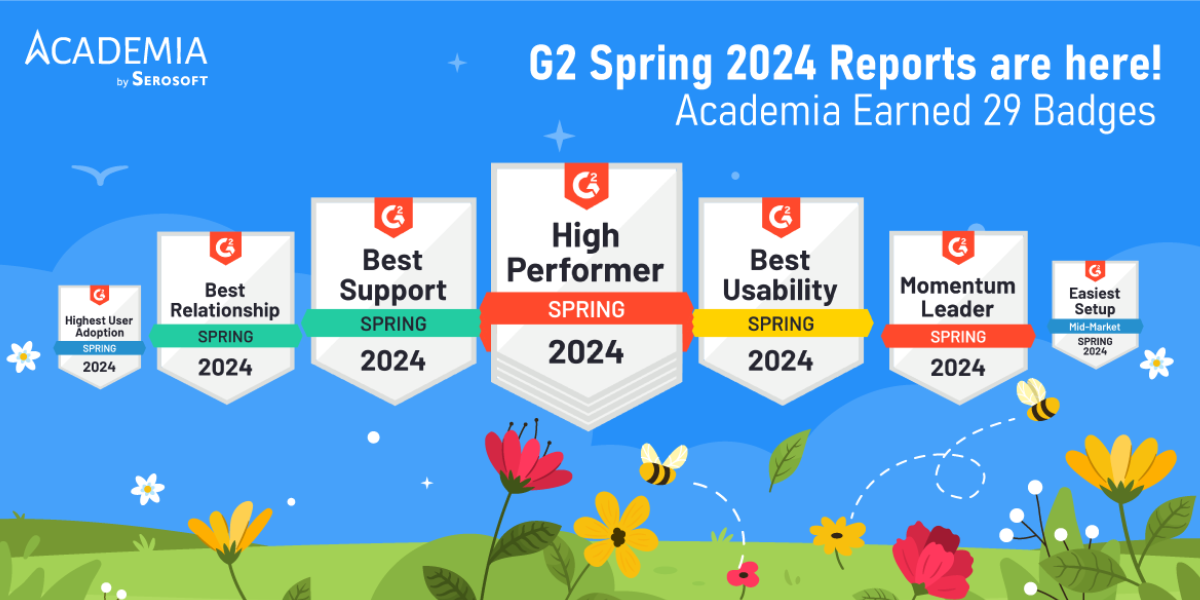
This Spring 2024 – Serosoft Achieves 29 G2 Badges for Excellence in Academic Solutions

In the ever-evolving landscape of Academia ERP/SIS solutions, standing out amidst the competition requires dedication, innovation, and unwavering commitment to customer satisfaction. At Serosoft, we are thrilled to announce a momentous achievement that speaks volumes about our relentless pursuit of excellence. We have proudly earned an outstanding 29 G2 badges, a testament to our dedication to providing unparalleled solutions and exceptional customer service.

Among these prestigious badges are recognitions for High Performance, Best Support, Easiest Setup, Highest User Adoption, Momentum Leader, Best Relationship, and Best Usability, among others. Each badge represents a pillar of our commitment to delivering innovative solutions that empower educational institutions to thrive in today’s dynamic environment.

High Performance: Our solutions are engineered to deliver superior performance, enabling educational institutions to streamline operations and achieve their goals efficiently and effectively.

Best Support: We prioritize customer satisfaction above all else, offering unparalleled support to ensure that our clients receive the assistance they need, when they need it.

Easiest Setup: With user-friendly interfaces and seamless integration processes, we strive to make the implementation of our solutions as smooth and hassle-free as possible.

Highest User Adoption: Our solutions are designed with the end user in mind, ensuring widespread adoption and utilization across educational institutions of all sizes and complexities.

Momentum Leader: Our forward-thinking approach and innovative solutions have positioned us as leaders in the industry, driving momentum and setting new standards for excellence.

Best Relationship: Building strong, lasting relationships with our clients is at the core of everything we do. We value trust, transparency, and collaboration, fostering partnerships that stand the test of time.

Best Usability: We understand the importance of intuitive design and user experience, and we are committed to delivering solutions that are easy to use and navigate, enhancing productivity and satisfaction.

These accolades are a reflection of our unwavering dedication to providing exceptional solutions and outstanding customer service. We extend our heartfelt gratitude to our clients for their continued trust and support. It is through their feedback, collaboration, and partnership that we are able to continuously innovate and evolve, driving positive change in the education sector.

As we celebrate this remarkable achievement, we remain committed to pushing the boundaries of innovation, empowering educational institutions to thrive and succeed in an ever-changing world. Thank you for joining us on this journey of excellence. Together, we will continue to shape the future of academia, one milestone at a time.

Read our G2 reviews: Academia by Serosoft on G2, currently stands with 4.7/5 rating out of 23 reviews.

#Serosoft #Academia #SIS #G2 Badges #CustomerSuccess #AwardWinning

We have always been G2’s favorite brand and winning badges: Learn more with this blog post.


Streamlining Access: Selecting the Optimal Single Sign-On Solution for Higher Education

In today’s digital age, seamless access to a plethora of platforms and resources is imperative for higher education institutions. Single Sign-On (SSO) software stands as the cornerstone, simplifying access by enabling users to navigate multiple applications with just one set of login credentials. Nevertheless, amidst the array of options available, choosing the most suitable SSO software for higher education can be a daunting task. In this discourse, we delve into pivotal considerations for selecting SSO solutions tailored for the academic realm.

Understanding the Significance of SSO in Higher Education

SSO obviates the cumbersome chore of managing multiple login credentials, empowering users to authenticate once and access all authorized resources seamlessly. This holds particular relevance in educational settings where students, faculty, and staff necessitate access to an array of applications and platforms.

Key Factors to Deliberate When Choosing SSO Software

Integration Capabilities: Ensure seamless assimilation with existing systems such as Student Information Systems (SIS) and learning management systems (LMS), fostering interoperability and data consistency.

Security Features: Prioritize stringent authentication methods, fortified encryption protocols, and adherence to industry standards, safeguarding sensitive institutional data.

User Experience: Opt for an intuitive solution that furnishes a seamless login experience across various devices, enhancing user satisfaction and productivity.
Scalability and Performance: Select software endowed with scalability features, adept at accommodating escalating user volumes without compromising operational efficiency.

Cost and Affordability: Strike a judicious balance between initial expenditures and long-term benefits, scrutinizing potential cost savings and return on investment.

Conclusion

To navigate the complex landscape of single sign-on software for higher education, institutions must conduct a thorough evaluation of factors such as integration capabilities, security features, user experience, scalability, and cost considerations. By doing so, they can strengthen their access management systems and enhance security in today’s digitally-driven educational environment. Discover how Academia can serve as your comprehensive solution for higher education digitalization, complete with SSO functionality. Learn more by requesting a live demo.

Unleashing Potential: The Profitability of EdTech Business Partnerships

In the fast-paced world of education technology (EdTech), innovation is the key to success. EdTech companies constantly seek new avenues to enhance their offerings, and one particularly lucrative avenue lies in strategic partnerships with other businesses. These partnerships not only foster innovation but also unlock numerous avenues for profitability. Let’s explore how EdTech business partnerships can be highly profitable ventures.

Access to New Markets: Collaborating with complementary businesses allows EdTech companies to tap into new markets they might not have reached otherwise. For instance, partnering with hardware manufacturers or telecommunications companies can provide access to broader customer bases, both domestically and internationally. By leveraging the partner’s existing distribution channels and customer networks, EdTech companies can expand their reach and increase revenue streams.

Complementary Offerings: Partnering with businesses offering complementary products or services can enhance the value proposition for customers. For example, an EdTech company specializing in virtual classrooms might partner with content providers to offer curated educational materials within their platform. By bundling products or services together, both partners can create more compelling offerings, leading to increased customer satisfaction and loyalty.

Shared Resources and Expertise: Collaborating with other businesses allows EdTech companies to access additional resources and expertise they may lack internally. This could include technology infrastructure, research and development capabilities, or specialized knowledge in a particular market segment. By pooling resources and sharing knowledge, partners can accelerate product development cycles, reduce costs, and deliver more innovative solutions to customers.

Risk Mitigation: Building and scaling EdTech solutions can be capital-intensive and inherently risky. Strategic partnerships can help mitigate some of these risks by sharing the burden of investment and market entry. By partnering with established companies with proven track records, EdTech startups can reduce their financial exposure and increase their chances of success. Additionally, partnerships can provide access to valuable insights and feedback from experienced industry players, enabling EdTech companies to refine their offerings and better meet customer needs.

Diversification of Revenue Streams: By entering into partnerships with multiple businesses across different sectors, EdTech companies can diversify their revenue streams and reduce dependency on any single market or product. For example, a company offering language learning software might partner with schools, corporations, and government agencies to offer tailored solutions for different customer segments. This diversification not only spreads risk but also creates more stable long-term revenue streams.

In conclusion, EdTech business partnerships offer a myriad of opportunities for profitability and growth. By leveraging complementary strengths, accessing new markets, sharing resources, and diversifying revenue streams, EdTech companies can position themselves for long-term success in an increasingly competitive industry. As technology continues to transform the education landscape, strategic partnerships will play a pivotal role in driving innovation and delivering value to learners around the globe.

Student Information System: A Comprehensive Guide to Mastering the Digital Transition

In the digital age, educational institutions face the monumental task of managing vast amounts of student data efficiently and securely. From admissions and enrollment to academic progress tracking and graduation, the complexities of student management demand sophisticated solutions that streamline processes and enhance administrative effectiveness. Enter the Student Information System (SIS) – a powerful software tool designed to centralize student information, automate workflows, and facilitate seamless communication between stakeholders. In this comprehensive guide, we explore the key features, benefits, and considerations of implementing a Student Information System, empowering educational institutions to harness the full potential of digital transformation in student administration.

Student Information Systems: Everything You Need to Know

At its core, a Student Information System (SIS) is a centralized platform that enables educational institutions to manage student-related processes and data systematically. From managing admissions and registration to tracking academic progress and facilitating communication, an SIS serves as the digital backbone of student administration, providing a comprehensive suite of tools to streamline workflows and enhance operational efficiency. By integrating various functionalities such as student records management, course scheduling, grade tracking, and communication management, an SIS empowers institutions to optimize resource allocation, improve decision-making, and deliver a superior student experience.

Key Features and Functionality

A robust Student Information System offers a wide range of features and functionalities tailored to the unique needs of educational institutions. Some key features to look for when evaluating an SIS include:

Student Records Management: Centralized storage and management of student demographic information, academic records, attendance records, and disciplinary history.

Admissions and Enrollment Management: Streamlined processes for managing admissions applications, enrollment registrations, and document submission, with automated workflows and customizable forms.

Course Management: Tools for course creation, scheduling, and assignment management, with support for prerequisites, class sizes, and instructor assignments.

Academic Progress Tracking: Real-time monitoring of student performance, including grades, assessments, and progress toward graduation requirements, with customizable dashboards and reporting capabilities.

Communication Management: Integrated communication tools for sending announcements, notifications, and reminders to students, faculty, and staff via email, SIS, or in-app messaging.

Financial Management: Billing and payment processing functionality for managing tuition fees, financial aid disbursements, and student accounts receivable.

Analytics and Reporting: Advanced analytics and reporting capabilities to track key performance indicators, identify trends, and generate insights for informed decision-making.

Benefits of Implementing a Student Information System

The adoption of a Student Information System offers numerous benefits for educational institutions, including:

Improved Efficiency: Automation of routine administrative tasks and workflows reduces manual effort, minimizes errors, and frees up staff time for more strategic activities.

Enhanced Data Accuracy and Security: Centralized data storage and standardized processes ensure data integrity and compliance with data protection regulations, reducing the risk of data breaches and unauthorized access.

Streamlined Communication: Integrated communication tools facilitate seamless communication between students, faculty, and staff, improving collaboration and enhancing the student experience.

Better Decision-Making: Access to real-time data and actionable insights enables administrators to make data-driven decisions, optimize resource allocation, and identify opportunities for improvement.

Enhanced Student Experience: A user-friendly interface and self-service capabilities empower students to manage their academic journey more independently, from course registration to graduation planning.

Increased Student Retention: Early intervention based on predictive analytics helps identify at-risk students and implement targeted interventions to support their academic success and persistence.

Considerations for Implementation

Before implementing a Student Information System, educational institutions should consider the following factors:

Scalability: Ensure that the SIS can scale to accommodate future growth and evolving needs, with the flexibility to add new features and modules as required.

Integration Capabilities: Compatibility with existing systems and seamless integration with third-party applications such as learning management systems (LMS) and financial software is essential for a smooth implementation

and interoperability.

Customization and Flexibility: Look for an SIS that offers customization options to tailor the system to your institution’s unique requirements and workflows, with the flexibility to adapt to changing needs over time.

Training and Support: Comprehensive training and ongoing support are crucial for the successful adoption and utilization of the SIS. Ensure that the vendor provides training resources, user documentation, and responsive customer support to assist with implementation and address any issues that may arise.

Data Migration and Security: Plan for the migration of existing student data to the new system, ensuring data accuracy, integrity, and security throughout the process. Implement robust security measures to safeguard sensitive student information and comply with data protection regulations.

User Feedback and Iterative Improvement: Solicit feedback from users throughout the implementation process and beyond, incorporating user input to refine and enhance the system over time. Continuous improvement based on user feedback ensures that the SIS remains aligned with the evolving needs and expectations of stakeholders.

Conclusion: Embracing the Future of Student Administration

In an era defined by digital transformation and data-driven decision-making, the adoption of a Student Information System represents a strategic investment in the future of education. By centralizing student information, automating administrative processes, and enhancing communication and collaboration, an SIS empowers educational institutions to streamline operations, optimize resources, and deliver a superior student experience. As institutions navigate the complexities of modern education, embracing the capabilities of a comprehensive Student Information System enables them to stay ahead of the curve, drive innovation, and position themselves for success in a rapidly evolving landscape. By leveraging technology to its fullest potential, educational institutions can unlock new opportunities for growth, efficiency, and student success, ushering in a new era of excellence in student administration.

Unlocking Academic Excellence: How Academia ERP Revolutionizes Educational Institutions

In the fiercely competitive landscape of educational technology, Academia ERP/SIS emerges as a game-changer, offering a myriad of benefits that transform the way institutions operate and thrive. Let’s delve into how Academia ERP delivers tangible value to its clients across key areas:Title: Unlocking Academic Excellence: How Academia ERP Revolutionizes Educational Institutions

In the fiercely competitive landscape of educational technology, Academia ERP/SIS emerges as a game-changer, offering a myriad of benefits that transform the way institutions operate and thrive. Let’s delve into how Academia ERP delivers tangible value to its clients across key areas:

Rich Features: Academia ERP’s extensive feature set translates into tangible benefits for clients. Every aspect of academic operations is optimized for productivity and effectiveness, from streamlined student management to efficient faculty administration. By providing a comprehensive solution under one roof, Academia ERP simplifies workflows, reduces administrative burden, and enhances overall efficiency, allowing clients to focus their resources on delivering exceptional educational experiences.

Shorter Implementation / Time to Value: Academia ERP’s swift implementation process translates into faster time-to-value for clients. With minimal disruption and seamless integration, institutions can quickly adapt to the new system and start reaping the benefits of enhanced efficiency and productivity. By accelerating the transition to ERP solutions, Academia ERP empowers clients to stay ahead of the curve and drive meaningful outcomes from day one.

High Configurability: The high configurability of Academia ERP means that clients can tailor the platform to their unique needs and workflows. Whether it’s customizing modules, defining user roles, or configuring reports, clients can adapt the system to suit their specific requirements. This level of customization ensures that clients can optimize their use of Academia ERP to meet their evolving needs, resulting in a truly tailored solution that maximizes efficiency and effectiveness.

Implementation and Post-Go-live Support: Academia ERP’s commitment to client success extends beyond implementation. With robust post-go-live support, clients have access to dedicated assistance and resources to address any challenges or issues that may arise. Whether it’s troubleshooting technical issues, providing training for users, or offering ongoing guidance and advice, Academia ERP ensures that clients receive the support they need to maximize the value of their investment and achieve their strategic objectives.

Lower Total Cost of Ownership (TCO): Academia ERP’s lower total cost of ownership translates into significant cost savings for clients. By streamlining operations, reducing overheads, and enhancing efficiency, Academia ERP helps clients achieve tangible financial benefits over the long term. With a focus on delivering maximum value for every dollar spent, Academia ERP enables clients to optimize their resources and reinvest savings into other strategic initiatives, driving continued growth and success.

Velocity of Product Innovation: Academia ERP’s commitment to innovation ensures that clients are always at the forefront of technological advancements. With regular updates and enhancements, clients benefit from access to the latest features, functionality, and best practices, ensuring that their investment in Academia ERP continues to deliver value over time. By staying ahead of the curve, Academia ERP empowers clients to drive innovation, adapt to changing market dynamics, and seize new opportunities for growth and differentiation.

In addition to these key benefits, Academia ERP offers clients:

Scalability: Whether a small institute with a 500-student count or a large one with a 20,000-student count, single branch, or 50+ branches, Academia ERP scales effortlessly to accommodate institutions of all sizes, ensuring that clients can grow and expand without constraints.

Data Security and Confidentiality: Academia ERP prioritizes data security and confidentiality, providing clients with peace of mind, knowing that robust encryption protocols and stringent access controls protect their sensitive information.

Advanced Analytics: With advanced analytics capabilities, Academia ERP equips clients with valuable insights and intelligence to drive informed decision-making and strategic planning, enabling them to optimize performance and achieve their goals.

Integration Capabilities: Academia ERP seamlessly integrates with other systems and applications, facilitating seamless data flow and interoperability across the institution’s ecosystem, thereby enhancing efficiency and effectiveness.

In summary, Academia ERP empowers clients with a comprehensive suite of features, unparalleled value propositions, and a steadfast commitment to innovation and customer success. By simplifying workflows, accelerating time-to-value, and driving tangible financial benefits, Academia ERP revolutionizes the way educational institutions operate and thrive in the digital age, unlocking new opportunities for growth, excellence, and differentiation.

Back to top