Type your keyword below

Harvard Remains the Most Reputed University; Suggests a Times Survey

In a survey of 300 universities across the globe, Harvard University has been named the most reputed university for the 14th consecutive time. According to the “THE World Reputation Survey 2025”, the leading institutions are distributed across 38 countries. Oxford University shares second place with MIT, while Stanford and Cambridge follow closely in fourth place. The United States leads with 71 universities, and the United Kingdom follows with 39. Asia is underrepresented, with only 15% of the ranked universities in Asia. 


But what enables these universities to lead the global stage consistently? It is not just history or legacy—it is strategic excellence in every aspect of education and administration. From adopting cutting-edge technology to focusing on student success, these institutions set the benchmark for academic and operational excellence.


In our understanding, here is how top universities maintain their reputation and how a robust Student Information System (SIS) or Education Enterprise Resource Planning (ERP) solution like Academia ERP plays a pivotal role in supporting such achievements.


In our understanding, here’s how they maintain their brand:

Innovative Learning Delivery: They constantly update their curricula to match industry standards and future readiness. The fact that they use an SIS/ERP is not up for debate because they must. For their subject matter, they must continuously be in touch with the experts in their field and industry while continuously mapping them in their SIS/ERP system to keep track of their respective specializations. In addition, they must also be using modern technological implements like AI, VR, ML, etc. Modern SISs integrate seamlessly with these AI-driven platforms to ensure smooth content delivery and tracking.


Data-Driven Decisions: They leverage technology to improve academic performance and operational efficiency. By analyzing trends, universities can make informed decisions about curriculum updates, resource allocation, and student support. Their SIS must offer advanced reporting and dashboards and provide real-time insights into student performance, attendance, administrative efficiency, etc. It helps identify at-risk students, streamline admissions, and improve financial planning based on historical data and predictive analytics.


Global Collaboration: World-class universities collaborate with international institutions for joint research projects, student exchange programs, and knowledge sharing. Their SIS must facilitate global collaboration by maintaining digital student records that are easily shareable across institutions. It has to support international admissions with multi-currency and multi-language capabilities to ensure a smooth onboarding process for global students.


Student-Centric Approach: They offer personalized learning paths and holistic support for student success. The SIS must provide customized learning pathways based on student performance, interests, and career goals. To track student progress, the system must also provide timely alerts for attendance, assignments, and exam results. Moreover, they must use SIS-backed self-service portals to empower students to access resources, register for courses, and communicate with faculty effortlessly.


Efficient Management: Streamlined administrative processes allow universities to focus more on academics and innovation rather than paperwork. It is a core function of an SIS to automate daily operations such as admissions, attendance, grading, and fee management. It should connect various departments through a single platform, reducing errors and improving workflow efficiency. The system should also ensure compliance with institutional policies and government regulations.


The consistent success of universities like Harvard, MIT, Oxford, Stanford, and Cambridge is not accidental. It results from strategic excellence, continuous innovation, and technology-driven operations. A robust SIS/ERP system like Academia ERP is crucial in supporting such achievements.


Understanding these benchmarks, Academia ERP continuously evolves to offer cutting-edge solutions for seamless operation, better decision-making, and enhanced student experiences. While more than 40% of universities are elevating their brands to global standards, the question remains: Have you been left behind?

Connect with the Academia ERP team today to discover how technology can drive your institution toward excellence and global recognition. The future of education is here—embrace it with Academia SIS/ERP.

Source: https://www.timeshighereducation.com/world-reputation-rankings

Modern Student Information Systems: How AI & Predictive Analytics are Transforming Higher Ed

In the ever-evolving world of higher education, institutions face pressure to improve student outcomes, streamline operations, and stay ahead of technological advancements. One of the most powerful ways to address these challenges is by integrating Artificial Intelligence (AI) and Predictive Analytics in Student Information Systems (SIS). As AI continues to reshape industries, its potential in education is immense—offering solutions for enhanced decision-making, personalized student success tracking, and improved administrative efficiency.


According to recent reports, 80% of higher education institutions believe AI will be key in improving operational efficiency and student experiences in the next five years. AI-powered SIS is leading the way with institutions striving to be more data-driven and proactive.

Let’s dive into how AI and predictive analytics are used by Student Information Systems and know why your institution should consider adopting these technologies.


How AI Transforms Student Information Systems

AI is more than just a buzzword—it’s a game-changer in education. Traditional SIS relies heavily on manual processes, which can lead to inefficiencies and errors. AI automates administrative tasks, from managing student data to grading and tracking performance, which frees faculty and staff to focus on more strategic initiatives.


A study by EDUCAUSE found that AI in education can save institutions up to 30% of administrative costs by automating routine tasks. AI also improves the accuracy of student data and reduces human error. By analyzing patterns across vast datasets, AI tools help institutions better understand their students’ needs, improving the overall quality of service and experience.

AI-driven systems can also provide real-time insights into how students are performing academically. For example, AI can flag students struggling in real-time, alerting instructors or advisors to intervene before problems escalate. This proactive approach saves time and can significantly boost student success rates.


Predictive Analytics for Boosting Student Retention

Student retention remains a critical challenge for higher education institutions. With rising tuition fees and increasing competition, institutions must focus on keeping students enrolled and engaged. Predictive analytics is a key tool in this effort.


By leveraging historical data—such as attendance, grades, and engagement metrics—predictive analytics can forecast which students may be at risk of dropping out or underperforming. According to a McKinsey & Company report, universities that use predictive analytics have seen retention rates improve by up to 15-20%. With these insights, institutions can offer targeted interventions, such as tutoring, counseling, or mentorship, to support at-risk students and improve their chances of success.


Moreover, predictive analytics can help colleges/universities optimize their programs by analyzing student preferences and predicting future demand for courses, majors, and campus facilities. This data-driven approach allows institutions to align resources with student needs, enhancing student experience.


Intelligent Reporting for Smarter Decision-Making

In today’s fast-paced educational environment, decision-makers need immediate access to reliable, data-driven insights. Traditional reporting methods require manual effort, resulting in delayed or incomplete information. On the other hand, AI-powered SIS generates dynamic, intelligent, real-time reports, offering decision-makers access to up-to-date insights that can guide critical decisions.


For instance, AI can track key metrics such as student enrollment, financial aid status, and course performance, providing a clear picture of institutional health. This data can be used to identify trends, improve resource allocation, and spot potential problems early. 60% of educational leaders believe real-time data analytics significantly improves campus decision-making.


With AI-driven reporting, institutions can stay on top of evolving trends and quickly respond to challenges, ensuring that resources are always deployed where needed.


Why Your Institution Needs an AI-Powered SIS

As more institutions embrace digital transformation, adopting AI-powered SIS is becoming increasingly essential. By integrating AI and predictive analytics into your SIS, you can enhance decision-making, optimize student retention, and improve operational efficiency—all of which contribute to a more personalized and impactful educational experience.


Moreover, AI-powered systems provide long-term cost savings, streamline workflows, and empower administrators, faculty, and staff to focus on their core mission: supporting students’ success. Institutions that embrace this technology will improve their bottom line and foster an environment of innovation and student-centered learning.


Ready to See How It Works? Try a Free Demo Today

The future of student information systems is here, and AI and predictive analytics power it. Ready to experience the benefits of AI & predictive analytics in action? Request a free demo today and see how an AI-powered SIS can enhance decision-making, boost retention, and drive institutional success.


As institutions continue to navigate an increasingly complex educational landscape, AI will undoubtedly play a pivotal role in shaping the future of higher education. Don’t let your institution fall behind—embrace the future with an AI-powered Student Information System today.

From Legacy to Cloud: Why Higher Ed Institutions Must Upgrade Their Student Information System Now

The Urgent Need for Digital Transformation in Higher Ed

Higher education institutions are at a crossroads. As student expectations evolve and administrative complexity increases, legacy Student Information Systems (SIS) are proving to be a significant roadblock. According to a recent Gartner report, over 65% of higher education CIOs cite outdated SIS infrastructure as a primary challenge in achieving digital transformation.

For institutions still relying on legacy SIS, the question is no longer if but when to migrate to a cloud-based solution. This article explores the limitations of legacy systems, the benefits of cloud migration, and real-world success stories of institutions that made the shift.

The Challenges of Legacy Student Information Systems

Many universities and colleges rely on on-premise, outdated SIS platforms built decades ago. These systems come with a host of challenges:

1. High Maintenance Costs

Legacy SIS solutions require ongoing hardware maintenance, software patches, and IT staffing, leading to escalating costs. Gartner research indicates that institutions using on-premise SIS spend up to 60% more on IT maintenance than cloud adopters.

2. Limited Scalability & Flexibility

As student populations grow and academic programs diversify, legacy SIS struggles to scale efficiently. Adding new features or integrating third-party tools often requires expensive custom development.

3. Security & Compliance Risks

Cybersecurity threats are rising, and legacy systems often lack modern security protocols like multi-factor authentication (MFA) and encryption. In 2023 alone, 50% of data breaches in higher education were linked to outdated IT infrastructure.

4. Lack of Remote Access & Mobility

Students, faculty, and administrators need access to student records, course materials, and administrative tools anytime, anywhere. Legacy SIS lacks mobile compatibility and real-time access, making remote operations cumbersome.

5. Poor User Experience & Integration Issues

Modern institutions require seamless integration with LMS platforms, CRM systems, and financial aid portals. Legacy SIS often fails to provide API-based connectivity, leading to data silos and inefficiencies.

Why Cloud-Based SIS is the Future

Higher education institutions that have migrated to a cloud-based SIS are experiencing enhanced efficiency, security, and innovation. Here’s why the shift is essential:

1. Cost Efficiency & Reduced IT Overhead

Cloud-based SIS eliminates the need for on-premise infrastructure and costly maintenance. Institutions save up to 40% on IT expenditures while benefiting from automatic software updates.

2. Scalability & Future-Readiness

Cloud SIS solutions scale effortlessly with student enrollment fluctuations, new program additions, and technological advancements.

3. Enhanced Security & Compliance

Leading cloud-based SIS providers offer end-to-end encryption, role-based access control, and real-time security monitoring, ensuring compliance with GDPR and other data regulations.

4. Seamless Access & Mobility

Faculty and students can securely access real-time student records, grading systems, and academic resources via web or mobile applications.

5. Faster Decision-Making with AI & Analytics

Cloud SIS solutions have built-in analytics and AI-driven insights, allowing institutions to track student success metrics, retention rates, and financial performance in real-time.

The Time to Migrate is Now

Institutions that delay cloud migration risk falling behind in student experience, administrative efficiency, and security compliance. A cloud-based SIS is not just an upgrade; it’s a strategic investment in the future of education.

Start Your Cloud Transformation Today

Academia SIS is designed to help higher education institutions seamlessly transition from legacy systems to a modern, cloud-based platform.

Book a Demo with our experts today and discover how a cloud-based Student Information System can transform your institution.

Request a Consultation Now

Student Information Systems reduce the amount of time spent on mundane tasks. How does that work?

Many education institutes have adopted new ways of teaching and learning, powered by modern technology. But what about student record management? Here is how the student information system reduces the management of administrative and academic records and can increase the productivity of staff by 70% (Read CECOS Collge, London Case study). 

What is a student information management system? 

A Student Information Management System or Student Information System (SIS) is a software application used for collecting and managing student data. SIS serves as a centralized data repository to support key academic and administrative processes organization-wide by providing access to real-time information to the departments. 

Continuous improvements in technology and the availability of high-end resources have boosted the functional capabilities of SIS. It is now used to automate a number of daily tasks and increases employee productivity by several folds. Since it is an electronically managed and maintained database, access to information is very fast, and economically viable than traditional sources. 

It can be used for any educational organization, be it a school, college, university, or training institute. Institutes can manage student data throughout the student lifecycle using SIS.  

Important Features and Functionalities in a Student Information System (SIS)

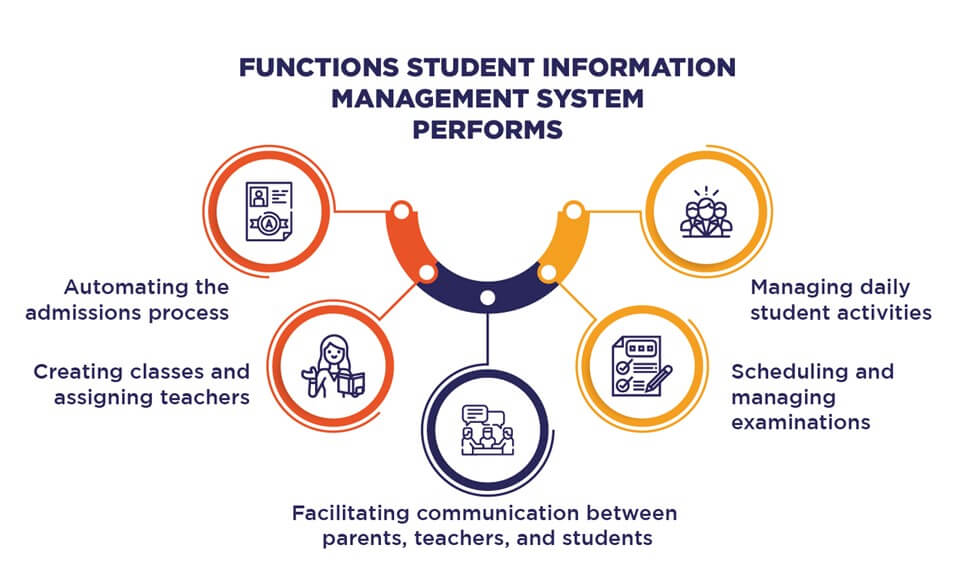
  • Automating Admission Process

With the help of this system, the admissions team and admins can automate a variety of operations in the admissions process. Once the data is stored of an applicant in the system, the information can be used for — applicant engagement, tracking the admission process, queries, and communicating messages on a large and individual scale. The system can also be used to send acceptance or rejection letters to the students and communicate any other important information.

  • Programs & Courses Management and Assigning Teachers

Easily create classes, assign teachers, manage courses, do lesson planning, etc., digitally. Student information systems are usually packaged within ERP software for education institutes. This means, not only do you get the features to manage student information but the information stored within SIS can be securely shared across various in-built modules and power digital operations using ERP in full capacity. 

The student information system records the course enrollment information and subject choices. Using this admins can digitally manage teachers, timetables, classes, resources, etc. 

You can also use the software to configure optional subject choices, program paths, course paths, fee structure, examination structure, grading method, and other related elements. 

  • Managing Daily Student Activities

Education ERP solution maps all sorts of academic, financial, and administrative records to the student ID in the student information system. This means a faculty or the administrator can pull student records for attendance, examination, health, fee, discipline, and more anytime as authorized by the super admin. 

This provides a better opportunity to manage the student lifecycle, and make decisions that are best for the student’s success. The student information system software eliminates the manual work of administrative and academic staff. 

Not only, does the software serve as a tool to manage and record the student data of a variety of things, but it also tracks the communication between staff and students, notices released to the student, actions are taken to discipline the student, and more. 

  • Scheduling and managing examination

Examination management and execution becomes very easy. The software provides specific tools and functionalities to manage and execute the examination phase with utmost success. Right from examination notification to form-fills to exam execution and result publication, the software provides all the necessary tools and functionalities to manage the examination phase successfully over a digital platform. 

  • Timetable Management and Lesson Planning

The system makes it easy for an administrator to track and check the available teachers on particular data and most importantly, whether the course syllabus for a subject is completed on time or not.

It helps an administrator adjust their human resource for optimal functioning with fewer resources. It also allows it to check the calendar, manage timetables for multiple classes,  manage national holidays, and schedule tests and exams as per the available information. 

  • Facilitating Communication between Parents, Teachers, and Students

Student Information Management System can facilitate communication between parents, teachers, and students. Since, the system stores all the contact information of all three stakeholders in an online database, it can be used to share important information, notifications, and news to them regarding ongoing and upcoming school activities. Parents can check the student’s progress and performance in real-time and request to connect with teachers to participate and involve in their ward’s education.

Conclusion

From the above list, you can see that student information system software is highly efficient in pivoting the regular and tedious everyday academic activities and automating these processes end-to-end. It can help you free up your resources and utilize them for more important tasks and operations in the institute. It improves efficiency and transparency in the operations and eliminates the common problems faced by teachers, staff, and students to bring more meaning to the operations.

So, what are you waiting for? Contact our ERP expert today to learn more about Academia SIS (Student Information System) and reap the above-mentioned benefits. 

Data-informed decision-making to transform the student experience in 2023

Teachers and schools have long collected data, that is usually unused. What many institutes fail to understand is — they are sitting on a goldmine. Unlike a few years ago, technology now is more efficient and provides opportunities to use data and analytics for improved teaching. 

Using data, teachers can track student progress in real-time, compare their progress in minutes with historical academic records, provide a personalized learning experience, differentiate between instructions for improved results, and have an insight on students that might just need a little more push. Data-driven decision-making in education can prove transformative for students and teachers both. 

Use data analytics to fight long-standing issues

Globally, education systems are now addressing the inequalities in education. There are significant gaps present between the achievements of students from low-income households to that from high-income households. The increasing wealth disparity is one of the biggest contributors to the increasing number of children that are deprived of equal opportunities in education. 

By analyzing data, educational researchers can understand the role of nutrition, parental involvement, pre-K programs, and other factors to fill these achievement gaps. Data provides granular reports to assess the positive and negative effects of interventions and policies on student outcomes and key learning milestones. 

Use data to improve teaching practices

Data in general can benefit all the departments in an institute, especially the academic staff. Teachers can use the data to reflect on their teaching practices. Traditionally, teachers use only one approach to engage students in learning activities. However, there are researches available that indicate the effect of teaching methodology may vary from person to person. 

Hence, it is imperative for the teacher to provide personalized learning experiences to students for increased student outcomes. Using data, teachers can daily observe, make inferences, and adjust their teaching methodology according to the needs of the students. 

Use data to optimize administration

Administrators can use data to learn more about students’ participation and behavior in the classroom. Processes like these can help catch the students that are likely to fall through the cracks and handhold. Data analytics provide precise insights into the gaps present in the curriculum coverage and help administrators better align of curriculum across departments and grades. 

Understand what data cannot do

Data analytics is an involving field in technology and it has a long way to go. Even though what you are experiencing right now through data is simply a scene out of a sci-fi movie, there are some big limitations to the technology. The key to finding the right answer through data lies within the data set. The more appropriate the data set is the more precise results it drives. 

Keep an eye on the trends

Many factors outside of a teacher’s control come into play that can influence student success. For example, the family life of the student might impact their academic performance in the institute. Hence, a teacher that is well known for these issues can provide better guidance to the student and work out a plan to ensure the growth and success of the student

Data can help a teacher analyze a student’s behavior based on their attentiveness in class, attendance in the class, punctuality, assignment submissions, and involvement in extracurricular activities.  Request Demo Now

5 Most Frequently Asked Questions about Education ERP / SIS – Answered

The world of technology may seem confusing at first, but digitalization is inevitable and you need to be quick in adapting to the technology. As a technology maven, and globally recognized for our flagship product Academia, we would love to be of any assistance to you in understanding the Education ERP solution. 

Let’s start with the definition first. Education ERP or enterprise resource planning software for the education industry is an advanced software. It is an app suite that aims at handling all your tasks from a single software and brings seamlessness to your processes. It comes with an integrated SIS, or student information system that works as a backbone and centralizes all the student-related data for better working and seamless management. 

Since this generalized definition is not enough to clear all your doubts and queries, we have listed down the five most frequently asked questions on education ERP and have answered them to the best of our knowledge. If you have more queries, please feel free to connect with our consultant here. We are available 24*7 to support you in any way we can. 

1. Can a school management system or school ERP system automate all the operations and processes of a school? 

Automation is a buzzword in the tech industry, and downright amazing if you ask us. But, it is in a very nascent stage. That means yes, automation is possible but it has certain limitations. 

Tasks such as attendance management, timetable generation, fee collection, and important communication can be automated. And we believe, it is good enough. These are some of the most time-taking and repetitive activities found in the education ecosystem.

To answer your question, most administrative tasks can be automated easily. For anything that is too complex to automate, you may not find it in a pre-built tool. But you can always communicate your needs to the ERP experts and they may be able to help you with the customizations and add-ons. 

2. How to manage online learning using education ERP? 

Education ERP solutions are pretty robust and accommodating. They can be easily integrated with an LMS or any tool that you use for online learning. Also, there are some education ERP solutions that have in-built online learning features and you can run online classes on them. 

But most of the education ERP solutions would have faculty and student side features that support online assigning of the projects and submissions as well. Also, examination-related tasks can be done on education ERP solutions. 

3. How do Education ERP solutions provide error-free data, reports, and information? 

Education ERP solutions are designed to provide error-free working. They are built on modern technology that runs on various logic in the backend. Also, before the implementation, they go through intense testing and most Education ERP solutions follow the GIGO concept, and only the useful and crucial data is put to use, while other things are stored in the archive. 

4. Does implementing Education ERP mean no manual intervention? 

In the processes and functions where you have automated things, yes you don’t have to do anything. It would be an end-to-end automated process. Also, there would be some aspects of the institute that would be partially automated and would require some manual interventions. All in all, it would reduce a significant amount of workload on your employees in both conditions. 

5. Can a school ERP solution help in making decisions at various levels?

Yes, absolutely. This is the most dynamic feature of an education ERP system. You would find a host of reports that would provide you with predictive analysis on trends and you can use them to build strategies for improvement in problem areas. 

Also, these reports are generated through Machine Learning, Business Intelligence, and Artificial Intelligence, they are pretty robust and on point. If you go with an Education ERP / SIS solution such as Academia ERP there would hardly be any time when you would find any gaps in the reporting as we configure the entire product to meet your needs. 

Wrapping Up 

We hope, you have more clarity about Education ERP / Student Information System software now and that you were able to find the answer you were looking for. In case you have any more questions you can always contact us anytime, we are always happy to help you. 

Student Information Systems: The Five Best Reasons to Invest

The education industry is known to run a certain way. But today the entire world has come together to change that. Education policies and paradigms are changing drastically around the world. But are you ready for that? 

At the heart of this discussion lies an impending need for changing the current infrastructure to digital. Over the past few years, colleges, schools and training institutes have gradually paced towards using digital technology for managing their organizations better. It gave them a competitive edge and helped them cope faster with the changing scenario of the education industry. 

Meanwhile, there are remarkable tools and technologies available specific to meet the needs of the education industry, Student Information System is the most discussed and perhaps the most widely-adopted. The reason is the software’s multi-functionality. Most decision-makers believe the Student Information System is a record management tool for education organizations. On the contrary, in this blog, we would be introducing you to this multi-faceted software product and how investing in it benefits your organization. 

What is a Student Information System? 

SIS is one of the most powerful words of the time. The dire need of every industry is to get the right information to the right people so that they make the right decisions. The word means “facts about someone or something”. Powerful, isn’t it? 

For years, like any other industry, education too used papers to manage student information. Everyone was shackled to paperwork. Papers are hard to manage and more prone to destruction, and extracting any information from them was like searching for a needle in the hay. Most of all it was very expensive. 

With digitalization, things shifted to modern and robust digital infrastructure. Things became cheaper and Student Information Systems came to light. As the name suggests, the tool allowed institutes to manage any student-related information in form digital format. It increased accessibility to the data and over years, people started becoming more creative in the use of digital technologies. Today, Student Information Systems are integrated with modern technologies such as AI (Artificial Intelligence), ML (Machine Learning), BI (Business intelligence), and more. 

Education organizations started storing student grades, course history, student records, academic information, non-academic achievements, and so much more. It is a secure, easy-to-manage, cloud-based solution that increased the usability and longevity of the student data. It improved schools’ understanding of their students and how they can improvise to gain a sharper edge in the market. 

More than just a Student Information System

The world of technology is fascinating. It sits at the core of every industry today, but if go back in time we would see how wondrously every industry has evolved over the years as technology grew. 

In terms of the education industry and Student Information Systems too the case is the same. The SIS was introduced in form of a record management system, but technology changed that. Information – as we said earlier it is a very powerful tool. It encourages better decision-making and backs your decisions to derive desired results. 

In today’s scenario, the Student Information System is used collaboratively by various departments to take the right decisions. Right from creating unique student IDs to managing academic records to managing student behavior, everything is done within the Student Information System and the data is used by decision-makers to improvise their academic strategies, marketing strategies, fee policies, and most importantly – encouraging diversity at their institutes to attract better student prospects at their institutes. 

More or less, the digitally-run institutes have a data-backed understanding of the weaknesses and strengths of their education system, and they use this information to broaden their scope for improvement. 

The five best reasons to invest in best Student Information System

To help you understand how a Student Information System software would benefit you, here are six reasons: 

  • Boost performance 

An education ERP (Student Information System) allows you to store a vast amount of information in the system. In the backend, it compiles this information and saves it for using the data for various operations. It is a centrally integrated system where the information can be cohesively used by various departments to offer the best services to the biggest stakeholder in the education industry – the students. 

Using the information, various departments can take better decisions and put in place better strategies to improve student outcomes. It helps them boost student performance individually and for the class as a whole. Furthermore, it promotes communication as the teachers/ faculty have information about students and they become more accountable for overall performance improvement and student experience. 

  • Fee management 

Online payments have taken over the world. Students and parents prefer to pay for the fees online as it is more convenient and faster. Most institutes currently don’t have the digital infrastructure to receive payments through online channels.

A Student Information System thus allows you to integrate your database to the online payment channels and provides you with real-time updates on the payment received, payment pending, and more. It completely eliminates the paperwork from the fee management process and allows you to digitally store the information in the system. 

Most Student Information System software vendors follow the best practices while building and integrating SIS software into your database. They follow security protocols such as role-based access and PCI compliance. Furthermore, tracking and mapping of the online payments with unique student IDs are done accurately within the system. 

Taking the ease a step ahead, you can add automation to it which would give you and student/ parents an automated reminder for pending fee payments, the payment received, receipts, and more. 

  • Security 

Cyber security haunts all industries. Education is no exception. Also, students and parents are very particular nowadays about data security and they do ask institutes a lot of questions relative to it as ed-tech becomes more of a routine thing. 

Investing in a cloud-based education ERP (Student Information System) allows you to get both flexibility and security. It is a powerful system that allows you to keep the database secure. With more and more digitalization; students, faculty, and other staff members are using the web and mobile applications to perform various tasks. Furthermore, these apps collect data at several points which are stored in the database. 

A secure Student Information System thus has to be implemented to ensure the data collected by your institutes is secure. Also, since cloud-based ERP solutions and Student Information Systems follow the security protocols and are not prone to physical threats you can trust an efficient service provider and ensure security at par. 

  • Course management 

The beauty of the Student Information System is that it goes beyond just recording and compiling information. The tools are very handy in giving support to teachers and parents to help students in their academic pursuits. The Student Information System gives real-time updates on attendance, activities, classwork, homework, performance, and other relevant information on a student. It promotes transparency and thus, allows teachers and parents to participate in the growth of the students. 

  • Resource Management 

Students are primary stakeholders in an education ecosystem, and most decisions are taken around them. Having a vast amount of information about students gives you a scope to improve the resources and facilities in the system and improve the student experience. 

Student Information System: Smart Resource Management for Enhanced Learning

It allows you to administer each department, classroom, hostel, and other resources well. It ensures the facilities are streamlined to the needs of the students and if there are any gaps they are informed to the authorities and faster decisions can be taken for faster implementation. 

Key takeaways

Student Information Systems are very helpful in administrative and management tasks for universities, colleges and schools. They come with various benefits and allow secure and easy management of large sums of student data that can be used collaboratively within various departments for improved student performance and experience. 

Role of Predictive Analysis in the Education Industry

The education industry is undergoing some of the biggest changes in the past few years. Although the industry is embracing e-learning enthusiastically, the newfound challenges in the pandemic and post-pandemic era have completely jolted the industry. Institutes are now moving towards a tech-based evolution. An industry that dates back centuries and is known for not making many changes in its traditional format of operating is now looking up to technology for its various needs. 

Right from student discovery to student retention and other nesting stages, technology has fused itself to every operative, academic, and organization task to restrengthen it. Tech-based solutions are helping in increasing accountability in people to improve knowledge retention and student experience. Institutes are using ERP or SIS (Student Information System) solutions for allocating resources and managing them better. Benefits in terms of better management and reduced cost are remarkable. 

Going a step ahead, not only tech adaption is improving the functioning of the institutes but also preparing them for future challenges. Predictive analysis allows educational institutes at all levels to learn from students, beneficiaries, and other stakeholders in the system to gain valuable insights and highlight industry trends. Not only does it gives them protection in harsh business scenario but also a competitive edge.  

Predictive analysis

Predictive analysis is a process of crunching the data and gaining meaningful insights at all levels from various stakeholders in the system to devise useful strategies for better ROI and management. 

Concerning the education industry, predictive analysis can help the management to make more informed decisions and effectively operate their institutes. It also helps in making strategic decisions around the student lifecycle and improves student experience by ten folds. It gives you a near-accurate prediction on what are the factors that may weigh down things for your institute. They can use this new knowledge and combine it with their experience and understanding to build a more sustainable system for things. In long run, improved decision-making can result in higher revenue, brand recognition, student retention, and more. 

Not to be confused with a traditional analytical tool

Meanwhile, the traditional analytical tools are focused on providing you with a detailed analysis of things that have been done, a predictive analytical tool is forward-thinking and provides you with data-backed recommendations on things that are to be done next. 

For any institute, what they do next in the future is as important as what they are doing now. The predictive analysis provides actionable insights and accentuates the confidence of people in the management to improve their decision-making.  

Advanced predictive analysis tools use structured and unstructured data and statistically analyze various functions and operations of the institute. Furthermore, it mines data and does predictive modeling to uncover hidden patterns and associated connections between various functions and outcomes to prepare personalized recommendations. 

Moreover, predictive analysis is a tool that allows you to go beyond just the academic and organization data. It allows you to capture elements that help you understand the user participation, response, and activities through the online portal, mobile applications, and various touchpoints and triggers in the digital system. It can also use big data to tell trends and give you a 360-degree view of the institute’s performance and recommend strategies to improve. 

Evolution of Predictive Analysis in Education 

Like any other industry, the education industry too has its unique needs, and technology if not personalized doesn’t serve its purpose. The evolution of predictive analysis in the education industry has given rise to systematic improvements in the education sector also, institutes are seen using existing data to gain insights on the present and future performance of education organizations as a business in terms of monetary gains and sustainability. 

Today, predictive analysis is not only being used for bigger aspects of the education industry such as the number of admissions but it is also used in predicting student success. Student success is a key indicator in the system, all the other factors mapped to it are taken under consideration in advanced predictive analytics tools to ensure business longevity and performance as a whole. 

Bid adieu to human errors

Traditionally data collection, collation, and analysis were done manually but the process is now redundant due to two major reasons. First, organizations had to dedicate resources primarily to this job and it was time-intensive and costly. Secondly, human intervention is prone to errors that may result in data discrepancies. Thus predictive analysis is a more viable and practical solution. 

Unique Usecases of Predictive Analysis in Academia ERP Solution

Academia is an advanced ERP/SIS software that provides dedicated solutions for schools, colleges, universities, and training institutes. We offer highly configurable software solutions that can be easily customized to meet your needs. Using Academia you can manage your academic, organizational and operational tasks easily. Furthermore, the product offers you a great user experience on mobile and web platforms, it is a secure solution that allows remote working. 

As a high-end software solution, we understand the importance of predictive analysis in the modern business environment. And have utilized it to its potential to develop amazing solutions for some of the biggest institutes located globally. Connect with us to know more about Academia and how we can help you manage your institutes better. 

Here are a few use cases of predictive analysis in Academia. 

1. Predicting Student Performance

One of the biggest challenges for faculties and management is to identify students that are lagging behind. Holding examinations quarterly or half-yearly does not provide much scope for performance evaluation and improvements. 

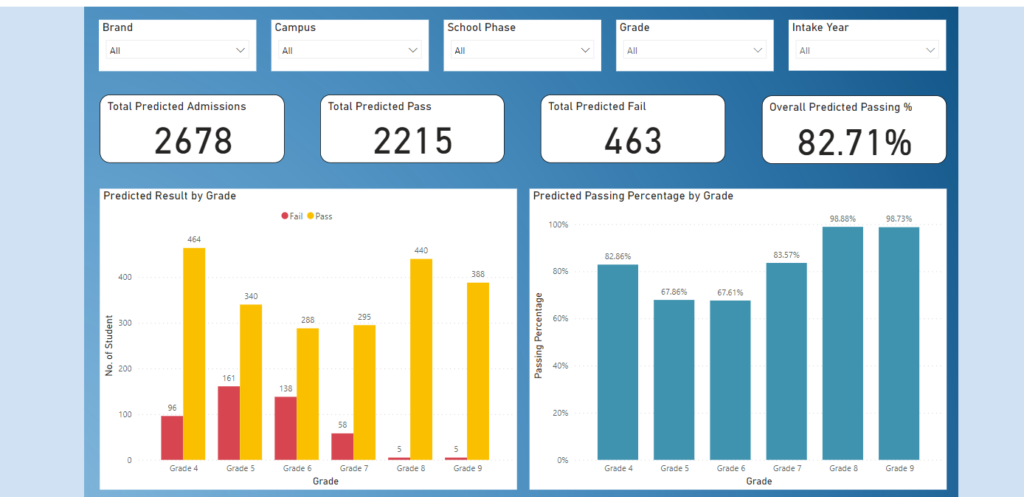
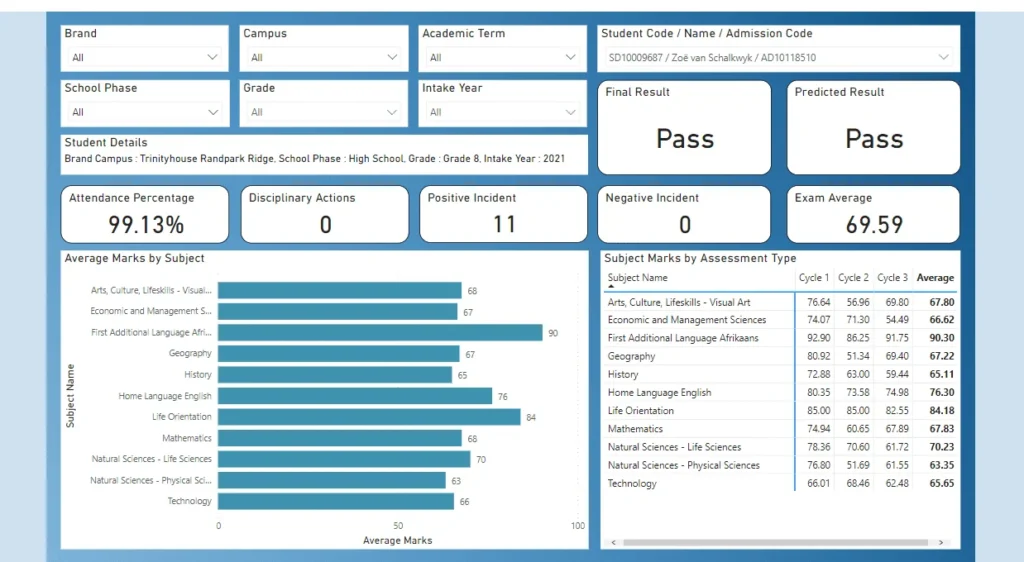
Academia ERP/SIS solution uses historical data of the students and creates a data modeling to provide you a close to accurate analysis of the student performance. Taking it a step ahead, it also helps in analyzing the performance of the class as a whole through a group analysis.

With an accuracy rate of ~90%, Academia is one of the finest education ERP solutions globally that statistically analysis a wide range of factors to provide a near-close prediction on students that may fail due to internal and external factors. The same goes for group analysis. 

Using the tool, schools, colleges, and universities can focus on student performance individually and identify the markers in the system that are causing the performance degradation in student performance. This helps them to take actions that improve student performance and drive them towards excellence. 

2. Application Conversion Prediction 

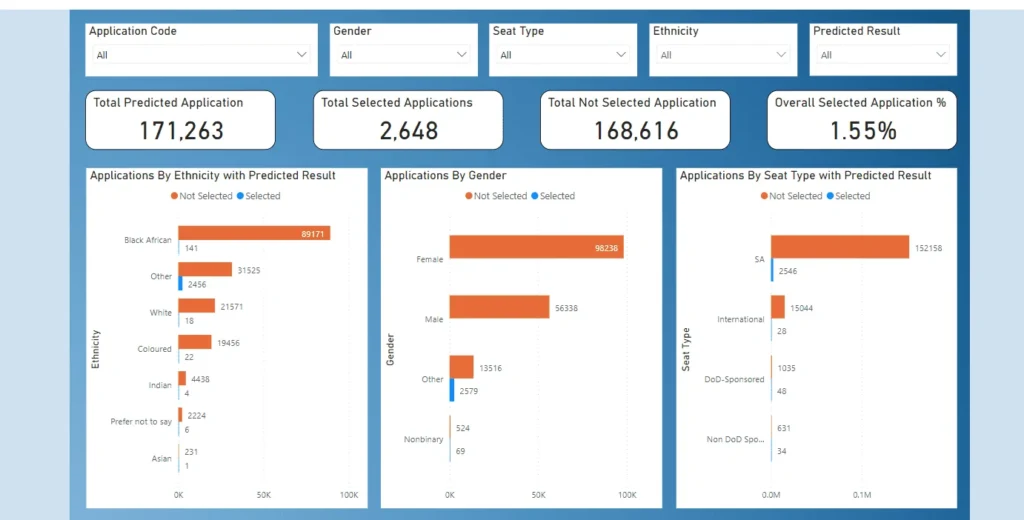
The drop rate in the stage from application to admission is a huge challenge for the education industry. With the limited available information about the students, it becomes very difficult for the organizations to identify the factors that are causing the drop rates to shoot up. 

With historical data analysis, the Academia ERP/SIS takes into account various factors to identify the major causes of the drop rates. Also, it provides useful insights and information to the counselors to guide students correctly and convert the applicants into students. The system being highly configurable, can be utilized by any institute easily to devise their own metric to identify applicants that are more likely to become a student in their organization and also fight off drop rates more efficiently. It gives them a major strategic advantage to increase their revenue for longevity.

Way forward

The growing competition in the industry requires a fast-paced solution that does not take much time but does the job in minutes and provides real-time updates along with greater data visualization. Owing to the new needs, the predictive analysis provides you the required support to manage your institutes better and support students in improving their performance. Student-side benefits such as improved transparency in the system and adaptive learning allow them to excel in their studies and increase their participation in the online and classroom learning scenarios. 

Tech-based solutions generate tons of data every day. Realizing the true potential of this data to devise meaningful strategies can help the organization in improving its market positioning. Operational and commercial decision-making can be backed with reliable data and prescribed suggestions from predictive analytical tools.

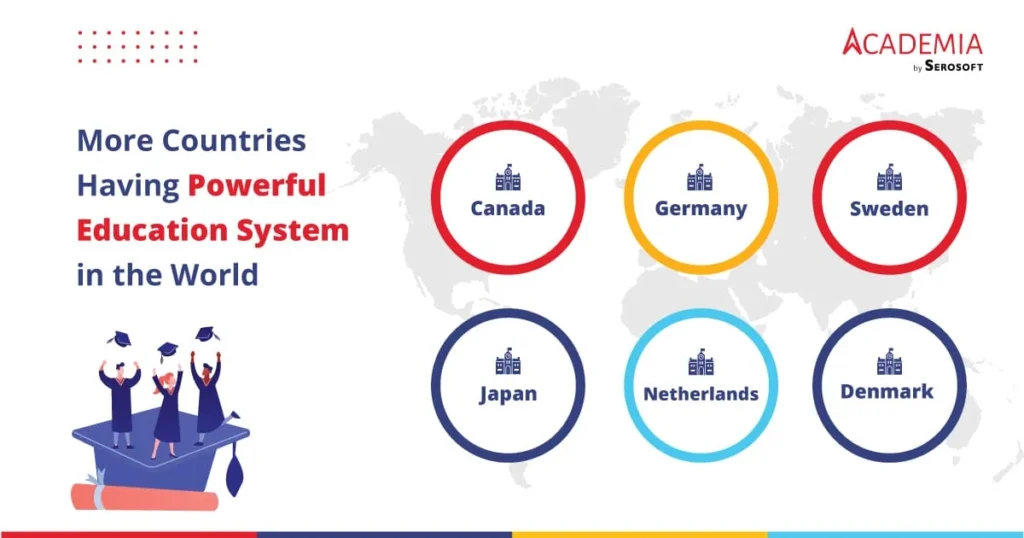
Top 5 Countries with Advanced Education System in the World

Education – a system that indicates the overall methodology of a country. No matter in which country you are living in, which type of culture you are following, what’s the GDP of your country and other theories but for a powerful & bright future, your country needs to have a top education system. A country needs the latest technologies, advanced tools, and of course a well-planned curriculum for the same. 

Does your country currently come under the countries with the best education system? Let’s discuss some of the countries that own the top education systems in the world. We have considered the parameters that make the education ecosystem best, like digital transformation, automation, easy access to study material, and quality of teaching & learning. 

Top countries having automation in education: UK, USA, Australia, UAE, Germany, Canada, Japan, and more. 

  • The United Kingdom 

The UK is one of the leading countries when it comes to the best education system in the world. It includes some of the most famous universities that provide top-notch education systems in the world. 

It provides best-in-class education right from the primary stage of a student to the graduation, post-graduation, and doctorate degrees. The UK not only focuses on top-quality education but also promotes all the technological tools and advanced methodologies like a Student Information System and Learning Management System. 

  • The United States of America

The United States of America is also one of the best countries that provide and attract a lot of students from all over the world. The most important reason behind it is the quality of education, the expertise of faculty members, advanced technology, and of course state-of-the-art infrastructure and facilities. This includes some of the best universities in the world including Harvard University, Stanford University, and many more. The country includes the finest educational institutions that have adopted advanced tools, technologies, and methodologies to provide the best in class education in the world.

  • Australia 

Australia has been recognized in the third position for offering the best education system in the world. Having been known for providing the best education in various parameters, students often consider Australia as the best place to study and get qualified. This country is good for students who want to continue their courses in the field of technology and innovation.  There are various universities in the country that are becoming prominent names using technology, innovation, automation, and all other criteria like complete digital transformation in the institution. 

  • Finland 

Finland’s education system is also considered one of the finest in the world. It is tremendous to provide world-class teaching in having the best access to study material in subjects like mathematics, science, and also in reading. Finland is managing to perform well-providing indicators like; 

  1. Teachers to very less number of student ratio
  2. Number of passing students in primary schools/secondary school
  3. Adoption of technology and automation
  • UAE 

The United Arab Emirates has been attracting international students for the last few years. Several higher educational institutions in UAE are good enough to provide high-quality education with all the specific degrees, Master’s degrees, Doctoral degrees, and Vocational courses. All of these education systems provide great opportunities to all the students who want to get educated in the best universities/institutions in the world.


How does an ERP/SIS make the education system even more powerful?

Every country owns a different level of education depending on the needs of students, the support of technology, the policies, the techniques to manage academic and administrative operations, and various other parameters. To compete with the top education systems in the world universities/institutions need to keep a keen eye on existing and upcoming technological updates. 

Do you know how an ERP/SIS can help educational institutions maintain & manage all the academics & administrative operations in a simple, efficient, and relevant way? It supports the overall structure of the institution, automating all the operations right from the admission to the examination. A robust ERP/SIS provides consistent, robust, and effective management to the institution making it a powerful name in the delivery of quality of education. 

Read more: How Education Management Systems Are Revolutionizing Student Learning Experience

Wrapping Up 

The listing of the above countries is done on various parameters, hope you will find it relevant and insightful. Now if you are thinking about how you can make your institution strong in all aspects, let’s discuss it now! We have the best option for you that can help you in the best way. Request Your Demo Now!

Facts To Know About Learning Outside The Classroom

In the modern world, educational institutions must opt for techniques that can promote advanced learning and teaching methods. In this COVID-19 pandemic, institutions faced various challenges and difficulties in managing the continuous flow of seamless learning and teaching. To make this better, it is necessary for institutions now to make a confined way of learning outside the classroom choosing technologies that can support the same. 

Among various strong reasons that promote learning outside the classroom program, the most important one is it enhances the student learning experience, in any case, enriching and providing students with real-life applications of theories and practicals similar to schooling. 

Technologies that can support learning outside the classroom

  • Student Information System

A student information system is a cloud-based software solution that provides complete automation of all the academic and administrative operations available in the institution. There are various operations in an educational institution that makes learning outside the classroom a bit difficult for students. In manual intervention, students and faculty need to connect to complete any operations from admission, attendance, examination, result declaration, and a lot more. 

To manage all these, a student information system provides a platform in which institutions can avail classroom as well as outside classroom learning. It provides systematic management through which students can focus on their learnings and lessons performing all other tasks like attendance, examinations, and all other related operations, simply, efficiently, and systematically. 

  • Learning Management System

A learning management system is also one of the most important software that avails seamless learning for institutions. It provides administration, documentation, tracking, reporting, and delivery of teaching and learning programs seamlessly. Using a learning management system owns various advantages, some of them are:

  1. Consistency of learning 
  2. Easy tracking & reporting
  3. Better results through engagement and gamification
  • AR/VR

In the digital world, educational institutions often need to use technologies that provide real-time and needed education. What is better than artificial intelligence and virtual reality. Artificial intelligence and virtual reality are changing the whole level of education providing students with immersive and experiential learning patterns promoting learning outside the classroom. Advances in this segment are incredible and are increasing at a larger pace. 

The use of AR/VR will bring the following benefits:

  1. Personalized learning
  2. Adaptive learning
  3. Monitoring 
  4. Capture and personalization of the data

Benefits of opting for learning outside the classroom

  • Seamless flow of learning 

With the advancement of technology, education institutions need to opt for the right technology that can prevail learning outside the classroom. Technologies like ERP, SIS, and others help educational institutions in managing all the tasks letting students move into their studies from anywhere and anytime leading towards a direct and seamless flow of learning and teaching. 

  • Better experience for students 

Students in today’s generation are different, having a modern approach for everything, they demand a quick, easier, and better way of performing any operations. It is high time for educational institutions to adopt modern techniques and ways that can help in optimizing a better learning experience. 

Learning outside the classroom provides students with greater learning experiences and opportunities. 

  • Improved ROI

Improved ROI is one of the key factors on which educational institutions mostly focus, every institution focuses on ROI improvement. Institutions that are still having manual intervention involve various extra costing from manpower to managing various documents. 

Institutions adopting technologies that can avail learning outside the classroom involves very little manpower, with less documentation, and other high-costing processes which ultimately target high ROI leading to growth and opportunities. 

What are your thoughts?

So which method are you using in your institution for delivering a good experience of learning? Have you opted for the right technology that can lead to positive outcomes for the institution along with having clarity for students about teaching and learning patterns? If you are thinking to choose one, you can also look for Academia, as it provides one of the best Student Information systems that can promote learning outside the classroom effectively by providing a systematic, robust, flexible, and efficient management of all the academic and administrative operations of the institution. 

Want to discuss the best technology for your institution? We are just a call away, contact us now and one of our best teams will get in touch with you. 

Back to top