Type your keyword below

Streamlining Academic Success: The Role of a Seamless Student Registration System

In the fast-paced world of academia, where efficiency and accuracy are paramount, the student registration process plays a pivotal role in shaping the overall educational experience. A seamless student registration system not only streamlines administrative tasks but also fosters academic excellence by ensuring a smooth transition for students into their chosen programs. In this blog, we’ll delve into the importance of a well-designed registration system and explore how Academia ERP emerges as the best available solution to meet the evolving needs of educational institutions.

  • Efficiency and Convenience: A user-friendly registration system simplifies the enrollment process for both students and administrators, eliminating cumbersome paperwork and reducing manual errors. With Academia ERP, institutions can offer online registration portals that allow students to register for courses, pay fees, and access essential information from anywhere, at any time, enhancing convenience and efficiency.
  • Personalization and Flexibility: Every educational institution has its unique requirements and workflows when it comes to student registration. Academia ERP offers personalized solutions that can be tailored to meet the specific needs of each institution, whether it’s configuring registration forms, setting up prerequisite rules, or defining enrollment deadlines. This flexibility ensures that the system aligns seamlessly with the institution’s policies and procedures.
  • Integration with Academic Systems: A robust registration system should seamlessly integrate with other academic systems such as student information systems (SIS), course management platforms, and financial aid systems. Academia ERP offers seamless integration capabilities, enabling real-time data exchange between different modules and providing a holistic view of student information to administrators.
  • Automated Workflows: Manual registration processes are prone to delays and errors, leading to frustration among students and administrative staff. Academia ERP automates registration workflows, from course selection to enrollment confirmation, reducing processing times and improving accuracy. Automated notifications and reminders inform students about important deadlines and requirements, ensuring a smooth registration experience.
  • Data Security and Compliance: Protecting sensitive student data is paramount in today’s digital age. Academia ERP employs robust security measures, including data encryption, access controls, and regular audits, to safeguard against unauthorized access and ensure compliance with data protection regulations such as GDPR and VAPT. Institutions can trust Academia ERP to uphold the highest data security and privacy standards.
  • Analytics and Insights: A comprehensive registration system should provide administrators with actionable insights into enrollment trends, course demand, and student preferences. Academia ERP offers 400+ powerful analytics and reporting tools that enable institutions to analyze registration data, identify patterns, and make informed decisions to optimize course offerings and resource allocation.

In conclusion, a seamless student registration system is essential for fostering academic excellence and enhancing the educational experience. With its efficiency, customization options, integration capabilities, and robust security features, Academia ERP emerges as the best available solution to meet the evolving needs of educational institutions. By leveraging Academia ERP, institutions can streamline their registration processes, improve student satisfaction, and achieve their academic goals with ease. Embrace Academia ERP as your trusted partner in driving academic success and empowering students on their educational journey.

You can check out our case study of False Bay & see how their registrations transformed with Academia ERP. For other case studies, you can visit here.


Unlocking Educational Success: Six Key Reasons to Invest in a Student Information System

In the digital age of education, where the seamless management of student data is paramount, Student Information Systems (SIS) have emerged as indispensable tools for educational institutions worldwide. From streamlining administrative processes to enhancing communication between stakeholders, SIS plays a pivotal role in fostering academic success. In this blog, we’ll explore six compelling reasons why investing in a robust SIS is essential for the modern educational landscape.

  • Centralized Data Management: A comprehensive SIS consolidates student data into a centralized database, providing administrators with easy access to critical information such as enrollment records, grades, attendance, and demographic details. This centralized approach eliminates data silos and ensures data integrity, empowering institutions to make informed decisions and deliver personalized support to students. 
  • Efficient Enrollment and Registration: With features such as online registration portals and automated workflows, a robust SIS streamlines the enrollment process, reducing administrative burdens and minimizing errors. Students can easily register for courses, track their academic progress, and access relevant resources, while administrators can manage enrollment quotas, track course demand, and optimize class schedules with ease.
  • Enhanced Communication and Collaboration: Effective communication is essential for fostering collaboration between students, faculty, parents, and administrators. A feature-rich SIS facilitates seamless communication through portals, messaging systems, and notification alerts, keeping stakeholders informed about important deadlines, events, and academic updates in real time.
  • Comprehensive Academic Reporting: Generating accurate academic reports and transcripts is a time-consuming task for educational institutions. A robust SIS automates the process of generating transcripts, report cards, and academic certificates, saving time and resources while ensuring accuracy and compliance with regulatory standards.
  • Data Security and Privacy: Protecting sensitive student data is paramount in today’s digital landscape. SIS prioritizes data security and privacy, employing robust encryption methods, access controls, and regular security audits to safeguard against unauthorized access and data breaches. Institutions can trust their chosen SIS to uphold the highest standards of data protection and compliance.
  • Analytics and Insights: Harnessing the power of data analytics is crucial for driving institutional success. SIS offers powerful analytics and reporting tools that enable administrators to analyze student performance, identify trends, and make data-driven decisions to improve outcomes. From predicting student retention rates to optimizing resource allocation, SIS empowers institutions to achieve their academic goals with precision and foresight.

In conclusion, investing in a robust Student Information System is essential for enhancing educational excellence and driving institutional success. Among the available solutions, Academia ERP stands out as the best option, offering a comprehensive suite of features designed to meet the diverse needs of educational institutions. By leveraging Academia ERP, institutions can streamline administrative processes, enhance communication and collaboration, ensure data security and compliance, and harness the power of data analytics to achieve their academic goals with confidence and efficiency. Embrace Academia ERP as your trusted partner in navigating the complexities of modern education and empowering students on their educational journey.

Streamlining Student Registration: Enhancing Academic Excellence Through Seamless Systems

In the modern era of education, the efficiency and effectiveness of administrative processes play a crucial role in ensuring academic excellence. One of the fundamental aspects of this is the student registration system, which serves as the gateway to educational institutions. A seamless and well-integrated registration system not only simplifies the enrollment process but also sets the foundation for a positive student experience and contributes to overall institutional success.

The Importance of Seamless Student Registration

A seamless student registration system is essential for several reasons. Firstly, it enhances the experience for both students and administrative staff by reducing paperwork, minimizing errors, and streamlining the entire registration process. This efficiency not only saves time but also improves accuracy and reduces administrative burdens, allowing staff to focus on more value-added tasks.

Secondly, a seamless registration system facilitates better communication and engagement with prospective students. By providing user-friendly online portals, automated notifications, and personalized communication channels, institutions can effectively communicate important information, deadlines, and requirements, thus ensuring a smooth transition into the academic community.

Furthermore, an efficient registration process is crucial for maintaining data integrity and compliance with regulatory standards. Robust data management features and security protocols provided by modern Student Information Systems (SIS) help institutions safeguard sensitive information, adhere to privacy regulations, and maintain the trust and confidence of students and stakeholders.

Implementing Academia ERP (Student Information System – SIS) for Enhanced Efficiency

In the quest for a seamless student registration system, institutions are increasingly turning to technology solutions such as Academia ERP (Enterprise Resource Planning). Academia ERP offers a comprehensive suite of modules designed to streamline various aspects of academic administration, including student registration, admissions, course management, and more.

With Academia ERP, institutions can automate repetitive tasks, digitize paper-based processes, and centralize data management, thereby improving efficiency and accuracy across the board. Moreover, Academia ERP provides real-time insights and analytics capabilities, allowing administrators to make data-driven decisions, identify trends, and optimize workflows for better outcomes.

The Conclusion

In conclusion, a seamless student registration system is indispensable for achieving academic excellence and fostering a positive educational experience. By leveraging technology solutions like Academia ERP, institutions can transform their registration processes, enhance operational efficiency, and elevate the overall quality of education delivery. With its user-friendly interface, robust features, and scalability, Academia ERP emerges as the best solution for modern educational institutions seeking to optimize their registration systems and achieve academic success.

Incorporating Academia ERP into the fabric of educational administration not only streamlines student registration but also lays the groundwork for continued innovation and advancement in academic excellence. As institutions embrace the digital transformation journey, Academia ERP stands as a beacon of efficiency, effectiveness, and excellence in student registration systems. Schedule a demo of Academia ERP for more detailed experience.

Unlocking the Potential: Harnessing AI-Powered Automation in Higher Education

In this digital era, artificial intelligence (AI) has emerged as a powerful tool for revolutionizing various aspects of higher education. From streamlining administrative tasks to enhancing student learning experiences, AI-powered automation is reshaping the landscape of academics. Let’s delve into a practical example of how AI is being leveraged across different areas within higher education institutions.

> Question Paper Generation: Traditionally, creating question papers for exams has been a time-consuming task for faculty members. With AI algorithms, question paper generation can be automated based on predefined criteria such as difficulty level, topic coverage, and question types. This not only saves time but also ensures the creation of balanced and relevant assessments.

> Email Communication: AI-powered email automation tools can assist the administrative staff in managing communication with students, faculty, and stakeholders. These tools can analyze email content, suggest responses, and even automate routine tasks such as scheduling meetings or sending reminders, allowing staff to focus on more meaningful interactions.

> Result Generation: Processing and generating examination results can be a daunting task, especially for large institutions. AI algorithms can automate the grading process for objective assessments and provide instant feedback to students. Additionally, AI-driven analytics can identify patterns and trends in student performance, enabling educators to tailor interventions accordingly.

> Predictive Analysis: AI algorithms can analyze vast amounts of data, including student demographics, academic performance, and behavioral patterns, to predict future outcomes such as graduation rates, student success, and course demand. This predictive analysis enables institutions to proactively identify at-risk students and implement targeted interventions to improve retention and success rates.

> Student Retention: AI-powered systems can track student engagement, attendance, and performance data to identify early signs of disengagement or academic struggles. By providing personalized support and interventions, such as academic advising or tutoring, institutions can enhance student retention rates and promote academic success.

> Management Reports: AI-driven analytics tools can generate comprehensive management reports by aggregating and analyzing data from various sources within the institution. These reports can provide valuable insights into enrollment trends, faculty workload, budget allocation, and resource utilization, helping decision-makers make informed strategic decisions.

> Personalized Learning: AI algorithms can personalize the learning experience for students by recommending relevant learning resources, adaptive learning pathways, and personalized feedback based on their individual learning styles and preferences. This personalized approach enhances student engagement and improves learning outcomes.

> Admissions Process Optimization: AI can streamline the admissions process by automating tasks such as application screening, document verification, and candidate evaluation. By analyzing applicant data and academic records, AI algorithms can identify promising candidates and facilitate faster decision-making, leading to a more efficient and transparent admissions process

> Virtual Assistant Support: AI-powered virtual assistants can provide 24/7 support to students, faculty, and staff, answering queries, providing information on courses, schedules, and campus services, and offering personalized assistance. These virtual assistants, integrated with natural language processing capabilities, can enhance accessibility and convenience for stakeholders while reducing the burden on administrative staff.

> Research and Publication Assistance: AI tools can assist faculty members in research and publication endeavors by analyzing vast amounts of academic literature, identifying relevant sources, and generating summaries or citations. Additionally, AI algorithms can help researchers discover new insights, trends, and patterns within their field of study, facilitating knowledge discovery and dissemination.

In conclusion, AI-powered automation in higher ed offers immense potential to transform higher education by optimizing administrative processes, enhancing student support services, and personalizing learning experiences. By embracing AI technologies, institutions can improve efficiency, effectiveness, and innovation across all aspects of academic operations, ultimately enriching the educational experience for students and educators alike.

By incorporating AI-powered automation across these additional areas, higher education institutions can further optimize operations, enhance services, and foster innovation, ultimately advancing their mission of academic excellence and student success.


Navigating Disruptions: Understanding the Top Factors Impacting Students’ Academic Experiences

In the dynamic landscape of education, students’ academic experiences are shaped by various factors, some of which have the potential to disrupt the learning journey. Identifying and addressing these disruptions is crucial to ensure a positive and effective educational environment.

1. Technological Challenges

In an era dominated by technology, students often encounter disruptions due to inadequate access or unfamiliarity with digital tools. The digital divide can hinder the seamless integration of technology into the learning process.

2. Administrative Hurdles

Cumbersome administrative processes can pose significant disruptions to students’ academic experiences. Issues like inefficient enrollment procedures, convoluted registration processes, and delayed communication can contribute to frustration and hinder academic progress.

3. Lack of Personalized Learning

Students thrive in environments that cater to their learning styles and preferences. A lack of personalized learning experiences, including limited options for course customization and inflexible curricula, can impede students’ ability to maximize their potential.

4. Insufficient Support Systems

Inadequate academic and emotional support can adversely affect students’ experiences. Limited access to counseling services, mentorship programs, and academic resources may contribute to feelings of isolation and hinder overall academic well-being.

5. Accessibility Challenges

Geographical and economic factors can create accessibility challenges, limiting students’ ability to access educational resources, attend classes, or participate in extracurricular activities, thereby disrupting their academic journeys.

Addressing Disruptions with Academia ERP

As we navigate the challenges impacting students’ academic experiences, exploring solutions that can enhance the educational journey is crucial. Academia ERP stands out as a comprehensive solution designed to mitigate disruptions by:

  • Streamlining Administrative Processes: Academia ERP simplifies enrollment, registration, and communication processes, reducing administrative hurdles and enhancing student experience.
  • Facilitating Personalized Learning: With features supporting customizable courses and flexible curricula, Academia ERP empowers institutions to offer personalized learning experiences tailored to individual student needs.
  • Providing Robust Support Systems: Academia ERP includes features that facilitate efficient academic and emotional support, fostering a positive and supportive educational environment.

Conclusion: Academia ERP – The Right Solution for Pleasant and Seamless Student Experiences

In conclusion, addressing disruptions in students’ academic experiences is vital for fostering a positive and effective learning environment. Academia ERP emerges as the right solution, offering a comprehensive approach to streamline administrative processes, facilitate personalized learning, and provide robust support systems. By embracing Academia ERP, institutions can create an environment conducive to optimal student experiences, ensuring a seamless and enriching educational journey for all.

Navigating Change: The Human Side of AI, Automation in Higher Education

In the ever-evolving landscape of education, integrating artificial intelligence (AI), automation, and Academia ERP (Education Enterprise Resource Planning) systems is reshaping higher education institutions worldwide. This transformative trifecta revolutionizes how educators teach, students learn, and administrators manage operations. However, amidst the technological advancements, it’s essential to remember the human aspect-the educators, students, and administrators who drive these innovations forward and adapt to the changing educational landscape.

Empowering Educators: Augmenting Capabilities with Technology

Far from replacing educators, AI, automation, and Academia ERP systems are valuable tools to augment their capabilities. AI-powered grading systems streamline assessment processes, allowing educators to provide timely feedback and focus more on refining their teaching methods and mentoring students. Meanwhile, Academia ERP systems automate administrative tasks, such as course scheduling and resource allocation, allowing educators to focus on what truly matters-fostering meaningful connections with students and inspiring lifelong learning.

Student Success Interventions: Early Identification and Support

Predictive analytics integrated into Academia ERP systems enable higher education institutions to identify at-risk students early on and provide targeted support to improve retention and academic outcomes. These systems analyze students’ historical data, attendance records, and performance metrics to identify patterns indicative of potential challenges. Advisors receive alerts to intervene when students exhibit signs of struggle, while personalized interventions are recommended based on individual needs and circumstances.

Fostering Innovation and Research: AI as a Catalyst

AI-driven Academia ERP systems are transforming teaching and learning and driving innovation and research within higher education institutions. These systems catalyze groundbreaking discoveries and advancements by analyzing vast datasets and uncovering patterns and trends. Researchers leverage AI algorithms to accelerate the pace of discovery, tackle complex problems, and push the boundaries of knowledge further than ever before.

Administrative Optimization: Streamlining Processes for Efficiency

Academia ERP systems powered by AI and automation are revolutionizing administrative processes within higher education institutions. These systems streamline workflows, reduce manual errors, and enhance efficiency from admissions to enrollment management and beyond. Chatbots handle routine inquiries; virtual assistants aid in scheduling, and predictive analytics optimize resource allocation-all contributing to a more agile and responsive administrative infrastructure.

Challenges and Opportunities: Embracing Change Together

While integrating AI, automation, and Academia ERP systems presents numerous opportunities for innovation and growth, it also poses challenges. Concerns about data privacy, algorithmic bias, and the ethical implications of AI must be addressed. Additionally, there’s a pressing need for upskilling educators and administrators to leverage these technologies effectively and ethically.

However, by embracing change and fostering a culture of collaboration and innovation, higher education institutions can successfully navigate the complexities of the digital age. With a human-centric approach that prioritizes empathy, inclusivity, and adaptability, we can ensure that education remains a transformative force for future generations. Together, let’s harness the power of AI, automation, and Academia ERP systems to create a brighter future for higher education.


Understanding the Hidden Curriculum in Higher Education

In higher education, the promise of access to knowledge and opportunity is vast. However, with an increasing number of students leaving school before obtaining their degree, it’s evident that the delivery of this promise is falling short. A staggering 40.4 million students have some college experience but no degree, a concerning statistic that demands our attention and action.


The surge in first-generation college students, now constituting 56% of learners, is a positive shift in access to higher education. Yet, it is also accompanied by challenges, exposing a hidden curriculum gap that disproportionately affects these students. The unwritten rules, norms, language, and expectations embedded in this hidden curriculum often become barriers, leading students to opt out of the education system.


Despite well-intentioned efforts to increase post-secondary degree attainment, the needle barely moved between 2010-2020. The root of this stagnation lies in a focus on solving academic barriers rather than addressing the real issue – the hidden curriculum. As someone who has worked closely with thousands of college students, I have witnessed firsthand the confusion and overwhelm they face when navigating unfamiliar territory.


One aspect of this hidden curriculum that warrants attention is the language barrier. Many students, especially those from first-generation and historically marginalized groups, find themselves unable to ask the right questions due to fear of appearing ignorant. This lack of understanding often leads to missed opportunities and contributes to the alarming number of students leaving higher education prematurely.


Consider the example of a student who avoided visiting a professor during office hours because she believed it was a busy time for the professor. The underlying issue here is not just the fear of approaching a professor but a lack of understanding of the purpose and definition of office hours. This example is a classic case of students missing valuable resources due to the hidden curriculum.


Another language-related barrier surfaces in the financial aid process. The complex jargon used in financial aid offer letters leaves many students, particularly first-generation ones, bewildered. Terms like “direct” and “indirect” costs create confusion, and students report not knowing the importance of calculation behind specific figures. Simplifying communication and using student-friendly language can significantly affect their comprehension and decision-making.


The solution to this language problem is straightforward: adopt simplified, proactive, and personalized student engagement strategies. Here are a few actionable steps to consider:

Proactive Language Assessment:

  • Evaluate the language used in communications and aim to simplify it. Establish a goal to write all communications at an eighth-grade reading level. Eliminate jargon and provide explanations for unfamiliar terms.

Ask More Questions:

  • Gain insight into the current state by asking questions such as:
    • What can be done to reduce the risk of the hidden curriculum?
    • What needs to be stopped to minimize the impact of the hidden curriculum?
    • What practices should be continued to reduce the risk of the hidden curriculum?

Talk to Students and Test New Options:

  • Incorporate student feedback into the assessment process. If there are recurring questions, it indicates a communication gap. Adjust terminology based on student input to enhance clarity.

Returning to the “office hours” scenario, a simple shift to terms like “visiting hours” or “drop-in hours” can make a considerable difference, especially for first-generation students who may find these terms more approachable.


Traditional approaches to improving educational outcomes have often overlooked the hidden curriculum’s impact. By acknowledging the role of language and communication, institutions can make significant strides in creating an inclusive and supportive higher education environment. Small changes, driven by a student-centric approach, can pave the way for a more accessible and understandable educational journey, ultimately ensuring that every student has the opportunity to succeed. As we prioritize these adjustments, we contribute to a higher education landscape that embraces diversity, supports individual needs, and propels students toward their goals.


Embark on the journey to reshape higher education by advocating for transparent language and personalized engagement. Join the movement to bridge the hidden curriculum gap and ensure every student’s success. Let’s simplify communication, ask crucial questions, and amplify student voices.


Curious about how our solutions can help your institution navigate the hidden curriculum more effectively? Request Demo today and explore the possibilities firsthand. Together, we can create an inclusive educational environment that empowers all learners.


You might be interested in our: Higher Ed Plans, click to learn more.


Embracing the Future: The Benefits of Hybrid Learning in Modern Education

Introduction:

In the ever-evolving landscape of education, traditional teaching methods are giving way to more flexible and dynamic approaches. One such approach gaining widespread popularity is hybrid learning. Combining the best of both worlds – traditional classroom settings and online learning. Hybrid learning is proving to be a transformative force in education. In this blog, we will explore the various benefits of hybrid learning, heralding a new era in acquiring knowledge.

  • Flexibility and Accessibility:

Hybrid learning allows students to choose when and where they engage with course materials. This flexibility is especially crucial for non-traditional students, working professionals, and those with other commitments. By providing access to online resources, hybrid learning ensures that education becomes more accessible to diverse learners.

  • Personalized Learning Experience:

Each student has a unique learning style, pace, and preference. Hybrid learning allows educators to tailor their teaching methods to suit individual needs. With a mix of in-person sessions and online resources, students can learn at their own pace, revisit materials as needed, and engage with the content in a way that best suits their learning style.

  • Enhanced Collaboration and Communication:

Hybrid learning encourages collaboration among students and between students and educators. Online discussion forums, collaborative projects, and virtual group activities foster communication skills and create a sense of community. The blend of in-person and virtual interactions enhances social learning, preparing students for the collaborative nature of the modern workplace.

  • Technological Literacy:

In an era dominated by technology, students must develop technological literacy. Hybrid learning introduces students to various digital tools, platforms, and resources, preparing them for the tech-centric demands of the professional world. This enhances their academic experience and equips them with valuable skills for the future.

  • Cost-Effectiveness:

For both institutions and students, hybrid learning can be a cost-effective solution. Reduced travel expenses, lower infrastructure costs, and the ability to reach a broader audience contribute to overall financial efficiency. Students can often save on accommodation and transportation, making education more affordable and accessible.

  • Adaptability to Changing Circumstances:

The global pandemic highlighted the importance of having an adaptable education system. Hybrid learning proved resilient, allowing seamless transitions between in-person and online learning modes. This adaptability ensures that education can continue even in the face of unforeseen challenges.

Conclusion:

As we navigate the rapidly changing landscape of education, it is evident that hybrid learning offers many benefits. It combines the best aspects of traditional and online learning, providing flexibility, personalization, collaboration, technological literacy, cost-effectiveness, and adaptability. Institutions can leverage advanced technological solutions such as Academia ERP to enhance the implementation of hybrid learning further. This comprehensive solution streamlines administrative processes, facilitates communication, and provides a robust platform for managing the complexities of modern education.

In embracing hybrid learning and leveraging innovative solutions like Academia ERP, we are not just adapting to change but paving the way for a more inclusive, efficient, and future-ready education system. The synergy between flexible learning models and advanced technology is the key to unlocking the full potential of education in the 21st century.

Elevating Educational Success: The Role of Holistic Data in Student Achievement

In the ever-evolving landscape of academia, educational institutions are recognizing the need to embrace innovative methodologies to enhance student success. Leading this educational revolution is the strategic integration of holistic data – an intricate paradigm that transcends conventional academic metrics. By tapping into an extensive repository of information encompassing both academic and non-academic dimensions, educators can adeptly tailor interventions, fostering an environment conducive to triumphant student outcomes.

Understanding Holistic Data

The term “holistic data” represents a panoramic spectrum of information extending beyond grades and standardized test scores. Encompassing facets such as attendance records, extracurricular engagement, social and emotional well-being, and demographic insights, this diverse set of data points equips educators with a profound understanding of each student’s distinctive journey, facilitating a comprehensive approach to addressing individual needs.

Tailoring Learning Trajectories

Holistic data serves as an empowering tool, enabling educators to craft personalized learning trajectories attuned to each student’s strengths, weaknesses, and learning preferences. Meticulous analysis of academic performance, combined with attendance records and extracurricular participation, facilitates a nuanced approach. For instance, a student excelling in scientific endeavors but grappling with attendance challenges might benefit from a mentorship program or personalized time-management strategies.

Early Identification of At-Risk Students

A pivotal advantage of holistic data lies in its capability to pinpoint students at risk of academic setbacks at an early stage. By evaluating diverse indicators – ranging from a sudden decline in grades to irregular attendance or signs of emotional distress – educators can proactively intervene. Early identification lays the groundwork for implementing targeted support systems, preventing potential academic hurdles from escalating.

Promoting Comprehensive Social and Emotional Well-Being

Success in education transcends conventional academic benchmarks; it encompasses the holistic well-being of students. Holistic data equips educators to gauge the overall health of students by considering elements such as peer relationships, participation in extracurricular activities, and responses to social and emotional support programs. This comprehensive perspective enables institutions to foster a supportive environment conducive to the holistic development of each student.

Fostering Parental Involvement

Holistic data serves as a valuable instrument in promoting collaboration between educators and parents. By providing a comprehensive overview of a student’s academic journey, extracurricular engagements, and social-emotional well-being, parents can actively contribute to their child’s educational support system. This collaborative approach strengthens the home-school connection, further enhancing the framework for student success.

Implementation of Holistic Data Systems

To unlock the full benefits of holistic data, educational institutions must invest in robust data management systems. These systems should seamlessly integrate various data sources, ensuring a unified and accessible platform for educators. Comprehensive training programs can further empower teachers to interpret and effectively utilize holistic data, thereby maximizing its impact on student success.

Conclusion

In the dynamic sphere of education, the strategic integration of holistic data emerges as a transformative paradigm, guiding students toward success across multiple dimensions. As educators delve into a comprehensive understanding of each student’s journey, they unlock the potential for personalized interventions and proactive support.

To explore how holistic data management can revolutionize your educational institution, consider requesting a demo of Academia ERP. The seamless integration of various data sources and comprehensive training empowers educators, contributing significantly to creating a nurturing environment that fosters both academic and personal growth. The use of advanced data management solutions, tailored to educational needs, stands as an illuminating beacon in the quest for a brighter and more well-rounded educational future.

Transforming Higher Ed in the Philippines with Academia ERP – Key Insights

Introduction

Higher education in the Philippines is undergoing a profound digital shift, with technology playing a central role in shaping the future of learning institutions. This analysis explores key insights from a recent World Bank report, shedding light on the impact of digital transformation on education delivery, student engagement, and overall institutional effectiveness. Additionally, we examine the pivotal role that Academia ERP, with its innovative solutions, can play in driving this transformative journey.

Digital Transformation in Higher Education: Key Insights:

The World Bank report underscores several critical areas where digital transformation is significantly influencing higher education in the Philippines:

  1. Access to Education: Digital platforms are breaking down geographical barriers, providing diverse student populations with broader access to education.
  2. Student Engagement: Technology enhances engagement through interactive learning materials, online collaboration tools, and virtual classrooms, creating a dynamic learning experience.
  3. Institutional Efficiency: Digital solutions streamline administrative processes, contributing to increased efficiency and cost-effectiveness for educational institutions.
  4. Flexible Learning Models: The rise of flexible learning models, including blended and online learning, enables students to customize their educational experiences to better suit individual needs and schedules.
  5. Data-Driven Decision Making: The use of data analytics is empowering institutions to make informed decisions by providing insights into student performance, learning trends, and areas for improvement.

Academia’s Role in Driving Digital Transformation:

As higher education in the Philippines embraces the digital era, institutions are seeking comprehensive solutions to navigate this transformative journey. Academia, with its cutting-edge offerings, stands out as a key player in driving digital transformation:

  1. AI-Driven ERP Solutions: Academia ERP provides AI-driven Enterprise Resource Planning (ERP) solutions tailored to the specific needs of educational institutions. These solutions streamline administrative processes, enhance decision-making through data analytics, and contribute to overall operational efficiency.
  2. Efficient Resource Allocation: Academia’s AI algorithms optimize resource allocation, ensuring effective use of faculty scheduling and classroom utilization.
  3. Enhanced Communication and Collaboration: Academia ERP fosters enhanced communication and collaboration within the educational ecosystem. AI-driven communication tools facilitate seamless interactions between students, teachers, and administrators, creating a more connected and collaborative learning environment.

Conclusion

The digital transformation of higher education in the Philippines, as outlined in the World Bank report, marks a pivotal moment in the evolution of learning institutions. As technology continues to reshape education delivery and student experiences, institutions must embrace innovative solutions to stay at the forefront of this transformation. Academia ERP, with its AI-driven ERP solutions, is well-positioned to be a catalyst for positive change in Philippine higher education, offering comprehensive tools to enhance efficiency, personalize learning experiences, and drive the institutions towards a digital future that empowers both educators and learners alike. To delve deeper into the transformative possibilities, institutions are encouraged to explore the insights and solutions offered by Academia ERP.

Reference: https://documents1.worldbank.org/curated/en/099925001062333685/pdf/P17757402843a10c90b3e30308406a38304.pdf


The Future of Financial Aid in Higher Education

Introduction:

The journey to higher education is riddled with challenges, and for many students, the most daunting hurdle is financial. In a recent survey conducted by University Business & others, higher education leaders shed light on the obstacles faced by prospective students in enrolling and completing their degrees. Unsurprisingly, financial friction emerged as the primary barrier, prompting urgent discussions on how to revolutionize financial aid for enhanced student success.

Financial Obstacles and the Impact of FAFSA Simplification:

According to the survey, 40% of respondents indicated that financial obstacles significantly affected a “high number of students,” while 54% acknowledged their impact on “some” students. This emphasizes the urgent need for reform in the financial aid process. The 2020 FAFSA Simplification Act, set to take effect this year, introduces significant changes. However, the survey also revealed challenges in communication and understanding among students and families regarding the impact of these changes.

Current State of Financial Aid Processes:

While 53% of respondents described their financial aid process as “modernized, automated, and digital,” a substantial 43% still admitted to relying on “mostly manual and paper-based” methods. This duality highlights the disparity in approaches across institutions, emphasizing the need for a standardized, streamlined process to ensure consistency and efficiency.

Challenges Faced by Financial Aid Offices:

A staggering 76% of survey participants acknowledged that their institution’s Financial Aid office struggles due to a lack of resources, often having to “do more with less.” This predicament not only hampers the effectiveness of financial aid services but also underscores the necessity for a new model that can meet the needs of students and families more effectively.

Addressing the Communication Gap:

The survey also revealed a gap in communication between institutions and students regarding the changes in the financial aid process. While 78% of respondents expressed confidence in their institution’s ability to adapt, only 22% had low confidence in readiness. However, when it came to students’ awareness, 56% had a “low” level of confidence, indicating a need for institutions to proactively communicate changes to students, parents, and families.

The Role of Academia ERP by Serosoft:

In this era of digital transformation, solutions like Academia ERP by Serosoft, have emerged as pivotal tools for achieving Student Financial Success. By streamlining financial aid processes, eliminating friction, and empowering financial aid offices to do more with less, these solutions contribute to increased enrollment, higher retention rates, and improved degree completion.

Conclusion:

As the higher education landscape undergoes dynamic changes, the need to revolutionize financial aid processes becomes increasingly apparent. The survey results underscore the urgency for institutions to adopt modernized, automated, and simplified approaches. By addressing the challenges highlighted in the survey and embracing solutions like Academia ERP,  institutions can pave the way for enhanced student success and create a more inclusive and accessible educational environment.

Manage your education institutions’ finances with the Academia Fee Management Module. Academia ERP has got you covered from Fee Management Set Up to Reports & Dashboards.


Breaking the Cycle: Prioritizing Student Financial Success for Higher Education

“Education is the most powerful weapon which you can use to change the world.” – Nelson Mandela

In the pursuit of changing the world through education, one often encounters a critical roadblock that impedes the journey of countless students: financial barriers. The cyclical nature of financial constraints on higher education perpetuates a system where deserving individuals are denied the opportunity to unleash their potential. It is high time for educational institutions to break this cycle and prioritize student financial success. In this blog post, we explore the challenges students face, the impact on their academic journey, and the role of technology, specifically Academia ERP by Serosoft, in revolutionizing higher education.

The Financial Struggle: A Barrier to Excellence

For many students, the dream of obtaining a higher education is overshadowed by the harsh reality of financial constraints. The rising tuition, textbooks, and living expenses force students into a dilemma: compromise their educational aspirations or accumulate massive amounts of student debt. This struggle is not only a personal burden but also a societal issue, as it restricts access to education and perpetuates cycles of poverty.

The Impact on the Academic Journey

The financial burden on students goes beyond the economic realm; it profoundly affects their academic performance and mental well-being. Students juggling part-time jobs to make ends meet often find themselves stretched thin, unable to dedicate sufficient time and energy to their studies. This compromises the quality of education and undermines the true potential of these individuals.

Moreover, the stress of financial instability contributes to heightened anxiety and mental health issues among students. The toll of worrying about tuition fees and basic living expenses distracts students from fully engaging with their coursework and extracurricular activities, diminishing the overall college experience.

A Paradigm Shift: Prioritizing Student Financial Success

To break the cycle of financial barriers in higher education, institutions must undergo a paradigm shift, placing the financial success of their students at the forefront. This involves implementing proactive measures to alleviate financial stress and foster an environment conducive to academic excellence.

1. Scholarships and Grants

Institutions should actively seek and provide a variety of scholarships and grants to deserving students. By offering financial aid based on merit, need, or a combination of both, colleges can empower students to focus on their studies without the constant worry of financial instability.

2. Financial Literacy Programs

Equipping students with financial literacy skills is crucial for their long-term success. By integrating financial education programs into the curriculum, institutions can empower students to make informed decisions about budgeting, loans, and personal finance, setting them on a path to financial stability beyond graduation.

3. Work-Study Opportunities

Creating on-campus work-study opportunities allows students to earn money while gaining valuable work experience. This helps alleviate immediate financial concerns and enhances students’ employability post-graduation.

The Role of Technology: Academia ERP by Serosoft

In this digital age, technology plays a pivotal role in transforming the landscape of higher education. Academia ERP by Serosoft emerges as a probable go-to solution for institutions committed to prioritizing student financial success. This comprehensive enterprise resource planning system is designed to streamline academic and administrative processes, with a focus on enhancing the overall student experience.

1. Transparent Financial Management

Academia ERP provides a transparent and efficient financial management system, allowing institutions to track and manage financial resources effectively. This transparency is crucial in ensuring that allocated funds are utilized to benefit students directly, whether through scholarships, grants, or other financial assistance programs.

2. Integrated Scholarship Management

One of the standout features of Academia ERP is its integrated scholarship management module. This module simplifies the process of awarding scholarships and grants, ensuring that deserving students receive the financial support they need. Automating this process reduces administrative burden and ensures a fair and efficient distribution of financial aid.

3. Analytics for Informed Decision-Making

Academia ERP provides robust analytics and reporting tools that enable institutions to make data-driven decisions. By analyzing student demographics, financial aid distribution, and academic performance, institutions can identify trends and implement targeted interventions to support students facing financial challenges.

Conclusion: Academia ERP – Empowering Student Success

In conclusion, breaking the cycle of financial barriers in higher education requires a concerted effort from institutions, supported by innovative solutions like Academia ERP by Serosoft. By prioritizing student financial success, educational institutions can empower students to overcome financial obstacles and unleash their full potential.

In the words of Nelson Mandela, education is a powerful weapon for changing the world. Let’s ensure that this weapon is wielded by all, regardless of their financial background. With Academia ERP, institutions can not only streamline their operations but also contribute to a more inclusive and equitable educational landscape, where every student has the opportunity to succeed.


The Pivotal Role of Modern Student Record Systems in Higher Education

Introduction:

In the rapidly evolving landscape of higher education, the importance of streamlined administrative processes cannot be overstated. Modern Student Record Systems (SRS) have emerged as pivotal tools that not only manage data efficiently but also revolutionize the way institutions operate. This blog delves into the multifaceted role of modern SRS in higher education, exploring how they contribute to improved efficiency, data security, and overall student success.

Streamlining Administrative Processes:

Efficient Data Management: Modern SRS goes beyond traditional record-keeping, offering dynamic platforms for managing and organizing student information. From enrollment details to academic progress, these systems ensure that data is easily accessible and updated in real-time.

Automated Workflows: With the integration of automation, SRS minimizes manual intervention in administrative tasks. This not only reduces the risk of errors but also frees up valuable time for administrative staff to focus on more strategic aspects of their roles.

Enhancing Student Experience:

Personalized Learning Paths: SRS enables institutions to create personalized learning paths for students. By tracking individual progress and performance, educators can tailor educational experiences to meet the unique needs of each student, fostering a more engaging and effective learning environment.

Real-Time Feedback and Communication: Communication is key in the educational journey. Modern SRS facilitates instant communication between students, faculty, and administrators. This real-time feedback loop ensures that issues are addressed promptly, enhancing the overall student experience.

Data Security and Compliance:

Secure Data Storage: In an era where data security is a top priority, modern SRS employs robust security measures to protect sensitive student information. Encrypted storage and secure access protocols ensure that data is safeguarded against unauthorized access.

Regulatory Compliance: Higher education institutions must adhere to various regulations. SRS helps in ensuring compliance with standards and regulations, such as GDPR or FERPA, by providing tools for secure data handling and reporting.

Improving Institutional Decision-Making:

Data-Driven Decision-Making: One of the significant advantages of modern SRS is its ability to generate actionable insights through data analytics. Institutions can make informed decisions based on trends, performance metrics, and other relevant data points.

Resource Optimization: By providing a comprehensive view of institutional resources and their utilization, SRS assists in optimizing resource allocation. This includes faculty workload, classroom utilization, and budget planning.

Conclusion:

In conclusion, the modern Student Record System – an integral part of the Student Information System (SIS), is pivotal in transforming higher education institutions into agile, efficient, and student-centric organizations. From streamlining administrative processes to enhancing student experiences and ensuring data security, these systems are indispensable in navigating the complexities of the modern educational landscape. Embracing and integrating these technologies is not just a step towards innovation; it’s a commitment to the success and growth of higher education in the 21st century.


Celebrating Success: Academia ERP/SIS Earns 26 G2 Badges in Winter 2024!

We’re overjoyed to share some extraordinary news that fills our hearts with pride and gratitude. This winter, Academia ERP, our beloved Student Information System (SIS), has achieved a remarkable milestone by earning an astounding 26 G2 badges! This achievement not only validates the excellence of our platform but also underscores our team’s unwavering commitment to providing unparalleled customer support.

A Journey of Excellence

At Serosoft, our journey has always been fueled by a passion for customer satisfaction. We believe in the power of strong relationships with our users, and it’s customers’ trust that has been the cornerstone of our success. As we revel in this achievement, we extend our heartfelt thanks to each one of you for being an integral part of our journey.

Check our category-wise 26 G2 badges that Academia ERP proudly earned in the winter of 2024:

  1. Education ERP Suites:

• High Performer
• Momentum Leader
• Best Relationship
• Easiest To Do Business With
• Leader Mid-Market
• Highest User Adoption


Learn more about Academia Education ERP and the modules offered.

  1. Student Information Systems (SIS):

    • Easiest Admin Mid-Market
    • Best Relationship Mid-Market
    • Best Support Mid-Market
    • Easiest To Use Mid-Market
    • Best Usability Mid-Market
    • Leader – Asia Pacific
    • Users Most Likely To Recommend Mid-Market
    • Leader Mid-Market
    • Users Most Likely To Recommend
    • High Performer


    Learn more about Academia Student Information Systems (SIS) and the modules offered.
  2.  Admissions and Enrollment Management:

    • Easiest Admin Mid-Market
    • Best Relationship Mid-Market
    • Best Usability Mid-Market
    • Leader – Asia Pacific
    • Easiest Setup Mid-Market
    • Momentum Leader
    • High Performer Mid-Market
    • High Performer


    Learn more about Academia Admissions and Enrollment Management.
  3. School Management:

     • Best Support
     • High Performer


    Learn more about Academia School Management System.

    In the past G2 reports, we had been performing great for our customers and earning G2 badges: See our previous quarter reports, we are on a growing track.

           • Fall 2023 Reports – 23 Badges

           • Summer 2023 Reports – 19 Badges

           • Spring 2023 Reports – 5 Badges

           • Winter 2023 Reports – 5 Badges

           • Fall 2022 Reports – 2 Badges (It all started from here)

Beyond Badges: Our Customers’ Contribution

These badges aren’t just symbols of achievement; they represent the collaborative effort between our dedicated team and the invaluable customer feedback. Customers’ insights have played a crucial role in shaping Academia ERP/SIS into the robust and feature-rich system it is today.

As we celebrate these 26 G2 winter 2024 badges, we renew our commitment to innovation, customer satisfaction, and the ongoing enhancement of Academia ERP. We look forward to continuing this journey together with our clients, partners, and stakeholders. Check out Academia ERP’s G2 profile.

Empowering Educational Institutions: Academia ERP’s Cutting-Edge Management Login Feature

In the dynamic landscape of educational institutions, staying ahead in administrative efficiency is pivotal. Recognizing this need, Academia ERP has unveiled its revolutionary Management Login Feature, a powerful tool that offers comprehensive visual reports with multi-level drill-down capabilities. This feature empowers educational leaders with the insights to make informed decisions, enhancing efficiency and strategic planning in key functional areas.

Admission (1)

Admissions: Navigating Trends and Sources

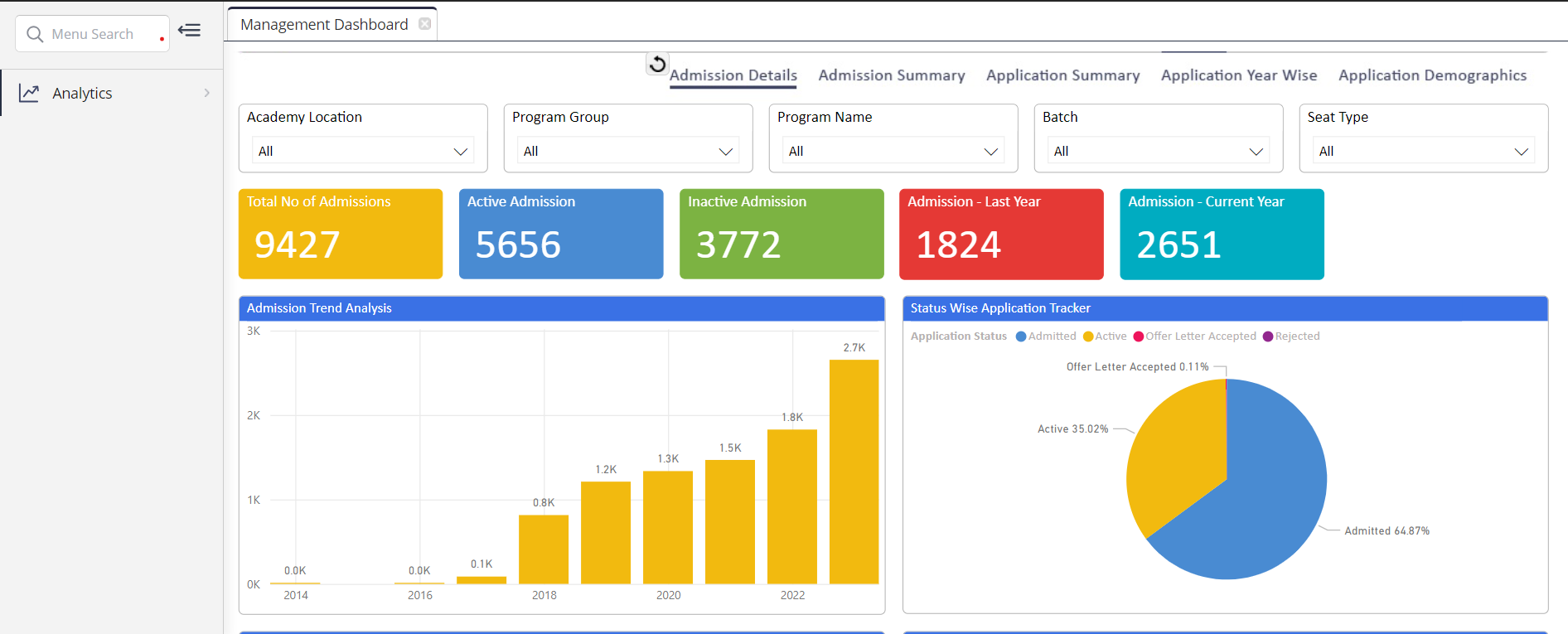
The admissions module within the Management Login Feature provides a holistic view of enrollment dynamics. Admission trend analysis allows administrators to identify patterns and make data-driven decisions for future intake. Source-wise admission analysis enables institutions to optimize marketing efforts by understanding the most effective channels. Capacity-wise assessments across various academy locations ensure efficient resource allocation, fostering a seamless admission process. The application to the admission tracker adds another layer of granularity, offering insights into the conversion rates at different stages.

Finance

Finance: A Transparent Financial Landscape

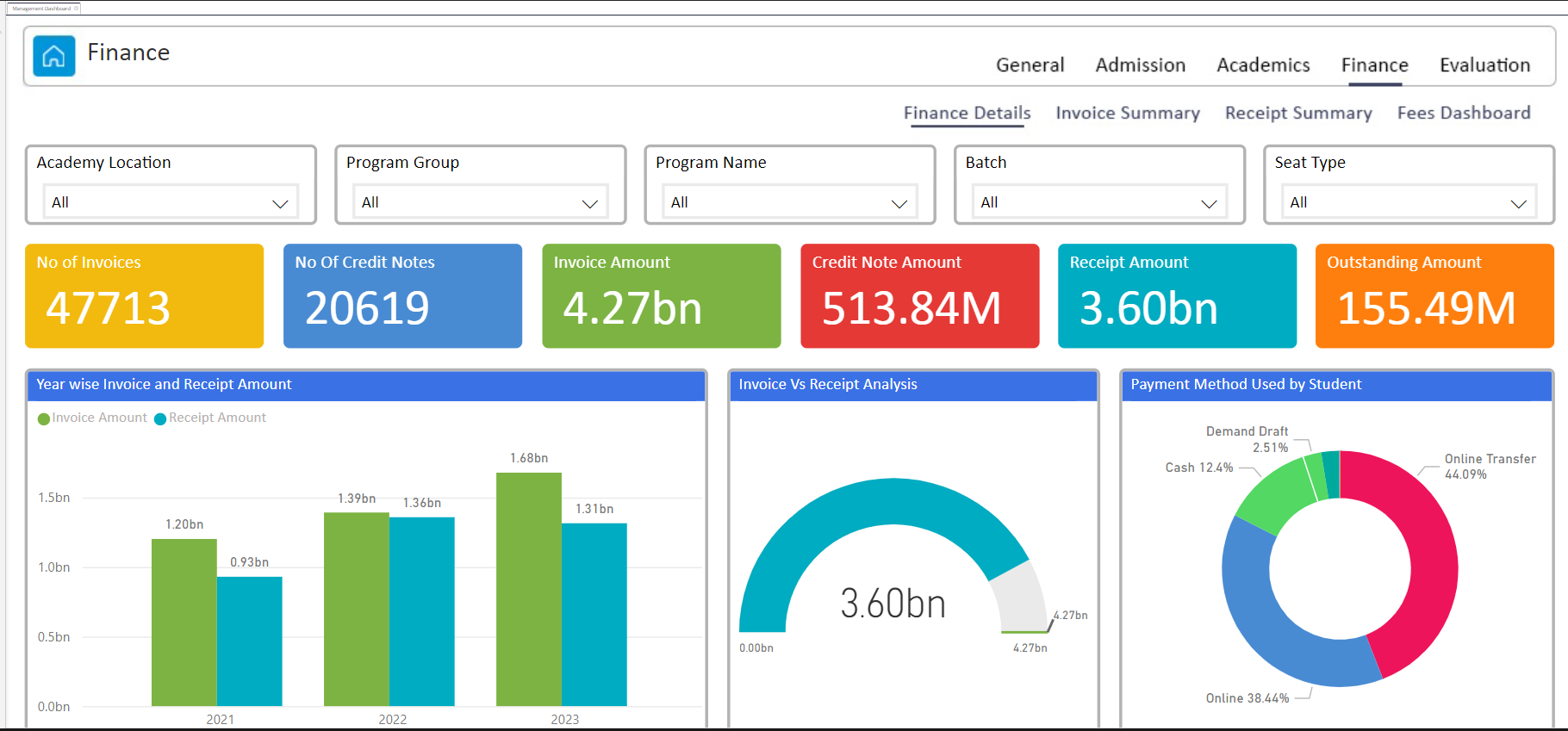
In the finance module, Academia ERP offers tools for transparent financial management. The invoice vs receipt analysis provides a clear picture of financial transactions, ensuring accountability. The payment mode tracker aids in understanding the preferred payment methods, allowing institutions to optimize their financial processes. Outstanding amount reports, categorized by Academy location, timeline, and percentage amount, offer a deep dive into receivables. Additionally, program-wise revenue reports equip institutions with insights into the financial performance of different academic programs.

Academics

Academics: Fine-Tuning Course Offerings

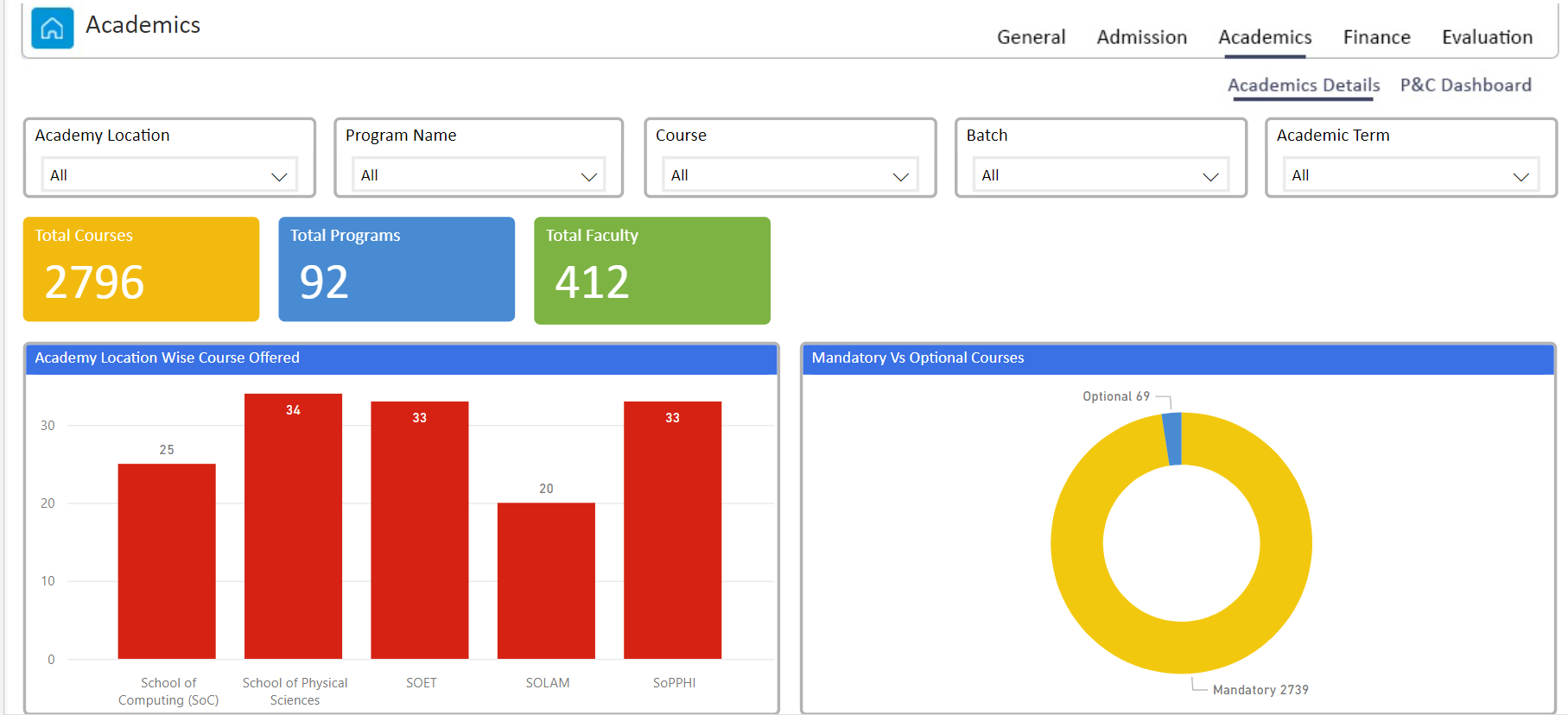
The academics module of the Management Login Feature is designed to assist institutions in optimizing their course offerings. Identifying top departments with the highest course offers allows academic leaders to focus resources effectively. The analysis of optional vs compulsory courses aids in curriculum planning, ensuring a balanced academic structure. Detailed reports on courses offered over time provide a historical perspective, aiding long-term academic planning.

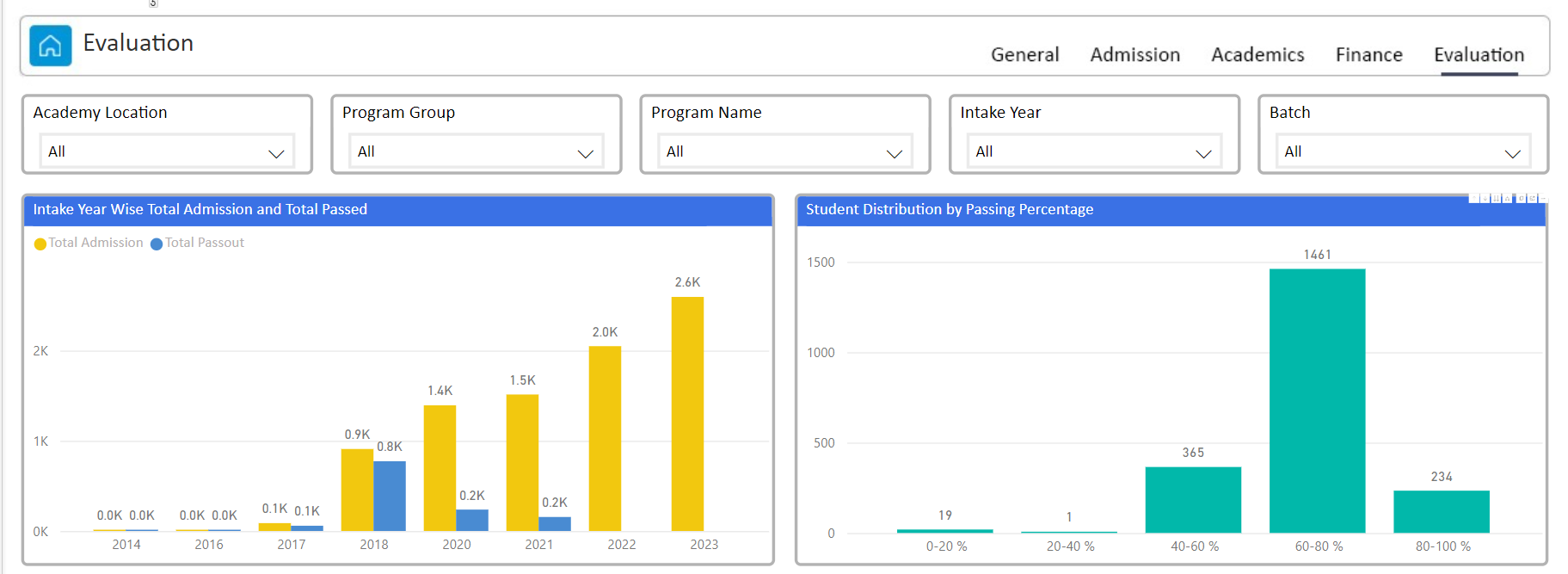
Evaluation

Evaluation: Enhancing Academic Performance

The evaluation module empowers institutions to assess and enhance academic performance. Pass vs fail comparisons by courses offer insights into the effectiveness of teaching methodologies. Intake and pass-out reports provide a comprehensive overview of student progression. Identifying top-performing courses enables academic leaders to recognize and replicate success, contributing to continuous improvement.

Glimpse into Decision-Making

The Management Login Feature provides a glimpse into the decision-making process with its visually intuitive reports. By presenting data at various levels of granularity, administrators can make informed decisions at the right time. Whether it’s optimizing admissions, managing finances, refining academic offerings, or enhancing evaluation processes, Academia ERP’s Management Login Feature empowers educational institutions to thrive in an ever-evolving landscape.

In conclusion, Academia ERP’s new Management Login Feature is a game-changer for educational institutions seeking a competitive edge in managing crucial processes. By providing robust visual reports and drill-down capabilities, this feature equips administrators with the tools needed to navigate challenges, capitalize on opportunities, and foster continuous improvement in all aspects of institutional management.

Embracing Educational Evolution: Implementing HyFlex for Flexibility Revolution in Higher Education

Introduction

In the ever-evolving landscape of higher education, institutions are constantly seeking innovative ways to enhance the learning experience for their students. One such transformative approach gaining momentum is the implementation of the HyFlex model. HyFlex, short for Hybrid Flexible, combines the best of both traditional and online learning environments, offering students and educators unprecedented flexibility. This article delves into the dynamics of implementing HyFlex in higher education and explores its far-reaching implications.

Understanding HyFlex

The HyFlex model is designed to accommodate diverse learning preferences and circumstances. It allows students to choose between attending classes in person, participating remotely, or even switching between the two based on their individual needs. This flexibility is especially valuable in today’s educational landscape, where students might face various challenges, such as geographical constraints, health concerns, or work commitments.

Benefits of HyFlex Implementation

Enhanced Accessibility: HyFlex makes education more accessible by breaking down geographical barriers. Students from different parts of the world can engage in the same course without the need for physical presence, fostering a diverse and inclusive learning environment.

Personalized Learning: With the ability to choose between in-person and online attendance, students can tailor their learning experience to align with their preferences. This personalized approach contributes to increased engagement and better learning outcomes.

Adaptive Pedagogy: Educators can adapt their teaching methods to suit different modes of delivery, ensuring that students receive a high-quality education regardless of their chosen learning pathway. This adaptability promotes a dynamic and responsive educational ecosystem.

Resilience in Uncertain Times: The HyFlex model proved invaluable during times of crisis, such as the COVID-19 pandemic, enabling institutions to seamlessly transition between in-person and online learning to ensure educational continuity.

Challenges and Solutions

While the HyFlex model offers numerous benefits, its successful implementation comes with its share of challenges. Technological infrastructure, faculty training, and student engagement are crucial aspects that require careful consideration. Institutions can address these challenges by investing in robust technological solutions and providing comprehensive training programs for educators.

The Role of Academia ERP

To facilitate the seamless integration of the HyFlex model, institutions are turning to advanced educational technology solutions. Academia ERP emerges as a leading solution provider, offering a comprehensive suite of tools to support HyFlex implementation. This innovative ERP system streamlines administrative processes, provides a user-friendly interface for educators and students, and ensures the efficient management of both in-person and online learning environments.

Academia ERP’s features include:

User-Friendly Interface: The platform offers an intuitive interface that simplifies navigation for both educators and students, promoting a positive and user-friendly experience.

Real-time Collaboration: Academia ERP facilitates real-time collaboration, allowing students to engage with course materials, participate in discussions, and submit assignments seamlessly, regardless of their chosen mode of learning.

Attendance Tracking: With HyFlex, monitoring attendance becomes a critical aspect. Academia ERP provides robust attendance tracking features, ensuring accurate and transparent record-keeping for both in-person and online participation.

Integration with Learning Management Systems (LMS): Academia ERP seamlessly integrates with popular LMS platforms, creating a cohesive educational ecosystem that enhances the overall learning experience.

Conclusion

In conclusion, the implementation of the HyFlex model represents a significant leap forward in the evolution of higher education. Its ability to provide unparalleled flexibility to students and educators alike positions it as a transformative force in the academic landscape. To maximize the benefits of HyFlex, institutions can leverage the technological prowess of solutions like Academia ERP. As we embark on this flexibility revolution, higher education institutions need to embrace innovation and invest in the tools that will shape the future of learning.


Maximizing Efficiency: A Foolproof Approach for College Admissions Teams to Optimize Resources

In an era where colleges face increasing demands and resource constraints, the need for streamlined processes within admissions teams has never been more crucial. This blog delves into a foolproof strategy to empower college admissions teams to accomplish more with fewer resources, ultimately fostering efficiency and enhancing the overall admissions experience.

The Challenge:

College admissions teams are often confronted with the challenge of managing growing application volumes, diverse applicant profiles, and evolving selection criteria. With limited resources, this uphill battle can lead to bottlenecks, delays, and a potential compromise in the quality of the admissions process.

The Foolproof Approach

Implement Smart Automation:

Integrate advanced automation tools to handle repetitive and time-consuming tasks such as data entry, document verification, and communication processes. By automating routine tasks, admissions teams can redirect their focus to more strategic and value-added activities.

Utilize Data Analytics for Decision Support:

Leverage data analytics to extract meaningful insights from applicant data. This enables admissions teams to make informed decisions, identify trends, and allocate resources more effectively. By understanding the applicant pool better, colleges can optimize their selection processes.

Enhance Collaboration with Technology:

Invest in collaborative technologies that facilitate seamless communication and information sharing among team members. Cloud-based platforms and project management tools enable real-time collaboration, reducing the reliance on physical meetings and streamlining workflows.

Implement a Holistic Applicant Tracking System (ATS):

Deploy a comprehensive ATS that centralizes all applicant information, simplifying the tracking and monitoring of each candidate’s progress. This not only enhances organization but also ensures that crucial details are not overlooked during the admissions journey.

Personalize and Streamline Communication:

Leverage personalized communication strategies through email automation and chatbots. Tailored communication not only improves the applicant experience but also reduces the time spent on generic inquiries, allowing admissions teams to focus on more nuanced aspects of the process.

Invest in Training and Skill Development:

Equip admissions teams with the necessary skills to navigate modern technologies effectively. Providing training on the latest tools and methodologies empowers teams to adapt to changes swiftly, making them more resourceful in managing complex admissions processes.

Conclusion:

By adopting this foolproof approach, college admissions teams can revolutionize their admission operations, achieving higher efficiency and productivity even with limited resources. Embracing smart technologies, data-driven decision-making, and collaborative platforms positions colleges to not only weather challenges but also thrive in the ever-evolving landscape of higher education admissions.

Read our case study for more used case information on this: False Bay College, Muizenberg, South Africa


Securing Academic Environments: The Role of SIS Training and Support

Securing Academic Environments: The Role of SIS Training and Support

Creating a secure and welcoming environment within university campuses is essential for the well-being of both students and staff. Unfortunately, the sense of safety is often compromised, as per Gartner’s report in August 2023, the Education sector emerged as one of the top five most targeted domains for cyber-attacks. Given this scenario, prioritizing student protection and risk mitigation has become imperative, underscoring the heightened importance of campus security systems and software.


When selecting a Student Information System (SIS), careful consideration of essential features, ease of use, and overall functionality is crucial for the successful integration and operation within educational institutions. Among the pivotal features, the emphasis should be placed on software training and support, and here’s why.


The Significance of SIS Software Training and Support


The introduction of a new system or technology inevitably comes with a learning curve. After the SIS is prepared for testing and launch, having reliable support to address queries or troubleshoot issues becomes paramount.


A dependable technology partner stands by your side throughout the process. Opting for a company with an extensive online knowledge base and a responsive support desk ensures quick responses. Leading SIS providers go a step further by offering tailored on-site and online training for staff and other users.


Continuous access to support is integral to the success of a school implementing a new SIS. Without proper training, integrating a new system only adds to the frustrations and workload of staff, defeating the purpose of the upgrade.


Choose Academia ERP for Exceptional SIS Training and Support


No other SIS provider supports your school like Academia ERP, from platform design to training and ongoing maintenance.


Academia ERP ensures that your system is configured with your institutional data, business rules, and variables from migrated data, making the training more relevant and offering staff a chance to become familiar with the system. The training period spans two months, allowing staff members to experiment with new skills, seek clarification, and gradually adapt to the system at a comfortable pace.


For more information on how Academia ERP can provide unparalleled support to your education institutes, reach out to us today.

Back to top