Type your keyword below

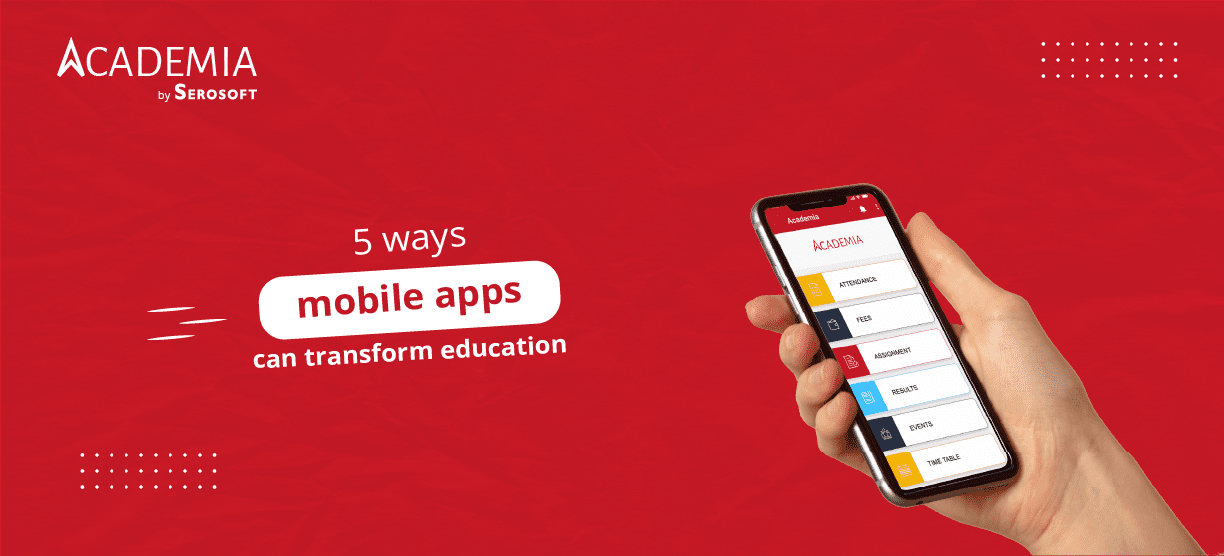
5 ways mobile apps can transform education and improve the student experience

Web and mobile applications have been an integral part of our lives. We shop, travel, manage, eat and do a lot of things that are powered directly or indirectly through applications. When it comes to education, the scenario is the same. Today, we have efficient web and mobile apps that allow institutes to go a step further in providing quality education and keep students participating in academic activities.

Although, it is clear by now that technology helps ease things. But when it comes to specifics not everyone can give quantified answers to the questions. Why have a student mobile application? How does it benefit the students and organization? These and many other questions are hard for institutes to answer especially in terms of advantages and disadvantages. 

So, here we are – trying to lift the mist from the question of how student mobile applications can serve as a transformative tool. Very specific and to the point, here is how Academia ERP solution for students approaches your institute’s problems concerning the student experience. 

What is student experience? 

Students are one of the biggest stakeholders of the education domain, and if we are not talking about their 360-degree development and not giving any heed to their cues on whether they are connecting with your institutional activities, you may very soon lose out to your competitors. 

By definition, student experience means 360-degree development of students not only in academic aspects but in terms of social, emotional, and intellectual growth. Institutes started redefining and refining the cultural, political, sporting, and artistic interests of students and pursuing ways in which technology can ease things for them.

Why apps for student experience transformation? 

The education industry is one of the oldest industries in the world. However, when it comes to tech adaptation the industry has shown slow progress. Today, when complex industries such as manufacturing and logistics are thriving due to technological innovations, the education industry is just beginning to scratch the surface. Hence the challenges that were holding the industry several years back are still holding it. 

It was only after covid-19 that technology became a dire need for the education industry and it agreed to change its traditional working. Today, technology is making education cheaper for students. It is ensuring everyone can access knowledge and resources well and students can participate in their development. 

Collaborations in various communities such as students, faculty, staff, and administrators have improved drastically. Mobile applications for education are engaging students better because of their vividity and ease. Furthermore, globally internet is being made available to people irrespective of their financial stature. It is a relatively cheap resource and almost everyone around the world is enjoying better connectivity than what was around 10 years ago. 

The market shows a positive trend toward tech adaptation. Be it online learning, digitalization of the infrastructure, digitally managing resources and stakeholders, or more, everything indicates an inevitable digital transformation. All these indicators tell us that mobile apps and other education technologies are here to transform how students perceive education. 

How do mobile apps improve the student experience? 

  • Ease of access

Access is one of the most underrated terms by far which is associated with technology. People don’t really pay heed to the ease it brings to people’s lives, let alone that of students. It is an undeniable fact that knowledge access is a privilege for a certain class of society. Especially the third-world countries where educating the population is a challenge. 

“More than 72 million children of primary education age are not in school and 759 million adults are illiterate and do not have the awareness necessary to improve both their living conditions and those of their children.”  

Using mobile applications and digital devices you can turn the situation around. You have an opportunity to share the knowledge resources with a larger group. It is relatively cheaper and provides ease of access irrespective of time and place. 

  • Create student groups and improve engagement

The three primary C’s that you have to focus on the most at your institute  – Communication, Community, and Collaboration can be easily achieved through a mobile application. 

Academia ERP / SIS solution is a central student information database that can be collaboratively used by many departments in your organization. It helps you align better strategies for improved decision-making. 

With a centrally-located database, you can access information about students such as demographic details, their weaknesses, their strengths, their achievements, and other aspects. This information can be further utilized to create well-balanced groups of students that help each other in achieving better academic and non-academic group or individual goals. It also increases the integrity and communication between the students and creates a well-balanced cultural and social environment for them to thrive. 

Communication tools and platforms such as social networks, forums, committees, discussion spaces, chats, and push notifications, are all great tools to keep the integrity alive in your education institute and healthy exchange of ideas giving birth to innovation. 

  • Real-time tracking 

Student mobile applications come up with a bundle of features that are a catalyst in improving student participation in academic and non-academic activities. On the same lines, having correct information is very important. With students being able to stay connected with the management, faculty, and classmates through mobile applications it becomes very easy for them to track any information about timetables, exams, news, events, transport, attendance, and other activities. This feature alone would help you improve the participation rate in various activities. 

  • Seamless learning 

The learning experience becomes more centrally aligned to students and achieving their personal goals becomes very easy. They start taking individual initiatives towards their education and hence student outcomes become better. Also, modern education ERP systems can be integrated with learning management systems or online learning portals. This would allow you to collect crucial information about a student for performance and help them in their course for better knowledge retention. 

  • Reports and Analytics

Data is collected at several touch points on the app to give you a peek into student performance and participation in classroom and non-classroom activities. The data can be used more creatively by the institutes. Reports and analytics are revolutionary tools that allow you to detect student risks prior and take appropriate actions to evade them. 

Wrapping Up 

These were some ways that student mobile applications affect the student experience positively. To make sure, you are effectively using these technology innovations for your institute connect with the technology experts at Academia ERP / SIS Software. We are one of the leading education technology partners and we have successfully served more than 320+ customers across the globe. To know more about the product, visit our website.  

Role of Predictive Analysis in the Education Industry

The education industry is undergoing some of the biggest changes in the past few years. Although the industry is embracing e-learning enthusiastically, the newfound challenges in the pandemic and post-pandemic era have completely jolted the industry. Institutes are now moving towards a tech-based evolution. An industry that dates back centuries and is known for not making many changes in its traditional format of operating is now looking up to technology for its various needs. 

Right from student discovery to student retention and other nesting stages, technology has fused itself to every operative, academic, and organization task to restrengthen it. Tech-based solutions are helping in increasing accountability in people to improve knowledge retention and student experience. Institutes are using ERP or SIS (Student Information System) solutions for allocating resources and managing them better. Benefits in terms of better management and reduced cost are remarkable. 

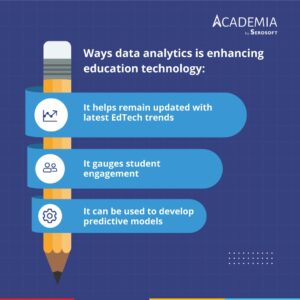
Going a step ahead, not only tech adaption is improving the functioning of the institutes but also preparing them for future challenges. Predictive analysis allows educational institutes at all levels to learn from students, beneficiaries, and other stakeholders in the system to gain valuable insights and highlight industry trends. Not only does it gives them protection in harsh business scenario but also a competitive edge.  

Predictive analysis

Predictive analysis is a process of crunching the data and gaining meaningful insights at all levels from various stakeholders in the system to devise useful strategies for better ROI and management. 

Concerning the education industry, predictive analysis can help the management to make more informed decisions and effectively operate their institutes. It also helps in making strategic decisions around the student lifecycle and improves student experience by ten folds. It gives you a near-accurate prediction on what are the factors that may weigh down things for your institute. They can use this new knowledge and combine it with their experience and understanding to build a more sustainable system for things. In long run, improved decision-making can result in higher revenue, brand recognition, student retention, and more. 

Not to be confused with a traditional analytical tool

Meanwhile, the traditional analytical tools are focused on providing you with a detailed analysis of things that have been done, a predictive analytical tool is forward-thinking and provides you with data-backed recommendations on things that are to be done next. 

For any institute, what they do next in the future is as important as what they are doing now. The predictive analysis provides actionable insights and accentuates the confidence of people in the management to improve their decision-making.  

Advanced predictive analysis tools use structured and unstructured data and statistically analyze various functions and operations of the institute. Furthermore, it mines data and does predictive modeling to uncover hidden patterns and associated connections between various functions and outcomes to prepare personalized recommendations. 

Moreover, predictive analysis is a tool that allows you to go beyond just the academic and organization data. It allows you to capture elements that help you understand the user participation, response, and activities through the online portal, mobile applications, and various touchpoints and triggers in the digital system. It can also use big data to tell trends and give you a 360-degree view of the institute’s performance and recommend strategies to improve. 

Evolution of Predictive Analysis in Education 

Like any other industry, the education industry too has its unique needs, and technology if not personalized doesn’t serve its purpose. The evolution of predictive analysis in the education industry has given rise to systematic improvements in the education sector also, institutes are seen using existing data to gain insights on the present and future performance of education organizations as a business in terms of monetary gains and sustainability. 

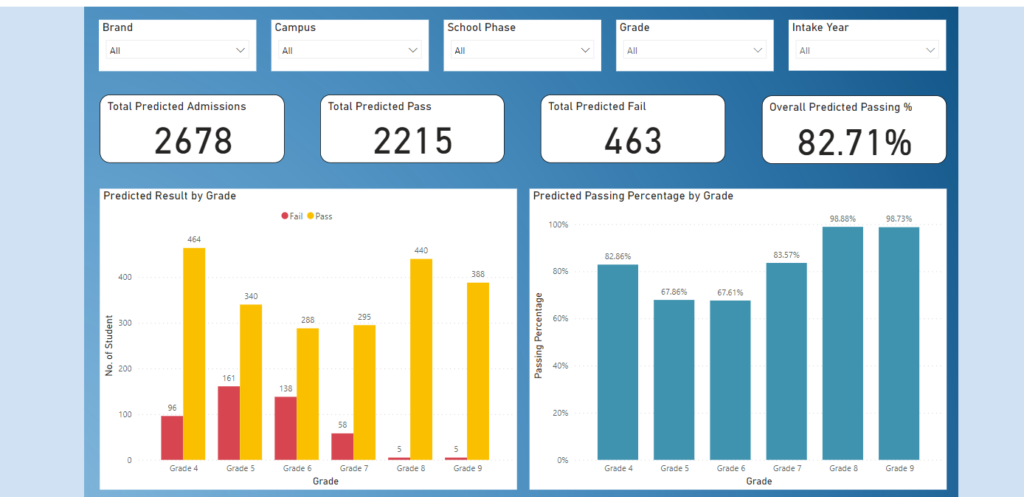
Today, predictive analysis is not only being used for bigger aspects of the education industry such as the number of admissions but it is also used in predicting student success. Student success is a key indicator in the system, all the other factors mapped to it are taken under consideration in advanced predictive analytics tools to ensure business longevity and performance as a whole. 

Bid adieu to human errors

Traditionally data collection, collation, and analysis were done manually but the process is now redundant due to two major reasons. First, organizations had to dedicate resources primarily to this job and it was time-intensive and costly. Secondly, human intervention is prone to errors that may result in data discrepancies. Thus predictive analysis is a more viable and practical solution. 

Unique Usecases of Predictive Analysis in Academia ERP Solution

Academia is an advanced ERP/SIS software that provides dedicated solutions for schools, colleges, universities, and training institutes. We offer highly configurable software solutions that can be easily customized to meet your needs. Using Academia you can manage your academic, organizational and operational tasks easily. Furthermore, the product offers you a great user experience on mobile and web platforms, it is a secure solution that allows remote working. 

As a high-end software solution, we understand the importance of predictive analysis in the modern business environment. And have utilized it to its potential to develop amazing solutions for some of the biggest institutes located globally. Connect with us to know more about Academia and how we can help you manage your institutes better. 

Here are a few use cases of predictive analysis in Academia. 

1. Predicting Student Performance

One of the biggest challenges for faculties and management is to identify students that are lagging behind. Holding examinations quarterly or half-yearly does not provide much scope for performance evaluation and improvements. 

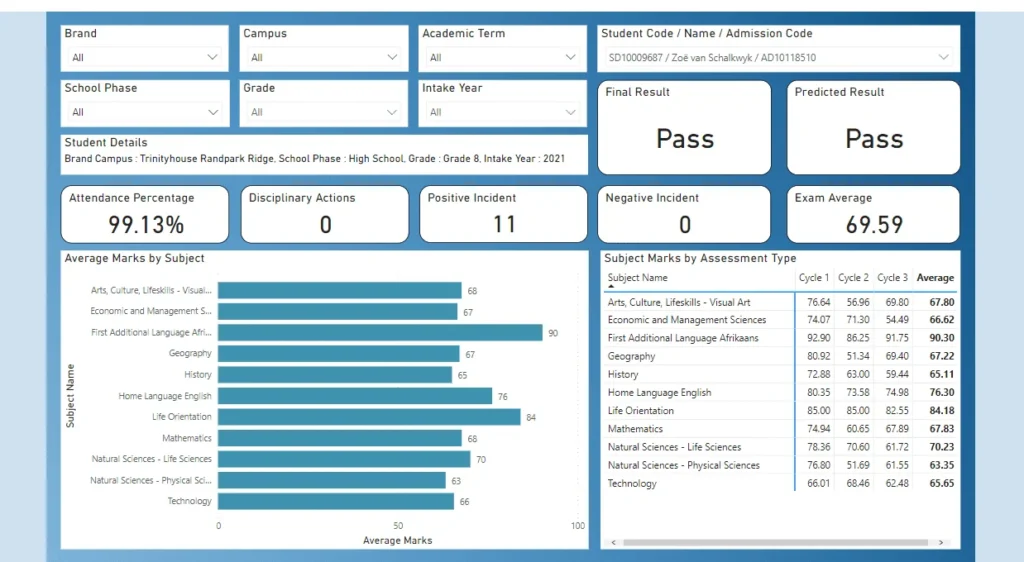
Academia ERP/SIS solution uses historical data of the students and creates a data modeling to provide you a close to accurate analysis of the student performance. Taking it a step ahead, it also helps in analyzing the performance of the class as a whole through a group analysis.

With an accuracy rate of ~90%, Academia is one of the finest education ERP solutions globally that statistically analysis a wide range of factors to provide a near-close prediction on students that may fail due to internal and external factors. The same goes for group analysis. 

Using the tool, schools, colleges, and universities can focus on student performance individually and identify the markers in the system that are causing the performance degradation in student performance. This helps them to take actions that improve student performance and drive them towards excellence. 

2. Application Conversion Prediction 

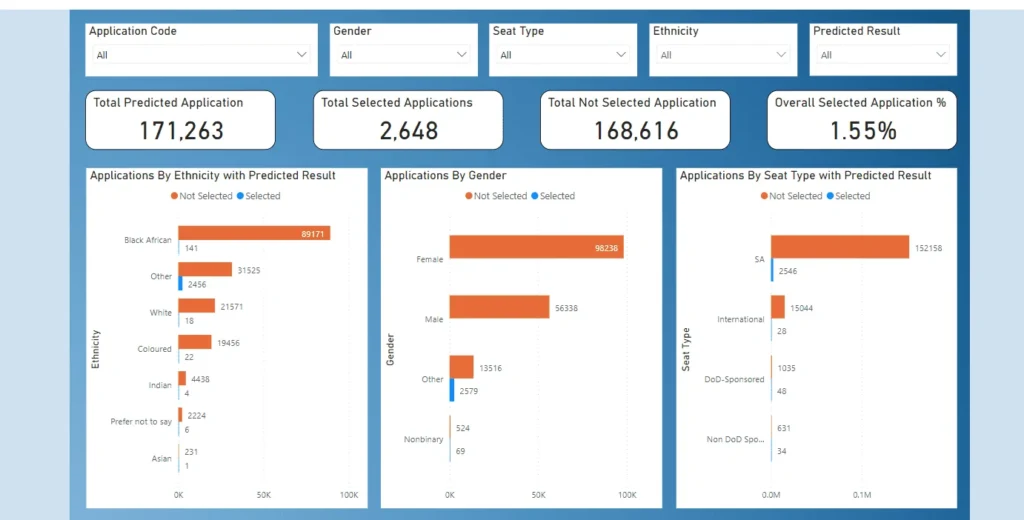
The drop rate in the stage from application to admission is a huge challenge for the education industry. With the limited available information about the students, it becomes very difficult for the organizations to identify the factors that are causing the drop rates to shoot up. 

With historical data analysis, the Academia ERP/SIS takes into account various factors to identify the major causes of the drop rates. Also, it provides useful insights and information to the counselors to guide students correctly and convert the applicants into students. The system being highly configurable, can be utilized by any institute easily to devise their own metric to identify applicants that are more likely to become a student in their organization and also fight off drop rates more efficiently. It gives them a major strategic advantage to increase their revenue for longevity.

Way forward

The growing competition in the industry requires a fast-paced solution that does not take much time but does the job in minutes and provides real-time updates along with greater data visualization. Owing to the new needs, the predictive analysis provides you the required support to manage your institutes better and support students in improving their performance. Student-side benefits such as improved transparency in the system and adaptive learning allow them to excel in their studies and increase their participation in the online and classroom learning scenarios. 

Tech-based solutions generate tons of data every day. Realizing the true potential of this data to devise meaningful strategies can help the organization in improving its market positioning. Operational and commercial decision-making can be backed with reliable data and prescribed suggestions from predictive analytical tools.

Why School Management System for managing Admissions and Enrollment in Canada?

Canada is the second largest country in the world, right after Russia. It is a good country having a thriving economy with multiple business opportunities. Education in Canada is expanding and moving in a good direction with a strong public education system.

Institutions from across the world are moving towards a radical change and likewise in Canada, institutions are adopting EdTech solutions like Student Management or Information System. It is helping institutes automate and streamline institutional tasks right from admissions, to enrollment, examination, and more. 

How School Management System is Helping Canadian Institutions in Managing Admissions and Enrollment?

According to Wikipedia, Canadian K-12 institutions are rendering quality education to institutions, and it is delivering the highest school enrollment as per the percentage of their graduating population. 

So technologies like SMS/SIS and more are helping institutions to increase the enrollment rate and optimize the admissions process in the best manner.

What is the School Management System?

A School Management System (SMS) is software that provides complete management of all the academic and administrative activities in an institution. It manages all the tasks right from enquiry, and finances, to the completion of education. It reduces the workload of all the stakeholders along with human malfunctioning, errors, confusion, and more. It provides a complete database of each student for multiple departments, centers, and even locations.

A well-equipped and feature-rich SMS provides schools with a centralized portal and mobile application that can be accessed by anyone from anywhere at any time according to the needs and the authorities.

Why choose SMS for managing admissions and enrollment in your institution?

  • Creating a giant database of all the enquiries

Admissions are considered to be the busiest time for educational institutions, it involves a lot of documents, details, and more with a huge amount of data and information. Especially, in the enquiry process,  they involve large amounts of data like the name, address, course details, other functionalities, and various other things. 

A School Management System manages a complete database of students for all the administrative tasks, and especially for managing enquiry processes, it provides a separate analytical dashboard to check, manage, and update any data accordingly.

  • Facilitating the enrollment process

The admission process is yet another crucial task for an educational institution, it needs to be systematic and proper. The enrollment process is one of the most important processes in completing admission processes and initiates efficient attendance, form-filling & more.

The SMS automates the complete enrollment process and creates a systematic analysis of the student records, it also creates and handles students’ records & management effectively. It also designs the enrollment processes & simplifies the student entries, documents, images, certificates, and more making the process efficient and effective in the best possible way.

  • Creating an effective chain for fees & finances

Fee & finances management is also important for education institutions. A Student Management System provides complete fee management, it automates all the fee-related tasks reducing the chances of errors. It will generate diverse fee structures and receipts for complete admission & enrollment processes. 

It includes various features & functionalities like a robust mobile application that can efficiently provide multiple features for fee management. It provides students & parents with easy fee submissions, receipt generation, and more along with notifying them of the due date of fee submission and a lot more.

  • Building a strong chain of communication

A proper chain of communication is the key to success for administrators, staff, faculty, and even students in the admissions and enrollment process. Institutions must build a strong channel of communication among stakeholders.

An SMS creates and builds strong seamless contact and relationships among all the stakeholders and drives a faster mode of communication that can nurture good modes of coordination in the institution.

So, what are you up to?

Canadian institutions in the modern scenario need a splendid difference and personalized element to manage all the academic and administrative operations in the institution. It also leads the way to manage admissions and enrollment and boosts the entire admission drive in the best way. Academia SMS can help with this in unbelievable ways, want to know how? Request your demo now!

How College Mobile App Can Make Life Easier for Your Students?

With the increasing advancement in technology, students are also being technologically influenced. For this, the education sector is getting driven by smart tools and software that can help in balancing the student lifecycle. Even after the COVID-19 pandemic, institutions are adopting advanced solutions like Student Information System (SIS) to manage their academic and administrative activities in the best way.

A Student Information System streamlines the complete educational operations in the institutions, it provides a systematic arrangement for all the operations associated with a student. A robust ERP/SIS includes a mobile application that not only helps faculty and administrators but also the students making their life easier in many ways. 

How does a mobile application help students manage their day-to-day operations?

  • Instant Accessibility

The new generation of students wants everything easily accessible. They want everything at their fingertips. They want instant gratification for all the institutional tasks.

An ERP/SIS with a mobile application provides easier access to students for any of their institutional tasks. It provides all the information at a glance with easier accessibility right from admission, enrollment, program & courses, examination, and a lot more with just a single click from anywhere and everywhere. 

Students can easily access attendance, timetable, assignments, and all such things using the mobile application. 

  • Motivates Students

A handy mobile application with all the functionalities to manage students’ attendance, timetable, fee, and a lot more can ease students’ life in many ways. It motivates & empowers students on being active in managing their day-to-day tasks and also in their studies. 

A user-friendly mobile application helps students stay active, energized, and motivated for further studies. 

Also check, how the Academia ERP/SIS mobile app helped students in different institutions:

  • Connectivity among all Stakeholders

An educational institution involves multitudes of tasks from each end, like faculty, administrators, and students. A mobile application associated with software like ERP/SIS provides complete access to all the stakeholders like faculty, administrators, and students. For example, it avails students of easy assignment submission, and likewise, it avails faculty members to check and mark numbering for assignments. 

This way, it connects all the stakeholders for all the operations, providing instant solutions and satisfaction. It also includes connecting students and faculty members with features like real-time notifications, database updates, notifications, chatbot integration, and many more. 

  • Personalization

As discussed above, students of this generation need everything quick, easy, and personalized. A feature-rich mobile application provides complete accessibility and personalization to students. It regulates the easier flow of data, information, and updates among students and other stakeholders, and the best feature of this is it provides different user interfaces to each stakeholder according to their needs and authorization motivating personalization and ease in all manners.

Conclusion

With the regular advancements in education, it is a must for institutions to provide utmost ease to students. Technologies like ERP/SIS provide complete management of all academic and administrative operations. It provides an ease to all the stakeholders by automating all tasks and makes it accessible on the portal and the mobile application. 

What are your thoughts on the use of mobile applications for students and faculty members? Let’s discuss it in detail, contact us now, and one of our experts will get back to you soon.

Top EdTech Trends in the USA Market to Pay Attention to in 2023

The technology adoption in the current scenario is improving at a steady pace. It is the right time for educational institutions to adopt techniques that can help overall management. Educational institutions need to understand that it is the time when today’s needs will become tomorrow’s obsolete.

Tech adaption is going to be a decisive factor in the competition for the year and beyond. Institutions need to prepare for their digital evolution that can improve their market positioning and share. 

The USA is one of the fastest growing countries in all aspects, especially in terms of education. In recent years, EdTech in the USA is expanding exponentially and institutions across the country are adopting new technologies that can help in the overall development and growth of the institution. Let’s have a look at the top EdTech trends the USA institutions need to pick in 2023.

Top EdTech Trends the Industry should pick in 2023

  • Institutional ERP/SIS

With the growth in the education sector, institutions must ensure efficiency in all academic and administrative operations. An institutional ERP/SIS provides end-to-end automation of operations along with managing the entire student lifecycle. Automating all the processes leads to complete digital transformation of the institution making processes more transparent, smooth, and efficient. 

So with the emerging competition, institutions in the USA need to be equipped with an ERP/SIS to ensure better operational activities along with an enhanced learning experience.

  • Artificial Intelligence

Artificial intelligence is truly impacting the education world. It is helping enhance the education sector right from the classroom experience to commercial and organizational decision-making.

If implemented effectively, AI can help educational institutions strengthen the classroom experience along with improving the overall institutional experience. It helps in filling the needed gaps in learning and teaching allowing institutions to drive efficiency, and personalization, along with streamlining learning experiences.

The institutions in the USA need to leverage artificial intelligence in combination with good software/tools.

  • Gamification

Gamified lectures in an online learning setup are a huge success for improved student participation and knowledge retention. It has been implemented in all other fields and likewise in education. It is helping students improve their learning experience tremendously. It starts with the action of automating institutional tasks and also bringing enhanced learning experiences for institutions. The basic implementation of gamification can be initiated by replacing the traditional marking or grading system with the point system. It simplifies the marking processes for students in the competitive age along with reducing peer pressure to earn more marks or percentages in the examination. 

It helps faculty members and students in psychological processes that motivate learning and overall development in the best ways.

  • Focus on Student-Centered Learning

Student experience should be the biggest focus of the education industry. Institutions must adopt software/tools that support student learning in all ways. The USA in the current scenario is a hub for students from across the world. Institutions must adopt techniques like adaptive learning that provide personalized experience and help in the overall management and especially ease to students to motivate them for focused learning.

Conclusion

Institutions in the USA are adopting EdTech technologies at a pace. So it is high time for your institution to adopt or replace your old technique with a new, improved, and efficient solution. There are countless software, tools, and technologies that can become helpful but may remain a tricky and crucial job for you to choose the best one. 

We can help with this! 

Just Contact Us Now and one of our expert team will get back to you for a detailed discussion.

5 Reasons to go cashless in this academic season in your institution

Collecting fees is one of the tedious yet crucial tasks for any educational institution. When performed manually, it involves a lot of time, effort, and workforce. Even after this, the process remains unmanaged. A long queue of students, huge data, and various files & documents make this process more confusing, error-filled, and chaotic. In this modern era, a fee management system can automate all this process cashless (online). 

Here are 4 reasons to go cashless this academic season in your institution:

  • Easier Mode of Payment 

Fee submission and collection are the most critical tasks in any educational entity. It needs to be effective in any terms. It is the right time for the institution to opt for technology or software that can make payment processing easier. Technologies like ERP/SIS provide a fee management system and complete online and cashless payment processing. It helps in making the complete process easier, systematic, and organized.

  • Accessible Record-Keeping 

With modernization, students and faculty members demand a quick response to any institutional operation. Gone are the days when you had to find any paper or document of a transaction from a room full of files and documents. Then time changed, and it became difficult to find and manage transactional data through multiple spreadsheets, documents, and tally devices. 

To this, it is a must that institutions opt for cashless transactions and automate complete processes using automation. It can not only help in managing the payment inward and outward techniques, but this also will help in the easy accessibility of data from a single software.

  • Remote Data Availability 

Students in today’s generation demand quick responses and easy-to-do things. By using cashless payments and transactions, institutions can provide remote data availability to students, faculty members, and higher authorities. A mobile application with all the features and functionalities to automate complete fees & payments can help in better ways. It can avail any stakeholder to connect and coordinate from anywhere and anytime. 

  • Convenience to Students/Parents

The new generation of students is happier going online for any operations. It provides them with more flexibility and ease of things. The online payment system in institutions allows parents to pay more securely and conveniently. A smartly chosen software or technology used for institutions even notify students and parents to pay fees before or on the due date. It also provides them with the on-time generation of the receipts and various benefits like this, it provides convenience to students and parents for fee submission and related tasks. 

  • Lower Risk

Cash payment in any business entity involves a lot of risks. In educational institutions, it involves a long chain of connections (inter-department and external department). After successful submission of the fee by the student, the accountant passes it to higher authorities involving 2-3 middlemen. This complete process brings various confusion, errors, chaos, and in some cases, loopholes.

To avoid this, modern educational institutions can adopt advanced tools like ERP/SIS, which also provides full automation to complete fee management operations, minimizing risks and creating transparency for complete transactions and processes. 

Why Use the Academia Fee Management System in Your Institution?

Fees & payments are considered the most essential tasks for any institution. The Academia fee & payment system provides all the related tasks like generating receipts, canceling the transaction, generating bills, creating receipts, and a lot more. 

It automates and streamlines all the processes of managing and filtering out department-wise data and generates impactful insights and reports that depict the exact count of fee collection from all the departments. 

Academia fee management system provides

  • Digital and remote account management
  • Effective management among internal and external departments 
  • Secure and transparent payments 

Benefits of Academia mobile application for fee management:

  • Enhanced interaction 
  • Effective administrative management 
  • 24/7 availability 
  • Instant updates 
  • Prior notifications to parents/students 

Conclusion

Cashless payments are the new needs of modern business entities. It is the right time for educational institutions to think and opt for a cashless mode of payments but with a strong base of managing operations. 

Let’s connect and discuss how a fee management system can strengthen administrative operations, accounting processes, staff management, and student ease & satisfaction in your institution. Request your demo now and one of the experts from our team will get back to you! 

EduAction with Arpit Badjatya – A Candid Conversation “Tea & Talk Over EdTech”

[vc_row][vc_column][vc_column_text]

“Technology is not just a tool, it can give learners a voice that they may not have had before.” 

-George Couras

The COVID- 19 pandemic has taught us about various digital parameters, especially in the education sector. It allowed us to adopt a new education model, accept new challenges of technology, and advances. 

Moderated by Mr. Arpit Badjatya, CEO & MD, Serosoft (Academia), EduAction is a series that grabbed the huge attention of vice-chancellors, principals, and other education leaders globally. It is a concept-based series that includes a candid conversation over the digital transformation journey of educational institutions. 

Also, check – Thank You Message from our CEO 

Insights to the Beginning – The First Episode 

The first episode of the series witnessed Prof. Chandrashekhar Ramanathan from IIIT  Bangalore. He has spent 25 years in the field of Information Technology in various capacities. He served on the Technical Advisory Panel of many departments for the Government of Karnataka including the Department of Education, Finance, and Center for Smart Governance. He was recognized in the list of “Top 10 Data Science academicians of India” by the Analytics India magazine for the years 2018 and 2019.

The first episode was a boom and the conversation between the two experts over tea & talk went through a lot of EdTech trends.

The highlights of the first episode are:

  • 3 biggest learning in regards to technology adoption.
  • Things to remember for successful adoption of new automation tools.
  • Factors to consider when adopting new technology.
  • How to select, compare and evaluate ERP vendors? 
  • What would classrooms look like in 2025?
  • Rapid-fire round with the guest.

Any many more questions… 

The very first episode marked a huge success among educators, education leaders, and people who aspire to education technology and its usage. 

The International Mark of EduAction with the Second Episode:

The enthusiasm with the first episode was a motivation to make it more huge with the second episode and so is the grand move of the show. This time internationally!

The second episode of the show made an embarking move to the international education market. A special guest from CECOS London – Mr. Aakif Tanveer, Director of Communications added more value to the show. He is a graduate of Imperial College London and has focused on the use of technology during his 13 years at CECOS College, London helping the college grow consistently. 

His strong emphasis on the use of technology to deliver student-centered experience has enabled CECOS to become a dominant player in the UK education sector.

The second episode has also marked a successful presence among the EdTech leaders and educationalists from across the world. 

The highlights of the second episode are:

  • Why do institutions need to focus on automation in the post-COVID world?
  • How CECOS College, London is delivering a Student-centered Experience through automation?
  • What are the major wins with automation?
  • Rapid-fire round with the guest.

And more such discussions…

We hope you have attended both the sessions and had a great experience with such expert personalities. In case you have missed the sessions, we have made them available to you. Just check the below links:

EduAction with Arpit Badjatya EP #1:

https://youtu.be/GBImKgrYE-s

Stay tuned for the next exciting episodes! 

How Data Analytics Improves the Efficiency of Educational Institutes?

The education ecosystem includes various small and medium entities like universities, colleges, schools, and training centers. It involves a huge amount of data and information that needs to be stored, managed, and organized in a way to be accessed anytime. Manual intervention in institutions makes this process a bit complicated and sometimes creates situations for breaches of confidential data. 

So how can you solve this in the modern era of education and technology? Education analytics can become the perfect solution to this. Using analytics institutions can attain a lot of opportunities for better data gathering and analysis that can help faculty members and students in the long run. 

Want to know how it is possible? Let’s discuss it in more detail:

What is the role of analytics and reporting dashboards in an educational institution?

Modern educational institutions need to understand analytics so they can attain advanced outcomes that can significantly transform the way of teaching, learning, and managing the whole institutional objectives. 

Analytics and reporting dashboards can effectively attain and engage current and prospective students, increasing student enrollment, and improving student retention and completion rates. It can help institutions achieve intended outcomes with pace and perception. 

How can analytics improve academic and administrative efficiency in an institution?

Analytics and reporting are becoming increasingly helpful for educational institutions to attain positive outcomes, it can effectively manage all the academic and administrative operations of an institution. Let’s discuss it in greater detail:


Academic Management Using Analytics 

  • Efficient admission process 

Admissions are considered one of the most important sessions which includes enquiry, registrations, enrollment, and various other tasks. Analytics can lead to proper and effective management tracking every information related to their data, finding efficient patterns, and shifting the admission process to go smoothly. 

  • Program and courses management 

Managing programs and courses in an institution is also vital, institutions must opt for tools and technologies that can help in selecting programs and courses using data analytics. Selection of the right course within the right time along with all the data makes students more focused. This improves students in the subject and indicates to whom and when specific learning content should be delivered. 

  • Effective management of fee operations 

Fee management is also one of the crucial tasks that include multiple bill payments, transactions, and more. In modern education institutions, it is important to accelerate online payments and create a systematic fee payment procedure. Data analytics with an ERP can facilitate complete fee management having multiple features including online payments, mobile notifications, and access to all other features. It can differentiate between generating receipts, canceling the transaction, creating receipts for backdating, and more. 

  • Advanced attendance management 

Attendance is considered one of the most necessary tasks for any educational institution, but with manual intervention, this process becomes critical and sometimes creates chaos and confusion among faculty members, students, and even higher authorities. An ERP integrated with data analytics can provide complete data management of attendance along with biometric integration of each student’s attendance. Graphic presentation of attendance becomes easier for all students and faculty members creating a systematic loop of daily attendance. 

  • Enhanced data security 

Data security is often the most important concern for any educational institution. Institutions should opt for tools and techniques that can provide enhanced security. What is better than an education ERP? It deals with complete data security having data analytics and system usage analysis to track all the data and information from any resource. It gives security to students and faculty members in providing and managing confidential information related to any subject matter in the institution. 

  • Complete student lifecycle management 

Students are the ultimate stakeholders of any institution and almost every operation in the institution remains associated with students. Right from admission to alumni of the student, multiple tasks need to be performed by the institution along with providing a better user experience to students. Using analytics, institutions can attain a robust student lifecycle management providing perfect catchup to exact details of students. Students also get the authority to have quick responses to their requests whether it is related to admission enquiry, examination, or any other query.

Administrative management using analytics 

  • Hostel management 

The hostel is often a section that needs separate care and involvement from the institutional authorities. Having a perfect system that can trigger automation of all the basic operations like the number of students in the hostel, the number of amenities, availability, and attendance of students, and related things. Analytics used effectively can make all these simpler and more organized. 

  • Transport management 

Another crucial activity in an educational institution is transportation! It involves a huge amount of manpower, money, and resources. Institutions need to understand that using automation they can make this process more aligned and systematic. GPS trackers and cameras are added to the analytics through which counting of each student, their bills, their attendance, and all other things can be measured and analyzed. With all these, tracking and maintenance of drivers and helpers’ activity add to the feather with students’ safety. 

  • Library management 

Libraries dole out a vital role in the education industry. It can be called the brain system of any stakeholder in the institute. With the enhancement in the digital content, it is initial to manage the catalog of the educational institutions with a scalable and reliable library management system having feature-rich analytics and reporting dashboard. It will support each requirement related to the library and its management virtually. 

How can analytics bring a differentiation to your institution?

With the emerging EdTech trends, analytics is playing a vital role in the educational ecosystem. It can help institutions achieve automation and digital transformation by opting for software like an ERP/SIS. 

Analytics can simply create differentiation in your institution creating a data log of each activity whether it is for students, faculty members, parents, or higher authorities. It can be considered a breakthrough point of success for your institution. 

Conclusion

Hope you liked the article and got to understand how data analytics improves the efficiency of educational institutes? Want to know more about analytics and reporting dashboards, contact us now, and one of the experts will get connected to you to help you with the best. 

NBA Accreditation: Definition, Benefits, and Process

With the advancement in the education sector, the quality of education and learning is enhancing day by day, and the introduction of a new Accreditation process by the NBA in 2015 is one such change that can bring great impact in terms of quality of education & institutional practices. 

What is NBA Accreditation?

NBA, National Board of Accreditation is an accreditation agency representing India in the Washington Accord (WA). The NBA was established in 1994 and gained autonomy in the year 2010. Furthermore, it became a member of the Washington Accord in the year 2014. The main feature of the NBA is to assess the performance of higher education institutions issuing quality accreditation certificates to a specific program that complies with the quality Standards Criteria of the NBA. 

The NBA accreditation supports various programs on mission and vision statement, Programme outcomes, course outcomes, faculty contributions, students’ performance, teaching-learning process outcomes, infrastructure, and library management. 

Based on various criteria, NBA certification and accreditation support various funds, autonomous college status, deemed university status and having the authority of researching projects. 

Why is NBA Accreditation important?

Let’s say a higher education institution has NBA accreditation and carries the stamp of recognition for its education quality assurance at undergraduate, graduate, and postgraduate levels. Universities and colleges need to have NBA accreditation for as stringent NBA accreditation criteria with the purpose that they are at par with international best practices. 

Having an NBA accreditation, higher education institutions can have better clarity of data, identification, and student encouragement that can lead to enhancement of the overall institution. 

Benefits of NBA Accreditation

  • Managing quality standards 

There are various ways through which an institution can manage quality standards, with NBA accreditation it becomes quite possible to meet stringent quality standards. Academia modules provide complete management to quality standards providing the necessity of students having to conduct a detailed analysis at college admission and management process. 

It signifies the commitment to excellence, students also get benefit from the process of continuity in the improvement of quality that is a part of the NBA’s approach to promoting excellence in technical education. 

  • Encourages trust in the institution

Institutions having NBA accreditation have a compulsion to meet and maintain high standards. This also increases trust and confidence among the public promoting accountability. This helps potential students and their families to have a certain level of trust in the institution for the amount of accreditation it receives. 

  • Improves students’ performance 

The modern generation of students expects an enhanced and advanced process of learning, teaching, examination, and result generation. Academia supports NBA accredited programs and supports Outcome-Based Education OBE, which can measure students on criteria like knowledge, skills, and attitude. Also, various facilities and curriculum ensure the student gets proper placement after their studies. 

  • Helps in SWOT analysis targeting better outcomes

Having NBA accreditation institutions can do a SWOT analysis, let’s say, evaluation of their strengths, weaknesses, and opportunities/threats. Academia with its modules helps in perfect evaluation, it helps the institution understand where it currently stands and how it should move forward. 

  • Promotes fund-raising

Accreditation necessarily helps educational institutions to secure and raise funds in the best ways. With the funding increasingly linked to effective performance and outcomes, accreditation would help institutions to avail performance-linked funding and incentives. 

  • Better mobility going forward

It is always important that educational institutions create transparency and provide mobility to educational institutions, it encourages and makes possible easing out the mobility to students and professionals at all levels. 

Enabling all the features that support accreditation, Academia facilitates higher mobility to students who are pursuing higher education. 

With the rise of the advanced education ecosystem, higher education institutions in India need to adopt the accreditation process to garner the benefits of the NBA program focusing on the betterment and growth of educational institutions. 

Process of NBA Accreditation for Higher Education Institutions 

  • Online Registration

Institutions seeking NBA certification need to have an online registration as the first step. Institutions can submit the required documents with the registration form using the ‘eNBA’ portal. 

  • Details Submission 

Moving to the portal, a permanent user ID along with password credentials is generated after the payment of the nominal registration fee. Utilizing the permanent Id, institutions can submit more details like the name of the head of the institution, information related to key promoters, institution’s bank details, proposing programs along with various approval letters and regulatory authority. 

  • SAR Report Generation

After this, the institution needs to prepare a self-assessment report (SAR). This whole process is done by self-evaluation of internal work processes & activities. This is an important step to have an institute apply corrective measures and improve the way it works.

  • Analysis & Evaluation by Committee Members

After completing all the processes, this phase is considered as an important one, it involves analysis and evaluation by the committee members of all the information covering all the areas in higher education institutions.

The major criteria for NBA certification depend on various factors like education outcomes, faculty performance, and overall facilities being provided to enhance students’ growth, the main goal of NBA accreditation is to maintain quality standards in many aspects and likewise.  

Closing Notes 

With this blog, I hope you got a good understanding of NBA accreditation and its advantages for your institution. 

There are various other things that you must know about, get in touch with us and the best of our team will get back to you to make a factful and interesting discussion. Contact us today! 

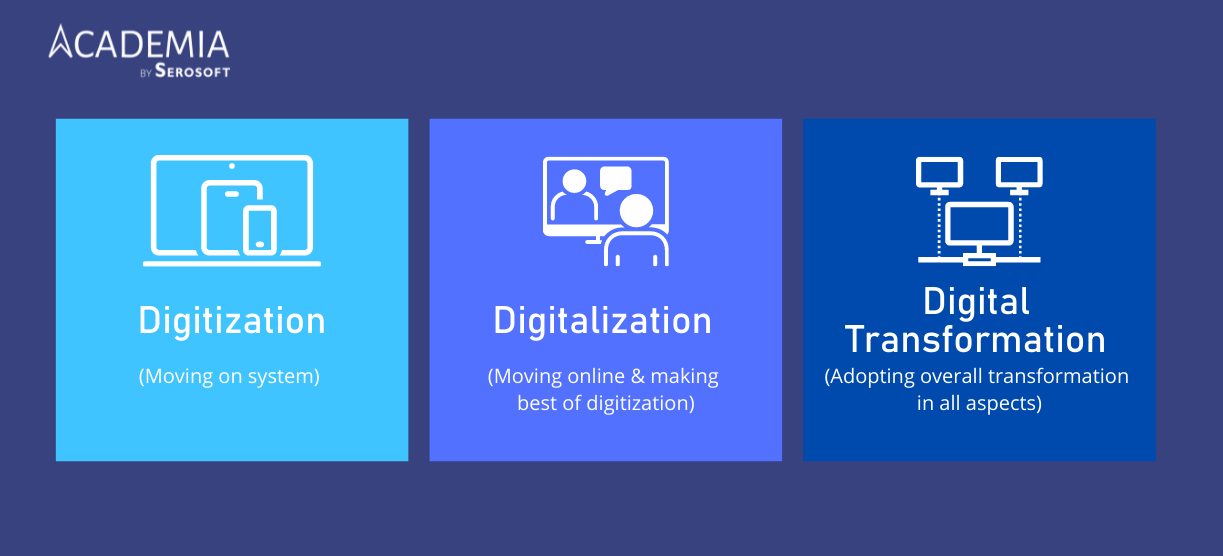
Difference between Digitization, Digitalization, and Digital Transformation

The COVID-19 pandemic has embraced digital technologies to keep the learning continued and improving. Educational institutions have opted for various technologies that helped them manage resources, improve safety, and increase effectiveness.  

With the emerging technologies, institutions often get confused between digitization, digitalization, and digital transformation. So in this blog, let’s discuss these three terms and concepts closely along with their values in the context of education. 

What is digitization?

Digitization in education is the process of converting information from a physical source to a digital one. It directly helps in converting non-digital documents into digital representations that are automatable according to the workflows. Digitization also enables processes to create business value accessed anywhere, anytime. It also lays the foundation for businesses’ use cases that leverage the data.

Examples of digitization include scanning a paper document and saving it on a computer’s hard drive as a digital document, choosing Excel spreadsheets from paper formats, and more. 

What is digitalization?

In a broader sense, digitization and digitalization are closely associated. They are often considered the same terms, but looking deeper into it, both are different, having different meanings and values. Digitalization means making the best of digitized resources and work. It more often helps in connecting through digital technologies to improve overall efficiency along with creating a digital culture at its core.

One of the common examples of digitalization includes converting Excel spreadsheets, documents, and more to the cloud. Through this, institutions can work in a structured environment where the documents can be shared and accessed among stakeholders according to their needs.

What is digital transformation?

Digital transformation is the complete transformation of activities, operations, processes, products, and functionalities leveraging opportunities of digital technologies. It includes both the terms digitization & digitalization. 

Institutions in the modern age can choose digital transformation aiming for efficiency, productivity, and new monetization opportunities. It can help institutions to bring new-age learning to all prospects. 

One of the common examples and benefits of digital transformation is moving the data of admission or any other operation from a Google tool into software like ERP that can analyze the data. 

The main benefit of digital transformation for educational institutions is to provide ease, productivity, and growth through all the academic & administrative operations for all the stakeholders associated with the institution.

The Difference between digitization, digitalization, and digital transformation

Digitization, digitalization, and digital transformation are co-related terms and help educational institutions achieve automation. Meanwhile, it is crucial to understand that digital transformation is the broadest term that involves both digitization and digitalization. 

According to Gartner, digitalization and digital transformation have a growing impact with enhanced expectations from students, staff, and faculty. 

Digital transformation helps in automating complete functioning & transforming manual functioning into three processes: first digitized, second, digitalized, and last yet the most important digital transformation. 

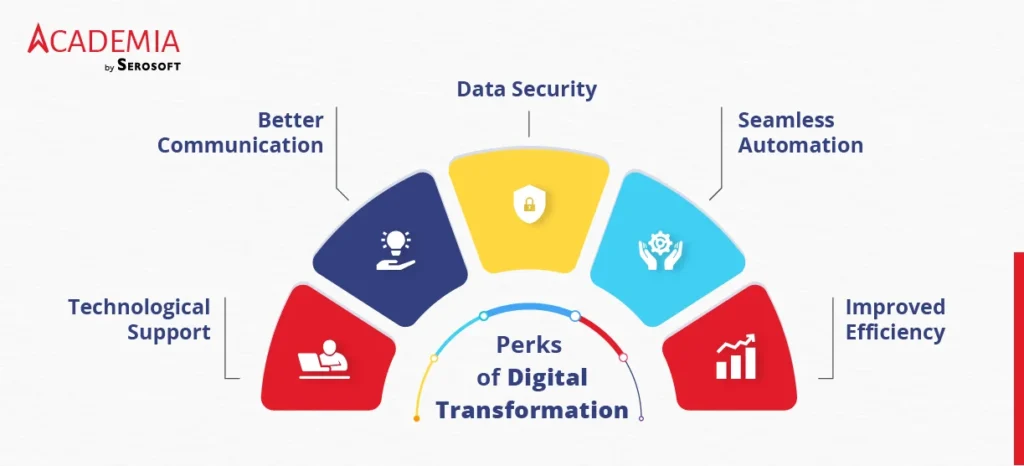
Various technologies like ERP/SIS, help educational institutions automate all their operations, and activities, and opt for digital transformation leading to unstoppable success and achievements. 

Conclusion 

So at which stage your institution stands – digitization, digitalization, or digital transformation? Nevertheless, institutions must understand that if your institution has opted for digitization, it is nothing but a step ahead of manual intervention. With the enhancing EdTech opportunities, institutions should need to choose digital transformation with advanced software like ERP/SIS. 

Academia ERP/SIS provides absolute digital transformation to all the academic & administrative operations of your institution. The key aspects of digital transformation for your institution include:

  • The digital transformation of complete manual processes even from paper, documents, or Google tools. 
  • Interoperability with other software and systems for seamless workflow and management. 
  • Multi-center capability for managing multiple locations & campuses with ease. 
  • Mobile application for easy access from anywhere and anytime for any stakeholder. 
  • Boost productivity and ROI. 

So, what are you waiting for? Seek digital transformation now! Just fill out the form and one of our experts will get to you as soon as possible. 

Back to top