
Type your keyword below

School Management Software Price in India — Things you must know

India is a price-sensitive market, and if price is a pressing issue for you in deciding the best School Management Software, let Academia ERP help you. Academia ERP is the best-of-breed education technology. With a strong presence in 21 countries, including the US, UK, and India we get queries on daily basis regarding the cost of our edtech solution. Consider us as your personal guide to understanding the world of education technologies, especially if you want to ensure the School Management Software you want to go with is value for money. 

What is School Management Software? 

To start with, you must learn how education ERP solution providers are placing prices on their software solutions. For this, you must learn what the software does for your institute. 

In general, School Management Software is an advanced solution that optimizes your institution’s internal and external operations. You would be surprised to know, in our experience, we have seen the magic happen wherein our own customers have reported a 70% hike in employee efficiency and student satisfaction after the implementation of Academia ERP. 

Apart from the in-built tools to automate and manage the tasks related to admissions, attendance, fees & finances you get out-of-the-box features such as resource management, reports & analytics, and other faculty and student-side features. 

Solutions such as Academia ERP go a step further and offer student mobile applications and dedicated student and faculty web portals. This gives affirmation that School Management Software comes with definite solutions for all your stakeholders. 

Now, coming down to the pricing models. 

Pricing Models of School Management Software

Different solution providers have different pricing models. We are giving you an insight into the most popular pricing models from which you can decide which one is best for you. Also, do drop us a message, if you have any further questions about Academia ERP pricing, or features or would like to have a live demo

1. Per Student Pricing 

There are a couple of low-cost school software available on the market that provide you scalability based on the number of students you have in your school. Although it may seem a viable option at first, the solution tends to become a bit pricy if you are a big school with a large number of students. Also, the solution may not provide many important features which are necessary for meeting the needs of a brownfield project.

Going further, scalability in terms of features and functionalities is a miss, so if you need new add-ons you would have to reinvest on 3rd party toolsets and integrate them into the ERP solution. 

All in all, this solution is not very great for chains of institutes, or schools that have many students. If you are just starting, and are looking for a small solution, go for it. 

You would be required to pay the price for individual prices for each student. Some solution providers also bill you annually. It may be a pain to figure out how many users you need for getting the best pricing from the solution provider in negotiation. 

2. Monthly / Yearly Pricing

Unlike the pay-per-user model, you can go with a monthly or yearly pricing model. The price is unaffected by the number of users. So, no matter how many users you have, you pay the price based on the feature or functionality you choose to go for. 

This is one of the best pricing models and is most commonly preferred by big and small education organizations. Moreover, it is highly flexible, and you can scale the application as per your need. You can anytime choose to go for additional storage or functionality or any other added service you require. But you would be required to pay for it. 

Also, there would be a difference in monthly and yearly license prices. 

3. One-time Pricing 

The pricing model is usually used for legacy software. Legacy software solutions are built on old architecture and have various challenges when it comes to scalability, flexibility, and integrations. 

It is best to choose a SaaS-based education ERP solution as they are more efficient and provide you with the sheer benefit of scalability. Also, legacy software doesn’t come with many features and functionalities. Depending on the features and functionality the solution offers the price may vary.

4. Feature-based pricing 

If you are already using software and there are one or two features that are amiss in the software, you might want to go with some solution provider that provides plugins or add-ons for those features. 

The price as the name suggests is only for the individual features you are seeking to implement in the software. So, you only pay for the requested features. 

Factors Influencing the price of School Management Software 

This is very important to discuss as the above-mentioned pricing models for school ERP prices in India and everywhere else may get highly influenced by these factors. If you have talked to any vendor you would notice that the price that is first mentioned is only a ballpark figure considering the basic requirements of a school. The accurate price of School Management Software would only be given after a deeper understanding of the school’s exact requirements.

Also, the prices of the software vary from vendor to vendor. This variance is due to the quality of the software and the features that come in the basic package. In this section, we are mentioning the top factors that influence the price of School Management Software. 

  • Cloud offerings

There are various types of deployment methods, the most common three are Cloud, On-premise, and Hybrid. If you go with a cloud-based solution, the software is deployed on the vendor’s cloud and thus the maintenance and management become the vendor’s responsibility, ultimately resulting in a slight increase in the cost. However, cloud-based solutions are the more cost-effective solution as compared to on-premise solutions. You can check out our blog on on-premise vs cloud-based ERP solutions for a better understanding. 

  • Role-based login

The School Management Software is a feature-rich solution to manage all operations and support all the stakeholders in the system. Simply put, it is one solution to meet the needs of everyone in the education ecosystem. So, it becomes very important that there is a strict divide in terms of access to data and justified restrictions on actions to ensure the security of the data and optimal working. 

So, based on the number of stakeholders and organizational hierarchy, the software allows you to define users and roles to provide defined access. If you have a large organization, then a large team has to be given access, which would increase the cost of the solution. 

  • GPS tracking 

Tracking is a crucial part of any School Management Software. Be it progress or activities, students are under constant supervision and monitoring of the school management. Hence, features such as GPS tracking are important, especially if you provide a hybrid or online learning program. This way you can keep an eye on the student activity and location on the go. However, it is a very common feature and would not drastically affect the cost of the product. 

  • SMS & Email Alerts

There might be some additional charges for using SMS and email alert facilities since some software use third-party applications to enable such facilities. You can contact your vendor to learn about this feature more. 

  • Technical support 

The job does not end once you have purchased and deployed the product. Technical support is required throughout the product lifecycle to ensure optimum product performance and user experience. Hence, you would have to talk to your vendor about what is their technical support plan and how much is it going to cost you. If you don’t have an internal technical support team, this cost would elevate as not just product maintenance but, server management, and maintenance would also become an additional service and cost. 

  • Staff training

Meanwhile, most School Management Software provides you with staff training for free, some may charge you given the complexity of the solution and the duration of time to which the training would extend. 

  • Number of modules

As discussed, based on the number of features and modules you use the cost of the product increases. However, it depends on what pricing model you choose and how the vendor monetizes the solutions. If you need any enhancements to the existing features it would also be an additional cost.

Wrapping Up

I hope the blog will help you understand the various pricing models available on the market. Also, if you have any questions about Academia School Management Software or the pricing models we would be happy to assist you. 

5 Ways to Create Productive School Culture

Managing a school means juggling various tasks and managing various stakeholders in the system. They need collaboration, connection, and a balanced atmosphere to grow, and stay productive

You need to make various social and cultural reforms, along with better process and operation management for the seamless function of academic, non-academic, and administrative tasks. 

For this, you can adopt modern techniques that encourage a positive atmosphere in a school and strengthen the integrity of various stakeholders at the school. 

Why is a Positive or Productive School Culture Important?

To inculcate positive culture at your school you have to work on bringing more inclusivity to your institution and win the trust of your stakeholders.

Education leaders in a school need to make strategies effective and focus on stakeholders’ satisfaction. For this, they can initiate an efficient routine for the institution with proper rules and regulations, good practices, real-time feedback, and efficient planning targeting a productive environment.

5 Ways to Create Productive School Culture

  • Use all the data efficiently

If you are using the web and mobile applications you can generate a large scale of data that can provide you in-depth insights on various aspects of the school’s functioning. Not only is it good to perform management-related tasks, but you can also create a centralized database for the same and allow your employees to access it based on their role and improve their functioning.  

  • Create an engaging atmosphere for faculty members 

Improvements in day-to-day operations can help you in creating a positive environment at your school. You must ensure your employees have ease of work and can manage the workload easily. School Management System (often known as ‘School ERP System’) would allow you to optimize your work processes by streamlining them. People can have more transparency in their work and hence they would be able to match the requirements of the institution and contribute to its common goals. 

  • Build a highly valued learning environment

The new age learning environment needs an interesting and engaging curriculum for learning and teaching patterns. It is crucial to create a highly valued learning environment that can not only attract students’ interest but also provide them with a worthy learning environment. A well-planned curriculum and learning environment indicate the values and mission of your institution.

To a good start, institutions can start automating institutional tasks to set that standard and build a great sculpture among stakeholders.

  • A communication channel between faculty members and parents

Effective communication is the secret source to success in any organization. You must make a crystal clear line of communication between faculty members, students, and parents. Creating a centralized platform for the same like a robust mobile application and a portal can be a very good option through which faculty members can share any update with the students and parents from anywhere and anytime.

An effective chain of communication among all the stakeholders creates a productive atmosphere and promotes an enthusiastic culture in all ways.

  • Set coherent expectations

Often, institutions create rules and regulations to set a level of discipline that are not always acceptable to stakeholders. It is a must to adhere to rules and regulations that can be followed by all with ease. Boosting transparent and positive rules can be an encouragement to this. 

To this, institutions can initiate transparent and unified laws using tech solutions that can help in the easier processes from both ends, like performing the action and tracking the same. 

Setting clear and coherent expectations can boost productivity with the completion of actions expected from any stakeholder in the organization.

Wrapping Up!

The process of improving school culture takes time. Using a centralized process with strategic decision-making can help in making it more productive and efficient. Targeting students and faculty members as end-users and opting for processes to make their lives easier can help in this way. 

An easy step to check the accuracy of your action for improving school culture is to run different kinds of surveys. By receiving real and immediate feedback from different stakeholders, you’ll be able to make improvements and changes to your actions or perhaps announce their success.

So, I hope the article helped you get an understanding of productive school culture. If you still have questions and doubts, we have a team of experts that can guide you through this. Just contact us here and one of the product experts from our team will get back to you as soon as possible!

Serosoft for its Academia SMS recognized in 2021 Gartner Market Guide For K12 Student Information Systems

Students in the modern age expect advanced and technology-updated solutions to ease out their day-to-day activities in an institution. A digitalized learning experience and seamlessness relented through web and mobile applications help in elevating the student experience. It boosts the efficiency of the teachers, meanwhile improving the performance of the students in the competitive learning environment. 

But how do the institutes do it? 

To cater to these needs of modern students and to make an efficient workflow in the institution, it is a must to adopt a good K12 Student Information System – SIS (often referred to as School Management System – SMS) that can trigger effective and smooth management of all the academic and administrative operations in the institutions.

Delivering tremendous SIS solutions in institutions for the last 14 years, we are proud to announce that, Serosoft for its Academia SMS (K12 School Information System) is listed as a Representative Vendor in K-12 Student Information Systems in 2021 Gartner’s Market Guide for K12 Student Information Systems. We are the only Representative Vendor in the report with its HQ in India.

Education in India is taking a 360-degree curve, the transformation from manual intervention to automation is prevalent and is growing rapidly.

Why do we have one of the best Student Information Systems (SIS)?

Prodigious Functionality

A Student Information System is becoming a new need of modern education institutions, whether it is a university, college, or training institution. Every institution needs software that can simplify their day-to-day task making efficient management in the best way.

Academia by Serosoft is an award-winning Student Information System helping 300+ institutions around the world powering educational institutions with efficient, faster, and more productive academic and administrative operations.

Complete Data Security

Data security is one of the significant challenges in the education sector with institutions being prone to vulnerabilities and falling victim to massive data breaches. A robust and flexible Student Information System (SIS) provides complete data protection managing any task related to students, faculty, and even the management through a single system.

Academia provides complete security by having features that support complete data protection, some of them are

  • High scalability
  • Superior flexibility
  • Diverse Reporting

Optimum Support System

Transferring the complete working process from manual documentation to software is a significant task that requires complete support from the SIS vendor you choose. Academia is one of the best Student Information Systems and provides optimum support at each stage starting from training, implementation, and 24/7 support to handle any of the technical issues that arise anytime to any of the responsive authority or faculty members in an educational institution.

Targeted ROI

Every educational institution aims at two important goals, one of which is seamless student experience & management and the second one is to attain high ROI. Academia ERP helps institutions with effective and efficient management of all the academic & administrative operations that can make everything simple, easy, and flexible, it will also focus on cost-saving along with an overall increase in ROI.

Automation of all the operations in an institution leads to overall efficiency and a high return on investment.

The education sector is undoubtedly one of the most important segments that demand growth according to the modern age. For this, institutions must opt for the right technology like a Student Information System (SIS) from a reputed organization that can fulfill their real aims. 

Academia is proudly serving 300+ institutions in 20+ countries helping 700,000 learners across the globe. We are delighted to be listed in this Gartner Market Guide, for the second year in a row. This is just a start to the aim of bringing complete digital transformation to education. 

Source: Gartner, Market Guide for K-12 Student Information Systems, Saher Mahmood, 13 September 2021.

GARTNER is a registered trademark and service mark of Gartner, Inc. and/or its affiliates in the U.S. and internationally and is used herein with permission. All rights reserved.

Gartner does not endorse any vendor, product, or service depicted in its research publications and does not advise technology users to select only those vendors with the highest ratings or other designation. Gartner’s research publications consist of the opinions of Gartner’s research organization and should not be construed as statements of fact. Gartner disclaims all warranties, expressed or implied, concerning this research, including any warranties of merchantability or fitness for a particular purpose.

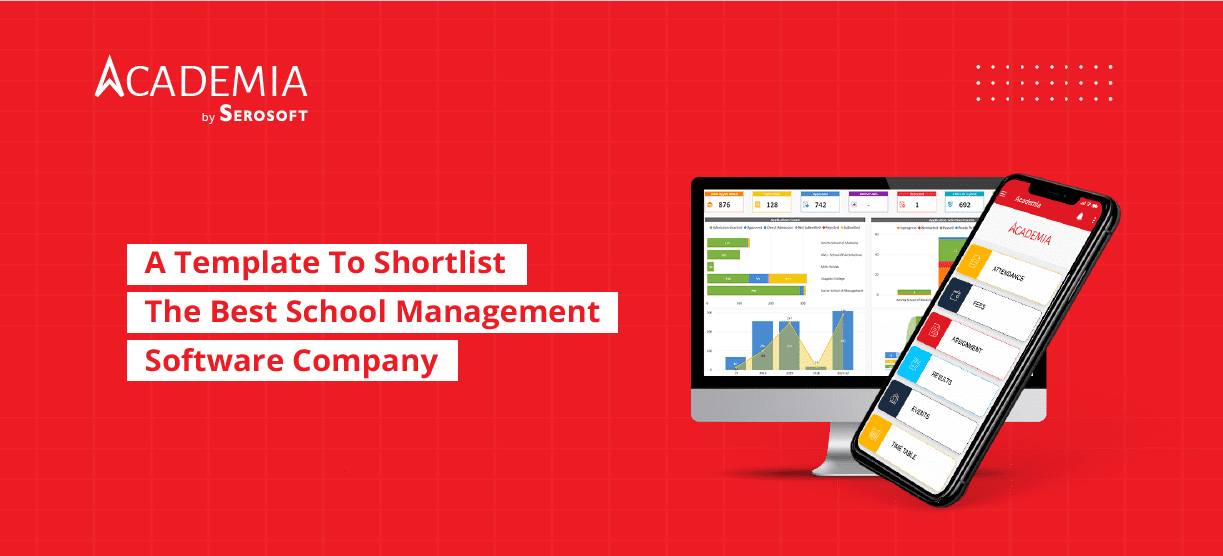
A Template To Shortlist The Best School Management Software Company

Are you the key decision-maker for school ERP implementation in your organization? If yes, here are some factors that can help you find the one in the haystack of thousands of education ERP software providers in the world. Let’s begin.

Factors to consider when choosing the right school management software company for your school 

  • Start by analyzing your needs

You cannot choose the best when you do not know what you want. Identify the needs of your school, talk to your staff, evaluate the problems and analyze the solution that you are looking for. 

Draft an outline of the solution you need to meet your objectives. Depending on the nature of the project, the requirements, and the reputation choose an offshore or onshore school management ERP software provider. 

  • Check the company’s expertise

You would find many companies with good products, but they may not be the right fit for you. You need to prioritize your needs over their vivid technical exuberance. If you need a product that is simple yet effective, that is what you get. Rather than a product with tens of features, nothing meets your needs. 

Talk to the vendors about how their product aims at solving your pain areas. The one that provides you with the right answer demonstrates the product’s functionality to meet your needs, and is genuine about the results that the product would drive is the one that you shortlist. 

  • Reputation

It is very important to understand you are not just buying a school administration and management system but are partnering with the company. Reputation is a very important factor. 

Look for people that are highly professional, and polite and provide you with flexibility. Check their customer testimonials and reviews on reliable sites such as Gartner Digital Markets & G2. Learn what opinion their customers have about their products as well as their services. Some bad reviews are okay, but a company with exceedingly bad reputation in the market is not the right fit for you. 

  • Budget

Cost is always an important factor when deciding between vendors. Determine if the cost of the product falls within your budget. Unless you are confident and the vendor guarantees you ROIs, you don’t want to buy a product that is eating up a large chunk of your school’s budget and resources. Having said that, do not compromise on quality at all. 

Many companies may provide you with an upfront cost of the product but have underlying additional fees and charges. Talk to the vendors about document management, data management, cloud cost, configurations, customer support, data migration costs, setup/training/maintenance costs, etc. 

  • After-sales support 

Unfortunately, there is no product in the world that is going to guarantee you 100% uptime. There would be instances when the product would show some problem running, and that is okay. What you need is a team that is available 24*7 to provide you instant support during these times. A good support, maintenance, and cloud-based solution that can be remotely updated, and upgraded are what you are looking for. 

Wrapping Up 

These were some factors that can help you decide between hundreds of school management ERP software. If you are looking for a vendor, you can consider Academia ERP which is a leading solution provider for eminent schools in 22 countries. Request the Academia school management system demo here

What are the Benefits of School Fee Management Software?

Managing fee records in school is difficult if done manually. There are multiple fee structures, various departments, and n-numbers of students; it’s an art to keep track of everything and be able to access the exact details whenever there is a need. It is time-consuming and lacks flexibility, transparency for parents, and students. 

However, it becomes smooth with a fee management system to handle all the fee-related tasks in school.  It gives a platform that connects the entire campus, multiple academies in one place, and simplifies administrative processes. 

Here are the seven benefits of using fee management software in school:

  • Streamline Fee Collection

Online Fee Management System gives you a centralized platform to handle all the resources in one place. It makes the entire process super easy, simplifies data management, and makes the workflow seamless. There is no need to use multiple software programs for a particular function. Parents can submit the fee online via Parent Portal or Mobile Apps; there is no need to come to the institute and wait in line to do the same. 

  • Scalable & Configurable 

Every school strives for growth, and therefore it should have the software that can support the development. Academia ERP is such enterprise resource planning for educational institutions. Its fee module is scalable to the needs of the school. It is adjustable to increasing numbers of free spectrums, making it easy to use education ERP. If a school has multiple campuses in various locations, it is configurable, according to every institution.

  • Mobile Apps, SMS & Email Integration

No more paper waste! School Fee Management Software is provided with the facility with the SMS & Email. Students and parents get the notifications for upcoming/pending fee details. After the fee submission, they again get the confirmation message for the same. Not only that, but they can also access all these details and previous fee records via the app. Academia ERP offers a Student/Parent App for the same to give them the power to access the details anytime, anywhere. 

  • Invoice Management

With the automation of fee management processes, invoice management becomes hassle-free. All the invoices for tuition fees, registration fees, scholarships, sponsorships, etc. all can be done quickly with this software. Users can send the e-invoice to parents/students or share the document in their portal. It reduces the stress of paperwork and storage. 

  • Fast payment

Fee submission can be as simple as buying stuff from Amazon e-commerce. Within a few clicks, parents/students can do the transaction any time they want. Fee management software is integrated with multiple payment gateways that provide quick remittance for fast payment, which is safe & secure. They also access various payment modes, such as VISA, MAESTRO, credit/debit card, internet banking, etc.

  • Comprehensive Reports

School Fee Management applications provide a comprehensive and smart reporting engine for the entire department. With its analytics, you can efficiently deal with fee structure student-wise, course-wise, and more. It also offers visual aids with colorful charts that help in faster and better-informed decision making.

  • Easy Calculation

Some schools offer scholarships, sponsorship, sibling discounts, and more facilities like that. With the school fee management software, you can perform all the calculations within seconds. There is no need to go through calculators and paperwork.  

In Conclusion

Implementing this software is highly beneficial for schools as well as higher education. It empowers educators, saves significant time, makes management processes proficient, and easy for everyone. It reduces the staff workload, makes fee records error-free, and allows them to focus on students.

Do you want to streamline the fee management process in your school? Check out the working of the Fee Management Module in a FREE EDUCATION ERP DEMO with our experts. Book Now!

Top 10 Chain Of schools in India

Education plays a crucial role in shaping the future of a nation. In India, several educational institutions have emerged as pioneers in providing quality education. This blog presents a curated list of the best chain of schools in India, evaluated based on several key parameters. Additionally, we will explore how technology, along with the implementation of an Academic Enterprise Resource Planning (ERP) system, has helped educational institutes excel in their endeavors.

Listed below are the top 10 Chains of schools in India on the basis of their Year of establishment, number & quality of students, and number of schools in the chain.

1. The Ryan International Group of Institutions in Mumbai.

It was established in 1976 and currently operates 137 schools across India. These schools are affiliated with various boards such as CBSE, CISCE, IB, CAIE, and state boards. With an aggregate enrollment of 270,000 students and a faculty of 16,000, the Ryan International Group has a presence in 40 cities across 16 states. This school chain, promoted by Dr. Augustine and Mrs. Grace Pinto, has gained recognition for its commitment to providing quality English-medium education beyond metropolitan areas, extending to tier-II, III, and IV cities. In 2018, the group was honored with the World’s 100 Greatest Brands 2018 award.

2. Podar Education Network, headquartered in Mumba.

It was established in 1927. It comprises 124 schools and 350 preschools, making it a prominent name in preprimary and higher school education in India. Affiliated with CBSE, CISCE, IB, state boards, and Cambridge International, the Podar Education Network has an aggregate enrollment of 150,000 students and a faculty of 6,800. Seth Anandilal Podar founded the Podar Group of Schools, and under the chairmanship of Dr. Pavan Podar, the network has achieved success by focusing on well-trained teachers equipped with the latest digital technologies and a contemporary education approach that prepares students for the challenges of the modern world.

3. Billabong High International Schools, Mumbai.

It started in the year 2000 and has since grown to encompass 30 schools in 21 cities across India. With affiliations to CISCE, CBSE, and Cambridge International, these schools prioritize creating an engaging curriculum that fosters joyful learning experiences for students. Billabong High International Schools emphasize a holistic approach by integrating sports and performing arts into their curriculum. Their dedication to providing an integrated, multi-disciplinary education helps develop students’ creativity, critical thinking, and practical skills. In 2016, the schools were recognized with the Best School Brand award by the Economic Times.

4. The VIBGYOR Group, Mumbai.

It was established in 2004 and operates 33 schools across nine cities in India. Affiliated with CBSE, CISCE, and Cambridge International, the VIBGYOR schools have an aggregate enrollment of 48,000 students and a faculty of 6,000. Founded by Rustom P. Kerawalla, these schools have gained a reputation for setting new benchmarks in quality education. The VIBGYOR schools are known for their unique integrated curriculum, which encompasses classroom learning, sports, performing arts, and extracurricular activities to ensure the overall development of students.

5. The Presidency Group, Bangalore.

It was established in 1976 and currently operates seven schools across two cities. Affiliated with CBSE and CISCE, the Presidency Group has an aggregate enrollment of 15,000 students and a faculty of 1,100. Founded by Dr. Nissar Ahmed, the Presidency Group is highly regarded as one of the top schools in Bangalore. The distinguishing feature of Presidency schools is their meticulously designed curriculum, which incorporates thematic and integrated pedagogies to foster critical thinking and the application of knowledge. Values and life-skills education plays a significant role in preparing learners to face the challenges of the modern era.

6. The Maharishi Vidya Mandir Schools, based in Bhopal.

It was established in 1991 and currently operates in 156 schools across 126 cities in India. These schools are affiliated with CBSE and state boards. With an aggregate enrollment of 102,500 students and a faculty of 6,500, the Maharishi Vidya Mandir Schools were conceptualized to honor the wisdom and teachings of Maharishi Mahesh Yogi. The schools offer an academically rigorous curriculum prescribed by CBSE and state boards, complemented by the Maharishi Consciousness pedagogy. This unique approach combines Vedic education with Maharishi Technology, including practices like transcendental meditation and Siddhi programs that aim to unlock students’ full creative potential.


7. The Kendriya Vidyalayas, headquartered in Delhi

This chain was established in 1962 and currently comprises 1,204 schools spread across 29 states and seven Union territories in India. These schools are affiliated with CBSE and primarily cater to the children of Central government employees in transferable jobs. Managed by the Kendriya Vidyalaya Sangathan, an autonomous body under the Union HRD ministry’s jurisdiction, the Kendriya Vidyalayas offer heavily subsidized fees and are known for their outstanding examination results. In 2019, the Kendriya Vidyalayas achieved a national pass percentage of 99.47% in the CBSE class X exams, surpassing all other CBSE-affiliated schools, including private ones.


8. The Vidya Bharati Schools, located in Lucknow

Were established in 1952 and currently operate a network of 13,067 schools across 29 states in India. These schools have an aggregate enrollment of 3.4 million students and a faculty of 150,190. The Vidya Bharati Schools focus on educating students about Hindutva, patriotism, and Indian values and culture, in addition to following the standard curriculum. The schools provide specially written texts about Indian culture and customs, and all students are required to learn moral education, physical education (including martial arts), music, Sanskrit, and Vedic math.


9. The DAV Schools

This group was founded in 1886, have grown to become the largest non-governmental educational society in India. With over 900 schools, the DAV Schools have an aggregate enrollment of 2 million students and a faculty of 50,000. The schools follow Swami Dayanand Saraswati’s ideals and offer education primarily in English, along with compulsory education in Hindi, Sanskrit, or a regional language. In 2013, the Associated Chambers of Commerce and Industry of India (ASSOCHAM) awarded the DAV Schools with the Best Chain of Schools in India accolade.

10. The Delhi Public School Society

This group was established in 1941, comprises 205 schools in India and 11 abroad. As a non-profit, non-proprietary, private educational organization, the Delhi Public School Society enjoys a reputation as one of the most respected and trusted education societies in India. Founded by Pinkesh Barjatiya, the society began as Church High School and has since embraced innovation in its learning programs. The faculty at Delhi Public Schools focuses on revolutionizing education through ideas and practices that align with new-age educational trends and global associations. Society places a primary emphasis on meaningful and joyful learning experiences for students.

It is worth noting that this list does not encompass all popular school chains in India, as there are many others making significant contributions to the education system. Technological advancements have played a crucial role in the growth and expansion of these institutions.

How Academia ERP Helps Chain of Schools:

Introduction:

In the 21st century, technology has revolutionized the education sector, empowering institutions and chains of institutions to provide an enhanced learning experience. Additionally, the implementation of an Academic ERP/School Management System (SMS) has streamlined administrative processes, leading to improved efficiency. Here are a few ways technology and Academia ERP contributes to the success of educational institutes with multiple branches:


1. Centralized Data Management:

Implementing an Academia ERP system in a chain of schools offers the advantage of centralized data management. With all information stored in a single platform, schools can easily access and update student records, academic performance, attendance, timetables, and more. This eliminates data redundancy and inconsistency while enabling accurate reporting and analysis. Centralization also improves stakeholder communication and collaboration, empowering teachers, administrators, and parents to access relevant information and facilitate seamless interactions. Overall, Academia ERP streamlines data management enhances decision-making, and promotes a cohesive educational ecosystem within the chain of schools.

2. Enhanced Teaching and Learning:

Technology enables interactive teaching methods, multimedia-based learning, and virtual classrooms, making education more engaging and effective. Students can access online resources, collaborate with peers, and benefit from personalized learning experiences.

3. Efficient Administration:

Academia ERP systems automate administrative tasks such as attendance management, fee collection, timetable scheduling, and examination management. This reduces manual work, minimizes errors, and improves overall operational efficiency.

4. Seamless Communication:

Technology facilitates seamless communication between teachers, students, and parents. Online platforms, email, and messaging systems enable quick and effective information sharing, progress tracking, and parent-teacher collaboration.

5. Data Management and Analysis:

Academia ERP systems store and manage vast amounts of data, allowing institutes to analyze student performance, identify areas of improvement, and make data-driven decisions. This enhances the overall academic quality and enables personalized interventions.

6. Parent Engagement:

Technology platforms enable parents to stay connected with their child’s education journey. Parents can access real-time updates on attendance, grades, assignments, and school announcements, fostering a strong parent-school partnership.

Conclusion:

The listed chain of schools in India, considering parameters such as year of establishment, number of schools, number of students, infrastructure, board affiliation, tuition fees, and student quality, showcase a commitment to providing quality education and holistic development. Moreover, the integration of technology and the implementation of an Academia School Management System (SMS) have propelled educational institutes toward excellence by enhancing teaching and learning, streamlining administrative processes, and promoting effective communication. With continuous advancements in technology, the future of education holds immense potential for further growth and innovation.

6 Things Educators Need to Know for Schools Re-opening amid COVID-19

With the unlock phase, Schools are set to re-open after months of lockdown. However, the risk has not averted 100% and precautionary measures are a necessity.

According to the news on India.com on Thursday, as many as five lakh students took the Pre-University Certificate board examinations in Karnataka, rekindling hopes that educational institutes may resume operations sooner or later — when all precautions are in place. This is just one example, there many more students whose career is dependent on this school resuming.

Amid this delay in school reopening, institutes are also instructed to regulate virtual classrooms to fill the learning gap that occurred during the lockdown.

The upcoming session won’t be the same as it used to be. It will be peculiar for teachers as well as students. There will be a few measures that both have to take. Here we are discussing the six major things that educators must consider before the school reopening.

Bring Remote Learning & Online Student Management

Considering the main precaution to save yourself from CORONA spread, social distancing, remote learning has become extremely important. Institutions that were equipped with the latest technology such as Online School Management System and Learning Management System, could continue their school curriculum.

Academia School Management System has helped many institutions to regulate their day to day tasks, distribute home assignments via employee portal and student portal/ app respectively. Online Institute Management Solutions helps the institute to maintain the continuity remotely. Educators need to find a way to reopen the schools in between full in-person to fully remote, and digital transformation of school management is one such solution.

Keep social distancing in the classrooms

There is no wonder that it’ll be difficult to maintain a social distancing concept among children. Schools are meant to engage students to bring social etiquettes and personality development along with academics. But it has changed now.

Now schools are also responsible for the protection of our children. Therefore they have to take proper action to implement basic precautionary measures in school while maintaining a stable environment for students.

Schools in other countries which have restarted the school have established the social distancing in sitting arrangement in classrooms, break rooms, etc. The administration is instructed to pause the assembly and sports activities until further notice.

Do Regular Sanitisation in School

The time has changed. Previous cleaning methods won’t be enough for the school. The administration will need to bring routine sanitization and disinfection for every corner of the schools.

Here are the advisable processes to look for routine cleaning during the COVID-19 school reopening.

  • Face shield
  • Door, doorknobs, and handles
  • Stair rails
  • Classroom desks and chairs
  • Lunchroom tables and chairs
  • Handrails
  • Light switches
  • Handles on equipment (e.g., athletic equipment)
  • Push-buttons on vending machines and elevators
  • Shared toys
  • Shared remote controls
  • Shared telephones
  • Shared desktops
  • Shared computer keyboards and mice
  • Bus seats and handrails

Keep Thermal Screener At the Entrance

A thermal scanner is a device that measures the temperature of a person while maintaining social distancing. As it is known that individuals with high body temperature are prone to CORONA infection or they already have come to grips with it.

Many institutes which have started in-person office working have installed either thermal scanner cameras or simple manual scanners that read the temperature of the person in front of it. Schools can also do the same. As in schools, there are always transaction people in and out, therefore, it becomes crucial for them to take every possible measure to save children and staff.

Aware Students with Current Scenario

Awareness is the key to handle this pandemic with rationality. Thanks to the internet and global connectivity, it is not difficult to get the information you need. But it is vital to get the correct data with credible sources. Many entertainment companies are making documentaries related to CORONA and how to handle this pandemic. To bring awareness in schools, teachers can add activity of showing these documentaries to children just to make sure that students are updated with the crucial information.

It will not only minimize the pressure of teachers but also will help students to become independent and take care of themselves.

Maintain Positive Environment for Students

After the lockdown and with the learning gap it will be difficult for students to cope up with the new environment. Wherever in the world, when students come back to school, they will need emotional support and a positive environment to get their life back on track. Hence the teacher, the school superintendent will have to be vigilant of the student’s mental situation and provide the needful support to them and their families.

Recently the Brown Center on education policy hosted a webinar that addressed how schools in the US should approach questions revolving around school reopening amidst the CORONA pandemic. Check here to know more.

Conclusion

The CORONA pandemic hit all of us. We can’t stay in lockdown forever, things need to move, and there is only one solution. Fight Against It. With the help of education technology and continuous collaboration, we can get back to normal once again.

Academia SMS is benefiting many schools and other educational institutions during this pandemic. Talk to us to know how it can help your institution too. Book a free session now!

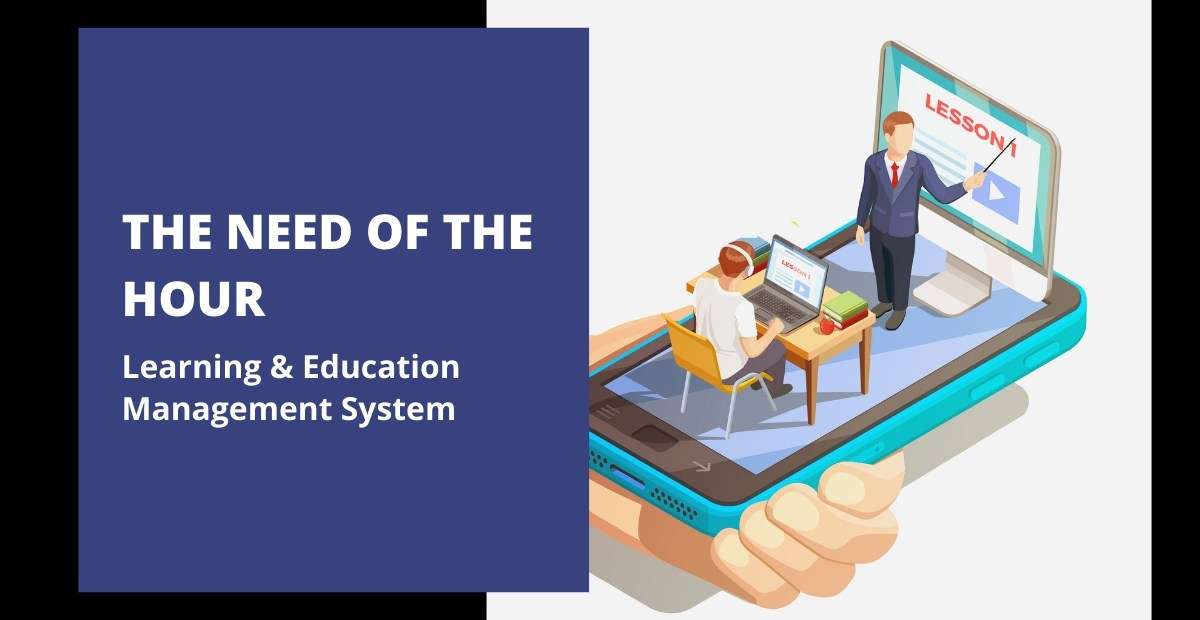
Why Do Schools Need a Learning Management System & ERP More Than Ever?

Technology came to the rescue of educational institutions during the time of the lockdown crisis due to the COVID-19 pandemic. The government in India and most of the nations instructed educational institutions to follow the strict rules of lockdown owing to the security of students and teachers, which was essential as well.

However, technologies such as the Learning Management System (LMS) and Education Management System enabled educational institutions to carry on with the learning activity even during times of crisis.

In this post, let us learn about the specific advantages of the learning management system and education management system for educational institutions.

Key benefits of education management systems:

  • Access to the information: The education ERP software can be accessed from anywhere, anytime. Any authorized user (teacher/staff/students/parents) can get any record they want with login credentials. It brings seamless workflow even with remote working. With automated system school management can access required information in real-time, enabling better decision-making at the individual level.


  • On-time Student-Teacher Collaboration: Schools that have adopted a school management system have seen enhanced student-teacher collaboration. The system enables teachers to assign homework, provide feedback on assignments, and add behavioral information for each student. All these interactions happen online, over the application. Remote learning becomes much easier and more fun with the integration of the Learning Management System (which Academia ERP provides). We’ll discuss more on this.


  • Increased Parents Involvement: In the digital age, guardians of students expect to remain informed of their ward’s performance and activity. The school management system enables the institution to do just that, with the parent portal or mobile app they check their child’s academic progress, track syllabus, etc. without the need of visiting the school campus. Thus, there is enhanced transparency and trust between the institution and student guardians.

Key benefits of learning management systems

  • All eLearning content in one platform: Learning Management Systems like Moodle have made the management of learning material convenient without the need for hard drives, laptops, printed materials, etc. This enables educational institutions to provide hybrid learning and the risk of losing important information. Teachers find it convenient to prepare for their lectures and students learn with interest due to the interactive mode of learning.


  • Easy-to-track learner’s progress: Learning Management Systems gives teachers the ability to keep track of students’ progress and ensure that they are meeting their potential. Suppose, if a student is not able to successfully complete any course, teachers can offer them supplemental resources to improve their performance. These systems feature reporting and analytics tools that also allow you to pinpoint areas of your eLearning course that may be lacking, as well as where it excels. If you discover that many of your online learners are struggling throughout a specific online lesson, for example, you can assess the eLearning content and make modifications if necessary.

Do you know Academia School Management System can help manage entire school management remotely and student learning with LMS integration? Know more about it with a FREE demo from our expert.

How to choose the best school management software for your institute

Technology has entered every institution and no organization remained untouched from it. It has entered the education sector as well. One such technology is school management software, which is simplifying the day-to-day tasks in schools and making teachers’ lives easier.

As performing daily academic operations become easy with School ERP but it is not easy to choose this software. It is important to find whether it is right for your school and if it can provide long-term benefits. While opting for this software, you should consider a few significant factors, for instance, its features, working, user-friendliness, vendors’ market presence, experience in the field, etc.

It is important that you do a comprehensive analysis according to the needs of your institute, its cost-effectiveness and its impact on ROI.

Here are the factors that should look at while choosing the best school management software.

Does it have useful features?

A school management system is ERP software that usually has multiple features. So it is very important that it offers the features that your school needs and how it will benefit the stakeholders (students/teachers/staff). The features should minimize the manual processes, solve the problems your Insitute facing. It is better to have a few features that work all the time rather than having multiple features that do not work at all.

Is it reliable?

If you are going run your entire school campus, ready to invest your time & money in a school ERP then you should always take a demo of the software. There are software providers that offer free demo to assist to make a more informed decision. You should have a clear picture of how long you are going to use this software, who will use it and what academic operation will be done by it.

Is it scalable?

Education ERP solutions are designed in such a way that it can be scalable depending upon the need of institutions. As every school plans to grow with time. The software should help in growth. With time the number of users i.e students, parents, and staff will increase, and if this software is not scalable it will become useless. To check the scalability of the software you can look for the clients it is serving, the number of students in its clients.

Does it offer long-term and 24*7 support?

Adapting to technology is not easy. If you do not have proper support any technology can increase the problems. So, before choosing the software, look for a company that is well-established, has good years of industry experience and offers proper support during the training & implementation of the software.

It is user-friendly?

Running a school with management software should make regular tasks easy, and it can only be done when the software is user-friendly. You can check its working with the demo these software provers offer. It will also help you to have an idea of how long will it take to learn the software completely and you will be able to use it to its full potential.

Does it improve student experience & learning?

Students are the main focus of any school. The implementation of any technology in an institute is to make the student experience better and improve their performance. Therefore the software you are picking up should assist students in school and beyond. School ERP providers also offer mobile-ready portals and apps to increase the connectivity between the teachers and students. Students can access all the important notifications in the portal, submit documents and assignments, pay fees, and more. Do consider these functions while opting for the software.

Conclusion

Education technology such as the school management system is designed to automate academic operations. But before choosing a smart technology for your institute you should be smarter too. Don’t carry away with the flow, check all the above-mentioned factor and get a good understanding of the product before investing in it.

Are you ready to know how Academia School Management System can automate academic operations in your institute and help you grow? Book a FREE demo now!

What is School Management System? 5 advantages that you should know.

School management software is a web-based solution to streamline administrative processes and manage the school database. Schools use this software to record, control and manage student details, employee records, school information, and much more.

With proper management, time efficiency, and error-free processes, school management software minimize all the manual work. Automation of complete school administration is the best way to manage classes, attendance records, homework systems, events, timetables, holidays, etc.

Not only does it help teachers manage student progress, syllabus, and assignments, but also manages teacher details, their administrative involvement,  attendance with biometric integration, and more.  

There are multiple advantages of using a School Management System, here are the 5 major benefits that you should know:


  • Efficient Work Process

Automation of the entire school management system brings all the departments on a single platform. It minimizes the time wasted in information exchange. Any user with the required credentials can access the information whenever needed. The information flow becomes smooth, convenient, and more integrated with the use of this online tool. Leading to an efficient and error-free work environment.

  • Aid in Decision Making with Diverse Reporting

Like any other advanced enterprise solution, this software provides diverse reporting in various categories for all the departments in schools. No need to go one by one through the stack of files. Users can access details for a single student or for multiple students in a group along with day-wise and month-wise reports. Whatever information is needed, is a few filters and clicks away.

Recommended reading: 5 Reasons Why Your School Needs An ERP Software

Along with the above-mentioned functions, it also provides reports in a tabular form, bar chart, or pie chart with colors. This helps in the quick analysis of data. With this visual aid, the user is able to take decisions faster.

  • Customization and Configuration on Demand

Every Education ERP firm introduces new features and strategic methods in its software regularly. They also advance their tool according to the need of a school. For example, if a school uses relative marking in place of a regular marking scheme, the software provider can customize accordingly to fulfill the specification of the school. 

The configuration is a feature by which a non-technical person with basic training in software can personalize it according to the terminology used by a school. For instance, some schools might prefer a scorecard in place of mark sheet. Similar changes can be configured easily within the software.

  • Date Safety and Recovery

In most educational institutions the student data and all the other information is manually organized in files. In case of any accident like a fire or a natural disaster or a theft, you are left helpless with no backup. With an ERP solution, data is managed centrally and stored permanently on its server (cloud) which has in-built encryption in its framework for security. 

School Management System minimizes the risk of losing data due to these mishaps and makes data recovery hassle-free.

  • High ROI owing to cost-saving

Digital transformation helps in making schools go paperless and cuts down significantly on printing and mailing costs. This software system offers precision and automation that together reduce operational and administrative costs without cutting corners. 

An advanced Education ERP system can improve communication between all departments (including parent-teacher-student) across the educational institution. Simpler, more competent communication means increased employee productivity, transparency and improved satisfaction.

Recommended reading: 4 Ways How Education ERP Can Increase ROI of Educational Institutions

Each department has access to a central database, which lowers costs associated with setting up and maintaining multiple data centers. This saves employee time and cuts overall administrative expenses.

These are the key modules that are offered by an advanced school management system

  • School Setup
  • Campaign Management
  • Inquiry Management
  • Admission Management
  • Student Information System
  • Fee Management
  • Class Management
  • Subject Management
  • Time Table Management
  • Attendance Management
  • Examination & Marksheet Management

Academia School Management System can save your academic cost by 22%. 

Know more benefits like this with a demo that’s absolutely free! Book now!

Image source: freepik.com

Back to top