
Type your keyword below

Why Should Educators Think About College Information System?

Digital transformation is leading to doors of growth and success for various institutions and higher education institutions are one of the biggest segments that are demanding technological changes for better functionality, so is your college ahead of the competition curve having the best technology i.e., college information system to maintain the day-to-day functionalities in a better way? If not then read out this blog to understand why it is helpful for your institution and why you should think about automating the college operations. So let’s get started:

What is a college information system?

A college information system is a one-stop solution for higher education institutions to digitize & streamline all academic and administrative tasks starting from admission management to alumni management. It provides complete automation from the daily operations that in manual interventions keep completely busy to the staff, faculties, and students along with providing them a hectic schedule leading to errors and mistakes.


Academic operations that you can simplify using a college information system:

  • Admission 

Admission season is one of the most challenging periods for any institution, and it becomes more difficult when you need to manage all the administrative tasks manually. If you look in the current scenario when everyone is looking for online platforms it is quite difficult for students as well to stay in the queue for admission forms likewise it becomes crucial for administrators to manage the admission process systematically. 

A college information system provides complete access to a smooth admission process in an institution, so if you’re looking forward to a smooth, systematic, and functional admission process in your institution, then Academia can be the best option for you. It provides management of the entire administrative process effectively and efficiently. 

  • Enrollment 

Right after admission, enrollment of each student is the most important task that institutions focus on. The enrollment process involves more systematic influence over the number and characteristics of new students. It is a very crucial process that involves time and effort if done manually as a single mistake leads to multiple errors. 

There are various student enrollment steps in which a college management information system especially helps in creating and completing each student’s enrollment efficiently, with just a few clicks saving time and efforts of staff and administration that can be either used in more productive ways. 

  • Fee Management

Managing fee records in an institution is the most difficult task in an educational institution, it often gets more complicated if done manually. Fee operations of any institution include various fee structures, various departments, and data of n-numbers of students. It becomes difficult to keep track of each and everything resulting in a lack of flexibility, transparency, and time management. 

So a college management system provides complete fee management handling all the fee-related operations, it gives a systematic connection with the entire campus even having multiple academies or branches simplifying administrative processes and giving access at just a few clicks to access any student’s data anytime.    

  • Attendance

Attendance is the most important task in any institution, it involves a bundle of operations, so the staff and administrators need to be super active in performing everything efficiently, but manually the process goes so rough including various interventions at each end like the long queue for admission form generation and submission, handling of various documents at different departments, admission fee, and a lot more.

A college information system provides vigorous attendance management that helps in deterring the dignity of the institute making everything simple and systematic. It provides easy access to students for submitting their documents, forms, and fee from their homes along with access to faculty and staff to complete the admission process with just a few clicks. 

  • Communication 

Communication is the biggest key to success for any institution, it creates a strong bond avoiding any kind of misconception and faults. 

Students and faculties have a straight relationship that needs a strong bond of communication, a college management information system more specifically focuses on bridging the gap among students, faculties, and parents, it helps to connect any time providing strong connectivity and synchronization. 

Using the college information system and its mobile app, parents and students are allowed to check all the activities like fees, admission, examination, timetable, and more with just a few clicks having accessibility from anywhere at any time. 

  • Time table management 

Again, timetable management is also one of the crucial tasks for faculty, in today’s time students always demand a clean and clear picture of their time, and thus a proper and synchronized timetable is a must for any institution.

A college management system focuses on timetable management with the functionality for the efficient institution for all the academic and non-academic activities happening in the college and then creates a predictable timetable for students to follow.  

Academia creates a student database in a manner that can be accessed using the mobile app from anywhere anytime. The software also provides a vigorous timetable for all the staff, administrators, and faculties to follow the day-to-day operations efficiently. 

  • Library management 

The library is another one of the most important segments one which administrative staff needs to focus on, manual library management includes various malfunctioning like missing books, late submissions, wrong allotment of books, and so on. 

A college management system includes a library management module that easily assists all the library-related activities efficiently and effectively. It provides easy access to all the library-related information with just a few clicks allowing students to choose any kind of book with submitting its request, faculties also get easy access to allot and submit the books easily having track of each book. It also allows charging extra payment on late returning of books. 

And so on…

There are various other modules on which a college management system works like hostel management, examination management, human resource management, and so on… it focuses on the all-around management of the institution assisting with each of the operational tasks of the institution. 

Conclusion 

In the current scenario, educational institutions need to choose digital transformation having the best college information system, it is beneficial in multiple ways targeting the overall growth of the institution. 

Hope you understand all the important things about a college information system, if so, then it is the correct time for you to choose the best information system that can trigger the n-number of growth opportunities for your institution. 

Download Exclusive Gartner Reports Brought to You by Serosoft (Academia):
 

When to replace or renovate your student information system (SIS)?

The educational ecosystem is on the path of change for various years, and year by year institutions focus to adopt changes in technology that can lead to growth and success of the organization, Student Information System (SIS) is one of the most common technological changes that institutions are focusing to adopt from last few decades, but it is important to check that the SIS you are using is supporting your institution to drive changes along with providing you to deliver modern, innovative technology services being the best student information system for higher education.

Let’s discuss how you can evaluate your current SIS and is it the correct time for you to update or renovate your current SIS software attributing the latest research report by Gartner for “Deciding to Replace or Renovate Your Student Information System With the Fitness Attribute Framework”.

Important things to consider while checking the fitness of your current SIS:

1. Evaluating the capabilities

There are various SIS vendors out there who are providing the same outdated technology for SIS that is restricting the ability to deliver new and modernized services. It is also not wrong to say that most the institutions are using the same SIS without any upgrade for many years leading to restricted growth and advancements in the institutions. 

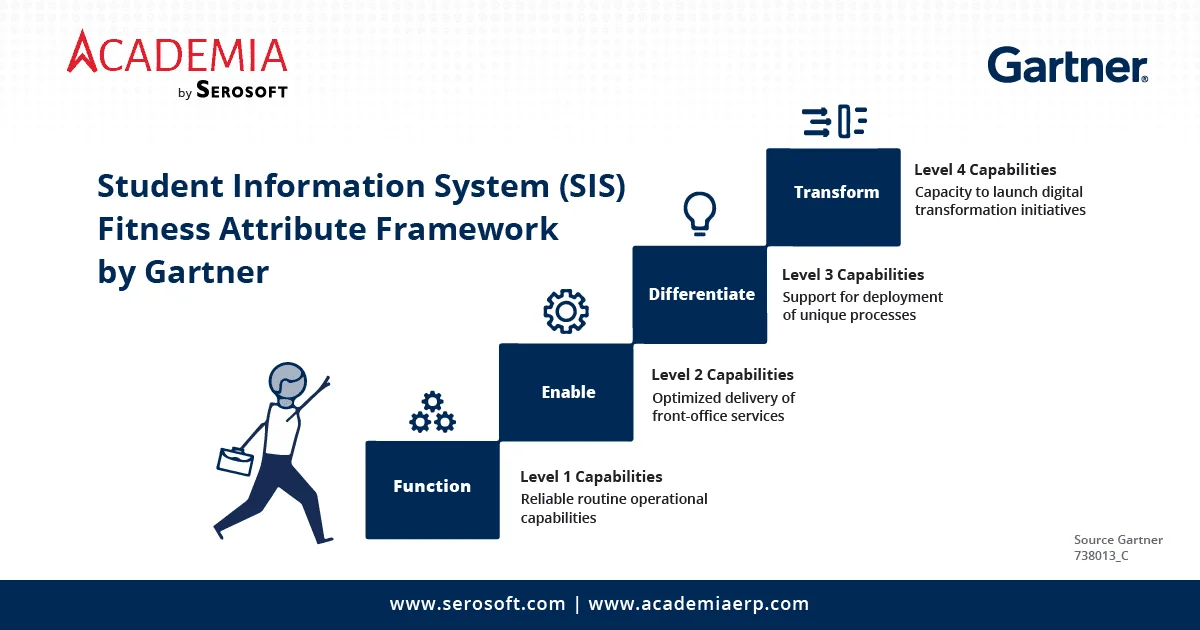
According to Gartner’s latest research report, it is important to assess the fitness of the institution’s SIS by evaluating its capabilities to function, enable, differentiate, and transform the institution. 

It is important to evaluate the fitness of your SIS based on its:

  • Function

The SIS software in your institute must provide the best and most modern functionalities in maintaining the routine operational expectations, performance, uptime, architectural sustainability, routine maintenance, and skillset availability. It should lead your institutional work in a more fast and actionable way along with a touch of modernization and technological trends leading to the overall growth of your organization.

  • Enablement

A modern SIS includes a lot of advanced features and not just administrative operations. It should meet business unit requirements being responsible for workflow changes and education-specific functionalities for financial aid regulation, satisfactory academic progress, common core application, international visa regulations, tax reporting, and legislative mandates.

  • Differentiation

In today’s modern world, it is most important for educational institutions to opt for change that supports the deployment of unique processes along with the capacity to provide a competitive advantage. Let’s say, in the current situation it is important for institutions to use BI and analytics leading to competitive growth in every way. 

  • Transformation

Modern ERP or SIS software works to automate complete processes of all the tasks in an institution that leads to digital transformation focused on aspects like automation, artificial intelligence, digital relationships, personalized interactions, and ecosystem partnering. So the SIS you choose must lead to complete digital transformation along with all the above aspects.


2. Cost quantifying 

Cost is one of the primary elements of the SIS fitness framework if you are thinking of replacing or upgrading your current SIS software, it is necessary to compare and evaluate the costing involved. 

You can especially compare costs and expenses that you will need to spend on upgrading your SIS versus the expenses you were doing with your current SIS. 

It is important to note that if you are using outdated SIS software, it will include various expenses to meet the current criteria of the technological world, and on the other hand an advanced SIS solution will save most of your institution’s cost providing complete automation of all the processes along with easy access from just one click providing everything efficiently and effectively. 

So take your decision wisely choosing an SIS software that helps you in saving cost-effectively.

3. Develop an SIS modernization plan

This pandemic has taught us to opt for technologies that can ease our work effectively, so the impact of this has created a perception for institutions to evaluate the workings of their current SIS and if it is not meeting their expectation criteria it is better to replace and renovate it as the institutions who are not opting modernization are at risk of being left being in the digital business environment, isn’t it true?

So hope you have got the things that you need to consider while evaluating and checking your SIS fitness. Now let’s discuss the advantages of using the best student information system in higher education institutions.

Advantages of using the best and updated student information system in higher education institutions:

  • Complete automation having multiple data backups

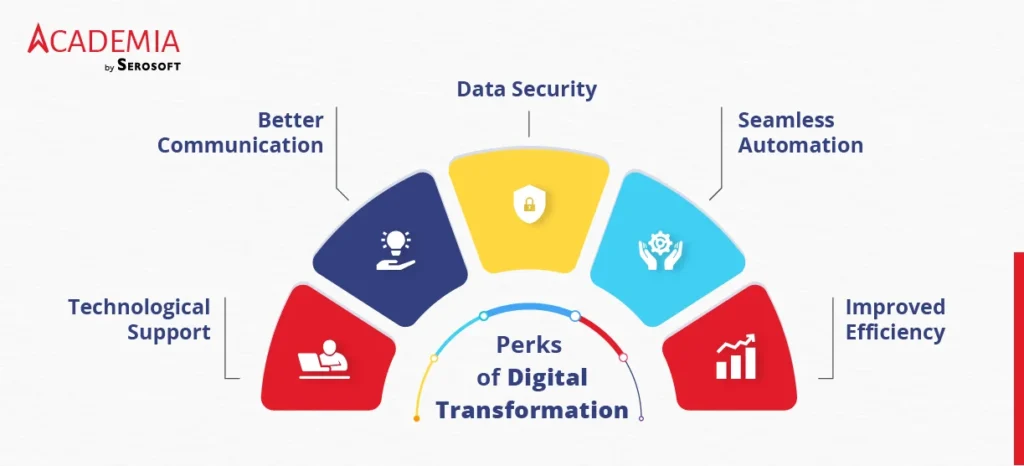
Different and modernized from the traditional student information system, an upgraded SIS automatically updates all the data from time to time. With regular and automatic security updates there are very few chances of the student information system getting hacked by anyone leading to complete data security. With all this, it also initiates multiple automatic backups of all the information stored providing the satisfaction of complete data security in any manner. 

  • Increased productivity

A technology updated student information system increases the productivity of institutions, it eases out every task providing access to everything with just a few clicks, it manages all the tasks like admission, library management, course selection, hostel management, transportation, all other hundreds of tasks. So having easy access to everything the staff and faculties get the opportunity to use the time and energy in greater productivity and growth of the students and ultimately of the institution. 

  • Fosters efficiency 

With the best student information system for higher education, the complete operations of an educational institution get automated. Various things like manpower, time, resources, and paper works, get reduced from every perspective. Meanwhile, these things can be used for better processes driving students’ progress and outcomes. Simply, we can say that a technology-upgraded student information system fosters efficiency making everything simple, efficient, and worthwhile. 

  • Comprehensive management 

In an institution, there are various things to manage for every student, so it becomes messy for administrators to manage all the operations of hundreds of students like student registration, attendance, examination, results, and so on. So to ease out all these operations they choose SIS but imagine a scenario where you have opted for an SIS and it is becoming more tricky to manage tasks, the management of all the things will go adverse. So you must choose the best student information system for higher education that is technology updated and can help to automate all the processes with ease, and if you can find one such; then in simple words you can attain comprehensive management of your institution in the best and most effective ways. Just think- isn’t it satisfactory?

Is it the correct time to update or upgrade your current SIS?

So what do you think of the above? Do you think it is the correct time to update your student information system (SIS)? You can also check Gartner’s latest research report that can help you in deciding to replace or renovate your student information system with the fitness attribute framework. Its ideology will help you understand things that you need to keep in mind while analyzing and evaluating the results of SIS software available in your institution. 

Download Gartner’s latest report now!

Wrapping up 

Hope you find this blog relevant and if you think that you need an advanced, modernized, efficient, and the best student information system for higher education, you must check with Academia. It is one of the best SIS solutions having all the latest functionalities that must be there in your institution. We will feel obliged to provide you with a free demo of the system, just reach out to us and our team of experts will be there to manage it for you. 

Download Exclusive Gartner Reports Brought to You by Serosoft (Academia):
Higher Education ERP: What is the Future Scope in Institution Management?

The education industry has witnessed various changes for several years like from pen and paper to phones, tablets, and laptops, for teaching and learning but there is still a big scope of change that can transform the level of education making all the operations simple, efficient, and relevant. I guess you may have understood what I am talking about? A Higher Education ERP – can transform the complete operations of the institution bringing automation and digital transformation of all the academic and administrative processes of the institution. 

The future of education is changing rapidly and will change in the upcoming years, but having an Education ERP Software you can make sure to adopt every change with the same consistency and flow and it will make all the processes easy and smooth providing access to every single thing from just one click. Let’s discuss how an ERP will help institutions to adopt any change in the education scenario easily. 

What is a Higher Education ERP?

Enterprise resource planning (ERP) for education is something that is indulged with power BI analytics tools that help in generating important reports for managing all the academic and administrative operations of an institution like admission & enrollment, fees payment & collection, student attendance, academic performance, compliance management and much more. It enables institutions to make data-driven decisions that can lead towards the growth and success of the institution. 

Benefits of ERP System for Universities and Colleges:

There are various benefits of using the higher education ERP system in your institution let’s discuss some of them:

  • Improves access to all the data 

An ERP system provides and creates a single version of the truth because everyone uses the same system. Furthermore, schools and higher educational institutions include a bulk of data as they collect and process personal and confidential information about their prospective, faculty and enrolled students, alumni, and staff. An ERP system can manage all the data effectively and efficiently 

  • Enhances workflow increases efficiency and reduces reliance on paper

Institutional development is the most important aspect in an educational institution, having an ERP institution can enhance their workflow along with increasing efficiency, along reducing paperwork. Let’s take an example, like an institution is still following the traditional method using the pen and paper format, and if they require any documents related to one student, the staff or faculties need to check various documents that will be time-consuming, tedious, and even sometimes it is also possible that some of the documents will get misplaced or missing. 

In the second scenario, if an institution will opt for an ERP system, then everything will go in flow providing work efficiency and productivity. The use of an ERP system will reduce the use of paper or faculty keeping the data in a single system that can be accessed from anywhere anytime, and an ERP system can manage multiple branches of an institution keeping data of all the institutions in just a few clicks. 

  • Tightens controls and automates complete processes 

ERP brings automation in education institutions, providing various benefits to the institution, it tightens the complete control providing digital transformation and automation in the institutions. 

Just imagine, through automation, institutions can grow and earn a huge success as it becomes so easy for institutions to manage all their academic and administrative tasks easily and efficiently. 

Cloud-based Higher Education Management Software vs On-premise

It is always estimated by experts that cloud technology is better than on-premises ERP. The on-premises include manual installation of the software and continuous updates on the machines which involve more clarity, on the other hand, a cloud-based technology never requires any on-site manpower. Starting from installation to complete configuration, everything is possible using online tools without much hassle. 

Cloud-based ERP software is easy to deploy, along with facilitating everything like admission, attendance, fee collection, along with improving the communication gap among the students, teachers, and faculties providing online and easy access to everything. 

How Higher Education Institutions can choose the right ERP solution?

Education institutions need to choose an ERP system that can help them bring digital transformation and automation in institutions, simplifying all the academic and administrative operations of the institutes. The Higher Education Software for Universities and Colleges should focus on managing all the tasks, reducing the monotonous pattern of the day-to-day activities of the institution keeping track of all the data related to students, faculties, and parents. 

Academia is an ERP/SIS system that helps institutions to automate and manage the entire campus operations, administration, and learning needs in a very effective way. It provides complete assistance to institutions focusing on complete digital transformation through automation. Academia focuses on providing high scalability, diverse reporting, and super flexibility to institutions. 

Check out our exclusive Gartner research report on Top 10 Strategic Technologies Impacting Higher Education:


Learn more about Advantage Academia 

What is the Future Scope of Higher Education ERP?

  • BI-powered ERP

The future will most likely see a rush in demand for higher education BI-powered ERPs. Using business intelligence dashboards it will be easy to track key performance indicators, real-time metrics, or any other key student data that could be easily tracked, allowing teachers to make smart decisions with all the information required. So it is most important for higher education institutions to opt for an ERP that can simplify their current as well as future needs. By using an ERP institutions can track attendance and studying reports generated to help faculties and students to have better learning platforms. 

I can only state that higher education software for universities and colleges will be truly intelligent and future-ready if it manages to embody the personal touch and the wisdom of conventional learning in its new-age software. 

  • Automation of complete activities 

Automation is one of the most important functions that an ERP provides, a higher education ERP automates the complete day-to-day tasks. 

Students in today’s era demand easier access to everything like marking attendance, fetching timetables and all other tasks, and predicting the future. There are more chances that students will only like institutes that will provide their complete automation and real-time access to things from admission form to result in the announcement. 

For example, you can take any recurring work like generation of fee records and fee receipts than using an ERP you can attain any records anytime using the ERP automation. 

  • Advances in technology – teaching and learning patterns

Opting for cloud-based higher education management software will allow institutions to adopt advances in technology that can help in teaching and learning patterns. It provides easy access to all the academic and administrative tasks through which traditional patterns can be easily erased. With all these, it is also easier to predict that one can anticipate more options and more advanced features using e-learning ERPs in the future.

  • Customization and personalization 

According to the Education ERP Market Size And Forecast, growing demand for modern learning has improved the level of the education system, improved performance of the academic and administrative department, and enhanced connectivity have made ERP essential for higher education institutions. It is not wrong to estimate that modern trends and technologies are improving the chances of incredible future growth of institutions using ERP. A good and robust ERP provides the personalization and customization of tools and technologies that are needed by the institutions. 

Commenting on the personalization of systems using ERP, I can conclude that an ERP will get more powerful having more strong implementation and customization of each institution’s process but for these, institutions must choose a flexible, robust, and well-integrated ERP system.  

  • Better communication 

ERP software can help students and faculty to learn properly bridging the gap between them. It helps institutions with updating all the lessons, assignment details, faculty’s availability and other related information, managing attendance, enrollment tasks, examinations, and all other tasks managing better communication. 

Conclusion

Hope this article helped in understanding the future of ERP in education along with its usage and benefits. If you are interested in opting for ERP software, Academia can help you get the best after having a free demo with a team of experts. So book your demo now. 

Also, check the FAQs below to know more about the ERP system. 

FAQs

  • How do I find a good higher education ERP system?

There are various higher education ERP systems available on the web, but it is crucial to select one that can avail you of all the facilities that you are looking for, you must select an ERP that can efficiently manage all the academic and administrative tasks along with providing simple and easy access to everything, you will also need to check that the software you are choosing is reasonable and will help you in future to add value and growth to your organization. I must suggest Academia, as Academia is the one-stop solution for all your academic needs facilitating you with effective, easy, and flexible operations in your institution. 

  • Should I choose a Cloud-based or on-premise ERP software in the institution?

As you may have read the blog above explaining the difference between cloud-based and on-premise ERP software, but it will be your needs that can help you to conclude like if you are thinking that your institution has the time, energy, and efforts to work on some of the tasks manually on-premise ERP can be good, but if you are seeking to choose complete digital transformation of your institution that can facilitate you with all the activities with just a few clicks than a Cloud-based ERP is the best solution.  

  • Is opting for an ERP system costly for my institute?

Opting for an ERP can help institutions with managing the complete operations systematically and efficiently, but many of the institutions feel that choosing an ERP will be a costly business, but in my opinion, it is an investment that regulates and cuts the unnecessary costing in several tasks. 

I will suggest Academia ERP which provides flexible, robust, and scalable services, managing the complete operations of the institute at a very effective cost. A quick demo can help you better understand it.

Why Interoperability is Important in Education ERP and Why do we need it?

Have you listened to the increasingly widespread term “interoperability” all around in the education trend? Maybe, but do you know what it is and what its benefits are, and why it is important to have in your institution? It is often seen that today institutions choose technology and then make adjustments with the existing workflows and systems to implement it. Having interoperability in education ERP, institutions no longer need to make any changes in the current workflows, technologies, or systems, as technologies can not work on silos these days, they need integration to form and create a greater experience and here interoperability works better. Let’s discuss it in this blog post to conclude why it is important, why institutions should choose an ERP having interoperability in education ERP. 

What is interoperability? 

Interoperability is the capability of having two or more information systems that are allowed to exchange and use information systematically providing synchronization of all parts. 

Looking into deeper interoperability is a component and a very important term for institutions. It attempts and addresses all the needs of institutions such as duplicate information in different areas or systems, lack of cohesion, the existence of various systems that provide different works. So interoperability focuses to erase all these errors bringing control and efficiency among the institutions. 

It results in cooperation, development, integration, and the rendering of all the academic and administrative operations in the best possible way. 

Why is interoperability important?

As of now, you may have understood the meaning of interoperability, now let’s jump over to understand the importance of interoperability in education ERP. Interoperability most importantly facilitates the exchange of information, like if you have a library management system in your institute than having an ERP like Academia you can make it more powerful to provide the best experience for students and faculties by having a single source of truth and reducing data redundancy between the two systems. 

Some of the advantages of interoperability include:

  • Adaptability:

This is one of the best advantages of interoperability, various systems that take in the information, connect and distribute that information automatically and flexibly. 

  • Data Cohesion:

It provides a proper and systematic arrangement of all the information that is managed effectively and controlled by all parties. 

  • Increased growth:

It is one of the most important advantages, it provides all availability of information associated with the value chain. So faculties and students get the opportunity to operate cohesively throughout the entire academic and administrative process ensuring the information is available and accessible by all to all systems. 

How does an ERP provide you with complete interoperability?

Education ERP or Student Information System provides the complete operational arrangement of all activities in an educational institution. Having interoperability an ERP system can provide a technological platform that can operate multiple integrations of systems using one landscape providing the desired results to faculties and students. 

Academia a one-stop solution for all your needs

Academia provides one of the best robust, feature-rich, analytics-equipped, and user-friendly ERP systems and Student Information systems built on a cutting-edge and flexible architecture- that enables educational institutions to automate & streamline their functions and all the processes for learning and administration. 

In terms of providing interoperability, Academia understanding today’s rapidly evolving technological landscape provides SIS/SMS that can be integrated with 3rd party systems to ensure greater value to institutions, management, and faculties.  Looking deeper into it, Academia ERP provides comprehensive integration with educational systems such as Learning Management System (LMS) example Moodle, Library Management System such as Koha, Finance and Accounting Systems like Tally, Sage, and many other tools and systems like LimeSurvey, PowerBI, Microsoft teams, etc. Learn more about the interoperability offered by Academia ERP.

It has developed an extensive team that helps institutions successfully integrate and score business applications and services, through a variety of ways like pre-built connectors/plug-ins, web services, integration platforms- that can be customized according to customer’s business requirements, technical environment, and budget. 

Conclusion 

Institutions that are seeking complete digital transformation need interoperability as an important feature. Hope this article helped you in understanding interoperability and its advantages and most importantly how necessary it is for an educational ERP to have interoperability. So if you are curious to know more about it, Academia can help you with this, we are just one call or message away to discuss and interact with you. Contact us today

Check out our exclusive Gartner research report on Top 10 Strategic Technologies Impacting Higher Education:


Top 13 Reasons Institutions Should Use Student Database Management Software

Educational institutions involve a huge amount of data of students for managing school affairs systematically. To streamline the process of managing student data, a lot of institutions are thinking about school management databases. It helps you to store and organize student-related data in a proper and centralized manner so that you can easily access, edit, or update data if needed. 

  • Manages complete student information

A school management database deals with all the information related to students’ attendance, assignments, academic reports, curriculum details, project details, exam management, grades, achievements, medical history, addresses, accounts, and many more things. It also helps faculties to reach all the student data easily and effectively. 

  • Streamlined coordination and communication

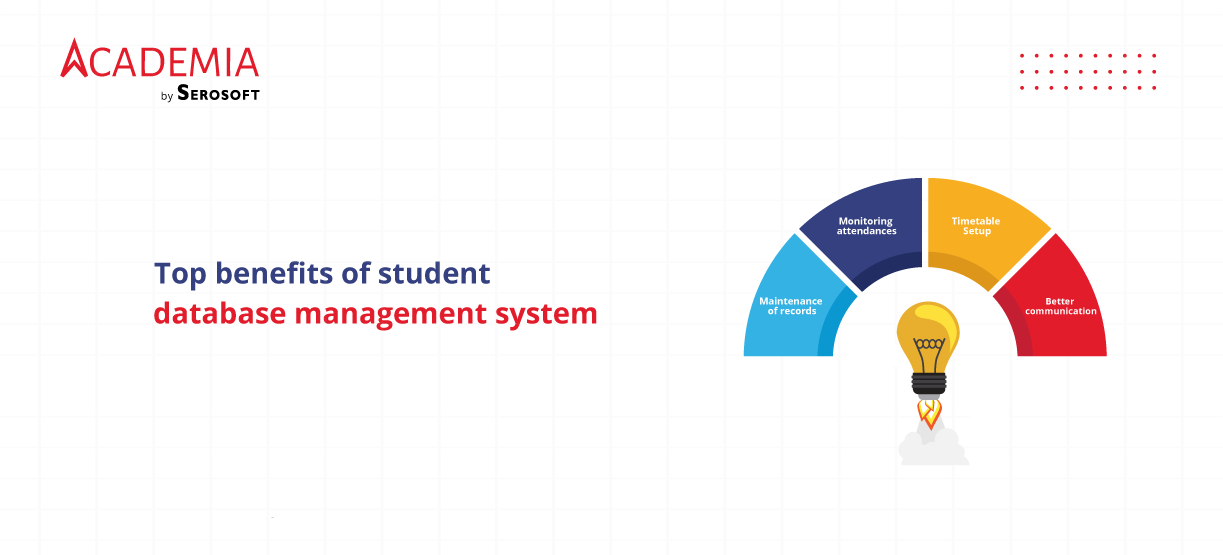
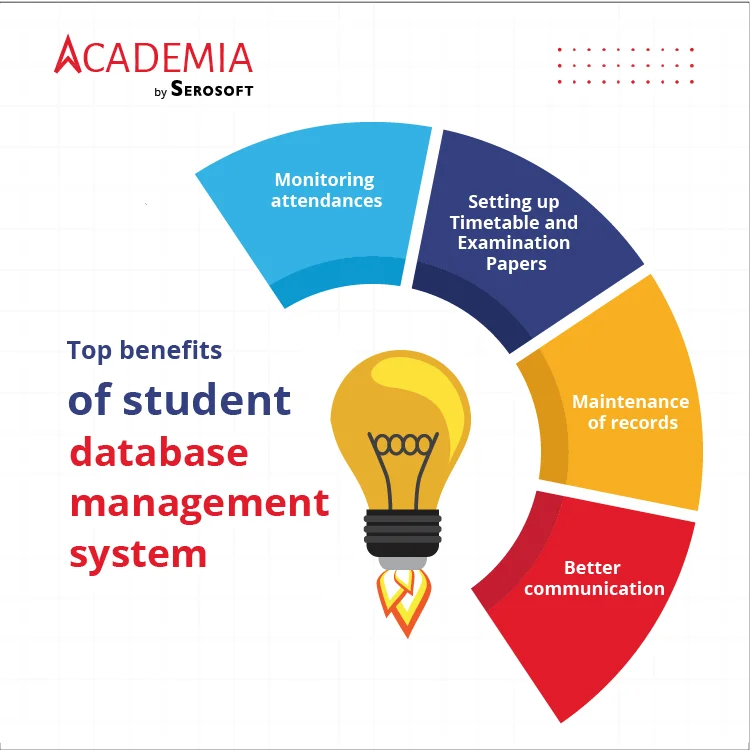
The school database management system helps for better coordinating and remembering all the events and activities that are going to be held in the school in the upcoming days or weeks. It provides a proper look at the data on a single screen and helps to highlight and remember the important information. This helps institutions in better productivity and growth. 

It also allows institutions to circulate easier communication between students, faculties, faculties-parents, and student-faculties and even allows for the school alumni to stay connected with each other. 

Instead of relying on the diary system, a school database management system can send instant updates to the faculties on school events, attendance, and even disciplinary issues over email or SMS. students can also communicate with each other and with their teachers on the discussion boards to clear their doubts and collaborate over assignments. 

The school database management system takes care of the admission process as well. The complete management system accesses the registration process, admission approval, document uploading, test and interview schedules, and much more. The way of managing academic processes is changing, people are attracted to an effective admission system that can provide ease to faculties, students, and parents. 

It also helps students and faculty to fill out the application conveniently reducing long queues to get an application form or to get their admission-related queries and get an application form or to get their admission-related queries answered easily. 

“Admissions are no longer difficult now, they are easier than ever before. 

  • Reduces paperwork 

A school database system helps students manage students’ data automatically, reducing the paperwork and providing effective digital tracking of student data. All the documentation like admission forms, student records, financial aid, paperwork, and all other data can be managed effectively. It also provides proper security of all the records managing and securing the data for future reference to access whenever they are required which is quite complex with paperwork. 

A school database system stores each data properly providing real-time tracking of all the documents with just a few clicks. 

  • Trustworthy and secure 

The school database management system is the most secured and reliable source, it provides a hundred times more security than manually stored information. Student database software helps in storing all the information using a cloud-based server. It also provides multiple automatic backups of essential data to make sure you do not lose your valuable data. Most importantly, it prevents software from getting hacked by any competitor or other cyber suspect. 

  • Proper and efficient attendance management 

The school database management system includes tools that help faculties maintain quick records of student’s attendance. The software provides student attendance management features that require students to check and scan their fingerprints and enter or leave the classroom and school premises. The software also takes care of the attendance of students, which includes half-days, late coming, etc., without any kind of manual intervention. 

It also reduces the faculty’s workload from the monotonous task of taking attendance of each student by calling his\her name. It also allows faculties to directly check the summary of the presence and absence of the students digitally. The most interesting part is this software allows administrators to keep track of faculty’s attendance along with providing them with a quick calculation of their leaves and adjustments. 

  • Transport management 

A student database management system provides easy access to the transportation system of the institute. It manages the complete transportation requirements right from tracking the vehicle to managing and monitoring the salary, working hours, and other tasks of drivers and other helpers in the vehicles. The software provides easy access to parents and faculties to track their kids using the mobile application keeping them updated about the kid. 

  • Timetable management

The school database management system also provides a better school and class management. Timetable creation is considered the most critical thing that involves a lot of time, it also becomes difficult to circulate the timetable among the students as a minor error by a student or faculty can create a lot of confusion, and even in some cases, it can spoil student’s future if the student not downs wrong time table. 

So the school database management system helps with a timetable management feature that helps in scheduling the classes properly. It helps institutions to meet the requirements of different education boards. The tool also enables users to make changes to a timetable as per their convenience along with providing the timetable to students on their mobile app that can be accessed anywhere and everywhere. 

For more information, check out this video about how Student Information Systems Benefiting Educationalists Worldwide:

Bottom Line:

Hope the article helped you to understand more!

So if you are thinking of optimizing these benefits of a school management system in your institute, Academia SMS can be the best option for you. It provides the best system that helps institutions to manage all the academic and administrative operations of an institute. 

So don’t just be an average competitor of other institutes but be a growth seeker focusing on student’s growth and secured future. Contact us today

Unlocking the Potential: Experiential Learning in Education Automation – Advantages and Disadvantages

In today’s dynamic educational landscape, the demand for effective learning resources is paramount. Explore the advantages and disadvantages of experiential learning, a method vital for institutions leveraging education automation, and education ERP solutions. Let’s delve into the intricacies of this transformative approach.

Understanding Experiential Learning

Experiential learning, centered around hands-on experiences, propels students to learn by doing. This process, combining self-initiative and self-assessment, is amplified by hands-on technology and innovation. In both traditional classrooms and online learning environments, students and teachers benefit significantly from experiential learning opportunities.

Advantages of Experiential Learning:

  • 1. Real-world Experiences:

              • Students engage with data and concepts through hands-on tasks, fostering a deeper understanding and retention of information.

  • 2. Creativity Unleashed:

              • Encourages creative problem-solving, equipping students with innovative solutions to real-world challenges.

  • 3. Accelerated Learning:

              • Implementation of learning points creates a lasting impact, developing problem-solving and decision-making skills.

  • 4. Theory-Practice Integration:

              • Merges theory and practice, providing students with opportunities to apply knowledge in real-world scenarios.

  • 5. Learning from Mistakes:

              • Embraces the value of errors, allowing students to iterate and refine their approaches, turning mistakes into valuable learning experiences.

  • 6. Career-oriented Focus:

              • Guides students towards their future careers by aligning learning activities with real-world experiences and activities.

  • 7. Communication Skills Enhancement:

              • Fosters teamwork and collaboration, bridging communication gaps and promoting effective communication skills.

  • 8. Visible Accomplishments:

              • Promotes a feedback loop that accelerates learning, enabling students to see tangible improvements in a short span.

Disadvantages of Experiential Learning:

  • 1. Patience and Guidance Required:

              • Demands patience and guidance as students experiment with various methods, requiring time for results to manifest.

  • 2. Decentralized Process:

              • Considered a decentralized process, as students access and submit assignments online, limiting faculty access through traditional modes.


Conclusion:

Embrace the power of experiential learning with online tools and technologies, revolutionizing knowledge acquisition and skill development. If you’re considering implementing experiential learning activities in your institution, Academia ERP offers a suite of tools, including a student information system, enterprise resource planning, and more. Contact us now for further information and personalized assistance. Your journey toward transformative education begins here!

Contact us now to explore how Academia’s suite of tools can enhance your institution’s educational experience and seamlessly integrate experiential learning into your curriculum. Take the first step towards a transformative educational journey!

Frequently Asked Questions About Education Management Information System

As the institutions are seeking technology to opt for digital transformation and automation, various questions occur in mind like which Education Management Information System to choose, how does it work, and what is the process of implementing it, and various others.  So let’s discuss some of the important questions in this blog.

Education Management Information System FAQs:

  1. What is an Education Management Information System? This is one of the basic questions that institutions must know about if they are focusing to have a big and positive technological impact. An education management information system software allows the management to have the institution’s complete academic and administrative operations bringing digital transformation and automation to the institution.
  2. How can an EMIS manage academic and administrative operations? An EMIS helps educational institutions to manage the complete academic and administrative operations systematically, e.g. if we talk about the admission process EMIS will simplify it by removing the long queue process for generation and submission, making it completely digital and mobile-friendly for students and faculties as well. If it is a fee-related operation, an EMIS can make it systematic by generating fee receipts and all other operations of the institution.
  3. How to Choose an EMIS for my institution and which is the best EMIS in the market right now? There are various EMIS solutions available in the market, but it is important to choose the right one that can help to ease out the institutional tasks along with saving the cost. After proper research and having a demo with the software and its company, you must select an EMIS software after proper research and having a demo with the software and its company. You can also select Academia, it is an award-winning and leading educational ERP software solution that provides robust, scalable, and flexible software that can accomplish all the academic and administrative operations of the institution. Please refer to our blog post on Choosing the Best Management Information System for Your Educational Institution for more details and exact steps.


  4. What are the basic changes that I will need to bring after having an EMIS in my institution?The answer to this question is quite simple, opting for an EMIS (Education Management Information System) like Academia will completely transform your institution digitally. It will provide a new way of operating institutional tasks with automation. It will change the complete day-to-day activities of your institution, reducing the manpower, decreasing the chances of errors, reducing the overall cost, and making everything conceptualized and clear.
  5. Do we need to get training before implementing EMIS in our institute? Yes definitely, before implementing anything in any sector, it is important to understand it properly and the same applies to the education management information system. To have a successful implementation of it in your institute, you must need to have a proper understanding of it. Academia has a team of highly qualified and experienced professionals who will provide you complete knowledge and training about the EMIS software. The team is so polite and humble that they will never leave you in confusion about anything. You can ask them anytime even after the first 3 months or more of implementing the software.
  6. What needs to be involved in the ERP implementation process? An Education Management Information System implementation involves installing the software, moving your data over to the institute’s system, configuring your users & the processes, and also training the users on the software. Choosing the right partner for implementing your ERP system is almost as important as selecting the right software like Academia. The right software company will arrange the whole implementation process for your institution making it clear, simple, and systematic.
  7. Is the EMIS software costly? No not at all, the Education Management Information System by Academia is designed in such a way that it manages the complete operations of the institution by reducing the manpower, paper, and time, it also arranges things in a single system, saving data. All the operations are managed properly and directly save cost, making the software cost-effective. Academia provides a cost-effective system that institutions can implement and save a lot of costs and earn revenue.
  8. What are the advantages of using mobile apps for students? Academia SIS is designed to meet the needs of administrators, faculty members, and students as well. The students in the institution get the authority to mark attendance easily along with providing real-time access to parents and faculties to track their child’s attendance, with this, they can even pay the fees from anywhere at any time using the mobile app. Generation of hall tickets and mark sheets for the examination is also possible using the mobile app. So to conclude, it is an app for students and faculty as well.

Conclusion

Academia education management information system offers comprehensive and detailed services that improve institutional productivity, workflow efficiency and boost high  ROI by streamlining administrative processes with automation. Hope the above questions helped to resolve your basic queries related to the EMIS, if you have any other questions or queries related to it our team will be glad to resolve them. Do contact us now.

Student Life Cycle Management Success with SIS Solution

Student success is always considered as the top priority for any institution, students always are considered as the base of any educational institution. So various works are associated with students right from their admission process to the completion of their education.

Previously, all the tasks related to student success were dependent on a lot of manual work that included organizing marketing activities for universities to attract fresh prospects, track their interests, nurture them through continuous engagement, these are just some of the things that come under student lifecycle management. 

Do you know about the student life cycle? Let’s discuss it to have a better understanding of student success and organizational management. 

What is the Student Life Cycle?

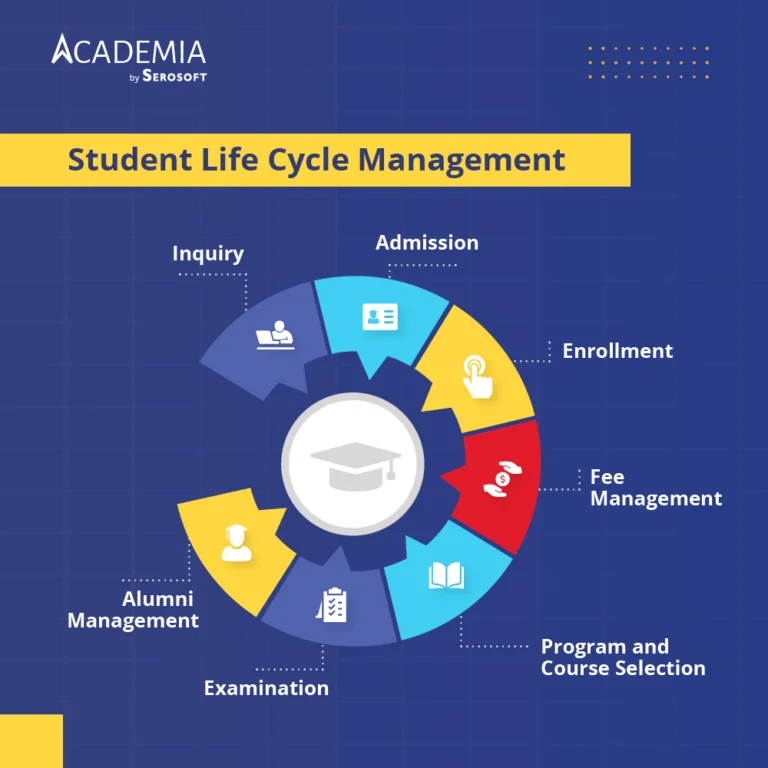
A student life cycle is a data-driven and holistic approach that focuses on the entire student journey right from the inquiry for admission to alumni to ensure student success in real-time. 

You can efficiently manage your institution’s complete student life cycle by having a Student Information System (SIS) that triggers to deliver high-quality learning experiences. It provides fully customizable, flexible, and scalable solutions to manage efficient and effective services. 

A student information system can enable you to manage and create quick & easy-to-use student profile information, the inquiry process, enrollment for admission, link to enroll, schedule, transcript, and degree evaluation, and share records with faculties, and administrators. 

It also can track student performance from his first-class to his last class in the university that is course completion, managing information across the entire student lifecycle to advance students.


The complete life cycle of student in an institutions includes the following factors:

  • Inquiry for admission 

It is one of the most primary and essential tasks that institutions have to make proper and systematic, inquiry is the first step that students do to know about the institution in which they are going to take admission. You need to manage the database of prospective applicants and inquiries. Academia SIS provides easy access to manage a database of prospective students/applicants, it can also follow up on inquires, convert online inquiries to applications when needed. Analyze the inquiry management system using the source dashboards and reports. 

  • Admission process 

Once the inquiry is done, students choose to take admissions in the institution, manually it is a lengthy process for students as well as for management also. It involves long admission form filling and submission, enrollment and verification of students, and various other things. Having an online system like an ERP helps the management and students manage the complete process easily and effectively without any stress and time-consuming process. Academia SIS provides you the following benefits making it a simple and systematic process:

  • Systematic creation of admission applications. 
  • You can provide an online application form facility on the institute’s website that is easily accessible to students and their guardians. 
  • It is easy to manage application form acceptance and generate an offer letter for that as well. 
  • You can convert online applications to admissions easily. 
  • You can track and check the records of student registration information. 
  • Generation of detailed reports on applicants at each stage with their status and ranks. 
  • Fee Structure 

Managing fee records in institutions is difficult to do manually. There are various fee structures, patterns, various departments, and n-numbers of students; it requires effort to keep track of everything and access the exact details required. The process becomes time-consuming with a lack of flexibility, transparency for parents, and students.  

It becomes an easy and smooth process having a fee management system that handles all the fee-related tasks. Having an ERP like Academia you will get the following features to manage fee operations:

  • It will be easier to create multiple fee plans to use across the institute. 
  • You will be able to manage the fee plan at the time of the course enrollment for each student. 
  • Manage refunds and cheque bounce issues along with duplicate receipt issues. 
  • Generate sponsored invoicing & student invoicing. 
  • You can manage security rights by adding, modifying, deleting, and exporting fee structures according to your needs.

Check out 7 Benefits Of Using A Student Fee Management System to help institutions manage fee management.  

  • Program and course selection 

There are various courses and programs offered by institutions, each student needs to select the desired program or course. This process takes a lot of time and effort, sometimes it becomes a more difficult, complicated, and time-consuming process for the management, finding previous data creates more chaos and complications. Academia provides a special program and course module which makes program and course selection easy and systematic in the following ways:

  • You can create and manage programs and courses that are offered and run in the institute. 
  • It is up to the management to create the list of courses and students associated along with the enrollment, you can also define the credits, hours, and sections for the programs according to the needs. 
  • It is also easy to map programs and courses concerning the sessions. 
  • Define and create student advisers and program coordinators. 

Having a program and course module can become easy for institutions to manage and run the complete process. 

  • Timetable 

It is also one of the most important factors in the student life cycle that institutions need to focus on to make it simpler for them as well as for the students. Manually this process includes a lot of glitches, it also becomes difficult for students to access the timetable manually on time. Let’s walk through in detail to look at how an education ERP can help with timetable management.

  • Using Academia you can generate details for attendance via time-table integration.
  • Mark attendance of students, program, and section-wise.
  • Provide functionality for attendance-based exam detention with the integration of attendance management and examination modules.
  • Provide attendance reports including program-wise attendance for faculty and students.
  • Attendance record 

Attendance is one of the most necessary components of administrative processes in educational institutions. Proper attendance brings success for students as well as for the institute. It is always seen that poor attendance affects the quality of education and deters the students’ performance. Just think about the scenario in which you will get an attendance management system that can keep track of attendance along with academic performance.  Academia attendance management system provides you with the  following features to manage attendance in your institution:

  • Generate session details for attendance via integration with the timetable. 
  • Mark section-wise attendance to the students.
  • Attendance-based exam detention by integrating attendance management with the examination module. 
  • Generate attendance reports including program-wise and faculty-wise attendance.
  • Integrate with biometric-based student class attendance solution (optional).
  • Examinations 

Examinations have always been a crucial part of academic assessments, it needs to be conducted smoothly for student success and organizational success. The examination officers need to manage the complete and conduct the examinations. An examination management system can help the institutions reduce the burden, making it a right to make an ideal student life cycle model. It includes the following features:

  • Prepare and manage pre-examinations processes.
  • Manage exam notifications to send to student/parent/faculty portals.
  • Manage exam programs and student registration.
  • Manage student detention based on fee/attendance record.
  • Record student performance remarks and marks.
  • Generate hall ticket and design exam schedule.
  • Manage exam day processes including student exam attendance.
  • Evaluate and manage different marking heads i.e. mid-term, viva, and final semester.
  • Manage the marking schemes including grade, percentage, GPA, and CGPA.
  • Prepare results, transcripts and generate reports for result analysis.
  • Alumni Management

It is often considered that after completing the studies students no longer need to be in touch with the institutions, but it is also one of the most important parts of student life cycle stages it is considered as alumni management in which institutions keep all the data and records of each student from the admission to their ending day of university/college/school. So just imagine the situation in which a 10 years old student of your institution needs his documents for admission, it will be so exhausting to find it manually where lakhs of files and documents are there, it will become a time-consuming and chaotic process. 

Having an ERP like Academia, you can access all the data in just a few clicks, isn’t it amazing, all the data of each student will be saved right from the admission to the ending day of his studies. 

Closing Notes:

An institution’s success depends on student life cycle success. It is high time for institutions to seek digital transformation having best-in-class technology and ERP solutions to improve the student service and gain a competitive edge. Having a Student Information System or an ERP makes it easier for institutions to manage student life cycles without any risks and chaos. 

Academia provides highly flexible, scalable, and robust ERP solutions to manage and improve student relationships throughout his whole journey in the organization. It provides quick & easy to use tools and technologies that increase straight student retention rates managing complete student life cycle stages. 

There are many more features that Academia provides to institutions, like organization setup, campaign management, front desk management, messaging and notifications, assignment management, security gate management, and many more. So if you are looking forward to providing a better experience to your students intending university student life cycle, feel free to contact us, we will provide you a free demo of each module to have a better understanding of it. For more information check out the website now. 

Check out how Academia fulfilled TSM’s requirements for specific flow designed for ATKT examination management & mark sheet generation.

Difference between Digitization, Digitalization, and Digital Transformation

The COVID-19 pandemic has embraced digital technologies to keep the learning continued and improving. Educational institutions have opted for various technologies that helped them manage resources, improve safety, and increase effectiveness.  

With the emerging technologies, institutions often get confused between digitization, digitalization, and digital transformation. So in this blog, let’s discuss these three terms and concepts closely along with their values in the context of education. 

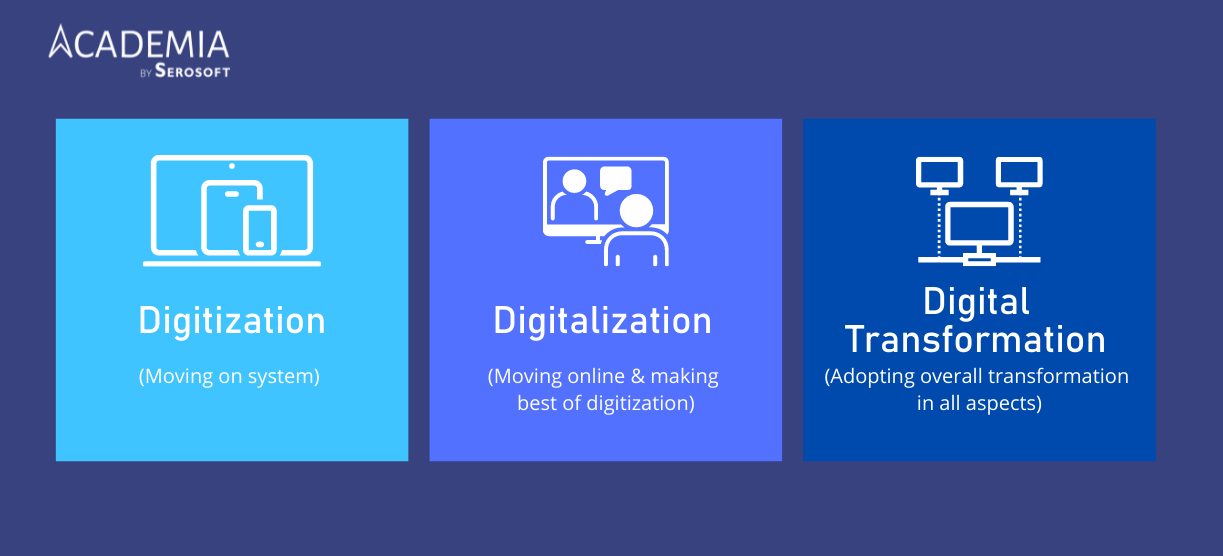
What is digitization?

Digitization in education is the process of converting information from a physical source to a digital one. It directly helps in converting non-digital documents into digital representations that are automatable according to the workflows. Digitization also enables processes to create business value accessed anywhere, anytime. It also lays the foundation for businesses’ use cases that leverage the data.

Examples of digitization include scanning a paper document and saving it on a computer’s hard drive as a digital document, choosing Excel spreadsheets from paper formats, and more. 

What is digitalization?

In a broader sense, digitization and digitalization are closely associated. They are often considered the same terms, but looking deeper into it, both are different, having different meanings and values. Digitalization means making the best of digitized resources and work. It more often helps in connecting through digital technologies to improve overall efficiency along with creating a digital culture at its core.

One of the common examples of digitalization includes converting Excel spreadsheets, documents, and more to the cloud. Through this, institutions can work in a structured environment where the documents can be shared and accessed among stakeholders according to their needs.

What is digital transformation?

Digital transformation is the complete transformation of activities, operations, processes, products, and functionalities leveraging opportunities of digital technologies. It includes both the terms digitization & digitalization. 

Institutions in the modern age can choose digital transformation aiming for efficiency, productivity, and new monetization opportunities. It can help institutions to bring new-age learning to all prospects. 

One of the common examples and benefits of digital transformation is moving the data of admission or any other operation from a Google tool into software like ERP that can analyze the data. 

The main benefit of digital transformation for educational institutions is to provide ease, productivity, and growth through all the academic & administrative operations for all the stakeholders associated with the institution.

The Difference between digitization, digitalization, and digital transformation

Digitization, digitalization, and digital transformation are co-related terms and help educational institutions achieve automation. Meanwhile, it is crucial to understand that digital transformation is the broadest term that involves both digitization and digitalization. 

According to Gartner, digitalization and digital transformation have a growing impact with enhanced expectations from students, staff, and faculty. 

Digital transformation helps in automating complete functioning & transforming manual functioning into three processes: first digitized, second, digitalized, and last yet the most important digital transformation. 

Various technologies like ERP/SIS, help educational institutions automate all their operations, and activities, and opt for digital transformation leading to unstoppable success and achievements. 

Conclusion 

So at which stage your institution stands – digitization, digitalization, or digital transformation? Nevertheless, institutions must understand that if your institution has opted for digitization, it is nothing but a step ahead of manual intervention. With the enhancing EdTech opportunities, institutions should need to choose digital transformation with advanced software like ERP/SIS. 

Academia ERP/SIS provides absolute digital transformation to all the academic & administrative operations of your institution. The key aspects of digital transformation for your institution include:

  • The digital transformation of complete manual processes even from paper, documents, or Google tools. 
  • Interoperability with other software and systems for seamless workflow and management. 
  • Multi-center capability for managing multiple locations & campuses with ease. 
  • Mobile application for easy access from anywhere and anytime for any stakeholder. 
  • Boost productivity and ROI. 

So, what are you waiting for? Seek digital transformation now! Just fill out the form and one of our experts will get to you as soon as possible. 

Achieving IT Governance through a University Information System

In recent times, there has been a consistent focus on how IT supports good governance in HEI (Higher Education Institutions). With technology rapidly changing and competition rising, HEI’s good IT governance is increasingly being achieved with a capable University Information System.

For HEI (Higher Education Institutions) where technological infrastructure consists of different kinds of applications and platforms, academic systems, cloud applications, and diverse technologies, IT is an essential factor that supports the growth and sustainability of the institution. All these different technologies used to support the research, teaching, and administrative processes need a very efficient IT governance framework. 

An IT governance framework is made of structures, processes, and relational mechanisms with each mechanism having a specific function and when implemented, it should positively impact the institute. At the same time, the process to identify the right mechanism for a specific context is a tough and complex one. 

Today, IT plays a critical role in every aspect of a university from researching and teaching to administration. IT is helping educational institutions achieve their goals and objectives. Also, communications and IT provide increasing opportunities to boost an institution’s effectiveness and efficiency. Hence, investment in IT, and how, when, and where it will be made, is an important part of an institute’s strategy to grow.

IT governance covers everything related to technology, including:

  • All technology, applications, and services used by the university
  • IT resource management 
  • IT project management 
  • Information security 
  • IT policies and standards 
  • IT risk management 

Today, implementing an IT governance system at universities has become a necessity and it helps to-

  • Define who is responsible for IT strategic planning and decision-making
  • Identify how to leverage technologies for greater innovation and collaboration among students, faculty, and staff
  • Create a strong IT strategy and line it up with the university’s global strategy
  • Save costs in IT investment because of project management and prioritisation of investments
  • Reduce IT risks with adequate management
  • With the right indicators have the evaluation and monitoring of IT-based processes and services
  • Accomplish regulatory compliance, implement international standards and obtain quality certification relating to IT governance more easily
  • Achieve a return value on investments made, with cost savings, global internal organisation improvement, more user satisfaction, improved corporate image, and outreach

A university management system is specifically designed for every stakeholder from Chancellors, Directors, Principals to administrators and staff to automate complex procedures and manage day-to-day operations. With a good university management information system, there is a lot of benefit for students and the university, including better academic delivery, work efficiency, and improved student achievement. With the education landscape going through steady changes, universities must have an innovative university information system. 

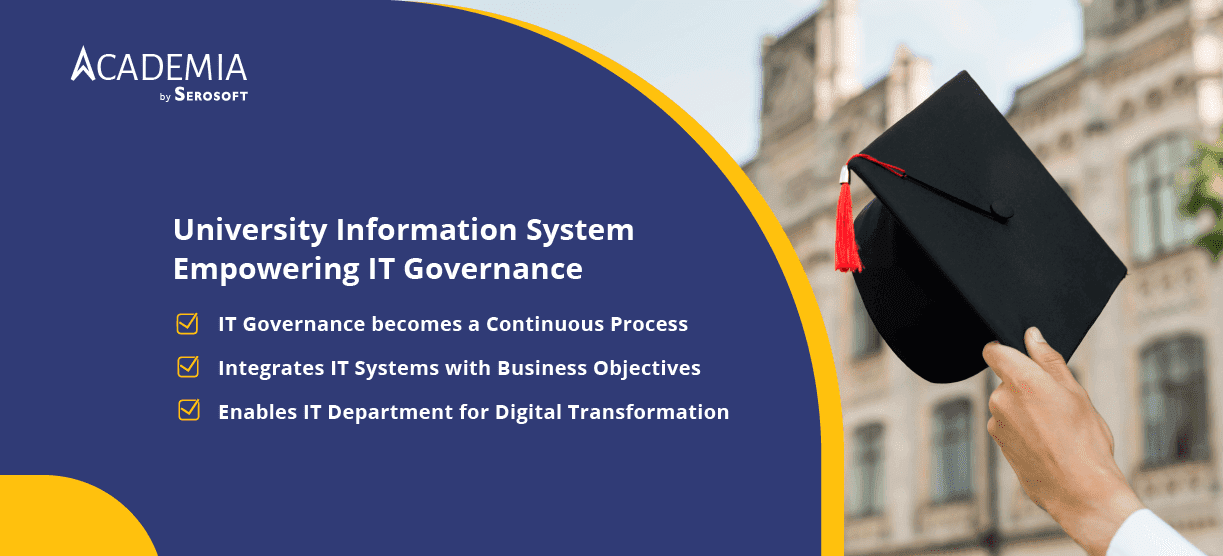
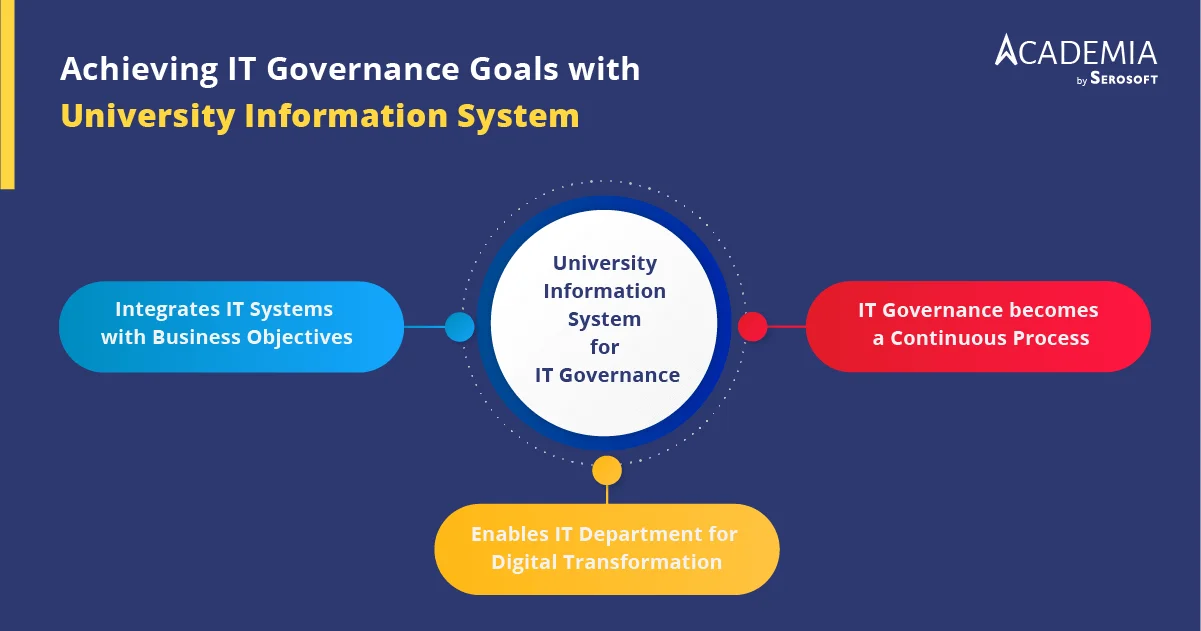
There are 3 reasons why a University Information System is crucial for a university to achieve IT Governance goals: 

  1. The system ensures that IT governance becomes an ongoing process, which is critical to the success of the initiative.
  2. It integrates IT systems with business objectives.
  3. It changes the perspective of the IT department as a service provider and elevates it to enable transformation at a human, social and intellectual level.


Some of the key advantages of deploying a university management information system are:

  • Seamless management of all in-house activities
  • Offline & online examination management
  • Onsite, online, offline service support anytime
  • Role-based login access for data security
  • Monitoring & accurate information analysis
  • User-friendly solution for ease of navigation 
  • Reduction of manpower and cost savings
  • Centralised online admissions
  • Improved transparency in result processing or procurement. 
  • Better efficiency with faster processes and central data repository
  • Better accountability
  • Easy to assemble, process, and record information quickly
  • Integrates all stakeholders for an improved level of comfort

Academia ERP offers a robust and comprehensive University Information System customised to provide automation solutions to digitise administrative operations. With decades of experience, Academia has been successfully converting manual processes into digital ones.

Academia is a practical cloud-based university management information software that can be accessed across campuses and academic and non-academic departments which are integrated with everyday activities. Academia’s transparent and user-friendly ERP helps to connect students and teachers and eliminates the mismanagement of data. The data is secured with security tools and encrypted passwords and there is the quick automatic backup of data that is easily retrievable.

Academia also offers 27×7 offline and online support to fix any technical bugs that may arise, and help in the smooth functioning of the ERP.

To learn more about Academia’s empowering University Information System, please get in touch for a free demo. 

https://www.academiaerp.com/request-demo 

Back to top