Type your keyword below

Revolutionize Leave Management with Academic ERP Software

The modern education ecosystem is moving towards a more flexible, agile & institutional environment and this trend has been accelerated by the arrival of new technologies. The use of leave management systems, especially ERP software for creating and managing various types of leave for faculty, students, and staff members is gaining popularity. This article will discuss how a leave management system can revolutionize your institution’s leave management process by offering features such as flexible scheduling options and real-time insights into multiple stakeholders’ activities, etc.

Advanced leave management features

There are several types of leave management features available:

Enriching faculty’s onboard experience (For New Joiners? Or onboarding to the system?

Ensure a seamless experience for new faculty.

It also helps students, faculty, and administrators in different ways. It helps students in requesting easy leaves, checking leave balance, and likewise, it helps faculty members to approve the students’ leave. It also helps faculty members to manage their leave balances and processes accordingly.

Make it easy for your students to learn about institutions’ culture and values, which will help them feel more connected to the institutional identity.

Faculty & Student Portal

The student portal allows the student to access their leave balance and details.

Students can submit leave requests by filling out a form on the portal, which is then submitted via email or SMS.

The students can apply for leave using this same portal.

Students can view their history of application and approval dates for any particular request that they have submitted through this tool.

A good leave management system can provide a lot of benefits to all stakeholders.

The right leave management system should be easy to use, flexible and scalable. It should also be affordable, integrate with other systems, and be compatible with various browsers, operating systems, mobile devices, and applications.

Conclusion

Leave management systems are critical to the success of academic institutions. Academia ERP is an education ERP that provides a leave management system that helps faculty and students in effective leave management.

Academia ERP is a comprehensive and user-friendly ERP solution that helps you manage all aspects of your institution’s operations. It provides a leave management system that helps faculty and students in effective leave management.

Leave management is a process of tracking and managing all the leaves taken by students. It helps in improving the productivity and learning experience of students.

Academia ERP software has been developed to assist faculty members and academic institutions in managing their leave. This ERP software can be used to track all the leaves taken by students and monitor their progress towards achieving their goals as well as help them maintain high productivity levels during semester breaks.

Want to learn more? Request your demo now!

Challenges and Supporting Factors in Adopting ERP in Higher Education Indonesia

The education model of modern institutions in Indonesia is changing and moving towards automation and digital transformation. According to Wikipedia, the Indonesian education system is the fourth largest in the world with more than 50 million students, 3 million teachers, and 300,000 schools. Indonesian institutions need to choose and implement technologies like ERP that are directly associated with modern education and growth.

Higher education institutions in Indonesia are on the verge to opt for ERP systems for complete digital transformation, but institutions need to check the challenges & supporting factors in adopting ERP according to the Indonesian educational system. 

An ERP implementation can be one of the most intensive processes undertaken after considering Indonesia’s education ecosystem. 

Installing an ERP system changes the complete scenario for all stakeholders, so to make it positive the challenges need to be accomplished deliberately.

Challenges & their Supporting Factors in Implementing ERP 

1. Selection of the right ERP software 

Challenges

There are 2,316 higher education institutions (2,235 private), including 391 universities (345 private) in Indonesia. Higher education in Indonesia offers academic degrees, vocational degrees, and professional degrees.  

These institutions are on their way to opting for digital transformation and an ERP is one such solution. To choosing ERP, institutions are facing various confusion like selecting the ERP for some operations, avoiding systematic implementation process, and more.

Supporting Factor 

Indonesian institutions need to deep dive into research for finding the right ERP software. It is crucial to check all the necessary features, modules, and functionalities that your ERP provides. With all these, the ERP vendor organization you choose must provide you with efficient implementation, support, & pre & post-implementation process, maintenance & sprint updates. 

2. Proper communication between institutional authorities & ERP experts

Challenges

Effective communication is the key to success for any business. In educational institutions as well, it becomes necessary to have an effective chain of communication between all the stakeholders. 

After selecting an ERP system, institutions often find it difficult to connect with the ERP vendor due to various factors like language differences, unscheduled meetings, unskilled ERP managers for their institutions, and more. All these affect the entire implementation process of the ERP in your institution.

Supporting Factor 

For smooth implementation of an ERP, it is a must that institutions in Indonesia should check each and everything with the ERP they choose from the start. They can communicate and understand the product in the following manners:

  • Requesting at least 2-3 rounds of complete tour or demo of the product. 
  • Demanding a dedicated and skilled ERP expert for proper implementation of the ERP. 
  • Organizing internal sessions in your institute explaining the ERP and its features. 
  • Connecting with the ERP vendor team regularly for seamless relationships. 

3. System preparation according to the Indonesian education scenario 

Challenges

As discussed above, Indonesia includes more than 2000+ institutions. It includes institutions with academic degrees, vocational degrees, and professional degrees. In these different types of institutions, ERP vendors often get distracted and confused in choosing and accomplishing the needs in implementation. 

Supporting Factor 

An ERP is considered an end-to-end solution for educational institutions. The ERP you choose must provide you with all the features that can help in managing all the academic & administrative operations. 

For this, the system you choose must provide all the standard versions with a centralized server. The ERP experts should deal with all the necessary system preparation according to your institutional type, operations, activities, and regular tasks. 

4. An efficient deployment & training for all stakeholders 

Challenges 

After proper system preparation, institutions often face difficulties in managing the efficient deployment of the ERP and knowledge transferring to KT, as most of the ERP vendors do not always provide training to all the stakeholders for a better understanding of the product. 

Supporting Factor

As mentioned above, every institution has a different way of imparting education. The ERP system you choose must provide:

  • A Systematic Deployment 

After systematic preparation of ERP, institutions must opt for a consolidated deployment plan containing information on processes to be mapped to the designated modules. 

  • Training to Stakeholders 

An ERP system changes the complete operational activities of the institute. It makes all the stakeholders opt for an automated method, and it sometimes becomes difficult to go with the sudden transformation.

For this, higher authorities at the educational institution need to organize sessions with associated stakeholders for complete knowledge transfer and proper functioning in the institutions.

5. Regular Maintenance & Updates 

Challenges

After completing all the processes, an ERP system requires continuous maintenance & needs to be updated regularly. Institutions in their day-to-day tasks educational authorities often neglect or forget the regular maintenance & updates. 

Supporting Factor

After the completion of installation, we provide comprehensive support to the institute. A good ERP software provides institutions with raising queries related to the software, it also gets resolved as stipulated by a support team. It should also organize sessions to provide detailed sessions for sprint updates. 

Academia ERP: A perfect solution for Indonesian educational institutions 

Every country owns a different level of education ecosystem, with different types of programs & courses offered, different types of stakeholders’ behavior, and a lot more differentiated things. 

Keeping the aforementioned in view, Academia provides a comprehensive and customized ERP solution according to the needs of the institution. Currently, we are providing robust ERP solutions in more than 20 countries according to their customizable needs. 

With our several clients present in Indonesia, we provide the supporting factors & solutions to all the challenges that affect consistent ERP implementation. 

Want to know more? Request your demo now

Global Education Institutions – Why is it the high time to implement ERP?

The use of technology is undoubtedly necessary for almost all sectors, and education is not an exception. Considering Covid’s impact, it is a crucial time for the digital transformation journey of educational institutions. Implementation of systems like ERP (Enterprise resource planning) is helping cores of institutions automate all the tasks and operations. 

According to Research And Markets,  the global education ERP market will reach $22.2 billion by 2026. Various advancements in information technology have equipped educational institutions with new innovative tools for handling their operations. Recent enhancements in information technology have equipped educational institutions with new innovative solutions for handling operations. 

Why is mid-2022 and 2023 the peak time for institutions to opt for an ERP?

The global pandemic pushed educational institutions to instantly shift gears, from adopting online learning patterns to managing complete student and faculty life cycles online. In this situation, institutions that have adopted intelligent software ERP have to accelerate growth and success in all diagonals managing efficient operations. 

Based on the current educational scenario, the educational ecosystem in the remaining 2022 and 2023 will be composed of three main models – centralized educational institutions, decentralized operations in institutions, and a hybrid learning approach. It is the right time for institutions around the globe to choose a well-integrated education ERP that can manage all the academic and administrative tasks for the growth and success of the institution. 

Why is it the right time for educational institutions across the globe to choose ERP?

The higher education ecosystem is growing exponentially. Various new institutions are being inaugurated and are on their way to achieving success using technological tools for automation. Along with it, several prestigious institutions are choosing automation and digital transformation, changing the traditional or manual form of working. It is also fair to say that higher education institutions have started utilizing technology improvements along with implementing ERP software to grow and achieve better results. 

Let’s have a look at the country-wise educational scenario – need & worth of ERP:

✅ India

According to Wikipedia, India has a publicly funded higher education system that is the third-largest in the world, next to the United States and China. Going deeper, India has a total of 1026 universities, including national and state universities. Having a huge ecosystem, institutions must choose modern techniques that can embed better learning, teaching, and of course, administration management.

“Energetic youth are the engines of development of a country; Their development should begin from their childhood.” – Narendra Modi, Prime Minister of India. 

As Indian education is taking a 360°curve, educational institutions must adopt technologies that can support the complete establishment of modern technology; an ERP can be the best one for this! 

United States

The USA is considered home to the maximum number of international students. It provides a diverse range of courses for all study levels. There are nearly 4,500 higher education institutions in the US, including colleges and universities. As it is clear that the USA is always a step ahead in adopting technologies, there are still a few institutions that are using manual processes to run the institutions. 

Being a trendsetter of technologies in the world, it is a must that education institutions in the USA should choose a good ERP product to bring automation and digital transformation. 

South Africa 

South Africa is also considered one of the best countries to get a quality education. This country owns reputed institutions, including universities, colleges and schools. Do you want to beat the competition and become one of the top universities in South Africa? If yes, then it is the right time to choose the best ERP system that can provide robust academic and administrative operations bringing complete automation and digital transformation to the institution.

Various institutions in Africa are growing and achieving opt for a good ERP system. Check now:

Philippines

There were around 3.5 million students enrolled in higher education for the school year 2019-2020, an increase of approx 0.5 Million from the 2010-2011 student enrollment of 2.95 Million in the Philippines. Though every country has its education system, most nations would have a similar concept or equivalent qualification. The education system in the Philippines is different as it adopted a combination of influences from its colonial history. 

With the enhancing technology, institutions can find ways to simplify processes for students in all aspects bringing complete digitalization and automation to their institution. However, most of the institutions in the Philippines are on the way to opting for automation with technologies, as the education system here has been greatly influenced by the colonization of Malaysia, China, Spain, and America. 

The United Kingdom

The UK is known for having one of the best education systems. According to a report by usnews.com, the UK is in 2nd position for best countries in education. It includes various prestigious universities, colleges, and schools. The best part of the education system of the UK is that most of the institutions are on the urge to opt for automation and digital transformation. 

To maintain the dignity of institutions in the country, institutions must implement a robust and feature-rich ERP. It can not only help in accomplishing all the goals and needs but will also help your institution to remain on the top just like the country’s dignity to be at the top of the education ecosystem.

Indonesia 

The use of technology is enhancing in every sector and education is never an exception. Indonesia is a country that is evolving technologically with speed.

According to Unesco, Indonesia’s literacy rate is now high at around 95 percent. Its youth literacy rate is even more impressive at 99.67 percent.

To continue this, Indonesia utilizes the trend of having software and tools that can make the education ecosystem sharper, more efficient, and more effective. The year 2022-23 can be considered a revolutionizing year for adapting and implementing technologies like ERP, SIS, and LMS. A combination of these can not only help in the digital transformation of the education ecosystem but will also open gates for splendid growth and success for the institution. 

Institutions are implementing ERP to attain success and growth at the same time, check the case study now.

Australia

The education ecosystem is enhancing with pace, and Australia is also becoming a place for education enhancement. The government of Australia is focusing on the digital education revolution program. It is the right time for institutions to choose a technology and implement ERP that can bring prosperity, productivity, and growth. 

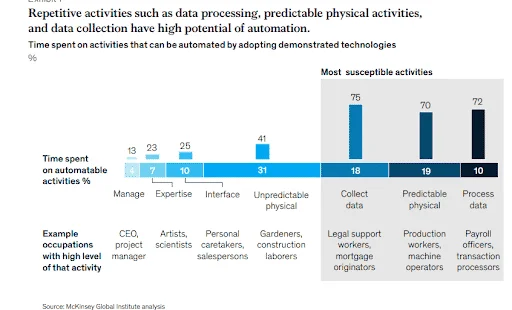
According to Mckinsey and Company, Various automation technologies such as ERP, SIS, machine learning, artificial intelligence (AI), advanced robotics, and more are already transforming Australian institutions, the economy, and the entire community. Software like ERP/SIS is enormously changing and restoring the Australian economy, helping institutions manage academic and administrative tasks. 

Canada 

As of 2021, there were approx. 97 universities in Canada, offering quality education to students. Each of these institutions is choosing their ways to grow and compete in the education market. With the enhancement in education, it is a must that institutions should opt for ERP as it can provide complete digital transformation to all the academic and administrative tasks of the institution. 

The digital transformation of institutions can leverage data and technology to improve and meet stakeholders’ expectations. In the current scenario of Canadian education, automation using mobile applications or web applications is a must for students, faculty, and staff. It can lead to efficient and easy completion of all tasks along with providing satisfaction to all stakeholders. 

With having an n-number of educational institutions in the world, it is a must that institutions should implement ERP for the complete digital revolution in education:

The COVID-19 pandemic has accelerated digital transformation in education as there exist nearly 1.5 billion students across the world. Meanwhile, the situation is getting back to normal, it is high time for educational institutions to attain a good ERP system and implement it in their institutions. Various countries from the APAC region, Middle east countries, and others including Ghana, Botswana, Papua New Guinea, and more are witnessing a digital revolution in education.

In which country your institution is located? Are you using a good ERP that is glorifying growth and success along with satisfying all the stakeholders? If not, then it is the right time for your institution to choose a good ERP that can fit, grow, and accomplish your institutional objectives. 

New Educational Institutions/Universities – Why do they have ERP/SIS from the start? 

After the COVID-19 pandemic, various new institutions were opened and established. Are you also one among them? If so, then it is initially important to keep a note of the current EdTech wave. Choosing the right technology that can boost overall operations from the start can become a path-breaking decision for institutions.  

Reasons why should new institutions implement ERP from the start:

  • Automation of operations from the start can reduce loads of paperwork
  • It enhances interactions and creates smooth communication channels 
  • It streamlines all academic and administrative operations from the first day
  • Boost productivity and enhances ROI from the start

Why is it necessary for established or 1-2 years old institutions to implement ERP?

Every educational institution has a different approach to managing academic and administrative tasks, but with the emerging competition, it is necessary to opt for modern trends and techniques that can ease out tasks for faculty, staff, and students. It is the right time for institutions to implement ERP that makes the flow systematic for all the operations. 

Reasons to implement ERP in your institution:

  • Free from hectic paperwork, documents, and manual sheets 
  • Simplification of student life cycle management 
  • Bridging the communication gap between stakeholders
  • Enhances ROI and productivity 

Conclusion 

Multiple educational institutions across the world are choosing ERP for managing their day-to-day operations and making them efficient. 

Academia ERP is benefitting 300+ educational institutions across 20 countries and 4 continents. Providing automation and digital transformation to multiple institutions and helping them bring more productivity, growth, and efficiency in the best possible ways. 

Academia is providing robust academic & administrative management to all the operations available in the institution right from admission, attendance, program & course selection, to examination, and all other tasks. With all this, it is also rendering customizable benefits to institutions according to the needs, for example, anonymous answer sheet checking, multiple report generation, and many more features. 

Check institutions around the globe that are getting benefited from using Academia:

So what are you waiting for? Let’s discuss now: Contact us now!

Stay tuned for more blog posts like this! 
Ten Ways to Increase Student Engagement During Admissions

For the last few years, educational institutions have started opting for technologies that play a supporting role in overall academic and administrative management. Among all other important tasks, admissions, recruitment, and enrollment are the most crucial. Institutions must opt for student engagement activities that boost admissions to the best prospects. 

Reaching the targeted student enrollment rate is not that easy. It involves new-age learning activities that are less time-consuming. According to a survey by InsideHigherEd of colleges and universities, 60% of admissions officials from community colleges and 55% of admissions officials from private bachelors colleges are concerned to complete goals for student admissions. 

Let’s have a look at ten ways to increase student engagement during admissions:

  • Efficient communication and enquiry processes 

Admissions in any education entity involve various tasks, and the first one to it is the enquiry process. It needs to be efficient with an error-free communication process. An effective communication process needs to be engaging, easy, attractive, and collaborative. 

The enquiry process needs to be quick and easy. The modern generation of students needs paced solutions. Text or video feedback are engaging ways of communicating with learners and establishing peer collaboration networks. Institutions need to understand that solutions like an ERP/SIS can automate the enquiry process making communication seamless and error-free. 

  • Involve pre-enrollment activities 

After successful enquiry completion, institutions must give a major focus on pre-enrollment activities. It directly helps in converting inquiries into admissions.  The  advanced generation of students demands pre-enrollment activities like

  • Opt technologies like portal and mobile applications to communicate with students 
  • Avail Self serve application forms 
  • Collaborate more with best-fit applicants
  • Focus on solving all the queries related to students


  • Effective pre-admission processes 

It is also one of the major steps of the whole admission process. Many universities and higher education institutions gear up in the pre-admission process to align the process systematically. But institutions must organize the students’ potential enquiries from different sources and take action instantly to convert the students into prospective students. 

The pre-admission process needs to be designed attractively and engagingly which should help in enhancing student engagement activities. 

  • Use social media to attract students 

Today’s generation is full of mobile phones, websites, and social media. They just demand easier and trending solutions for all their needs. Modern education leaders need to use social media to connect and coordinate with students. Using the power of social media, it will become easier to announce, notify, and welcome new students to the institution. 

  • Keep an up-to-date website 

A website is considered the online address of an entity. Educational institutions must have an up-to-date website with all the necessary features and functionalities. It should remain updated with all the latest information, news, and updates available to the institution. The most necessary element to this is, that in the highly competitive age, institutions need to keep the website SEO friendly and updated according to keyword search rankings. 

  • Utilization of a responsive mobile application 

Today’s advanced generation needs every information, notification, and update on their mobile phone. Institutions must use a responsive mobile application that can avail faculty, parents, and students to check, upload, and any information online. 

Also, Read Benefits of Mobile ERP Applications in the Education World
  • Reduce response time using automation 

It is beneficial for education leaders to attain automation in their institutions. Automation can result in reduced response time. It can keep all the academic and administrative tasks aligned and reduce response time for all the operations boosting overall productivity in the institution. 

  • Use of analytics dashboards

Universities, colleges, schools, and training centers involve a huge amount of data and information that needs to be stored, managed, and organized to be accessed anytime. Manual intervention in institutions makes this process a bit complicated and sometimes creates situations of data breaches. 

Automation is the best solution to this. Technologies like ERP/SIS can help education institutions with efficient analytics and dashboard. It can secure all the data and information systematically. It also provides many opportunities for better data gathering and analysis that can help faculty members and students in longer prospects. 

  • Enhance credibility in all operations 

In the new age of learning, there is huge competition among educational institutions. So to make a place in the ecosystem, it is a must that institutions should leverage technology and ways that can enhance credibility in all operations. Various technologies can improve all the operations and enhance productivity in the institution, some of them can be ERP, SIS, and LMS. It depends on educational institutions to choose the best and work accordingly for them.

  • Use multi-center capabilities for managing multiple campuses 

It is often seen that educational institutions find it difficult to manage admission operations on multiple campuses. It involves a multitude of data and information that needs to be shared effectively and efficiently. To manage student engagement and seamless data management, institutions must use the multi-center functionality features included in ERP software. It provides the benefit to manage various institutions using just one single software. 

How does Academia help institutions boost admissions and student retention efficiently?

Academia is the best solution for educational institutions, it can be your sole learning solution with all the major institution management functionalities and features. 

For Boosting Admissions: 

Academia empowers you with the feature of running different campaigns on social media, websites, and other platforms to attract new students. The easy online admission process and program selection also play a vital role here.

For Student Retention:

Academia’s powerful analytics comes to the rescue here. Analytics and reporting are powerful tools for analyzing the student retention rate. Graphs and reports can help education management to bring transparency and make the best decision for increasing the student retention rate.

Still looking to get in-depth information on boosting admissions and student retention. Request a free demo and take a complete tour of our product.

4 Undeniable Reasons Why Educational Institutions Should Use ERP Software

Being a part of the education industry, I need not tell you how much the meaning of education has changed over the years. It is no longer about providing education for sake of a system or law. It is about having more accountability toward building the future of the country by shaping these young minds. Equity and accessibility have become an integral part of the goal. Governments around the world have already started prepping to meet these new goals in a couple of years. 

Even though, the goals have changed the challenges have remained the same. In fact, after covid-19, they have elevated. The resources are meager and in some poor countries, educating children is not even on the list of priorities for people. They are battling to keep their families fed and are asking children to take up odd jobs. As an education organization, you too must have seen a dipping admissions rate, late arrival of government aid, and most of all students having lowered engagement in the classroom. How are you are prepping to battle them? 

One of the solutions is — Education ERP. 

What is Education ERP Software? 

Education ERP software is advanced software that helps in automating the operations in an institute and serves as a database for multiple applications put in use for the digital governance of an institute. 

4 undeniable reasons you must invest in Education ERP software

  • Reduces cost 

A report by OECD suggests that global funding for the education industry can go down by 11%. This means you must be prepared to reduce the cost of operations and spend only on the things that are absolutely necessary. 

But do you even know where you are spending currently? I know your answer. Manual processing is not only costly, but it is highly opaque. There is no transparency in the transactions and hence you may not be able to fully consolidate where you are spending currently. 

To fight that, use an ERP solution. It is an enterprise-level resource management tool that provides you with financial management and automates most tasks to reduce operational costs. 

  • Paperless operations 

This is the most cliched reason to invest in technologies but, imagine the amount of money you save by going paperless. Paper-bound operations are slow and they are very difficult to manage. They lower the productivity of the staff and you lose out on good opportunities to stay profitable in the current economic climate. Hence, switching to paperless operations is best, and ERP does it all for you. 

  • Reports and Analytics. 

Compliance agencies and regulatory bodies are prepping for changing their norms of accreditation. They need to see more accountability in administrative and academic staff toward quality education. They are demanding reports on various aspects of a student lifecycle and to stay on top of it you need — first, a database that centralizes information in one place, and second a tool that consolidates data to provide you accurate reports. 

You no longer cannot depend on the academic and non-academic staff for these reports, given you are short on resources and you have to reduce your operation cost so hiring more people is out of the question. Hence, an education ERP is a long-term solution. The data analytics feature helps you generate various reports and stay in line with compliance. 

  • Data security and management

Data security has become a central concern for education institutes. During covid-19 many institutes chose to go with the available option in the market without testing the security of the product. As a result, many students and parents are complaining of data leakage and are concerned about the security of the student in an online learning environment. 

This has led to institutes taking harsh measures and going with tools that offer higher security in the ecosystem. An education ERP solution such as Academia ERP can help you navigate through this challenge easily. We are a highly secure platform that uses various security measures to prevent any breaches.

Wrapping Up 

These were the 4 reasons to invest in education ERP software. If you need to know more about the features and functionalities, please fill out this form to request a free demo. Our technology experts would connect with you shortly. 

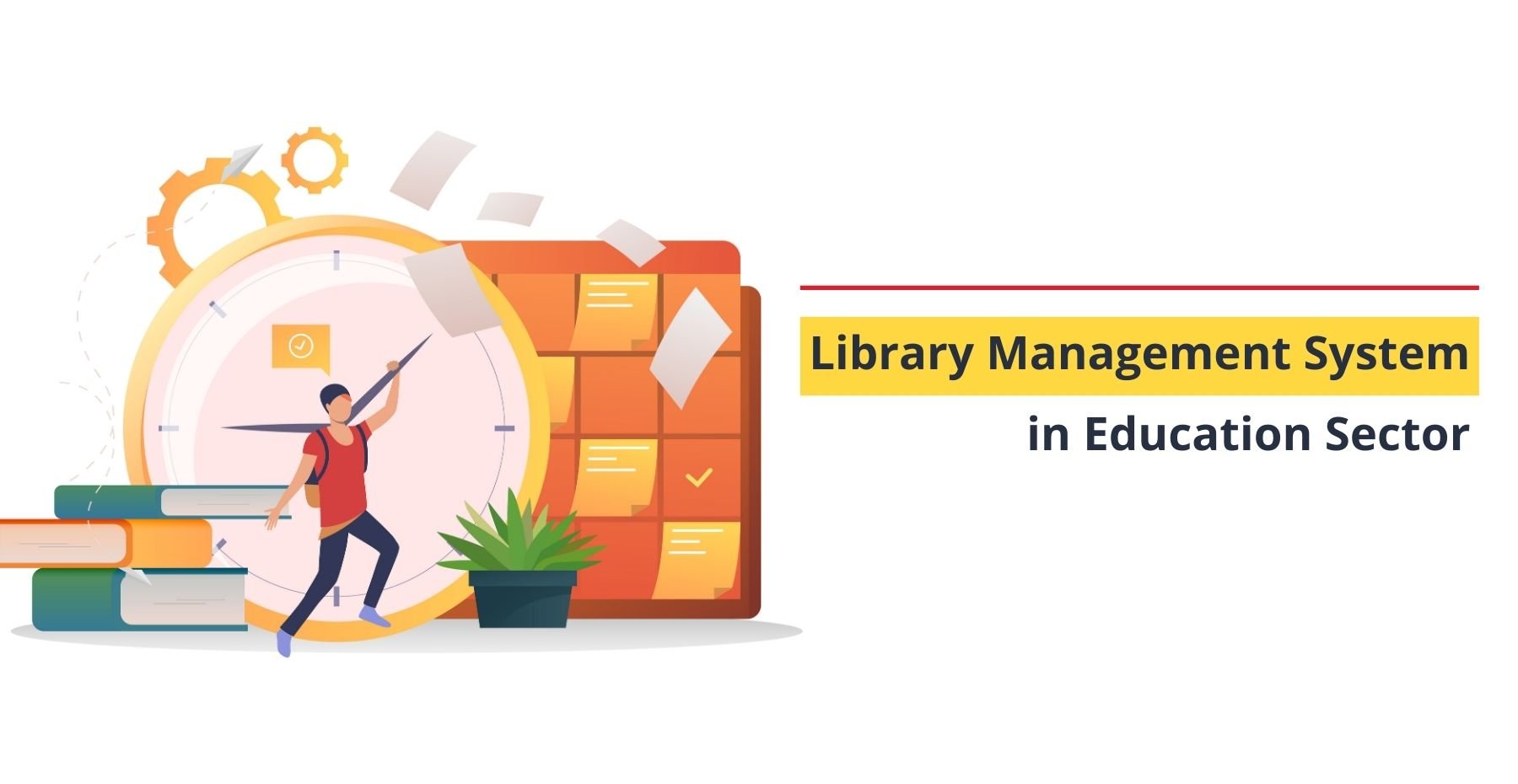
Importance of Library Management System in Education Industry

Libraries are an irreplaceable part of any institute. However, managing your libraries is not an easy task. Called the brains of any institute, the thousands of books in your school or college need technology-driven management. Why? Here is how the library management system helps your education organization. 

Why implement a Library management system

  • The ultimate solution for all

A library management system helps all the stakeholders in the organization. Be it librarian, faculty, student, or even the management – the high-end software allows you to view the books in the library, students that have issued them, and when it is due. Also, it allows you to identify missing books in the library and manage new stock.

  • Improved Transparency

An ERP solution integrated with a library management system allows you to ensure more transparency in the process. It doesn’t require librarians to bury their heads into the log book to map which book is taken by which faculty or student. It is an easy system where you get detailed information on every resource easily and that too in a few clicks. 

  • Accessibility 

Remote capabilities allow the admin or the librarian to access the application on their mobile phones. This gives them great flexibility to work remotely and allows them to access data and perform tasks anytime and from anywhere. Also, this increases their productivity by several folds. 

  • Analytics

Integrated analytics helps in easy report generation. Creating reports manually is not just time intensive but also prone to many human errors. This may cost the education organization to make wrong decisions while stocking up the library inventory. Accuracy with real-time updates is rendered through the high-end library management system.

  • Notification System 

Students coming and going to inquire about book availability is tiresome and they start to lose interest fast. With an easy notification system, you can send out notifications to the students that have raised inquiry tickets about the books in the library and inform them on mobile phones with in-app notifications, SMS, emails, etc., as per your preference and convenience. 

Outcome Based Education

How does Academia ERP help in efficient Library Management?

Academia ERP is a feature-rich solution for education organizations. In its wide variety of features and functionalities, it also offers you a feature-rich library management system that is highly customizable as per your institute’s requirements. Here are a few things that the Academia ERP library management system can do for you: 

  • Manage books/periodicals/journals/CD-DVD and other media records
  • Manage available books and issued books records with RFID/barcode integration
  • Generate library cards for students, faculties, and books
  • Issue/receive library items to and from students/faculties

Want to learn more about Academia an

d how it can bring effective library management to your institution? Talk to our product experts for a Free Demo. Book Now!

An ERP Promise to Profitability in 5 Simple Steps

With an ERP solution comes a great promise: the potential to help your organization (Institution) make more money while spending less. Whether or not you already utilize ERP technology, profit is the engine that drives business. An ERP solution can steer your company in the right direction by helping you make more profit. Academia ERP is an advanced ERP solution with an amazing support system that can help institutes get there.

The Basics:

The ERP solution itself can’t guarantee success. You and your company must guide the ship, using ERP as the sail. The promise of ERP can be fulfilled, but you must look beyond the software to find the formula that will lead you toward increased profits through smooth functioning and improved operations. Academia ERP helps you in increasing your overall profits by decreasing manual intervention in the processes and increasing the rate of admissions per year by removing inefficiency barriers from the processes.

Power of People + Power of ERP = Increased profit and a healthier organization.

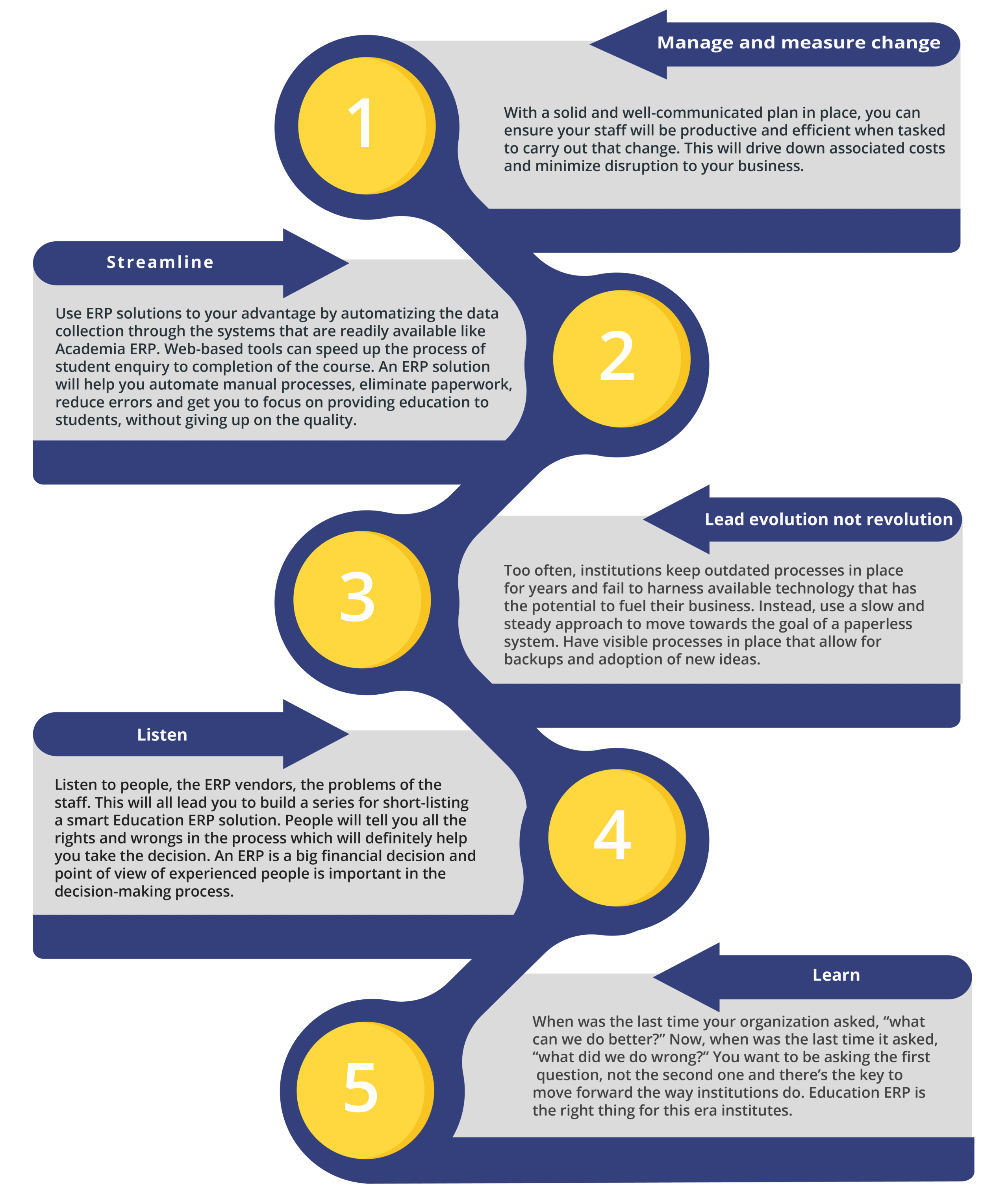
So how do you leverage this formula to become a better and a more successful Institution? It’s simpler than it might seem…

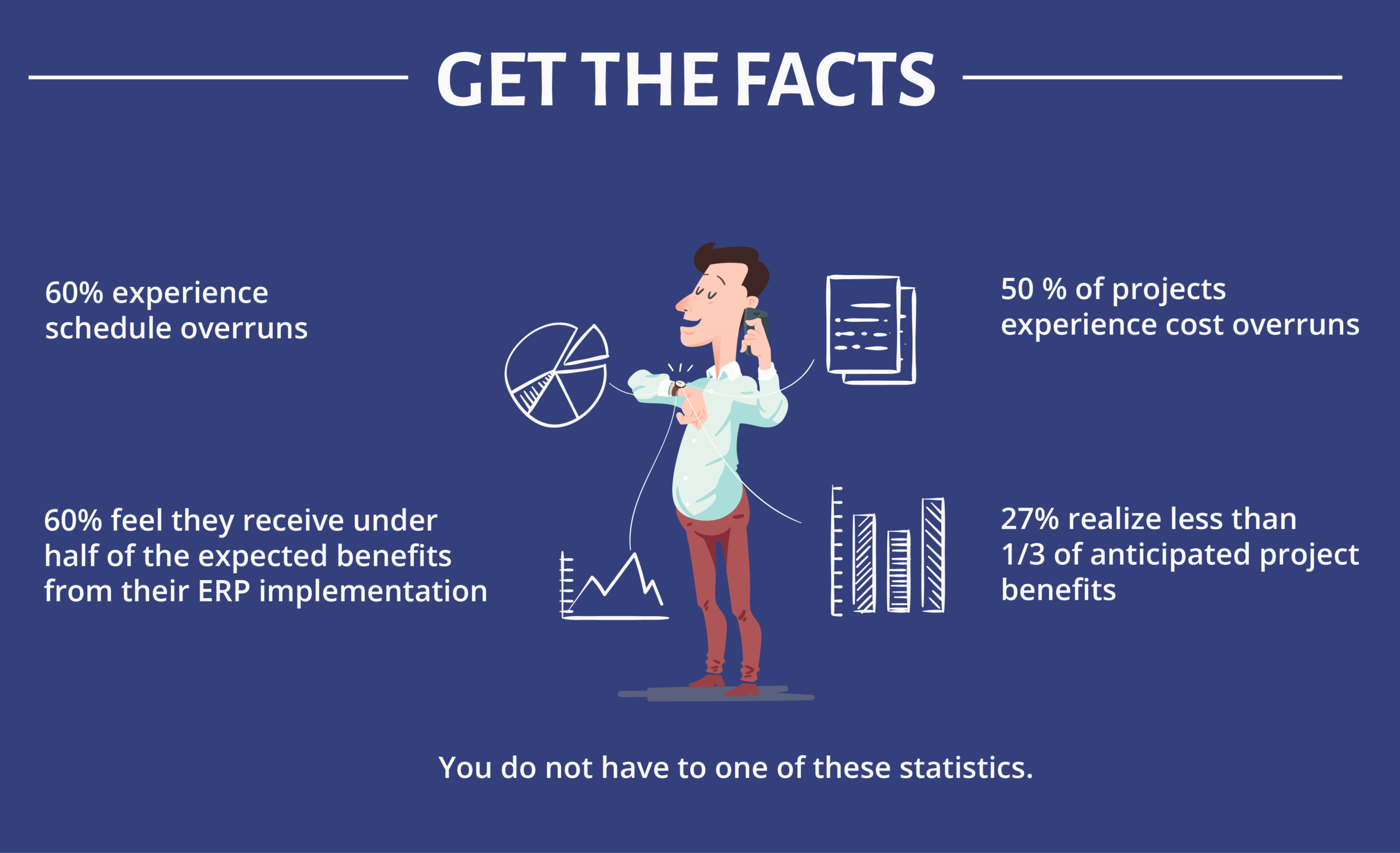
Even Institutes that are satisfied with their software run the risk of running over budget, and many do not receive the expected benefits.

the facts how erp in education benefiting institutions

online college management software-school administration software-Education-ERP- the-right-thing-for-institutes

ERP doesn’t have to be confusing, and a good solution can help the institution to grow and succeed, but only if used the right way.

Know that these steps will lead you to take confident action in adapting to ever-changing conditions, maintaining the health of education systems fuelling growth, and increasing profitability.

You don’t need to hope for the best when you’re using ERP correctly. The best will happen.

Training and Education: Important Elements For Successful ERP Implementation

With the rising EdTech trends and their positive outcomes, educational institutions worldwide are adapting technologies like ERP/SIS that can enhance overall functionality bringing efficient management in the institution. 

What is an ERP system and how can it help educational institutions?

An ERP system is software that can automate all academic and administrative processes. It can manage and streamline all the day-to-day activities such as enquiry, admission, fee & finances, examinations, and many more. 

It helps educational institutions with institution management driving all of the operations from a single platform. It is the true digital transformation of the institution. 

Institutions must choose good ERP software that can effectively meet the expected extent. After selecting a robust ERP system comes the implementation process, there are various factors associated with smooth implementation of the education ERP system.

Let’s move further to discuss the important elements for successful ERP implementation in an institution!

Elements for Successful ERP Implementation

  • Get a better understanding of ERP

ERP is a broader concept and a software solution that can automate all the activities and tasks within an institution. It is necessary to get a deeper understanding with elite training for all the stakeholders who are associated with the use of the system. 

The higher authorities need to check the overall functionalities of the software to confirm whether it can cater to their daily activities and processes. Institutions can also create a panel to check the efficacy of the product to make its work better and improved.

  • Analyze Problems/Requirements

An ERP system can replace outdated techniques entirely through digitalization. So to make it productive, it is a must that institutions should analyze the product efficiency and check the usage and problems with each department. 

The best practice to evaluate this is to create sample data from all the departments and check the accuracy of the system in various aspects i.e., some enquiries, some exam-related data, and more. After checking the accuracy of the system, you need to ask for its solution from the vendor in the best possible way.

  • Check the Needs for Customization

Every educational institution owns different types of rules and regulations. It is a must that the ERP system you choose must provide customization according to the requirements. The software you choose must be a system that can fit the existing processes of the institute with a flair for automation. 

Academia ERP provides solutions to each problem, it renders customization according to the institution, various integrations, anonymous assessment, and multi-Centre functionality to name a few.

  • Test all the Modules

As discussed above, the higher authorities need to create a panel for sample data modeling from all the departments and test each module with the ERP software. Test results are generated live and presented among the ERP team and the panel to find out real-time solutions to the problems. 

After solving the major problems, all the stakeholders in an institution need to use the system to see if they are comfortable with its functionalities and are helpful to the institution in its role.

  • ERP Implementation

After analyzing the system in all aspects, the ERP experts process the implementation of the ERP.

The process starts with transferring all the data from all the departments from manual papers and files or legacy systems. The complete process needs time and involves expert teams from both ends. 

After successful implementation, the ERP experts hand over the complete system to the educational institutions. 

  • Support

As its most important function, an ERP system automates all the operations of an institution, but for this, not just successful implementation can help; it requires effective use by the organization and continuous support from the ERP team. They need to provide maintenance and help at regular intervals. 

For this, Academia ERP has a designated customer support team with experts to resolve any issues instantly along with 24/7 availability. It also releases regular sprint updates to deliver all the updated features and functionalities of all the modules.

Conclusion

With the rising competition and expansion in the education sector, it is the right time for educational institutions to choose a very good technology like an ERP system that can boost productivity in all aspects. 

Again, it is crucial to select a robust ERP system that provides complete automation along with smooth and efficient implementation, support, and end-user satisfaction. 

If your institution is looking for one, Academia ERP can become the best option, as it is a robust platform used and loved by more than 320+ education institutions across the globe. Here, the team of experts believes in overall efficiency while rendering the software, right from the first interaction to the implementation process and customer support!

Request your demo now to learn more about the award-winning ERP solution! 

ERP – Aid To Decision Makers

Implementation of ERP Software in the educational industry has been revolutionizing institutional management for some time now, thereby helping institutions to improve their operational efficiency, making them convenient and transparent for stakeholders.

The very concept of ERP in education is not new. ERP solutions prove to be a big help with management processes, and they were in full fledged functioning mode in some big educational institutions. Development of technology and prevalent need for computing concepts have led to the increase in demand for ERP solutions in education sector as they make these institutions more efficient in handling processes.

In context of education, this segment has seen some periodic attempts. Recently there has been a great challenge in the higher education sector. Needless to say, as the size of institutions grow, they need a campus management product as a hygiene factor.

Below are the key factors which can cite a great importance:

  • The effective use of ERP can help in planning an excellent record and cultivating control over the system.
  • It also proves to be useful for consistently delivering business process efficiency and help in monitoring the policies which help in better customer services and enhanced returns on investment.
  • Usefulness of ERP can also be sought in reducing labor cost.
  • It can also be helpful in managing business operations efficiently.
  • It is thereby useful in moving the sales performances for institutions.
  • It improves the structuring of financial aspect of an organization.

Educational institutions on an average are using their faculty’s time more towards lame operational areas rather than on creative areas. Looking at the operational aspect of higher education today, we find that it has an equivalent stage of complexity that an ordinary enterprise has; general administration, finance, HR and inventory management in addition to services such as canteen, hostels etc, all of which need to be managed properly for the efficient functioning of these institutes.

The resolution of this problem should be dealt by all the stakeholders. The capability of educational institutions to apply superlative processes is held up by the absence of solitary systems. However today’s requirement is to build a solution that is purposely built to encompass the distinctive requirement of the educational industry, therefore, conventional ERP may not suffice.

Impacts on different functions of the institutions:

Admissions

Admission has always been a burdensome procedure with a bulky amount of data required to be stored and managed. ERP can considerably make the admission procedure easy and straightforward as:

  • It will be capable of assisting in creating surroundings that facilitate the spread of information around the admission process, such as course accessible, collection criterion, fees, capture of information about applicants and supporting documents.
  • It can assist in successively running the system based on university standards/affiliation requirements and frequent tests.
  • It can also be helpful in automating the admission process and processes around the candidate record through the life-time of the student, making it a single time process.

Administration

The ERP software can help an institute in synchronizing all over-watch activities during student’s life-cycle in a single place. It includes association of actions such as:

  • Maintaining information – attendance, marks, records ,courses and overall performance
  • It is also beneficial for Scheduling classes, tests, examinations and events
  • Automatically updating the student database during promotion or course progression.
  • Automated report card and transcript generation for students.

Financial management

The Campus ERP makes financial management faster and easier, providing precise information accessible at any given time

  • Fee management of student- automated record of fees and other charges
  • Payroll management of employee and staff
  • Purchase, Asset and Inventory management for the institute
  • HR System

Campus ERP help put an HR system into place:

  • Class schedules for teachers, duties for staff members can be effectively assigned
  • Maintaining attendance records of staff
  • Efficient payroll management for staff members

Serosoft Solutions Pvt. Ltd. is a leading provider of ERP solution targeting education sector with most number of clients in higher education sector, spread across Middle East, Africa and Indian region. An effective ERP solution can make a huge difference and add significant value to an educational institution. Serosoft solutions provide tailor made

  • Campus Management Software
  • College ERP software
  • Education Management Software
  • Student Information System (SIS)
  • Student Management Software
  • University Management Software
  • School Management Software
  • Training Management Software
Back to top