
Webinar Alert: What Nobody Tells You About AI in Higher Education | Thursday | 8th Oct 26

X

Type your keyword below

Student Information Systems for South African Universities: A Complete Buyer’s Guide

Summary: Choosing the right Student Information System is becoming increasingly important for South African universities as student numbers grow and institutional operations become more complex. The Department of Higher Education and Training reports that more than 1.3 million students were enrolled across public and private higher education institutions in 2023, with enrolments projected to reach 1.6 million by 2030. Universities therefore need systems that can support not only day-to-day administration but also long-term institutional growth.

This buyer’s guide explores the key questions universities should ask before selecting an SIS. It examines how to assess institutional requirements, evaluate both core and advanced SIS capabilities, and assess areas such as reporting and analytics, integrations, cloud deployment, configurability, data security and POPIA requirements. It also explores the growing role of AI, what universities should look for in implementation and vendor support, and how to make the final SIS decision.

The key takeaways are clear: universities should begin by identifying the problems they actually need to solve, evaluate how well an SIS connects data and processes across the complete student lifecycle, and look beyond individual features to assess advanced capabilities that can improve efficiency, visibility and decision-making. They should also consider whether the platform can integrate with their wider technology ecosystem, adapt to institutional requirements without excessive customisation, support responsible data governance and remain relevant as their needs evolve.

Ultimately, the guide helps university leaders move beyond simply asking “Which platform has the most features?” and instead evaluate whether an SIS can connect data, streamline processes, support better decision-making and provide a strong foundation for long-term institutional growth and future readiness.

What Should a South African University Assess Before Comparing SIS Vendors?

The buying process should begin before the first vendor demonstration.

Universities should first understand the problems they are trying to solve. An institution replacing a legacy system may be struggling with fragmented data and difficult integrations. Another may already have a functioning SIS but need better reporting, automation or support for multiple campuses and learning models.

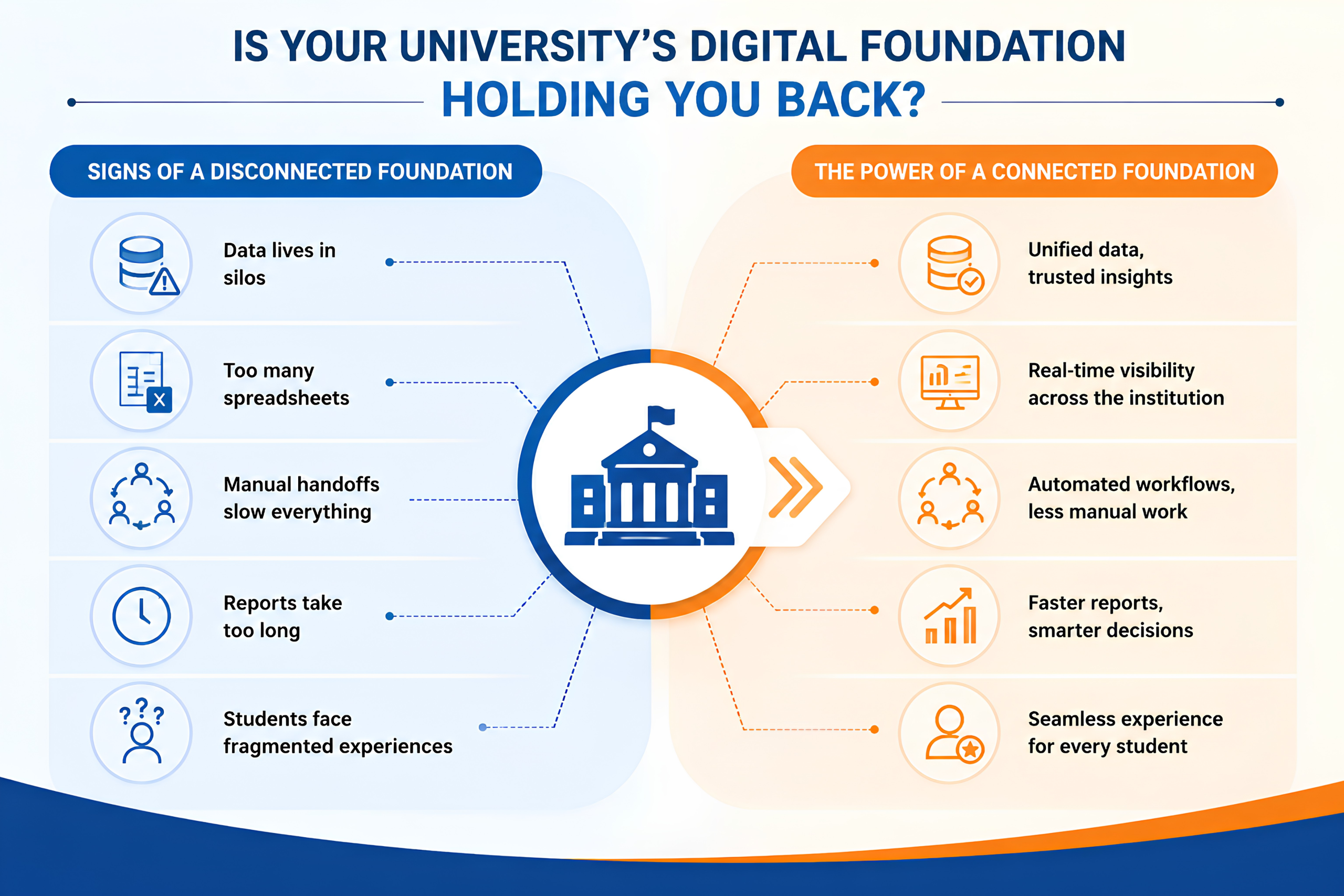
This assessment should look at the complete operating environment. Where does duplicate data entry occur? Which reports require manual consolidation? Which processes still depend on spreadsheets or email? And where do students or staff experience unnecessary delays?

A useful starting point is to map the student lifecycle and identify where information or processes break down. Only then can a university create meaningful evaluation criteria for potential vendors.

This matters because a feature that appears impressive during a demonstration may have little value if it does not address an actual institutional requirement.

What Should Universities Look for Beyond Core SIS Features?

Admissions, student records, registration, academic management, examinations and fees form the foundation of any Student Information System. However, when comparing SIS platforms, universities should look beyond whether these basic capabilities are available.

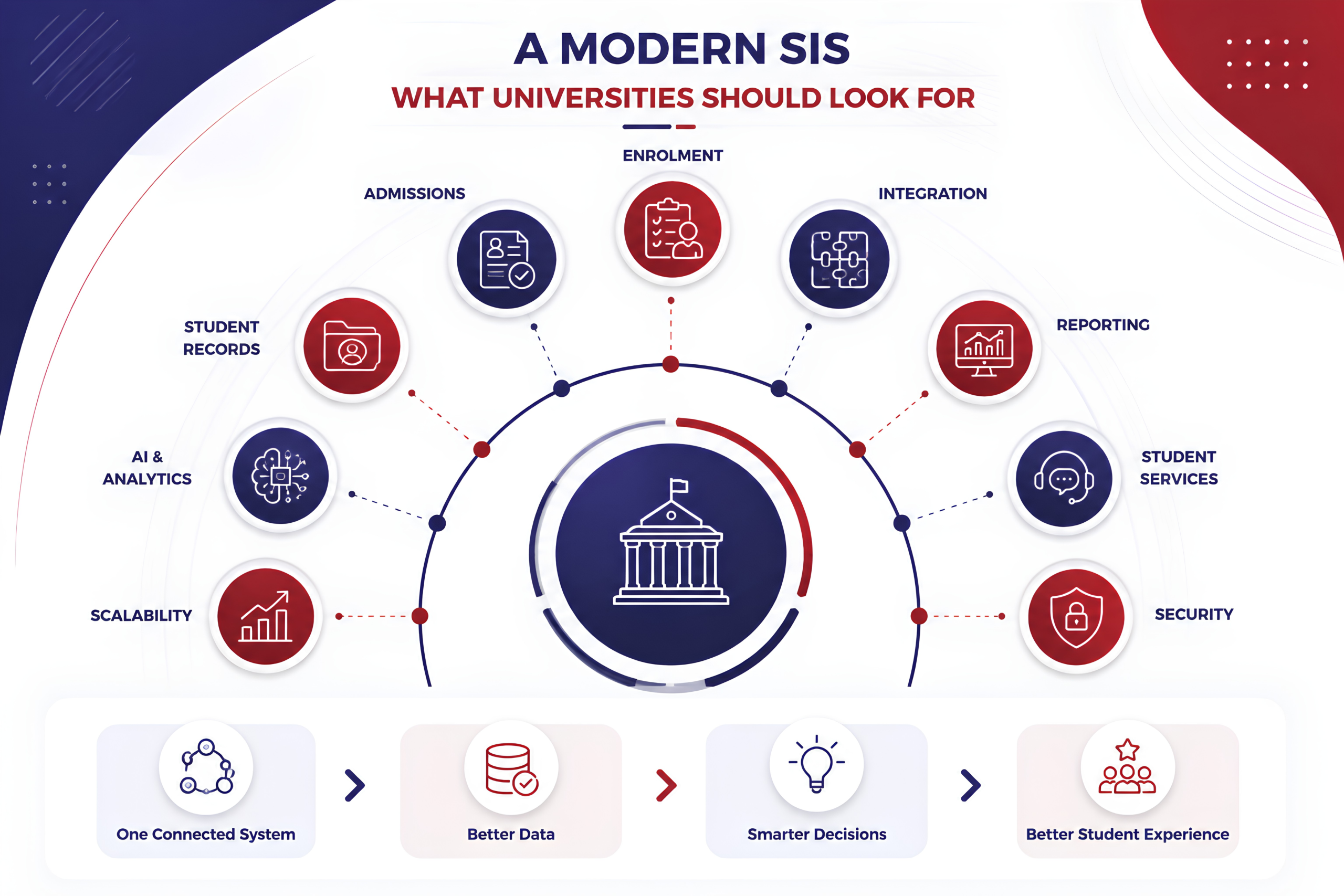
The more important question is whether the system can support a connected, efficient and evolving university environment. Core processes should work together, allowing information collected at one stage of the student journey to flow seamlessly across admissions, academics, finance and student services without repeated data entry or disconnected records.

Beyond these fundamental capabilities, universities should also assess the advanced features that can improve efficiency, visibility and the overall student experience. Depending on institutional requirements, these may include:

  • Workflow automation and digital approvals
  • Student self-service portals and mobile access
  • AI-powered analytics and intelligent reporting
  • Early alerts and student engagement insights
  • Communication and service request management
  • Multi-campus and multi-programme management
  • API-based integrations and data connectivity
  • Role-based dashboards and real-time visibility

These features may not always be the starting point of an SIS evaluation, but they can play an important role in determining how well a platform supports a university as its operational and strategic requirements evolve.

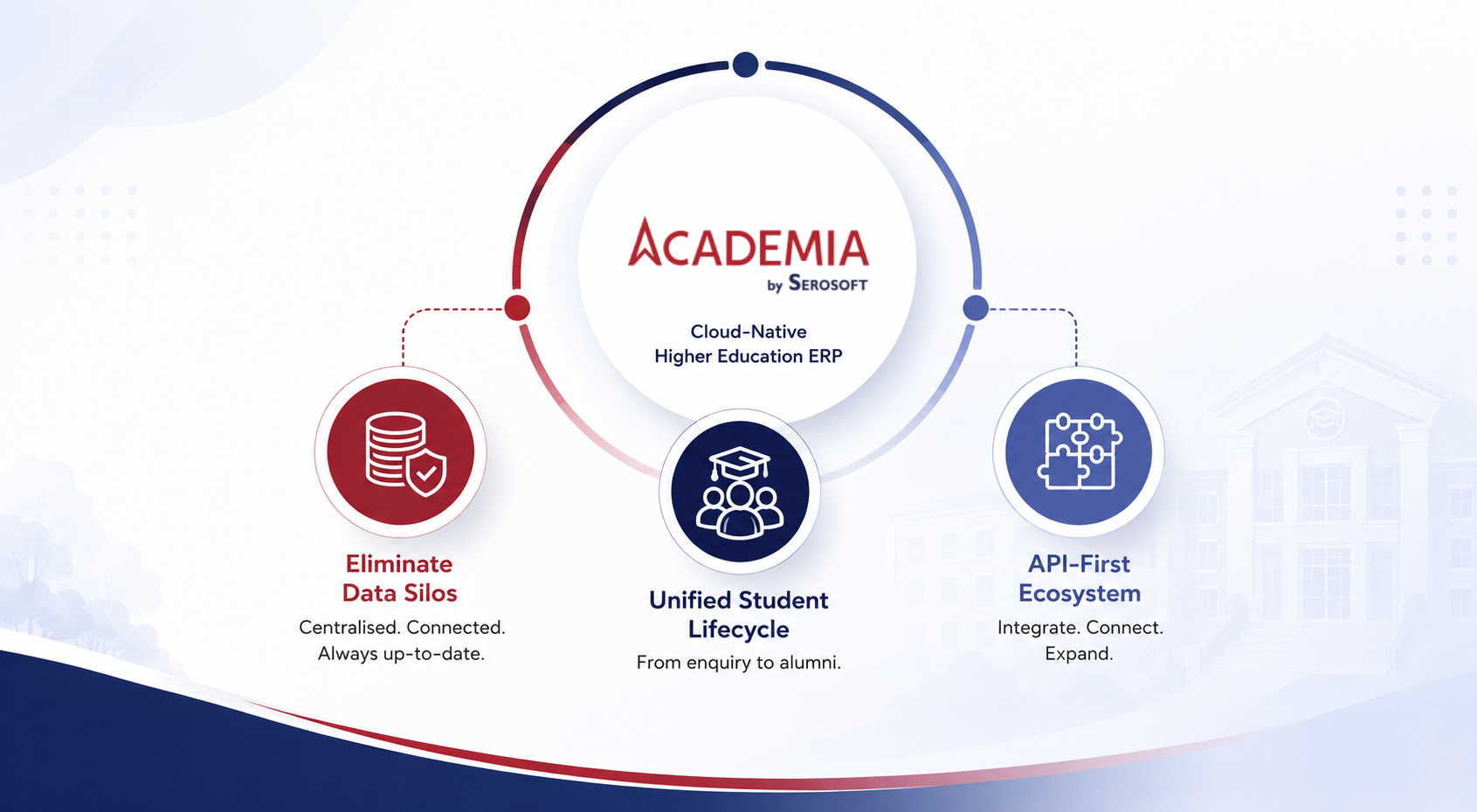
At Academia, this connected approach is central to how we approach higher education technology. The objective is not simply to provide separate modules, but to create continuity between the processes, information and insights that different university teams depend on.

How Important Are Reporting and Analytics When Choosing an SIS?

Reporting should be one of the most important parts of an SIS evaluation.

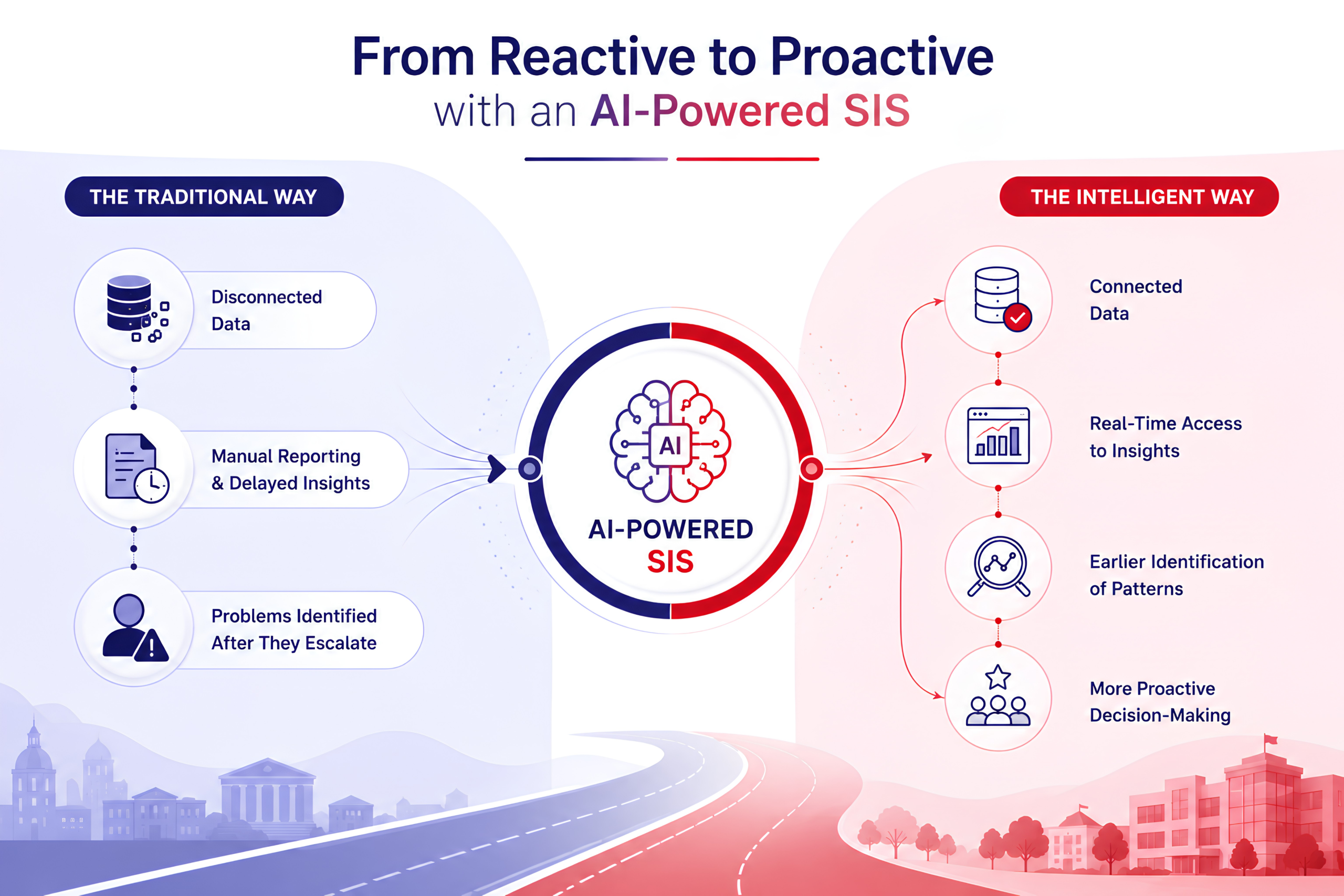
Many platforms can generate reports. But there is a significant difference between a system that stores data and one that helps institutional leaders access, understand and use that data.

The 2025 EDUCAUSE QuickPoll on data modernisation found that 68% of respondents were already in the process of modernising their data environments, while only 1% believed their institution had fully modernised its data management and strategy. Operational efficiency, student success and retention, and data visualisation and decision support were among the leading drivers for modernisation.

The lesson for SIS buyers is important. If admissions, academics, finance and student services operate with disconnected information, reporting often becomes a manual exercise in collecting and reconciling data before anyone can begin analysing it.

At Academia, we believe reporting should move beyond simply answering “What happened?” University leaders increasingly need to explore trends, understand patterns and access information without waiting for lengthy manual report preparation. This is why Academia combines institutional reporting with AI-powered analytics and 400+ AI reports, helping institutions access information more quickly and meaningfully.

When comparing SIS vendors, universities should therefore ask not only how many reports are available, but also whether the platform provides configurable reporting, real-time visibility, dashboards and analytical capabilities that support actual decision-making.

How Should Universities Evaluate Integration and Data Connectivity?

An SIS rarely operates alone.

South African universities may already use learning management systems, finance platforms, payment gateways, identity systems, communication tools and other specialised applications. The SIS must therefore fit into a wider technology ecosystem.

Poor integration can create duplicate data entry and data inconsistencies. Over time, institutions can find themselves with plenty of information but no reliable, unified view.

The EDUCAUSE research identifies siloed data and older technology as persistent barriers to modernisation. Its findings reinforce an important procurement principle: buying a new platform without considering how it connects to the existing environment can simply create another silo.

Universities should ask vendors how integrations are managed, whether APIs are available and how easily the platform can connect with both current and future systems.

From Academia’s perspective, integration is not an additional feature to consider after implementation. A connected SIS should act as part of a wider digital ecosystem, allowing institutional information to move where it is needed.

Should Universities Choose a Cloud-Based or On-Premise SIS?

There is no universal answer.

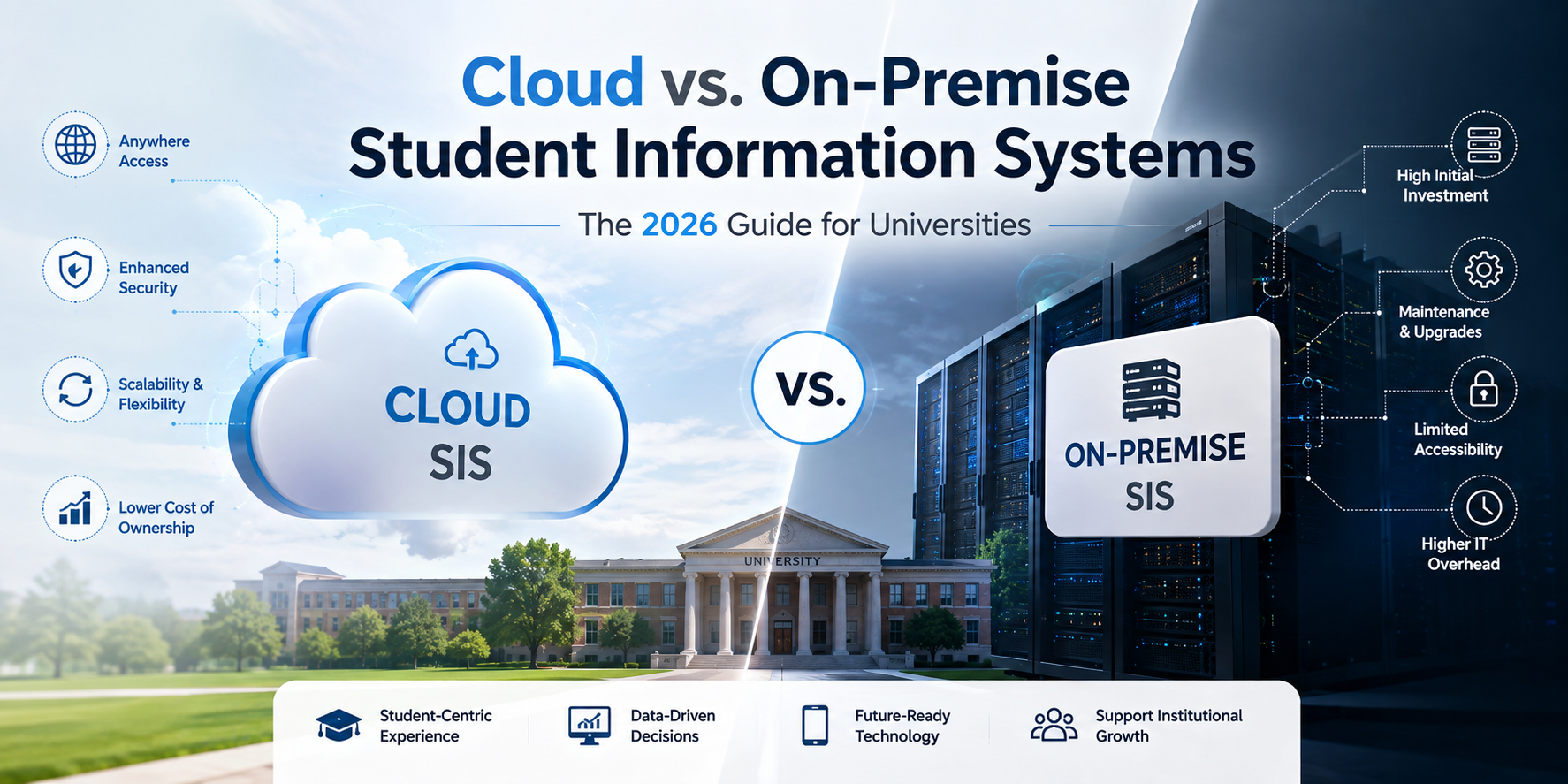
A cloud-based SIS may offer scalability, easier access across campuses and reduced infrastructure management. An on-premise approach may suit institutions with particular infrastructure or control requirements.

The decision should therefore be based on the university’s own operating model rather than a general assumption that one approach is always better.

South Africa’s higher education environment also includes significant diversity in how students access education. DHET data for 2023 showed that 34.7% of public higher education enrolments were through distance learning. This makes accessibility, scalability and the ability to support different learning journeys important considerations for technology buyers.

The real question is:

“Which deployment model best supports our institution’s accessibility, scalability, security and long-term technology strategy?”

How Much Configurability Does a University Need?

Universities are complex institutions. Academic structures, approval processes, programmes and administrative rules can differ significantly.

However, buyers should distinguish between a configurable platform and one that requires extensive custom development.

A configurable SIS allows institutions to adapt workflows and processes without fundamentally changing the software. Heavy customisation may initially appear attractive, but it can create long-term challenges around upgrades, maintenance and dependency.

During evaluation, universities should understand what can be configured independently and what requires vendor development.

At Academia, configurability is designed to give institutions flexibility while maintaining the advantages of a scalable platform. The goal is not to force every university into an identical process, but neither is it to create a completely different software product for every institution.

How Should Universities Assess Data Security and POPIA Requirements?

An SIS manages some of the university’s most important information, including personal, academic and financial data.

Security should therefore be evaluated as part of the procurement process, not after a vendor has been selected.

Universities should understand how access is controlled, how permissions are managed, whether audit trails are available and how the vendor approaches data protection and governance. POPIA considerations also make it important to understand how personal information is processed and protected.

The key is to look beyond a simple statement that a platform is “secure”.

A serious evaluation should examine the controls behind that claim and ask how the vendor supports the university’s own responsibilities around information governance.

Should AI Influence an SIS Buying Decision?

Yes, but universities should evaluate AI carefully.

The question should not be:

“Does this SIS have AI?”

It should be:

“What does the AI actually help us do, and how is institutional data governed?”

UNESCO’s 2025 survey found that 19% of participating higher education institutions already had formal AI policies, while another 42% were developing guidance. The findings reflect a broader shift: universities are exploring AI, but governance and responsible adoption are becoming equally important.

For SIS buyers, this means looking beyond AI labels. Practical capabilities may include intelligent reporting, analytics, automation and easier access to institutional insights. But vendors should also be able to explain how AI operates and what controls surround its use.

Academia’s approach includes SERA AI, AI-powered analytics and intelligent reporting capabilities designed specifically around higher education use cases. The objective is to help institutions move from simply accessing data towards asking more meaningful questions of it.

What Should Universities Ask About Implementation and Vendor Support?

The quality of the platform matters. But so does the journey of getting there.

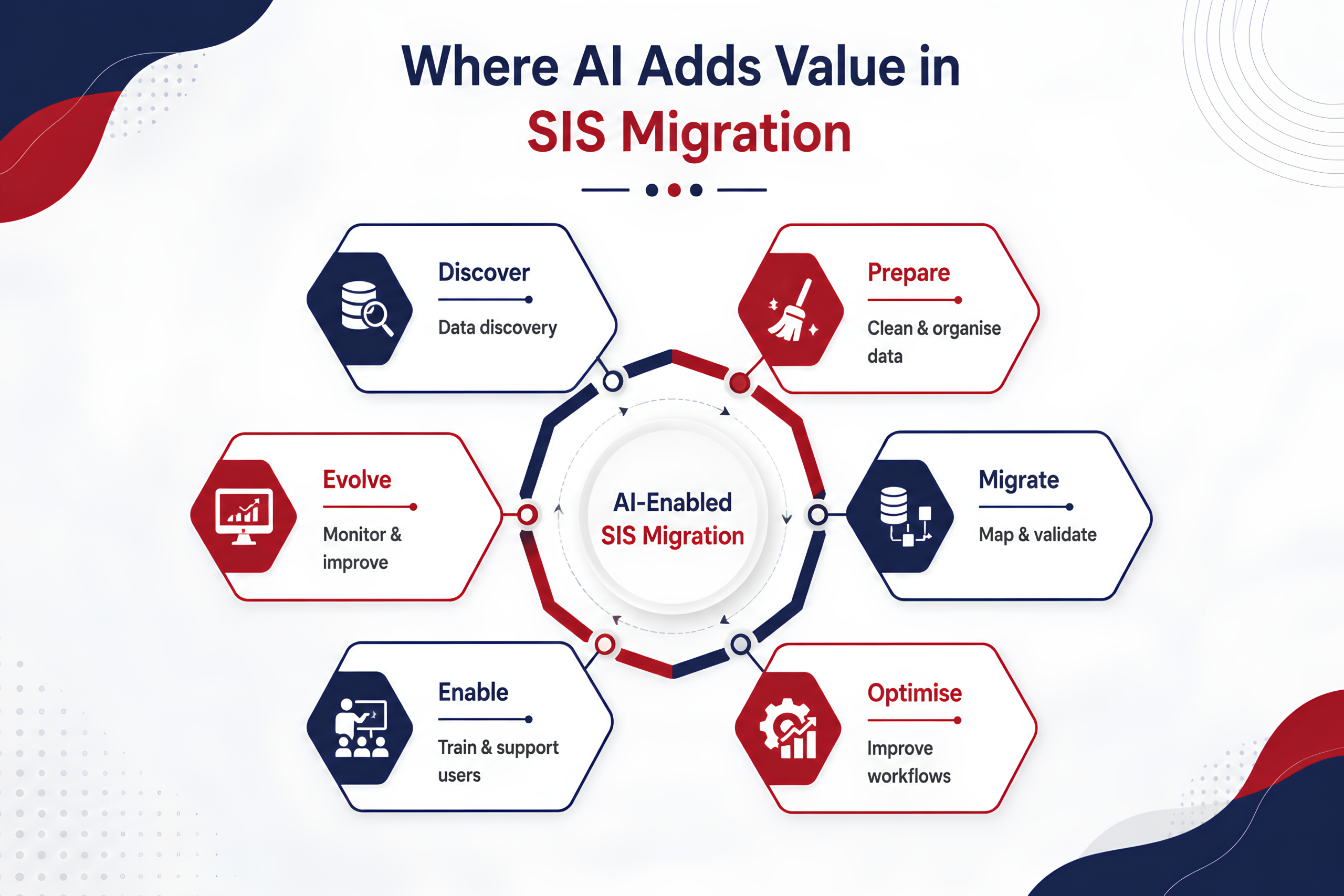
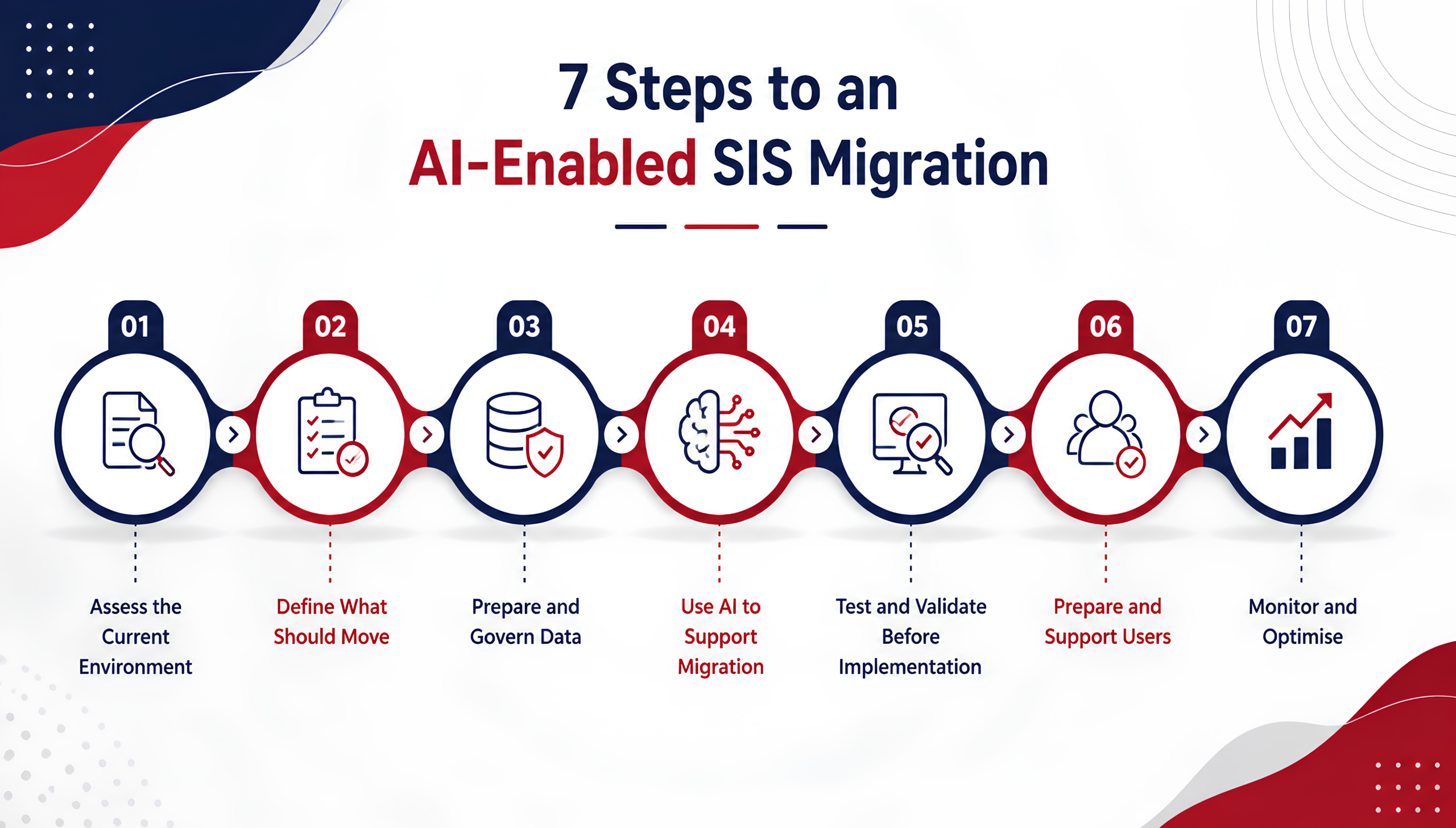
SIS implementation can involve data migration, process redesign, integration, staff training and change management. Universities should therefore evaluate the vendor’s implementation methodology as carefully as the product itself.

Before making a decision, ask:

  • How will existing data be migrated and validated?
  • What implementation approach will be followed?
  • How will staff be trained?
  • What support is available after go-live?
  • How are upgrades and future enhancements managed?
  • Does the vendor understand higher education processes?

The strongest vendor relationship should extend beyond implementation. An SIS is a long-term institutional platform, so universities should also assess the vendor’s product roadmap and ability to support future requirements.
How Should a University Make the Final SIS Decision?

The final decision should bring together functional, technical and strategic requirements.

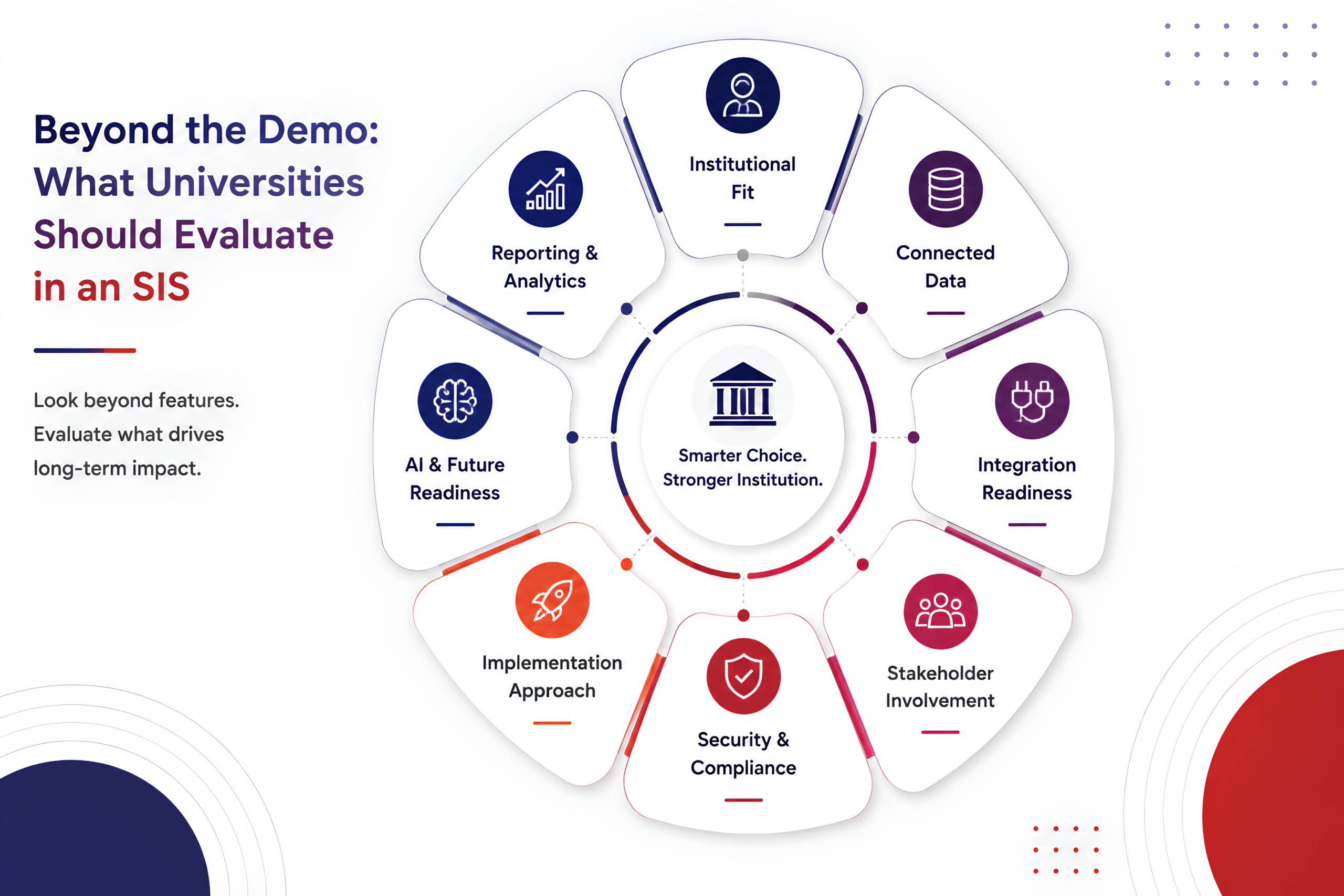
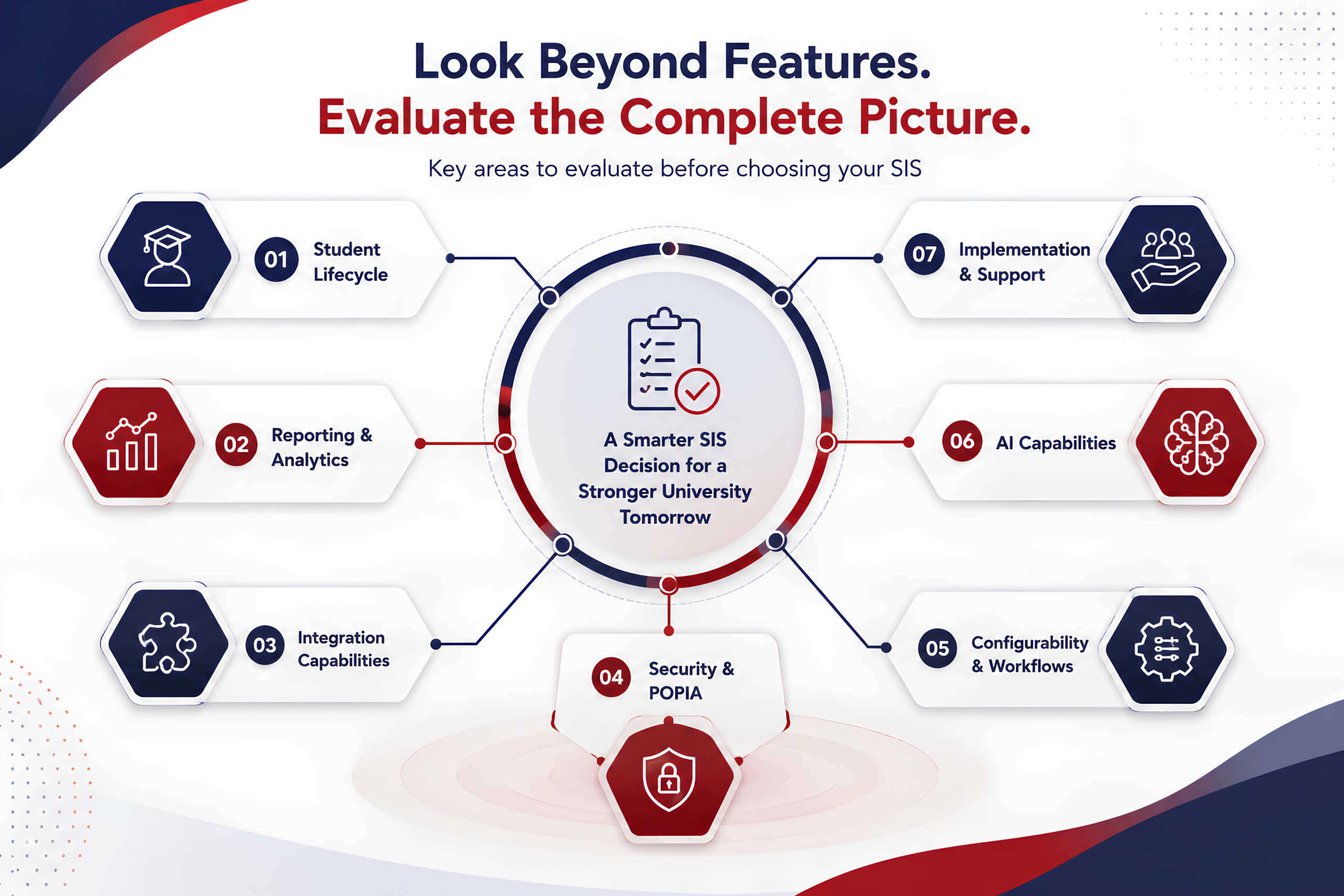
Rather than selecting a platform because it performs well in one area, universities should assess the complete picture: student lifecycle coverage, reporting, integration, configurability, security, implementation and future readiness.


Choose Student Information System


A practical evaluation can focus on these core areas:


Evaluation Area What to Assess
Student lifecycle Does the SIS connect key student processes?
Reporting Can users access reliable, actionable information?
Integration Does it connect with the existing ecosystem?
Configurability Can it adapt without excessive customisation?
Security Are governance and access controls robust?
AI Are the capabilities practical and responsibly governed?
Implementation Can the vendor support migration and change?
Future readiness Does the platform and vendor roadmap support long-term growth?

The best decision is rarely about choosing the platform with the longest feature list.

It is about choosing the system that creates the strongest foundation for the university’s future.

How Can Academia by Serosoft Support South African Universities?

Academia by Serosoft is an AI-powered Student Information System and Education ERP designed to support the complete student lifecycle, from admissions and enrolment to academics, examinations, fees, student services, graduation and alumni management.

For South African universities, Academia brings together connected student data, configurable workflows, integrations, reporting and AI-powered capabilities within one platform. Its reporting and analytics capabilities, including 400+ AI reports and SERA AI, can help institutions move beyond manual data collection towards faster access to institutional insights.

The platform is designed to help universities streamline processes, connect their wider technology ecosystem and build a more efficient, data-informed approach to institutional operations.

Conclusion

South African universities are operating in an increasingly complex environment, with more than 1.3 million students enrolled across public and private higher education institutions and further growth planned towards 2030.

That makes the SIS more than an administrative system. It can become the foundation connecting students, processes, data and institutional decisions.

The right platform should therefore do more than manage records. It should provide connected workflows, meaningful reporting, strong integration capabilities, flexibility and a clear path towards responsible AI adoption.

At Academia, we see the SIS buying decision as an opportunity to move beyond fragmented operations towards a more connected and intelligent institution.

The final question for every university is therefore:

“Are we choosing a system that will simply manage today’s processes or one that can help us build the university of tomorrow?”

Ready to Evaluate Your Next Student Information System?

Whether you are replacing a legacy platform, improving institutional reporting or building a more connected digital ecosystem, the right SIS can create a stronger foundation for long-term transformation.

Discover how Academia by Serosoft helps universities manage the complete student lifecycle, connect institutional data, automate workflows and turn information into actionable insights through AI-powered capabilities.

Request Demo | Speak with an SIS Expert

Frequently Asked Questions

What should South African universities look for in a Student Information System?

Universities should evaluate student lifecycle coverage, reporting, integrations, configurability, security, POPIA-related data governance, implementation support and long-term scalability.

Why is reporting important when choosing an SIS?

Reporting helps universities turn institutional data into useful information. Buyers should assess data accuracy, dashboards, configurability, real-time visibility and analytical capabilities rather than simply counting pre-built reports.

How important is integration in an SIS?

Integration is critical because universities use multiple systems. A well-integrated SIS can reduce duplicate data entry, improve data consistency and provide a more connected institutional view.

Should universities consider AI when selecting an SIS?

Yes. However, universities should evaluate practical use cases, data governance, transparency and human oversight rather than selecting a platform based simply on AI branding.

How can Academia support South African universities?

Academia by Serosoft provides an AI-powered Student Information System that supports the complete student lifecycle, configurable workflows, integrations, institutional reporting, AI-powered analytics and SERA AI.

What Should South African Universities Look for in a Student Information System in 2026?

Choosing a Student Information System (SIS) is becoming a strategic decision for South African universities. It influences how institutions manage admissions, enrolment, academic records, examinations, fees, reporting, student services, and institutional data.

South Africa’s public higher education institutions recorded 1,115,580 enrolments in 2024, a 4.1% increase from 2023. With growing student numbers, multiple learning modes, regulatory reporting, and rising expectations for digital services, universities need more than a system that simply stores student records.

This guide explores what South African universities should look for in an SIS in 2026, from student lifecycle management and HEMIS reporting to NSFAS workflows, POPIA-aligned data protection, automation, AI-powered analytics, integrations, scalability, and implementation support. It also covers the key questions universities should ask when evaluating SIS vendors and choosing a platform that can support their institution today and scale with it tomorrow.

The real question is:

What should South African universities look for when choosing an SIS that can support their institution today and scale with it tomorrow?

Why Is Choosing the Right SIS Important for South African Universities?

A Student Information System acts as the digital foundation for university operations, connecting admissions, enrolment, academics, examinations, fees, student services, and institutional reporting. This becomes increasingly important as institutions manage growing volumes of student data. DHET’s latest available statistics, based on HEMIS data, recorded 1.07 million students across South African public higher education institutions in 2023, with overall public and private higher education enrolment reaching 1.36 million.

With this scale of data, universities need an SIS that can maintain accurate records, connect workflows, reduce duplication, and provide reliable institutional reporting. The goal is not simply to digitise processes, but to create a connected university where data, people, and systems work together.

What Problems Should Universities Solve with a New SIS?

Before evaluating vendors, universities should identify where their current systems create friction, such as fragmented student data, spreadsheet-based reporting, duplicate data entry, manual workflows, or limited digital student services. This challenge is becoming more relevant as institutions modernise their data environments. EDUCAUSE’s 2025 Data Modernisation QuickPoll found that 68% of respondents were already in the process of modernising institutional data, with operational efficiency, student success, and data-driven decision-making among the key drivers.

A modern SIS should address these gaps by connecting data, automating routine processes, and providing a unified view of the student lifecycle, helping universities move from fragmented administration to more efficient, data-driven operations.

Which SIS Features Matter Most for South African Universities?

1. Complete Student Lifecycle Management

The SIS should support the student journey from application and admission to registration, academics, examinations, graduation, and alumni engagement.

2. South Africa-Specific Reporting

Universities should evaluate how the platform supports local reporting requirements and institutional data structures, including DHET and HEMIS-related processes.

3. NSFAS and Funding Workflows

Student funding is an important operational area. Universities should assess whether the SIS can support relevant funding workflows, student financial information, notifications, and reconciliation processes.

4. POPIA-Aligned Data Protection

Student information is sensitive institutional data. Universities should evaluate role-based access, permissions, audit trails, data security, privacy controls, and how the vendor approaches POPIA-aligned data governance.


5. Workflow Automation

Admissions, approvals, registration, examinations, fee notifications, student requests, and reporting should not depend unnecessarily on manual processes.

6. Analytics and AI

A modern SIS should help institutions move beyond static reports towards dashboards, intelligent reporting, pattern identification, and faster decision-making.

7. Integration

The SIS should connect with LMS platforms, finance systems, HR, CRM, payment gateways, identity systems, and other university applications through appropriate integration frameworks and APIs.

8. Scalability

The platform should support growing enrolment, new programmes, multiple campuses, distance learning, and changing institutional requirements without creating additional silos.

Should South African Universities Choose a Cloud-Based SIS?

Cloud-based SIS platforms can provide advantages such as scalability, accessibility, easier updates, and integration capabilities.

However, cloud versus on-premise should not be treated as a simple technology preference.

Universities should evaluate:

  • Data security
  • Privacy and governance
  • Integration capabilities
  • Business continuity
  • Disaster recovery
  • Scalability
  • Vendor support
  • Implementation requirements
  • Total cost of ownership

The right choice depends on the institution’s infrastructure, strategy, security requirements, and long-term digital roadmap.

How Can Universities Compare SIS Vendors?

A feature list alone is not enough to select an SIS.

Universities should compare vendors across five areas:


Evaluation Area What to Check
Functionality Student lifecycle, academics, admissions, examinations, fees
South African Requirements DHET, HEMIS, NSFAS and local reporting needs
Technology Cloud, APIs, integrations, scalability and security
Intelligence Analytics, dashboards, AI and automation
Implementation Migration, configuration, training, support and roadmap


The strongest vendor evaluation is based on
real institutional workflows.

Instead of asking a vendor to show every feature, ask them to demonstrate how the platform would handle a real admission cycle, registration process, examination workflow, student request, or reporting requirement.


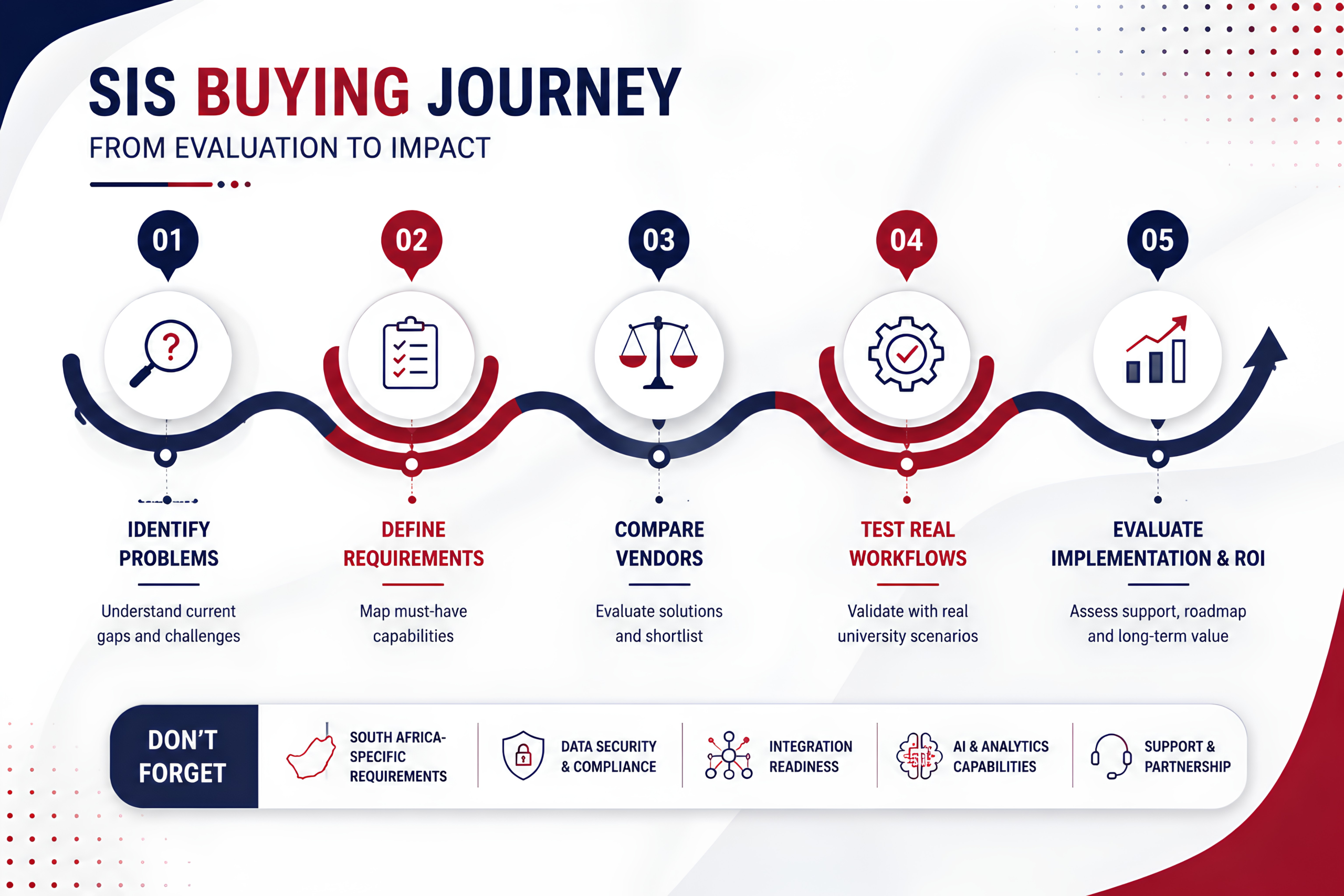
SIS Buying Journey

What Questions Should Universities Ask Before Buying an SIS?

Before signing a contract, decision-makers should ask:

  • Can the platform support our complete student lifecycle?
  • How does it support South African reporting requirements?
  • Can it integrate with our existing LMS and finance systems?
  • How does it handle HEMIS-related data?
  • What funding and NSFAS-related workflows are supported?
  • How is student data protected?
  • What AI capabilities are already available?
  • Can workflows be configured without extensive development?
  • How does the vendor approach data migration?
  • What training and implementation support are provided?
  • How frequently is the platform updated?
  • Can the system scale across campuses and growing enrolment?
  • What does the vendor’s product roadmap look like?

These questions help universities evaluate not only what an SIS does today, but whether it can remain relevant over the next five to ten years.

How Does Academia Support South African Universities?

Academia by Serosoft is an AI-powered Student Information System designed for higher education institutions, bringing student lifecycle management, automation, analytics, and institutional reporting together on a unified platform.

For the South African market, Academia highlights capabilities including NSFAS management, NSC results integration, HEMIS and TVET MIS reporting, along with admissions, academics, examinations, fees, and student services.

The platform also provides AI-powered analytics and reporting through SERA AI, helping institutions move from manual reporting towards more accessible institutional insights.

Academia’s South African experience includes institutions such as False Bay TVET College, where its platform has supported digital processes across admissions, applications, reporting, and institutional operations.

What Does Academia’s Own Analysis Say About AI and Automation?

Academia’s published analysis reports that AI-powered analytics can deliver up to 30–40% improvement in decision-making speed, while automation across areas such as admissions, examinations, and reporting can reduce manual workload by nearly 50%.

These figures are Academia’s own published analysis rather than independent South African research, so universities should use them as vendor-reported benchmarks rather than guaranteed outcomes.

A separate Academia analysis estimates that workflow automation can reduce routine administrative effort by 25–40%.

The larger opportunity is to shift administrative teams away from repetitive data work and towards activities that require human judgement and student interaction.

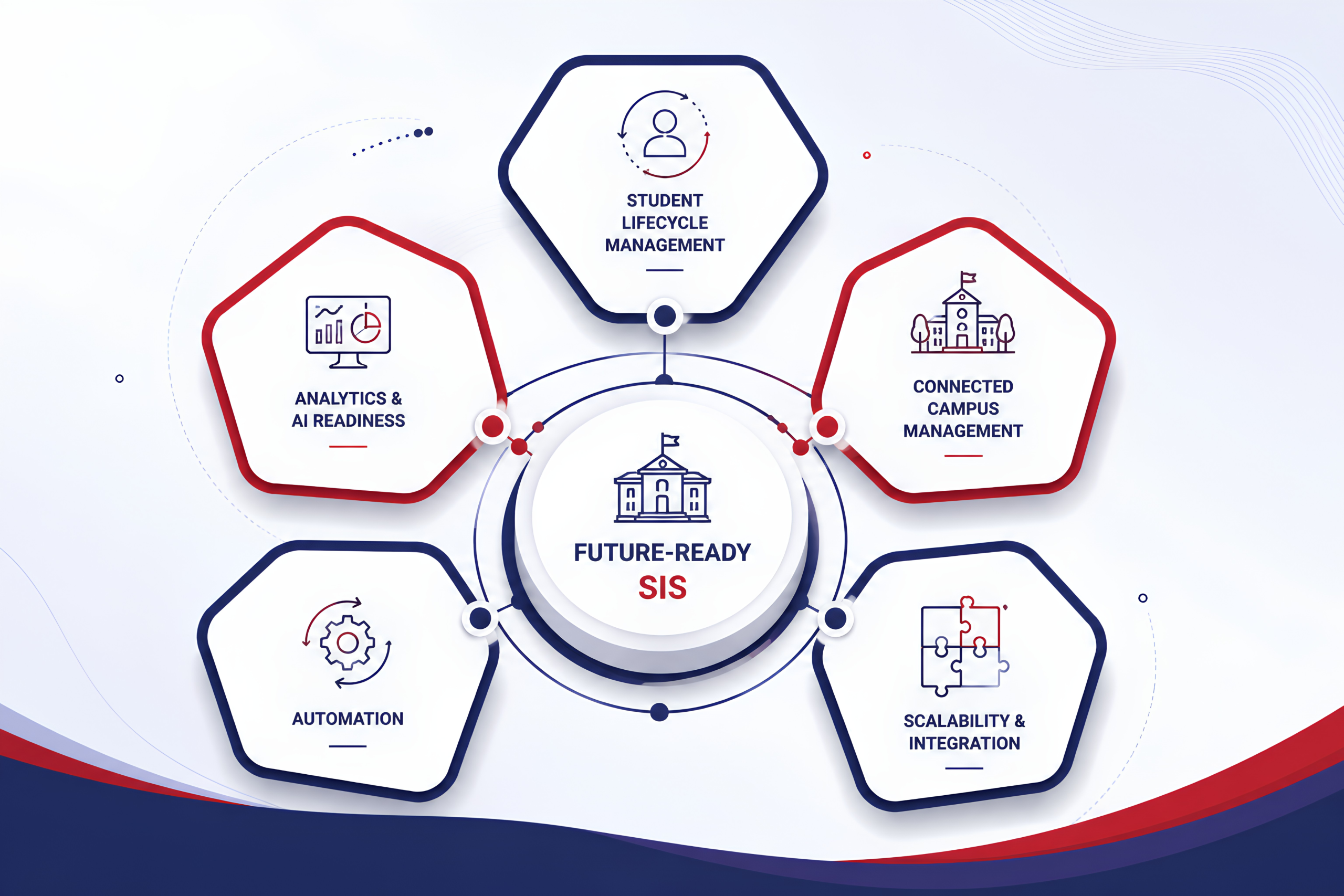
What Does a Future-Ready SIS Look Like?

The future of SIS is moving from record management to institutional intelligence.

A future-ready platform should connect data across departments, automate routine processes, provide real-time visibility, support local reporting requirements, and create better digital experiences for students and staff.

AI is also becoming part of this conversation. UNESCO’s 2025 global survey received 400 responses across 90 countries and found that nine in ten respondents were using AI tools professionally. The survey also highlighted the growing need for institutional guidance around responsible AI use.

For South African universities, this means AI capabilities should be evaluated alongside security, governance, transparency, and human oversight.

Conclusion

Choosing a Student Information System in 2026 is about more than selecting software with the largest number of modules.

South African universities need to consider local reporting requirements, student lifecycle management, data governance, integrations, automation, analytics, AI, scalability, and implementation support.

The right SIS should help an institution answer three fundamental questions:

Do we have the right data?

Can we access it when we need it?

Can we use it to make better decisions?

As South African higher education continues to grow and modernise, the SIS can become more than an administrative platform.

It can become the digital foundation for a more connected, efficient, data-driven university.

Is Your SIS Ready for What Comes Next?

Higher education is becoming more connected, data-driven, and AI-enabled. The right SIS can help your institution move beyond fragmented processes and build a stronger digital foundation for growth.

See how Academia by Serosoft brings student data, academic operations, reporting, automation, and AI-powered insights together to help South African universities operate smarter and serve students better.

Request Demo | Talk to Our SIS Experts

Frequently Asked Questions

What is a Student Information System?

A Student Information System is a central platform used by universities to manage student, academic, administrative, financial, and institutional information throughout the student lifecycle.

What should South African universities consider when choosing an SIS?

Universities should evaluate student lifecycle coverage, DHET and HEMIS-related reporting, NSFAS workflows, POPIA-aligned data governance, integrations, automation, analytics, AI, scalability, security, and implementation support.

Does an SIS support HEMIS reporting?

This depends on the platform. Universities should specifically ask vendors to demonstrate how their solution manages HEMIS-related data, validation, reporting workflows, and institutional requirements.
Why is POPIA important when selecting an SIS?

An SIS handles significant amounts of personal and student information. Universities should therefore assess privacy controls, access management, security, auditability, and the vendor’s approach to POPIA-aligned data governance.

Is AI necessary in a modern SIS?

AI is not valuable simply because it is included as a feature. Universities should evaluate whether AI can provide practical benefits through reporting, analytics, automation, assistance, and decision support while maintaining appropriate governance.

Can a cloud SIS support multiple university campuses?

Yes, cloud-based platforms can be designed to support multiple campuses and growing enrolment. However, universities should evaluate scalability, configuration, security, integrations, and performance before selecting a platform.

How does Academia support South African universities?

Academia provides an AI-powered higher education SIS covering admissions, academics, examinations, fees, student services, analytics, automation, and reporting. Its South African capabilities include support for NSFAS management, NSC results integration, HEMIS and TVET MIS reporting.

Why Enrolment and Student Records Management Remain a Challenge for Philippine Universities?

Enrolment is one of the most important administrative processes in a university. It brings admissions, academics, finance, student services, and the registrar together around one outcome: getting students successfully enrolled and keeping their records accurate throughout their academic journey.

For Philippine universities, however, that process is becoming increasingly complex.

CHED’s 2025 statistics list 2,334 higher education institutions for AY 2024–25, covering private institutions, state universities and colleges, local universities and colleges, and other government institutions.

As institutions manage growing student populations, multiple programmes, digital services, and increasingly complex academic structures, the volume of student information also grows.

This raises an important question:

Why do enrolment and student records remain a challenge even when universities are already using digital systems?

The answer often comes down to one issue: Connectedness.

Why Is Enrolment Still Difficult for Philippine Universities?

Enrolment is not a single transaction.

A student’s journey may involve application, document verification, admission, registration, payment, course selection, academic advising, and student services. Later, the same record may need to support programme changes, examinations, graduation, and requests for official documents.

When different departments manage these activities through separate systems, spreadsheets, forms, or manual workflows, information can become fragmented.

The result is more than administrative inconvenience. It can affect data accuracy, reporting, staff productivity, and the student experience.

The World Bank’s work on digital transformation in the Philippines similarly highlights the importance of digital infrastructure, data, digital skills, and digitally enabled services in improving institutional efficiency.

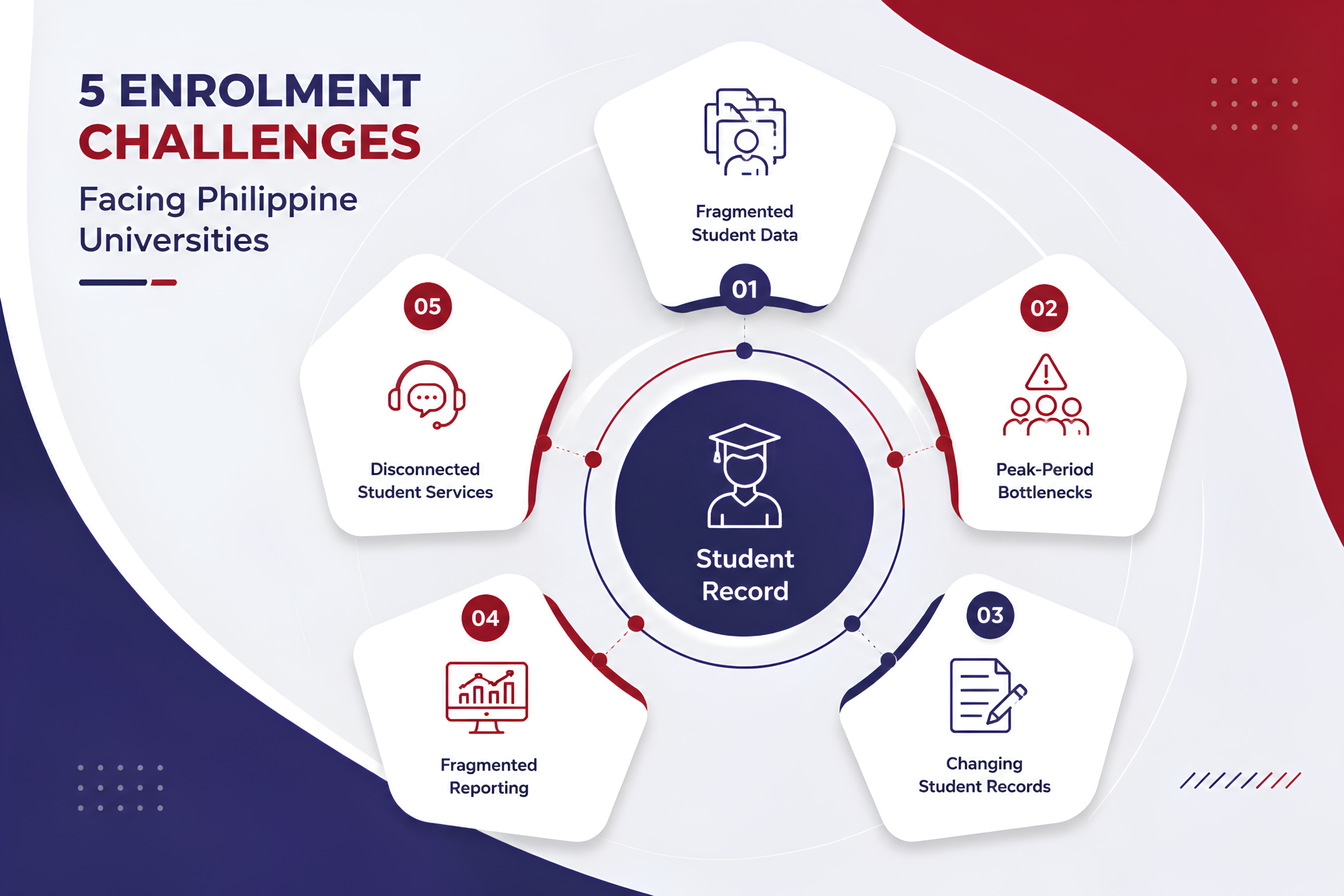
What Are the Biggest Enrolment and Student Records Challenges?

1. Fragmented student data creates duplicate work

Admissions, the registrar, finance, and academic departments may each need access to student information. When these systems are not connected, staff may repeatedly enter, export, verify, or reconcile the same data.

The solution: A centralised student record should act as a reliable source of information, while integrations allow relevant data to move between connected systems.

The objective is not simply to store more data. It is to make sure authorised teams are working with consistent, up-to-date information.

2. Peak enrolment periods expose inefficient workflows


Enrollment Challenges

During enrolment, staff may be handling document verification, approvals, payments, registration issues, and student queries at the same time.

Manual approvals and email-based processes can quickly create bottlenecks.

The solution: Universities can automate repeatable workflows such as approvals, notifications, document checks, and status updates. Staff can then focus on exceptions and student support rather than repeatedly moving information between departments.

3. Student records keep changing

A student’s record does not stop changing after enrolment.

Programme shifts, subject changes, academic standing, scholarships, leaves of absence, and personal-information updates can all affect the record.

When updates are made separately, inconsistencies become more likely.

The solution: Universities need lifecycle-based record management, where relevant changes are reflected across the processes and departments that depend on them.

4. Reporting becomes harder when data is fragmented

University leaders need answers about enrolment trends, programme demand, student progression, finances, and academic performance.

But if information is spread across multiple databases, staff may have to export spreadsheets, clean data, check discrepancies, and manually prepare reports.

This is where data modernisation becomes important. EDUCAUSE’s 2025 QuickPoll found that 68% of respondents were in the process of modernising their institutional data environment, while only 1% considered their institution fully modernised. The report also identifies fragmented and siloed data environments as a major barrier.

The solution: Move towards connected institutional data and real-time dashboards so that reporting becomes less about collecting information and more about understanding it.

5. Student services become slower when systems are disconnected

Students increasingly expect to submit applications, access records, make payments, and request documents digitally.

If they have to visit different offices or repeatedly submit information that the university already has, the problem is no longer just administrative.

It becomes a student experience issue.

The solution: A modern SIS should provide student self-service capabilities while connecting the information behind those services.

How Can Universities Build a More Efficient Enrolment Process?

Fixing enrolment challenges does not always require completely changing every system a university uses. The first step is to identify where information gets stuck, where staff repeat the same work, and where students have to wait for a process that could be automated.

A more connected enrolment environment can bring together admissions, document verification, registration, payments, academic records, and student communication within a coordinated workflow.

The impact can be significant. Academia’s analysis of AI in higher education notes that more than 60% of higher education administrators spend over half of their workday on tasks with no direct academic value, while workflow automation can potentially reduce routine administrative effort by 25–40%.

For Philippine universities, the opportunity is to redirect that administrative effort towards work that requires judgement, advising, and direct student support.

What Does a Connected Enrolment Process Look Like?

A well-designed SIS should allow information captured during one stage of the student journey to support the next stage without unnecessary re-entry.

For example, once an applicant is admitted, relevant information should be available for enrolment and academic processes. Once enrolment is completed, the same student record can support course registration, fees, academic tracking, and future student services.

This creates a more consistent flow of information while reducing the need for staff to manually reconcile records.


Enrolment Challenge What a Modern SIS Can Do
Repeated data entry Reuse verified student information
Manual approvals Automate rule-based workflows
Delayed status updates Trigger real-time notifications
Scattered records Maintain a centralised student profile
Slow reporting Provide dashboards and AI-powered reports
High student-query volumes Enable digital self-service
Difficult record tracking Maintain structured, auditable information

The objective is not to automate everything.

It is to automate the repetitive parts while keeping people responsible for decisions that require human judgement.

What Should a Modern SIS Provide?


Capability What Philippine Universities Should Look For
Student records Centralised and continuously updated information
Enrolment Automated and configurable workflows
Admissions Seamless applicant-to-student transition
Integration Connectivity with LMS, finance, payments and other systems
Reporting Real-time dashboards and analytics
Student services Digital self-service and request tracking
Security Role-based access and auditability
Scalability Support for growing programmes and campuses
AI Practical automation and intelligent insights


 Philippine Universities

A modern SIS should therefore connect people, processes, and information, rather than simply digitising individual forms.

Can AI Improve Enrolment and Student Records Management?

AI is becoming another consideration for higher education technology.

UNESCO’s 2025 survey found that 19% of responding higher education institutions already had a formal AI policy, while another 42% were developing guidance. One in four respondents had already encountered ethical issues related to AI.

For enrolment and student records, AI can support areas such as document processing, student queries, workflow automation, analytics, and reporting.

But universities should not ask only:

“Does the SIS have AI?”

They should ask:

“Can AI work securely with our institutional data and support useful decisions?”

That makes data quality, governance, security, and human oversight just as important as the AI capability itself.

Is Your University Ready for a More Connected SIS?

A quick assessment can help identify where modernisation may be needed:

  • One reliable student record
  • Integrated admissions and enrolment
  • Automated approval workflows
  • Digital document submission
  • Student self-service
  • Connected finance and enrolment information
  • Real-time reporting
  • Role-based access
  • Audit trails
  • Integration with existing systems
  • Scalable architecture
  • AI and analytics capabilities

If several of these are missing, adding another standalone application may not solve the underlying problem.

The priority may be connecting the student lifecycle itself.

How Can Academia Help Philippine Universities?

Academia by Serosoft is an AI-powered Student Information System designed to manage the higher education lifecycle from prospecting and admissions through academics, student services, graduation, and alumni engagement.

Academia currently reports 400+ institutions across 32 countries and 1M+ learners and educators benefiting. Its SIS provides centralised student data, real-time tracking, role-based access, interoperability, analytics, and configurable workflows.

For enrolment and records management, this connected approach can help universities reduce repeated data entry, improve information visibility, automate administrative workflows, and give students more convenient digital access to services.

Academia also provides AI-powered analytics and reporting, including 400+ AI-powered reports, alongside a broader library of institutional reports and dashboards.

The value is not simply having more technology.

It is having technology that allows admissions, enrolment, academics, finance, student services, and records to work from connected institutional information.

What Is the Future of Enrolment Management for Philippine Universities?

Digital transformation in the Philippines is moving beyond basic digitisation. The World Bank identifies digital data infrastructure and digitally enabled services as important components of the country’s broader transformation agenda.

For universities, the same principle applies.

The future of enrolment is not another online form.

It is a connected environment where student information can move securely through the right workflows, staff can access reliable data, and students can complete more services without unnecessary administrative friction.

For Philippine universities, the question is therefore no longer:

“Do we have a system for enrolment?”

It is:

“Can our SIS give us a reliable, connected view of the student throughout the entire lifecycle?”

That is the shift from simply managing enrolment to building a more connected, data-driven, and student-centric university.

Is Your University’s Enrolment Process Truly Connected?

When admissions, registration, finance, academics, and student services operate in silos, even a digital process can create unnecessary work.

See how Academia by Serosoft connects the student lifecycle through unified records, automated workflows, digital self-service, and AI-powered insights, helping Philippine universities make enrolment simpler, faster, and more connected.

Request Demo | Talk to an SIS Expert

Frequently Asked Questions

Why is enrolment management challenging for Philippine universities?

Enrolment involves multiple departments, approvals, payments, academic requirements, and student records. When these processes rely on disconnected systems or manual workflows, delays and data inconsistencies can occur.

How can universities improve student records management?

Universities can centralise student information, integrate departmental systems, automate workflows, establish role-based access, and provide digital self-service for common student requests.

Can an SIS reduce manual work during enrolment?

Yes. Workflow automation can support approvals, notifications, document processing, registration, and other repeatable tasks, reducing the amount of manual coordination required from staff.

Why is integrated data important for universities?

Integrated data gives departments a more consistent view of student information and helps leadership access reliable information for reporting, planning, and decision-making.

Should Philippine universities consider an AI-powered SIS?

AI can add value through automation, analytics, document processing, and student support. However, universities should evaluate AI alongside security, governance, integration, data quality, and scalability.

What should universities consider when choosing an SIS?

They should evaluate student lifecycle coverage, integration, workflow automation, reporting, security, scalability, self-service, configurability, and AI capabilities, not just the number of modules.

How Can UAE Universities and Higher Institutions Choose the Right Student Information System in 2026?

Choosing a Student Information System (SIS) is no longer simply an IT decision for UAE universities. It affects how institutions manage admissions, academics, student services, data, reporting, and decision-making.

As universities modernise their digital infrastructure and explore AI, one question is becoming increasingly important:

Is your current SIS ready for the next generation of higher education?

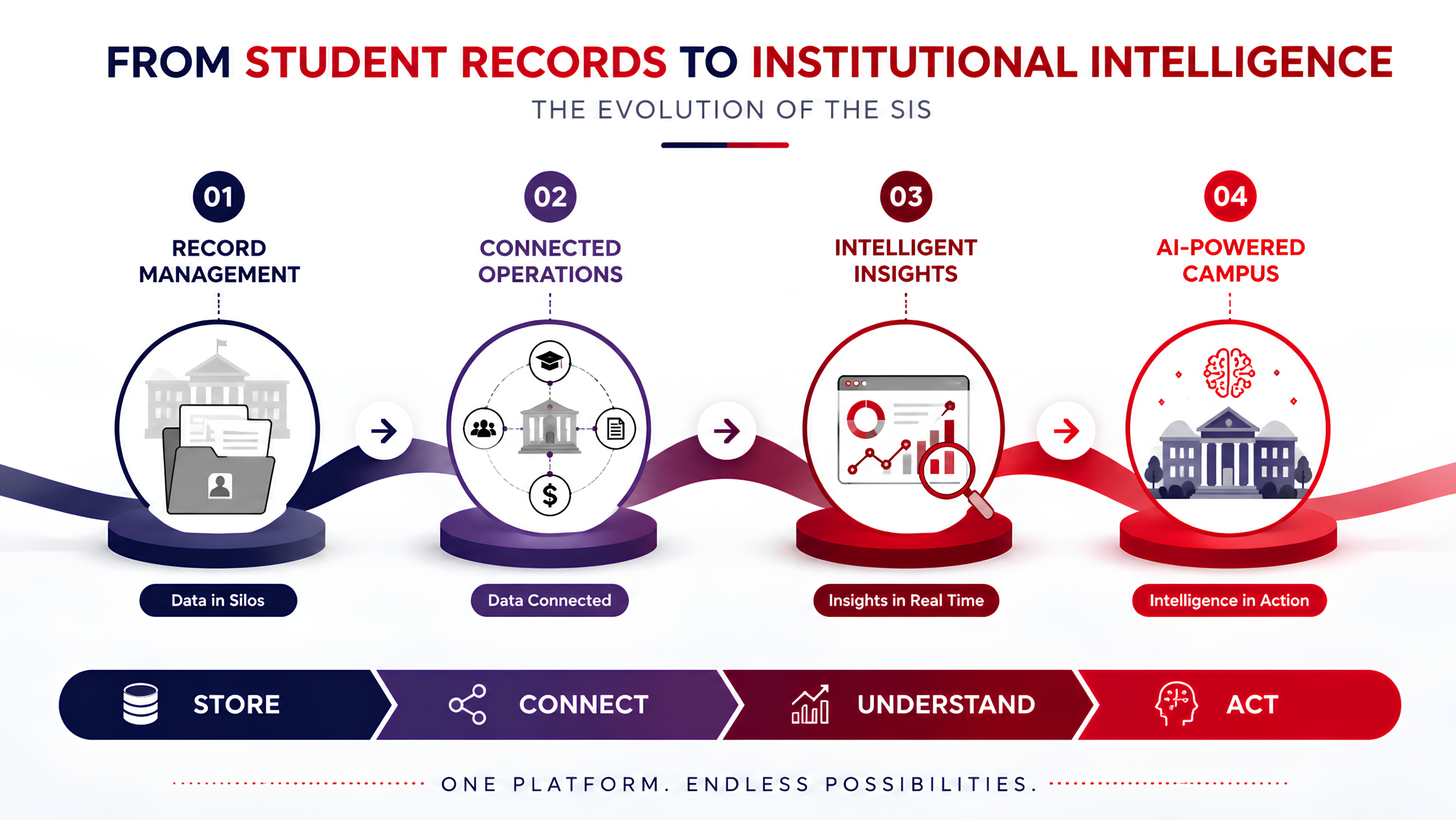
A legacy SIS may still manage student records effectively. But modern universities increasingly need connected data, intelligent workflows, real-time analytics, cloud scalability, AI capabilities, and better digital experiences.

So, what should UAE universities look for in an SIS in 2026, and when does it make sense to move beyond a legacy platform?

Why Do UAE Universities Need a Student Information System? 

A Student Information System is a central platform that manages student, academic, and administrative information throughout the student lifecycle.

A comprehensive SIS can support:

  • Admissions and applications
  • Enrolment
  • Student records
  • Programme and curriculum management
  • Course registration
  • Attendance
  • Examinations and assessments
  • Fees and payments
  • Student services
  • Graduation and alumni
  • Institutional reporting and analytics

The role of an SIS, however, is changing.

Traditional systems were primarily designed to store and process information. Modern SIS platforms increasingly need to connect information, automate processes, generate insights, and support institutional decision-making.

Why Are UAE Universities Reconsidering Legacy SIS Platforms?

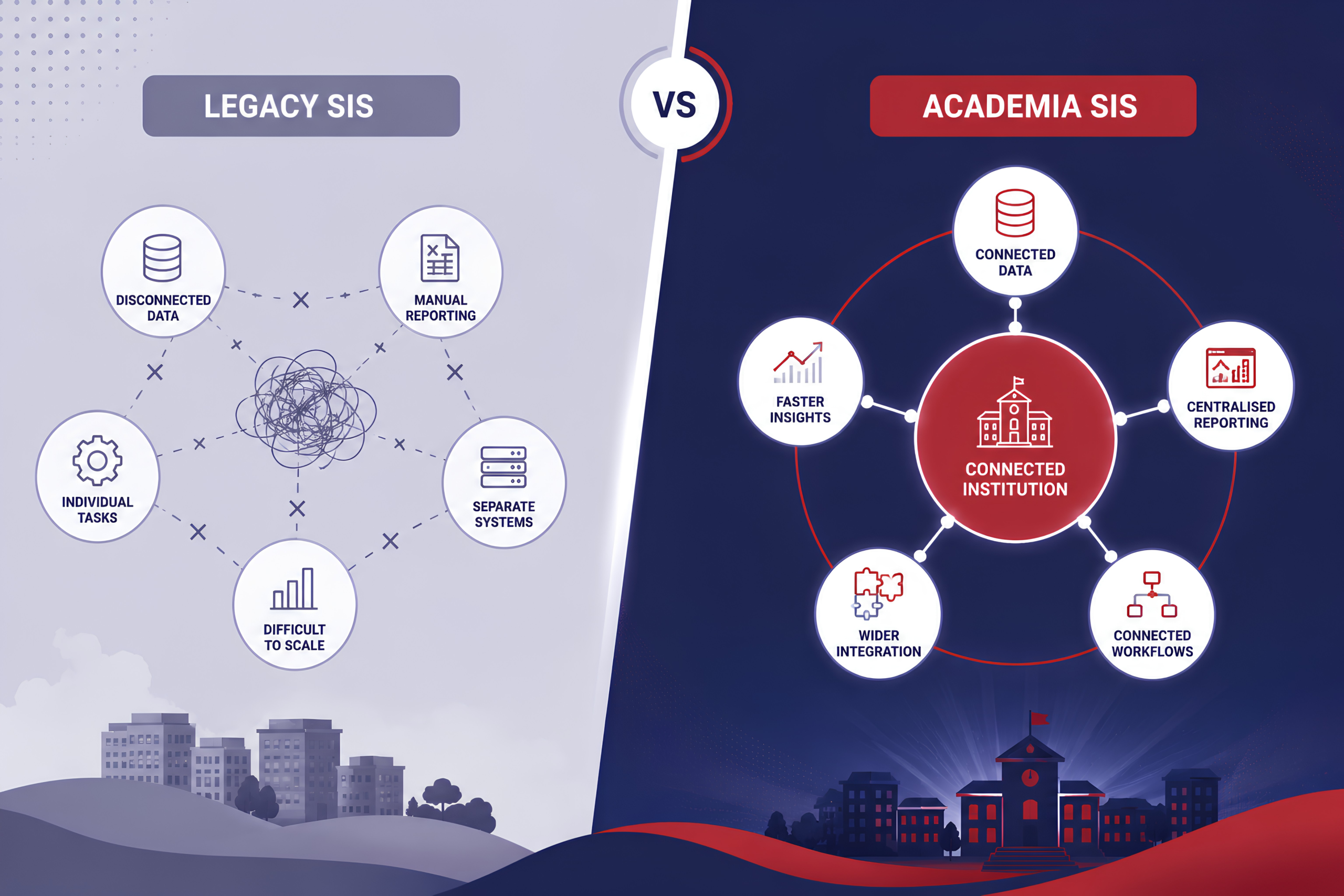
Legacy SIS platforms can continue to perform core administrative functions, but fragmented data, manual workflows, and difficult integrations can limit institutional digital transformation.

A university may have separate systems for admissions, finance, academics, LMS, HR, and student services. When these systems operate in silos, staff may rely on spreadsheets, manual exports, duplicate data entry, and reconciliation.

The result is a fundamental problem:

The university has data, but not necessarily a unified view of the institution.

What does higher education research say about data modernisation?

EDUCAUSE’s 2025 QuickPoll found that 68% of respondents were in the process of data modernisation, while only 1% felt their institution had fully modernised its data management and strategy. Overall, 92% were either discussing modernisation or already had some systems modernised.

The leading drivers included operational efficiency (58%), student success and retention (46%), and data visualisation and decision support (43%). Siloed data was identified as a challenge by 51% of respondents.

For UAE universities, the implication is clear: an SIS should be evaluated not only on what it manages, but on how effectively it connects and uses institutional data.

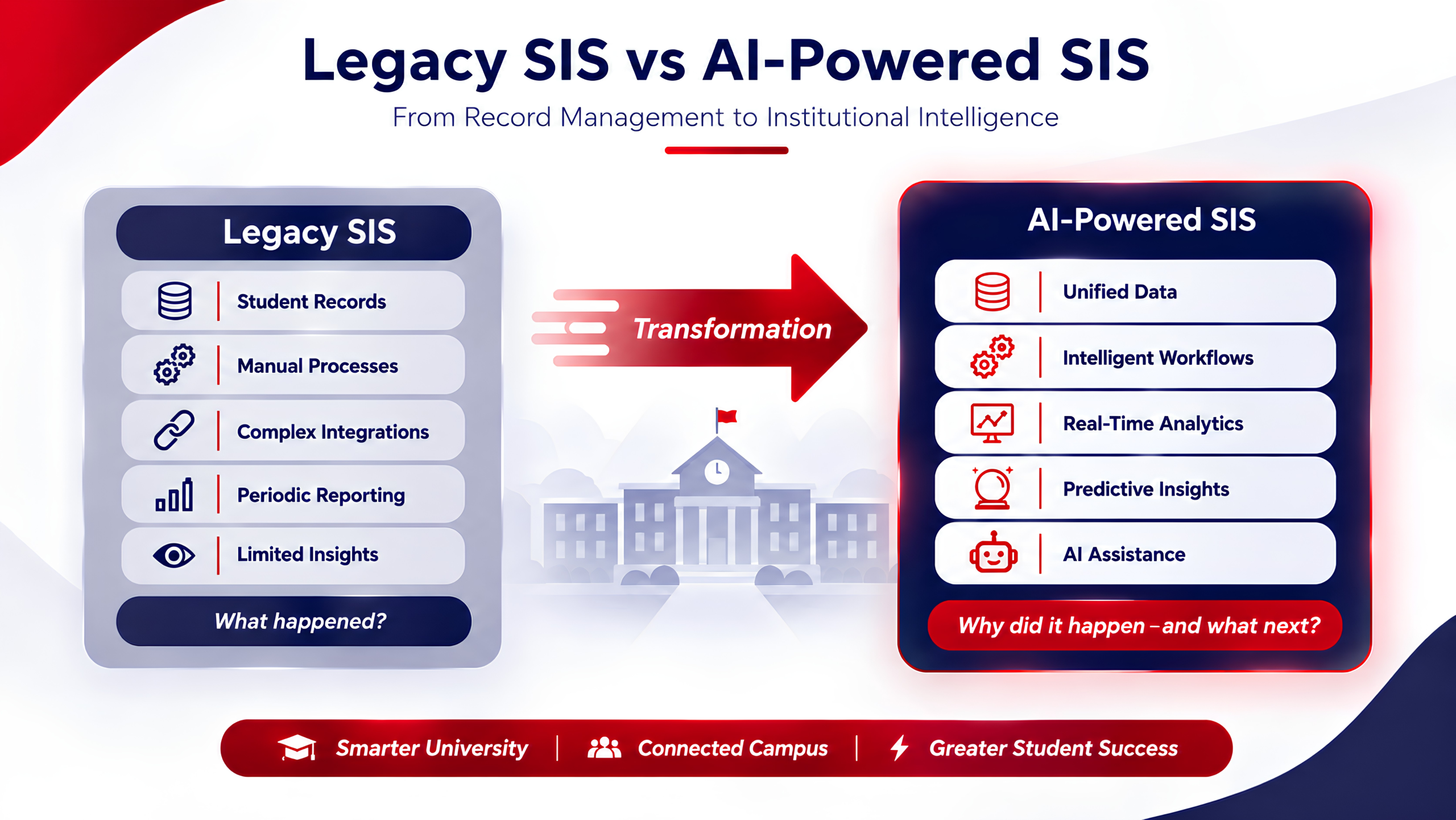
What Is the Difference Between a Legacy SIS and an AI-Powered SIS?

A legacy SIS primarily manages records and processes, while an AI-powered SIS extends those capabilities with automation, analytics, intelligent assistance, and predictive insights.


Legacy SIS and an AI-Powered SIS?


Capability Legacy SIS AI-Powered SIS
Student records ✓ ✓
Admissions ✓ ✓
Academic management ✓ ✓
Examinations ✓ ✓
Finance ✓ ✓
Workflow automation Limited Advanced
Real-time analytics Limited ✓
Predictive insights Limited ✓
AI assistance Limited/add-on Integrated
Integrations Often complex API-enabled
Cloud scalability Varies ✓

The real comparison is therefore not simply old technology versus new technology.

It is:

Record management versus institutional intelligence.

Why Is AI Becoming Important When Choosing a University SIS?

AI is becoming an important SIS consideration because universities are increasingly using AI across teaching, research, administration, and student services.

UNESCO’s 2025 global survey received 400 responses from UNESCO Chairs and UNITWIN Networks across 90 countries. It found that 19% of institutions already had a formal AI policy and another 42% were developing AI guidance, meaning 61% had either established or were developing institutional guidance.

The survey also found that 90% of respondents were using AI tools professionally, while nearly half were experimenting with AI in teaching. One in four reported that their university had already encountered ethical issues related to AI.


University SIS

This makes AI governance part of SIS evaluation.

Universities should ask:

“Does this SIS have AI?”

But also:

“Can AI operate securely and responsibly using governed institutional data?”

Can AI Really Improve University Decision-Making?

Yes. AI-powered analytics can help universities move from periodic reporting towards faster, data-informed decision-making.

Consider enrolment management. A traditional report may show that enrolment is below target. Understanding why may require separate analysis of applications, offers, acceptance rates, programme demand, fees, and historical trends.

A connected SIS can bring these information sources together and make institutional patterns easier to identify.

Academia’s published analysis reports that institutions using AI-powered analytics can achieve up to 30–40% improvement in decision-making speed, while automation across admissions, examinations, and reporting can reduce manual workload by nearly 50%.

The larger opportunity is moving from:

“What happened?”

to:

“Why did it happen, and what should we do next?”

How Can a Modern SIS Reduce Administrative Workload?

A modern SIS can reduce routine administrative work by automating repetitive processes and connecting workflows across departments.

Potential areas include:

  • Application processing
  • Document reminders
  • Approval workflows
  • Fee notifications
  • Attendance alerts
  • Examination processes
  • Report generation
  • Data validation
  • Student service requests

Academia’s published analysis states that more than 60% of higher education administrators spend more than half their workday on tasks that add zero academic value. It also estimates that workflow automation can reduce routine administrative effort by 25–40%. The value of automation is therefore not simply fewer manual steps.

It is giving staff more time for work that requires human judgement and student interaction.

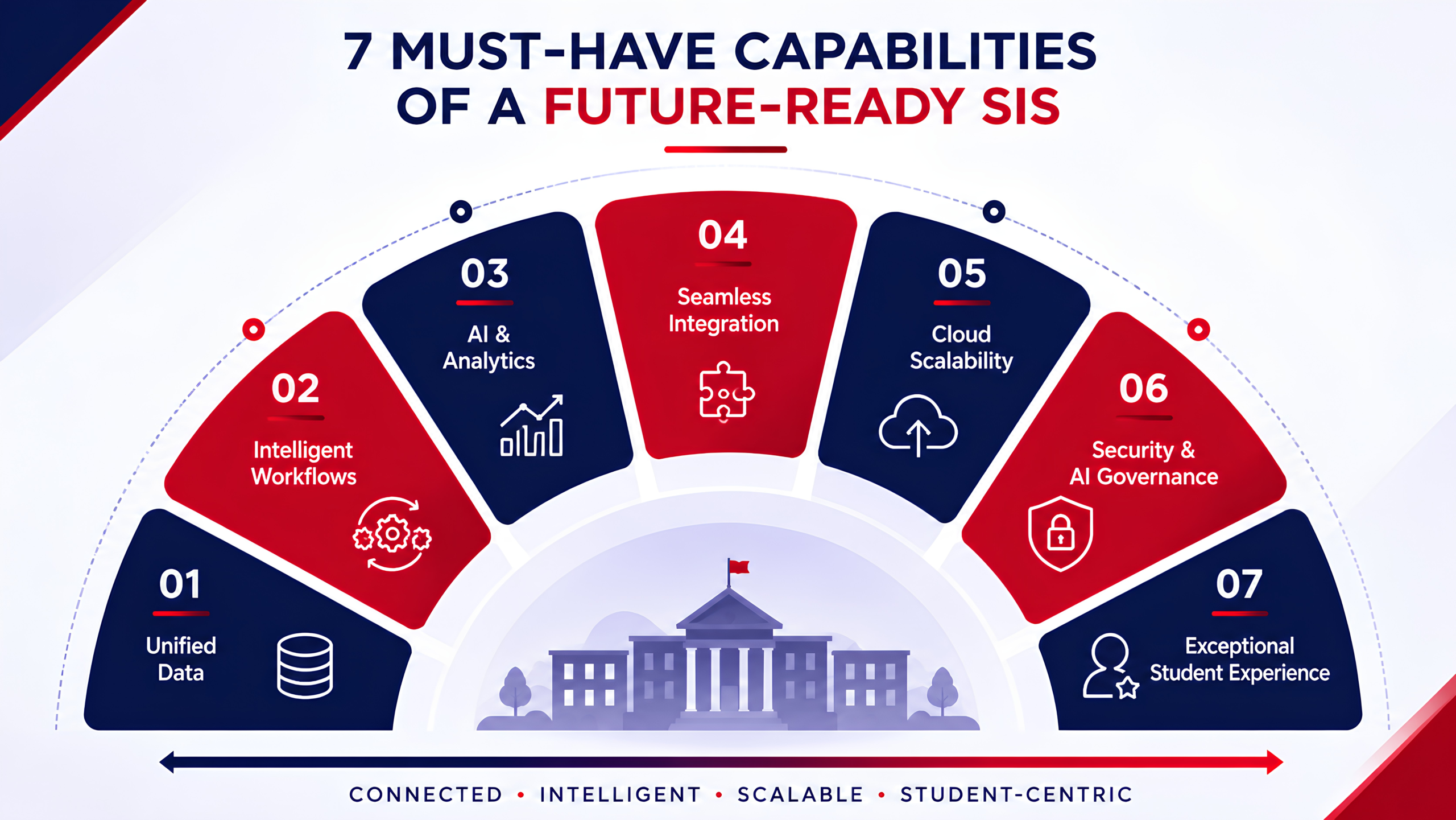
What Should UAE Universities Look for in an SIS in 2026?

UAE universities should evaluate an SIS across data, automation, AI, integration, scalability, security, and student experience.

1. Unified Institutional Data

A trusted source of student and academic information should replace disconnected records wherever possible.

2. Intelligent Workflow Automation

Admissions, academics, finance, examinations, and student services should support configurable workflows.

3. AI and Analytics

Look for real-time dashboards, predictive analytics, AI-powered reporting, and intelligent assistance, not simply an AI label.

4. Integration

The SIS should connect with LMS, finance, HR, CRM, payment gateways, identity systems, and other institutional applications.


Integration

5. Scalability

The platform should support growing enrolment, new programmes, multiple campuses, and changing institutional requirements.
6. Security and AI Governance

Universities should assess permissions, privacy, audit trails, security controls, and responsible AI practices.

7. Student Experience

Students should be able to apply, register, view academic information, make payments, submit requests, and receive notifications through connected digital channels.

Is a Legacy SIS Always a Bad Choice?

No. A legacy SIS is not automatically a bad system simply because it is older.

The real question is whether it can support the university’s future requirements.
University leaders should ask:

  • Can our SIS integrate easily?
  • Is institutional data unified?
  • How much reporting remains manual?
  • Can workflows be automated?
  • Can leadership access real-time information?
  • Can students complete services digitally?
  • Can the platform support AI responsibly?
  • Can it scale across campuses?
  • Does the vendor roadmap support our digital strategy?

If several answers are no, modernisation or replacement deserves serious consideration.

How Does Academia Support the Shift From Legacy SIS to AI-Powered SIS?

Academia by Serosoft positions its platform as an AI-powered Student Information System designed specifically for higher education, combining student lifecycle management with workflow automation, analytics, integrations, and AI capabilities.

Academia supports areas including admissions, academics, examinations, fees, student services, graduation, alumni management, and institutional reporting. Its AI capabilities include SERA AI, AI-driven analytics, intelligent workflows, and AI-supported academic and operational insights.

For a university evaluating legacy SIS replacement, the important question is not simply how many modules a platform has.

It is whether the platform can connect:

Unified Data + Intelligent Workflows + Institutional Intelligence

What Is the Future of Student Information Systems in UAE Higher Education?

The future of SIS is moving from digital record management towards intelligent institutional operations.

The next generation of platforms will increasingly help universities connect data, automate repetitive tasks, identify patterns, support students, and make decisions faster.

EDUCAUSE’s research shows that higher education institutions are already actively modernising their data environments, while UNESCO’s research shows that institutional AI guidance is becoming increasingly common.

For UAE universities, the strategic question is therefore no longer simply:

“Do we need an SIS?”

It is:

“Is our SIS ready for an AI-driven, data-connected university?”

Conclusion

The best Student Information System for a UAE university in 2026 is not necessarily the platform with the longest feature list.

It is the platform that best connects students, data, processes, systems, and decisions.

Legacy SIS platforms can continue to perform essential functions. But as universities modernise their data infrastructure and adopt AI, they increasingly need platforms that provide automation, interoperability, analytics, scalability, and responsible AI capabilities.

The evidence points towards a broader transformation: 68% of EDUCAUSE respondents were in the process of data modernisation, while only 1% considered their institution fully modernised. UNESCO also found that 61% either had an institutional AI policy or were developing AI guidance.

For UAE universities, the question is simple:

Is your current SIS helping you build the university of tomorrow or simply managing the university of today?

Ready to Build a Future-Ready Digital Campus?

Whether you’re replacing a legacy system, modernising your existing SIS, or planning your university’s next phase of digital transformation, the right technology foundation can make all the difference.

Discover how Academia by Serosoft helps universities implement AI-powered Student Information Systems that streamline operations, improve institutional visibility, connect the complete student lifecycle, and support smarter decision-making.

Request Demo | Speak with an SIS Expert

Frequently Asked Questions

What is the best Student Information System for UAE universities in 2026?

The best SIS depends on each university’s requirements. Institutions should evaluate student lifecycle coverage, integration, AI, analytics, scalability, security, configurability, and student experience.

Why should UAE universities consider replacing a legacy SIS?

Universities may need to modernise when legacy technology creates fragmented data, manual workflows, difficult integrations, slow reporting, limited scalability, or inadequate AI readiness.

Is AI important when selecting an SIS?

Yes. Universities should evaluate practical AI capabilities alongside data governance, security, permissions, transparency, and human oversight.

Can a modern SIS integrate with existing university systems?

Yes. Modern SIS platforms can integrate with LMS, finance, HR, CRM, payment, identity, and other institutional systems through APIs and integration frameworks.

How can Academia support UAE universities?

Academia by Serosoft provides an AI-powered higher education SIS combining student lifecycle management, workflow automation, analytics, integrations, and AI-enabled capabilities.

7 Student Information System Implementation Mistakes Universities Must Avoid (2026 Guide)

Implementing a Student Information System (SIS) is one of the most significant digital transformation initiatives a university can undertake. A well-executed implementation connects admissions, academics, examinations, finance, student services, and institutional reporting into one unified platform, improving operational efficiency and enhancing the student experience.

However, technology alone doesn’t guarantee success. Many SIS implementations face delays, budget overruns, low user adoption, or fail to deliver the expected outcomes due to avoidable planning and execution mistakes.

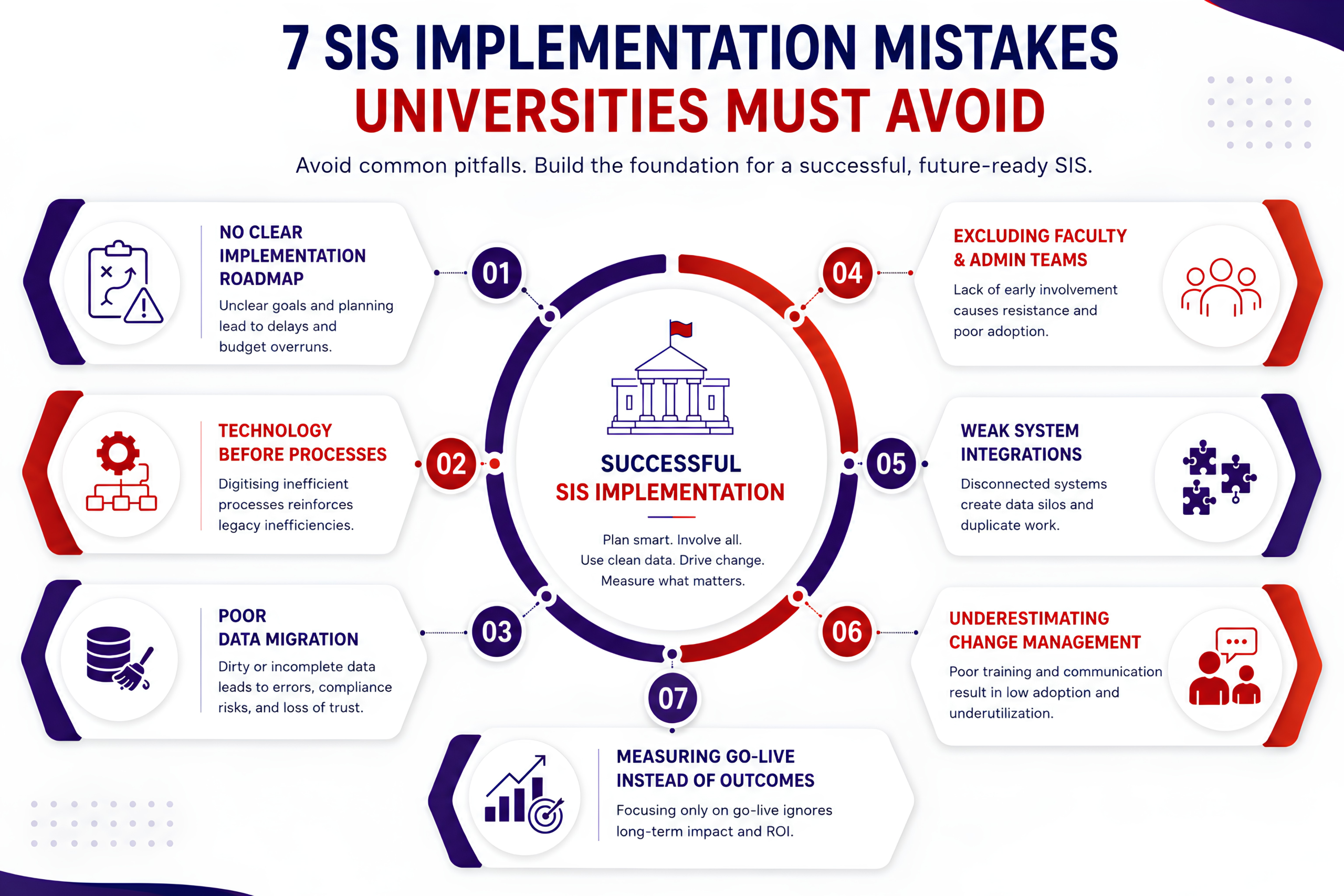
In this guide, we’ll explore the seven most common Student Information System implementation mistakes universities make, why they occur, and how institutional leaders, IT teams, and student administration professionals can avoid them. Whether you’re replacing a legacy system or implementing a cloud-based SIS for the first time, these best practices will help lay the foundation for a successful and future-ready implementation.

Why Do Student Information System Implementations Fail?

Student Information System implementations typically fail due to poor planning, disconnected stakeholders, weak data governance, and inadequate change management, not because of technology limitations.

An SIS touches nearly every department within a university. If institutional goals, workflows, and responsibilities aren’t aligned before implementation begins, delays, budget overruns, and low user adoption become far more likely. Successful implementations start with a clear roadmap, cross-functional collaboration, and well-defined success metrics.

According to the Higher Ed Innovation Index 2025 by Transact + CBORD, 49% of higher education institutions are accelerating technology investments, while 44% identify implementation as their biggest digital transformation challenge.

These findings reinforce an important reality: selecting the right technology is only the first step. Long-term success depends on how effectively institutions plan, implement, and manage change.

What Happens When Universities Skip Implementation Planning?

Universities that begin SIS implementation without a clear roadmap are more likely to experience delays, budget overruns, and scope changes.

Implementation planning should define institutional objectives, project governance, timelines, responsibilities, and measurable outcomes before configuration begins. Without this foundation, departments often work in silos, priorities become unclear, and implementation decisions become reactive instead of strategic.

Before launching an SIS project, universities should answer:

  • What institutional challenges should the SIS solve?
  • Which departments will own implementation?
  • What KPIs will measure success?
  • How will risks and project milestones be managed?

A structured implementation roadmap reduces uncertainty and creates accountability throughout the project lifecycle.

Why Is Choosing Technology Before Defining Processes a Costly Mistake?

A Student Information System should improve institutional processes, not simply digitise inefficient ones.

Many universities focus on software capabilities before reviewing how work is actually performed. As a result, outdated workflows, duplicate approvals, and manual processes are transferred into the new system, limiting its impact.

Before configuring an SIS, institutions should simplify workflows, eliminate redundant tasks, standardise approvals, and identify opportunities for automation. Optimising processes first ensures the technology supports institutional goals rather than reinforcing legacy inefficiencies.

Why Is Choosing Technology Before Defining Processes a Costly Mistake?

How Does Poor Data Migration Affect Student Information System Success?

Clean, accurate data is essential for a successful SIS implementation. Migrating duplicate, outdated, or incomplete records can lead to reporting errors, compliance risks, and reduced confidence in the new system.

Rather than transferring legacy data as-is, universities should:

  • Remove duplicate records.
  • Standardise data formats.
  • Validate programme and student information.
  • Archive outdated records.
  • Establish clear data governance policies.

Reliable data enables better reporting, stronger decision-making, and a smoother transition to the new platform.

An EDUCAUSE QuickPoll (2025) found that 68% of higher education institutions are actively modernising their data systems, yet only 1% believe they have fully modernised their data management strategy. Additionally, 51% cited siloed institutional data as a major challenge, highlighting why data quality and governance should be prioritised before implementing a new Student Information System.

Why Should Universities Involve Faculty and Administrative Teams Early?

A Student Information System implementation succeeds when it has institution-wide ownership, not just IT support. Universities that exclude faculty, admissions, finance, registrar, or student services teams from the implementation process often face resistance, poor adoption, and workflows that fail to meet operational needs.

Every department interacts with the SIS differently. Involving key stakeholders early helps identify functional requirements, resolve process gaps, and build confidence before go-live.

To encourage collaboration, universities should establish a cross-functional implementation team that includes academic leadership, admissions, registrar, finance, student services, and IT. Early engagement reduces rework, improves adoption, and ensures the system supports institutional goals from day one.

Can a Student Information System Succeed Without Integrations?

No. A modern Student Information System delivers the greatest value when it integrates seamlessly with the university’s digital ecosystem.

An SIS should exchange data with platforms such as Learning Management Systems (LMS), finance and ERP software, HR systems, payment gateways, library solutions, and communication tools. Without these integrations, universities often struggle with duplicate data entry, inconsistent records, and fragmented reporting.

Before implementation, institutions should identify:

  • Systems requiring integration
  • Data exchange requirements
  • API and interoperability needs
  • Security and compliance considerations

A connected technology ecosystem enables better collaboration, improves data accuracy, and provides leadership with a single source of institutional truth.

Based on Academia’s experience working with higher education institutions, universities that align academic, administrative, and technology teams before implementation are better positioned to reduce project risks, improve user adoption, and achieve faster time-to-value. Implementation becomes significantly smoother when people, processes, and technology evolve together.

Why Do Many Universities Underestimate Change Management?

Even the best Student Information System cannot succeed if users don’t adopt it.

Many institutions invest heavily in technology but overlook communication, training, and user readiness. As a result, staff continue using manual processes, adoption slows, and the expected benefits of the implementation are never fully realised.

Successful universities support change by:

  • Communicating project goals early
  • Delivering role-based training
  • Appointing departmental champions
  • Providing ongoing post-implementation support

Treating implementation as a continuous improvement initiative, not a one-time deployment, helps maximise long-term success.

How Can Universities Measure the Success of an SIS Implementation?

A successful implementation is measured by business outcomes, not just a successful go-live.

Universities should define measurable KPIs before implementation begins to evaluate long-term impact.


KPI Expected Outcome
Admissions processing time Faster application processing
Manual data entry Reduced administrative workload
Data accuracy Improved reporting quality
User adoption Higher staff utilisation
Executive reporting Faster access to institutional insights

Monitoring these metrics helps universities continuously optimise processes and maximise their return on investment.

What Should Universities Do Before Selecting an SIS?

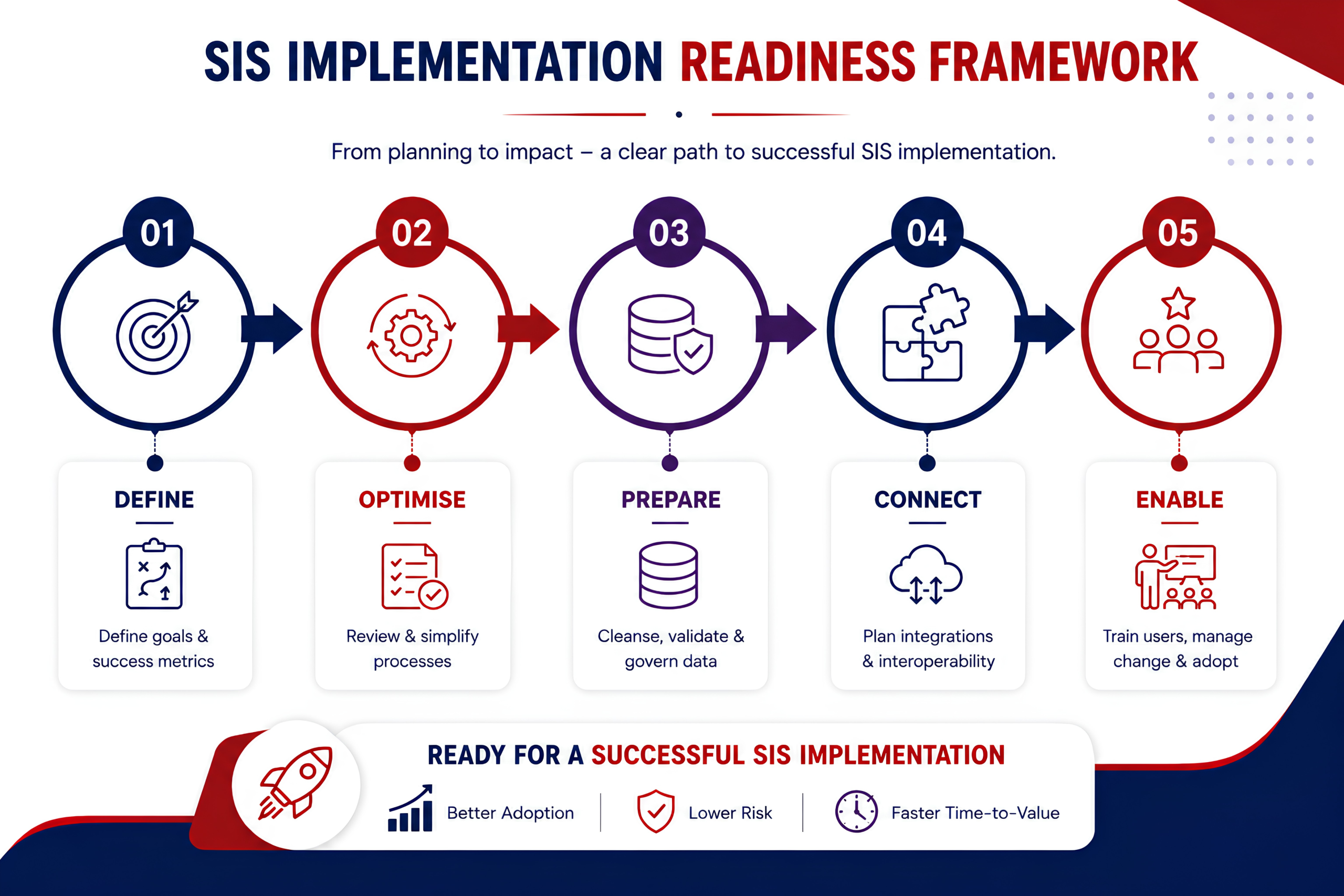
Before evaluating vendors, universities should assess their implementation readiness. Completing the following checklist helps reduce implementation risks and ensures the institution is prepared for long-term success.

SIS Implementation Readiness Checklist

✔ Define institutional goals and success metrics.

✔ Review and optimise existing business processes.

✔ Assess data quality and migration readiness.

✔ Identify integration requirements.
✔ Establish project governance and ownership.

✔ Develop a change management and training plan.

✔ Define KPIs to measure implementation success.

Universities that complete these steps before selecting an SIS are more likely to achieve a smoother implementation, stronger user adoption, and greater long-term value from their investment.

How Does Academia Help Universities Deliver Successful SIS Implementations?

A successful Student Information System implementation requires more than software; it requires higher education expertise, proven implementation practices, and a long-term digital transformation strategy.

Academia by Serosoft is an AI-powered Student Information System built exclusively for higher education. It supports the complete student lifecycle from admissions and enrolment to academics, examinations, finance, graduation, and alumni management through a unified cloud platform.

With configurable workflows, seamless integrations, AI-powered analytics, and real-time executive dashboards, Academia helps universities modernise operations, improve decision-making, and create connected digital campuses that are ready to scale.


Student Information System implementation

Universities are increasingly looking beyond automation. The next generation of Student Information Systems is expected to provide predictive insights, workflow intelligence, and real-time analytics that support faster, data-driven decision-making. Institutions that combine automation with AI-powered insights will be better positioned to improve operational efficiency, student success, and institutional agility.

What Will Successful Student Information System Implementations Look Like in the AI Era?

The future of Student Information Systems lies in intelligence, not just digitisation.

AI-powered SIS platforms are enabling universities to move beyond managing records to proactively improving institutional performance. By combining automation with predictive analytics, institutions can identify enrollment trends, support at-risk students, automate repetitive processes, and provide leadership with real-time operational insights.

Future-ready universities will prioritise Student Information Systems that are scalable, connected, AI-enabled, and capable of adapting to evolving student and institutional needs.

Conclusion

A successful Student Information System implementation is built on strategic planning, stakeholder collaboration, quality data, and continuous improvement, not technology alone. Universities that avoid these seven common implementation mistakes are better equipped to reduce project risks, improve adoption, and maximise the long-term value of their investment.

As higher education continues to evolve, institutions need Student Information Systems that not only streamline operations but also enable smarter, data-driven decision-making. Choosing the right implementation approach today creates a stronger foundation for tomorrow’s digital campus.

Ready to Build a Future-Ready Digital Campus?

Whether you’re replacing a legacy system or planning your first Student Information System implementation, the right strategy can make all the difference.

Discover how Academia by Serosoft helps universities implement AI-powered Student Information Systems that streamline operations, improve institutional visibility, and support the complete student lifecycle.

Request Demo | Speak with an SIS Expert

Frequently Asked Questions

What is Student Information System implementation?

Student Information System implementation is the process of planning, configuring, integrating, migrating data, and deploying an SIS to manage student information and academic operations across a university.

What is the biggest reason SIS implementations fail?

Poor planning, disconnected stakeholders, weak data governance, and inadequate change management are the most common reasons universities struggle during implementation.

Can an SIS integrate with existing university software?

Yes. Modern Student Information Systems integrate with Learning Management Systems (LMS), ERP, finance, HR, payment, and communication platforms to create a connected digital ecosystem.

How can universities ensure a successful SIS implementation?

Universities should establish clear objectives, optimise processes, involve stakeholders early, prioritise data quality, plan integrations, invest in user training, and measure success using defined KPIs.

Why Enrolment and Student Records Management Remain a Challenge for Ghana Universities

Ghana’s higher education sector is becoming more digitally complex. Universities must manage admissions, enrolment, registration, academic records, examinations, fees, transcripts and reporting across increasingly diverse student populations and academic structures. In 2024, Ghana recorded 693,307 tertiary students, compared with 711,695 in 2023, while enrolment in public universities stood at 389,763, down from 422,583 in the 2022/2023 academic year.

The challenge, therefore, is not simply about increasing student numbers. It is about managing large volumes of student information accurately, consistently and efficiently across the entire student lifecycle. When admissions, registration, academics, examinations, and student records operate through disconnected processes, universities can face duplicate data, manual reconciliation, delayed services, and limited institutional visibility.

From Academia’s perspective, the real opportunity is to move from fragmented student administration towards a connected digital environment. Academia’s Ghana-specific SIS offering identifies disconnected student records, manual admissions and clearance, paper-based transcript and results management, spreadsheet-dependent accreditation documentation and delays in GTEC reporting as key areas where institutions can benefit from modernisation.

Why Is Enrolment and Student Records Management Difficult for Ghana Universities?

Enrolment and student records are at the centre of almost every university process.

A student’s information may begin with an application, move through admission and clearance, continue into registration and course selection, and eventually feed examinations, academic progression, finance, graduation and alumni records.

When these stages are not connected, the same information may be entered, verified or updated multiple times.

This creates several challenges:

  • Duplicate or inconsistent student records
  • Manual admission and registration processes
  • Delays in updating academic information
  • Difficulty retrieving historical records
  • Spreadsheet-dependent reporting
  • Limited visibility across faculties and campuses
  • Greater administrative workload

A 2020 study of records management practices at Ghana Communication Technology University found challenges including inadequate staffing, insufficient storage facilities, limited training and the absence of a formal records-management policy.

These challenges show that student records management is not only a technology issue. It involves processes, people, policies and systems working together.

How Do Fragmented Systems Affect Student Enrolment in Ghanaian Universities? 

The enrolment process involves much more than accepting an application.

Universities must verify applicant information, confirm admission decisions, complete clearance, register students, assign programmes and courses, collect relevant financial information and maintain an accurate academic record.

If each stage relies on separate tools or manual intervention, the process becomes difficult to control.

For example, information captured during admission may need to be transferred into another system for registration. Changes to student details may then need to be communicated manually to academic or finance teams.

The result is a human integration layer: staff spend time moving, checking and reconciling information instead of focusing on higher-value institutional work.

According to Academia, fragmented student records across faculties and satellite campuses and manual admission screening and clearance are among the structural inefficiencies Ghanaian institutions can face.

A connected SIS can instead create a single flow from applicant → admitted student → enrolled student → active learner → graduate.

Student record journey

Why Is Accurate Student Records Management Important for Ghanaian Universities? 

Student records are more than administrative information.

They support academic decisions, student services, institutional reporting, accreditation and long-term institutional planning.

The University of Cape Coast, for example, describes its Student Records Section as responsible for registrations, assessments, graduations and academic data management, while supporting students, faculty, staff and alumni. Its online student information system is implemented in collaboration with the university’s MIS function and faculty and departmental registration and examination officers.

This illustrates how closely student records are connected to wider university operations.

Accurate records help institutions answer basic but important questions:

  • How many students are enrolled?
  • Which programmes are they studying?
  • Have they completed registration?
  • What courses are they taking?
  • What is their academic progression?
  • Which students are eligible to graduate?
  • Can accurate information be produced for institutional reporting?

When answers depend on manually combining information from multiple sources, institutional decision-making becomes slower and more difficult.

How Does Student Records Management Affect GTEC Reporting and Compliance in Ghanaian Universities? 

For Ghanaian universities, student information also supports the wider regulatory environment.

The Ghana Tertiary Education Commission (GTEC) regulates tertiary education and is increasingly using digital systems to strengthen institutional oversight. In 2026, GTEC reported that it had deployed AMIS for accreditation, CEMS for credential evaluation and CAPS for centralised applications, describing these systems as part of a move towards a more digitised regulatory environment.

GTEC also currently regulates 321 accredited institutions and 3,507 accredited programmes nationwide.

This makes reliable institutional data increasingly important.

If student, programme and academic information is fragmented internally, producing accurate reports and documentation can become a time-consuming exercise.

From Academia’s perspective, a modern Student Information System should centralise student records, programme information, academic workflows and reporting so that institutions can access consistent data when required. Its Ghana offering specifically highlights delays in GTEC reporting and programme accreditation submissions as areas where connected systems can help.

How Does Data Protection Affect Student Records Management in Ghanaian Universities? 

Universities manage highly sensitive personal information.

Student records can include names, identification details, contact information, academic performance, financial information and other personal data.

Ghana’s Data Protection Commission oversees implementation of the Data Protection Act, 2012 (Act 843), which establishes requirements around the lawful processing and protection of personal data.

For universities, this means student information management should consider more than accessibility.

Institutions need appropriate controls around:

  • Who can access student information
  • What information different users can view
  • How records are updated
  • How changes are tracked
  • How information is stored
  • How data is shared between systems
  • How records are protected over time

A modern SIS can help establish these controls within the workflows where student information is created and used.

What Should Ghanaian Universities Look for in a Modern Student Information System? 

Universities evaluating their next SIS should look beyond individual features.

The more important question is whether the system can connect the complete student lifecycle.

1. Connected Enrolment and Admissions

Admissions, clearance and enrolment should operate as connected processes rather than separate administrative tasks.

2. Centralised Student Records

Universities should have a reliable institutional source of student information that authorised users can access when needed.


Modern SIS

3. Integrated Academic Records

Registration, course selection, assessments, examinations, results and progression should connect with the student’s core record.

4. Multi-Campus and Faculty Visibility

As institutions operate across faculties, departments and campuses, leadership needs consistent visibility without manually consolidating information.

5. Reporting and Analytics

A modern SIS should make institutional information easier to analyse, helping university leaders move from manually prepared reports towards faster, data-informed decisions.

6. Integration With Existing Systems

Universities do not necessarily need to replace every technology platform they already use. The SIS should be able to exchange information with LMS, finance and other third-party systems.

Academia states that its Ghana platform integrates with LMS platforms, finance systems and third-party tools, enabling secure data exchange without disrupting existing infrastructure.

How Can Academia Help Ghanaian Universities Improve Enrolment and Student Records Management? 

Academia by Serosoft approaches student information management as a connected student lifecycle rather than a collection of separate administrative functions.

Its Ghana-specific SIS offering is designed to address challenges including fragmented student records, manual admissions and clearance, paper-based transcript and results management, spreadsheet-dependent accreditation documentation and limited real-time institutional visibility.

The platform brings together admissions, student management, programmes and courses, examinations, fees, documents, analytics and reporting within a broader education management ecosystem. Academia’s Africa platform also highlights automated workflows, real-time insights and coordination across departments and campuses.

Academia has also previously supported Ghana Technology University College with an ERP implementation covering admissions and other university operations, with the institution highlighting easier access to student records and automated admissions processes.

For Ghanaian universities, the objective is not simply to replace paper or spreadsheets with software. It is to create a more reliable digital foundation for enrolment, student records and institutional decision-making.

What Is the Future of Enrolment and Student Records Management for Ghanaian Universities? 

Ghana’s higher education sector is already moving towards greater digitalisation. GTEC’s deployment of AMIS, CEMS and CAPS demonstrates that digital systems are becoming increasingly important to how the tertiary education ecosystem operates.

For universities, this creates a clear opportunity.

The next generation of enrolment and student records management should be built around connected data, automated workflows, secure access and real-time institutional visibility.

The goal is not simply to process more students.

It is to manage every student record accurately throughout the academic journey while giving administrators, faculty and leadership the information they need when they need it.

The key question for Ghanaian universities is therefore no longer:

“How do we manage more student records?”

It is:

“How do we create a connected system that keeps student information accurate, accessible and useful throughout the entire student lifecycle?”

Is Your University Ready to Modernise Student Records Management? 

Explore how Academia by Serosoft can help your university connect admissions, enrolment, academics, examinations, student records and reporting within one scalable digital environment.

Book a personalised Academia SIS demo.

Frequently Asked Questions

1. Why is student records management challenging for Ghana universities?

Student records can become difficult to manage when admissions, registration, academics, examinations and finance rely on disconnected systems, spreadsheets or manual processes. This can create duplication, inconsistent information and limited institutional visibility.

2. How can an SIS improve student enrolment?

A modern SIS can connect admissions, clearance, registration and student records, reducing repeated data entry and helping universities maintain more consistent information throughout the enrolment process.

3. Why are accurate student records important?

Accurate records support academic administration, examinations, graduation, student services, institutional reporting, accreditation and strategic decision-making.

4. Can a modern SIS integrate with existing university systems?

Yes. A modern SIS should integrate with systems such as LMS and finance platforms rather than requiring universities to replace every existing application. Academia states that its Ghana solution supports integration with LMS, finance and third-party tools.

5. How does Academia support Ghanaian universities?

Academia’s Ghana-specific SIS is designed to address fragmented student records, manual admissions and clearance, paper-based transcript and results processes, accreditation documentation and institutional reporting challenges.

6. Is student data security important when choosing an SIS?

Yes. Universities process significant amounts of personal information and should evaluate access controls, data protection, auditability, secure storage and information-sharing practices when selecting an SIS.

Best Student Information Systems for UAE Universities (2026): Academia vs Legacy SIS

For UAE universities, choosing a Student Information System (SIS) in 2026 is no longer simply about managing student records.

It is about whether the institution can deliver a connected student journey, make faster decisions, reduce administrative dependency, integrate systems and prepare for an increasingly AI-driven higher education environment.

That shift is already visible across the UAE. The Ministry of Higher Education and Scientific Research (MoHESR) is actively redesigning higher education services around digital integration, data, AI and simpler student journeys. Its 2026 digital transformation programme includes reducing repetitive procedures, improving data reliability and integrating services across government and higher education systems.

At the same time, MoHESR has launched the Higher Education Institutions Indicators Compass, giving UAE institutions centralised dashboards for performance monitoring, data quality and evidence-based decision-making.

This raises an important question for university leaders:

Can your current SIS support the UAE university you are trying to build, or is it only managing the university you have today?

Why Do UAE Universities Need to Rethink Their SIS in 2026? 

A traditional Student Information System manages records, registration, grades and reports. Today’s UAE universities also manage multiple programmes, international students, digital services, finance, LMS and CRM platforms, alongside growing expectations around data and AI.

When systems do not communicate, staff become the integration layer. Data is moved manually, reports are reconciled, and spreadsheets fill information gaps.

According to Academia, one of the recurring challenges higher education institutions face is not the absence of individual systems, but the gaps between them. When those gaps remain, administrative teams spend time connecting information instead of using it to improve decisions and student outcomes.

The question is whether core technology can support the next stage of transformation.

What Is the Difference Between a Legacy SIS and a Modern SIS? 

A legacy SIS can still perform important functions. The question is what happens around it.


Capability Legacy SIS Modern SIS
Student records Strong Strong
Admissions & enrolment Supported Connected and automated
Academic management Supported Integrated across lifecycle
Workflow automation Often limited Configurable workflows
Analytics Report-based Dashboards and real-time insights
Integrations Complex workarounds Connected ecosystem
AI Limited or add-on AI-enabled capabilities
Student self-service Varies Connected digital journeys
Decision support Historical Data-driven and proactive

A legacy SIS is often designed to record what happened. A modern Student Information System should help institutions understand what is happening, why it is happening and what to do next.

Legacy SIS vs Modern SIS


1. Why Is Fragmented Data a Problem for University Leadership? 

Admissions may hold one version of a student’s information, academics another, finance separate records and the LMS additional learning data. When leadership needs a complete picture, teams have to bring those pieces together.

This slows reporting and creates inconsistencies. MoHESR’s automated data integration with 54 higher education institutions in 2025 further demonstrates the UAE’s move towards connected higher education data.

What UAE universities should ask:
Can our SIS provide a reliable view of the student lifecycle without requiring teams to manually reconcile information?

2. What Do Students Expect From UAE Universities Today? 

Students increasingly expect university services to work like other digital services. They think in outcomes: apply, register, pay, check timetables and results, raise requests and get answers.

If every step requires a different portal, repeated information or manual follow-up, the technology may be digital, but the experience remains fragmented.

Student experience is therefore a core SIS consideration. MoHESR also focuses on reducing repetitive procedures and creating seamless digital services.

3. How Does Manual Reporting Affect University Decision-Making? 

University leaders need timely answers to questions such as:

  • Which programmes are attracting demand?
  • Where are applications dropping off?
  • What is the current enrolment position?
  • Which students may need support?
  • Where are outstanding fees concentrated?
  • Which processes create the highest service workload?

A modern SIS should make this information easier to access.

If your SIS requires extensive manual work before leadership can trust the numbers, the problem is bigger than reporting. It is an institutional data problem.

4. Why Are UAE Universities Prioritising AI in Their SIS? 

The AI conversation is moving beyond “Does the system have AI?”

The more important question is:

Can AI work effectively on trusted institutional data?

In June 2026, the Ministry of Education launched the NOVA project to advance AI-driven institutional transformation, reinforcing the importance of data and AI in education administration.

A modern SIS should provide a foundation for faster reporting, intelligent analytics, automated workflows, pattern identification, proactive student support and AI-assisted decisions.

Academia by Serosoft approaches this through an AI-powered SIS ecosystem, including SERA AI and AI-powered analytics.

Is Academia Better Than a Legacy SIS for UAE Universities? 

The answer depends on the university.

If an existing SIS is stable, integrated, scalable and AI-ready, replacement may not be necessary.

Evaluate alternatives if:

  • Teams spend too much time reconciling data.
  • Reports require spreadsheets and manual consolidation.
  • Integrations are expensive or difficult to maintain.
  • Students navigate disconnected systems.
  • Workflows depend heavily on email and manual approvals.
  • Leadership lacks real-time visibility.
  • The SIS roadmap is not keeping pace with AI.
  • New programmes or campuses require significant technical effort.

These issues affect operational efficiency, student experience and scalability.

What Should UAE Universities Look for in a Modern SIS?

Before shortlisting vendors, evaluate six areas:

1. Connected Student Lifecycle

Admissions, academics, examinations, finance, student services and graduation should work as one ecosystem.

2. Integration

Connect LMS, CRM, finance, payments, identity and other platforms rather than creating another silo.

3. Automation

Ask which processes can be automated and how easily workflows can change.


UAE SIS

4. Analytics and AI

Evaluate whether institutional data becomes actionable insight, not just static reports.

5. Scalability

Support changing enrolment, programmes, campuses and operational requirements without technology bottlenecks.

6. Security and Governance

Assess security, role-based access, auditability, data governance and responsible AI from day one.

Why Should UAE Universities Consider Academia as Their SIS? 

Academia by Serosoft is built for higher education, bringing student lifecycle management, academic operations, workflows, analytics and AI capabilities into a connected SIS environment.

According to Academia, the strongest SIS outcomes come when institutions move beyond digitising individual processes and instead connect the complete student lifecycle. This approach helps universities reduce manual intervention, improve visibility and create a more consistent experience across admissions, academics, finance and student services.

Rather than replacing one database with another, the goal is to create a technology foundation where data moves more effectively, processes require less manual work, students face fewer barriers and leadership gains better visibility.

That is the difference between modernising software and modernising university operations.

What Should UAE Universities Consider When Choosing an SIS in 2026? 

The best SIS is not the one with the longest feature list. It is the one that fits the institution’s strategy.

For UAE universities, that direction increasingly includes connected digital services, reliable data, AI-enabled operations, streamlined student journeys and faster evidence-based decisions.

The UAE’s higher education ecosystem is already moving towards stronger data integration, simpler services and AI-enabled transformation. That makes the SIS decision more strategic than ever.

The question is no longer: “Does our SIS work?”

The better question is: “Is our SIS helping us become the university we want to be?”

What Can a Modern SIS Offer UAE Universities? 

If your university is evaluating a legacy SIS or exploring an AI-powered alternative, now is the time to assess options.

See how Academia can help your university connect the student lifecycle, automate operations and turn institutional data into better decisions.

Request a personalised demo for your UAE institution.

A demo can help your team compare Academia with your existing SIS and identify high-impact automation opportunities.

Frequently Asked Questions

What is the best Student Information System for UAE universities in 2026?

There is no single best SIS for every institution. Evaluate integration, scalability, automation, analytics, AI, security and long-term transformation needs.

Should a UAE university replace its legacy SIS?

Not necessarily. Replacement becomes worth considering when the existing system creates fragmented data, manual processes, limited integrations, poor reporting visibility or difficulty adopting AI.

Why is AI important in a university SIS?

AI can support faster analysis, intelligent workflows and proactive decisions. As UAE education emphasises AI and data, AI readiness is becoming an important SIS criterion.

Can Academia integrate with existing university systems?

Academia is designed as a connected higher education platform. Universities should assess its integration with LMS, CRM, finance, payments and other platforms.

What should universities ask SIS vendors during a demo?

Ask vendors to demonstrate real workflows: how an applicant becomes an enrolled student, how data moves between departments, how reports are generated, how workflows are automated and how integrations work.

Digital Campus Revolution: How Modern SIS Transforms Higher Education in 2025

The landscape of higher education is experiencing unprecedented digital acceleration. According to World Metrics, higher education’s digital virtual learning market is poised for significant growth, with projections set to reach $12.86 billion by 2025.

The education big data analytics market is projected to grow to $47.82 billion by 2027. These staggering figures underscore a fundamental shift: institutions that fail to modernize their student information systems risk being left behind in an increasingly competitive educational landscape.

Yet despite this digital momentum, many higher education leaders find themselves grappling with outdated systems that create more barriers than bridges to success.

The question isn’t whether to embrace digital transformation-it’s how to do it strategically and effectively.

The Perfect Storm: Understanding Today’s Higher Education Challenges

Enrollment Management Crisis

Colleges and institutions face a multifaceted enrollment management crisis.

Key challenges include:

  • Declining enrollments
  • Rising operational costs
  • Funding uncertainty
  • Leadership and staff resignations or migration
  • Increasing security and privacy threats

The crisis creates a domino effect across institutional operations.

University administrators struggle to balance declining enrollments with higher expectations for personalized student experiences.

Traditional paper-based processes and legacy systems cannot keep up with modern students’ demand for seamless, mobile-friendly interactions at every touchpoint.

Administrative Bottlenecks and Resource Strain

Administrative workload in higher education has reached critical levels.

Manual processes consume time that could be spent on student engagement and strategic initiatives.

Key tasks adding to the burden include:


  • Course registration
  • Grade management
  • Financial aid processing
  • Compliance reporting

Typical enrollment process challenges:

  • Students navigate multiple departments and fill out redundant paperwork
  • Manual approvals cause delays
  • Miscommunication between systems creates frustration

Fragmented administrative processes increase staff workload and impact student experience.

Data Silos and Decision-Making Blind Spots

Many institutions operate with disconnected systems, creating data silos.

Academic, financial, and student services data often live in separate systems.

Fragmented data makes it difficult to gain comprehensive insights into:

  • Student success patterns
  • Institutional performance
  • Operational efficiency

Lack of unified data leads to decisions based on incomplete information, a critical risk in today’s competitive higher education landscape.

The Strategic Solution: Modern Student Information Systems as Digital Transformation Catalysts

Centralized Data Management for Informed Decision-Making

Modern Student Information Systems (SIS) serve as the central nervous system of educational institutions. By automating administrative tasks such as registration, grading, and course scheduling, student ERP/SIS significantly reduces paperwork and streamlines processes. This centralization creates a single source of truth that enables data-driven decision-making across all institutional levels.

Advanced SIS platforms provide real-time dashboards that give administrators instant visibility into key performance indicators: enrollment trends, retention rates, financial aid distribution, and academic performance metrics. This comprehensive view enables proactive interventions rather than reactive responses to emerging challenges.

Streamlined Student Experience Through Automation

Today’s students expect digital-first experiences that match the convenience they enjoy in other aspects of their lives. Modern SIS platforms/student management systems deliver this through intuitive student portals that enable self-service capabilities for course registration, grade viewing, financial aid tracking, and transcript requests.

Automated workflows eliminate the need for students to visit multiple offices for routine transactions. Degree audit tools help students track their academic progress in real-time, while integrated communication systems ensure they receive timely notifications about important deadlines and opportunities.

Faculty Empowerment Through Technology

Modern SIS platforms don’t just serve administrators and students-they also empower faculty with tools that enhance teaching effectiveness. Integrated gradebooks, attendance tracking, and analytics dashboards enable professors to spot at-risk students early and provide timely interventions.

Access to comprehensive student information, including academic history and support services usage, allows faculty to offer more personalized guidance and support.

This holistic view of student data supports better educational outcomes and stronger faculty-student relationships.

Key Features That Drive Institutional Success

Predictive Analytics for Proactive Interventions

Leading SIS platforms now incorporate predictive analytics capabilities that identify students at risk of dropping out before traditional warning signs appear. By analyzing patterns in course engagement, attendance, assignment completion, and even campus resource utilization, these systems can flag students who may benefit from additional support services.

This proactive approach to student success has proven remarkably effective in improving retention rates and overall institutional outcomes.

Mobile-First Design for Modern Expectations

With students increasingly accessing information through mobile devices, modern SIS platforms prioritize mobile responsiveness and native app experiences. This ensures that critical student services remain accessible 24/7, regardless of location or device preference.

Seamless Integration Capabilities

The most effective academic ERP integrates seamlessly with other campus systems: learning management systems (LMS), financial aid platforms, library services, and campus card systems. This integration eliminates data duplication and ensures consistent information across all institutional touchpoints.

Robust Security and Compliance Features

Given the sensitive nature of student data, modern SIS platforms incorporate advanced security measures including encryption, role-based access controls, and comprehensive audit trails. These features ensure compliance with FERPA, state privacy laws, and other regulatory requirements while protecting institutional reputation.

The Path Forward: Embracing Digital Campus Innovation

The transformation of higher education through modern student information systems isn’t just about technology-it’s about reimagining how institutions serve their students, support their faculty, and operate efficiently in an increasingly complex environment.

Not all Student Information Systems (SIS) are created equal, and their importance has never been greater. Higher education institutions today face mounting challenges, including financial pressures, competition from online learning, enrollment fluctuations, and growing scrutiny over whether the cost of a degree is justified.

Institutions that invest in comprehensive, modern SIS platforms position themselves to thrive in this new landscape. They can provide superior student experiences, operate more efficiently, make data-driven decisions, and ultimately achieve better educational outcomes.

The question for higher education leaders isn’t whether to modernize their student information systems-it’s how quickly they can implement solutions that will drive institutional success in 2025 and beyond.

Ready to Transform Your Institution’s Digital Infrastructure?

Institutions that fully embrace digital transformation will define the future of higher education. Academia SIS provides the robust, scalable platform your institution needs to streamline operations, enhance student experiences, and drive institutional success.

Discover how Academia’s comprehensive student information system can revolutionize your campus operations. Schedule a personalized demonstration today and see how leading institutions are transforming their digital infrastructure for sustained success.

Explore Academia SIS Solutions- https://www.academiaerp.com/contact-us/

Why Data Is the New Oil for Middle East Universities – and How ERP Unlocks It

Introduction:

In the heart of the Middle East, higher education institutions are undergoing a silent revolution – one powered by data. From admissions to alumni engagement, every touchpoint now generates information that could transform how universities operate.

But here’s the challenge: most of this data remains trapped in silos – scattered across spreadsheets, paper files, and disconnected systems. The result? Missed opportunities for smarter decisions, faster operations, and personalized student experiences.

As the saying goes, “data is the new oil.” Yet, like crude oil, it holds little value unless refined. That’s where a powerful Education ERP – like Academia Student ERP – steps in, transforming raw data into actionable intelligence that drives institutional excellence across the Middle East’s fast-evolving higher education landscape.

Problem Statement: The Data Dilemma in Middle East Universities

Despite rapid modernization, universities in the Middle East face persistent challenges when managing their data:

  • Fragmented systems: Academic records, attendance, and student information often live in separate platforms, making reporting difficult.
  • Manual processes: Many institutions still rely on paper-based registers or Excel sheets for attendance management software and admission tracking.
  • Limited visibility: University leadership lacks a centralized dashboard to analyze performance across departments or campuses.

A 2024 PwC Middle East Education Outlook revealed that over 65% of regional universities cite “poor data integration” as a top barrier to digital transformation.

Without an academic ERP or college management system, institutions struggle to make informed decisions, optimize resources, or proactively address student needs.

Impact: Delayed reports, administrative inefficiencies, and missed opportunities to improve student engagement and retention.

The Solution: How ERP Unlocks the Power of Data

Imagine turning all that scattered information into a single, actionable source of truth. That’s exactly what a student management system or university management system does. Here’s how ERP for higher education solves the data dilemma:

  • Unified Data Platform: Integrates student records, attendance management, finance, and faculty data in one system.
  • Real-Time Dashboards: Leadership can monitor KPIs like enrollment trends, course performance, and attendance rates instantly.
  • Predictive Analytics: Identify at-risk students early, forecast resource needs, and improve overall institutional efficiency.
  • Compliance & Security: Protect student information with secure student information management systems compliant with regional regulations.

By refining raw data into insights, college ERP and academic ERP solutions allow universities to move from reactive management to strategic decision-making.

Data & Stats: The Rising Value of Educational Intelligence

The global EdTech market is booming, and analytics sits at its core. Key insights for Middle Eastern institutions include:

  • Operational efficiency: Universities using ERP in education reported a 20–30% improvement in admin workflows within two years (HolonIQ Report)
  • Decision-making speed: Integrated student database management systems reduced report generation time by 25% (Deloitte Report).

https://www.deloitte.com/us/en/about/press-room/deloitte-unveils-zora-ai-agentic-ai-for-tomorrows-workforce.html?utm_source=chatgpt.com

  • Retention impact: Institutions leveraging admission management systems and student record management software saw 15% higher student retention rates.

These figures highlight a clear trend: universities investing in education management information systems and higher ed ERP gain measurable improvements in both administration and student success.

UAE Universities Are Experiencing Data-Driven Transformation

Consider a leading UAE university struggling with decentralized academic records. Departments maintained their own student information system software, making performance monitoring and attendance tracking slow and error-prone.

After implementing Academia Student ERP, the university achieved:

  • Centralized student records: Faculty accessed real-time data through a student management software platform.
  • Automated reporting dashboards: Eliminated the need for manual attendance management and Excel-based tracking.
  • Predictive insights: Early detection of at-risk students and timely interventions.

The Future: AI and Predictive Insights for Smarter Campuses

The next frontier is AI-enabled academic ERP. Imagine a campus where a Dean asks, “Which courses are experiencing low attendance this month?” and the system instantly delivers actionable insights.

With training management software, student academy management systems, and college software integrated, universities can:

  • Predict student needs and personalize learning experiences.
  • Streamline faculty schedules and resource allocation.
  • Enable proactive decision-making for institutional growth.

ERP for higher education is no longer just about managing operations – it’s about shaping the future of learning and administration.

Conclusion:

Data is the most valuable resource a university holds, and without the right systems, it remains underutilized. By adopting student ERP, college management software, or university ERP, institutions in the Middle East can transform scattered information into strategic insights, optimize resources, and improve student outcomes.

Actionable takeaway: The universities that refine their data through academic ERP solutions today will lead the region’s knowledge economy tomorrow.

CTA: Discover how your institution can leverage Academia Student ERP and other education management systems to unlock the full potential of data and drive smarter, more strategic decisions.

The hidden cost of manual attendance management in higher ed institutions

Attendance might seem like one of the smallest, most routine tasks in higher education classrooms. A professor calls out names, marks the register, and the class begins. But when multiplied across hundreds of classes, dozens of faculty members, and entire academic years, this “simple” process reveals a staggering hidden cost.

Manual attendance management in higher education doesn’t just consume minutes-it drains hours, budgets, and institutional potential. What appears to be harmless administration is, in reality, a silent productivity leak that affects financial efficiency, instructional quality, and trust between stakeholders.

Faculty time lost to roll calls, staff salaries spent reconciling errors, and the compounding impact of human mistakes all translate into wasted resources that could otherwise be fueling innovation and learning. Add to this the risks of fraud, compliance issues, and declining parent satisfaction, and the true cost of manual attendance becomes undeniable.

This blog uncovers the unseen toll of manual systems-exploring their financial burden, educational impact, risks to compliance and trust, and the opportunity costs holding institutions back. Finally, it highlights how automation can turn attendance into a strategic driver of efficiency, safety, and growth.

Insert Image Suggestion: Visual of a professor marking attendance manually vs. an automated dashboard.

The Financial Toll of Manual Attendance Management

When it comes to hidden costs, the financial impact of manual attendance management systems is perhaps the most striking. What looks like a simple administrative step actually adds up to thousands of dollars in lost productivity and unnecessary labor.

a. Time = Money

On average, faculty spend about 10 minutes per class per day on manual attendance. That may not sound like much, but across a faculty of 50 staff members, the cumulative loss exceeds 400 hours every academic year. This isn’t just time lost from teaching-it’s paid hours that could have been used for instructional preparation, research, or student mentoring.

The problem doesn’t end there. Many institutions assign full-time administrative staff to reconcile attendance sheets, fix errors, and manage reports. These roles often cost between $70,000 and $100,000 annually-money spent not on advancing student outcomes but on correcting inefficiencies in outdated processes.

b. Misallocation of Resources

Every dollar spent on redundant manual processes is a dollar not invested in innovation. Instead of paying for staff to chase down attendance errors, institutions could be funding student support programs, digital transformation initiatives, or faculty development. The financial trade-off is clear: manual tracking represents not only direct salary costs but also a major opportunity cost in institutional growth.

Insert Table Here: Comparison of manual vs. automated attendance costs (time & money).

Human Error and Inaccuracy

No matter how attentive faculty or staff may be, manual attendance management systems are inherently prone to human error. Paper-based attendance management typically carries an error rate of 1–3%, which may sound small but translates into dozens-or even hundreds-of inaccuracies across a semester in a medium-sized institution.

These errors range from something as simple as an overlooked name to more serious mistakes like incorrect, missing, or duplicated records. Over time, discrepancies accumulate and require hours of additional administrative work to resolve. In cases where reconciliation doesn’t happen quickly, institutions may face challenges in reporting accurate attendance data for compliance or audits.

The consequences can directly affect people. For instance, mismatched records can cause payroll inaccuracies for staff whose salaries are tied to attendance monitoring. Students, too, may face disputes regarding their attendance percentages, leading to grade penalties or loss of eligibility for scholarships and aid. Even a single mistake can ripple into conflicts, grievances, and a loss of trust in the institution’s processes.

By relying on outdated, manual processes, higher education institutions are not just accepting inefficiency-they are opening the door to avoidable disputes and long-term credibility risks.

Insert Image Suggestion: Illustration showing a paper attendance sheet with errors.

Administrative and Educational Impact

Attendance management is not just an administrative activity; it also directly affects instructional quality. For faculty, every minute spent calling names and marking registers is one less minute spent teaching. In smaller classes, this loss may feel manageable, but in large classrooms with multiple periods, the cumulative toll can reach 20–30 minutes per day.

This is a direct hit on student learning. A course designed for 60 minutes of instruction may shrink to less than 45 minutes once attendance and other manual formalities are factored in. Over a semester, this results in dozens of hours of missed teaching time, undermining course outcomes and student performance.

On the administrative side, reliance on manual systems makes it nearly impossible to capture attendance data in real time. This slows down identification of absenteeism trends and delays interventions for at-risk students. Without timely visibility, faculty and administrators miss critical opportunities to support students before small issues snowball into academic failure or dropout.

The lack of accurate, centralized records also creates bottlenecks in reporting. From departmental planning to government compliance submissions, administrators spend excessive time consolidating data that could otherwise be instantly generated with automation. The end result is a campus environment where both students and staff are shortchanged-students lose valuable learning time, and staff remain buried under administrative tasks.

In short, manual attendance systems don’t just waste resources; they compromise the very core mission of higher education: quality teaching and student success.

Fraud, Security, and Compliance Risks

Manual attendance systems are vulnerable to proxy attendance and “buddy punching,” which distort records and weaken accountability. Manipulated logs can affect funding, compliance audits, and overall credibility. In emergencies, reliance on paper sheets delays roll-calls and poses serious safety risks.

Stakeholder Trust and Engagement Erosion

Parents and guardians face unnecessary frustration with outdated absence notifications. Without real-time updates, families feel left out of critical communication loops, leading to disengagement. Students and faculty also lose confidence when errors persist, gradually eroding trust in the institution’s systems.

The Opportunity Cost of Manual Tracking

The greatest loss is in time and resources. Faculty hours spent marking attendance could instead support teaching and student mentoring. Administrative salaries devoted to error reconciliation divert funds from innovation and growth. Automated systems reverse this drain by enabling data-driven insights, efficiency, and accountability, helping institutions refocus on their academic mission.

Frequently Asked Questions

Q1: Why is manual attendance still common in higher education?Manual systems persist largely due to tradition, perceived low upfront costs, and slower digital adoption. Many institutions assume manual tracking is “good enough” without realizing the cumulative hidden costs.

Q2: What are the hidden costs most institutions overlook?
Institutions often underestimate:

  • Lost instructional hours when teachers spend time on attendance.
  • Staff salaries tied to reconciliation work.
  • Compliance risks from inaccurate reporting.
  • Parent dissatisfaction caused by poor communication loops.

Q3: How do automated systems improve ROI?
Automated attendance systems deliver measurable ROI through:

  • Efficiency: freeing faculty and staff from repetitive tasks.
  • Real-time data: enabling quick interventions for absenteeism.
  • Reduced fraud: eliminating proxy attendance.
  • Improved safety: instant roll-call during emergencies.
  • Higher satisfaction: better transparency for students, parents, and administrators.

Conclusion:

Manual attendance may seem like a small administrative routine, but its hidden costs are significant-draining finances, reducing instructional time, eroding trust, and exposing institutions to compliance and safety risks. The real price isn’t just inefficiency; it’s the missed opportunities to invest in innovation, growth, and student success.

By moving to an automated attendance system, higher education institutions can reclaim valuable time and resources, ensure compliance, and foster stronger engagement with stakeholders.

Now is the time to leave outdated processes behind. Explore how solutions like Academia SIS can help your institution unlock efficiency, accountability, and growth through automation.

Battling Administrative Inefficiencies in African Universities: How Digital Transformation Can Bridge the Gap

Higher Education

Higher education in Africa plays a pivotal role in shaping the continent’s economic, social, and technological development. Yet, despite its importance, many universities face persistent administrative inefficiencies that hinder their ability to deliver quality education.

Rising enrollment, outdated manual workflows, and limited funding compound these challenges, creating bottlenecks across admissions, student management, and academic operations. Consequently, institutions struggle to maintain operational efficiency while striving to improve the student experience.

Amid these challenges, digital transformation has emerged as a powerful solution. By integrating modern technologies such as cloud-based student information systems (SIS) and enterprise resource planning (ERP) solutions, African universities can streamline processes, reduce errors, and make data-driven decisions that support both administrators and students.

This blog explores the key administrative hurdles facing African universities and how digital transformation can help bridge the gap.

The Hidden Cost of Manual Administration

Academic Process

Many African universities continue to rely heavily on manual processes for admissions, grading, attendance tracking, and record-keeping. Paper-based workflows lead to slow processing times, frequent errors, and data inconsistencies. Staff members often spend hours on repetitive administrative tasks rather than focusing on strategic initiatives that could improve the institution’s overall performance.

These inefficiencies extend beyond staff workload. Students experience delays in registration, exam result publication, and access to academic resources, which can affect satisfaction and retention. Furthermore, the reliance on physical documentation increases the risk of data loss or damage, potentially compromising academic integrity. As a result, universities face reputational risks alongside operational challenges, highlighting the urgent need for streamlined, technology-driven solutions.

Infrastructure and Funding Barriers

Infrastructure limitations and funding constraints are major obstacles to digital transformation in African higher education. While some universities attempt to adopt modern solutions, uneven internet connectivity and limited IT resources often make implementation difficult. Many institutions struggle to invest in sustainable, long-term IT infrastructure due to tight budgets, leaving them reliant on outdated systems that cannot scale with growing student populations.

Government and private initiatives, such as Kenya’s National Digital Master Plan, South Africa’s Higher Education ICT projects, and Nigeria’s TETFund reforms, aim to improve technology adoption across campuses.

However, progress is gradual, and institutions must find cost-effective ways to integrate cloud-based systems that can function reliably even in low-resource environments. Digital transformation, when implemented thoughtfully, enables universities to overcome these infrastructure and funding challenges, providing scalable solutions that reduce operational inefficiencies.
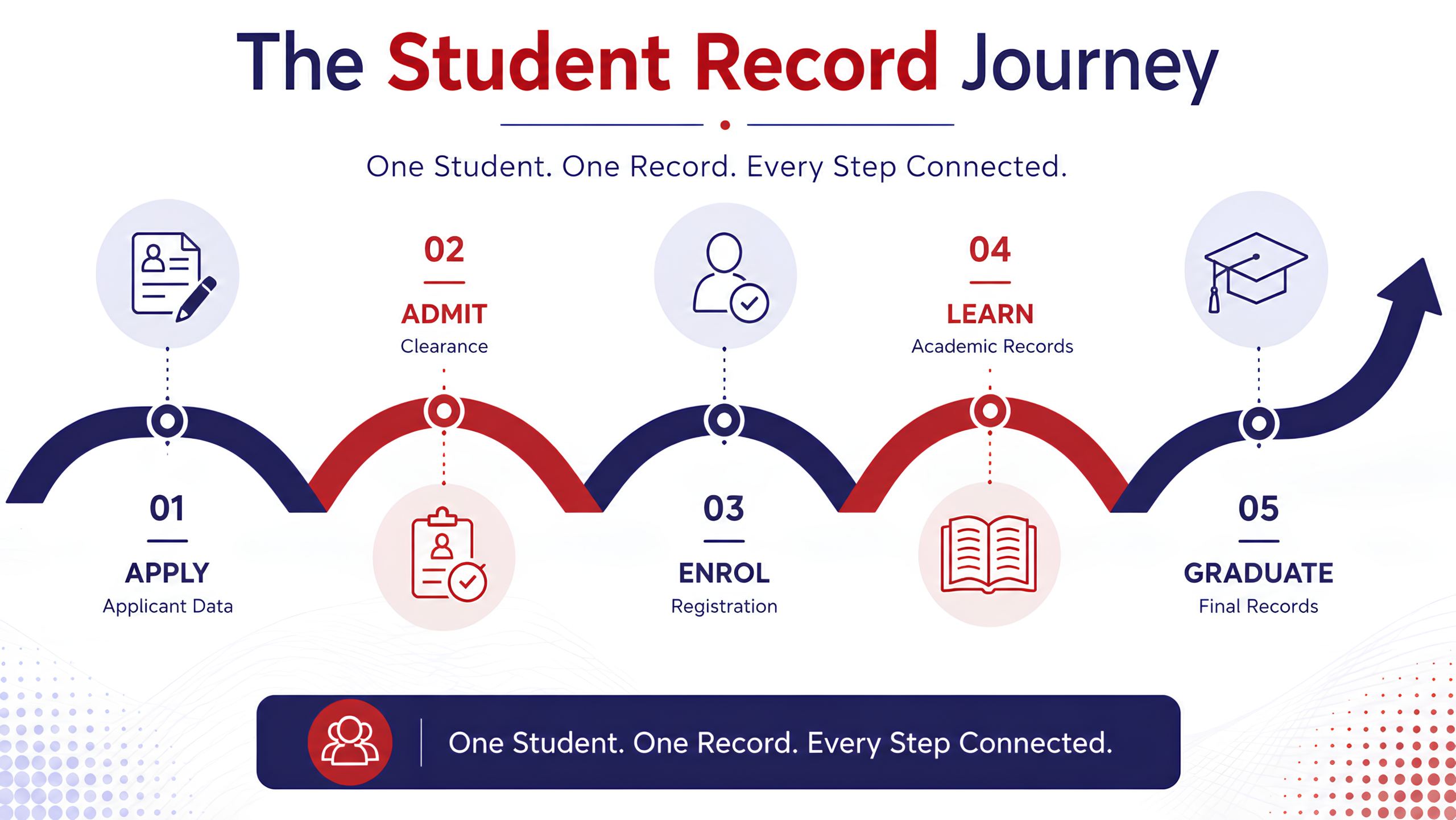
Faculty Shortages and Resource Imbalances

Another pressing issue in African higher education is faculty shortage. Increasing student enrollment across sub-Saharan universities has created significant gaps between teaching demand and available staff. Many faculty members are stretched thin, managing large classes and multiple administrative responsibilities simultaneously. This imbalance not only affects teaching quality but also increases the likelihood of errors in grading, attendance, and scheduling.

Data-driven planning is essential to address these challenges. With centralized systems, universities can analyze faculty workloads, optimize scheduling, and allocate resources more efficiently. By understanding trends in course demand, student engagement, and faculty capacity, institutions can make informed decisions that balance workloads and improve overall efficiency.

Bridging the Gap through Digital Transformation

  • Automating Administrative Tasks:
    • Cloud-based SIS and ERP platforms, like Academia SIS, streamline admissions, attendance tracking, grading, and reporting.
    • Centralized data connects academic, administrative, and financial departments, reducing duplication and improving accuracy.
  • Remote Accessibility:
    • Staff and administrators can access real-time data from anywhere.
    • Enables faster decision-making and collaboration across campuses.
  • Efficiency and Error Reduction:
    • Automated workflows minimize manual errors.
    • Personnel can focus on student engagement and academic planning.
  • Cost-Effective Implementation:
    • Cloud-based systems require minimal IT infrastructure investment.
    • Ideal for universities with tight budgets.
  • Long-Term Benefits:
    • Improves operational efficiency and the student experience.
    • Supports faculty in delivering higher-quality education.
    • Contributes to a sustainable and resilient higher education ecosystem.

Wrapping Up:

Administrative inefficiencies in African universities are more than operational challenges-they directly impact student outcomes, faculty performance, and institutional reputation. Digital transformation is not merely a technological upgrade; it is a strategic approach to creating inclusive, efficient, and data-driven campuses.

Cloud-based student information systems like Academia SIS empower African institutions to centralize data, automate workflows, and optimize resources. By leveraging technology effectively, universities can overcome historical administrative hurdles, enhance governance, and focus on their core mission: delivering quality education that drives the continent’s development forward.

Solving Student Data Fragmentation in Gulf Universities Through Cloud-Based SIS

Introduction: The Fragmentation Dilemma in Gulf Universities

In the Gulf Cooperation Council (GCC) region, higher education institutions are experiencing rapid growth and diversification. However, many universities still rely on outdated, siloed systems to manage student data. This fragmentation leads to inefficiencies, data inconsistencies, and challenges in decision-making. A recent study highlighted that many institutions in the region operate with traditional, disconnected systems-spreadsheets for enrollment, siloed databases for finance, manual attendance tracking, and fragmented reporting tools.

Why Fragmented Student Data is a Major Concern

In Gulf universities, fragmented student data is a significant challenge that hampers operational efficiency, decision-making, and compliance. Here’s how:

Administrative Inefficiencies

Disparate systems and manual processes lead to delays, errors, and wasted time. Administrative staff often duplicate efforts, entering the same data into multiple systems, which increases the risk of inconsistencies and reduces productivity. A report from Higher Ed Dive highlights that 43% of organizations cite an increasingly distributed and remote user base as a key driver of this shift, yet struggle with integrating and standardizing insights Higher Ed Dive.

Inconsistent Data Across Departments

When different departments use separate systems, it becomes challenging to maintain a unified view of student information. This fragmentation leads to misaligned decision-making and poor collaboration among departments. According to SnapLogic, data silos in higher education institutions create inefficiencies and hinder decision-making.
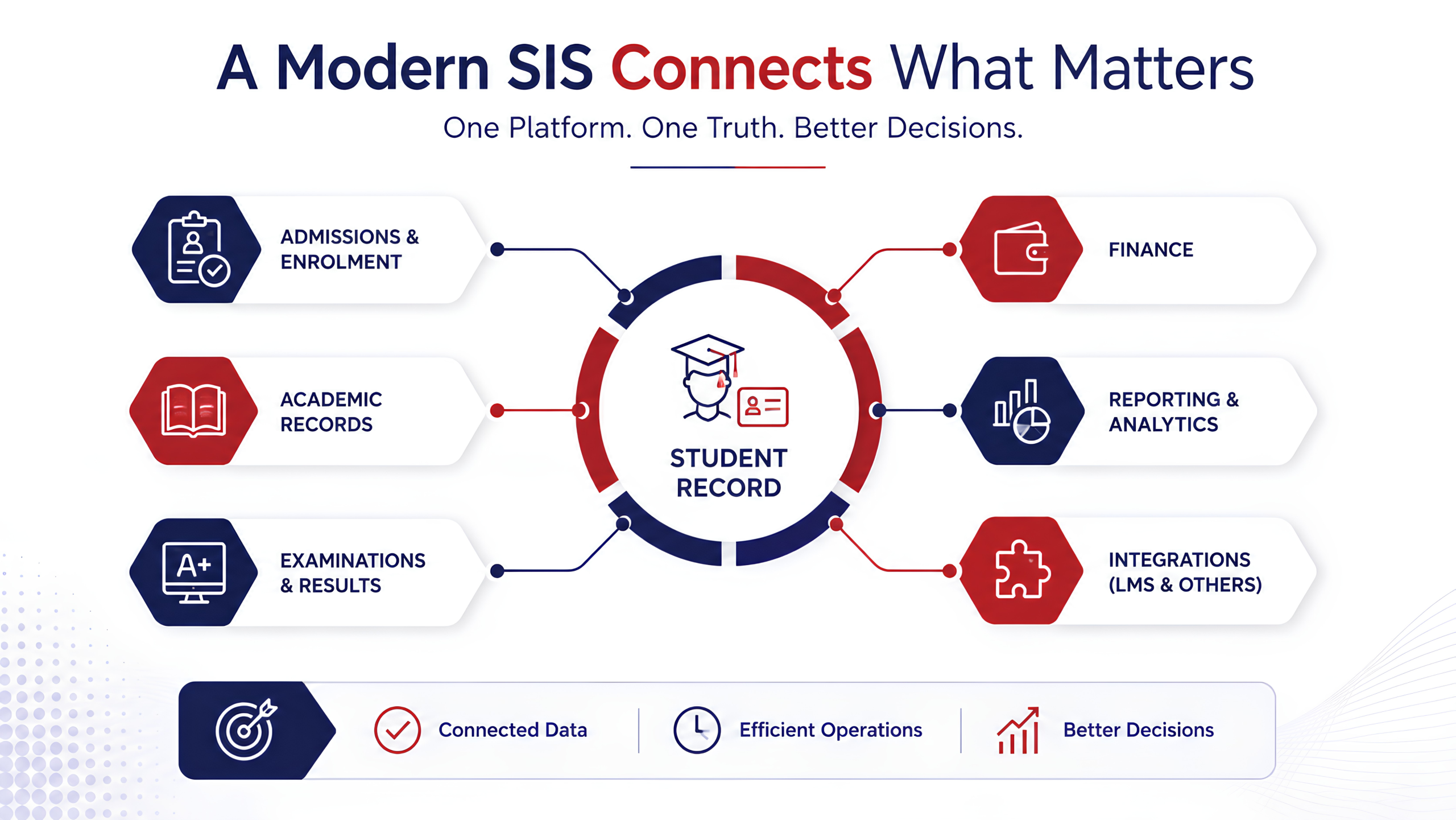
https://www.snaplogic.com/blog/higher-education-data-challenges-and-modernization-tips?utm_source=chatgpt.com

Compliance & Reporting Challenges

Accurate and timely reporting is crucial for accreditation and government compliance. Fragmented data makes it difficult to generate consistent reports, risking non-compliance and potential funding issues.

The International Institute for Higher Education Research and Capacity Building (IIHEd) notes that a fragmented data infrastructure significantly constrains policy formulation, implementation, and evaluation.

https://www.iesalc.unesco.org/en/articles/bridging-data-gap-higher-education-policymaking-challenges-and-opportunities-evidence-based?utm_source=chatgpt.com

Addressing these challenges requires a unified approach to student data management, ensuring efficiency, accuracy, and compliance across all departments.

How Cloud-Based Student Information Systems Solve the Problem

A cloud-based Student Information System (SIS) is a modern digital platform that centralizes all student data-academic records, attendance, fees, grades, and more-on a secure, cloud-hosted system. Unlike traditional on-premises or siloed solutions, a cloud-based SIS allows universities to access and manage information anytime, anywhere, without relying on disconnected spreadsheets or multiple software systems. For Gulf universities struggling with fragmented student data, this technology offers a seamless, unified approach to information management.

Here’s how a cloud-based SIS addresses the core challenges:

  • Centralized Data Management – All student information is stored in a single system, ensuring accuracy, consistency, and eliminating duplication. Departments no longer operate in silos, and administrators can rely on a single source of truth for all reporting needs.
  • Real-Time Access – Faculty, staff, and administrators can instantly access up-to-date information, enabling faster decision-making and timely interventions for students. This is especially critical for multi-campus universities in the Gulf region.
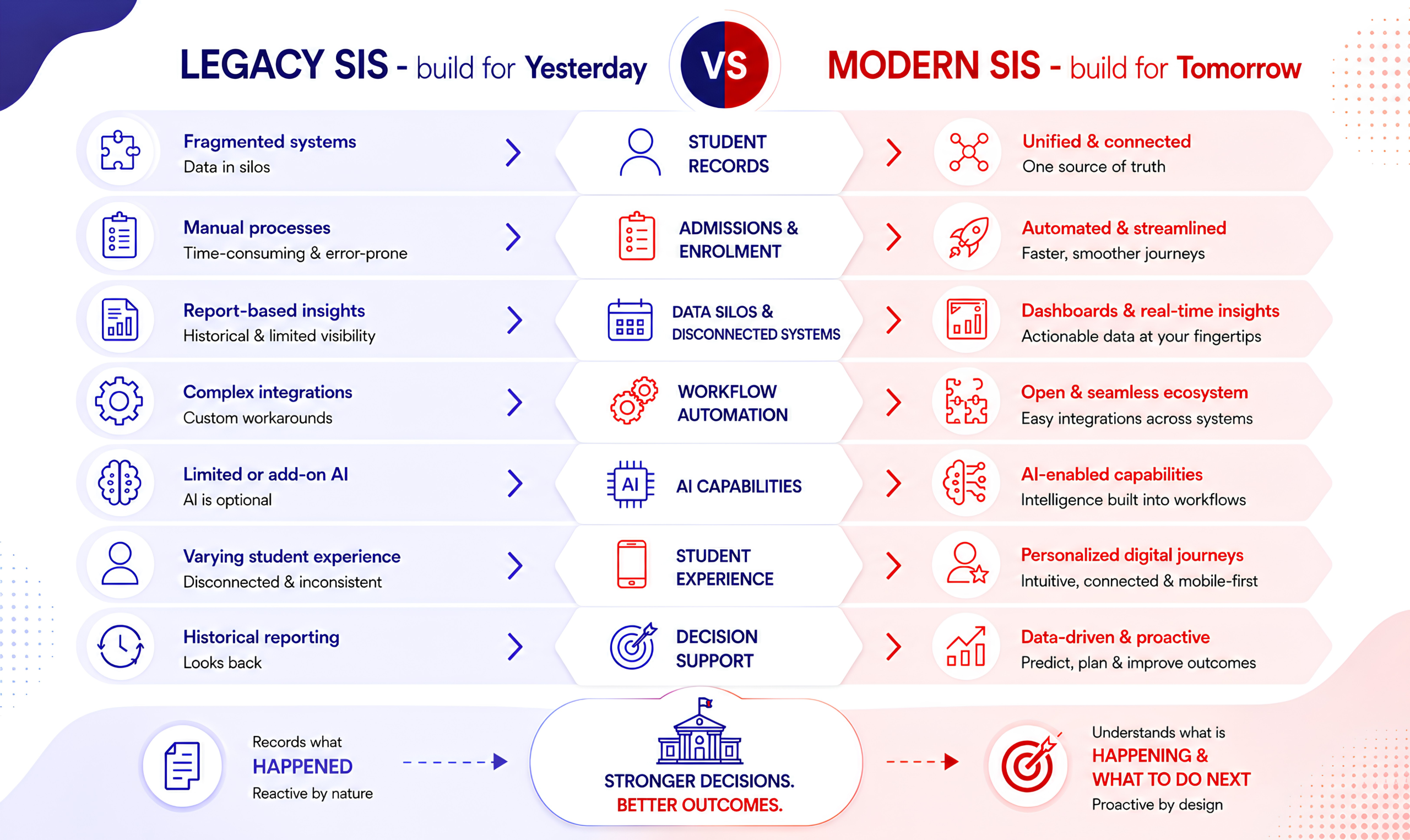
  • Enhanced Collaboration – A cloud-based SIS connects different departments, fostering better communication and collaboration. Academic, administrative, and finance teams can work together efficiently without data delays or errors.
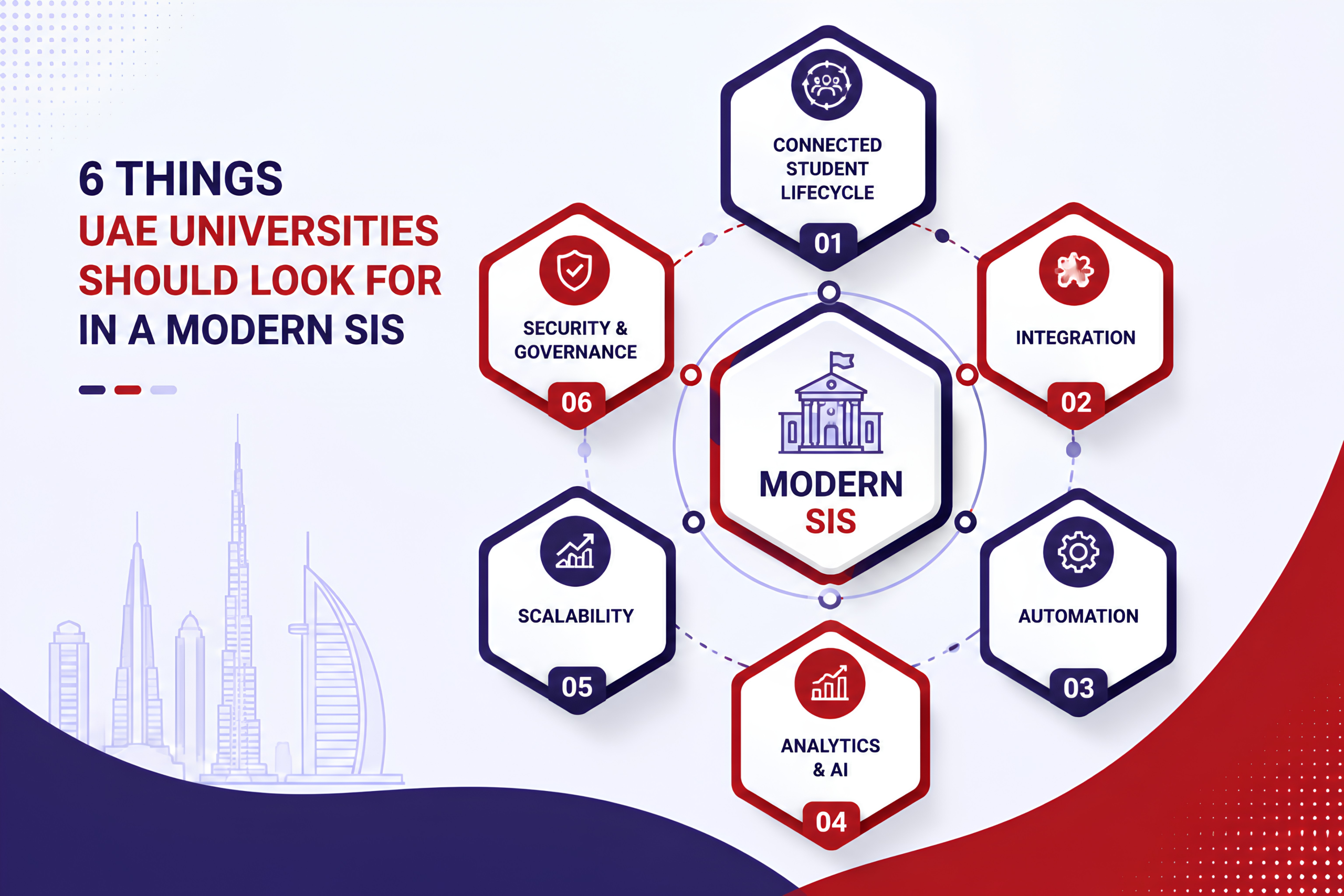
  • Scalability – Cloud infrastructure grows with the university. Whether student enrollment increases or new campuses open, the system adapts without the need for costly hardware upgrades or complicated migrations.

  • Cost-Effectiveness – By reducing the need for on-premises servers, IT maintenance, and manual processes, a cloud-based SIS helps universities optimize operational costs while improving overall efficiency.

By implementing a cloud-based Student Information System, Gulf universities can overcome data fragmentation, streamline administrative workflows, and provide a better experience for students, faculty, and leadership alike.

Data-Driven Insights

According to a report by Strategic Market Research, the global Student Information System market is projected to reach $16.1 billion by 2030, driven by the increasing demand for streamlined administrative processes and enhanced data security. Strategic Market Research

Read the full report here:

https://www.strategicmarketresearch.com/market-report/student-information-system-market?utm_source=chatgpt.com

In the GCC region, national education digitization programs are pushing SIS adoption. Many private schools in countries like the UAE and Saudi Arabia now operate fully cloud-based SIS systems with bilingual support, reflecting a regional shift towards digital solutions. Strategic Market Research

Embracing the Future of Student Data Management

Fragmented student data has long challenged Gulf universities, causing inefficiencies, inconsistent information, and compliance risks. Cloud-based Student Information Systems (SIS) offer a unified solution, centralizing data, enabling real-time access, and fostering collaboration across departments.

By adopting a cloud-based SIS, institutions can streamline operations, improve decision-making, and enhance the overall student experience. As higher education continues to evolve in the Gulf, embracing this digital transformation is no longer optional-it’s essential for maintaining competitiveness and achieving long-term success.


Discover how your institution can leverage digital transformation with Academia SIS. Contact us today to learn more.

How AI-Driven ERP Systems Are Redefining Student Success in Universities

Introduction: AI Meets Higher Education

Think of a university as a bustling train station, with hundreds of students arriving, departing, and navigating multiple tracks of courses, assignments, and deadlines. Without guidance, many students risk missing their connections, and staff are constantly juggling schedules and paperwork. Now imagine an AI-driven ERP system as the station master with a digital map in hand-guiding every student seamlessly, automating announcements, and ensuring no one misses a step.

AI-driven ERP systems are no longer futuristic-they are transforming higher education, helping institutions focus on what truly matters: student success.

According to a report, universities adopting digital tools see a 25–30% improvement in student engagement and academic outcomes.

In a world where students expect personalized experiences, traditional ERP systems simply can’t keep up. AI is the bridge between operational efficiency and enhanced student satisfaction.

The Challenges Institutions Face Today

Higher education institutions face growing pressure to deliver high-quality education while managing complex administrative processes. Key challenges include:

  • Manual administrative tasks: Attendance tracking, marksheet generation, and email communication take up significant faculty time.
  • Disconnected student data: Information silos across departments hinder timely decision-making.
  • Student disengagement: Without personalized guidance, students struggle to stay on track academically.
  • Scaling issues: Managing multiple campuses or a growing student population strains legacy ERP systems.

These challenges impact not only operational efficiency but also student outcomes. Universities need smarter, AI-enabled solutions that empower both staff and learners.

How AI-Driven ERP Systems Transform Student Success

How AI-Driven ERP Systems Transform Student Succes

Alt Tag: A modern, four-pointer infographic showcasing the AI capabilities of SIS. 

AI-powered ERPs like Academia SIS are designed to tackle these challenges head-on, delivering tangible benefits for universities and students alike. Here’s how:

1. Personalized AI Assistants for Every Student

Imagine a student needing guidance on course registration, assignment deadlines, or exam schedules. AI-driven personal assistants provide real-time recommendations and reminders, helping students make informed decisions. This enhances engagement and reduces administrative bottlenecks.

  • Benefit: Increased student accountability and better academic planning.

2. Automated Remark Generation in Marksheets

Preparing detailed marksheets with personalized remarks is time-consuming. AI-driven ERP systems automatically generate remarks based on performance trends, saving faculty hours and ensuring consistent feedback.

  • Benefit: Faculty efficiency rises while students receive insightful, timely feedback.

3. AI-Integrated Email Automation

Universities often struggle with timely communication-whether sending fee reminders, exam notifications, or policy updates. AI-integrated email automation ensures messages reach the right student segment at the right time, with personalized content.

  • Benefit: Improved student engagement and reduced administrative errors.
  • Example: After implementing AI email workflows, an Indian institute noted a 30% increase in student response rates.

4. AI-Driven Report Generation

From attendance reports to academic performance dashboards, AI-driven ERP systems deliver real-time insights, enabling proactive interventions. Administrators can identify struggling students early and provide necessary support.

  • Benefit: Data-driven decision-making improves overall student success.
  • Example: Universities using Academia’s AI analytics identified students at risk of dropout 2–3 weeks earlier than before, allowing timely support.

Additional Advantages for Institutions

Beyond direct student benefits, AI-driven ERP systems enhance university operations:

  • Streamlined attendance management: Real-time tracking ensures accuracy and reduces manual errors.
  • Efficient multi-campus management: Centralized control over different locations simplifies governance.
  • Enhanced compliance and reporting: Easily generate regulatory reports for accrediting bodies.
  • Scalable student management system: Handle growing student populations without adding administrative burden.

Final Words: The Future of Student Success

AI-driven ERP systems are no longer optional-they are essential for institutions committed to enhancing student outcomes.

From personal AI assistants and automated marksheets to AI-powered reports and communication, these systems empower institutions to focus on learning rather than administrative chores.

By embracing solutions like Academia SIS, universities can foster smarter, data-driven campuses that elevate student success and prepare learners for the challenges of tomorrow.

Discover how your institution can leverage digital transformation with Academia SIS.

Enhancing Data Security in African Higher Ed Institutions: How Academia SIS Addresses Implementation Challenges

Introduction:

The Growing Concern of Data Security in African Higher Education

In today’s digital-first academic world, data has become the lifeline of higher education institutions. From admission records and attendance tracking to exam results and research data-everything depends on secure, well-managed systems. Yet, African universities and colleges are facing a critical challenge: how to protect this sensitive data while adopting modern digital tools.

The stakes are high. According to the African Union’s 2023 Cybersecurity Report, cyberattacks in Africa increased by 20% year-over-year, with education among the most targeted sectors.

For institutions already navigating limited budgets, faculty shortages, and rapid enrollment growth, a single data breach can mean not just financial loss but also reputational damage.

This is where a robust academic ERP like Academia SIS becomes a game-changer-helping African higher ed institutions strengthen their defenses while simplifying digital transformation.

The Challenge: Why Data Security Feels Like a Moving Target

Higher Education

Higher education leaders in Africa often acknowledge that digital adoption is necessary, but many struggle with security. The challenges include:

  • Fragmented Systems: Institutions rely on disconnected software for admissions, attendance, exams, and finance. This increases data vulnerability.
  • Limited IT Expertise: Many colleges lack dedicated cybersecurity teams, making it harder to monitor and prevent threats.
  • Regulatory Compliance: With data protection laws like South Africa’s POPIA (Protection of Personal Information Act) coming into force, compliance becomes critical but complex.
  • Rising Costs: Building an in-house secure student information system (SIS) often exceeds institutional budgets.

For African universities, balancing affordability, compliance, and security has become an uphill battle.

The Solution: How Academia SIS Enhances Data Security

Academia by Serosoft offers a comprehensive student ERP and higher ed ERP that integrates core academic and administrative functions into one secure platform. But more importantly, it addresses the unique data security concerns of African higher ed institutions.

Key Security Features of Academia SIS

  1. Centralized Student Information System
    • Eliminates fragmented tools by consolidating admissions, attendance, examinations, and finance data in one student information management system.
    • Reduces risks of data leakage across multiple platforms.
  2. Robust Role-Based Access Control
    • Ensures staff and faculty have access only to what they need.
    • Helps prevent unauthorized access to sensitive student data.
  3. Advanced Data Encryption & Cloud Security
    • Safeguards student records and academic data against cyberattacks.
    • Cloud-hosted options with top-tier providers ensure global-grade data protection.
  4. Regulatory Compliance Built-In
    • Designed to align with global standards like GDPR, while also being adaptable to local regulations such as POPIA.
    • Keeps institutions audit-ready with minimal effort.
  5. Scalability with Security
    • As student numbers grow, Academia’s education management information system scales without compromising data security.

Real-World Relevance: Africa’s Higher Ed Transformation

Across Africa, higher education institutions are accelerating their digital transformation journeys. Universities adopting secure, integrated solutions like Academia ERP are not only reducing vulnerabilities but also unlocking new efficiencies:

Hear from leading African institutions as they share their transformative journey with Academia.

https://www.youtube.com/watch?v=SvbQYLfC0QQ

https://www.youtube.com/watch?v=goEUKudlBjs

Several African universities are already exploring modern education ERP systems to improve governance and regain control over sprawling academic operations-all while enhancing trust among students, parents, and regulatory bodies.

While specific case studies vary, institutions consistently report benefits such as improved compliance, reduced IT overheads, and stronger protection against digital threats after adopting student information systems like Academia SIS.

Data & Stats: Why Security Cannot Wait

  • 44% of universities worldwide reported at least one ransomware attack in 2022, according to a report.
  • African universities are increasingly seen as “soft targets” due to lower investment in IT security (World Bank, 2023).
  • A Deloitte report highlights that institutions with integrated ERP systems reduce compliance risks by up to 40% compared to those using disconnected tools.

The message is clear: securing student and institutional data isn’t optional-it’s mission-critical.

Conclusion: 

Building a Secure, Digital Future for African Higher Ed

African higher education institutions stand at a crossroads: embrace digital transformation securely, or risk being left behind. Faculty, staff, and students need systems they can trust-ones that protect sensitive data while supporting innovation.

With Academia SIS, universities and colleges can achieve exactly that. By combining the power of a student ERP, academic ERP, and university management system into one secure solution, institutions can confidently move toward a future where data protection and digital excellence go hand in hand.

Discover how your institution can leverage digital transformation with Academia SIS.

Schedule your personalised demo today. Click on the link below

https://www.academiaerp.com/request-demo/

Streamlining Higher Ed Administration: How SIS Transforms Daily Tasks for Efficiency

Introduction

Did you know, according to a report, higher education administrators spend nearly 40% of their time on manual, repetitive tasks such as paperwork, scheduling, and reporting?

https://simplyflows.com/time-wasted-on-repetitive-tasks-is-40-percent/

This not only drains valuable time but also leaves little room for strategic initiatives that could improve student experiences and institutional growth.

Now imagine an environment where routine tasks like admissions, attendance, grading, and reporting run seamlessly in the background-allowing administrators to focus on decision-making, innovation, and student success. This is where a Student Information System (SIS) steps in as a game-changer.

The Administrative Burden in Higher Education

Managing a higher education institution is far from simple. From juggling student records across multiple campuses to coordinating faculty schedules, administrators often face overwhelming complexity. Moreover, with rising student expectations for digital-first experiences, traditional manual processes are no longer sustainable.

Without the right tools, administrators encounter:

  • Data silos across departments.
  • Errors and delays in reporting.
  • Inefficient communication with students and faculty.
  • Difficulty scaling operations as the institution grows.

This is why institutions worldwide are increasingly adopting student ERPs with robust student data management capabilities to simplify operations.

How SIS Simplifies Administrative Workflows

Student Information System

1. Centralized Student Data Management

Rather than juggling spreadsheets and disconnected systems, an SIS unifies admissions, attendance, grades, fees, and every student record into one reliable, centralized platform. This reduces errors, improves accessibility, and saves countless hours otherwise spent on manual updates.

2. Automating Routine Tasks

Admissions officers no longer need to manually process thousands of applications. With SIS, tasks like application tracking, document verification, and communication can be automated. Similarly, features like automated attendance tracking and AI-generated reports help administrators save time while reducing human error.

Also Read: To learn more about how the attendance management system automates the process and saves a major chunk of time for the staff.

https://www.academiaerp.com/blog/automated-attendance-management-system-transform-your-institutions-operations-in-2025/

3. Smarter Communication and Engagement

SIS platforms often come with integrated portals and mobile apps for students, faculty, and parents. This enables faster communication-be it sending fee reminders, exam schedules, or urgent notifications. In addition, a centralized communication system minimizes confusion and fosters greater transparency throughout the institution.

4. Data-Driven Decision Making

With graphical dashboards and real-time analytics with insightful reports, administrators can monitor student performance, financial health, and institutional KPIs at a glance. These insights empower leaders to make informed decisions that directly impact academic outcomes and operational efficiency.

5. Scalability and Flexibility

An ideal SIS isn’t rigid. It evolves with the institution’s growth. Features such as API integrations with LMS, finance, and HR systems ensure that institutions can scale seamlessly without technology becoming a barrier.

The Role of AI in Higher Ed Administration

Artificial Intelligence is no longer a distant concept; it’s now a driving force behind change in higher education. Within an SIS, AI capabilities can:

  • Act as a personal assistant to administrators, helping them schedule tasks, generate reports, and track deadlines.
  • Enable predictive analytics, allowing institutions to forecast enrollment trends or student attrition risks.
  • Simplify marksheet remarks and documentation with auto-generated suggestions.

By embracing AI-enabled SIS platforms, institutions can transform daily operations from being reactive to proactive.

What’s Holding Institutions Back?

Despite the clear benefits, some institutions in Africa, Asia, and beyond face hurdles such as:

  • Budget constraints that delay tech adoption.
  • Resistance to change among staff using legacy systems.
  • Limited technical expertise for system integration.

However, these challenges are surmountable with the right ERP partner that provides rapid implementation, prompt support, and intuitive design-ensuring that even non-technical users can adapt quickly.

Conclusion: Building Future-Ready Campuses

Higher education administrators are the backbone of institutional success, yet they often spend their days buried under manual tasks. A modern Student Information System (SIS) changes that reality-bringing automation, data-driven insights, and seamless communication into daily workflows.

By integrating AI and flexible ERP capabilities, institutions can achieve efficiency, transparency, and scalability while freeing administrators to focus on what matters most: student success and institutional growth.

Ready to see how Academia SIS can simplify your institution’s administration? [Book a Demo] today and experience the future of higher education management.

How Middle Eastern Institutions Can Overcome Multi-Campus Management Challenges

Introduction: Navigating the Maze of Multi-Campus Management

Imagine trying to manage a sprawling network of islands, each with its own set of resources, schedules, and communication channels. Without a central hub, coordinating activities, sharing information, and ensuring consistency becomes a daunting task.

This is the reality for many universities in the Middle East operating multiple campuses across vast regions. The absence of a unified system often leads to inefficiencies, data silos, and a fragmented student experience.

The Growing Challenge: Multi-Campus Operations in the Middle East

The Middle East is witnessing a surge in higher education institutions expanding their reach through multiple campuses. For instance, the UAE has established several international branch campuses, attracting students from around the globe. However, this expansion brings forth significant challenges in managing diverse operations across various locations.

A recent study highlighted that universities in the region often struggle with coordinating activities, sharing resources, and maintaining consistent standards across campuses. This lack of integration can result in administrative bottlenecks, delayed decision-making, and a disjointed student experience.

Read the full report here:

https://al-fanarmedia.org/2024/12/international-branch-campuses-spread-in-mideast-amid-concerns-about-costs-impact/?utm_source=chatgpt.com

The Solution: Unified ERP Systems for Seamless Management

To address these challenges, many universities are turning to Digital Enterprise Resource Planning (ERP) solutions tailored for the education sector. These systems offer a centralized platform to manage various administrative functions, including admissions, student records, timetables, and financials, across multiple campuses.

Key Benefits of Implementing ERP Solutions:

Key Benefits of Implementing ERP Solutions

  • Centralized Data Management: Consolidate student information, academic records, and financial data into a single platform, ensuring accuracy and consistency across all campuses.
  • Real-Time Communication: Facilitate seamless communication between departments and campuses, enabling timely updates and collaborative decision-making.
  • Resource Optimization: Efficiently allocate resources such as classrooms, faculty, and equipment, minimizing conflicts and maximizing utilization.
  • Regulatory Compliance: Ensure adherence to local and international accreditation standards by maintaining standardized processes and documentation.

Overcoming Implementation Challenges

While the benefits of ERP systems are evident, the implementation process can pose challenges, especially for institutions with limited technical expertise. To ensure a smooth transition, universities should consider the following steps:

  • Needs Assessment: Conduct a thorough analysis of the institution’s requirements to select an ERP solution that aligns with its objectives.
  • Stakeholder Involvement: Engage faculty, staff, and students in the planning and implementation phases to ensure the system meets their needs and gains their support.
  • Training and Support: Provide comprehensive training to users and establish a support system to address any issues post-implementation.
  • Continuous Evaluation: Regularly assess the system’s performance and make necessary adjustments to optimize its functionality.

Conclusion: Embracing the Future of Education Management

In the rapidly evolving landscape of higher education in the Middle East, universities must adapt to the complexities of multi-campus operations. Implementing a unified ERP system can streamline administrative processes, enhance communication, and provide a consistent experience for students and staff across all campuses. By embracing digital transformation, institutions can position themselves for sustained growth and success in the 21st century.

Call to Action:

Ready to transform your university’s operations? Book a demo today and discover how our ERP solutions can streamline your multi-campus management.

Managing Faculty Shortages in Higher Ed Institutions: The Role of Academic SIS in Resource Allocation

Faculty shortages are a growing challenge for higher education institutions globally. From retirements to strict qualification mandates, many higher ed institutions struggle to maintain teaching quality and keep academic calendars on track.

UNESCO reports that some institutions face faculty gaps exceeding, affecting student learning outcomes.

https://www.unesco.org/en/articles/global-report-teachers-what-you-need-know?utm_source=chatgpt.com

Imagine a student management system that tracks faculty availability, automates scheduling, and ensures no class goes unattended.

A comprehensive academic ERP provides these capabilities, helping institutions overcome shortages while keeping students engaged and academic processes smooth.

The Challenge: Faculty Shortages in Higher Education

Faculty Shortages in Higher Education

Faculty shortages in higher education institutions create multiple operational and academic challenges:

  • Disrupted Academic Schedules: Classes delayed or canceled affect student progression.
  • Overworked Permanent Staff: Existing faculty juggle multiple courses, leading to burnout.
  • Student Dissatisfaction: Inconsistent schedules reduce engagement and learning satisfaction.
  • Administrative Complexity: Coordinating temporary faculty and reallocating resources manually is time-intensive.
  • Compliance Risks: Maintaining adherence to accreditation and teaching standards becomes challenging.

These challenges highlight the urgent need for higher ed ERP solutions that streamline resource allocation.

How Academic SIS Addresses Faculty Shortages

A powerful SIS/college management system offers tools to manage faculty resources effectively:

1. Centralized Faculty Management

  • Track faculty availability across departments in real-time.
  • Allocate teaching assignments based on expertise and workload.
  • Reduce dependency on manual spreadsheets and scheduling conflicts.

2. Automated Scheduling

  • Generate conflict-free class timetables automatically.
  • Send instant notifications to faculty and students about schedule changes.
  • Ensure every class is conducted as per the academic calendar, even during shortages.

3. Performance Monitoring & Analytics

  • Evaluate faculty performance via dashboards in the education management information system (EMIS).
  • Identify workload imbalances and areas needing professional development.
  • Improve teaching quality across departments consistently.

4. Data-Driven Decision Making

  • Predict upcoming faculty shortages using real-time data.
  • Allocate guest lecturers or temporary faculty efficiently.
  • Optimize staff deployment to maximize teaching coverage.

5. Student-Centric Benefits

  • Students access up-to-date schedules via the student ERP.
  • Transparent reporting enhances student engagement and trust.
  • Consistent academic delivery supports improved learning outcomes.

Data & Stats Supporting SIS Implementation

  • Efficiency Gains: Deloitte reports that institutions adopting academic ERP solutions reduced manual scheduling time by up to 50%, improving operational efficiency (Deloitte, 2022).
  • Teaching Coverage: Institutions using ERP for higher education improved class coverage by 25–30%, ensuring fewer cancellations (EDUCAUSE, 2023).
  • Administrative Load Reduction: Gartner highlights that schools leveraging a college management system for human resource allocation experience up to 35% less administrative workload (Gartner, 2022).

These figures show the tangible impact of adopting a student management system like Academia SIS.

Key Takeaways

  • Streamline Faculty Allocation: Academia SIS ensures optimal use of existing staff.
  • Automate Scheduling: Reduce errors and save administrative time with an academic ERP.
  • Monitor Performance: Dashboards and analytics improve teaching quality in a college management system.
  • Enhance Student Experience: Transparent schedules and data-driven processes boost engagement.

By integrating a university management system like Academia SIS, higher ed institutions can transform faculty shortages into an opportunity for operational excellence.

Conclusion:

Faculty shortages are challenging but not insurmountable. A student ERP like Academia SIS, proudly serving 400+ institutions globally, provides higher education institutions with the tools to allocate resources efficiently, maintain academic standards, and improve student satisfaction. Digital transformation is no longer optional – it’s essential for resilient, future-ready campuses.

Discover how your institution can leverage Academia SIS to overcome faculty shortages and optimize resource allocation today.

Back to top