
Type your keyword below

How A Modern Education ERP Can Save Your Money

In today’s time, the education sector is one of the most important segments that require the right boost of technology like an ERP system, but do you know all the University cost-cutting strategies before having an ERP software in your institute? It always becomes difficult for educational institutions to decide on the technology that can help with saving their cost and money. For modern institutions, ERP is considered one of the most important and path-breaking technologies that can help in attaining complete digital transformation, meanwhile, there always remains various confusions among administrators and higher authorities about the cost of an ERP, so today let’s discuss this in this blog:

  • Reduces costing for paper

Schools, colleges, and universities own a huge amount of data starting from initial data of students, admission details, financial data, admission records, medical data, and various other academic and administrative data that includes confidential and important information. Previously all this data and information was stored using pen and paper, the bulk of files and documentation, and various other manual processes. All these processes included a huge amount of money and time. So university ERP helps in reducing unnecessary costs for paper along with making each piece of data and information secure, easy to access, and reliable. It removes extra paperwork keeping every information reachable within just a few clicks for all stakeholders that are, students, parents, faculty, and higher authorities. 

  • Removes communication costs

Communication is the most crucial key to the success of any educational institution, and to keep it fluent, institutions opt for ways like phone, messages, emails, and whatnot! It includes huge costing but stills never satisfies the needs of stakeholders. An ERP software provides the right cost-saving strategies along with bridging the communication gap among the institution. It gives a single platform (portal/mobile application) to all the stakeholders to communicate each piece of information in the best way keeping the communication fluent, error-free, and satisfying at each end. Using the software any associated person from parent to a higher authority can send messages, email, notifications, and get notified with the upcoming responsibilities using the mobile application making it a super flexible process for everyone. 

  • Tracks real-time performance of students along with saving huge costing

For any university or higher education institution, it is essential to track the real-time performance of the student to analyze the overall learning and growth graph of the student. Meanwhile, it also becomes difficult to monitor students day to day activities and to make it efficient institutions choose various methods and techniques that increase extra costing and hours with extra manpower. An ERP software allows online and real-time tracking of students with the latest scoring of students in each test available within just a few clicks.  It also gives simple and easy tracking of faculty performance to which higher authorities have to set goals for each faculty. It provides the overall cost-cutting of the institution in the best possible manner. 

  • Streamlines daily tasks 

Multiple day-to-day operations are needed to be completed by the faculty and students in the institution. Some of these tasks are daily attendance, basic records, library management, and a lot of others. Manual intervention of all these processes includes huge costs, manpower, and time that can be easily removed using an ERP system. It automates each operation of the institute making it more convenient for every individual present in the university/institution. 

  • Reduces costs of the admission process

The admission season is considered the busiest time in any educational institution, it involves huge data that needs to be managed efficiently. Manual intervention of the admission process involves errors, confusion, and in some cases mismanagement that includes huge cost, manpower, and a huge amount of time. An education ERP software is one of the best university cost-saving ideas to manage the admission process effectively and efficiently. It manages the complete admission process smoothly removing all the hectic tasks, extra and unnecessary costs automating the complete admission process from form filling to registration and enrollment of the student. 

  • Less burden of examination costs

Just like the admissions, the examination is also one of the most important seasons for any educational institution, universities and colleges always spend a huge cost to make it systematic, functional, and efficient, higher authorities always think about how they can cut costs over this without interrupting the internal and crucial processes. ERP software gives an easier, flexible, and robust way of completing the whole examination process through automation along with cutting unnecessary costs and the burden of faculty. The main focus of an education ERP is to ease out all the academic and administrative tasks of universities/colleges/schools along with cutting extra costs in all prospects. 

  • Eliminates extra costing for fee payments

Fee payments are often the most necessary transactions of any educational institution, it needs concentration, perception, honesty, and clarity, but even after having all these, sometimes it involves errors, misunderstandings, and chaos at the administrative level. An education ERP provides transparency, clarity, flexibility, scalability in each fee transaction at each level. The students and parents get notifications when at the due date for fee submissions, the administrator gets easier access to all transactions of each student along with easy receipt generation for all the transactions along with eliminating extra costs for managing each fee payment and other things. 

  • Increases revenue 

With multiple operations available in educational institutions including a huge amount of investments it becomes difficult to focus on revenue generation and profits. So an education ERP provides a way to increase the revenue by saving costs over unnecessary investments, extra manpower, and various other things. Automation of all the academic and administrative operations available in the institute leads towards ROI development and profit generation in unexpected ways.


Why should you choose Academia to save costs having ERP?

There are various ERP software available for educational institutions, but institutions must understand the true usage of an ERP system and a comparison between a few ERP vendors is also important. You can also check Academia, it is also one of the best, awarded, and leading education ERP that is helping more than 200+ educational institutions to bring automation and digital transformation along with having cost-saving with each operation and revenue generation. 

Conclusion 

Hope this article helped in understanding a modern ERP and its usages in cost-saving and earning revenue along with bringing a systematic workflow in the institution. To know more, request your demo now or drop a mail and we will be there to help you with the best. 

Data Migration Challenges during ERP Implementation

In today’s competitive educational sea, the institution needs to become ships that can survive and reach the desired edge. An ERP is one of the best technological tools that is helping educational institutions to attain their desired results. It makes a smooth completion of all the academic and administrative tasks of the institution. Sometimes it happens that institutions choose ERP software that fails in proper ERP implementation and data migrating in the best way. It is necessary to follow and create an ERP data migration checklist that can lead to systematic ERP implementation. Let’s discuss some of the major data migration challenges during the ERP implementation process. 

What is Data Migration?

Data migration is the process of transferring data from one storage or technique to another. Looking in the Edtech world, data migration is considered as one of the most important segments through which another switching into the system becomes easier, systematic, and convenient. 

Importance of data migration for ERP implementation in educational institutions

The data migration process is crucial and transferring in the new ERP system needs to be smooth and transparent as in an educational institution every single piece of data keeps a significant role. Effective data migration at the time of ERP implementation is most important as improper data migration leads to inaccurate data and challenges. 

Major Challenges in ERP Data Migration

  • Data repetition and integrity

In an institution, different departments like admission, fee, library, and many others store data of a single student, but in manual interventions, identifying and searching the needed data becomes too crucial. Sometimes improper communication and concentration at the time of data migrating from manual to ERP software involve data repetition which then needs to be solved with proper communication, concentration, and integrity. 

  • High cost of migrating the data

When the institution was already in manual intervention then the ERP implementation team will need more efforts in extracting the important data and in retrieving data, the cost of all this will get included in the ERP implementation budget. There must be one more case in which data from an older ERP system needs to be shifted to a newer one, so in these cases, the cost of data migration remains less and needs to be decided by both parties. 

  • Third-party involvement 

Educational institutions own various tasks and thus it becomes difficult to keep data migration on priority at the time of ERP implementation that indirectly creating internal conflicts in the institutions is one of the major challenges in ERP data migration. As discussed above, there are various departments in an institution like admission, fee, examination, and various others, and there is always a person associated with every department who manages everything systematically, but while ERP implementations sometimes have other tasks administrators gives most of the work to the ERP implementation trainer to that increases the chances of data inconsistency. 

  • Regulatory issues 

Educational institutions must follow various regulatory issues that were made by higher authorities in every state, city, or country. When migrating the data into an ERP system institutions should comply with those regulations to maintain systematic, smooth, and flexible operations in the institute.

What are the solutions to overcome the ERP implementation challenges?

  • Give precedence to data migration

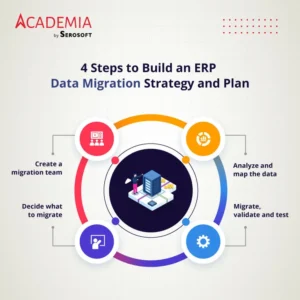
Data migration is one of the most important elements of ERP implementation, it needs to be pre-planned with systematic workflow. It is obvious that the entire implementation process is time-consuming but data migration should also be systematic with allocated and enough resources along with a dedicated team from the institution and the ERP trainers. It needs to begin with the extraction and cleansing of important data from source systems so that important data can be used accordingly in the future. 

  • Consider the Complete Institutional Scenario

It is also important to analyze the complete data of the institute to understand how it can associate with the ERP system to enhance the academic and administrative operations of the institutions. It starts with extracting and cleaning the data that we have discussed above, after extracting the data, mapping it to the structure of the ERP database, setting up rules for translating the data into the structure during migration.

ERP implementation is an opportunity to get better insight into the business in real-time by analyzing its data. It is also important to think about how the institution can be used for decision-making across the whole institution. 

  • Assigning responsibilities to administrators and faculty 

It is essential to determine who will own the specific data of the institution from the team, from admission, fee, examination, library, and many others. The institutional team will also need to assign roles and responsibilities right before the implementation of ERP software, it directly will make the data migration process more smooth, efficient, scalable, and significant. 

Conclusion

So, have you understood the significance of data migration and how to overcome the challenges in ERP data migration for successful ERP implementation? For this, you will need to choose a very good and robust ERP system like Academia, it provides efficient and effective academic and administrative management along with significant data migration, training, and ERP implementation, and needed customer support. So what are you thinking about? Let’s connect today to discuss more contact us now! 

Download Exclusive Gartner Reports Brought to You by Serosoft (Academia):


5 Common Higher Education ERP Implementation Mistakes To Avoid

Technology is playing a key role in today’s era. Every segment and industry is shifting to opt for technologies that can upgrade and help them in being the competition. Looking in the education sector, it is now important for educational institutions to opt for technologies like ERP/SIS that can eventually help them in associating and operating the day-to-day operations of the institute. A better and robust ERP system can eventually help educational institutions to manage all the administrative and academic operations of the institute.

But educational institutions must select a good ERP platform that can help institutions in attaining growth along with fulfilling all the requirements. Even after selecting a very good ERP, institutions sometimes make mistakes that should be avoided while implementing an ERP system in the institute.

Let’s take a look at a recent interview of an ERP specialist taken by an educational media interviewer. In this, he asked about the common mistakes that can be avoided by institutions while having an ERP implementation.

Question 1

How can the institution prepare itself for digital transformation?

Answer by ERP Specialist: 

Digital transformation is considered the new need for educational institutions, it helps in streamlining and managing all the academic and administrative operations. But in my opinion, there is a proper process that institutions need to understand before thinking to opt for digital transformation. Different educational institutions today are at different stages of digital transformation, hence, they all need customized paths to achieve 100% digital transformation. These stages or situations can be majorly classified into 3 major categories:

  • Situation 1:

Manual Interventions in the institution

I think there are more than thousands of institutions that are still working using the manual process in their institutions. I do not regret the point that manual intervention can also help institutions to grow but the fact is its slow growth and which in today’s time is considered as no or less growth. Let’s take the example of the admission process of an institution using the manual process. It starts from a long queue for the admission form and ends with a lot of documentation from both ends for enrollment, right? It becomes a hectic, long, and confusing process for students, faculty, and staff. So it is the right time for institutions that are still operating with manual processes to understand and choose to move towards automation of each process in the institution.

  • Situation 2 

Semi-Automation

In my opinion, there are various higher education and K12 institutions that have opted for semi-automation. Semi-automation is considered as the situation in which institutions opt for individual software to automate some of the processes of the institution like the Learning Management System (LMS) to enhance the learning experience of students, Tally to audit databases, and various others. I think this eases out the work but initially, it increases the chances of more confusion among the administrator and faculty as multiple software increases the need for multiple hands to operate and track each data.

Institutions must opt for an ERP along with some of this software, as it helps in storing and tracking all the data from one single software that can be used by any of the administrators, faculty, or staff members. A good ERP system also avails interoperability of other software along with the ERP. It manages all the operations from admission to the alumni and the student giving easier and more efficient access to everyone available in the institute.

  • Situation 3 

Having an inefficient ERP System
Once I visited a higher education institution, they already had an ERP system that they were using to operate several tasks like admission, fee, examination, and many others, but to my surprise, I found that they have witnessed the same growth even after using the ERP system for their academic and administrative operations. Then I checked with each team who was operating the system what was the issue, it amazed me more when I found the real issue was the ERP itself. It was hard to understand for a normal faculty or student, it was not easy to operate, and it does not even have a mobile app to provide easier access to students.

So as per my experience, it is most important for educational institutions to choose an ERP system that provides them with complete functionalities, no or very less code language, proper training, systematic implementation, and all other important functionalities that a good, robust, and flexible ERP should have.

So this way, institutions have to analyze their position before seeking digital transformation in their institution.


Question 2

Interviewer: 

What is the training process that institutions should opt for while implementing an ERP system?  

Answer by ERP Specialist: 

Hmm, the answer to this is also quite interesting, because various institutions opt for an ERP system but fail to seek a proper training process for administrators and faculty which leads to the unsuccessful implementation of the ERP system. Institutions must choose a perfect ERP system leading to proper training from the implementation team of the ERP vendor company. 

An institution must check every detail before seeking for implementation of the ERP software, the training and implementation team will include these steps:

  • Firstly, the ERP implementation team should visit each campus of the institution to analyze the current working process and the needs of the staff and administrators. 
  • After understanding the needs and working process of the institute, the institute must focus on initiating the training process of the administrators and staff who are going to operate the software in the future. 
  • As the last step, the training and implementation team must check that everyone in the institute is comfortable with using the software and is initiating all the processes like the admission process and all the other processes effectively using the software. 

Question 3

Interviewer:

Is change management important or should it be avoided? 

Answer by ERP Specialist:

I think this is high time for educational institutions to opt for change, and a good ERP system can help them in initiating this process. Although institutions must opt for the proper change management process before initiating any kind of new implementation in the organization. 

Now, if you are thinking about what change management is and why it is important, let me help you understand it properly. Change management is an art, that requires a careful balance between faculty, processes, and technology in the context of an educational institution. It needs continuous judgment, evolution, and strategic decisions at each end, and the first one to implement is choosing a good and best ERP software. In my opinion, Academia ERP is one of the best, most flexible, and scalable ERP software that provides the best technology adoption to institutions who even are far away from advanced technologies in their institute.

Question 4

Interviewer:

Is inadequate budget can also be a problem while implementing an ERP system? 

Answer by ERP Specialist:

There is nothing like an inadequate budget, if a higher education institution focuses on bringing advancement and growth they can manage any circumstance. I mean, educational institutions need to understand that an ERP system is a step that can help them in achieving new goals along with more opportunities, it leads to systematic management of all the academic and administrative tasks in the institute. 

Institutions who are having a tight budget must choose a very good and reasonable ERP system that can provide them with bringing automation and digital transformation to their institution. Here it is also important that institutions must find a good ERP system, as in search of a reasonable software compromising the success that a good ERP software can provide can also become a mistake for an institution’s growth.

Question 5

Interviewer: 

What is the common mistake that most institutions make while having an ERP implementation?

Answer by ERP Specialist: 

Educational institutions need to understand that successful ERP implementation can help the overall educational institution with streamlining workflow, optimizing costs, and the systematic arrangement of all the academic and administrative tasks. But institutions must avoid these common mistakes:

  • Not able to explain proper requirements to ERP vendor
  • Not taking into account the end-users that are individual department heads
  • Implementing the ERP software just after one initial discussion
  • Not having regular maintenance

Last Conversation:

Interviewer: I hope this knowledge given to you will help educational institutions when they focus on striving for digital transformation in their institution. Any recommendations that you wanna give to our readers while selecting an ERP software vendor. 

Answer by ERP Specialist:

Yes, of course, I would suggest institutions opt for a good, scalable, robust, and flexible ERP system in their institute, they must need to be very careful while selecting the ERP software. I would recommend checking with Academia, it is one of the best and award-winning software that provides one of the best institutional management in all prospects avoiding all the major mistakes we have talked about in this session. 

How Education Management Systems Are Revolutionizing Student Learning Experience

The new generation of students is different, having a modern approach for everything, they demand a quick, easier, and better way of performing any operations. So for this, it is high time for educational institutions to adopt modern techniques and ways that can help in optimizing a better student learning experience. What do you think about an education management system? Do you know why student experience is important for institutions? How can it help institutions in managing all the operations in a more systematic way that can lead to revolutionizing the whole student learning experience? Let’s discuss all these points in this blog. 

First of all, let’s discuss why student experience is important! 

Why is student experience important?

Students in any educational institution needed to be considered as a priority, for this, institutions can adopt modern tools and techniques like an education management system to provide seamless learning experience automating and streamlining all the academic and administrative operations in the institution like enrollment, records, teaching, homework and assignment, library management and a lot more. Isn’t it interesting?

How is the Education Management System helping to Improve the Student Learning Experience?

  • 24/7 Access

The education management system provides easy 24/7 access to everyone, students can check and submit their assignments anytime, can access their fee details along with receipt generation at the time, important mails, library, and whatnot! They can operate any feature anytime according to their flexibility and requirements. 

It results in saving time and efforts of students that can be consumed in other productive activities. 

  • Offer Centralized Access 

In an educational institution, multiple things need to be managed at different ends. Various tasks need to be managed at each end by administrators, staff, and students. Right from admission to alumni, there remains a bundle of works. Having an education management system, institutions can provide required access to every individual on the same platform eliminating extra time, effort, and chances of errors.

Easy and Convenient!

  • Analytics and Reporting 

Students often in institutions complain about a lack of timely feedback, exact analytics, and reporting of tasks that hinder their learning experience. With manual interventions, students often have to wait for things like feedback, approval, and even their performance reports.  

An education ERP helps institutions to generate all the reports along with real analytics on the time. It helps students in staying motivated and encouraged towards their end goal i.e., their studies. It also helps faculty to get a clear picture and in-depth understanding of a student’s learning curve.

How easy! 

  • Customization of Learning Experience 

It is the best feature that institutions can initiate using an ERP system, it provides real-time access to customize the learning experiences for students. Faculty can create customized homework and assignments, can provide assessment details, can discuss passages to discuss queries with students, can use podcasts to improve their learning skills and a lot more. 

So isn’t this customization that can generate more ideas and techniques to learn and attain institutional objectives? 

  • Reduced Paperwork 

Any educational institution involves a lot of data and paperwork. Hopefully, you will also agree that more paperwork and managing those papers and documents is the hardest and messiest thing, not only for students but also for faculty and other staff, right? An education ERP can help institutions to improve the student experience and faculty experience by exchanging papers and documents with computerized processes and management. 

An effective ERP manages all the documents, right admission forms, examinations papers, result paper, and all other documents can be created and sent using the mobile app and portal which reduces the time, efforts, wastage of paper, and of course easiest access. 

What do you say? Easy enough! 

  • Encourages Continuous Learning 

As discussed, an educational institution involves lots of necessary tasks like fees, examination documentation, and many others. All these occupy a lot of time for students in manual processes. So having an education management system, institutions can provide students with a mobile app that can simplify and automate all important operations like fee submission, examination timetable, entrance card, results declaration, and all other things, they will also get notifications like when is the next slot for fee submission. A mobile app associated with an ERP helps in encouraging continuous learning reducing the excessive time from other administrative tasks. 

Relief from other tasks means the right to focus on studies, right? 

  • Effortless Communication 

Effortless communication between students and faculty is the most important element in any educational institution, it needs to be efficient for the smooth functioning of the institution and to provide a revolutionizing student experience. An ERP software helps educational institutions to achieve this objective effectively providing platforms like mobile apps and portals for operating all the operations and communicating thoroughly as and when required. 

Easy communication breaks all hurdles! right? 

Academia – A revolutionizing ERP software for educational institutions

Various ERP vendors provide good ERP software for educational institutions, but institutions must focus on having a platform that focuses on the 360-degree development of the institute. Academia Education Management System helps institutions to indulge in the digital world making everything smooth and easier for students and faculty along with providing a 360-degree development of the institution. 

Also check:

Top 13 Reasons Institutions Should Use Student Database Management Software

Conclusion

Hope you liked the blog and it helped you in understanding how to improve the student experience at university, and how it can help transform the overall atmosphere of your institution along with providing a revolutionizing student learning experience. What do you think, is it relevant for your institution? Get your queries clear with us, request your demo now! 


Campus Information System – A Backbone of Modern Educational Institutions

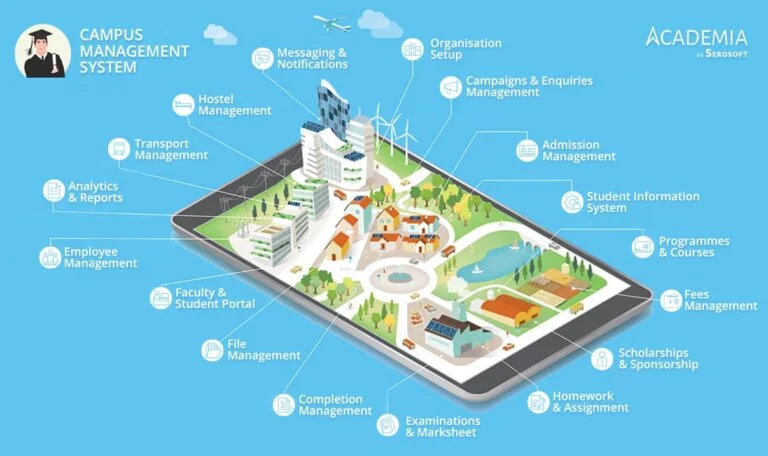
The world of education has faced various challenges in recent times. To overcome this, most educational institutions have opted for technology and software that can direct them towards efficiency. Educational institutions need to choose the right technology like a campus information system that can lead to help them in every prospect being a backbone of modern educational institutions. Having an accurate campus information system institutions can analyze various data, create reports, manage payroll, fee collection, transportation, attendance. A campus management system effectively and effortlessly helps Universities, Colleges, and Schools irrespective of making students, faculty, and staff happy and organized properly. 

How can a Campus Information System help an educational institution?

  • Standardized admission management 

The most important goal for any educational institution is to attain quality admission every year along with retaining the existing students. A campus information system helps here in providing a seamless and standardized admission management process, it manages all the tasks from inquiry, admission, and enrollment. It provides a direct and organized admission process from each end i.e., faculty, student, and parent along with managing all the data in a single software.


  • Prodigious parent-faculty communication 

With the effect of increased facilities and opportunities in each field, parents and students always expect extra efforts from faculties and from the whole institution in explaining each and everything properly and systematically. So in this prospect, a campus management system clarifies all their demands providing a smooth way of communication among parents/students and faculty through a mobile app or portal. The parents can connect, track, or check their child’s performance from anywhere and anytime along with getting easy access to pay fees, to check any updates, to check assignments, examinations, results, and much more things. 

  • Organized examination management 

Ah, the examination season! It is probably the most important and busiest for every individual in an educational institution, whether they are administrators, faculty, students, or even parents, everyone finds them the busiest having a bundle of chores.  So a campus information system necessarily facilitates all of them to sit and relax and just focus on the right path, that is for sure- studies for students and arrangements for faculties. 

A campus information system focuses on providing organized examination management that automates and streamlines the planning and execution of the entire examination process. It manages the entire examination process simply and efficiently.

  • Easy homework and assignment management 

Homework and assignments are the tasks that occupy a lot of time from both ends – students and faculty. So a campus management system effectively provides and manages all the tasks related to assignments in a single software providing likewise authority to students and faculty. It also allows students to submit the assignments from the online portal and mobile app along with checking the results on the same platform and likewise to faculties it gives complete authority to check and declare results online for students. Isn’t it amazing?

  • Efficient library management 

Efficient library management is most important in any educational institution, manually managing a library involves a long, confusing, and tedious process. A campus information system provides easier and efficient library management through which a librarian and students both can circulate and catalog any item effectively.  It streamlines all the operations by keeping a database of each book taken by each student. The main objective of the library management system is to increase the productivity and output of the library, librarians, and its users.

  • Effective employee management 

Employees play a vital role in any organization, and in an educational institution employees like faculty, administrators, and other staff are considered as the lifeline of the institution. Everything related to each faculty and other staff member needs to be managed effectively and efficiently. A campus information system provides effective employee management managing their payroll, leave record, attendance, and all other things.

  • Analytics & reports 

Analytics and reporting engine has been established now in every area and activity, using it organizations can manage multiple tasks at a time. Educational institutions are also one such segment in which analytics & reports can play a vital role, having a campus management system, institutions can attain and improve their overall experience through analytics and reporting engines, it provides proper data insights into students and faculty behavior. 

Why can a platform like Academia help educational institutions?

A campus information system can bring a big differentiation in an institution making everything systematic and robust, but you must select a very good, flexible, and robust ERP system like Academia that can help you in the best manner. Academia is a leading-edge campus information system for universities, colleges, and schools that can automate all academic and administrative processes. It is a comprehensive solution that streamlines every single task in the institution focusing on greater efficiency, smooth leading, and control in every manner being the backbone of a modern educational institution.


Conclusion

Hope you liked the blog along with understanding the fact that how a campus information system can help educational institutions becoming the backbone of modern educational institutions. Wanna know more? Just Request Demo now and our team of experts will contact you as soon as they can to provide you with more details.

Importance of Education Management Information System

In this modern era, educational institutions need to use various technological tools that can help them in managing and running their institution properly, but with the technological advancements, educational institutions need to opt for a system or software that can help them connect all the operations in a single system having access to all the operations. An education management system is a new-age software for institutions that can help them in managing all the vital operations easily and efficiently becoming the backbone of modern institutions. 

There is a huge landscape for educational institutions in today’s time in which they need to set their footprints. Now working on just spreadsheets, Microsoft Excel, Microsoft Word, and tools like this make your institutions slow and far away from top technology and trends. So having an education management information system can help institutions make all the decisions quicker along with providing systematic, simple, and efficient work bringing complete automation in every way.


Let’s discuss some of the key elements that can help you understand why an education management system is beneficial for your institution:

Understanding the Importance of an Education Management System:

  • Admission & inquiry management 

It is one of the crucial segments for education institutions to increase the potential strength of students along with retaining the existing one. Education institutions should need to choose a method that can help them rely on admission & inquiry management strategically. 

Education management software helps institutions in the best way. It creates a smooth path to solve all the inquiries related to admission focusing to turn them into real-time students for a long time. Along with this, it helps in managing academic goals by engaging the current students of the institution. 

  • Student management 

A student lifecycle is the only thing in any institution which needs to be better and better from any angle, whether it is admission, attendance, or examination. To become a successful institution, an institution should focus on student-centric management that can lead towards their engagement, interest, and of course their growth. 

An education management information system most importantly works focusing on the initial growth of students, making all the academic and administrative operations simple, systematic, flexible, and robust in every way. It provides a student mobile application and portal in which they can easily track their progress along with submitting assignments, checking their timetable, checking their results, and whatnot. All of these save their time providing them more time to focus on their studies and in-person growth. 

  • Library management 

The library is one of the most important segments of the institution. Students can get any of the important books whenever they require it, but asking the librarian “how it goes managing the records of the library manually?” is not so interesting as they find it very hectic to keep a record of each book and ask the student to return those books on time. 

So what do you think is the best way to make it easy and smooth on both ends that is students and librarians?

The best answer to this is library management using an education management system! 

It can most efficiently solve all the problems providing students and teaches an authority to browse the available books online from anywhere and anytime. Most importantly it provides easier management to the librarian helping in keeping and tracking the records of each book associated with each student. It even can allow penalties on the students who do any kind of damage to the books after the allotted time.

  • Student-teacher collaboration and communication

Student-teacher collaboration and communication is the most important thing in any educational institution, it needs to be crystal clear from every angle. Students, parents, and faculties need to collaborate and communicate properly to manage things in a better and more organized manner. 

An education management information system provides proper and easy management of academic and non-academic activities of the students. It provides a platform through which parents can contact the faculty anytime along with providing their feedback in the most effective way. 

  • Fee management 

Fee collection is one of the most important and primary sources of income for educational institutions, but having manual intervention fee management in most of institutions remains a hectic, messy, and time-consuming process. 

An education management system provides institutions with complete automation of the complete fee management process, it automates the fee collection and receipt generation process along with sending alerts to parents and students regarding the fee due dates. It also erases the lengthy procedure of queuing at the fee counter just to pay the fee making all ends – parents, teachers, and faculty happy and satisfied. 

  • Examination management 

The examination is undoubtedly the most important and busiest time for educational institutions, in the examination period, the faculties need to be systematic and proper in each way. Examination processes require very seamless functioning which in manual operations includes multiple stages starting from exam admins, staff, teachers, exam center managers, and a lot more people get associated just to make the exam process proper and efficient making the overall process long, time-consuming, hectic, and difficult for all. 

The education management system software provides complete automation of all the processes by scheduling online examinations and publishing results making it quick and worthwhile for faculty, students, and admin staff. 

Academia Education Management Information System for Modern Age Institutions 

Various ERP vendors in the market provide educational ERP systems for institutions, but institutions need to choose the best ERP or education management information system that can help them in making everything systematic along with targeting increased revenue generation. 

Academia is one of the award-winning education EMIS providers for universities, colleges, schools, and training institutes. It focuses on fulfilling all the comprehensive and customized needs of the institution along with targeting complete digital transformation automating all the academic and administrative tasks in the institution. 

Also, check – How Education Management Systems Are Revolutionizing Student Learning Experience?

Closing Notes

So, it seems interesting? What do you think about it? An education management information system is worthwhile and helpful for educational institutions that can initiate a new and bright perspective. Let’s connect for a while to discuss more. Request your Demo now.  

How ERP Supports New Age Learning Infrastructure at Educational Institutions?

There will be no argument saying that the education system is going to have an extreme transformation in the upcoming years. Even the COVID-19 outbreak is compelling education institutions to choose technological ways to go with the flow. With all these consequent changes the education system is getting various benefits using education ERP solutions along with optimizing the remote learning and other learning infrastructure tools. 

Let’s discuss the technological paradigm in which an ERP supports new-age learning infrastructure at educational institutions.

Learning Infrastructure Technologies at educational institutions:

Learning Management System (LMS)

To start with, a learning management system (LMS) is software that enables educational institutions to manage & deliver interesting skill-based e-learning platforms to students. Looking deeper, it is quite hectic for educational institutions to manage an LMS along with all other academic and administrative activities. Having an ERP system, institutions can specifically maintain and manage an LMS along with systematic and efficient management of all other academic and administrative activities. 

An LMS integrated with a robust ERP system, provides the following benefits:

  • Avoids Data duplicity in data entry 
  • It reduces down the wait time for students 
  • It always provides accurate and real-time data
  • Improves efficiency and productivity
  • It triggers a strong and positive position of your institution 
  • Creates various opportunities to reduce unnecessary expenses
  • Helps in increasing the ROI of the institution

Library Management System 

A library management system is the digital demonstration of a physical library. It is a platform that manages and functions in an automated and organized manner. Talking about how an ERP system is integrated with the library management system, it will become a standalone part of an ERP making everything simple and quick for administrators, faculties, and students. 

Key elements on how an ERP can help library management system:

  • An ERP integrated with Library Management System helps in managing all the in-house functions of the library.
  • An ERP makes it possible to provides 24*7 access to the library for students and faculty. 
  • It utilizes all the functionalities like acquisition, cataloging, serial control, etc., in the library management system flowing it in an education ERP software. 
  • It saves a lot of time leading to greater efficiency in all aspects. 

Exam Proctoring 

Exam proctoring is a process of making the online examination secure and systematic that helps faculty to monitor student’s activities in real-time. A systematic online proctoring system helps faculties to track and monitor students eliminating cheating in the exams. A systematic and robust ERP system provides secured exam proctoring focusing on high data security, monitoring, enrollment management, and all other crucial tasks related to examinations. An ERP supports effective exam proctoring in the following ways:

  • Effective time management
  • hassle-free conduction of the examination
  • Conducting high stake semester exams objective + subjective 
  • Manage online entrance exam 
  • Facilities to report results in your system 
  • Detailed analysis of results 
  • Accuracy of results 

Why is using education ERP beneficial for institutions?

  • Centralized data management

It is one of the most important benefits of using ERP for educational institutions. A flexible and robust ERP provides centralized access and management providing required access to everyone from faculty, administrators, and students. Anyone can access all the data stored in a single database system. Right from admission, fee, examination, every single task can be managed effectively, using a robust and flexible ERP system leading to systematic and centralized data management. 

  • Real-time management 

Focusing on positive outcomes, an ERP provides real-time management of all the academic and administrative operations in the institute. It provides a systematic arrangement of every operation helping administrators to solve any of the problems at any time providing easy access to every data piece related to financial aid, admission, or examination. 

  • Positive changes and student engagement

You must choose the best education ERP that can trigger growth and positive outcomes not just in monetary terms but also in making a consistent workflow in the institution. A good ERP system completes the requirements of students and faculties at each end making them focus on learning and teaching. It facilitates students to access every information like admission form, attendance, fee, etc., from the mobile app and portal along with providing a smooth connection with the faculties whenever required engaging them on the right path that is their studies!

  • Better ROI on technology spending

The end goal of any organization is to attain better ROI on technology spending. An ERP system performs best in this way. Every educational institution focuses on earning more revenue generation but manual interventions of the tasks make it more difficult having various breakages at each level like more manpower, more time taking processes, data glitches, and the list goes on. An ERP helps effectively and efficiently manage all the academic and administrative tasks easily focusing on cost-saving and targeting an overall increase in ROI on technology spending.


  • Increased student retention

Students these days are advanced, they like things that are quick and effortless. Gone were the days when everything at an institution started with a long queue whether it is admission, fee submission, or examination. An ERP makes all these processes online providing easy access to students from any corner of the globe. Using the mobile app they can simply fill admission forms, fees, and can generate enrollment numbers for the examination. This makes them keep the focus on the right place, that is their studies leading to more student interest and retention in the institute.

Conclusion

Hope you find this article relevant to understanding the new-age learning infrastructure and how an ERP can help to opt for all of them with ease at an educational institution. So Academia can help you attain all these having world-class, modern, and the best Education ERP/SIS for educational institutions. It fulfills all the criteria that you need to have in your educational institution to keep it the best, technology-updated, and successful institution in every aspect. 

So, aren’t you curious to know more about it?  If yes then we will be glad to help you. Just request the demo and our team of experts will be there for you. 

Download Exclusive Gartner Reports Brought to You by Serosoft (Academia):


How Higher Education ERP System Drives Positive ROI for Educational Institutions?

What is that extra factor that you are using in your institute to increase ROI? Have you ever paid attention to ROI improvement? Every institution wants to have more revenue generation but doesn’t know how to do that. An ERP can effectively and efficiently manage all your academic and administrative tasks making everything simple, easy, and flexible, it will also focus on cost-saving – targeting an overall increase in ROI. Let’s discuss how automation of processes through a higher education ERP system in your institution helps improve the ROI of your educational institution, You can also use our – Education ERP ROI Calculation.

How can Higher Education ERP drive positive ROI for your institution?

Academic Activities 

  • Save paper and decrease administrative workloads 

The basic and most important feature of any higher education ERP is to digitize and automate maximum operations in the institution. An ERP can control user onboarding jobs like student admission, library management, teacher onboarding process, and many more to name a few. It provides automation and digitization, saving paper and decreasing administrative workloads and costs leading to increased ROI.

  • Provides excellent time management 

If you ever got a chance to handle and operate a higher education institution, you may have known that manual interventions take so much time along with creating extra expenses in each operation. These tasks take a lot of time, and as a result, your co-workers end up investing less time in educating students. With the help of higher education ERP solutions, one can easily handle all these tasks and save enormous time along with expecting a high return on ROI. 

  • Analytics and report 

Analytics and reports can significantly transform the way of working by enabling new ways for prospecting students when involved in an ERP help in increasing student enrollment, improving student retention and completion rates, along boosting faculty productivity and research. Analytics gives teachers’ performance and higher management along with managing day-to-day operations of any educational institution helping in increasing and better ROI. 

  • Examination and mark-sheet management

The examination is considered as one of the most important tasks in any educational institution, it requires a lot of pre and post preparation having multiple tasks like timetable management, paper execution, providing enrollment number and roll number to students creating exam sheets, checking the exam sheets, declaring results, and many other things. Performing these tasks manually takes lots of time, effort, and a lot of expenses, and a very less return on investment. An ERP can make the examination and mark-sheet management process easy and effective. The complete examination process can be accessed easily and with very little expense targeting high ROI using automation. 

  • Certificate & document management

In an educational institution, there is an abundance of data that needs to be managed properly so that it can be accessed whenever required. Manual interventions of certificates and document management take a lot of time and effort. Using an ERP solution, it will become easy to arrange all the documents and certificates in a system having access with just one click. 

Using the system, it will also become easy to distribute any certificates & documents to students, parents, and faculty through the mobile app or portal leading to fewer expenses in managing the documents and distributing the documents. 

Administrative Activities 

  • Admission management

Admissions are considered as one of the most important tasks for any institution, it includes a variety of tasks, a lot of queries related to classes, courses & programs, form submission, enrollment number allotment, and various other things that include time and unnecessary expenses. A Higher Education ERP works necessary to automate all the processes making it simple, efficient, and user-friendly saving time and unnecessary expenses initiating towards high ROI and growth for the institution. 

  • Fee management 

Managing fee records in an institution is difficult if done manually, there are multiple fee structures, various departments, and n-number of students; it’s an art to keep track of everything and be able to access the exact details whenever required. It also equips a lot of time, lacks flexibility, unnecessary expenses, and less return on investment. 

Meanwhile, all these processes can be handled smoothly if they can be managed using a fee management system and a higher education ERP. It manages all the tasks easily and efficiently providing proper data management and fee transactions. Saving the institute from any type of data breach and money malfunctions focusing on high return on ROI. 

  • Infirmary & Hostel management 

Infirmary and hostel management are also considered important tasks for any educational institution owning and managing a hostel as well. There are a lot of tasks like taking care of meals of the students, managing their infirmary, and regular doctor checkups, and more other tasks that need to be managed properly. Manual intervention of this includes more expenses and time, a higher education ERP provides complete management of this process leading to no or fewer expenses involved along with targeting high Return on Investment. 


Student Engagement 

  • Messaging & notifications 

Communication is one of the strongest assets that directly helps in institutional growth and success. It builds trust and avoids the disposal of improper information. 

A higher education ERP having a proper portal or mobile app clears all sorts of gaps making crystal clear communication between faculties, administrators, and students enhancing the student-faculty collaboration as well. A clear line of communication triggers the right growth and opportunities for the institution leading to high return on investment and profits. 

  • Disciple management 

The educational institution needs to focus the most on the discipline and personal development of students that sometimes goes secondary due to manual process and excessive burden on faculties. A higher education ERP provides complete discipline management, capturing misconduct details, capturing discipline committee details, capturing appeal details, capturing sanction details, and many others that initiates growth opportunities for institutions leaving a direct or indirect impact on ROI. 

How Academia can help you in increasing your ROI?

Academia is one of the best ERP systems, an award-winning ERP system that helps automate and manage the entire campus operations, administration, learning needs, and high return on investment in a very effective way. 

Highlights through which Academia can help you in increasing ROI:

  • Reduced operating expenses 
  • More growth in the same amount of time and growth
  • Reduction in cost of acquisition for new students 
  • Reduced customization cost in each segment i.e, admission, fee, examination, etc. 
  • Reduced hardware costs 

There are many more features that Academia provides that can help you in saving unnecessary costs and expenses focusing on high ROI, profits, growth, and opportunities of an institute. 

Wrapping Up

So, what are you waiting for? High return, growth, and opportunities are not so far for you and your institution. A higher education ERP can bring them all for you easily and effectively. Let’s connect so that you can better understand how an ERP can help you in proper ways. Request your demo now! 

Download Exclusive Gartner Reports Brought to You by Serosoft (Academia):


Role of Student Enrollment Management System in Higher Education Institutions

Configuration of Enrollment Rules

Use the enrollment management system to configure the entire admission process. This includes defining admission criteria, selection process, admission stages, stage fees, important documents, seat number & seat type, and more. 

Once configured, the system would behave as per your set rules and would ensure the process is followed. Also, many steps in the process would be automated and would require minimal to no manual intervention. 

Enquiry Management

Set up an online enquiry form on your website, centrally manage each enquiry on the enrollment software, assign enquiries to users, schedule follow-ups, convert enquiries to applications, close enquires, reopen enquiries, generate reports on enquiries, follow-ups, enrollment, admissions, etc., and do much more with one single tool. 

Online Application

Use the software to set up custom application forms for various programs, courses, and batches. As per your pre-defined criteria, applications can automatically be rejected and all you get is qualified applications to work with. 

Real-time Application Tracking

Track applications at any stage of the application process and assist your prospects better. The software provides you with a real-time report on the status of every application and helps you take better decisions. The software also comes with in-built features to take actions for any application such as — promoting to the next stage, collecting form fees, collecting stage fees, rejecting applications, releasing offer letters, and more. 

Merit List Generation

The enrollment management software streamlines the process of document verification, promoting applicants to the next admission stage, consolidating data and creating a merit list for various rounds, and finally generating a master list of students that are to be sent an offer letter. 

Download Exclusive Gartner Reports Brought to You by Serosoft (Academia):


Lead Management Integration

An enrollment management system is efficient in tracking enrollment enquiries from multiple sources. You can also use the software to run and manage campaigns over various channels, track ad spends, and calculate impact by generating reports on enquiries, enrollments, admissions, and follow-ups. 

Also, robust application and enquiry management software helps in the seamless management of the lead and guides an applicant throughout the lead pipeline for easy conversion and improved enrollment rate. 

8 Ways Campus Information System Improves Student Admission Rate

In the last few years, it has always been a most important and challenging task for higher education institutions to keep improving their student admission rate along with increasing the student retention rate. The most common problem for this is the lack of proper technology in maintaining the academic and administrative tasks. So do you think it is the correct time for educational institutions to choose technology like a campus information system? A system that can provide complete digital transformation focusing on students’ needs along with providing systematic academic and administrative operations with pace. 

Let’s discuss ways in which campus information systems can help in improving the student admission rate in your institution.

  • Simplified and automated admission process 

In this modern era, everyone wants everything quick, simple, and easy to access. The manual admission process takes a lot of time right from the admission form distribution to the final submission and admission, the process goes so long keeping staff and administrators busy and hassled. Students also find it a long and tiring process, so a campus information system helps create a simplified roadmap for admissions that can be managed by staff and administrators easily and give students access to attain the complete process from home or anywhere else using the portal or mobile app. 

  • Systematic enrollment procedure 

The student enrollment procedure is also one of the most important steps right after the admission of the students, enrolling each student manually includes a lot of time making the process difficult and time-consuming, it also creates chances of errors that ultimately create difficulties for students in the long term.  

A campus management system provides more systematic influence over the number and characteristics of new students, as well as influences the persistence of students to continue their enrollment from the time of matriculation to their graduation. It also makes the enrollment process easy for the staff and has access to all the documents as needed anytime. 

  • Better communication and coordination 

Modern generation students need everything clear and concise. Most institutions lack proper communication due to the overburden of academic and administrative tasks, so if you are thinking of increasing student admission and retention rate, you must focus on creating a strong communication channel between the students and faculty. 

A campus management system provides a platform to create a tight knot between students and faculties bridging the communication gap. 

Different identified portals and mobile apps make everything clear among students and faculties right from admission documents to examination details and documents; everything remains simplified and systematic, focusing on a strong bond of communication. 

  • Online attendance management system 

Attendance is one of the most important elements of administrative processes in educational institutions. But as the world is taking the technological flight students also demand a flexible classroom environment which is different from the manual attendance format even in online classes.

Having a campus information system, institutions can allow students to mark attendance using their mobile apps and the best part is parents, students, and faculties can track the attendance anytime to evaluate the student’s presence and performance.

So what do you think about a campus management system? An attendance management system is an interesting software that can help an institution to manage attendance properly and also helps the students to mark attendance properly. 

  • AI-powered analytics and report dashboard

Institutions that have already opted for technologies like a robust ERP or campus management system welcome a bundle of students every year along with having improvement in student retention rates. 

Parents and students these days demand real-time monitoring and tracking of their performances. The campus information system includes smart analytics dashboards that help discover, interpret, and communicate through patterns in data. 

Analytics and reporting also help in AI-driven insights that help in generating highly accurate reports about student performance with their grades, attendance, assessments, and the entire academic progress. 

So what are your thoughts about AI-powered analytics and report dashboards? Do you know its impacts on higher education institutions?

  • Data security 

Educational institutions involve a lot of data that needs to be managed properly and student data is one of the most critical data that needs to be managed and secured properly. A campus management system streamlines and manages the complete data and information related to each student, it helps you in securing, storing, and organizing each data separately that can be accessed, edited, or updated anytime as per the needs. 

  • Systematic arrangement for a fee & bill payments 

Managing fee records in an educational institution is one of the most crucial tasks, and in manual interventions, it becomes more difficult to arrange each payment successfully, maintaining receipts, distributing on time, tracking each student’s fee records, and many other crucial tasks. Students and parents also find it difficult to stay in the queue for a long time to pay fees, attain receipts, and remember the next fee schedule. 

A Campus learning management system provides a fee management system that eases everything, from each student’s fee record to generating receipts of each transaction. It also allows parents and students to pay fees from anywhere any time using the mobile app, along with giving a real-time notification for the next free rotation. In simple terms, fee management provides a systematic and flexible approach to completing the fee and payments, easing out tasks like students, parents, and administrators. 

  • Focus on student performance 

A campus management system provides a complete arrangement of managing all the academic and administrative tasks of an educational institution, starting from admission till the alumni of the student, giving administrators and faculties more time to focus on student’s productivity and performance. It also provides smooth, efficient, and friendly student self-services options giving students time to focus more on their studies rather than frustrating administrative tasks like records, accounts, personal information, fee, data and deadlines, grades, and a lot more. Institutions need to understand that students’ growth and productivity leads to overall institutional productivity, growth, achievements, and improved admission rate. What do you say? Isn’t it amazing? 

Why Academia Campus Information System is the best option for your institution?

A campus management system needs to be efficient, robust, and flexible in anyways, Academia Campus management system provides you with modern, enabling technology that empowers an institution’s operations effectively. It focuses on stakeholders’ and institutions’ needs at the same time, resulting in superior user experience and intelligence, limiting the user interaction to all activities where people make a difference, relieving them from the burden of tedious and repetitive tasks. 

The system also focuses on providing support for strategic initiatives with actionable data using built-in analytics that enable every user to easily analyze key institutional metrics. 

Wrapping up  

So do you find the blog interesting in understanding how a campus information system can help you in improving the student admission rate? If so then we will urge you to have more information about a campus information system, let’s connect to discuss more, our team of experts is always there to interact with you! Request your demo now! 

Download Exclusive Gartner Reports Brought to You by Serosoft (Academia):

Back to top