
Type your keyword below

Education ERP for Higher Education Institutes: Saudi Arabia Edition

Enterprise Resource Planning or ERP software is an industry term for an app suite, a multi-module software that is designed to serve and support multiple business functions. An ERP solution can mean many different things based on its application in various industries. And hence, it becomes very important to map your expectations from the software with its core functionalities, and features. Today, we will discuss what ERP means for a higher education institute. 

The history of ERP solutions in Saudi Arabia 

ERP solutions are very dynamic. Not just in the features and functionality, but it has a very interesting story of its inception. It is an app suite, which constantly evolved with the changing needs of the world. It is one of the oldest solutions which is still blooming and metamorphosing as the world demands. 

It all started in the 1960s, the economy was great, and most industry sectors were expanding. This is when the manufacturing industry realized they are lacking a solution that provides inventory control. This gave birth to Material Requirement Planning-I, the first-of-its-kind software and a forefather of enterprise resource planning. With time, the software evolved and by the 1990s, it was extending its services to the areas such as Finance, Human Resources, Project Management, Engineering, and more. 

The solution was efficient in addressing the needs of various industries and streamlining their operations to offer cost-effective solutions. Although it was a risky implementation, industries continued to rely on this amazing solution. 

Looking at the product’s success in the west, many industries in Saudi Arabia too implemented the technology to achieve global expansion. The technology even disrupted the education sector and by 2007, the Saudi Arabian government started implementing ERP solutions in public and private education organizations. 

ERP in higher education 

ERP in higher education institutes is widely used by corporations. It has played a significant role in implementing a digital ecosystem that gives better scope for monitoring and administrating the institutes. It allows tracking of various operations such as human resource management, resource planning and implementation, student information management, and financial management. 

Despite the challenges of implementing ERP systems, organizations in the corporate sector have highly benefitted from the financial competitiveness they get on implementing the solution. Although, it is only a recent phenomenon to see ERP making its way to the nonprofit sector as well. The trend picked up when higher education institutes realized the benefits of using an ERP system — it made management, financial and administrative tasks very easy. 

Implementing an ERP solution in a higher education institute becomes rather difficult than its implementation in a corporate because of the unique organizational model and core processes. A higher education system supports academic growth and has a set of activities that did not initially lie in the core capabilities of an ERP solution. It is more about scheduling the learning process and advising students on their performance and engagement. Furthermore, admissions, examinations, and resource planning & implementation are very unique aspects in and of an education institute. 

Even though the implications of using an ERP system in a higher education institute and in any other organization have shown a positive effect, it is still important to address the unique aspects of an educational system to not make any mistakes in the implementation process. Also, it helps us understand how beneficial are ERP software over legacy systems and what value they bring in. 

Modules for ERP in Higher Education

Quoting from Kassel 2009 Report

“As scientific and teaching enterprises become ‘big business and universities’ throughout the world struggle to revamp or reorganize their identity within an era focused on “commercializing higher education” 

“Software vendors are increasingly viewing the education market as a lucrative “industry” potentially worth several hundred billion dollars in revenue .” 

Education ERP is a very popular technology that is here to revolutionize the internal and external operations of an education organization. It transforms the way an institute — manages, administers, and monitors. However, it is important to note that education systems around the world differ, and meanwhile, most education technologies are a good fit for institutes in Europe, and America, but they fail to successfully implement their product in the Arab world. 

It is very important that an education institute partners with a vendor that has an in-depth understanding of the higher education system. A vendor that has a very futuristic vision about the software and meets your expectations in the short and long term. It is also important that they provide constant updates to the software and roll out features that are more efficient and effective in the working of an education institute. 

In short, it is important that educational institutes are partnering with vendors that do not believe the implementation of the software in the organization was their end goal. Rather they should be innovating constantly and gaining a grip over the market with forwardism. The product should show functional efficiencies that define the processes and operations of an education organization better. 

  • Functional Requirements of a higher education institute in Saudi Arabia from ERP
S.No.  Functionality S.No.  Functionality
1.  Communication – internal & external 15.  Timetable Management
2. Staff profiling 16.  Course Resource Management
3. Student Information Management 17.  Assignment Management
4. Hostel Management 18.  Assessment 
5. Alumni Management 19.  Ad-hoc Reporting
6. Feedback System 20.  Admission Management
7. Transportation Management 21.  Payroll Management 
8. Curriculum & Lesson Planning 22.  Reports & Analytics
9. Staff & Student Attendance Management 23.  Human Resource Management
10. Performance Analysis 24.  Placement Management
11. Academic Calendar Management 25.  Asset Management
12. Examination Management 26.  Online Examinations
13. Library Management 27.  Online Education & Blended Learning
14. Fee Management 28.  Accounting


  1. Additional Requirements of a higher education institute in Saudi Arabia from an ERP 


S.No. Add. Functionality S.No. Add. Functionality
1. Integrations 5.  Customer Support
2. Interoperability 6.  Statutory Compliance
3. Configurability  7.  Cloud-based infrastructure
4. Data Security & Management 8. Scalability

Importance of Implementation Strategy

Implementation of the product is key to success. If you fail to follow the project management principles, even a great product may not be meeting your expectations. You need to understand, having a robust and feature-rich product is only a part of the dream, to make it come alive you need an implementation process that provides you more control over the product. Hence strategic software implementation is important. 

  1. Planning 
  2. Business requirements & software configuration
  3. Testing & Refinement
  4. Training & Deployment
  5. Maintenance and Enhancements

Wrapping It 

We are not denying the fact that there are a thousand education ERP solutions available on the market and each is unique in its own sense. But, it is not a competition of what is the best education ERP solution. You must stick to the goal, and define your own priorities while hunting for the right education ERP solution. 

Education organizations in Saudi Arabia have a very unique education system and they need specific academic functionalities to meet their goal. Also, it is not merely about acquiring an ERP application. It is important that the app provides you with tailored solutions to address your needs. 

I am text block. Click edit button to change this text. Lorem ipsum dolor sit amet, consectetur adipiscing elit. Ut elit tellus, luctus nec ullamcorper mattis, pulvinar dapibus leo.


Kuwait Higher Education System and role of College Management Software

Principles and general objective of education in Kuwait

Education is a right for all citizens in the State of Kuwait. The overall goal is to prepare individuals to be participants in society and are active and thoughtful in both private and public life. 

The state defines the role of education institutions in developing the above-mentioned qualities and training individuals that serve as a big pool of skilled human resources. 

Education is viewed as a primary tool to build a high-performing society at institutional, cultural, economical, and social levels. Hence, it is very important for education institutes to 

  • Strike a balance to preserve the cultural identity and prepare the citizens to meet the changing needs of the country at regional and international levels
  • Provide basic skills
  • Prepare citizens to stay abreast with international technological advancement
  • Prepare students to have a strong moral and intellectual fabric to face the general challenges life throws at them. 
  • Prepare youth to become active members of society

Apart from these long-term and short-term goals, there are some current priorities and concerns of the nation that are to be addressed urgently. 

Current Educational Priorities and Concerns

The world around Kuwait is making technological and scientific advancements in leaps and bounds. The ministry of education in Kuwait is aware of this fact and is constantly defining and redefining the role of education in Kuwaiti society. And hence, they have outlined a few priorities that have to be addressed on an urgent basis:

  • Developing a new curriculum
  • Developing new teaching methods
  • New literacy programs 
  • Special programs for gifted students 
  • Special programs for students with special needs
  • Student performance analysis and management
  • Target for higher student outcome 
  • Adding sciences and information technology to the curriculum
  • Developing school libraries

Orientation

To guide the direction of education Ministry of Education has formulated a few changes at all levels of education. Rather than discussing them all, we would only be focusing on higher education. Ministry of Education objectifies higher education or post-secondary education to prioritize:

  • Specialized human resource training and development 
  • Respect society’s values and traditions
  • Have leadership qualities to guide society
  • Follow and contribute to the scientific progress for economic, social, and cultural development
  • Serve society
  • Achieve development while safeguarding society’s values and ethics
  • Strengthening Arab / Islamic cultural heritage
  • Contributing to Arab civilization with scientific research and development 
  • Development in arts and culture 
  • Infusing international standards in the areas of science and technology, and arts

Primary Concerns

One of the biggest challenges faced by the education system in Kuwait is the shortage of teachers. Also, the participation and inclination of males in society is very less towards the teaching profession. This elevates the concern as according to research, female teachers have a very high early retirement rate, wherein they are likely to exit the profession between the ages of 30-40. 

Males are highly reluctant towards joining the teaching profession. This becomes a challenge in front of the Ministry of Education as they have to address the challenges pertaining to teaching skill development, increased programs, and the addition of new curricula for science, arts, and information technology. The country has launched a variety of programs to motivate Kuwaiti youth to join the profession, professional training, and elevate the status of teachers in the country. 

Higher Education

As scientific and technological advancements are a huge part of the plan, there are committees set up to administer and assess the efforts of higher education institutes. 

The Committee for Scientific Affairs has been set up and affiliated with the Bureau of the Kuwait University Director of Scientific Affairs. Its role is to review and update the curricula of the fields of specialization to stay abreast with the latest developments in educational resources in international universities. Kuwait University also does periodical evaluations of science programs. For this purpose, Academic Excellence Scheme has been launched in view to strengthen the education system to meet international standards in the field of science. 

Academic Excellence Scheme assesses:

  • The academic level of students during their study at the university
  • The performance of teaching staff 
  • Research and community services 
  • Scientific facilities and equipment
  • Administrative and technical support 
  • Efficacy of the administrative system 

Emergence of the College Management System

With increasing focus and efforts towards improving the education system of the State of Kuwait, it is well established that the committee and authorities in Kuwait are gripping the education institutes to improve the quality of education and increase student outcomes. 

They have strict and high standards, which are very important to meet for the institutions to survive and stay profitable. Given that, the implementation of college management system in higher education institutes have shown some great results. 

The software helps in resource planning and management and provides automation of tasks. It is very useful in monitoring and managing student lifecycle, along with student performance analysis and management. It also comes with advanced tools for administration and streamlining of internal and external operations. 

With better data management, higher education institutes can use the in-built reporting system in the college management system to generate accurate reports and produce them for the regulatory authorities for accreditation and compliance. 

Key features of a college management system help in:

  • Automation of the processes for higher employee efficiency and productivity.
  • Performance analysis of teachers based on student outcomes, feedback, student success, and other factors. 
  • Attendance management of students and teachers both
  • Human resource management 
  • Fixed asset management 
  • Resource planning, implementation, and management 
  • Digital operations: Admission management, examination management, attendance management, financial management, accounts management, fee management, resource management 
  • Financial reporting and tax operations 
  • Accurate reports for accreditation
  • Higher revenue generation and faster ROI
  • Increased admission rate, and more. 

In essence, 

The government of Kuwait is making some major changes in the education system to meet their priorities and prepare the youth for future opportunities. Numerous schemes and regulatory authorities have mushroomed to assess and evaluate the performance of higher education institutes and see if they are meeting the long-term and short-term goals set by the Ministry of Education. 

In this scenario, College Management Software can help the higher education institutes in Kuwait to meet standards set by the government and stay profitable. It is a feature-rich tool that optimizes the experience of all the stakeholders in the system while streamlining operations, providing tools for administration and monitoring to ensure higher student outcomes and success. 

If you are searching for a College Management System that does this all for you, you have come to the right place. Academia CMS is a dynamic tool, that offers you 30+ modules to digitalize your operations and provide you with the above-mentioned to fulfill the high standards set by the Government of Kuwait.

The Benefits of Edtech Partnership – Education Technology (UK Edition)

Education institutes in the UK continue to adapt to education technologies in defense of the extraordinary challenges that come their way. Apart from some initial hiccups, it is remarkable how the sector has dealt with the return to classrooms to campuses in the tumultuous economic environment. 

As we move towards the end of the year, it is only relevant to inspect some of the themes that have governed the education sector all throughout the year. Along with this, if these themes are here to stay, and get a permanent place in the education landscape of the United Kingdom. 

Learning Management System

The first thing that crosses anybody’s mind while talking about education and technology is the learning management system, a.k.a, LMS. It is only fair to talk about it, especially when the world is making efforts to return to the pre-pandemic order. So, would there be any more online classes? Would there be remote learning? Well, the likely answer is the hybrid approach. Institutes in the UK have shown a keen interest in blending learning and are likely to continue with the same approach. 

Need to invest in the right technology

As the wheels of change churn, education institutes have a growing interest in other modern technologies. What seems clear is the need to invest in Education ERP solutions, cloud infrastructure, mobile applications, data security measures, and other things. 

Strategy and tools to cover up for the losses during Covid 

It is no news, COVID-19 has made the education sector highly vulnerable. Even before COVID-19, there were some big educational gaps. In COVID-19, they have widened. Students and parents are expecting education institutes to fill them as fast as they can. 

Funding 

Another challenge is to close the skill gap. It is important to ensure the country has a workforce with the right skills to contribute to the changing government’s stated goals post-Brexit. With reduced access to labor from the EU, there is no other option but to create a high-skill, high-wage economy, and thus, it has a huge budget planned for the education sector. 

The schools are lined up to get an extra £4.7 billion by 2024-25, and nearly £2 billion of new funding to help institutes recover from the effects of the pandemic. Higher education institutes too are going to be emerging from the pandemic with more cash than ever before. 

In essence

Schools and higher education institutes are ready to make their investment into education technologies and meet their modern challenges. However, they are still one step short of making that leap. 

With cash reserves planned to make the necessary investments in technology to meet the needs of the time, they also need the right vendor. 

This is where you and we come into play. We bring a globally recognized education ERP solution and are here to offer you a channel partner program to get an early-mover advantage in the market. 

With an intent to deep penetrate the UK market with our award-winning product, we are seeking professionals that have a knack for sales and project management. We are looking to partner with individuals and companies. We have 3 models in our partner program. Each one is targeted toward generating high revenue. 

Given the need of the hour, institutes in the UK can be highly benefitted from our product. If you are willing to partner with us and use this opportunity as your leverage, contact us here

Take your Student Retention Game to Next Level With Education ERP: US Edition

Student retention may not be a primary focus for many colleges, but it would shock you that 1 in 4 students in the USA is dropping out to study somewhere else or nowhere. This is a statistic from a report published by National Student Clearinghouse earlier in August this year. Approximately, the retention rate in the public-funded higher education institute is only 76.3%. 

Having said that, student retention should be a primary focus of colleges right now. Trends are being reported on a regular basis indicating the number of students dropping out of higher education institutes is going to dip lower. 

Now that an applicant has come and enrolled in one or many of your programs and courses it is time to pull up your socks and gear up for the battle of student retention with full force. To help you in your course, here is a comprehensive blog on education ERP / Student Information System (SIS) and how it can help in a significant increase in student retention. 

  • Improving communication between students, faculty, and administrative authorities

If you have assigned an advisor to your students you must ensure the communication between the student, advisor, administrative authorities and faculty is clear and seamless. Just knowing the challenges that are stopping the student to continue their education can help you evade them much faster and put resources and services to offer support throughout the student lifecycle. 

Using an education ERP / SIS solution can thus serve as a key tool to manage the feedback of the students and track the process to resolve these issues. Also, administrative and non-administrative tasks can be speeded up through education ERP / SIS for improved student experience and communication. 

  • Guide the course selection process

Proper counseling can be provided to the students by effectively managing applicant enquiries and queries. Not only is an education ERP / SIS a great tool for automating enquiry management and streamlining the admission process but with a little effort from your end, you can ensure each applicant is given the due attention and is counseled well to boost their decisioning in the course selection process. 

  • Engage students the way they want

Personalized learning is no longer a fancy word in the education industry. Many institutes are doing it and are reaping various benefits. The education industry no longer runs on the notion of ‘swim or sink’. 

Technology can be used to learn more about students’ interests, and their mode of learning, checking their performance and engagement throughout the class and ensuring they are being engaged in the way they want to learn. Using education ERP / SIS you get a powerful student performance management system where you can generate accurate reports on their engagement, performance, and participation and plan lesson plans accordingly. 

  • Supporting each step of the student journey

At every stage of the student lifecycle, a student faces different challenges. As an administrator at your institute, it is very important for you to analyze these challenges and develop strong strategies to improve the student experience. 

First of all, the employees at your institute should be very focused on the primary goals of your college. Using a traditional management approach, and redundant software requires too much manual intervention and hence have lowered productivity and efficiency. 

Using Student Management Software with a centralized database would boost the understanding of your employees across all departments. Further, the automation brought along education ERP / SIS would free them up to act on powerful strategies and achieve the shared common goal.

  • Build a placement network and manage it properly

One of the primary reasons for students to drop out of college is their financial problems or their sheer need to work. With an efficient placement network, you can manage paid and unpaid internships, jobs, and other earning opportunities for students better. 

This way, students would get relevant information to participate not only by just learning but using their hands-on experience. Finding a job opportunity would not become an added activity for them but would become highly convenient.

A good education ERP / SIS solution thus comes with a robust placement management center with all these qualities and makes things and information more readily available for the students to be benefitted. 

  • Don’t just collect data use it

The use of digital tools and software make it easier for businesses to capture data at several touch points. This makes strategizing easy. The use of education ERP / SIS and student mobile applications allows you to not just improve student experience but get real-time data about any declines in student count in any of the programs and courses. 

Also, the robust reporting system, allows you to consolidate data across various departments and identify the factors that are causing your students to drop out. Acting upon these factors would help you in improving your student retention by several folds. Also, predictive analytics and help you in forecasting student retention percentages. Any positive or negative change in the metric thus becomes easier to track and faster to act upon. 

Way Forward

In hopes that you find this blog informative and useful, you can consider taking a demo of our education ERP / Student Information System – Academia Education ERP which has all these qualities to increase your student retention. For more interesting information about education technologies, stay tuned. 

How does Education ERP increase the ROI of your Institution?

ROI for years has served as a primary tool when taking any important decision about a product or a service. As a decision-maker at your institution, you may too have heard some amazing things that can be done through an education ERP solution. But now you must quantify the product and understand how it is going to make a difference at your institute, Calculate Savings vs Gains – Education ERP ROI Calculator, and whether it would become a monetary burden or something that would increase your return on investment. 

Take our word. Education ERP solutions are revolutionary solutions built for education institutes to manage their administrative, academic, and non-academic tasks. This includes all the student-side operations and management tasks. Using this you can build a strong digital infrastructure for your institute and start seeing the difference shortly. 

In this blog, we would be sharing how education ERP ensures higher ROI for your organization. In case you need any further assistance in quantifying the ROI, connect with us. Our ERP experts would give you a next-to-accurate calculation on ROI and that too for free. Just fill out this form here. 

Investing in the right education ERP solution

There are plenty of education ERP solutions available on the market. And each one has its strengths and limitations. It all comes down to the specific needs of your institution. 

Largely, an education ERP solution can be differentiated on the basis of the features and functionalities and the sub-segment of the education industry they cater to. Meaning there are dedicated SaaS solutions available on the market for schools, colleges, and training institutes. 

The more accurate the solution is the more ROI it assures. Also, whenever you are in talks with the vendors regarding the product do stay transparent about what degree of digital infrastructure is present in your institute, given the education ERP solution would require at least laptops, and desktops to operate upon. 

How does the Education ERP solution drive ROI at your institute? 

  • Saves paper and decreases the administrative workload

One of the biggest challenges for education institutes is to manage their paperwork. Meanwhile, the industry is highly focused on students and teachers, they seem to forget that people doing the desk job have an important duty to do and they are loaded with a lot of paperwork which is difficult to manage and costly.

Digitalization of the operations thus opens the doors for all stakeholders to perform their duties on the software and use the real-time updates to take right decisions. No longer the need of running registers from corridor to corridor for getting information, everything can be done from a single dashboard. This creates a cohesive work environment, while completely eliminating the paperwork from the system. 

  • Saves time and increases efficiency

Meanwhile, there is too much expectation from the academic and administrative staff, we must understand faster operations require efficient tools and solutions. Going down the traditional road of operations there is not much transparency and the work is delayed too much because of the delays caused due to systemic inefficiencies. When we give people the right solutions to perform their duties we can see a drastic difference in their performance ratio and high accountability. Also, digitalization paves way for data accessibility which allows people to take the right decision, at the right time and get you the desired results. 

  • Automation

Talking of productivity and accountability, we must not forget that people in administrative roles are crowded by daily activities that are time-consuming and repetitive. Having efficient digital solutions to automate these tasks can allow them the time to manage their work hours better and focus on their primary duties without any hindrance. 

  • Enhance Collaboration

Collaboration between various departments and stakeholders is a great advantage. In a survey done for 300 institutes, ERP integration helped institutes improve the collaboration rate between teachers, students, and parents by 49%. 

  • Connectivity

ERP solutions come with another quality, they give you remote access to data and important features to perform your tasks. This has been especially helpful during the pandemic wherein institutes were not able to open the facilities and were working remotely. Connectivity through desktops, laptops, and mobile apps, has thus helped them efficiently run their institutes. 

  • Security

Another benefit of education ERP is that of security. Although not all ERP solutions can be trusted and you need to scrutinize the security measures they take to safeguard your institute data, a good ERP solution would be the most secure way to assure no data leakage. Also, the software can be further secure by putting in place role-based access control. Where you can define limitations in accessibility as per the institute hierarchy and usability. 

Take security in the education ERP solution a notch up by going for the Academia ERP solution, a cloud-based solution for the end-to-end digitalization of your institute. 

Wrapping Up 

These were some of the ways in which an education ERP solution would help you increase your ROI. Depending on the efficiency and effectiveness of the solution, the ROI varies. So, whenever you are talking to your solution provider do talk about how ROI-focused is their solution. 

Also, you can consider Academia education ERP solutions. We are one of the leading software solutions for schools, colleges, and training institutes. But most of all, we guarantee one of the highest ROI with our product implementation in the market. Learn more about Academia by connecting with our product specialist

Integrate WhatsApp with your Education ERP software now!

3rd party integration is a very big aspect of product customization and modernization. There are pre-built solutions available that allow you to plug and play in your education ERP system for more efficiency. It allows you to increase feature-richness and helps you increase the usability of the software. p

But, it is important that the 3rd party tool that you use is secure and standardized, and that the implementation process is done expertly. This would safeguard your data and would not affect the efficiency of the software in any manner. 

Furthermore, the Education ERP solution you are going for should allow configuration and customization of the product. For this, you can choose our Academia ERP/SIS solution which is used by 320+ institutes and has a presence in more than 21 countries across the globe. Connect with our technology expert here to know more about our product and Whatsapp integration. 

WhatsApp Integration 

Communication is crucial for the smooth working of any educational organization. It is necessary for the growth of the institute and allows you to extend information to the people in the ecosystem at the right time. But as big as your institute is, are you still using the redundant method of communication? Asking the employees to put the information on a notice board, or going class by class to announce the news? 

The old methods of communication are not efficient and have a restricted reach. You have an opportunity to change it with WhatsApp integration. WhatsApp is a widely used, and free messaging app that is loved by everyone. 

WhatsApp has a 2 Billion active user base across the globe, and there would hardly be someone that is not using the app in your ecosystem, especially the students. You can leave your ancient ways of communication and pivot to WhatsApp messaging – an advanced mode of communication. 

Why it is better? 

It is a known fact that messages are the best way of communication. They are to the point and direct. They do not need any effort, people can check them anytime whenever they want and get time for it. Also, they are not as formal as emails and do not have the possibility of spamming. 

Also, WhatsApp messages would not be a hurdle in people’s busy routines, especially when you want to communicate with your parents.

Important Features of WhatsApp that Benefit Education Institute

Here are some exciting features of WhatsApp that help you in improving communication between various stakeholders in the education institute:

  • Verified Account 

People do not entertain messages, emails, and calls that they feel are likely sales calls. There are checks in various email applications such as Gmail and YahooMail, that automatically spam emails from brands that it feels are “unsafe”. Also, there are possibilities where your mail directly lands in the promotion label. 

But with WhatsApp, just like any other social media account, you can request a business verification that would give you the blue tick. This helps the receiver identify you as a trusted app, and would entertain your messages believing important. Not only is it great for messaging information to the existing students and their parents, but you can use it as a marketing tool as well for the prospects and parents of prospects. 

  • Use the number of your choice

Similar to mail, toll-free numbers may get blocked by mobile applications and create a hindrance in your communication with the parents or students. Furthermore, people would not even realize if they received a call that got blocked. 

Hence, using a number of your choice for WhatsApp messaging is a viable option. You can choose a toll-free, sales, or even a landline number. Also, as per your hierarchy, you can allow multiple people to use the number for various types of communications based on their role in the organization. For customer/student support it is a very good option. 

  • Broadcast Messages

Sending bulk messages to all the students, parents, and teachers is made easy with WhatsApp. It allows you to broadcast the information to all in a single click. It is a good tool, as you would not have to send out messages individually to all students. It widely reduces the risks of missing out on people and sends out messages responsibly on your single command. Also, it reduces the efforts to a minimum.  

  • Secure & Encrypted Communication

Security is a very important aspect, and WhatsApp is by Facebook. You can imagine the lengths they have undergone to technologically secure each message with encryption. It is a very reliable tool, and one of the best and the most trusted in the market. 

  • Media Sharing

Not only the text messages but can securely send out media files as well. You can share photos, videos, locations, documents, links, etc., on WhatsApp. It gives you a great advantage in your institutional communication. 

Wrapping Up 

WhatsApp is one of the best tools to ensure secure and faster communication between your organization and various stakeholders. If you are looking for an education ERP solution that is WhatsApp integrated consider Academia ERP. We are a globally recognized SIS/ERP solution provider where we offer secure Whatsapp API integration to the Academia SIS/ERP solution.

How does the Academia ERP Examination Module Help in Simplifying Grading and Reporting?

Education evaluation is an important step in the learning process. It helps teachers, parents, and students to identify if the teaching is going in the right direction and if students are well-connected with the curriculum taught. Also, it allows a student to identify if there are any shortfalls in understanding the classwork and seek the help of teachers to fill these gaps. 

However, no teacher would deny that examinations are some of the most strenuous times of the academic year. A teacher is involved in many manual operations such as reviewing, feedback, reporting, marks entry, etc. This can all be eliminated by implementing robust ERP solutions such as Academia Education ERP / SIS

About Academia ERP Solution

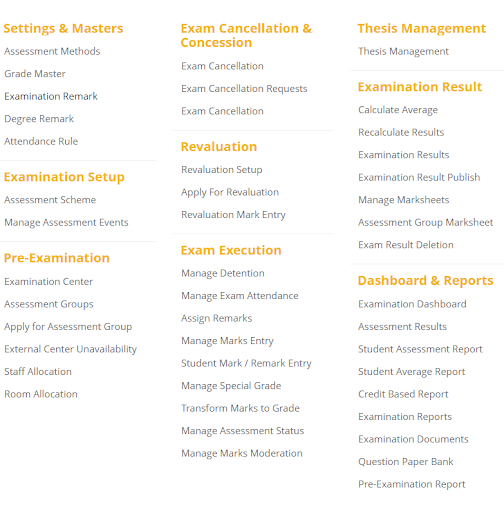
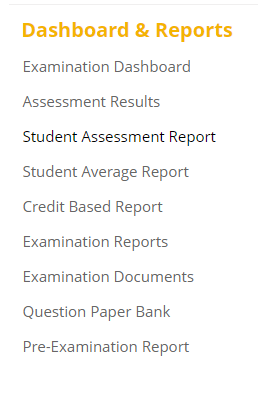
Academia is an education ERP suite, that comes with 30+ modules to manage, monitor, and execute various tasks in an education organization. This also includes the Academia Examination Module which has all the features and functionalities of the pre-examination, examination, and post-examination phases. 

The dedicated web portal allows teachers to automate most of their tasks and brings ease in reviewing a student’s performance and grading. Also, it optimizes each operation, giving them more time to invest in teaching and effectively improving student performance. The module is built keeping teachers in mind and has been successful in automating and streamlining assessment, grading, and reporting tasks. 

It is highly configurable software, meaning you can set the parameters for assessment as per your institution’s evaluation criteria. Furthermore, the software goes a step further and allows interoperability with secure and trusted digital tools. E.g., some of our clients are enjoying Moodle integration with the Academia ERP solution which has allowed them to take the online examination and sync the assessment records to the ERP solution without any manual work.

Here is how Academia ERP Examination Module is beneficial for teachers: 

1. Accurate & Consolidated Reports

One of the biggest benefits of the Academia ERP Examination Module is automation. You can completely automate assignment collection without having to worry about mishandling the project or any inaccuracies. The software can handle the data of hundreds of students and their activities with near-zero errors. Also, gives you an auto-generated report in one click. 


This feature alone can eliminate any chances of delays in the process and you can ensure the results are out on time and students are at an advantage of checking and improving their performance. 

2. Integrations 

Academia Education ERP can be integrated with a variety of digital tools that support online learning and online evaluation. This gives you the benefit of interoperability and you don’t have to switch between software systems to manage different types of tasks. 

Also, there are a set of pre-built reports that are built by keeping each aspect of the examination phase in mind. And you might now even require any other tool to generate reports on exam-related tasks.

3. Assessment with a customized grading scale

Academia ERP Examination Module has a sub-functionality “Settings and Masters”. This feature allows you to customize the performance metrics with a grading scale that fits your institution’s standard. 

Also, the software flaunts features such as changing marks to grades and vice versa in one easy click. The module allows you to take the grading scale a notch higher or a notch lower based on student performance. 

It is a versatile tool that allows you to manage periodic tests, thesis submissions, assignment management, term-end examinations, subject-oriented activities such as practical examinations and evaluations, and more. 

4. Co-scholastic Activities – Scheduling and Grading

Apart from academic learning, you have the option to create programs for Yoga, Art, Health Science, Physical Education, and other co-scholastic activities. Not only does the tool help you in managing operations pertaining to these activities it allows easy scheduling of examination and grading. 

The pre-examination and post-examination features in the Examination Module allow you to easily manage the examination schedule, resource management, crisis management, evaluation, grading, and report generation. 

5. End-term Report Card Generation

End-term examinations can be more hectic than managing the periodic tests and other evaluation processes. Report card generation could be challenging as the traditional approach made it a manual task. With Academia ERP you can easily manage it with automation. 

Grading and reporting activities can completely be automated. This allows teachers to break free from manual work. Report cards can be generated with ease and accuracy through Academia ERP Examination Module. 

6. Publish Reports 

Students can check results using Academia ERP Student Mobile Application. Also, you can give different access to the parents to access the parent portal and check the academic report of their ward. 

Online publishing of the reports is much more efficient than traditional methods wherein a parent was required to come to the school to get the report. In case they miss it, they would have to wait for the next parent-teacher meeting or need to take a personal appointment with the teacher. These communication gaps are completely filled with Academia Education ERP Software.

7. Record Management

Academia Education ERP comes with a robust Student Information System that records every academic and non-academic information, record, and activity of a student with high accuracy. You don’t have to manage any paper-based records and completely go paperless by implementing Academia ERP.

The system is efficient, secure, and easy to use. Also, you can retrieve the information remotely and perform various tasks. With Academia ERP you can enjoy hassle-free management of your education institute. 

Summing Up 

Academia ERP Solutions is a highly efficient software solution that allows you to streamline all institutional operations. It comes with a dedicated Examination Module, that has all the features and functionalities to manage pre-examination, examination, and post-examination activities. 

Implementing Academia ERP can help you in managing, monitor, and automate most tasks for the examination phase. It empowers you to handle load extensive studies and also scheduling of assignments, examinations, and evaluation processes easily. Also, the wide range of reports that come pre-built with the product is visually-stunning and comprehensive. 

To learn more about the product, you can connect with us here and schedule a live demo

Top 5 Smart Resources for Institutions to Check While Choosing ERP/SIS

With the modernization in the education sector, education institutions around the world are choosing software technology for their overall development. ERP is also the modern choice of institution. It can automate and streamline the academic, non-academic, and administrative operations of an institution. 

But do you know what are the main features that you need to look for while choosing an ERP/SIS? If not, these 5 smart resources can help you take a deep dive into the world of education ERP/SIS and win the competition.

  • Quick Reads

If you are thinking of buying an ERP/SIS for your institution, these 5 blogs can help you learn about an ERP and how it digitally transforms your institute. 

  1. Student Lifecycle Management: AI-driven Solutions
  2. Role of Predictive Analysis in the Education Industry 
  3. Student Information Systems: The Five Best Reasons to Invest
  4. Cloud ERP vs On-premise ERP Solutions: What is right for your education institute? 
  5. Global Education Institutions – Why is it high time to implement ERP?
  • Rapid Evidence

Smart are the people that take informed choices. If you are thinking about digital transformation, choose Academia ERP, a proven solution and the first choice of 320+ education institutes around the globe. Here are a few of the reviews that can help you understand why Academia ERP/SIS is the best choice for your institution.

  1. Reviews from prestigious institutions over G2
  2. Reviews from prestigious institutions over Gartner Peer Insights
  3. Success stories from clients 
  4. Case studies 
  • Awards & Accolades

Education institutions around the world opt for technologies that can bring complete digital transformation. Check these awards and accolades that make Academia a worthy platform for educational institutions. 

  1. Awards & Accolades
  2. Media Coverage 
  • More about Education ERP/SIS

These whitepapers and reports can help you a lot if you want to gain in-depth insights into the functionalities of an ERP/SIS.

Whitepapers & product sheets 

  • All About Security

Education institutions are easy targets for hackers. Here are a few resources which will help you understand the elements and standards that are required to achieve unbreakable security in an education ERP. 

  1. GDPR Security
  2. A Checklist To Safeguard Your Institution’s Data
  3. The Top 5 Priorities for Higher Education in Cybersecurity

Wrapping Up! 

An ERP/SIS helps education institutions not only to automate and streamline their operations but also to give higher ROI, operational efficiency, and ease of monitoring and management. Want to know more? Request your demo now!

5 Most Frequently Asked Questions about Education ERP / SIS – Answered

The world of technology may seem confusing at first, but digitalization is inevitable and you need to be quick in adapting to the technology. As a technology maven, and globally recognized for our flagship product Academia, we would love to be of any assistance to you in understanding the Education ERP solution. 

Let’s start with the definition first. Education ERP or enterprise resource planning software for the education industry is an advanced software. It is an app suite that aims at handling all your tasks from a single software and brings seamlessness to your processes. It comes with an integrated SIS, or student information system that works as a backbone and centralizes all the student-related data for better working and seamless management. 

Since this generalized definition is not enough to clear all your doubts and queries, we have listed down the five most frequently asked questions on education ERP and have answered them to the best of our knowledge. If you have more queries, please feel free to connect with our consultant here. We are available 24*7 to support you in any way we can. 

1. Can a school management system or school ERP system automate all the operations and processes of a school? 

Automation is a buzzword in the tech industry, and downright amazing if you ask us. But, it is in a very nascent stage. That means yes, automation is possible but it has certain limitations. 

Tasks such as attendance management, timetable generation, fee collection, and important communication can be automated. And we believe, it is good enough. These are some of the most time-taking and repetitive activities found in the education ecosystem.

To answer your question, most administrative tasks can be automated easily. For anything that is too complex to automate, you may not find it in a pre-built tool. But you can always communicate your needs to the ERP experts and they may be able to help you with the customizations and add-ons. 

2. How to manage online learning using education ERP? 

Education ERP solutions are pretty robust and accommodating. They can be easily integrated with an LMS or any tool that you use for online learning. Also, there are some education ERP solutions that have in-built online learning features and you can run online classes on them. 

But most of the education ERP solutions would have faculty and student side features that support online assigning of the projects and submissions as well. Also, examination-related tasks can be done on education ERP solutions. 

3. How do Education ERP solutions provide error-free data, reports, and information? 

Education ERP solutions are designed to provide error-free working. They are built on modern technology that runs on various logic in the backend. Also, before the implementation, they go through intense testing and most Education ERP solutions follow the GIGO concept, and only the useful and crucial data is put to use, while other things are stored in the archive. 

4. Does implementing Education ERP mean no manual intervention? 

In the processes and functions where you have automated things, yes you don’t have to do anything. It would be an end-to-end automated process. Also, there would be some aspects of the institute that would be partially automated and would require some manual interventions. All in all, it would reduce a significant amount of workload on your employees in both conditions. 

5. Can a school ERP solution help in making decisions at various levels?

Yes, absolutely. This is the most dynamic feature of an education ERP system. You would find a host of reports that would provide you with predictive analysis on trends and you can use them to build strategies for improvement in problem areas. 

Also, these reports are generated through Machine Learning, Business Intelligence, and Artificial Intelligence, they are pretty robust and on point. If you go with an Education ERP / SIS solution such as Academia ERP there would hardly be any time when you would find any gaps in the reporting as we configure the entire product to meet your needs. 

Wrapping Up 

We hope, you have more clarity about Education ERP / Student Information System software now and that you were able to find the answer you were looking for. In case you have any more questions you can always contact us anytime, we are always happy to help you. 

Data Security is a Concern for the Education Industry

Data privacy is a pressing issue for the education industry. But this is not something new. For any industry that is keeping its first step towards digitalization, security becomes a pressing issue and this time it is the education industry. 

How did it all start?

Now how did it start? Covid-19 has accelerated the adoption rate of technology across the globe. In a very short time, many institutes were forced to take hasty decisions and go with the available vendor without thinking much about security and the upcoming challenges pertaining to data and its mismanagement. 

Current Scenario

Now that the world is relaxing after a two-year-long harsh battle with Covid-19, it is time to rethink those choices. Now education institutes are thinking about the data that is being shared daily on online platforms by students, faculty, and school officials. This has made education institutes a primary target of cyber criminals as the proper security measures are still lacking. Frequent and high-intensity cyberattacks have become prominent in the education sector over the last two years. 

Moreover, even software that uses powerful data security regulations often becomes vulnerable to these attacks. Not always it is the fault of the product you are using. The problem may lie in the loosely integrated 3rd party software that gives cracks in your system to make a breach. The partner applications may not follow high standards of security and this may make you more prone to data theft. 

Furthermore, thousands of students use their personal devices to access the web and mobile applications and this may put the server at risk. Also, the students are at risk as the malicious code can be pushed to the devices, or phishing emails or messages may be sent easily to the students. 

Common security threats faced by EdTech companies 

In recent times, edtech companies have become a big target for cybercriminals. There have been instances of security breaches, phishing, stealing of data, and other instances. Here are some of the most frequent threats that are battled by edtech companies around the world:

  • Cloud Security Breaches: 

One of the most common threats for edtech companies is breaches in cloud-based applications. Cloud-based applications create a virtual depository of data that is very easy to access remotely. Data dissemination and analytics are also fairly easy in cloud-based applications as compared to on-premise applications. 

But at the same time, the risk of data breaches concerning the personal information of students and educators, financial operations, and other tasks associated with an institution. Cybercriminals may use this information and redirect the payments to a fictitious account that hackers control. 

  • Phishing:

Phishing needs no introduction as it is one of the most common threats. Cyber attackers mask their identity as a trusted entity and lure the users into divulging into sharing private and sensitive information such as credit card numbers, etc. Mostly cyber criminals target children as they are gullible and easy targets. 

  • Denial of Service (DoS): 

This is a new type of cybercrime, wherein the cyberattack makes sure that data or the systems that are used by the user are not accessible and are denied access. The cyberattack involves flooding the network with information and this disrupts the existing services. 

Denial of Services (DoS) in the context of edtech may result in disruption of education, delays in getting the right information for efficient administrative operations, or unavailability of knowledge resources or study material. 

  • Malware:

Malware attacks are very common. The software gets installed on the computer or server without the knowledge of the user, they come in various types and are employed to steal sensitive information of the users or commit crimes such as extortion.

  • Zoombombing:

It is fairly recent, online video conferencing platforms are interrupted by intruders. Incidents such as hate speeches against students during online classroom sessions or exposure to unwanted, harmful media during virtual classes have been reported. 

How Academia ERP is beating cyberattacks and staying compliant with global security standards? 

  • General Data Protection Regulation (GDPR): 

We are a GDPR-compliant organization. It is one of the biggest security standards for the countries in Europe, where the regulatory framework ensures we are assessing and processing the large volumes of data involving users securely and are not mishandling the data at all. We adhere to the framework very strictly and have by far never had any incidences concerning the mishandling of data or privacy breaches. 

  • Conducting Security audits: 

We timely conduct security audits and make sure there are no gaps in security with respect to our product. Furthermore, we go a step ahead and make sure the integrations that we do for our clients are not lost and do not provide any cracks through which the cybercriminals can make breaches.

  • Network and System Security

Network and system security are taken very seriously in Academia ERP. We take various measures to ensure the data and information is protected and shared through only secured channels through reliable access and network performance. Our well-designed network security solution ensures protection from a wide range of viruses, worms, trojans, spyware, adware, and ransomware. 

  • Cybersecurity awareness sessions

We are a big team of 200+ individuals, and we make sure each of our employees is adhering to the security standards and is following compliance. We regularly conduct cybersecurity awareness sessions and provide training to our employees about data protection and security protocols. 

  • Two-factor authentication & role-based access controls

Two-factor authentication and role-based access controls are implemented in the software solution. This allows us to make sure there is no unauthorized access to the system and that you face no situation where there is data leakage. 

Summing Up

Cybercrimes in the education sector are growing at a fast rate. As a decision-maker, the key to protecting yourself and other stakeholders using digital tools for administrative, academic, and non-academic operations lies in your hands.  

You can do right by choosing a reliable solution provider such as Academia Education ERP / Student Information System which adheres to the highest security standards and has by far had no instances of security breaches. We follow international standards of security and stay compliant with global regulatory frameworks. 

Know more about highly secure Education ERP called Academia ERP security by dropping a message. Also, get full-blown exposure to Academia ERP and its amazingness by requesting a live product demo

Back to top