Type your keyword below

Artificial Intelligence and Robotics: How Higher Education may Change in the US in the future?

Artificial intelligence and robotics are likely to have a significant impact on the higher education segment. Although the literature looks quite promising, there is yet some work to be done on centralizing all the studies and discovering if things are technically possible. The scope of impact is hard to grasp as we don’t know yet if implementing these two technologies is desirable, practical, and economically viable. However, many researchers use design fiction. We are basing our future speculations on the role of artificial intelligence and robotics in higher education based on their work. 

Current Scenario

Artificial intelligence and robotics have become buzzwords in the public, government, and academic sectors in the last few years. However, we are not yet ready to go into the implementation phase. The research literature is siloed, wide & deep, and very separated. For example, AI for education, learning analytics, educational data mining, etc., are separate fields.

Furthermore, using AI and robotics in the higher education segment is the ideation phase. We are still discovering how technology will participate in human decision-making. We have seen some use of the technology here and there, but we are yet to realize the full potential of the technology.

For implementing the technology, we need a wider understanding and debate to find answers to some of the biggest questions about its practical, ethical and social positioning in the market. 

At the same time, many existent bodies do review the literature and explore the challenges of implementing new technologies in the education sector. For example, a report by Reid in 2014 synthesized the change management issue of implementing technology in the classroom is highly regarded. 

Ironic enough, the industry which inspires innovation and the very platform for human development is not that open-minded about implementing technology. Especially when it comes to introducing technology and AI into the higher education segment, there is strong opposition. Many believe that technology and tools are dehumanizing the learning experience for students. Similarly, some believe technology in the education sector is a right-wing (especially in the USA) agenda to commercialize education and suppress liberal ideology. Many raise an ethical question around datafication of high education. 

There is a long list of apprehensions and many obstacles which are stopping the use of AI and robotics in the education sector. Yet, many use design fiction to stay imaginative and positive about implementing technology into the higher education segment. 

Design Fiction

Design fiction is a term used to describe a speculative space in which raising questions about a particular technology is desirable. Social and cultural assumptions are built into technologies and the potential for different technologies to help the world evolve. The space discusses the role of technology in general and how it will impact the industry and the world in the future. 

In this blog, we are discussing five design fiction that captures the potential of using AI and robotics in learning, administration, and research. This would help you have a wider view of the technologies and how these two technologies would change the higher education sector of the US by – changing staff roles, skill development, knowledge transfer, administration, etc. 

Design Fiction#1: AI & Robotics in Learning

One of the most popular application of artificial intelligence is in learning tools. AI in learning focuses on teaching students directly. It talks about Intelligent Tutoring Systems, which teach course content to students, and take a step-by-step process to personalize learning for each individual. 

Similar to this, Automatic Writing Evaluation tools, Conversational AI (chatbots),  and Adaptive Pedagogical Agents (a virtual character in the online or blending learning environment for instructional purposes). 

Design Fiction#2: Social Robots 

Social robots for learning is a physical robot for learning that supports students by interacting with them and helping with task completion. Evidence shows that learning is better with a physical entity than with a virtual agent. 

Thus, the concept of social robots is an imaginative concept of learning alongside robots. The concepts talk about robots interacting with the students and continuously learning about a student’s behavior and developing a sense of their needs. Using this, the robot can interact with the students at the right time and inspire them to do their work.

Design Fiction#3: Critical Conversation Bot

This fiction is inspired by Bayne’s 2015 description of Teacherbot. It is a chatbot developed to support a MOOC on e-learning and digital culture. The bot has no physical attribute. This fictional concept of the bot argues the role of robotics and artificial intelligence in building bots that inspire students to be critical thinkers and prompt them to think harder about their process of reading academic texts, raising questions about concepts, prompting discussions, and more. 

Design Fiction#4: Intelligent Campus App

This fiction emphasizes the direct application through tech-driven intelligent campus management. The concept is to increase the use of the Internet of Things and AI to improve campus management. This takes the current application of technology from using IoT for controlling lights and temperature to wayfinding, attendance monitoring, student experience, etc. One of the best examples of this is found in Luckin and Holmes (2017) fiction, which shows an optimistic vision towards the convenience the technology provides to students and enhances the student experience. 

Design#5: Learning analytics and datafication

The fifth fiction discusses using learning analytics and datafication in admission administration, decisioning, and ensuring retention. Chatbots can be used to assist applications through the complex processes of admission and maintain contact with them to attain higher retention. Using chatbots would be an economically viable, easy-to-implement option rather than using human resources. Gathering more data about Higher Education is seen in a positive light where it brings more transparency to increase accountability in staff and teachers towards students. 

However, using data in AI also has many issues. Security issues, ethical and legal restrictions, privacy legislation, implications of taking consent, and the right of control over one’s data are some of the biggest discussions around data usage. 

Data can be used in predictive analytics that would help institutes to find answers to some of the biggest concerns of the industry. However, there is a growing debate on how AI is trained. Currently, AI uses training data that does not represent the whole population. And hence, many draw attention to this bias. What is expected of developers is to bring more diversity. But since datafication requires standardization, we are still a long way from achieving a system that is above social, cultural, and demographic bias. 

Wrapping Up

These were some fictional designs that discuss the role of AI and robotics in the education sector. However, these have no ground existence right now and are merely an image of various researchers on how technology would change the education sector. 

Very few, but the use of AI and robotics applications have started to surface in the education sector. This includes AI-enabled chatbots, cloud-based applications that provide personalized learning, smart classroom management, etc. 

Hence, talking of the future, we should remain more hopeful. Sooner or later, there may be times when some of the things mentioned in these design fictions may come true. 

Complete Guide to Canada’s Higher Education System

The Canadian government is making some big investments in the public education sector. And statistics do confirm they are on the right path. In the past decade, the country has become a global center for people to find new job opportunities, business opportunities, education, a better quality of life, and so much more. To meet the demands of people from various parts of the world, it was very practical for the government to internationalize its education system. 

In this blog, we will be discussing the education system of Canada and why it is considered one of the best. 

Overview

Canada has a well-funded public education. It is managed provincially, and there are some aspects (very few, although) that vary from province to province. However, as the federal government oversees education, the standard remains consistently high throughout the country. 

In Canada, there are both public and private education institutions. The Canadian government spends heftily subsidizing education from kindergarten to the post-secondary level (provided by universities). It spends about 6% of its GDP on education, which is more than the average among the OECD (Organisation for Economic Co-operation and Development) countries.

Education Segmentation in Canada

Education in Canada is divided into three levels: 

  • Primary 
  • Secondary
  • Post-secondary

Primary Education 

Primary education starts at the elementary level and ends at grade 8. Students would usually start at the age of six to seven and would pass out from the primary segment at the age of 13 to 14. The school year starts in September and ends in following June. 

Education in Canada is available to all students at the age of 5. Provinces such as Quebec and Ontario provide elementary education at the age of 4 too. Depending on the provider, a student can be enrolled in Kindergarten. But that is optional. A student can directly enroll in Grade 1 as well. Since the education system changes province to province, needless to say, the age of compulsory education changes too. 

Province Age of compulsory education
Alberta 6 to 16
British Columbia 6 to 16
Manitoba 7 to 18
New Brunswick 5 to 18
Newfoundland 6 to 16
Northwest Territories 5 to 18
Nova Scotia 5 to 16
Ontario 6 to 18
Prince Edward Island 5 to 16
Quebec 6 to 16
Saskatchewan 7 to 16
Yukon 6 to 16

Secondary Education 

Secondary education or high school, in generic terms, starts at grade 9 to grade 12. A student would typically start high school at age 14 and pass out at 18. Since the education system in Canada is managed provincially, provinces such as Ontario and Quebec have a slight difference in their education system. 

In Ontario, they have a Grade 12+, and in Quebec, students attend high school until the age of 16. Students also have a choice to proceed to CEGEP, a publicly funded two-year college program where students can pursue either a university education, go for a diploma, or a vocational diploma. 

Post-Secondary Education

Canada has a vast network of colleges and universities and offers some of the best post-secondary education options worldwide. 

It has many internationally recognized programs. They are located both in urban and rural regions throughout the nation and have made education affordable and accessible to the population across the country. Degree awarded from Canadian universities is recognized worldwide and hold the weightage same as some of the most prestigious universities worldwide. 

Universities programs start from September to April or May. A college year is comprised of two semesters or terms. A student also can take classes for the third semester in the summer months. So, it entirely depends on the institute and students to start their university program in September or January. College programs can run all throughout the year, and this flexibility allows students to begin the course at any point of the year. 

Wrapping Up 

Canada has one of the highest literacy ratios. In 2015, 90% of people in Canada aged 25 to 64 were found to have completed at least high school, and 66% of people had obtained a post-secondary education credential. 

Quality and flexibility of education are two of the biggest reasons for the success of the Canadian education system. It provides the best facilities to its students for vocational and research. Provides a flexible structure, has made compulsory education for up to 16 years at least, and has been able to inculcate interest in people for education.  

The country is doing fairly well in the Primary and Secondary education segment. But it still has some deficiencies in post-secondary education. Like most countries in the world, Canada too is fighting the challenge of high dropout rates, and this can easily be mitigated through technological solutions. Learn more about education technologies such as education ERP / Student Information Systems to know how they can help in improved admission rates and student retention. 

Digital Education in Indonesia: Transforming the System

Indonesia celebrated National Technology Awakening Day in August 2022. The Ministry of education, culture, and technology participated in this event; it was a cross-departmental effort towards improving the education system of Indonesia through effective digital initiatives. The theme for this year was “Educational Transformation and Innovation through Technology.” 

The event had several highlights, including the government’s plan to go more digital-exclusive in the coming few years to make education more accessible and economically viable. 

On occasion, the Education, Culture, Research and Technology Minister Nadiem Makarim shared, 

“Thank you to the more than 1.2 million educators who have accessed and shared material on the Merdeka Mengajar [Emancipated Teaching] platform, a channel for teachers to learn, to teach and to create and support the implementation of the Merdeka Curriculum. In addition, as many as 3.2 million educators and education offices throughout Indonesia have accessed various technology platforms with a belajar.id account,”

The platform has become a learning tool for 714,000 students, 2,600 universities, 2,700 industrial partners, and 43,000 practitioners. The Ministry also released other platforms such as Rapor Pendidikan, Tanya Bos, Kampus, Merdeka, The School Activity Plan and Budget Application (ARKAS), and the School Procurement Information System (SIPLah).

 In the course of three years, the government has made several efforts to improve the digital infrastructure of the country. It worked with various educational institutes. They collaborated with principals, teachers, administrators, and lecturers to get the view of various stakeholders. The government’s aim has solely been to benefit various stakeholders in the education ecosystem. 

Today, Merdeka Curriculum and Belajar.id is impacting the lives of 1.6 million users and more than 312 thousand teachers. There are advanced teaching tools that teachers regularly use, and more than 1000 teacher communities throughout the country are relying on digital content libraries for teaching.

More than 500 colleges and more than 4000 educational institutions throughout the country are digitally equipped. However, there is a lot of scope for improvement, which requires hefty funding from government and private players to enter the market. The collaboration fund has been increased from 2 trillion to 11 trillion, which is likely to support the digital infrastructure to manage three times more users than there were in 2021.

Similarly, the government of Indonesia has an exceeding focus on improving opportunities for students. They are finding ways to make collaboration easy for the students of Indonesia. VokasiLand – a virtual reality project, is a great example of this. 

Transformation and innovation in Indonesia are all about collaboration and joint efforts of all the stakeholders. It is a holistic approach that is likely to completely change the landscape of the Indonesian education system. With technology becoming cheaper and cheaper and more accessible to people around the world, over time learning process, learning tools, learning experience, student outcomes, and so many more things are going to drastically change to cause a positive impact. 

Learn how Academia ERP is helping leading institutes in Indonesia to mitigate challenges such as increased drop rates, institute management, resource planning, financial planning and management, and more. Contact us here. 

What is Student-Centered Learning?

Now, this may come out as bizarre to you, but some of the world’s best schools have already started adopting it. Student-centered learning (SCL) is a concept in which, a student participates in the making and organizing of the content to fulfill its academic goals. The student decides what to learn, if it wants to learn, and how it learns. 

It is the direct opposite of teacher-centered approaches that have been in practice till now. It contrasts and challenges the traditional education system and implements the practices which allow students to hold the reigns of their future. There are some apprehensions in the industry. Are students mature enough to understand what is important to learn and what is not? Do we have the resources to accommodate the tools that are preferred for learning? There are a variety of basic questions. 

As someone from administration or management, it is very important to find out how effective it is and why it is important before jumping to any conclusion. In this blog, we would try to demystify things around SCL as much as possible. 

What are the factors involved in SCL? 

When we say we are giving the students control, we have to identify the aspects in which they have a say or control. Contrasting to TCL, SCL proposes a student be a leader that drives all the decisions around the learning process. It includes researching, proposing solutions, communicating ideas, and evaluating their own progress. This is everything that a teacher does in TCL. The role of teachers in SCL is that of a guide that helps put in place a process to attain the student’s goals. But still, they don’t have a say in the content, timing, or motivation as these would be controlled by the student. 

How is SCL different from Personalized Learning?

SCL and personalized learning are used interchangeably, which is not correct. In personalized learning, the reigns are still in the teacher’s hands. But in SCL, the entire scenario is altered. However, it is very easy to get confused as SCL does flaunt characteristics such as a highly personalized learning experience and openness to new teaching tools and styles as per individual preferences. 

Important features for successful implementation of SCL

  • Project-based learning 
  • Inter-disciplinary learning 
  • Assessment tool for evaluation
  • Feedback platform from Students and Parents
  • Personalized learning experience 
  • Robust IT infrastructure to support Virtual learning for flexibility

How educators must approach SCL?

As the classroom roles change with the implementation of SCL, it is important to learn how educators are coping with this change. 

Many studies are being conducted on the subject of SCL. The one that piqued my interest the most was that of the International Journal of STEM education in 2018. It talks about the identity-level shift and how educators have evolved from being content dispensers to content resources. 

Furthermore, many educators upon embracing SCL appreciated the positivity it brings to the classrooms and report its various benefits. They talk about better relationships between students & teachers, higher engagement, and tailored learning experiences. 

How is curriculum impacted in SCL?

Till now, we have seen schools have a definite curriculum and a flow in which the curriculum is taught to the students. It is a very important aspect of the education system. 

The same goes for SCL. SCL does not disregard the importance of curriculum, it just modifies. The curriculum for an SCL model is developed to pique the interest of a student as much as they would want to pursue learning in that particular course. Since it is project-based learning, it gives students a big opportunity to have a say in what they want to learn and how they want to approach the learning. 

Also, SCL proposes inter-disciplinary learning, which means a student can learn a combination of two or more academic disciplines in one activity. 

Role of teachers in SCL

There are various roles that can be obtained by a teacher in a student-centered learning environment. We are mentioning them here: 

  • Resource 

The student-centered learning environment sees teachers as knowledge resources to access knowledge. Since SCL gives huge credit to student knowledge, personal experiences, and understanding, SCL allows students to lead the classrooms and communicate their viewpoints. 

A teacher can guide these conversations, share their viewpoints, allow in-depth discussions by participating in these conversations, and build a good relationship with the student. This allows students to be benefitted from the knowledge and expertise of the teacher and work in partnership with the students. 

  • Mentor

It is very important for students to place their trust in adults, especially those that are connected with them on several levels. It helps you harness the feeling of a community at your school, and students share their bad and good experiences more openly for improvement. It also allows you to work on the aspects that are more beneficial for students. SCL gives a wide scope for it. 

  • Guide

SCL proposes teachers to be a guiding source, meaning they guide the student in the learning process and help them in overcoming these challenges. Teachers can help students understand how skills and knowledge would affect their lives in larger and smaller aspects. 

Furthermore, it gives teachers a great opportunity to nurture the students and become a part of their learning journey rather than just being a juncture in it. It gives a wider scope to understand the future goals of a student and provides them timely motivation and guidance to help achieve the goals.

Benefits of Student-Centered Learning 

Some of the biggest benefits of student-centered learning are: 

  1. Helps create a meaningful learning environment 
  2. Helps motivate students to take initiative towards learning
  3. Enjoy personalized learning
  4. Project-based learning that helps increase student engagement
  5. Improves academic performance
  6. Helps nurture a positive relationship between teachers and students
  7. Increases communication and collaboration in the classroom
  8. Increases participation of students in school activities 

Way Forward

The quantitative data on SCL shows many good traits. In a study from the Stanford Centre for Opportunity Policy in Education, it was found that students learning in the SCL environment outperformed the students studying in the traditional setup. Furthermore, there were lesser dropout rates and a higher number of graduates who applied to colleges. 

However, it should be noted that SCL comes with challenges that require educators to change their strategy to govern the classes and meet the requirements for SCL.  The challenges include the possibility of indiscipline in the classroom, increased workload due to higher classroom management, unevenness in the student participation rate, shifting students to a new environment, etc. 

These challenges are easily manageable through an advanced IT infrastructure and a more cohesive environment for students to participate in meaningful discussions. For achieving a high-end student experience and student engagement, digital transformation is necessary. It allows you to become an integral part of students learning journey and does not bind you to four-walled classrooms. Before you prep for student-centered learning, let’s finish up the groundwork together. Consider a free consultation with our ERP expert for a digital transformation at your institute, and together we can make things better for the students. 

EdTech Partnerships to enhance the Future of Education

EdTech Partnerships to enhance the Future of Education

The world has started to restore order after a long battle with the pandemic. The education industry is also reanalyzing the choices they have made with respect to choosing the education technologies that were implemented in haste to counter the immediate challenge. 

All in all, education technology has made a massive difference in the lives of students and teachers. The best edtech entrepreneurs understand this and are constantly realigning their products to the changing needs of the institutes. But only the best ones. 

It gets people thinking, in the post-pandemic world, would all the brands that mushroomed and thrived in the pandemic have any chance to survive now? 

However, this is very clear. The education industry is not looking back and will undoubtedly undergo digital transformation. If you want to leverage this opportunity by becoming a partner with good brands, you have to be very choosy and also accurate while making a decision. Here is how you can identify a good partner. 

  • Is the brand building long-term relationships with the customers? 

Good brands are all about building long-term relationships with their clients. This impacts how they provide service to their existing customers and constantly improve the product to attract new clients. Their primary focus is to retain customers, which is the best tactic to survive in a competitive environment and build a strong base for the future. Check out the company portfolio and identify how many new customers they have added after the pandemic and how many they have retained. 

  • How flexible is the brand to meet the changing needs of customers? 

Building a product and implementing it is only the beginning. The world has long moved from legacy software that didn’t provide the flexibility to accommodate the changing needs of the customer. But with modern systems, it is easier to constantly innovate and develop solutions relevant to the customer’s needs of today and tomorrow. Hence, brands that provide education institutes these benefits are likely to have a better chance of survival. And the brands are still not ready to evolve and have a cloudy future in the market. 

  • How are stakeholders using the product? 

The usability of the product is a reality check for every product. It is important to know what benefits the product provides to the customers and how useful the product is in everyday institutional activities. A brand that has a focus on transforming the lives of its stakeholders would constantly be seen improving the product’s core functionalities. And hence improving the user experience constantly to nurture customer loyalty. 

Way Forward

These are the three parameters on which you can analyze a brand’s future in the education industry. If you are looking for a partner with all these qualities, you might be interested in partnering with us. We have an award-winning education ERP with 320+ customers in 22 countries. We are innovative and reliable and have transformed the lives of 800,000+ educators and learners. If you want to learn about our partner program, drop a ‘Hi’ here, and we will get back to you within 2-3 business days. 

Indonesia vs Philippines: Comparing Higher Education Systems

In 2021, ASEAN reported that covid-related school foreclosures had affected the quality of education for more than 152 million children in the member countries. To confirm the impact, Gallup – a public poll specialist, estimated education satisfaction in Southeast Asia has dropped to 63% from 85%. 

Looking eye-to-eye with these massive challenges, the Cambridge-ASEAN policy was a mandate which provided a direction to ministers of education in the member country and provided tangible actions to reverse the effects of Covid-19. Although the impact of the pandemic was not that dire in all the member countries – Indonesia and the Philippines were not that lucky enough. According to a Unicef report, the education of 80 million children in Indonesia was impacted by Covid-19. Similarly, in another Unicef report, 27 million Filipino students are impacted by Covid-19. 

Summarizing the policy Cambridge-ASEAN policy, the team highlighted the importance of going digital and establishing a robust digital infrastructure to ensure students have access to learning resources. Mental health and well-being should take center stage when building new education policies and countering learning loss. Governments and organizations need to prioritize learning losses for younger students, vulnerable students, and people on vocational pathways. 

But before any nation delves into these suggestions, it becomes imperative that they address the long-standing issues in their education system. The two ASEAN (Association of Southeast Asian Nations ) countries (Indonesia and the Philippines) have some shortcomings in the sector that has, time after time, affected the students in many ways. 

Three significant issues on which we would be comparing the education system of both Indonesia & Philippines are – quality, affordability, and budget. 

  • Quality of education: 
  • Philippines

The Philippines has recently revised its education system, making education compulsory for 12 years. With this comes some significant challenges in curriculum, wherein language, literature, natural science, social sciences, arts, and humanities will be taught from grade 1 to 12, except chemistry which is only taught after the 9th grade. 

However, the change in the curriculum per se is not an indication of the quality. Facts disagree and show a sharp decline in the quality of education in the Philippines. In a standard test among the students and the National College Entrance Examination for college students, the scores were below the target mean score. Also, the attributed decline in quality may be due to the shortage of teachers in public schools. 

  • Indonesia

Indonesia has the fourth-largest education system in the world. However, in an education quality assessment done for 50 nations, it landed the last position. Although the country is making ample efforts towards improving the quality of education, the youth seems to be not benefitting from it – which is more or less a common phenomenon amongst middle-income countries. 

  • Affordability of Education
  • Philippines

In the Philippines, there is a significant disparity between educational achievements across social groups. Students from socially and economically weaker sections seem to drop out more often, especially at an elementary level. And most of the freshman students at the tertiary level come from families with affluent backgrounds. Also, public-funded schools are underfunded. 

  • Indonesia

Only one-third of 57 million school-going students finish their primary education. Although, unlike the Philippines, Indonesia does provide excellent access to primary and secondary education to its students resulting in a spike in enrollment rates from 21% to 77% between 1978 to 2015.  The system evades the needs of the students, leaving millions becoming marginalized and forgotten in the classroom. 

Furthermore, many education authorities responsible for running the national education system have been caught in corruption scandals that use loopholes in the system for political gains and personal wealth creation. There is a need for reform where teachers and students are empowered. Hence, the government has to work towards making education more affordable for the students hailing from the middle class.

  • Budget
  • Philippines 

The budget allotted for education by the government is not enough to sustain. This contrasts with the Philippine constitution, as it mandates the government to allocate the highest proportion of the budget to education. Also, according to a report, amongst the ASEAN countries, the Philippines has the lowest budget allocations. Low budget directly affects the public school infrastructure, resulting in underpaid teachers, insufficient reading material, poor facilities, and more. 

  • Indonesia

Similar to the Philippines, the education sector in Indonesia too is fighting inadequacy of the budget. Because of this, experts say less than half of the country’s teachers that are hired do not fulfill the qualification for the position. Also, absenteeism is on a high rise, well above 20%. Teachers are found to work outside the classroom to improve their incomes. Corruption is to blame for it. 

Conclusion

In both countries, there is an educational employment mismatch. For both countries to shorten the divide, they must work on skill development and make significant changes in their curriculum to meet the needs of the evolving job market. This is likely to help both countries to reduce the growing number of educated, unemployed, and underemployed populations. 

Suppose you are looking for a digital transformation for any educational institution in Indonesia, Phillippines, or any other Southeast Asia country. Academia ERP is there to help and rejuvenate your institutions’ digital fluency. Request a live demo of how Academia ERP is a problem solver for your education institutes.

How is Academia ERP uprooting the challenges of Higher Education institutes in Zimbabwe?

How is Academia ERP uprooting the challenges of Higher Education institutes in Zimbabwe? 

Countries in the African continent need to diversify their economies, develop skills, strengthen the education system, and provide professional training to their population. Since the growth of any country is highly dependent on the contribution of human capital, a government must make ample attempts to keep the population abreast with the new trends in the job market and meet the skill needs of the burgeoning industry sectors. For this, every government uses education as a tool to weave the very fabric of the future. And the first step requires it to address the long-standing challenges in its education system to strengthen it and derive desired results.

Talking of Zimbabwe, the country has some huge obstacles to conquer. The investment is limited, there is a shortage of teachers, and soaring high dropout rates. To top this, it is required to make education equitable and reduce the socio-economic divide in the country. Here are a few biggest challenges of higher education institutes in Zimbabwe and how Academia ERP is uprooting them. 

Challenge#1: Expansion of Universities 

At independence, Zimbabwe had only one state university, but the number now has grown to 13. There are eight state universities and four church-run universities. The expansion of the university system in Zimbabwe is mainly in response to the expansion of the primary and secondary education segment in the country. There is a sudden surge in enrollment rates. However, there aren’t many regional universities and academies to support the demand. Hence, the existing facilities are overstretching their facilities and resources – causing a big dent in the student experience at their universities. 

Approximately 300,000 students each year graduate from the secondary education segment and only 18% of students are admitted into higher education institutes. This means around 80% of students are still deprived of higher education and training – reducing their chance of landing a skill-based job and improving their quality of life. 

Academia ERP Solution:

  • Multi-centre Capability

The software comes with multi-center capabilities which allow you to manage multiple academies of your organization well. It helps you in setting up the digital infrastructure of newly planned academies. It also provides robust programs and course management, student performance analysis and management, teacher management, resource planning and management, and more. Multi-center capability is one characteristic that would help monitor and manage all the institutes, colleges, and academies in your organization remotely from a single dashboard. Hence, planning and managing your expansion is more profitable and successful.  

  • Efficient Management of Admission Phase

Although the enrollment rate in the higher education segment in Zimbabwe is rising, dropout rates also have elevated. Enrolling in a college requires a student to be emotionally, socially, and academically involved in university activities. And since each student is unique and has different aspirations, their innate abilities and expectations must be aligned with the college curriculum and culture. Hence, even though higher education institutes are seeing high enrollments, they are also parallelly fighting dropout rates.

To counter this, you need efficient management of the admission phase. With Academia ERP, you get dedicated features for the pre-admission and admission phases. Using them, you can run marketing campaigns, manage inquiries, track leads, close admissions, generate reports, and so much more. 

It also helps you in assisting a student in making academic choices. This would help you bond with the student better and know them well. This gives you a wider scope to understand if the applicant is the right fit for your campus academically, culturally, and emotionally. These informed choices allow you to choose the right applicant and retain them throughout the student lifecycle. And hence, reduce your big losses due to dropouts.

Challenge#2: Quality Education

The government of Zimbabwe has become very proactive about the quality of education. They sanctioned Council for Higher Education Act in 2006 to monitor the quality of education in higher education institutes. But only some of the universities in the country have a set structure or the tools to provide reports and audit requirements. This makes quality analysis difficult and leaves no scope for the universities to know their pain points and work on them. 

Furthermore, the country has 15.1 million people, but the GDP is only $20.5 billion. It is surprising that a country such as Zimbabwe, with a literacy rate of 90%, has such low GDP and is amongst the poorest countries in the world. One possible reason for this is that the population is not skilled and not ready to meet the changing demands of the global job market. Hence, the education sector is expected to help the nation fight this problem. 

Academia ERP Solution: 

  • Programs and Courses Management

For higher education institutes to offer students the skills that are highly demanded in the job market, it is very important to manage the programs and courses in their institute. It is important that they carefully evaluate the curriculum of the courses and make it richer through timely improvements. This would help you evaluate the curriculum better in light of the growing market demand and achieve student success easily. 

  • Student Performance Analysis and Management 

One of the ways to evaluate if the quality of education in your institute is high and up to the standards or not is through student performance analysis. Student outcomes, student success, student retention, and other important metrics help you understand if you have a quality-driven curriculum at your institute. Academia ERP offers you granular reports and efficient student performance record management. 

Also, a student’s performance analysis would help you predict if the student is on the verge of dropping out. Hence, before making a decision, you can help them make the right choice and rekindle their interest in skill development and education. 

  • Reports and Dashboards

Academia ERP offers a variety of reports and dashboards to provide quantitative and qualitative analysis to regulatory bodies. This would make reporting easy and hence get you a higher accreditation to attract more students to the provided course and programs. 

Challenge#3: Funding 

Most universities in Zimbabwe rely on government funding. However, many higher education institutes in Zimbabwe are underfunded. The salary of academic and non-academic staff is less than other universities when compared in the African continent. Many students from impoverished backgrounds are required to pay their fees. Somewhere, education is becoming reserved for the elite. Government is unable to provide scholarships. Basic resources such as computers, labs, laboratories, etc., are not available in higher education institutions. 

Academia ERP Solution: 

  • Reduced operational cost 

All the higher education institutes in Zimbabwe are focusing on reducing their expenses. This can only be done through efficient resource management and implementation. With Academia ERP, you would be able to allocate resources better. It provides you with accurate reports on resources that are free, under maintenance, occupied, etc. This allows you to manage the resources efficiently for them to be utilized better. 

  • Financial Management

Most higher education institutions are operating on traditional models. This means a lot of paper-bound operations and manual processing. Many staff and faculty expenses go unnoticed, causing budget mismanagement. Through Academia ERP, you can automate financial management and generate more transparency in operations. You would be able to track transactions and bring down your expenses. 

Way Forward

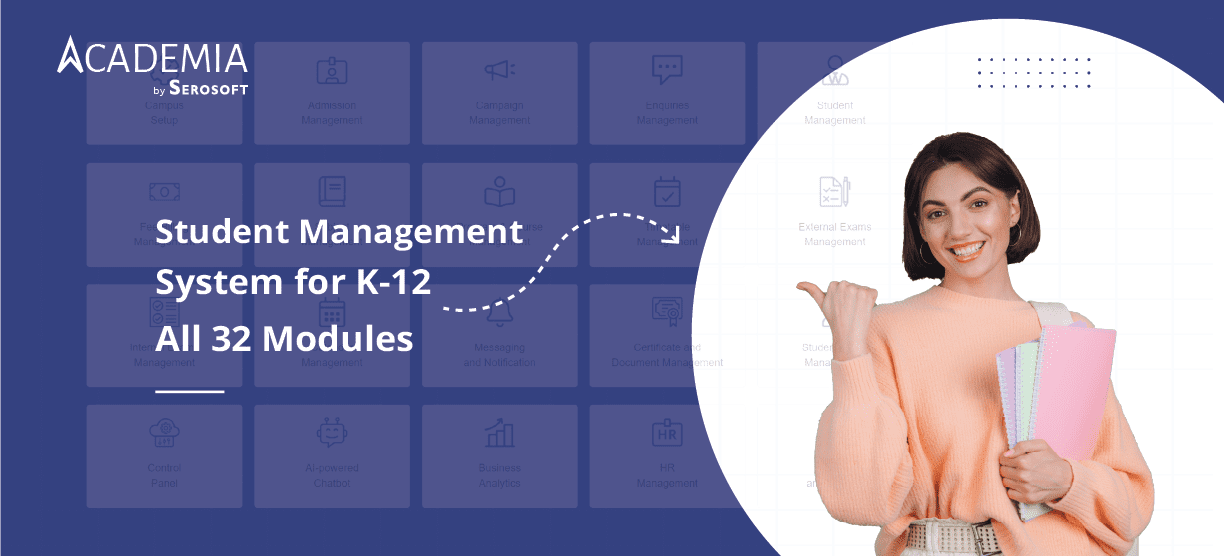
Although the education sector in Zimbabwe is facing some of the biggest challenges, we must remember that technology has the answer to most of them. If you are looking for a solution that can help you combat some of your institute’s biggest challenges, you can consider Academia ERP. It is an app suite with 30+ modules that helps monitor and manage institute operations. It automates tasks and has helped many institutes reduce their expenses by 33%. We have a presence in 21 countries and 320+ clients – of which Africa University, Zimbabwe is one. If you want to know how we can help you digitally transform, drop us a ‘Hi!’ here.

Education technology trends in Australia and ways to adopt

The education sector in every country plays a defining role in preparing future generations for upcoming opportunities and challenges. It provides a framework for people to equip knowledge and skills to contribute to the society and economy of the country. It prepares people to make their place in the global workforce and helps them align their skills with the demand in the global job market. It helps people to break boundaries and explore things that are beyond geographical limits. It improves their personal lives and gives them a shot at fulfillment.

Education has a massive impact on the life of people, and hence it becomes important that each trend and step taken towards elevating its effect is well investigated. Hence, we are discussing the upcoming trends in the Australian education system.

1.Parent Engagement

In the last two years, 2 in 5 parents have become more attentive towards their child’s participation in school. Of these, 60% of parents said they expect weekly communication from the school, and 7% of parents demanded daily communication.

At the same time, school management and teachers feel pressured to meet this growing demand of the parents. They need the tools to keep the parents of the students engaged.

In this context, schools can use school management software with student and parent mobile applications. Through these handy applications, parents can log in anytime and get real-time information about their child’s classroom participation, attendance, examination, assessment reports, day-to-day activities, etc. Also, these apps are equipped with omnichannel communication tools which can be used to connect with the school administration and faculty through SMS, calls, WhatsApp, mail, chat, etc.

2.Student Well-being

In the last 5 years, the Australian education system has shifted its focus from results to well-being. And this has happened to meet the demands of parents. Almost 50% of parents expected schools to support child’s well-being.

Individualized attention, personalized learning, holistic development, individualized career guidance, and other demands have taken the forefront.

To meet this demand of the parents, schools must choose education ERP solutions that come with in-built student lifecycle management and student performance management systems. These efficient tools would allow the faculty and administrative staff to assist a student all throughout the student lifecycle and analyze their performance in real-time to increase their participation to ensure a higher student success rate.

3.Lifelong Learning

Lifelong learning is not just a goal of the Australian education system; rather it is a shared goal. Every country is making policy changes to make education accessible and equitable to ensure students have access to the knowledge resources for lifelong learning and skill development.

4.Complexity in Education

Australian education system is one of the most complicated education systems. For it to realize its true potential, policy changes are needed, and this needs massive participation from government bodies. Challenges such as growing compliance requirements, complex teacher accreditation, and the rise of alternate pathways to university and workforce are some long-standing issues in the Australian education system.

Also, with the increased attention on student well-being, mental health, and student success, it is becoming hard for teachers to meet these growing demands while upholding the strict norms set by the Australian education system.

Modern education technology provides solutions to automate everyday tasks and increases the productivity and accountability of the staff to focus on the immediate challenges in the institute. It gives them time to work on their core responsibilities – thus improving student experience across the organization while ensuring well-being.

5.Attracting and retaining teachers

Recently, there has been a growing concern about the increased drop rates of teachers. It is essential for educational institutions to engage teachers and increase flexibility in their everyday work and tasks. Australian teachers are very moved by the notion of bringing a change in students’ lives. Most teachers dropped out because they felt they were not contributing to that idea. Some other dominating reasons were losing the work-life balance, increased administrative and documentation responsibility, pressure to manage the well-being of multiple students simultaneously, and more.

Technology can help in improving the teacher experience in many ways. Technology can help increase collaboration, improve teamwork, efficient reporting, reduce workload with automation, and more.

Wrapping Up

These were some key challenges of the Australian education system and how upcoming technology trends in the country can solve them. If you are wondering to find a solution that can positively impact the lives of students, teachers, and parents to achieve better results, try Academia ERP. We are a leading education ERP solution provider in 22 countries. Learn more about our product in a live demo with our ERP expert, and learn how we can help you uproot these challenges from your institution.

What are the factors that show an ERP needs to be updated?

Change is an inevitable part of human life. And even though you are dead set on using traditional methods of working, you cannot deny they are making your operations sluggish.

How do we know? If you would have been so satisfied with your current system you would not have been browsing this web page. Hence, accounting for the first factor that shows your ERP needs an update.

If you believe you need new software, we understand you have already started to see how inefficient your current system is. But to support your decisions, that one factor alone is not enough. So, here we are giving you 5 reasons to update your education ERP solution.

1. Increasing workload and no help from the existing system

One of the biggest reasons to implement an education ERP solution was to free up your workforce from the regular, time-consuming tedious tasks. You want them productive and focused on the top problems of your institute, rather than meddling with paperwork.

If you are sensing, you have a lowered productivity at your institute, and your current system is not able to power or automate operations at your institute -it is time for an update.

2. Increasing expenditure and no way to track it

The market is very uncertain right now, and the economic climate is stormy. The need of the time is a feature-rich finance management system that comes in-built with the education ERP solutions. It is very common for institutes to face problems while tracking the spending data of the faculty and staff. The data is often dispersed and hard to track.

Meaning, if you don’t know where your money is going, you cannot even start to think of a way to stop it. Hence, you need an updated system that gives you that transparency and reinforces measures to eliminate financial vulnerabilities in your organization.

3. Facing staggering losses and a dipping admission rate

Student admission rate plays a defining role in your institute’s profitability. If you are still using an old system you are likely to be handling the admission phase at your institute through paper-bound operations. And there are tens of things that can go wrong with that. They are time-consuming, error-prone, and costly.

Also, you miss out on many good applicants that were a good fit for your institute. An education ERP solution would help you in managing the admission phase better while automating your operations. Thus, update!

4. No defense against unplanned events

COVID-19 has put the education industry into a twirl, and it is only beginning to get ugly. Challenges such as reduced resources and insufficient funds would be very common scenarios for many educational organizations.

To brace yourself in these uncertain times, you need a system that forecasts trends for you to strategize and respond accordingly. Modern systems such as Academia ERP come with predictive analytics and reports to help you plan ahead of time for these unplanned events.

5. If you are still using different software for every little thing in your institute

If you don’t have a centralized database connected to all your software and if there is no interoperability between any of these tools you need to upgrade to an education ERP toolset. An education ERP serves as a centralized database and supports operations across the wide network of tools used in your organization. This gives you a wider scope of data accessibility and insights to strategize and ensure higher profitability.

Also, education ERP software is an app suite that has a gamut of features to perform a variety of tasks at your institute. This eliminates the need of having multiple apps to perform various tasks. Academia ERP software has admission management, CRM solutions, resource planning and management, finance management, HR management, and much more.

Lastly, you need the right approach

If you are facing all or any of the above-mentioned factors hindering the operations at your organization it is time to pull the plug on the old software and upgrade to robust education ERP software.

Modern systems are more flexible to meet the needs of modern institutes and in these challenging times, you need software that provides you with effective solutions to stay profitable. Furthermore, you need the right approach to finding the right solution.

The primary focus of your search should be the efficiency of the product. Not to nullify the impact of price as a deciding factor, but initially, you must ardently look for a solution that eliminates some of the biggest challenges at your institute. Once you have narrowed down your search, then you can take demos and go into further negotiation to decide on the right vendor that supports your institute’s needs for the long term at the right price.

Single Sign-On (SSO) Solutions for Higher Education

Single Sign-On is a new technology around the corner and is widely used in many education ERP solutions. It is very important to discuss the role of SSO technology and how it is likely to transform the user experience.

From what is SSO to if it is secure, this blog discusses the technology in length to help you understand it better and if you require it in your education ERP solution.

What is Single Sign-On?

Single Sign-On or SSO is a highly trusted authentication method. It enables a user to securely sign in to various applications and websites using one single set of credentials.

How does a Single Sign-On work?

Single Sign-On works based on a trust relationship set up between the application, also known as the service provider, and the SSO system (identity provider). This trust relationship is based upon an exchanged certificate between the two. The certificate is used as a sign of identity information that is sent from the identity provider to the service provider. This exchange of certificate serves lets the app/service provider know the information is coming from a trusted source.

In SSO, this identity takes the form of a token that contains small bits of login information such as the user’s email address and username.

Login Flow

The login flow is mentioned in the following steps:
1.User opens the app that he/she wants to access.
2.The service provider (app) sends the token that contains some information such as email address to the identity provider (SSO System) to authenticate the request.
3.If the user is already authenticated the identity provider gives immediate access to the user. If not, the user has to undergo a few more steps to log in to the identity provider.
4.In the second scenario, in which the user has not logged in to the identity provider, the user is prompted to log in. The login method is quite simple. It usually is done through an OTP verification.
5.Once the user is authenticated, the Identity Provider sends the token to the service provider (app).
6.The service provider (app) validates the token that it is sent from a trusted source during the initial configuration, and thus the user is granted access to the app.

How does Single Sign On help?

There are many apps used in an education institute. Having a different credential for each app and remembering them is a hassle. If you are not using a single sign-on, you must be getting queries on daily basis to reset the password. You can eliminate this completely by having a single sign-on.

An education ERP software serves as a centralized database to provide information to all the integrated applications. And hence, an education ERP software that uses single sign-on would provide an even better experience across the digital ecosystem where a user can use a single set of credentials to login into various applications and perform tasks.

With single sign-on not only are you able to eliminate queries, but it also improves the user experience. It provides a unified experience across the ecosystem where a user is able to manage the username and password much better.

Furthermore, with a Single Sign-On, administrators in your institute can easily control the complex process of multi-factor authentication. Also, they can easily remove login privileges for the people that are no longer in the organization. Not only is SSO great at reducing the calls you get on the helpdesk, but it is a highly convenient tool for administrators to centrally manage and control the usernames and passwords.

Is it secure?

Single Sign-On systems are very convenient and have a great benefit if you are using multiple applications. Users no longer have to manage their passwords and they don’t have to go to IT support each time they lose passwords. But, security is very important to discuss. Since, Single Sign-on serves as a password manager for various apps, if there are vulnerabilities in the app username and passwords to access various apps is compromised. And hence, an institute might lose access to the apps, denting their productivity and operational efficiency.

However, the best SSO vendors have highly secure services. They follow global compliance regulations and industry standards. Many will never store any information like account passwords and master keys on their system. Even in the event that the hacker is trying to make a breach, the security protocols ensure the account is well-protected.

Education ERP solution with Single Sign-On

Academia ERP comes with a very secure single sign-on. The product is highly secure and easily integrable with leading education technologies and applications. With the single sign-on option, you can manage passwords from a single dashboard for the entire organization. It is easy to configure with a variety of products and provides high flexibility to add new applications on the go to provide access to applications through SSO tokens and trust certificates.

Wrapping Up

Single Sign-on is a secure and convenient way to manage the username and passwords of all users across your organization. It is secure, and with a little research, you can find the right vendor to solve your problems. With SSO, you would have reduced queries for lost passwords, easy administration, easeful add/remove of account access to apps and so much more. If you have any more queries with respect to Academia ERP and how our Single Sign-On works, please feel free to connect.


How school admission management systems ease operations

You are a superhero to be shouldering the admission process at your institute manually. But the burden is increasing. Before you get squashed underneath that paperwork – evolve and switch to digital.

There are thousands of students every year knocking on your institute doors to get admission. And honestly, you are so engrossed with the paperwork that most applications go unseen. Remember the hundreds of phone calls you get for admission inquiries. Do you have any idea how many potential students you must have lost just because you could not properly manage their queries? Or for how many hours a student/parent had to stand in a queue to get an admission form? These and many more instances are screaming their lungs out – you need an admission management system.

School Management Software with Admission Management

School Management Software is an advanced education ERP app suite. It is a multi-module application that allows you to streamline your operations in your institute. It comes with dedicated modules for admission management, examination management, resource management, finance management, and the list goes on.

Here is how the School Management Software helps you manage the admission process better.

1.Difference Between Manual System and Admission Management System

One of the best ways to analyze the potential of any solution is to compare it with your current system. Here is a table that gives you bite-size information to draw a difference between a manual system and a School Management System.

S.no Manual System School Admission Management System
1. Extensive paperwork, application filling, storage, and maintenance Data automatically gets stored over a cloud or computer database
2. Increases dependency on the human resources and is highly uneconomical Automates most operations to free up your resources and provides faster operations – highly economical
3. Difficulty accessing information, longer information retrieval process Within a few clicks get the information that you need
4. A lengthy process of form sale, fee collection, form collection, listing, evaluation, etc. Centralized database shared across organizations for faster processing
2. Salient Features of an admission management software

a. Enquiry Management

The feature allows you to track every enquiry that is happening on call, message, or email for admissions. It also allows pipeline management, conversion of inquiries to applications, and robust data management.

b. Online Admission Setup

Online admissions have become a coveted feature. School management software provides you an option to set up an online admission page on your website that is easily integrated into the main database. It allows you to manage and track every admission application that is coming from an online channel and assist the applicant better.

c. Applicant portal

Once you have converted an enquiry to an application or a prospect has applied for admission you need to provide ease to these applicants. For achieving a higher experience for your applicants with your institute, choose to go with an applicant portal that allows easy management of their profile and application. The portal would provide a real-time update on the application progress, store their receipts and documents in one place, and allows easy communication with your support team through call, chat, or email.

d. Communication

A school management system is configured to provide you with various modes of communication. This makes it easy for you to send out messages and interact with people through calls, emails, WhatsApp, chat, etc.

3. Data management

Data management becomes very easy with the admission management system as it comes with a centralized database. This allows you to access information from anywhere and anytime and perform various tasks. Also, role-based access makes sure the data integrity is maintained organization-wide while improving the functioning of all departments.

4. Real-time updates

Many people underestimate the importance of real-time updates but you know it better. To stay on top of the processes and to make better decisions you need a real-time report on everything. This decreases your dependency on people and departments and allows you to take faster decisions with assured results. Also, sending real-time updates to applicants improves their experience with your institute, rather than them having to call your support team every day to know the progress of their application.

5. Reports and analytics

Advanced analytics come with predictive qualities for you to forecast the admission and enrollment rate. This system gives you a near-accurate prediction on several things and allows you to improve your strategy.

Also, in the post-admission phase, the pre-built reports in the system consolidate the data across all departments to provide you with accurate reports on enquiries, applications, admissions, enrollments, fee submissions, pending fees, and more.

6. Added advantages

Some of the added advantages of going digital include:

  • Manpower Savings
  • Reduced Paperwork
  • Faster Application Evaluation
  • Increased Productivity
  • 24*7 available to serve applicants
  • Streamlined processes
  • No queues
  • Accuracy
  • Remote working capabilities
Wrapping Up

An advanced admission management system can help you in untangling of your admission process. And here is great news, if you want to live this experience you are only a step away. Contact our ERP experts here, and take a live demo.

What does the Accounting System in Education ERP do?

One of the common misconceptions that people have around the world is that an education ERP is accounting software. The words are used interchangeably and as one of the leading A education ERP solution providers, it breaks our hearts. Accounting is just a fraction of the things an ERP solution does for you. It is multi-functional software that is aimed to provide automation to every operation (including accounting) of your education organization.

Best Accounting Features in an Education ERP and its Benefits

One of the primary functions of an education ERP solution other than automating is to increase transparency in operations. It improves collaboration in the workforce and allows people to use the power of information to take decisions. Some of the best accounting features of an education ERP solution and its benefits are:

1. Centralized Data Repository:

An education ERP software does not put the data in silos but rather centralizes the information to be shared across various departments through role-based secure access. This allows people in the administration to use the information to perform various tasks and get real-time updates on the activities. It provides organization-wide transparency in operations and communicates the right information to people for speedy operations. Hence, it mobilizes the operations in an organization to exhibit more flexibility and ease of data management.

2. Automation

Automation reduces the dependency on people and eliminates the chances of human errors. The software automatically detects accounts receivable and accounts payable and processes the payments while only requiring the employees to intervene when necessary approvals are needed. Manual tasks that can be automated with ERP include invoicing, reporting, order processing, receipt management, and more.

3. Data Analysis

A lot of people underestimate data, especially in the education industry. Business leaders around the world have effectively used data analytics to generate valuable insights and strategize to improve business performance accordingly.

Advanced Education ERP solution such as Academia ERP provides various reports on the financial performance of your organization and provides you predictive analytics to respond to the financial crisis in the market. It streamlines processes, identifies non-compliance, reduces costs, and serves your employees and other stakeholders to improve their experience.

4. Business Metrics

Another powerful feature of ERP accounting software is the capability to manage and monitor business metrics easily. The advanced solution consolidates data across several touchpoints and provides you with real-time data on your operations.

5. Optimized Sales and Marketing

Sales and marketing are inseparable aspects of an education institute and are also one of the few segments in which an institute invests heftily. With an Education ERP, you get an inbuilt accounting software that manages the commission of your sales professionals and provides you ease to inspect which channels are giving you a better return in terms of lead generation. This comparison and transparency in the operation allow you to take better decisions to run successful campaigns for your education organization and execute campaigns more efficiently.

6. Financial Management

Financial management requires extensive planning, organizing, and tracking of economic data across all departments. ERP accounting software provides you with a digital tool to manage your financial accounts and operations such as taxing – making monitoring, analyzing, and reporting easy with accurate and real-time data.

Customer Relationship Management

Accounting software with integrated CRM features allows you to enhance your relationship with all the stakeholders. With this, you can bring more ease in fees management, commission release, payroll management, and other financial aspects of your institute.

Wrapping Up

This was all that an education ERP does to manage your finances better. An education ERP software comes with dedicated tools to manage the financial aspect of your institute, meanwhile also providing you with other benefits.

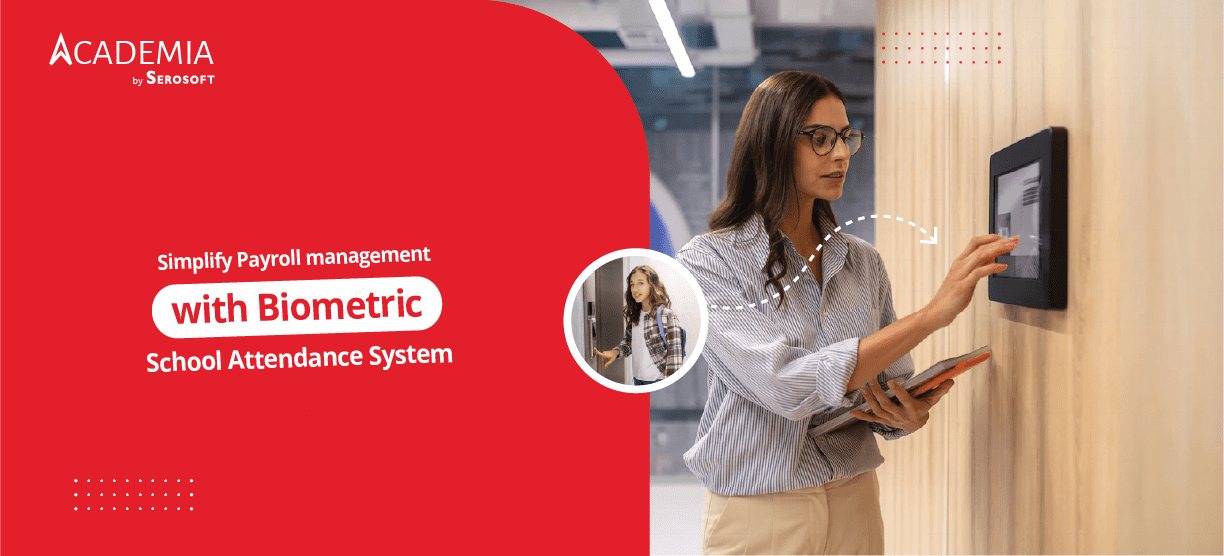
Simplify Payroll management with Biometric School Attendance System

How Does Biometric School Attendance Management Software Simplify Payroll?

A biometric school attendance software is not only a one-stop solution to manage the attendance of your students but also that of your employees. Primarily, schools use the paper-bound attendance management system to process the payroll of employees. However, the inaccuracies may affect the employee experience in your institute negatively, causing you to have a poor employee retention rate. Instead of going with the paper-bound attendance management system, a school can choose a biometric school attendance software that consolidates data across various departments and provides the admin with an accurate attendance report each month to process the payroll.

It is a highly secure, and integrated software that centralizes the information across the institution and makes payroll management easy for your admins. Also, the staff can use the employee portal to manage their attendance-related activities from a single dashboard and enjoy its convenience.

How does a Biometric Attendance System impact payroll management at your school?

Payroll processing is one of the most important tasks that have to be done every month. But it is time-consuming and any inaccuracies in consolidating the data may cause hindrances in the school taxation process.

Using biometric school attendance software would allow you to securely collect the attendance data for the entire month of your employees and consolidates it to provide a report on the education ERP software. Using the data in addition to the payroll processing features and functionalities in the education ERP you can manage the payroll of your employees without any trouble or increased workload

1.Real-time tracking of attendance

One of the most important features of the biometric school attendance software is the ability to review the attendance record of your employees anytime. The data is consolidated almost immediately to provide you with a real-time report. Instead of an administrator performing all the data consolidation tasks, the system provides you with information in a few clicks.

The software reads, stores and shares the entry and exit data of the employees accurately, and has no lag time. This also gives you a comprehensive view of the active work hours of the employee and helps you in taking any disciplinary action against the staff in case of irregularities.

2.No Fraudulent Attendance

Attendance can often be faked and manipulated by employees that would like to hide the irregularities in their attendance records. Paper-based records fall prey to these malicious elements in the school elements and a biometric-based attendance system is the best way to fight off this challenge.

The biometric machine uses biomarkers to identify and mark the attendance of the person. Meaning, even if a person wants to manipulate the data it becomes impossible for them to do so. With the biometric attendance management system, you can entirely eliminate the changes in proxy attendance, fraudulence, and other malicious activities. Hence, payroll processing and penalizing employees for their indiscipline becomes more accurate and easy.

3.Automated Payroll Processing

Any delays in payroll processing may become a reason for the negative experience of your employees. Since payroll processing is a cost-sensitive function, admins have to check and recheck the records just to be extra sure about the amount to be paid to the employees. This was a time-bound, labor-intensive activity until now. With a biometric attendance management system, you can completely automate it.

The education ERP system consolidates the attendance data and reliably tracks the leaves and active work hours of the employees. It does the required deductions and additions to the payroll, person by person, and processes the payment automatically.

4.Reduction in payroll errors

Instead of relying on a paper register in which a person has to declare or give the information of the attendance record, a biometric school attendance system provides more security. It is very difficult to manipulate the data collected by the biometric system and the education ERP software has a role-based access control wherein only the authorized person has the access to centralized data. Also, the software is very efficient in consolidating the attendance record and automating payroll processing. Given this, with a biometric attendance management system, you have software that efficiently manages the data and automates your process without any errors.

Wrapping Up

Hope we were able to pique your interest in this new-age solution to manage your employee attendance. Academia Education ERP has a built-in biometric attendance management system that does this all for you. It is an infallible software product that brings automation to payroll processing and allows your employees to enjoy the convenience of high-end technology in some of the busiest times of the month. Streamlining the process right from attendance marking, to leave management to payroll processing, Academia Education ERP serves as your one-stop solution to manage employee attendance more efficiently.

Meta

Simplify Payroll management with Biometric School Attendance System

School attendance software not only manages the attendance of students but also of employees. Find out how biometric school attendance management software simplifies payroll.

Manage Online Admissions with School Management Software

How to manage online registrations using School Management Software?

Managing thousands of applicants and applications may not be humanly possible for you, but it is child’s play for software like Academia ERP. Check out some of the advanced features and benefits of using School Management Software / School management ERP to streamline your operations and communication with potential prospects and beat the competition.

Important features of school management software to manage online registrations

1.Assigning Unique Applicant IDs to the prospects

A School Management System / School Management ERP eliminates any instances of data duplication. The advanced software assigns an applicant ID to the prospects the moment they initiate the application process. This allows you to manage the admission process of every individual better and improves your communication with the prospect. Also, it makes it easy for you to retain an applicant by fast-tracking their applications easily on passing every stage of the evaluation process.

2.Dedicated Applicant Portal

A feature-rich ERP / School Management Software such as Academia ERP comes with advanced solutions such as a dedicated applicant portal. This allows an applicant to manage their profile on their own and track the progress of their application. It also centralizes their communication with your organization in one place. Along with it, it comes with a payment gateway, allowing an applicant to make stage fee payments for every stage of the admission process.

3.Admission Management

As an organization, you can be benefitted from the gamut of features that come with the software to manage the admission process. Good School Management Software / School ERP comes with pre-admission and admission modules. With School Management Software, you can run marketing campaigns, manage your funds, manage enquires and manage the admission process of all the individuals in one place.

Academia School Management ERP software also provides you with dedicated reports and advanced analytics to boost your decision-making. Also, there are various loaders in the admission module, where you can make bulk uploads of offline enquiries, and applications.

4.Added features

Some of the other interesting features are:

  • Easy tracking and checking of admission enquires & registrations
  • Easy comparison of applicants
  • Statistical reports on the school online application process
  • Easy tracking of number enquires and registrations
  • Easy allocation of seats
  • Easy document collections and management
  • Automated notifications to applications
  • Easy configuration of admission rules
  • Easy scheduling of interview

New Feature in Academia ERP:

Academia ERP now has a new feature which auto-detects the similar reasons for application rejection in the applicants based on admission rules and does it in one single go.

Mobile Responsive Web Apps

A responsive Applicant web application allows a prospect to perform various functions using their mobile devices. It does not require them to use a laptop or desktop thus making it easier for the parents/guardians/applicants to manage their applications and keep track of their progress using their mobile devices.

Data security

Modern systems are built using dependable technology to secure the applicant’s data. The platform allows you to manage and modify data while securing it on all devices. Needless to say, going with a reliable vendor such as Academia ERP allows you to digitalize the admission process while using data security measures such as hashed password storing, data encryption, biometric authentication, two-step authentication, and more.

Let’s wrap it

An advanced school management software allows you to manage your admission process better. It is a feature-rich solution that provides real-time application tracking, simplifies the registration process, automates most operations, and provides a better experience to all stakeholders.

If you are looking for a School ERP system that does this all for you, consider Academia Education ERP / Student Information System. It is a globally trusted software solution that helps you in managing internal and external processes and brings automation to operations. The centralized software system boosts your operational efficiency and allows faster decision-making. To experience Academia consider a free live demo.

What is the impact of remote schooling on software shift?

COVID-19 was successful at putting us all into a box of four concrete walls. But the human spirit has always triumphed over every challenge and this time technology has a big role in it. Education technologies during COVID-19 were a huge success, but now that the world has reopened we are not going back to the traditional ways of operations. Efficiency, transparency, and effectiveness of the education technologies have opened the long-shut eyes of the education authorities and now that they have truly tasted it, there is no going back but moving forward.
Here we are introducing you to the impact of remote learning and how it has triggered a software shift.

What is changing?
Not to miss out on the perspective, it is important to highlight that the education industry has become more open-minded about technology now. Prior to the pandemic we hardly say the shift towards education technologies and changes in traditional operating methods. Although the redundant system was inefficient and did not meet the primary goals of the education sector in most countries such as reduced cost of education, accessibility to knowledge, improved knowledge retention, and more, it continued. This is surprising as even developing countries and major industries were highly focused on digital transformation even before the pandemic.

Although delayed, the shift towards technology is now allowing institutes to perform better even in a harsh economic climate such as now. Also, teachers are now more focused on providing a personalized learning experience to the students and ensuring higher knowledge retention. The technology of today is transforming:
How schools managed their operations?
How communication becomes more efficient between various stakeholders?
How information reaches students?

Learning Tools
The market is bustling with efficient learning tools that are allowing students to boost learning even in an online learning environment. Also, technologies such as AI, ML and interactive whiteboards, etc. are providing richer learning experiences to the students, especially if they don’t comply with the traditional reading and writing learning process.
Taking communication between teachers and students to next level. Zoom alone had nearly 200 million users per day in 2020, which is more than 190 million that was reported in 2019. From an educator’s perspective, interoperable software such as Education ERP has improved their work efficiency by up to 60% through seamless integration with online learning tools.
Lastly, there are collaboration tools that make online education much more effective and allow more seamless interaction in online classrooms. It is allowing large group communication and collaboration between teachers and students, and even teachers, students, and parents.

School Management Software / School ERP
School Management Software / School ERP (Link: https://www.academiaerp.com/school-management-system/) is an advanced education ERP solution that automates critical business operations in an education institute. The smart school software runs on modern technology and architecture that increases scalability and flexibility. It also serves as a shared database for all academic, non-academic, and financial operations where it provides features to manage finance and payment management, Student Information Systems, student lifecycle management, human resource, and workflow management, resource management and implementation, and more.

Furthermore, the reduced cost of cloud-based solutions has made cloud-based education ERP a popular choice for education institutes. The efficient application is deployed over the internet and provides a different portal for users to perform tasks that are important to their work and interest. Also, there is role-based access in the system core admin portal where an administrator can define users and roles to the employees and ensures secure working over a digital platform.

Another crucial highlight of development in the education ERP sector is automation. As technology advances, more and more education ERP solutions are popping in the market offering process automation in tedious education operations such as finance, administration, data management, timetable creation, attendance, and more.

Fees and Bill Payments
Better internet connectivity and the availability of smartphones have allowed institutes to work more transparently and efficiently. Automated billing and finance solution solutions do not require a person to perform time-taking manual processes such as fee collection, receipt management, late fee collection, and creating no-dues for several tasks.
Also, payments done through online sources such as UPI, credit/debit cards, net banking, e-wallet, etc. are easier to track than manual payment collection. Also, online payment processing brings more transparency to the system benefiting parents and students both.

Way Forward
Education technologies have a booming market. And there are solutions specific to the needs of education institutes to meet their newfound challenges. If you are looking for a robust education ERP solution, consider Academia ERP. It is an advanced education ERP suite that comes with features to automate your operations and bring more efficiency into the system.

Beginner’s Guide to Choosing the Best Training Management System

Shopping for technology and software may not be as easy as going to Walmart and adding things to your cart. Needless to say, the stakes are high here, and there is no scope for mistakes. You need to be right, and you need to be right the first time when choosing the best Training Management Software / Training Management ERP for your institutes.

Factors such as features, functionalities, configuration, vendor capabilities, customer support and more decide largely whether a product is fit for your institute or not. To make things more simplified for you, here is everything you must know about training management systems and how you can choose the best TMS for your institute.

What is a Training Management System – TMS? Before starting your search, you must understand what you are searching for and what you must expect.

Although training management systems have become one of the most sought-after technologies of the time, not many people know what they are and what they would actually do in their educational organization.

Simply put, training management software is a well-integrated system or an education ERP suite that is built for training institutes specifically. It has all the features and functionalities that can digitally transform all the internal and external processes.

Meaning, faster operations, powerful decision-making, increased productivity, and efficiency. But most importantly, they can get you a really-really high return on investment too, although it is subjective to choosing the right training management.

Advancements and Enhancements to the TMS The integrated system comes with a student information system allowing you to manage the student records across all the training institutes at various locations. It supports your back-office operations and also, allows various stakeholders such as trainees and trainers, and administrators to access the relevant modules and perform various tasks.

However, one of the most outstanding features of a training management system is that of data analytics. With the increased competition in the market, and the increased needs to efficiently manage your institute in terms of powerful fund management, and decision-making data analytics can be a game changer for many training institutes. It relays more transparency in the operations and allows visualization of data through integrating tools such as BI and others.

Today, training management systems have evolved and are more compatible to secure 3rd party integrations increasing the capabilities of the software ten folds. Also, cloud computing increased data management capabilities and allows faster data computing for increased productivity. Another addition to the TMS has been that of Artificial Intelligence and Machine Learning. As much as the technologies have been seen drastically changing other industry sectors, first-mover advantages can give training institutes a major push in the market.

Say “bye” to the biggest industry challenges
Mismanagement of funds
Mismanagement of human and physical resources
Productivity issues
Data security threats
Inefficiency and decentralized data

How to choose the right training management system?
Vision and Long-term Orientation The vendor must be looking forward to maintaining a long-term relationship with your institute. It is important that they have a good rapport in the market and are willing to go the extra mile for your organization to help you achieve your goals.

A vendor that is willing to get into a long-term service contract with you would benefit you in many ways. It would allow you to upgrade your software each time there is a dire need for technical evolution and support. Also, the configuration would help you in meeting your unique needs.

Organization
Every organization is different in terms of processes and hierarchy. It is essential that the software is easy to configure to match your organization structure. This means giving you multi-center capabilities, allowing you to add support for multiple languages, accepting payments through various modes, meeting regulatory requirements unique to your country, and more.

Total Cost of Ownership SaaS-based solutions are gaining immense popularity. They are efficient, cheaper, and give you more flexibility to choose the right plan as you grow. Also, the flexible architecture of the software allows you to ensure high-end security and gives you complete ownership of the product. While choosing the right solution, you must calculate all the advantages and disadvantages, and if you need to invest more money to enhance your infrastructural capabilities.

Implementation / Rollout Once the product is configured the software would be rolled out on your system. It is important that the product offers you high-end interoperability to allow easy exchange of data and information between various software for improved functionality. Testing and improvements in the product too are very important aspects of the product. There might be some initial hiccups faced by you and the team. Make sure the vendor is willing to train your staff to run the product efficiently.

Expertise You must enquire the vendor if they would be providing you with a dedicated team. It is very important as you might require regular help from the project manager and support team to ensure the product is fitting your needs and is always in top-notch condition.

Usability
One of the most important things is features and functionalities. You must list down all the important functions and operations of your institution that are most important to be digitalized. Now one by one, check if each of these requirements is met with the software or not.

In case, somethings are amiss, contact the vendor if they are willing to make those enhancements and customizations.

Considerations Here are some extra considerations. Make sure the software offers an end-to-end web interface. It should be built on reliable technology and offers high-end data management and security solutions. It should allow role-based access and centralization of data. If you are a chain of training institutes, the training institute management software should have multi-center capabilities. Also, the software must match the capacity level to guarantee the necessary quality level through the server system agreement.

Functionalities It must allow you to monitor, manage and optimize your operations. It should come with finance management tools with real-time cost tracking, profitability analysis and optimization, budget monitoring, and more.

Also, administrative tasks that are repetitive should be automated. Should give you digital solutions to most problems allowing you to focus on important aspects of the training institute. Should come with pre-built reports to offer transparency in the operations.

Wrapping Up These were some major considerations while buying a training management system. Hope this guide would help you sail easily through the selection process. Or we have another option for you. You can consider Academia Training Management System which comes with 30+ modules to manage all the operations in a training institute and gives you multi-center management capabilities. Furthermore, the product offers high-end data security, operational efficiency, centralization of data, and more.

Academia K-12 Student Management System: Explore All 32 Modules

K-12 is an American expression that is used for indicating the public-supported primary and secondary education in the USA, Afghanistan, Australia, Canada, China, Ecuador, Egypt, India, Iran, Phillippines, South Korea, and Turkey. It means student education from Kindergarten to 12th grade, which is approximately 13 years of basic education.

13 years of basic education, thousands of activities every year, and millions of bits and bytes of data that is stored somewhere on your computer or in a large bulky register. In the end, you would realize, managing the lifecycle of thousands of students learning in your organization becomes difficult, and almost impossible due to the inefficiencies found in traditional management.

Modernization of education institutes thus becomes necessary. Accountability has to increase in each department to improve the student experience and ensure higher knowledge retention for better student outcomes. Student satisfaction too is something that is not considered by many organizations as they don’t have the proper tools to render it and also calculate it. With student management software you can change that.

Introducing Academia Student Management System
Academia ERP/SIS is an education ERP suite that comes with advanced solutions to manage your internal and external operations. It has an inbuilt student management module and a data repository with a variety of features and functionalities that allow faster operations, accuracy, and transparency, making lives better for students in your institute.

All 32 Modules Explained

1.Organization Setup
Organization setup is an important tool in your kitty that allows you to set up the software as per your organization structure. It allows you to create departments, manage calendars, add/manage resources, set up fees & payment settings, and more. It is a wholesome tool that leaves no aspect of an education organization untouched and allows end-to-end configuration for optimal working.

2. Campaign & Enquiries Management
Pertaining to the pre-admission phase, you get a dedicated campaign management tool for institutes. The efficient system allows you to manage online, and offline enquires, set up enquiry forms, create reports, and get predictive analytics for the pre-admission phase of the academic year.

3. Admission management
The traditional management of the admission process has many shortcomings such as missing out on important enquires and lack of communication between staff, and prospects. Battle these challenges with Academia Admission Module that helps you in streamlining all the admission-related processes and increases your admission rate significantly.

Fun Fact: Did you know, False Bay College in South Africa reported 100,000 applications in an academic year after the implementation of Academia Education ERP? Check out the full story here.

4. Student Module
One of the finest features of the Academia Education ERP suite, the software comes with a dedicated student web and mobile application. It has all the features and functionality that allows a student to manage their profile and other academic and non-academic operations.

It comes with advanced features such as timetable management, assignment submission, a dedicated drive to store knowledge resources, and communication tools. Also, we recently introduced “Sera” an AI-driven virtual assistant to make app browsing more user-friendly.

5. Fees Management
Fees and Payments is one of the modules in the Academia ERP which streamlines all the transactions happening in your organization. The advanced solution allows you to integrate it with reliable 3rd party payment gateways wherein you can accept online fee payments through credit/debit cards, UPI, net banking, and other options.

Also, the toolset allows you to manage the fee receipts much better. It digitally stores all the information about fee payments and makes it easier for you to keep records.

6. Program & Course Management
The feature-rich module is a one-stop solution for you to manage all the programs and courses in your school. It allows you to create study plans, build reading material, capture student attendance, manage timetables, and generate numerous reports on programs, courses, student engagement, student performance, etc.

7. Timetable Management
Timetable creation and management can eat hours and hours of your productive time and still not guarantee accuracy and ease. With Academia ERP, you get a dedicated timetable management functionality that allows you to manage the timetable of all the programs and courses.

It allows you to create a master timetable and an extended timetable, and manage them. Also, you can import the timetable directly to the system using a pre-built format that comes with the system.

8. Student Attendance Management
Attendance is a repetitive and regular task in all educational organizations. However, it is also taking. You have to consolidate all the attendance data at the end of the day, month and year to calculate the student attendance percentage which is a hassle for the teachers.

With a dedicated student attendance management system, you can do it with a few clicks. This advanced tool comes with reports and analytics and various features to mark student attendance easily to store on a central data repository.

Furthermore, the Academia ERP student mobile application comes with a QR code-based attendance marking system through which students can easily mark attendance. This would completely eliminate the need for teachers to do attendance marking activities on daily basis. Similarly, you can choose attendance Biometric, and RFID attendance marking system integration as well.

9. Discipline Module
It is important to ensure that students are on their best behavior in the institute and are diligently participating in academic and non-academic activities to ensure growth and better prospects. Hence, Academia ERP comes with a discipline module, that allows you to take disciplinary actions against students.

10. Examination and Marksheet Management
Academia ERP offers end-to-end digitalization of the student lifecycle, right from admission to examinations to alumni. Examinations are the most strenuous times of the year. Not only is it stressful for the students but the administration and teachers too are usually drowning in workload during these times. To automate and streamline this phase of the academic year we have some amazing features.

Academia ERP comes with pre-examination, examination, and post-examination features and functionality that end-to-end digitalizes the entire process. Some salient features of the module are: setting up a grading system, resource allocation, and management, fee collection, hall ticket distribution, mark entry, and reports

11 Assignment Management
A book for students and teachers both the software comes with advanced solutions to allocate assignments, define assignment groups, collect assignments, manage them, grade them, etc.

This is a two-sided feature, which comes with student-side features as well, where they get to see their classwork and assignments, and also submit assignments using the Academia ERP student mobile application.

12. Graduation management
Manage student grades, create report cards, and create a list of graduating students without any chances of data mishandling or mismanagement through Academia ERP.

13. Calendar Management
Manage employee calendar, academic calendar, and holiday calendar on the go and bring more seamlessness in the operations. No more creating calendars on paper and circulating them all across your institute. Create calendars that are well-integrated with all the departments, and also with web and mobile applications – bringing ease into the lives of students, teachers, admins, employees, etc.

14. Task management
Task management is another advanced tool that allows employees to create their own task sheet and keep a track of their day-to-day activities and tasks. This allows more transparency in the system and helps your employees to stay highly productive and organized. To take the experience a notch up, there are also dedicated reports for task tracking.

15. Security Gate Management
Not only data security but we also ace security at all levels. Manage your on-campus appointments, manage visitors and enjoy other features in the software that allow easy management of the security gate.

16. File Management
Easy management of files that allows you to secure information related to all academies at one location and perform various tasks. The efficient file management system allows you to upload files of various formats and gives you unlimited storage capacity.

17. Committee management
Manages committees in your organization and its members and activities from a dedicated dashboard without having to take reports from each person. The tool allows you to allocate coordinators and define members with the system which gives you the utmost convenience to manage all committee-related tasks, activities, and communication in one place.

18. Front desk management
A complete solution to manage all your front desk activities. The toolset allows you to check items coming in and going and trackable through item codes. Also, you can keep track of the people receiving or sending items and even bills.

19. Transport management
If you have an in-house transport service for your employees and students this tool is a must-have. The tool allows you to manage vehicle types, add stops, and manage vehicles, and routes. It also allows you to get transport reports including that on any due fees.

20. Resource booking management
Now assigns and schedules all the resources in your organization and ensures there are no hiccups in academic and non-academic activities. The advanced tool allows you to manage equipment, labs, grounds, transport items, meeting rooms, and more.

21. Certificate and Document Management
Create certificate templates and manage important documents to allow easy management of all the certificates and documents in one place. The software allows various departments to use certification templates as per their usability for improved work efficiency.

22. Faculty Management
An end-to-end faculty management system that automates every step fo the faculty lifecycle. Right from onboarding to recruitment to workload management, the advanced tool gives you features and functionality to manage and ensure higher efficiency in faculty with useful data insights.

23. Scholarship / Sponsorship Management
Allocate funds for outstanding students and help them economically to perform better in their education and in their careers. With this amazing tool, you would be able to allocate a specific budget for scholarship and sponsorship and manage it on the go by allocating it to the students and also generating reports.

24. Outcome-Based Education Management
If you follow the outcome-based education theory in your education ecosystem, enjoy dedicated features and functionalities to manage the tasks around it. OBE correlation percentage setting, program and course outcome setting, a variety of reports, and more are some available features that would allow you to manage and perform all tasks for outcome-based education management.

A robust placement management system that allows you to add companies, create job postings, manage job applications, monitor and manage the recruitment process and create detailed reports.

26. Hostel Management
Hostel management software is designed to manage all the hostel activities like admissions, fee collection, receipt management, mess allotment, hostel stores and maintenance activities, inventory management, and more. The tool also comes with attendance marking system and a variety of reports on room availability, attendance, occupancy report, fees report, and more.

27. Election Management
Take your school elections online with a feature-rich election management tool. Academia ERP allows you to manage elections across all the locations and academies for various positions on the go. The digital solution comes with tools that bring transparency to the election and voting processes. This allows you to ensure school elections are centrally managed and also, fairly.

28. Thesis Management
Get a feature-rich thesis management dashboard that allows you to administer, monitor, and evaluate the progress of the thesis creation, submission, and approval from a single dashboard. Furthermore, it comes with a filter system that allows you to filter-out students based on various factors.

29. Infirmary Management
Manage inventory, staff, infirmary beds, student health information, and more through a single dashboard.

30. Messaging and Notification
Enjoy an omnichannel messaging and notification system that allows you to communicate messages to teachers, students, and parents easily over the phone, email, and chat from official sources.

31. User role allocation and management
Manage software users easily from a single dashboard and allow and deny access to the employees based on their work profile and organizational hierarchy.

32. Analytics and Reports
Analytics and reports are one of the most outstanding features of Academia ERP. The software comes with advanced reports that give you a granular view of the processes and operations. Fueled with AI and ML these reports brings predictive analytics to your system where you get to make data-backed decisions and ensure better working between various departments and improve processes.

“1 Million User Login Information Compromised” Meta warns. How can you ensure it does not happen with your school apps?

Facebook parent company Meta is warning 1 million users that their login information may have been compromised through malicious applications. The company identified 400 android and iOS apps that were specifically designed to steal Facebook login information such as usernames and passwords.

This leaves people thinking if a top-notch company like Facebook fell prey to malicious cyberattacks, what is the chance it could not happen with smart school applications?

Given the vastness of the situation, if you are a decision-maker at your institute, it is your responsibility that the smart School Management Software (Link: https://www.academiaerp.com/school-management-system/) that you use is following high-end security protocols to protect sensitive information. To help you ward off security threats, here are some useful tips.

Tips to protect user login credentials for your School Management System or Smart School Apps?

Password Hashing You must handle consumer login information with utmost care. You must contact the vendor and understand how they are storing the sensitive information of the users. If they say, it is stored as a plaintext password, it is a red flag. Go with software that uses password hashing technology and does not reverse the encryption in any attempt of cyberattack.

Biometric Authentication Smart devices are now embedded with biometric authentication tools. If you want to take the security of your school apps a notch higher, consider biometric login.

Biometric login provides you an added security as they would only open the app through fingerprint, retina, face, or voice recognition which is not an easy task to replicate. Also, it is impossible to make breach unless the criminal is in the physical vicinity of the user.

Two-factor Authentication Two-factor authentication is a proven solution to guard the app against unauthorized logins. The powerful system would add multiple layers to the login process and if the hacker is even able to get through the first layer, there is no chance they can get through the second authentication test. This would offer a great degree of certainty about the login credential security of the students, teachers, parents, and employees.

Make sure each layer of authentication should be designed and tagged smartly. You must authenticate a user based on any unique factor, such as OTP verification through a code sent to the user over the mobile phone.

Password Hygiene Always force your users to choose a strong password, it is for their own safety. Take measures such as:
The password should not include personal information (names, phone numbers, birthdays, pet names, or any other publicly available information).
Do not allow dictionary words, proper nouns, common combinations of numbers or letters, etc.
The minimum password length should be 10 characters.
Password should be a combination of uppercase and lowercase letters.
Encourage the use of special characters in the passwords.
Suggest using a unique password for each application.

Limit Login and Password Reset Attempt Limiting the login and password reset attempts is going to be a good add-on to the security. It would top off all the measures and allow you to ensure the iron-clad security of the user account.

Also, in case of any brute force attack, you can choose to inform the user of the attempts and ensure if it were they or someone else. In case, it’s not them, they can reset the password immediately and secure the account.

Limit Session Length Session length is usually underestimated but can be a strong tool to ensure the security of your application. Never go for an indefinite length of the session. You must define a time when the account would stay logged in on the app and would automatically log out.

Wrapping Up These were some tips for you to ensure login credential security on your School Management System. If you are looking for an Education ERP provider that follows all these protocols and has an international standard for security go with the Academia ERP solution.

Back to top