Type your keyword below

Will Online Learning replace the Traditional Classroom

Online Learning vs Classroom Learning

For thousands of years, education has been considered synonymous with traditional classrooms, but with the increasing technology and methods, institutions must opt for modernization and advancement that can lead to the overall growth of institutions, faculty, and most of all students. Various technologies are opting which institutions can create a modern and advanced experience in the classrooms. 

The concept of traditional education has changed over the years and is still on the path of advancement.  Let’s discuss some of the points that can identify whether traditional learning is good or online learning. 

Convenience

Looking upon the learning prospects, online learning is considered the best in today’s time, because it provides and creates a learning environment for learners wherever they want. It allows students to learn in their comfort zone, students can read, study, and learn at their speed having an aim in their mind, But the most important thing with online learning is it requires more concentration and self-motivation to learn. 

Looking upon classroom learning, it involves more time and learners should need to attend the class on regular basis with full concentration as there is no chance of replaying the teacher’s voice, or going back in past and attending the class, this sarcastic truth is the online disadvantage of classroom learning that can be easily ignored using the online learning methods. 

Teaching style

With classroom learning, teaching is often dependent on the teaching style of teachers. Let’s say, if the teacher is saying to repeat and learn something, the students have to follow that method to obey the teacher, this chokes the real grasping and learning capacities of students. Every teacher owns their different style of teaching and students remain with no choice instead follow the instructions given by their respective teachers. 

With the rise of technology, classrooms are being interactive with having multiple options with teachers and students, it provides teachers and students with various options to teach, learn, and grow together. Various technological tools like whiteboards, smart classes, projectors, and applications like Zoom, Skype, and a lot of others have helped educators with lots of learning materials in various formats like audio, images, videos, and texts that gave new hope to the new era of learning. 

Personalization

With online learning, personalization is considered as one of the biggest advantages, it allows every student to create their pattern to learn and grow, students can personalize their content according to their needs and requirements. Along with students it also gives teachers the priority to learn and teach students accordingly. 

With offline learning, personalization of content is becoming difficult as with classroom learning there becomes very few and restricted resources that bind teachers to teach with limited resources ultimately restricting the growth opportunities for modern students. 

Interaction

In this modern world, online learning is also becoming advanced, having a variety of resources like gamification, problem-solving, role-play, storytelling, case studies, speakers, and a lot of others. Good interaction among students and faculty leads to greater scopes of success and growth from both ends. 

In classroom learning, it becomes quite difficult to be in continuous interaction with teachers and students, with this, students only get a chance to interact with faculty in the classroom for a limited time in which it becomes difficult for faculty to solve queries of each student in the right way. 

Analysis

As discussed earlier, classroom settings allow students to learn on-the-spot communication with the teacher, but it does not always provide an exact analysis of students’ progress. Online technological tools like an ERP system provides real and exact data analysis making everything smoother and easier for educational institutions, it provides online access to all the operations from fee, admission, attendance, and examination, everything becomes easier and convenient. It manages everything along with analyzing each factor from faculty, student, and institutional prospect. 

So what’s the conclusion!

So what do you think? Which type of learning method is good for your institution’s growth? Which type of learning is in practice in your institution? Let’s discuss it in more detail, contact us now! 

Download Exclusive Gartner Reports Brought to You by Serosoft (Academia):


The Rise of Digital Education in India

Education in India is changing, student and teacher interaction is not the way it used to be. The transformation from blackboard to the digital board is prevalent and it is growing rapidly. The resource of information is not limited to teachers or books. The curiosity of students is increasing, they don’t have the patience to find answers, they prefer to say “Hey Google” rather than digging books.

Great visionaries were/are able to see this revolution in the education industry. They knew that learning platform like ByJU’s, Khan Academy and NPTEL will gain popularity and trust over traditional mode of learning. These visionaries could see the future of digital education in India.

Not only learning but also managing higher education and schools systems has changed dramatically. Now administrations of educational institutes want to shift to no paper-pen process. Automation of complete academic operation with a single software i.e. Student Management System that can manage all the departments is overwhelming.

Can we say that it is the dawn of digital education in India?
I’ll prefer to say…Yes. But the real grand beginning is yet to happen.

India has a population of 430 million children in the age group 0-18. Of course, all these children have the right to education but do you know how many of them are getting it?

According to the last survey, the enrollment percentage in primary schools is 95%, secondary education is 69% and shockingly the enrollment rate in post-secondary is just 25%.

Reason?

Among 430 million children, India has only around 1.1 million schools in which 97K+ schools are single teacher school. Furthermore, there are 900 universities and 40,000 colleges for higher education in India where the enrollment percentage is only 25%. More than 60% of students(below age 10) dropping from schools in midway.

At present, the overall Student-teacher ratio of India for primary schools is 23:1 in which UP and Bihar have the ratio around 60:1 which is much more than standard. This decreases the quality of teaching and availability of proper resources.

You can see there is a huge gap between students and educators. There is no doubt India is moving toward a modern and more advanced education system. Penetration of education has increased by a big number during the last decades. But to achieve the real potential of this nation, education needs to reach to every single child.

How education will reach every child of our nation?

The answer is Digital Education.

Digital education can fill all the aforementioned gap in our education system. Technology can help to mitigate all the issues. It can increase the quality of learning, reachability of qualified teachers to students in remote areas. Tools like LCD, digital board, free digital library, lesson videos, etc. can help children to gain knowledge in more efficient ways.

Digital penetration of education will help children to grow in all areas. As it is a more interactive way of learning, students will stay engaged to concepts that will be taught, they will pay more attention to details and that will help them to complete assignments on time. One of the most important benefits of digital education is students can learn on their own pace whenever and wherever they want.

Not only in learning the digital revolution in education can also help educational institutes in managing their day-to-day tasks. Student Information Systems can help educators to focus their energy on teaching. It can manage all the administrative operation of institutes.

Conclusion

Digital education in India is ready to pave its way to make an extraordinary transformation for students, educators, and educational organizations. There are many initiatives such as SWAYAM, PRATHAM- LEARN OUT OF THE BOX, etc. are already started by the government of India but we have a long way to go. The collective efforts of tech giants, the government of India and the education industry, can bring the change our nation deserves. It is the dawn digital education in India and the rays are about to brighten the world.

What is a library management system and how important it is for private colleges?

“When in doubt go to the library”

The line is said by a legendary writer of all time- J.K. Rowling.

We all know the importance of books in our life but an educational institute cannot breathe it. And how do institutes manage all those books for every level, for every class?

With a well-organized library.

Unlike primary higher education, schools has more demand for books as our young adults like to explore more and their area of grasping knowledge is vast. Therefore, higher educational institutes always require a proper library with well-arranged structure.

Here comes the library management.

What is a library management system?

A library management system or integrated library management software is a program to help librarians and users in circulating and cataloging items. It helps to manage the database by tracking item movement and keeping other records library. The main objective of the library management system is to increase the productivity and output of the library, librarians and its users.

What is KOHA?

KOHA is a world-famous electronic software to automate all the operations of your library. It’s a full highly scalable, full-featured, economical and easy to use library management system. It supports companies, educational institutes of varying sizes to maintain their libraries.

The literal meaning of KOHA is-Gift that is meant to be reciprocated.

KOHA doesn’t belong to any person or company. It’s sponsored by a group of libraries, communities and support company. It’s free and open source software i.e. FOSS.

It can help in cataloging, creating and running reports with KOHA report module, circulation, resend and accounting of all size, multi-branch libraries. You can also print barcode and labels with this library management software.

KOHA usually comes integrated into a college management system. A college management system is an education ERP software to automate complete academic and non-academic operations of a colleges

Library system in private colleges is very demanding. Due to cutting edge competition and continuous need for advancement, they have to run their system with a very targeted mission.

Private colleges offer multiple courses along with various curriculums to increase the involvement of students. This requires an administrative system fulfilled with all the resources. Resources that also include books, magazine, newspaper, published papers, etc.

Here are the reasons why private colleges need a library management system:

It saves time

Library management system automates all the manual processes in your library. With it, librarians can easily keep records of all the details. They can easily access the data whenever needed. User can also get information about where to find which books and if they are available or not. It saves a lot of time for both the users and the librarian.

It will reduce the operation cost

One library management system can do the tasks of many workers. You can save operational cost with the reduction of manual tasks. Due to time-saving in processing, it can save thousands of dollars.

It will increase productivity

With the complete automation of library information and online data management, it becomes easy to share information among users, librarians, and patrons. With the functionality of time-saving, cost-cutting it increases the productivity of the library and its users.

Are you ready for a smooth running time-saving library management?

If yes, Book a Free Demo now.

Top Functionalities of ERP Modules for Educational Institutions

Enterprise Resource Planning (ERP) solutions serve various functions utilizing different ERP modules to accomplish institutional goals. According to the nature of the business, modules for ERP solutions solve various departmental needs. Since we at Academia ERP provide ERP solutions for educational institutions, we will keep the scope of this blog post specific to education sector. We will discuss ERP modules for educational institutions.

An ERP for educational institutions comes with multitude of functions fundamental to the type of institution it is being used for, per se, University, a single Higher Education institute such as a college, School or Group of Schools. These solutions are also evolving with time as technology is advancing. If you are looking to implement a solution for your institute then we are listing major modules you should keep an eye for.

Major ERP modules for Educational Institutions are:

  • Campus Management
  • Admission Management
  • Campaign Management
  • Enquiries Management
  • Student Management
  • Fee and Billing Management
  • Subject Management
  • Class Management
  • Timetable Management
  • Examination Management
  • Certificate and Document Management
  • Control Panel
  • Business Analytics
  • Human Resource Management
  • Reporting

The above modules are major ones, a full-fledged Education ERP such as Academia ERP comes with 16 modules and is capable of handling the complete student life cycle management – right from admission to course completions till graduation for higher education. It is capable of managing all the departments in your institute with analytics and reporting for centralized monitoring for group of institutes.

Now, since you know about the available modules in education ERP, let’s also learn about the functionality of these modules.

Here are the top functionalities of Education ERP Modules:

  1. Streamlines Admission Process:

Admission process in educational institutions usually involves these steps: inquiry, form sale, form submission, application, document submission, shortlisting, examination, counselling and whatnot. When it comes to higher education institutions, such as college or university the admission process gets more complex. An education ERP solution helps institutions to integrate all the above processes in one module. It simplifies the process for institutes and life of academic staff.

  1. Trouble-free Program and Course Management:

Higher educational institutions run many programs and courses, simultaneously managing enrolments in these courses. Keeping a manual record of all the programs and courses with student enrolment records can become cumbersome. Using a system such as Academia College ERP software can help to easily manage different programs offered by your institute and enrol or remove pupils as per your requirements.

  1. Efficient Examination Management:

Conducting exams is a task in itself, there are many pre-examination and post-examination operations involved such as finalizing examination schedule, setting up exam centre, staff allocation, assessment scheme setup, exam execution, results declaration and distribution, and much more. The examination module in education ERP comes with a complete set of features to make examination process more efficient. Academia ERP also enables you to control the type of marking you want to use. It can also provide a relative grading system to improve the overall result of your institute.

  1. Easily Govern Institute Administration:

With ERP implementation in your institution, it becomes easy to control hostel, transportation, inventory and other administration activities involved. It provides you access to every minute details related to administrations activities and ancillary units fundamental to functioning of educational institutions such as hostels, transportation, inventory etc. For example, with hostel management module you insert the physical design of your hostel like no. rooms, floor, bed, etc. transportation module provides you real-time geo location information of your institute’s vehicles.

  1. Delight Faculties and Students:

With efficient management of student records, admissions, program and courses, examination, administration activities etc. Faculties or teaching staff save a lot of time to focus their time, energy and creativity on academic activities. With the adoption of new technology teachers become innovative with their teaching methods, students are more involved in class, thus, increasing productivity of the institute overall.

  1. Accurate Finance and Accounts Management:

The fee and bill payments module of education ERP lets you manage all the activities related to finance and accounting, such as, fee and bill payment, employee payrolls, scholarships, and sponsorship. This is gives you the power and control to manage the financial records from one centralized system. You can generate all kinds of associated reports such as receipts, bills, outstanding payments, account settlements, etc.

Conclusion

An ERP solution for educational institutions has many capabilities. The technology is the future of education management. We would encourage you to explore the technology in-depth and give it a try.

Do you think you can give it a try for your institute? A free demo can give you an in-depth understanding of the functionalities.

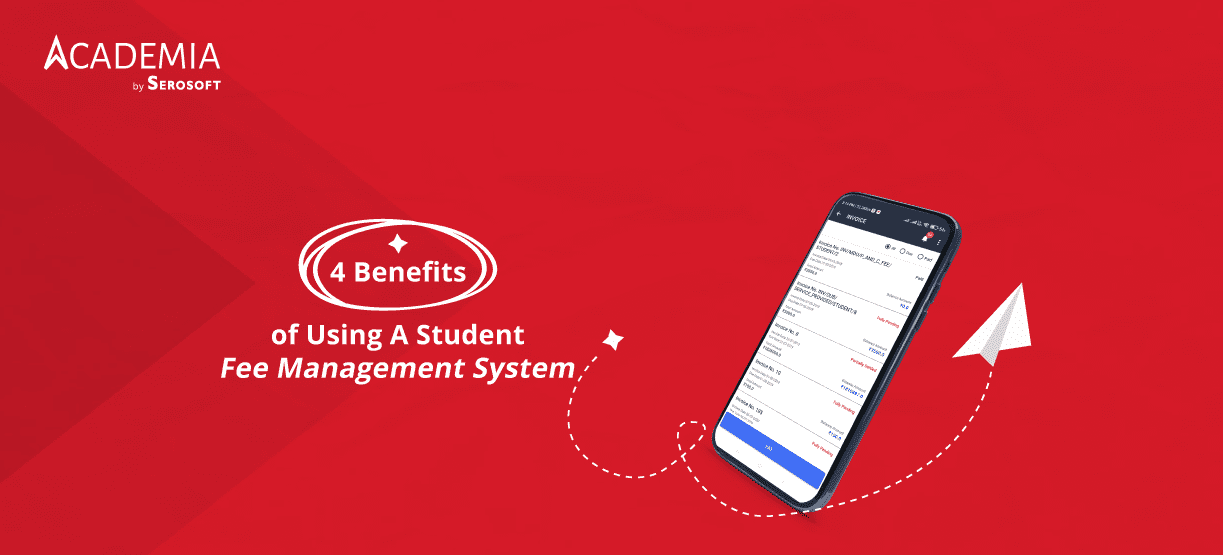
4 Top Benefits Of Using A Student Fee Management System

The fee management process in K-12 and higher education institutions is huge and extensive. Managing it manually is difficult and brings situations of human errors and malfunctioning 

This is the reason most educational institutions are moving onto an online fee management system. It is helping institutions in bringing transparency in all the fee-related tasks targeting ease and efficiency in all manners.

Nevertheless, let’s examine how a fee management system can benefit an institution.

  • A simple and easy-to-implement solution

An online fee management system is easy to implement and easy to use. Institutions need to choose an advanced and tech-updated fee management system that can be very efficient and easily used by all the stakeholders at their ease. Teachers and parents can access it from anywhere at any time.

  • Transparency, visibility, and clarity

An effective fee management system provides complete transparency and visibility in all transactions. Each transaction gets generated, recorded, and logged in a centralized database reducing data redundancy and duplication. All the data gets stored in the system securely and is encrypted with advanced tech solutions. It also restricts role-based data access to the centralized database for administrators and higher authorities.

  • Reminders and updates on time

There are various personal and professional tasks that students have in which students find it difficult to check their due date, collect receipts, check their status, paid amount, pending amount, and other things. A fee management system provides a check on all this, as students and parents can expect SMS and email reminders, and with a highly efficient ERP, it is possible to get WhatsApp notifications for the same. 

With regular notifications and alerts through SMS, emails, and WhatsApp messages, it is straightforward to track due dates, the status of pending and paid amounts, and many other things. Also, the student/parent mobile application also provides a receipt management system that helps store all the details of their transactions. 

  • Streamlined and paperless processes

An educational institution involves multitudes of tasks, data, fee transactions, processes, applications, approvals, and a lot more. With manual intervention, it involves an abundance of papers, files, documents, and even using digitized resources like computers with lakhs of files and folders. 

A fee management system automates and streamlines the complete process and creates a paperless environment. It provides a centralized web portal and mobile application to manage and ease the complexities for all the stakeholders.

The purpose of Academia ERP’s fee management system?

As discussed above there is an abundance of tasks that needs to be managed in an educational institution. Managing fees & finances effectively are crucial for institutions. To this, Academia provides an efficient platform that is its fee management system, it manages and controls all the fee and finances-related tasks and brings transparency, accountability, and accuracy to the whole academic and non-academic processes.

There are various features that the Academia fee management system provides one of its efficient features is – Finance Hold’. This provides institutions the authority to restrict students to participate in activities for which the fees are pending like examinations, admissions, and more.  This serves as a good tool for the institutes to streamline their operations. 

School Administration Management Through Automation

Wrapping Up!

Hope you liked the article and it helped in getting an understanding of the role of the fee management systems in modern educational institutions. 

So how are you managing fees and finances in your institution? Is it still manual or you are using an efficient fee management system? If your answer is a manual one, you immediately need to switch to an automated system that helps your institution in the real aspects. We can help you with the same, Request Demo now and one of our tech experts will get back to you as soon as possible!

5 Mistakes Institutions Are Doing While Choosing Education ERP

When it comes to choosing an Education ERP solution for an institution, decision-makers and administration do multiple mistakes. It is assumed that educators are the decision-maker when selecting an EdTech for an institute, but it’s not like that. Upper management, administration, and educators all are responsible to make a decision for any advancement in their institution.

As they are representative of the institute they are supposed to make effective decisions and set an example for their followers. But it is not always the case. After analyzing various decision-makers of institutes, we realize that there are various mistakes they are making while selecting an Education Technology Solution (Software).

Below are the five such mistakes institutions are making which should be taken care of:

Ignoring the needs of the institution

There are different pain areas for different institutions. Some institutions are able to manage their fee and bill payments some are not. Some institutes provide transportation services for students and employees some do not. There are various kinds of needs for institutions and according to them, there are many EdTech solutions available in the market.

Due to competition and ignorance toward the needs of their institution, they get distracted by multiple options of technology in the market. It is the responsibility of administration and decision-makers to consult with teachers, and discuss with students about the actual need of the institution so that they can avoid waste of time and money on implementing the wrong technology.

Adopting an EdTech that they don’t comprehendInstitutions mistakes when choosing education erp software

The main purpose of implementing an EdTech in schools of higher education institutions is to increase overall efficiency in the management processes. This can be achieved if users understand what they are using.

Many times decision-makers in institutes end up buying technology that they don’t understand completely and the whole purpose of using the solution goes haywire.

Therefore, it is important for institutions they make sure that teachers, students, and other staff members understand what technology they are going to use before buying it.

Not having a proper strategy for technology usage

Technology implementation should be done with a proper plan. Users should know what could be done with the technology in hand. It is the responsibility of the administration department to make a technological model and share it with every other employee, what function is acceptable and what is not. To make the most of technology, it is important to have a strategy for technology usage.

Not preparing educators and other staff

This is the most common mistake that institutions are making while choosing EdTech solutions for their institute. Educators, students, and other management staff are the important user of any technology update in an institute. In spite of that institutes usually, ignore this fact and pre-assume that they will be able to use any technology easily. It is very important to prepare and train educators and other members before making any technological changes within an institution.

Not getting proper training

Education ERP solution providers usually offer implementation and product training. They also provide customer support later on for any query. It is the utmost priority of an institute to have thorough training on the product after the purchase and before implementation.

Without comprehensive training, there will be no output of the product. The administration department of institutes should have a team member from all other departments for the training so that the technology can be used easily and efficiently.

Bottom Line

When choosing an Education ERP for schools or higher education, it is crucial to do a proper analysis of technology, available choices, research of the market, and the status of the institution.

It is obvious to get distracted by the multiple options available and the hype of competition. The main objective should always be kept in mind that you are choosing an EdTech solution to make academic processes streamline, fast and cost-effective not complex and confusing.

Do you know the implementation of an Education ERP can help you to save up to 50% on the operating cost of your institution?

Interested to know more? Then schedule your free demo with us.

How Automation Is Transforming Higher Education

It is not hidden that automation is spreading multidimensionally. We are living on the cusp of automation; robots, artificial intelligence, machine learning, bionic hands, etc are not new. Of course, any advancement or new features still makes us wonder about the capability of science but we are very much aware of its existence in our world.

Why automation?

This era requires a more advanced, efficient, and skilled processing system all around. There is no place for lazy, unproductive work quality no matter what kind of work you are involved with. Business, retail, education, customer service, banking sector, cleaning, etc. everything is running towards advancement.

Time management, productivity, and efficiency have become key principles in the workforce. All these elements for better functionality are being accomplished by technological advancement i.e. Automation.

Being a part of an education domain, my concern moves toward the education sector.

What is automation in education?

NO, I am not talking about a bionic or robotic teacher to deal with students. It will take a few more years to reach there. I am talking about automation in the processing system, in management which is already here.

A study in the US higher education system by a professor at California University found that administrators grew from 3800 to 12,183 between 1974 and 2008 i.e. 221% increase while faculty grew by just 10%. You can have an idea that a huge amount of money is being spent on operational management.

The main goal of the education sector is to attract and educate more students more efficiently yet much of the spending and focus is being given to the administration department.

In this time of automation, there are technologies that ready to streamline and manage administrative tasks effectively. In spite of spending extra money, institutions can arm their staff with these technologies for efficient, productive, smooth academic processes. This would liberate resources for the activities that will directly affect the main objectives – Student and Educators.

Impact of Automation On Education

There are many levels in which automation can impact education altogether. Institutes that are updated with technology such as Education ERP, reshaping the productivity of administrative processes, increasing connectivity between students and teachers, improving the working efficiency of educators and being more creative.

On Teachers

An Education ERP such as Student Management System helps teachers to manage their work in a more integrated and aligned way. This EdTech comes with potential features: record attendance in real-time with the flexibility of time, assignment allotment, grading, and scheduling time table or session diary. These features save a lot of time that free teachers to focus on delivering knowledge which is their main purpose.

On Student

Students in the current time spectrum are more tech-savvy and they are eager to learn more and more. Students are affected most by automation. They get feedback, remark from their educators on a real-time basis, avail all the documents in one platform, upload documents without standing in a long line. With the implementation of automation, they are able to develop a better and meaningful relationship with their educators as both are saving time from tedious academic work.

On Academic Administrative Processes

If you were ever a part of an education system whether in school, higher education, or training institute, you must have a rough idea of how an education institution runs – With tonnes of academic processes. Academic administrative processes perform many back-office tasks like; keeping attendance and document records of each student from each year, maintaining new admission, resolving inquiries, managing bills, payments, payroll of employees and so on. It is the responsibility of the admin department to run things smoothly and effectively. Automation is helping to achieve the overall goal of this department. Everything can be controlled and managed with potential Education ERP software. Automation helping staff members to be more creative and innovative which will help the education institute in the long run.

On Concluding Note

Automation is making the workforce productive in various industries but there is a lot to cover in the Education Industry. As it is one of the most important areas of our social cycle, it needs to be updated with the current EdTech and ready for future possibilities. Many institutions are already availing benefits from automation. It is the responsibility of the government, influencers, decision-makers of the education industry to take a step towards empowering the education system with automation. Moreover, it is the responsibility of us to make it fully functional.

Are you ready to take responsibility to empower the education management system?

A free demo can help you to start. Schedule a free demo now!!!

University ERP- Bridging The Gap Among Students, Faculties, & Parents

Communication is power, it creates a better relationship, builds trust and avoids disposal of improper information.

Even in education industry communication is very important. We are aware of the importance of connectivity and synchronization between faculties and students. But there are many more dimensions to cover to fill this communication gap.

It is prevalent that parents want to be involved in their children’s lives especially when it comes to academic performance. They want to be aware of how their kids are being taught, how they are performing, is there any behavior that needs to intervene, etc.

Not only between parents and student but communication also plays an important role between faculties and students. If a student is updated with all the lessons, assignment details, faculty’s availability and other related information; his awareness will increase and he will perform better. Same goes for faculty.

Here comes the need for a proper system that can enhance the connectivity among all the stakeholders of an institute.

What is University ERP?

University ERP is a software programme that manages all the academic processes within a university campus. It is also known with various names around the globe e.g. University Management System, Campus Management Software or Student Information System.

It manages complete student life cycle from inquiry to graduation till placement. A University Management System streamlines all academic operations with the help of many advanced features.

How a University ERP is connecting students, faculty, and parents?

A University ERP or University Management System such as Academia SIS provides an exclusive portal for parents, faculty, and students. These portals help them to see all the information they require.

University Management System Software- Academia SISWith the help of Parents Portal, parents can check the details of their children such as marks obtained, lessons taught, absentees, outstanding payments, disciplinary actions, etc. They can also track which faculty is running behind in his/her lesson plan and which one is performing better.

If parents stay aware of the performance of their children, they can take the required actions. Moreover, students perform better if their parents are aware of their academic activity.

If there are any inadequacies in performance or any other areas, parents can play their role to correct it.

Faculty with the help of Employee Portal can give assignments, homework to every student; individually or in a group which gives them the power to keep an eye on every student.

What are the benefits of University ERP?

In the olden days when our parents in college, their parents weren’t getting any academic or non-academic performance report of their children, only the mark sheet. Now the time has changed. With the help of Education ERP, parents can be aware of everything their children’s activity from beginning to end, which builds a meaningful and strong relationship among students, parents, and institutions.

Education ERP is the future

It is well known that Education Technology is going to replace all traditional and manual academic processes in the future. University ERP or Student Information System (SIS) brings the parents and institution on the same page, that ultimately leads to a healthy and successful student life cycle.

Is your university ready for an advanced management system? Take the first step and book a free demo now!!!

Why Education ERP Is Essential: 5 Key Benefits

It is the season of admissions. And you be an administrator at a school, college, or university, we are sure you are piled under admission enquiries. We understand these are chaotic times for you that eat up a large chunk of your time. But don’t forget this is also the most crucial and profitable time of the year for your institute.

Are you aware of the fact that there are software programs to take care of the admission process, and they can run them smoothly and effectively?

You came here to know whether your institution needs an Admission Management System or not.

Let us help you to figure out via these questions.

  • Are you facing a decrement in the application and admission rate?
  • Is it difficult for you to track the details of all the inquiries on a real-time basis?
  • Are you missing the target of admission?
  • Are applicants from your institute choosing other institutes?
  • Do you want to increase the efficiency of your institution?

You might find them unrelated to your problems but they are highly relevant for an effective admission process. You will need to go through the statistics and deep analytics to answer these questions.

If you do enough research and ponder these questions you will find, that many institutes are already adapted to automation in the admissions department. They are getting various benefits after automation.

What are the major benefits of an admission management system?

1. Manage Admission Inquiry Online

Pre-admission is the beginning step of the admission process, it turns the inquiry into an application if it runs smoothly. If an institution doesn’t have a proper management process to resolve the query of applicants, the admission rate will go down.

However, with an Admission Management System, this can be simplified. It helps in the opening, closing, and reopening of the inquiries, therefore, helps increment the resolution rate.

2. Easy payment processing

Admissions require various types of payment processes such as form fees, registration fees, enrollment fees, etc. It is a tough task to maintain records of all the payments. Also, it is prone to human error. Admission Management System can help in streamlining payment processes which will be error-free and less time taking.

3. Applicant Status Setting

After applying for admission, students and their parents get eager to check the application status.

They have to call or even come to the institution over and over for updates, which is quite inconvenient for them.

Admission Management System provides features by which applicants can check their application status. Some education ERP, for example, Academia, provides an applicant portal exclusively for applicants, they can it use to check application status, upload and download documents, fee payment, etc. anytime they want.

4. Improved Communication

Have you ever noticed that applicants lost interest in your institution because of a communication gap?

With the help of a student management system, you can avoid this from happening. It provides a chatbot or other communication functionalities that improve communication between applicants and institutions.

5. Uniformity in admission across multiple academies

Do you have multiple academies or are you part of a group of institutes?

How do you manage the admissions process in all these academies altogether?

It might seem impossible but a student management system can manage all the processes in a very smooth way. All admission inquiries, payments, bills, etc for multiple academies can be managed through this system.

Bottom Line

The way of managing academic processes is changing, people are attracted to an advanced, efficient management system with quicker processing time. An institute integrated with updated education technology performs better thereby increasing the students’ satisfaction and admission rate.

Admission Management System can make academic processes in your institute super easy and efficient. Are you ready for the advancement? Book a demo here

How a Student Information System Can Ease Your Pain

Education is a tool to create the future of not only a student but a nation. It’s a pity that least of the focus is given on the management of education operations in previous days.

But,

Like every other sector, science & technology came forward to change an old and disorganized system of education process management.

There are many software and applications that have been invented during the last few decades which are completely centralized to make education processes coherent and efficient. Student Information System, AI, ERP, IoT are some of the advanced technologies that are helping the educational institutes. Among them, SIS or Student Information System is the most favored technology among institutes for automation, scalability, and sustainability.

What is a Student Information System?

A Student Information System is an education ERP that helps higher education institutes to manage all the operations and processes in a more integrated, seamless and productive way. It manages the complete life cycle of a student from inquiry through admission to course completion including placement. It is a tool to bridge the gap between education and occupation.

SIS is a software that is customizable as per the requirement of the user. It is a source to automate and digitize the institute management system.

What challenges are faced by the education institution without SIS?

Student Information System SIS - Academia ERP

After consulting with many institutes we get to know that, there are a number of challenges faced by an education institute whether it is a stand-alone college, university or a group of institutes. The challenges they face are:

  • Administering of increasing student records.
  • Maintaining the connectivity between parents, teachers, and students.
  • Complex and time taking fee and bill payment system.
  • Delay in result and examination due to the inefficient and insufficient workforce.
  • Controlling dynamic examination data in various modes, student wise, subject wise, faculty-wise, etc.
  • Handling different departments for different logistics i.e. hostel, transportation, library, etc.

How a Student Information System is helping the institutes?

Student Information System is helping the institutes to simplify the management processes. There are various modules that come in the SIS for various tasks and the modules help in managing multiple day-to-day tasks.

Following are four benefits of using SIS in education institutes:

Integrated Solution for multiple institutes

You can manage multiple courses of multiple academies from one single web-based solution. There are modules for course setup, organization set up, etc in which admin have the power to set up data and he or she can manage everything from one portal. Apart from that, a Student Information System also provides various portals for various users as per the requirement of the institutes.

Increased Collaboration

With the help of SIS, the connectivity increases among parents, administration, management, and students. This connectivity brings the transparency of the processes that lead to trust in the organization.

More informed and quick decision

Using the Student Management System gives you the power to have an eye on every information of every department and process. This increases the ability to make any critical decisions in the least time which increases the efficiency of the organization.

Increased ROI

Return on Investment is important for an organization for motivation and growth. Student Management System is helping institutes to increase ROI via robust performance and enhanced efficiency. With the help of automation via SIS, institutes are not only able to increase efficiency but also they gain the students and parents satisfaction.

Are you wondering how SIS is making education management process streamline and efficient?

Try a free demo for more amazing features of SIS and witness the impact of technology now!!!

Click here to schedule a Free Demo: www.academiaerp.com/request-demo


5 Reasons to Choose an Admission Management System

We are living in the 21st century in the era of the third industrial revolution. Also known as the Digital Revolution, a century of computer and automation. Every industry is moving toward automation to and the education industry is not behind.

Education Technology or EdTech has become a new trend in the education industry.

As higher education is vast and the young generation is more tech-savvy, they are transforming very quickly into an EdTech synchronized system. Not just students but institutions are also shifting to automated academic and administrative operations through ERP.

Amidst cutting-edge competition, there are few EdTech tools that are transforming the higher education system.

Here are five such trends:

1. Artificial Intelligence

AI has already entered all the major sectors e.g. finance, marketing, and advertising, healthcare, law, etc. Now, many educational institutes are adopting AI in their academic and administrative process. UK-based company Third Space Learning is using AI software to improve the teaching experience of its global network of around 300 teachers.

In some institutes, AI software is installed in the classroom to guide teachers not to lose track of the topic while teaching, to maintain teaching speed for better understanding among the students.

2. Blockchain

The role of blockchain in the next technological chapter is not hidden. The adoption of bitcoin as a legit currency in various countries is one solid example of how blockchain tech is changing the system.

There are many ways blockchain technology in education can help to decentralize the higher education system. Education record and credentialing, copyright protection, course curriculum, innovative learning platform, publishing, library are a few areas where blockchain can overhaul the education experience.

3. Student Information System

Technology is knocking on your door at higher education- academia erpThe education industry runs on number of operations. To manage a student life cycle in an institution from admission to placement is not an easy task. It requires admission management, fee management, inventory management, academic management, various report generation, and much more work.

To make higher education efficient, productive, hassle-free and more centralized education software of Student Information system or SIS is introduced.

Many institutions have already adopted to Student Information System and due to quick run-around time, they are achieving a high return on investment.

4. Virtual Reality

Virtual Reality in education is also widely known as Virtual Learning Environment, which provides immense learning potential in higher education. Educators can enhance the educational experience by using VR practice in the classroom. Tech giants like Microsoft, Google have modified human-computer interaction via gadgets like Microsoft HoloLens and Google lens.

5. IoT

IoT or the Internet of Things has made the main transformation in the retail sector, healthcare, and customer services. According to the basic definition, It is defined as the proposed development of the internet in which everyday objects (other than the usual laptop, mobile, computer) have network connectivity to send and receive data and exchange information.

With the help of IoT, the education sector is availing the benefits of collaboration between students, educators, and administration. It also helps in global networking enhancement of textbooks, attendance monitor system, data collection, and better collaboration.

Why you should use these technologies in your institution?

It is not necessary to use all the tool simultaneously.  You can opt for the right EdTech based on institutional operations and processes.

To enhance the student, faculty and administration experience, for more collaborative processes and streamlined operations it is necessary to use technology in education.

Are you looking for EdTech or software to enhance the productivity of your institute?

Academia is one of the leading education management software that is an enhancer and enabler for the education sector operations. It works for schools, higher education institutions, and training institutes. Try a free demo now!!

Improve your institute’s security system via Blockchain Technology

A few decades ago, people used to maintain ledger books for accounting. However, this is changing rapidly in the world of digital technology. Today, companies across the globe are choosing blockchain technologies that improve, secures and verifies a transaction or review the ownership of a digital asset in public.

The functionality is essentially like a big book added and enclosed, where you can write new information with new information. However, the oldest data stored in blocks cannot be changed. Use cryptography to mark the time and link the contents of the newly added block to each previous block.

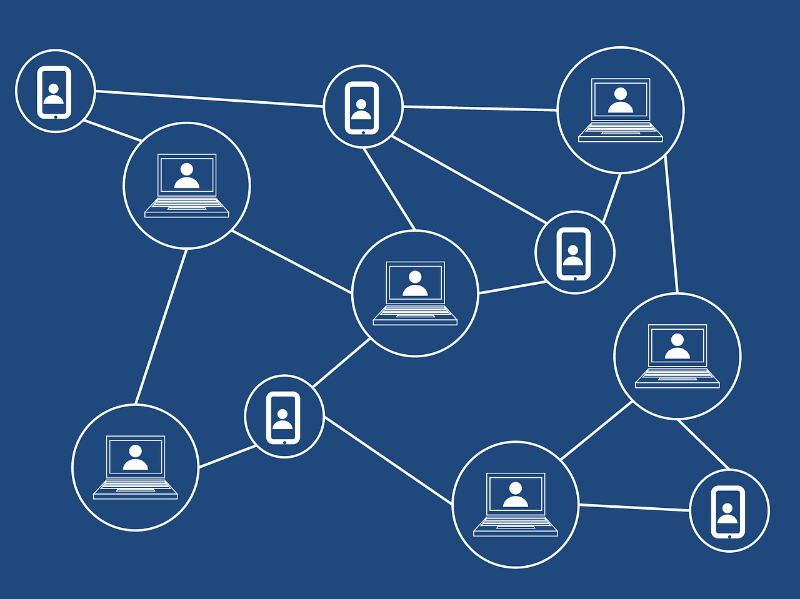
In other words, instead of uploading/downloading data like other systems to a cloud server or storing it in a single place, the blockchain divides everything into smaller parts. These mini-pieces are then distributed on the computer network. The blockchain is a digitally encrypted large book with no central point. Each node has a complete copy of this protocol so that failures in one or more modes do not cause data loss.

For educational institutions and their safety systems, blockchain offer many benefits and can improve the safety of these institutes.

1) Infrastructure security

Blockchain technologies improve institutions safety systems by improving their infrastructure security. Today, institutes around the world are adding cameras to their buildings and playgrounds. By using a security blockchain that provides tamper-proof accounting books, institutes can share security data across large device networks.

2) Institutes Data and Confidentiality

Although blockchain was originally created using a public distribution model and without special access controls, many blockchain implementations are concerned with privacy, an important element in the educational institute.

Blockchain technologies improve security systems in institutes where data can be easily manipulated. However, when encrypted with blockchain data, this data is inaccessible to unauthorized persons. Thus, protecting student data such as names, interest rate details, addresses, etc.

blockchain-technology for institutes security - academia-erp

3) Secure communication between parents and institutes

Blockchain improves the safety of the education system to ensure the confidentiality of information exchanged by Institute authorities or parents and faculties in discussion forums, messaging applications, and social networks. While other news media provide a continuous chain of encryption blocks, they can secure metadata of users who are randomly distributed in a ledger that cannot be retrieved at a single point so that it becomes impenetrable for pirates.

4) Secure storage on the cloud

With the advent of e-learning and cloud computing, students and educational institutions now store more data online. Blockchain technology helps to improve the safety of this cloud memory with tamper-proof encrypted records that protect data and ensure that these not be changed without permission.

5)Validation of the training titles

Reviewing the educational attainment of potential higher education students can be time-consuming, as post-diploma programs require validation of certificates, which is again a slow and complex process.

Institutes using Blockchain technology can offer their students a degree through a mobile app, and students can easily share their credentials with others. Additionally, because of the security of Blockchain encryption, you cannot change your certificates. This is an effective tool against the growing trend of counterfeiting.

Due to its security features, the industry is investing in the blockchain technology. Even educational institutions are rapidly using blockchain technology to benefit themselves from robust NextGen technology.

9 Benefits of Technology and Its Effect in Adapting the Education System of Present Generation

Education is not limited to blackboard nowadays. With the advent of the digital revolution in the 21st century, every organization every department is moving towards digitization.

Technology has made many tedious tasks into more streamlined and smooth work. In education also technology is playing many roles to make education more modern, more aware, informed and updated. There are many software and programmes which are making the education system more collaborative and synchronized. Academia ERP is one of the leading education management programs that is making handling and managing many education systems easier and efficient.

There are many benefits of using technology in the education system in the present generation. I am listing here the top 9 benefits of the technology in the education system.

1. More Resourceful education

Previously there were limited resources to gain knowledge about a particular topic. And if anyone wanted to dig deep in any topic he/she had to go through thousands of books, paper, research work to gather the information.

Today it is not like that; Whether you are a grad student or primary school student or teacher, you can get tonnes of information within seconds for the topic you want to know. Education has become more resourceful with the help of technology.

2. Tedious tasks have become easy

Keeping the record of student attendance, fees, homework, examination, and everything required tedious manual work of hours. It was time-consuming and hectic. With technology like Academia ERP, it has become easier than ever. Keeping the record of everything is simple, smooth and systematic. An Education management system i.e. Academia will ease out your processes and make institutional life simple.

“Academia- leading-edge education management software” has already started working on AI chatbot which will help the institute with auto-generated answers for the queries of the users and make system effectively efficient.

3. Fresh Information

With technology student and teachers, both get the newly updated information. The world is changing a lot and there are new researches, new invention going on every day. If you want to move with the world you have to keep up with this. Technology helps the education system to move with the world. They can find fresh information about every topic they want.

4. More collaboration in the classroom

New tech always attracts everyone. With new technology and gadgets, it has made the classroom more collaborative. The students and teachers can connect in a more effective manner that increases the exchange of knowledge easier.

5. More experiments than theory

Experiments make the learning foundation strong, this is a fact. When student experiment the topic they learn it increase the comprehensive understanding of the student.

With the use of technology understanding and skills of students and teachers both have reached a new level.

Through an ERP solution i.e. Academia, Teacher & student can interact more easily and effectively.

6. No more burden of heavy books

Different book for a different subject, different notebooks for different homework.

Not anymore!!

With the use of technology, hard copies of books are becoming obsolete. They take more space and difficult to handle many books at a time.

Internet and mobile/laptop/tab has helped the student and teachers to reduce the burden of all these papers and books.

7. Technology is a necessary life skill today

Use technology is not a fashion now it is a necessity. It is a life skill to stay forward in the world, to be updated in the world.

If you are aware of how to and where to look to get certain information you are already ahead of 50% in your work.

An education system with technology is a complete structure for student and teachers and management.

8. Technology has changed the relationship between teachers and student

Teachers and student relationships are changing and it is more simplified now. They connect more effectively. The exchange of information is better, effective and comprehensive.

9. Full participation and more fun way of learning

Online poll and feedback of assignment have made the student participate more in the learning. Data analytics and education software have made the teachers/professors find out where the students are lacking so that they can change the classroom program accordingly.

Technology has made education more fun and interesting. As the interaction and knowledge are not limited to simple blackboard drawing. Students are learning in with more focus and with more efforts.

On concluding note:

The education system is what changes the future of the world and technology is helping to make this change in more faster, more efficient and more powerful ways. Present generation very aware of its needs and requirement. There are more Elon Musk, Mark Zuckerberg ready to roll the world. Technology in education is a system is benefiting this generation to reach new goals.

For the bottom line, Academia is the right solution to overcome challenges and success in managing your institute. We provide systems with the right cost that fits your pocket and benefits you enormously once implemented. Academia Provides the best support in the industry. (Look at the client testimonials, how: https://www.academiaerp.com/clients/). We provide training programmes off site and on site as per the institute’s requirements.

Transforming Education In The VUCA (Volatile, Uncertain, Complex And Ambiguous) World

Education! The utmost need and undoubtedly one of the most important pillars of civilization for its evolution, existence, survival and proliferation. The way education is imparted in the millennial era is at the peak of its transformation period where education is no more the transfer of knowledge among a group of students by a teacher. The pace at which the technological intervention has made the difference in the other industries the objective is to embrace and adopt the technology in the most efficient and effective manner.

Across the globe, the educational institutions are now transforming on a large scale hence becoming more and more advanced therefore there is a surge in productivity with a new addition in the resources and their access to different segments resulting in the generation and flow of information encompassing every single aspect of the Education System, Students Information system involving various stakeholders like Management, Teachers, Parents, and Students.

Since the current world is highly volatile, uncertain, complex, and Ambiguous; the aim is to fill the gaps which exist in the current information flow system and make it more and more effective and transparent so that every stakeholder is absolutely aware of the progress and development taking place resulting in 360 degrees development of the education system.


education in the VUCA World - erp software for educational instituteThis can be done by improving the methodology by which the communication is done between the various stakeholders and incorporation of an Education ERP, or Student Information System in an educational organization is a must. This can be a trendsetter in the way the educational ecosystem operates right from the Admission enquiry of a student to follow a complete life cycle like admission, class allocation, Fees and Payments, Attendance Management, exams and reporting, Grading and Ranks and exist of a student resulting him/her to be alumni.
One of the greatest advantages of an ERP is the degree of extensively at which the data can be extrapolated and the spectrum at which it influences the Decision Making. The usage of an ERP results in a complete restructuring of an institution with a streamlined flow of information thus giving them benefits like:-

  • Technology advancement.
  • Increase in Daily Productivity.
  • Increased ROI.
  • Better and efficient communication between the departments across the locations.
  • Smart and automated classrooms.
  • Collaborated and calculated decision making.
  • Combining education with Learning and technology.
  • Improved Engagements.
  • Reduced Work Load.

Therefore it is evident that with the help of an Education ERP; Management, Teachers, Students, and Parents gets uninterrupted access to the vital Information at their Fingertips resulting in bypassing any chances of miscommunication or other issues.

In the end, the objective of an educational ERP is to provide an efficient and user-friendly product so that different needs of different users at various levels can be catered in the most effective manner and thus contribute to developing a positive a long-lasting impact on the Education System.

Want to find out how Academia Education Management System can help your institution to bring effective methodology and better communication among all stakeholders? Talk to our experts for a free demo.

5 Forthcoming Assistances Of ERP Solutions In The Education Domain

ERP plays a significant role in today’s era in all the industries and it will certainly play a vital role in the coming decades as well. When we talk about an ERP system and their correct implementation – it lessens burdens, reduces manual interventions & efforts, and enhances your day to day work efficiency.

Talking about education ERP

There are institutes that invest heavily in ERP based solution but are only using few available features & functionality of the ERP system. This is due to the lack of training process on the institute staff, improper implementation etc. If an ERP system is not set up correctly or not taught properly to the buyer, then you will always be playing catch-up and usually never accessing its full potential. Ultimately you end up doing things the same way you were doing 5 or 10 years ago.
As you know, in progressing & innovative technological world, user-friendly solution demand increases, and automation play a vital role to reorganize the entire process system. We are constantly modernizing new features and latest updates are released to enhance software products especially in the industry like education on regular basis. That will make a huge impact on the institute to raise high on its growth graphs.

Future of ERPERP based solution for education institutes

As high-end technological innovations (i.e. educational ERP) continue to emerge at triple fold speed in education domain, it is crucial for all institutes to go hand-in-hand with the growing technology to embrace the latest game changer in the ERP solution to stay ahead in the game.

Tomorrow’s ERP technology will be creating new standards for accuracy and help us make more informed decisions and indulge in smart systems. We, being the high-end education ERP seller in the industry have found out 5 basic evolution that could be the future of education ERPS. Here’s a brief idea about it and how it will benefit the intuitions in the future:

1. Increased awareness of the ERPs

in the coming era, there would be no institutes without an automation system. All the new generations of employees has amplified ERP solution uses due to its ease procedural. ERP sellers that still develop and support out-dated/obsolete user interfaces or features will face high pressure to create user-friendly, intuitive features.

2. ERP with the Internet of things

ERPs are able to bring a new level of interconnection between all your processes. IoT-enabled ERPs can easily link to all the devices at your institution and bring in sync all your processes at the institute. ERP systems can receive data from various devices and can get auto updates instantly on various place altogether. Such a system would also take charge of data control, delivering information to the ERP backend in real-time, instantly updating attendances and fee payments to keep your numbers and reports ready & accurate.

3. AI to meet the new era’s expectations

Artificial Intelligence is the most important enhancement that’s about to enter the ERP market, you are going to streak out if your ERP isn’t upgraded with an AI function. AI-based educations ERPs can also be making your institute more efficient. AI enabled personal assistant would be invaluable to the institutions in decision making, which is only possible through strong in-depth data analysis.
“Academia- leading-edge education management software” has already started working on AI chatbot which will help the institute with auto-generated answers for the queries of the users and make system effectively efficient.

4. Mobility

Mobility will be the most important requirement in the future of education ERPs, with the classes going virtual it will be important that the faculty/management of the institute will go mobile so that ERP solution will be easy to access anytime anywhere.

5. Flexibility

it’s really difficult to foresee how our education processes going to turn around in the coming years but with continuous advancement the education world is going to get all high-quality ERP solution which will help to end user in their regular processes. ERP for an education industry needs to facilitate a reliable stream of top-tier parts but amid constantly changing product configuration, suppliers, partners, and of course, customers, flexibility is a necessary asset.

9 Benefits of a Fee Management System for Institutions

Student Fee Collection and Management are very vital as well as a critical task for any Educational body. The higher management of institutes invests a lot of time and manpower to handle fee management. Fee Management System is one of the key mechanism in running Universities, Educational Institutes, Coaching/Training centers, and Schools. FMS is one of the most computerized fee calculation components of any ERP system. Other than being computerized at the same time it is sufficiently flexible to accommodate the changeable nature of fee expenditures that most of the educational institutions face day to day. Fee calculation is done on different parameters depending on individual Educational body.

Fee module robotically calculates the entire fee cycle like of individual student like; pending fees, previous fee payment information, deductions, concessions, etc. The calculation of fee for each student varies from student to student depending upon the category they fall in. Adding up to the above, the user (Student / Parent) is also given different options of fee payment like; per month fee, per quarter fee or depending on the monthly cycle fixed by the institute.

User-specified fee configuration and grouping can be maintained easily along with the computerized bill generation option which helps in enhancing the system reliability. Acceptance of fee in the form of “Fee Receipt” can be printed or generated by the system with few mouse clicks. At any point of time, if a user wants to verify his / her collections made and outstanding, this can easily be possible with such kind of system.

fees management system software - academia erpBy implementing the Fee Management System institute can be benefited in the following ways:

  1. Creation of Fee Plan: With the help of FMS we can create a different kind of fee plans depending on different parameters and categories. Fees plans can also be precisely divided into categories like Academic (Admission, Program, Exam, Courses) and Services (Transport, Hostel).
  2. Auto bill generation: In such kind of system Fee bills are automatically generated as per the defined time like; Monthly, Quarterly, Yearly, etc..
  3. Voucher & Receipt creation: FMS generates and issues a receipt for each transaction made with adjustments. Once a student pays the fees system creates individual vouchers along with the receipt which is to be handed over to the individual. It generates and print receipts of fees along with fee receipt no.
  4. Discounts Management: FMS helps in managing discounts till individual student level depending upon different category decided by the management. And the system helps in auto settling the generated bill with the applied discount.
  5. Auto settlements: This feature of FMS helps the student to get entire details about the fees paid. For example, if a student paid x amount of fee for Admission process he/she can get the entire bifurcation of the amount paid for the admission by settling the bill against the receipt.
  6. Fee Due Alerts: This feature is very helpful for both parents and Management. It generates fees due statement with the exact net due-fees of each student. It also displays backlog payment of each fee head like Tuition, Services etc.
  7. Online Payment: In today’s scenario mostly both the parents are working and it is very difficult for them to visit the school/ institution for fee payment as it is a time-consuming process from parent’s point of view. Here comes in picture Online payment through FMS, this helps parents to pay the fee from their home or office at their convenient time.
  8. Productivity: A massive lumber of educational management process related to fee management is moped out with the help of the Fee Management System. It also helps in reducing the dependency of each individual for the manual process.
  9. Accessible 24/7: There is no fixed time for accepting fees as the software works 24/7 which means fee management transactions can be made from anywhere at any time.

Hence, Fee Management System plays a vital role in education system. With the help of our award-winning education management software Academia ERP, we help automate the Fee Management for all higher-Ed educational bodies. Click on the link below for an online demonstration: Click Here

Why Parents Prefer Institutions with Modern ERP Systems

Regardless of the types of education institutes, it is very important for these institutes to use technological tools such as ERP (enterprise resource planning) systems. In most cases, these educational institutions use these systems to ensure that they can manage their organization much better than they otherwise would have. At the same time, the administration wants to offer its teachers and students a better overall experience. In addition, there exist certain reasons in these systems which makes parents fall in love with them. We shall discuss a few of them in the below section.

Registration

Registration is one of the first features that parents love in an ERP system. Today it is a common feature of all the ERP systems at the education institutes. With this system, parents can register their children for the next school year. These systems also provide the option to submit proof of income and online registration forms.

Online support for students

Today, the ERP systems also have online support capabilities that benefit students and parents alike. In fact, these systems are designed so that all authorized persons can view and track the records if they desire. Parents can also log into a window to see if their children are going to school/college regularly or not. The advantage of these systems is that they can see the support in real time and at the same time be informed about the changes taking place.

Fee management

One of the biggest benefits of ERP software is that parents always have the most up-to-date information about the fees they pay for their children. They can always see the updated price plans and stay up to date on this important aspect of their children’s education at all times. With these systems, they can easily take care of all the details and receive notifications about the fees to be paid.

Connect with the teachers

For most parents, it is very difficult to talk to teachers about their children’s performance. They just do not have time to participate in such discussions. However, with an online ERP system, parents can easily connect with students and track their progress or absence. These systems also allow them to see all the details about their children’s performance during various academic examinations and various other exams.

how ERP System benefit parents student

Institute schedule

In most cases, these systems also imbibe institute calendars that provide complete information about the structure of the academic year where one can find details on the following topics and more:

  • Public holidays
  • Events
  • Examination schedule
  • Time-Table
  • Schedule of the conference

Access progress reports

As mentioned earlier, these ERP systems can provide parents with all the information they may need about their children. The most important thing, however, is undoubtedly the progress report. All parents want to know if their children are performing well or not, and the best way to evaluate them is to talk about their progress. With the help of these systems, parents no longer have to wait until the day of the results to find out if their children have been successful. Thanks to these systems, they can also receive this information throughout the year.
As mentioned in the article, these systems also allow parents to know about their children’s performance during various tests and in real time. It also ensures that they can immediately identify gaps in their children’s learning and address areas where there may be gaps. In this way, they can also ask for help in this respect because the additional care before the gap as such is a major problem.

Vehicle Tracking

This is a big advantage of the ERP systems we are talking about here. These are the uncertain times that we are talking about and therefore there is a constant need for parents to know where their children are regularly. This includes all school and college trips as well as the various school/college picnic trips in which they regularly participate. With the help of an online ERP system, parents can get a detailed road map of the bus that brings their children to school and back to school. Also, through the inbuilt notification system, they can get the update regarding their child boarding status and can also get the alerts if any accident or mishaps occur during the travel time.

Payroll Management System

The Payroll Management System covenant with the monetary aspects of employee’s remuneration, stipends, subtractions, gross pay, net pay etc.. and creation of pay-slips for a particular time period. The outstanding advantage of Payroll Management System is its easy accomplishment and the advanced features and reports it includes.
Payroll Management System provides you the command to:

  • Deal with Employee Information professionally.
  • Describes in detail about the compensation, deductions, leaves etc.
  • Generates all the Reports related to an employee, attendance/leave, payroll etc.
  • Creates Pay-record and Pay Sheet all at the click of a mouse.
  • Create and administer appropriately the Payroll Processes according to the remuneration configuration allocated to the individual employee.

Payroll Management System by academia erp serosoft

The payroll management system is the procedure by which an Organization compensates an employee for the toil they have accomplished. Every Business, Company, Educational Institute, University etc… with employees be supposed to have a well-established payroll procedure. An effectual and well-organized payroll procedure will make sure that employees are paid perfectly and without fail, keeping them contented with this aspect of employment and allowing HR to focus on other areas.

PMS appears to be very simple at its heart but turns out to be complex and difficult for the reason that of the various deductions that come to take part in. The organization has got to hold back taxes from each pay packet and make sure exact finances are paid to the correct government organization. The company may also be answerable for subtracting and paying premiums for insurance and putting down the funds into retirement accounts.

Payroll Management system is designed to categorize all the everyday jobs of employee compensation and the filing of employee taxes. These tasks can include so many day to day tasks like keeping track of working hours, calculating salary, preservation of taxes and deductions, direct deposits, paying premiums to insurance carriers, and paying employment taxes to the government.

PMS frequently requires input from the employer on a regular basis. The employer needs to put in employee earnings information and hours per day, then the software uses the information to complete the computation and deduct withholdings mechanically. Mostly PMS automatically gets restructured every time a tax law changes. In this way, it helps employers in the form of reminding them about when to file various tax forms.

Why is payroll Management System important?

For different sectors of organizations, PMS is a very important part as it can help mitigate errors in the payroll process and minimize the amount of effort involved in the form of per Man working hour. The payroll management system is easy to use and many times very reasonable for the business. Business owners can acquire a reasonable system accessible on their local computer or via a cloud service. Companies should also keep away from working with a third party for payroll dealing out, as it helps to keep the information in-house. Using payroll system gives the permit to the management to assemble information at whatever place and time they may like. This system also helps them to make quick changes if at all any need arises. This can be more well-organized method rather than trying to physically generate the reports or get in touch with the third party payroll company to make changes immediately.

Hence, Payroll management system is Heart of every organization. So, we here at Serosoft are trying to help Universities, Group of Institution, Schools & Training Institutes to streamline the Payroll Management with award-winning Academia ERP. Please click on the link below for the Demo.

Request Demo

Back to top