Type your keyword below

5 Step Process to Implement OBE In Your Academic Institution

Outcome-based education or OBE is the latest development in the education industry. It is a type of education delivery model that focuses on mapping, measuring, and achieving pre-determined educational goals. It prioritizes student learning and development by nurturing the pre-existing skills in students to help them grow in their professional and personal life. 

Clearly, it is a major leap from the existing education delivery model where a lot of time and effort is spent on scoring good marks in examinations rather than skill development and knowledge acquisition. OBE thus can help you change that, and provide a definite solution for the increasing problems such as unemployment, skill alignment as per the global market standards, and more. 

If you are thinking about implementing OBE in your education institute, here are some tips to successfully implement it, and ensure better student outcomes.


Outcome-based Education Process – Step By Step OBE Implementation

  • Goal Setting 

First and foremost, it is imperative to set short-term and long-term goals for individual students in terms of learning outcomes, personal growth, skill development, and institute overall performance. Institutes can follow the given steps to define vision and mission department-wise. 

  • Start by brainstorming with experts and experienced faculty of various departments
  • Speak with industry professionals and alumni batches
  • Analyse the opinion and define a solid plan of action 

Once the vision and mission are clear, the institute needs to focus on teaching and learning processes.

  • Program and Education Objective and Program Outcomes

Program Educational Objectives help teachers define the expected outcomes for the students once they graduate, this includes academic and behavioral aspects both that are absolutely necessary to excel in their career. 

  • The vision and mission set in the first step should be central to the action plan.
  • Experienced faculty members and the heads of various departments must draft and share it across their respective departments. 
  • The draft and processes need to be implemented and discussed thoroughly for gaining the approval of authorities. You can iterate the draft to prepare a final draft. 
  • Once the final draft is ready after taking all the considerations of people involved in the implementation process, it is presented to Program Assessment Committee so that it can further be forwarded to Departmental Advisory Board. 
  • The Departmental Advisory Board reviews the points mentioned in the draft and sends them to the Board of Studies & Academic Council for final approval. Once the approval comes in, the draft is taken as a guide to design a fresh curriculum for the students to grow personally and professionally. 
  • Institutions need to analyze the student learning outcomes periodically to identify the learning gaps and rectify them. It is usually focused on Professional Skill Development, Problem-Solving Skills, Industry-Specific Skill Development & Creative Enhancement. 
  • Establishing Program Outcomes 

POs or Program Outcomes are defined as the objective achieved at the end of the specialization or discipline. These attributes are defined while a student is undergoing education and determined when they get a degree. 

Here is a step-by-step approach to establishing the POs for the institution. 

  • The Program Coordinator consults with the senior faculty to prepare a draft for program outcomes. 
  • The Coordinator speaks with alumni, industry experts, and various employers to understand the skill requirement and new trends in the industry. On analyzing the views, a synthesized version of the draft is created and sent to the Program Assessment Committee. 
  • The Program Assessment Committee reviews the draft and sends it to the Department of Advisory Board to get the final approval from them. 
  • Department Advisory Board makes the final decision by moderating the draft.
12 Graduate attributes mentioned By the National Accreditation Board In Their Guidelines to attain POs successfully
PO1 Knowledge PO7 Environment
PO2 Problem Analysis Capability PO8 Ethics of Individuals
PO3 Development & Designing of System PO9 Teamwork & Individual Contribution
PO4 Analyze & Solve Complex Problems PO10 Communication
PO5 Use of Latest Tools & Devices PO11 Finance & Management of Project
PO6 Society’s Responsibilities PO12 Life-long Learner
  • Establishing the Course Outcomes

Course Outcomes are different than Program Outcomes. The objective of CO or Course Outcome is to define the objectives that are achieved at the end of a semester/year. It is basically the outcome that is achieved in theory and practical lessons concluded at the end of the year or semester.

  • CO-PO Mapping Process

To thoroughly analyze if a student has successfully achieved the goals set at the beginning of the process, it is important to map Course Outcomes with Program Outcomes. To do that, follow these steps: 

  • Specify and obtain the course outcomes
  • Map COs with POs
  • Set an appropriate weightage for the CO assessment
  • Measure the COs through assessment given to students
  • COs & POs attainment calculation needs to be done. 

Concluding

Outcome-based Education can help you stand out in the education market and offer a quality education. But for that to happen you must have a great implementation strategy on your hands. Use the above-mentioned steps to achieve successful implementation of OBE. To assist you in your course toward redefining education consider an ERP solution that offers process streamlining, simplified processes, better results, easy CO-PO mapping, and more. Explore the Academia ERP OBE module here. 

Technology in Education: Key Takeaways from NEP 2020

In July 2020, India’s HRD Ministry was renamed Education Ministry and it unveiled the National Education Policy (NEP) 2020, a revolutionary regulation with ground breaking changes in Indian Education. This policy, while focusing on various aspects of education, weaves in technology at every stage. 

The NEP has been welcomed by educators all over the country who insisted it was long due. In the last few years, India has turned itself into an information focused society and it has become the need of the hour to embrace technology in the field of education. The NEP 2020 states that one of the main drivers of the education system will be ‘extensive use of technology in teaching and learning, removing language barriers, increasing access as well as education planning and management’.

It has become even more relevant in the current pandemic situation when virtual learning is the new normal, to re imagine conventional learning and teaching techniques. The Policy drafts a vision of education for the new generation which will help to build a self-reliant India.

According to the policy, a dedicated e-education unit and a National Education Technology Forum (NETF) will be set up to boost digital content, infrastructure and capacity building. Through NETF, Artificial Intelligence, Machine Learning, computing devices and other educational software and hardware will be incorporated into education at all levels to improve classroom processes, boost student progress, support teachers development and streamline administration and management.

Let’s look at some of the key aspects of NEP 2020 dealing with technology.

Primary Education

  • Recognising technology as an aid for teachers, bridging language barriers between teacher and student, creating digital libraries, enabling greater access to education, specifically for differently abled children.
  • Coding to be introduced in school curriculum as an important skill for students to develop.
  • Technology can be effectively used for teacher education and online teacher training.

Professional & Higher Education

  • Technology to be a part of professional education (legal/health)
  • Technology to be used to achieve 100% literacy has been proposed. For this, quality technology-based options for adult learning has to be introduced.
  • Recognising the importance of technology in addressing different challenges of society and to promote interdisciplinary research and innovation. For example, setting up a National Research Foundation has been proposed to grow a culture of research and Higher Education Institutions (HEIs) have been encouraged to open start-up incubation centres and technology development centres
  • The National Educational Technology Forum (NETF) to be set up to serve as a platform for the free exchange of ideas on using technology to enhance learning, assessment, and administration.

Administration of Education

  • The Academic Bank of Credit is to be created, which will digitally store academic credits earned from various HEIs. These credits earned over a period of time will help to grant degrees.
  • Focus on using technology to ensure efficiency and transparency of regulatory bodies like the State School Standards Authority, the Higher Education Commission of India and also its four verticals (National Higher Education Regulatory Council, National Accreditation Council, Higher Education Grants Council and the General Education Council).

Adapting to Artificial Intelligence

  • Recognising the challenges arising from the widespread use of Artificial Intelligence, the Policy focuses on the need to adopt changes occurring due to excessive use of AI across sectors.
  • The NETF will identify and categorise emerging technologies according to their potential and estimated timeframe for disruption, and present a periodic analysis to the Education Ministry, who will formally identify the relevant technologies.
  • The Policy is pioneering the need to generate awareness and conduct research on various facets of the emerging disruptive technologies, including concerns about data handling and security.

Learn How Academia helped bring online class culture at Ashoka Schools.
Download Case-Study Now!

Digital India

  • The Policy foresees creating a dedicated unit to frame the development of digital infrastructure, content and capacity building to take care of the e-education needs of school and higher education.
  • On a national level, the NEP 2020 calls for

> Investing in digital infrastructure
> Developing online teaching platforms and tools
> Creating virtual labs and digital repositories-Training teachers towards becoming quality online content creators
> Designing and implementing online assessments
> Establishing quality standards for content and technology
> Pedagogy for online teaching-learning

It has to be acknowledged that the NEP 2020 has done a path breaking job in incorporating technology in the Indian education system, but this also raises certain concerns and challenges that cannot be ignored.

A large part of rural India is still digitally challenged. According to a government survey conducted between July 2017 to June 2018, the results released in November 2019 say –

(a) Only 4.4% households in rural India have computers as against 23.4% urban households.
(b) 14.9% of rural India has internet facility as against 42% urban households.
(c) Internet users are growing in rural India, though access is almost always through mobile phones, in rural as well as urban areas.

For the purpose of education, it is necessary for students to have exclusive access to any form of digital hardware, be it a smartphone, computer or tablet. However, in today’s scenario, a majority of students from under privileged backgrounds have limited or no access to devices, internet and in some cases, even electricity.

While NEP 2020 recognises these limitations and the efforts to eliminate them with campaigns like Digital India and making affordable computing devices available, practical solutions are needed along with awareness on the importance and use of technology. Also, the human factor of education is crucial and technology is meant to further amplify the learning experience.

The NEP 2020 is undoubtedly a progressive step towards education of the future, with technology playing an invaluable role in facilitating teaching and learning. Hence, it is important to develop a coherent road map for promoting successful technologies and also providing effective data security and privacy, with the help of ed-tech companies which offer holistic education management information systems .

Estimates say that by 2022, the Indian K-12 ed-tech market, including educational ERP softwares, will be worth USD 1.7 billion and post K12 ed-tech market will be worth USD 1.8 billion. The policy also offers an opportunity for cooperation between the various industry stakeholders and regulatory authorities/educational institutions.

Finally, the success of NEP 2020 will depend on how well it is implemented, and how effectively the objectives of the Policy are integrated within the existing initiatives while also involving the relevant stakeholders in delivering the policy effectively.

The NEP 2020 is a great step in accepting that education in the future will mean greater dematerialisation and digitalisation of content and working towards staying ahead of the curve. For a country steeped in a traditional education system, this itself for India is an extraordinary feat.
Top 10 Chain Of schools in India

Education plays a crucial role in shaping the future of a nation. In India, several educational institutions have emerged as pioneers in providing quality education. This blog presents a curated list of the best chain of schools in India, evaluated based on several key parameters. Additionally, we will explore how technology, along with the implementation of an Academic Enterprise Resource Planning (ERP) system, has helped educational institutes excel in their endeavors.

Listed below are the top 10 Chains of schools in India on the basis of their Year of establishment, number & quality of students, and number of schools in the chain.

1. The Ryan International Group of Institutions in Mumbai.

It was established in 1976 and currently operates 137 schools across India. These schools are affiliated with various boards such as CBSE, CISCE, IB, CAIE, and state boards. With an aggregate enrollment of 270,000 students and a faculty of 16,000, the Ryan International Group has a presence in 40 cities across 16 states. This school chain, promoted by Dr. Augustine and Mrs. Grace Pinto, has gained recognition for its commitment to providing quality English-medium education beyond metropolitan areas, extending to tier-II, III, and IV cities. In 2018, the group was honored with the World’s 100 Greatest Brands 2018 award.

2. Podar Education Network, headquartered in Mumba.

It was established in 1927. It comprises 124 schools and 350 preschools, making it a prominent name in preprimary and higher school education in India. Affiliated with CBSE, CISCE, IB, state boards, and Cambridge International, the Podar Education Network has an aggregate enrollment of 150,000 students and a faculty of 6,800. Seth Anandilal Podar founded the Podar Group of Schools, and under the chairmanship of Dr. Pavan Podar, the network has achieved success by focusing on well-trained teachers equipped with the latest digital technologies and a contemporary education approach that prepares students for the challenges of the modern world.

3. Billabong High International Schools, Mumbai.

It started in the year 2000 and has since grown to encompass 30 schools in 21 cities across India. With affiliations to CISCE, CBSE, and Cambridge International, these schools prioritize creating an engaging curriculum that fosters joyful learning experiences for students. Billabong High International Schools emphasize a holistic approach by integrating sports and performing arts into their curriculum. Their dedication to providing an integrated, multi-disciplinary education helps develop students’ creativity, critical thinking, and practical skills. In 2016, the schools were recognized with the Best School Brand award by the Economic Times.

4. The VIBGYOR Group, Mumbai.

It was established in 2004 and operates 33 schools across nine cities in India. Affiliated with CBSE, CISCE, and Cambridge International, the VIBGYOR schools have an aggregate enrollment of 48,000 students and a faculty of 6,000. Founded by Rustom P. Kerawalla, these schools have gained a reputation for setting new benchmarks in quality education. The VIBGYOR schools are known for their unique integrated curriculum, which encompasses classroom learning, sports, performing arts, and extracurricular activities to ensure the overall development of students.

5. The Presidency Group, Bangalore.

It was established in 1976 and currently operates seven schools across two cities. Affiliated with CBSE and CISCE, the Presidency Group has an aggregate enrollment of 15,000 students and a faculty of 1,100. Founded by Dr. Nissar Ahmed, the Presidency Group is highly regarded as one of the top schools in Bangalore. The distinguishing feature of Presidency schools is their meticulously designed curriculum, which incorporates thematic and integrated pedagogies to foster critical thinking and the application of knowledge. Values and life-skills education plays a significant role in preparing learners to face the challenges of the modern era.

6. The Maharishi Vidya Mandir Schools, based in Bhopal.

It was established in 1991 and currently operates in 156 schools across 126 cities in India. These schools are affiliated with CBSE and state boards. With an aggregate enrollment of 102,500 students and a faculty of 6,500, the Maharishi Vidya Mandir Schools were conceptualized to honor the wisdom and teachings of Maharishi Mahesh Yogi. The schools offer an academically rigorous curriculum prescribed by CBSE and state boards, complemented by the Maharishi Consciousness pedagogy. This unique approach combines Vedic education with Maharishi Technology, including practices like transcendental meditation and Siddhi programs that aim to unlock students’ full creative potential.


7. The Kendriya Vidyalayas, headquartered in Delhi

This chain was established in 1962 and currently comprises 1,204 schools spread across 29 states and seven Union territories in India. These schools are affiliated with CBSE and primarily cater to the children of Central government employees in transferable jobs. Managed by the Kendriya Vidyalaya Sangathan, an autonomous body under the Union HRD ministry’s jurisdiction, the Kendriya Vidyalayas offer heavily subsidized fees and are known for their outstanding examination results. In 2019, the Kendriya Vidyalayas achieved a national pass percentage of 99.47% in the CBSE class X exams, surpassing all other CBSE-affiliated schools, including private ones.


8. The Vidya Bharati Schools, located in Lucknow

Were established in 1952 and currently operate a network of 13,067 schools across 29 states in India. These schools have an aggregate enrollment of 3.4 million students and a faculty of 150,190. The Vidya Bharati Schools focus on educating students about Hindutva, patriotism, and Indian values and culture, in addition to following the standard curriculum. The schools provide specially written texts about Indian culture and customs, and all students are required to learn moral education, physical education (including martial arts), music, Sanskrit, and Vedic math.


9. The DAV Schools

This group was founded in 1886, have grown to become the largest non-governmental educational society in India. With over 900 schools, the DAV Schools have an aggregate enrollment of 2 million students and a faculty of 50,000. The schools follow Swami Dayanand Saraswati’s ideals and offer education primarily in English, along with compulsory education in Hindi, Sanskrit, or a regional language. In 2013, the Associated Chambers of Commerce and Industry of India (ASSOCHAM) awarded the DAV Schools with the Best Chain of Schools in India accolade.

10. The Delhi Public School Society

This group was established in 1941, comprises 205 schools in India and 11 abroad. As a non-profit, non-proprietary, private educational organization, the Delhi Public School Society enjoys a reputation as one of the most respected and trusted education societies in India. Founded by Pinkesh Barjatiya, the society began as Church High School and has since embraced innovation in its learning programs. The faculty at Delhi Public Schools focuses on revolutionizing education through ideas and practices that align with new-age educational trends and global associations. Society places a primary emphasis on meaningful and joyful learning experiences for students.

It is worth noting that this list does not encompass all popular school chains in India, as there are many others making significant contributions to the education system. Technological advancements have played a crucial role in the growth and expansion of these institutions.

How Academia ERP Helps Chain of Schools:

Introduction:

In the 21st century, technology has revolutionized the education sector, empowering institutions and chains of institutions to provide an enhanced learning experience. Additionally, the implementation of an Academic ERP/School Management System (SMS) has streamlined administrative processes, leading to improved efficiency. Here are a few ways technology and Academia ERP contributes to the success of educational institutes with multiple branches:


1. Centralized Data Management:

Implementing an Academia ERP system in a chain of schools offers the advantage of centralized data management. With all information stored in a single platform, schools can easily access and update student records, academic performance, attendance, timetables, and more. This eliminates data redundancy and inconsistency while enabling accurate reporting and analysis. Centralization also improves stakeholder communication and collaboration, empowering teachers, administrators, and parents to access relevant information and facilitate seamless interactions. Overall, Academia ERP streamlines data management enhances decision-making, and promotes a cohesive educational ecosystem within the chain of schools.

2. Enhanced Teaching and Learning:

Technology enables interactive teaching methods, multimedia-based learning, and virtual classrooms, making education more engaging and effective. Students can access online resources, collaborate with peers, and benefit from personalized learning experiences.

3. Efficient Administration:

Academia ERP systems automate administrative tasks such as attendance management, fee collection, timetable scheduling, and examination management. This reduces manual work, minimizes errors, and improves overall operational efficiency.

4. Seamless Communication:

Technology facilitates seamless communication between teachers, students, and parents. Online platforms, email, and messaging systems enable quick and effective information sharing, progress tracking, and parent-teacher collaboration.

5. Data Management and Analysis:

Academia ERP systems store and manage vast amounts of data, allowing institutes to analyze student performance, identify areas of improvement, and make data-driven decisions. This enhances the overall academic quality and enables personalized interventions.

6. Parent Engagement:

Technology platforms enable parents to stay connected with their child’s education journey. Parents can access real-time updates on attendance, grades, assignments, and school announcements, fostering a strong parent-school partnership.

Conclusion:

The listed chain of schools in India, considering parameters such as year of establishment, number of schools, number of students, infrastructure, board affiliation, tuition fees, and student quality, showcase a commitment to providing quality education and holistic development. Moreover, the integration of technology and the implementation of an Academia School Management System (SMS) have propelled educational institutes toward excellence by enhancing teaching and learning, streamlining administrative processes, and promoting effective communication. With continuous advancements in technology, the future of education holds immense potential for further growth and innovation.

Importance of College ERP for Stakeholders

In the past decade, technology has become an integral part of many industries/businesses, and educational institutions are never an exception. Nowadays, with the increasing scope of technology, universities, higher education, and schools are incorporating quick decision-making into their current system. Institutions that are seeking a smart school or college management system need to opt for tools and software that can help faculty members, administrators, and other staff to master their tasks with more accuracy and efficiency.


  • Capability to manage academic & administrative tasks 

The current scenario of educational institutions involves a bundle of academic and administrative tasks. Right from admission enquiry to the alumni of the student, the administrators, faculty members, guest lecturers, and researchers find it difficult to manage all the operations manually. 

To this, a college ERP software can be the best solution, it can provide administrators and faculty members manage all the operations efficiently using just one single software. It can avail faculty members to manage all the important objectives in just a few minutes of tasks. 

  • Remote admission process 

Admission season is considered one of the busiest yet most important seasons in any educational institution. In completing this process, the staff, administrators, and faculty members get frustrated with the manual interventions in the institutions. In today’s scenario, institutions must choose technologies like college ERP software that can become a savior and help in managing all the admission-related activities remotely, quickly, and accurately. It also enhances productivity and boosts faculty morale in positive ways.

  • Efficient examination management

The examination time is also one of the hectic periods for educational institutions. It includes a bulk of tasks like question paper generation, hall ticket distribution, examination sheet checking, result, and more. So in the paced world, institutions must opt for good software that can help in automating the complete examination process and help in validating a fruitful examination season for students, faculty members, and ultimately for the institution.


  • Synchronized attendance management 

Attendance is also a crucial element of administrative processes in an institution. An effective attendance system brings success for students and also for the institute. Institutions that are still following manual processes always find attendance management a confusing and hectic process. It also creates a wall between the faculty and parents as faculty members are not always able to share the exact attendance details of students in an institution. 

An automated attendance system brings efficiency to the institution, improves student performance, and ensures trust between parents and faculty. Automation of attendance processes using biometric integration or directly through the portal can help institutions bring efficiency in different ways. 

  • Accurate financial aid 

Managing financial aid in universities, colleges, and schools is a difficult task for administrators, faculty members, and even for students if done manually. There are multiple fee structures, various departments, and of course a huge number of students. 

Meanwhile, institutions can make the complete finance process easy, flexible, and transparent. It gives a true platform and connects the entire process for just one or multiple campuses simplifying all the fee-related and financial operations of the institute. 

  • Student lifecycle management

A student is considered the most important stakeholder of any educational entity. Almost all of the tasks in the institution are connected to students. Faculty members always find it difficult to manage and organize students using the manual intervention. A school or college ERP software can attract students, track their interests, and nurture them accordingly. It also can help institutions engage students in real prospects and provide faculty and parents with real-time analytics for student tracking and enhancement. 

  • Data & information management

Educational institutions involve a huge amount of student data for managing school affairs systematically. In manual intervention, it becomes crucial for faculty members to manage data in papers, files, and documents. 

Automation through a robust ERP/SIS can help institutions streamline the complete processes and manage student data. It also helps to store, organize, and manage all the data in a centralized manner that can be easily accessed, edited, and updated from anywhere and anytime by faculty and parents according to the authority. 

  • A hybrid method of learning 

In today’s advanced and technological world, it is important for educational institutions to opt for a hybrid method of learning. A combination of both online and offline methods in the classroom using new technologies like artificial intelligence, virtual reality, augmented reality and more can help institutions ease student learning and teaching process. 

Conclusion 

A college ERP can be the best solution for educational institutions, it can provide robust management for every stakeholder, especially faculty members and students. Hope you like the article, still having doubts? Let’s discuss this now! 

Capability to manage academic & administrative tasks 

The current scenario of educational institutions involves a bundle of academic and administrative tasks. Right from admission enquiry to the alumni of the student, the administrators, faculty members, guest lecturers, and researchers find it difficult to manage all the operations manually. 

To this, a college ERP software can be the best solution, it can provide administrators and faculty members manage all the operations efficiently using just one single software. It can avail faculty members to manage all the important objectives in just a few minutes of tasks. 

5 Ways Technology Can Help Save Costs for Academic Institutes

The growth of educational resources and online courses being offered today are a clear indication of the shift to technology and how it’s changing the landscape of the education industry. 

Every year there is an increasing number of students opting out of attending schools and colleges physically. With many study options available, a lot of which are online and comparatively cheaper, technology is playing a huge role in making education accessible and cheaper than ever before. Even long-distance or work-based learning, as well as apprenticeships, are becoming available online, which reduces the total cost of education by permitting interns to live at home and learn and earn. 

Today, when the world has been ravaged by COVID19 in an unprecedented way, education is one field that has managed to deliver, without any hiccups. Educational institutions all over the world have quickly moved all their teaching online and are making sure that students are gathering every bit of knowledge and learning that they would have, on campus. 

While online education may be the need of the hour right now, technology has always proved to be a gainful investment for educational institutions, one of which is saving on costs. 

Let us explore 5 ways in which technology can help save costs for educational institutions. 

1. Using the cloud instead of the copier

Educational institutions have seen the enormous potential of the cloud and more and more schools and colleges are moving over every year. A market research report had predicted a 26% annual growth in cloud computing in schools through 2021. Needless to say, with the ongoing pandemic the numbers would inflate too much more than that. 

Cloud technology has plenty of instant benefits to academic institutions like –

  • It does away with the need to buy expensive printed textbooks, which become outdated quickly. Using digital content allows easy regular updating as and when necessary, which also saves cost substantially for the school. 
  • It minimizes the requirements for expensive hardware like servers, which call for ongoing server room cooling, maintenance and a huge amount of space. 
  • It reduces the use of toner and copy paper, along with saving the time spent on making copies every week, while also reducing carbon footprints. 
  • If there is ever a loss or a need to track down a paper trail, a cloud system will give easy access and swiftly recover data.

2. Taking advantage of the VoIP over the traditional PBX

Switching over to the VoIP phone system has helped schools and institutions to cut down costs by lowering phone bills and having access to new automation features to further boost productivity. 

VoIP providers often offer free internal calls making it possible for teachers, administrators, and anyone with a phone connected to the phone system to call each other without any charges. Larger schools and institutions can save a substantial amount by using a VoIP phone system since all the frequent calls made within a school system are considered in-network and will be free of charge.

A VoIP system is cheaper to maintain than a PBX system. It can be installed quickly with adding and removing of phones done simply. A hosted VoIP system comes with free 24/7 support staff. 

3. Opting for the digital platform over manual  

In this age of technology, it is a challenge for educators to constantly keep the learning environment engaging and relevant. It is important for them to keep the communications and information flow of the school community completely smooth and secure.

While it may seem migrating to a digital platform would require huge budgets, truth is, it is the crucial factor that can actually cut costs, boost productivity and save time which is otherwise wasted on administrative tasks. With digitization, teachers and administrators do not have to spend time with old machines, including outdated computers, printers and slow networks; and could use their time for more productive work. Teachers have the advantage of using technology to produce more creative learning opportunities for students. On the other hand, students get accustomed to technology at an early age and learn valuable skills which will sustain them for life. 

4. Using special-purpose applications for better efficiency

Educational institutions have started to see the utility of application that can help them manage a lot of departments better. Since educators know they have the responsibility of building the careers and lives of a whole new generation, they understand there is no scope for mistakes. Switching over to digital helps to make sure there are no errors in statistics and work flows smoothly as programmed. They are moving to the use of specifically created applications to better manage food services, school buses, utilities like electricity and cooling/heating, textbooks, etc.

Besides the smooth functioning and management of various departments with the use of various applications, educational institutions are also saving money by eliminating the need of human intervention and physical work.

5. Availing digital documents over physical material

One important aspect of knowledge is, it needs constant updating. Going digital helps to quickly and efficiently update new material online with adaptable changes. Content changes and delivery, digitally, lowers the cost of printing the new material and also gets rid of the reliance on physical printed content and copy.

While education institutions wake up to the importance of technology and seek to empower themselves with the latest, it is the SIS (Student Information System) that has proved to be the groundbreaker with the advantage to connect, teach and manage better. One of the most important roles technology plays is to handle evolving requirements and efficiently manage multiple modes of communication. 

Academia SIS has been specifically developed to suit the current and future needs of growing higher education institutions. It is a unique multifeatured solution for Group Institutions, Business Universities, Colleges, Schools, etc. and automates the complete student life cycle.

Undeniably, the best technology solution to successfully lower costs while providing an edge by enhancing connectivity among students, teachers and parents.

For the education institutions, while adopting technology helps to cut down costs, it also works for students as the expenses go down considerably with online course materials and other associated expenses. Hence, a win-win for all. 

4 Ways to Bring Institutional Effectiveness in Higher Education using Student Information System

It’s the 21st century; an era of digital transformation. It becomes vital for educational institutions to make the best use of the valuable time of staff & teachers and to maximize return on investment while also meeting the needs of tech-savvy and increasingly demanding millennial and gen-z students. Traditional labor-intensive administrative systems and irregular manual processes no longer meet these needs. So why should you let them hold you back?

Automation in education is playing a vital role in not only transforming the institution management but also enhancing student satisfaction, bringing productivity, and improving the overall performance. With software like a student information system, the dreams of institutions are becoming true, bringing institutional effectiveness owing to its capability of managing the entire campus and handling the complete student life cycle.

Before you can learn the way of using software for your institute management let’s learn what institutional effectiveness is.

Definition of Institutional Effectiveness

According to the SACSCOC Resource Manual, “Institutional Effectiveness is a systematic, explicit, and documented process of measuring performance against the mission in all aspects of an institution.”

Or in simpler terms

Institutional Effectiveness is all about bringing quality to education, administration, management, and everything an institution stands for.

Fundamentally Institutional Effectiveness in Higher Education comprises of the following:

  • Extensive institutional research
  • Accreditation
  • In-depth review of administrative processes
  • Strategic planning
  • Student performance analysis
  • Assessment of planning and optimization

Nowadays many higher education institutions are gearing up to bring institutional effectiveness and trying to optimize their daily practice to meet the benchmark. It helps to gain a competitive advantage, makes better-informed decisions, aligns all administrative processes and requirements, improves student completion rates, and much more.

Let’s find out how the best student information system can bring institutional effectiveness to your institution:

Complete roadmap of institution

Going digital in institute management gets you the complete roadmap of the campus and all the activities within that. With a centralized data platform, you get to see all the information. It helps to categorize the processes scoring to their priority and thereby you can make the proper planning of where you need to make most of your investment vis-a-vis Time or Money.

Review of administrative processes

The student information management system unites all the academic processes. With interoperability and multiple integrations, it becomes quite easy to manage, monitor, and control day-to-day processes. Being an education leader or decision-maker you can review these processes with a few clicks. This helps to take proper action to optimize the processes which are not aligning with your mission and vision.

Analytics report and decision aid

Nowadays, data analysis has become the power to understand, evaluate, and grow any business. It’s very much apparent that higher educational institutions are inundated with huge data information. Hence, sometimes it becomes difficult at times to keep track of every piece of information and manage them effectively. Thanks to the analytics & reports feature of student information management software, educators can generate categorized reports for all the departments they need. It gives them valuable insights into institutional processes and aids them in faster and more informed decision-making.

Return on investment and its assessment

Along with maintaining an effective management system, providing quality education, and meeting students’ & parents’ demands; it’s crucial for institutions to meet the target of return on investment. Shifting institution processes management into a digital platform not only gives seamless & efficient workflow but it also reduces expenses. Education leaders get a high return on an investment after the successful utilization of education software. It reduces paper cost, storage cost, printing & mailing costs and allows teachers and staff to utilize their time on other priority work.

Conclusion

Institutional Effectiveness is an ever-evolving process just like an educational institution in itself. But there are some fundamentals that need to be tracked, analyzed, and implemented at the right time. The above-mentioned benefits of a student information system are to give a broader perspective to learn how it can help higher education to achieve its mission and vision. There are more ways by which you can bring productive administrative management.

Give your teachers, staff, and students the time, clarity, and control they need to make a difference and build institutional effectiveness—with the Academia Student Information System. Learn more about it with a FREE demo. Talk to our expert now!


Academia by Serosoft Features in Gartner’s Market Guide For K12 Student Information Systems

After being featured in Gartner’s Market Guide for Higher Education Student Information System, we are thrilled to get featured in Gartner’s research in their report, Market Guide for K12 Student Information System, published on 2nd April 2020. 

As the adoption of digital transformation is increasing in educational institutions, being included as a key representative vendor of the Student Information System is surely a validation of Academia being one of the driving forces for creating changes in the education eco-system.

According to Gartner’s report, “K-12 education organizations continue to bring new requirements and expectations to this category. With such a long-term investment, K-12 CIOs and education leaders will want to understand the SIS marketplace and how it might influence future planning.” Institutions are migrating to SaaS-based solutions, which virtually every SIS vendor is offering now. It has been the impetus for many K12 institutions to shift to automation and move out of the conventional method of institute management.

The report also mentions that Student Information Systems digitizes administrative processes and streamlines many day-to-day tasks such as online enrollment, curriculum management, etc. Due to the interoperability standards that SIS software offers, institutions are relying heavily on automation for data resources.

The key features of Academia SIS:

  • Student data information
  • Registration and enrollment
  • Online registration 
  • Attendance
  • Calendar management
  • Grades and transcripts
  • Fee management
  • Health and medical records
  • Teacher portal
  • Parent and student portals 
  • Applicant portal
  • Administrator portal 
  • Standard and ad hoc reporting 
  • Data Analytics
  • Mobile app 

“We are thrilled to be recognized by Gartner as a key representative vendor of the K12 student information system. It’s overwhelming for us to be a part of the Gartner report for the second time in a row after being featured for Higher Education SIS last year. This places us among the top vendors in the world in the School Management System category. We are perhaps the only company from India to be on this list. Cheers to all the hard work put in by all of us, Serosofters!” CEO & MD Serosoft Solutions Pvt. Ltd.

About Gartner

Gartner, Inc. is a global research and advisory firm providing information, advice, and tools for businesses in IT, finance, HR, customer service and support, legal and compliance, marketing, sales, and supply chain functions. Its headquarters are in Stamford, Connecticut, United States. 

Founded in 1979, Gartner is the world’s leading research and advisory company and a member of the S&P 500. With over 100 offices globally, it provides business leaders with vital advice, research, and tools to achieve their vision to build the thriving institutions of tomorrow.

Gartner Market Guides help organizations understand the digital market, trends, and the significant attributes that impact it. It helps chief officers and authorities observe which vendors have a good track record and which service providers can be trusted so that they can make informed investments in the right solution at the right time.

5 Ways in Which a Right SIS can Empower Higher Educational Institutions

Higher education institutions must go through a paradigm shift with the modernization in the education industry. It is the right time to bring complete digital transformation and automation to the education sector. 

It is the right time institutions should adopt technologies like student information systems to automate all the academic and administrative operations improving efficiency and effectiveness in the institution. 

Do you know how a student information system can empower your institution? Let’s discuss it in more detail and understand ways in which a right SIS can empower higher education institutions. 

What is the Student Information System?

A Student Information System (SIS) is software that is used for every facet of education. It provides complete management of all educational operations including admissions, applications, scheduling, examination, and other tasks. These can be managed using a single system bringing complete automation and digital transformation. 

5 Ways in Which a Right SIS can Empower Higher Educational Institutions:

  • Fostering collaboration

Communication and collaboration are crucial factors in any educational institution, it needs to be crystal clear at every stage. Students, parents, and faculties need to collaborate and communicate properly to manage things in a better and more organized way. 

A right Student Information System provides proper and easy management of all the academic and administrative information management fostering collaboration and communication in the best possible way. It provides a platform through which parents can contact the faculty anytime along with providing their feedback in the best way. 

It promotes healthy communication targeting more growth and opportunities for educational institutions. 

  • Easing students day to day operations 

Students are considered as one of the most important stakeholders of an educational institution. The right student information system provides students with complete access through a portal and mobile application that triggers a seamless learning experience automating and streamlining all the academic and administrative processes like enrollment, records, teaching, homework and assignment, library management, and a lot more.

  • Building student-faculty relationships 

Students and faculty are considered as two separate entities that are dependent on each other and who need to maintain effective relationships. A student information system provides connectivity and synchronization between faculties and students managing attendance, enrollment, admissions, examinations, and a lot more operations. An SIS allows faculty members to send notifications for students at any time and students also get the opportunity to contact faculty at any time whenever they feel the need. 

  • Effective financial aid and management 

It is the most critical part of any educational institution. With manual intervention, institutions often feel it is a complex process as it involves multiple transactions, long queues, more staff, and a lot of many things that sometimes create chaos and confusion. A student information system provides complete financial aid and management of all the fee-related operations providing students, faculty, and staff the accessibility to attain any fee-related transactions through the mobile application and the portal. 

  • Efficient examination and assessment management 

Examinations are considered as one of the most necessary seasons in any educational institution, it needs to be effective and seamless with all the functioning at all ends like exam admins, staff, faculties, and exam center manager. It requires frequent communication with all the members involved in the processes plus students, ensuring everyone is aware of the same information and last-minute confusion can be avoided. 

A right and effective SIS provides complete management of the examination process covering aspects from exam registration forms, exam execution, marking schemes, results, the printing of mark sheets, reports, and making it a seamless and efficient process. 

Closing Notes 

The Student Information System is a broader concept and it includes much more functionalities than the above-mentioned features. It also includes various features and modules that are built to help staff, faculty members, and students bring better workflow. If used, it can bring a high ROI with time. 

A right SIS like Academia can empower institutions to bring high productivity and efficient academic and administrative performance. So, are you ready to explore the fantastic features of Academia? Try it with a free demo. Book Now!


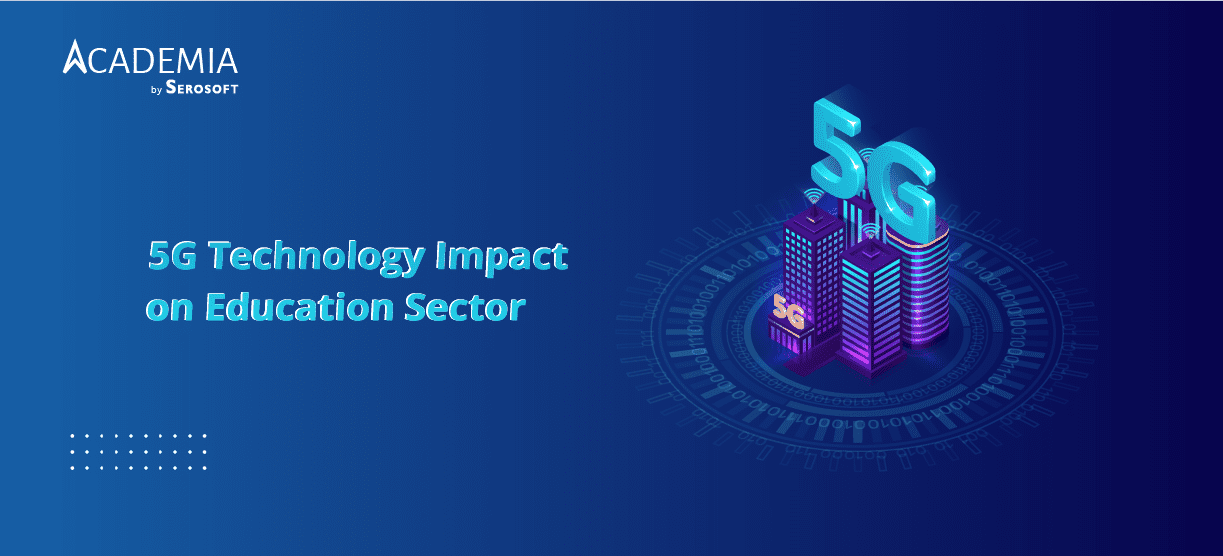
4 Reasons Why 5G is a Game Changer For the Education Sector

As the world announces to go 5G bound, every industry in the world is busy paving the way for it to be used in the segment. 5G, or fifth-generation wireless, is a new iteration in cellular technology that is said to bring great speed and responsiveness into wireless networks. This means the world is ready to go wireless in the truest sense, and virtual reality will take over. 

With so many things being said and stipulated around technology, we also have some speculations about technology usage in the education industry. 

How is 5G different from 4G? 

To start with, 5G will take the internet experience to the next level. It is on a new level, even though both 4G and 5G are wireless technologies. Latency, i.e., the delay between sending and receiving the information, is very low in 5G technology. Hence, faster delivery and seamless experience using gadgets, software, digital tools, etc. 

With an extremely low latency rate, 5G technology would allow faster educational delivery and make the user experience more immersive while using a variety of educational technologies. In comparison, a 5G cell tower can hold and support about 10 times more devices than a 4G cell tower. This will completely change the education landscape with greater bandwidth that supports superior communication over larger distances. 

How is 5G going to transform the education industry? 

Generally speaking, 5G can improve the quality of video conferencing, add haptic response capabilities, improve the immersive learning experience and allow educators to use VR and AR in the classrooms. Along with it, it would support a higher degree of personalization. Here are 4 ways in which 5G will be a game changer in the education industry. 

  • Improved interaction between teachers and students. 

If you are using any conferencing application such as Zoom or Google Meet, you are likely to experience lags and breaks in the connectivity. This negatively impacts education delivery in an online or hybrid learning environment. But with 5G, there is very little chance you would face such a problem. 

During online classes, you would not be required to wait for the program to load and reconnect, and hence would make connectivity between teachers and learners even easier. It would improve the knowledge retention of a student better in an online learning setup, would keep them engaged with the curriculum, and is likely to increase their participation. 

Similarly, students could download videos and learn material faster, and cool technology such as holograms, VR, AR, etc., can be effectively incorporated into the classrooms. 

  • It Brings in an immersive learning experience 

Although online learning in the devastating times of COVID-19 indeed became a saviour, it still had some limitations. Skill transfer, lab work, hands-on experience, and related activities were outside the scope of online learning tools. For this, extra tactile stimulation is required to offer the equivalent learning experience online as in real-life. 

With 5G, technologies such as AR and VR can provide an immersive classroom experience and allow students to explore complex concepts through zooming, pinching, and touching. Tools that can stimulate haptic responses (feeling of touch, motion, or interaction with physical objects) to introduce a variety of learning tools into the classroom other than traditional video conferencing that can increase student experience and engagement. 

  • Personalized learning experience 

The one-size-fits-all concept is ceasing in the education industry. Education authorities worldwide are realizing the power of technology and its capacity to provide highly personalized experiences to students. With 5G just around the corner, it is likely to improve personalization by creating intelligent systems. These systems would constantly analyze the student’s behavior and give near-accurate reports about his unique abilities, learning styles, preferences, and other attributes. 

Another trend that has been brought to reality with 5G technology is virtual teaching assistants. Which can assist a student in learning and provide a personalized experience as per their performance analysis and preferences. 

  • Access to knowledge and education

5G will likely democratize education. With technology, education would become more accessible and become more inclusive, and affordable. Hence, making education more equitable and accessible to the socially and economically weaker sections of society. 

Wrapping Up 

Although the true potential of the technology can only be realized once it becomes accessible to the world, these are the 4 things that are surely going to change in the education industry with 5G technology. For more interesting information such as this, stay tuned and subscribe to our newsletter. 

How Education ERP is Changing Dynamics of the Education Management

The education sector is in the advent of complete digital transformation. From online education management to MOOC (Massive open online course), e-learning, flip classroom; it is going to have a paradigm technology shift in the coming future.

Among all the education technologies, Education ERP is one that is playing a significant role in institution management. According to a study, Education ERP is going to grow 3X by 2028 with the increase of CAGR (Compound annual growth) 10.9%.

In today’s rapidly evolving electronics market, educational institutions are using education ERP solutions for managing, planning, controlling and delivering data effectively.

In this article, we’ll see how Education ERP is changing education management.

1. Digitization of complete administrative processes

An education management system integrates all the academic processes in one place and makes it easier to manage the day to day tasks. It helps to automate the entire administrative processes from admission to course completion.

It is an online student management system that makes workflow seamless, easy and efficient. It centralizes all the departments and allows staff members to communicate better and helps them to exchange information in a hassle-free manner.

2. High data storage with disaster recovery

This is one of the most prominent benefits of a web-based education management system. It is obvious that educational institutions generate a huge amount of documentation. To store and manage these documents manually is a tedious task that is also prone to physical damage.

With cloud-based campus ERP, institutes can easily store endless documents on the web with no worry about data storage capacity. Moreover, with the disaster recovery solution, you can back up the data on a remote offsite server, keep it safe from any kind of damage and recover it without any data loss.

3. Student management beyond campus boundary

What if student management is not limited to school/college timing?

An education management system is a solution that increases the connectivity between teachers and students. Students can check assignments via their portals, submit documents whenever needed, access their details, check their results, submit their fees online and do much more. Teachers with Teacher Portal, can check, remark, upload assignments work, download them for evaluation, track students’ academic records, etc.

Not only this, with the parent portal, parents can also keep track of their child’s academic activities, such as attendance details, results, remark from teachers, their achievements, etc.

4. Student-centric education management

The main objective of an educational institution is student development, giving them proper time for their complete improvement. However, due to the increasing number of academic processes, teachers and staff members have lots in their plates, therefore, it becomes difficult for them to focus on students.

Thanks to the education management system like Academia ERP, it takes the load off of trivial academic operations from teachers and allows them to invest their time in students and develop their teaching approach.

It helps institutes to build a student-centric ecosystem, which enhances student performances, improves the productivity of academic management, strengthens the credibility and thereby helps the institute to grow.

Education ERP: A tool to accelerate the growth of educational institutions

Institutions are shifting to digital transformation and implementing education ERP for managing, planning, tracking and controlling its regular task from beginning to end is the fundamental step toward that development. It is helping institutes to bring better management, efficiency, and cost-saving. It is enhancing the student experience, employee engagement, and changing the dynamics of education towards exponential growth.

Academia education management system helping more than 200 institutes worldwide to reach their higher potential. What are you waiting for?

Take the step toward a better future for your institute, shift to automation with Academia. Book a FREE demo now!

Back to top